
Mục lục
- What Is a Plastic Crate? Definition and Basic Features
- Classifying Plastic Crates by Structure
- Classifying by Material: PP or HDPE?
- Standard Industrial Plastic Crate Sizes
- Classifying by Lid and Special Features
- Plastic Crate Applications by Industry
- 5 Common Mistakes When Choosing Plastic Crates
- How to Read Plastic Crate Specifications
- Frequently Asked Questions
- Conclusion
Quick summary:
- A plastic crate is an item for holding, storing and transporting goods, made of virgin PP or HDPE plastic
- Classified by structure: solid plastic crates (closed) and open plastic crates (mesh/plastic baskets)
- The most common standard sizes in Vietnam: 600x400mm, 400x300mm, 300x200mm (compatible with the 1200x800mm Euro pallet)
- HDPE suits large-capacity crates, chemicals, water - PP suits components, food, high temperatures
In over 15 years supplying storage solutions to factories and warehouses in northern Vietnam, I have noticed one thing: most businesses buy plastic crates on instinct - seeing cheap, they buy; seeing big, they choose. The result is crates that break early, do not fit the pallet, cannot bear the actual load, or worse, contaminate food products because they use recycled plastic.
This article will help you correctly understand what a plastic crate is, distinguish the types, grasp the important specifications, and avoid the common selection mistakes I see businesses make.
What Is a Plastic Crate? Definition and Basic Features
A plastic crate (also called a plastic tote or plastic crate box) is an industrial container molded from virgin thermoplastic pellets, usually PP or HDPE. The production process uses injection molding with high-precision metal molds, creating products that are uniform in size, bear loads well and can be stacked on each other.
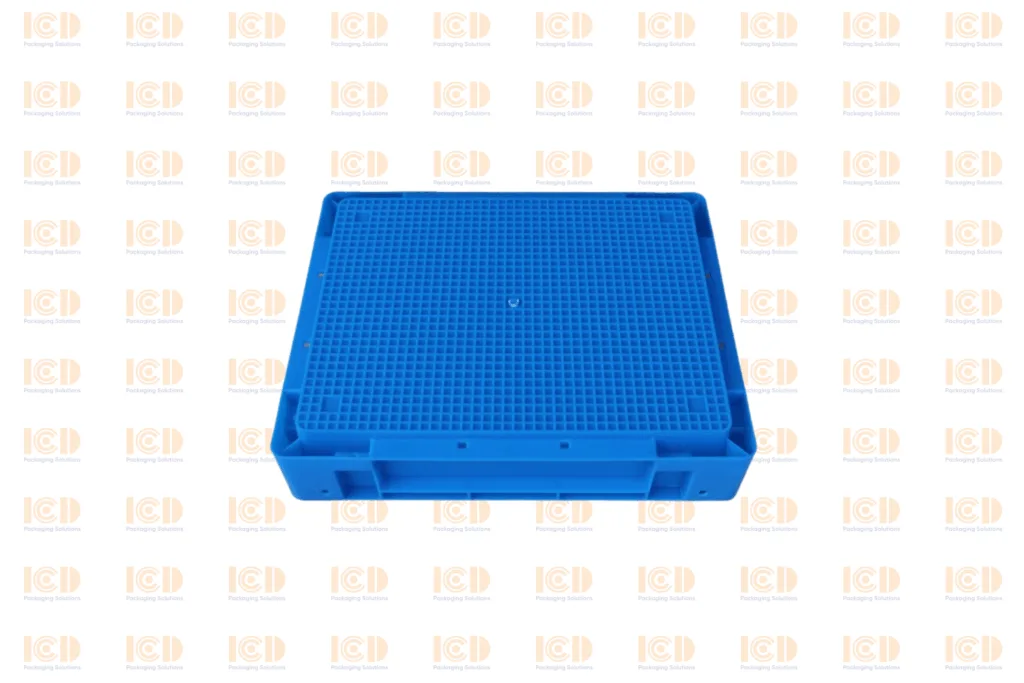
An important point to distinguish from the start: industrial plastic crates are completely different from the household plastic boxes sold at supermarkets. Industrial crates are designed to bear loads of 30-80kg and be used continuously in factory environments, cold stores and production lines - while household boxes are only for light storage at home.
On material, a good-quality plastic crate must use 100% virgin plastic pellets - that is, plastic never used before. Recycled plastic, though 20-30% cheaper, becomes brittle and cracks after 6-12 months of high-intensity use, and is not food-safe enough for the food or pharmaceutical industries.
Classifying Plastic Crates by Structure
The most important and practical classification when buying is by surface structure. This is the factor that determines which goods and which work environment the crate suits.
Solid plastic crate (Closed - Solid Container)
A solid plastic crate has a fully closed surface on the bottom and four sides. This design keeps goods from spilling, holds even fine granular materials, powder, or liquid (with a lid). Solid crates usually have higher rigidity than open crates and bear larger loads at the same size.
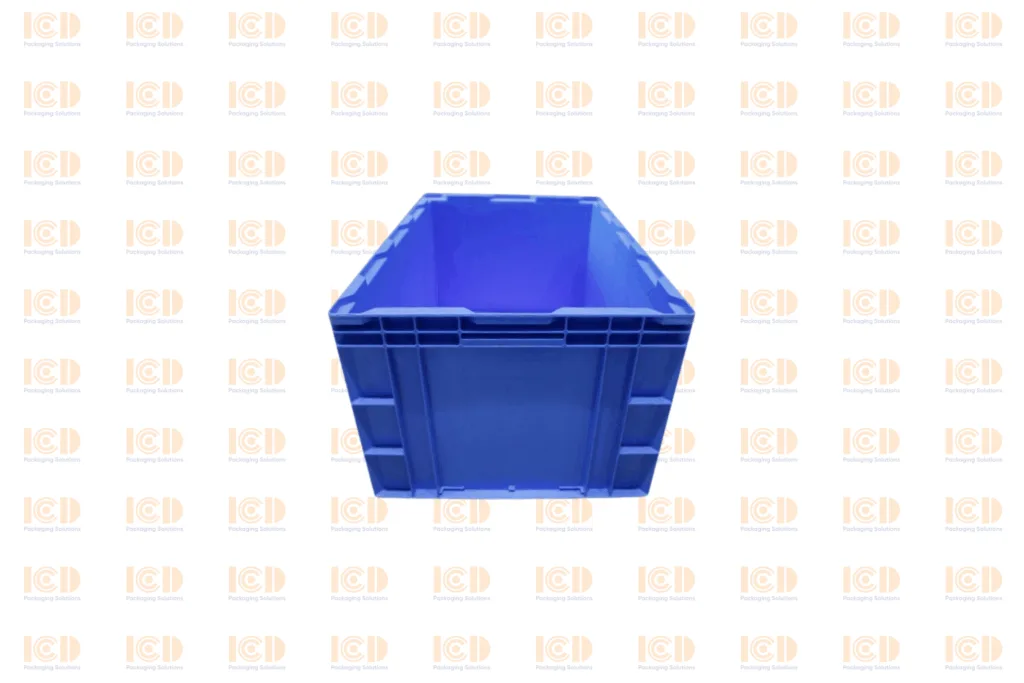
Typical applications: electronic components, mechanical parts, packaged food, dust-sensitive goods. This is the most common type in electronics, automotive assembly and logistics plants in Vietnam.
Open plastic crate (Mesh - Open Mesh Container)
An open plastic crate (or plastic basket) has ventilation holes on the sides and bottom. This mesh design allows air to circulate, drains water quickly and significantly reduces the crate’s empty weight. At the same size, an open crate is about 15-25% lighter than a solid one.
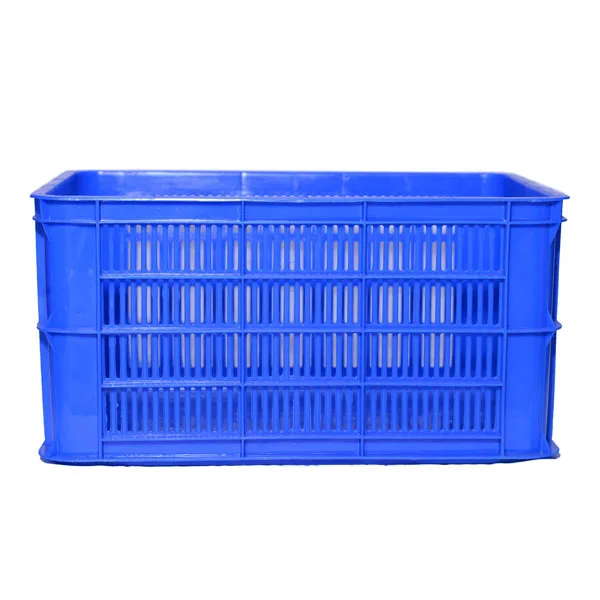
Typical applications: produce, vegetables, fruit, seafood, goods needing ventilation to avoid mold. In agriculture and seafood processing, open crates are almost the default choice for their drainage and easy cleaning.
Classifying by Material: PP or HDPE?
This is the question I get most from business customers. Both plastics are good - but “good” for different purposes. Choosing the wrong material can lead to crates failing early or unnecessary cost.
| Criterion | PP (Polypropylene) | HDPE (High-Density PE) |
|---|---|---|
| Rigidity | High, stiffer | Medium, more flexible |
| Heat resistance | Good (up to 120°C) | Fair (up to 80-90°C) |
| Impact resistance | Medium | Better, especially at low temperatures |
| Chemical resistance | Good with oils, organic chemicals | Good with most chemicals, dilute acids |
| Weight | Lighter (0.9 g/cm³) | Slightly heavier (0.95 g/cm³) |
| Cost | 5-10% higher | Slightly cheaper |
| Suitable for | Components, food, hot environments | Large crates, water, chemicals, cold storage |
Simple selection rule: If the crate is used in an electronics or food plant or a high-temperature environment - choose PP. If you need a large-capacity crate (over 100 liters), to hold liquid, or for cold storage - choose HDPE. If you are still unsure, contact me for specific advice based on your needs.
Standard Industrial Plastic Crate Sizes
One of the most common mistakes I see is businesses buying plastic crates without checking compatibility with the pallets and racks they use. The result is crates that do not fit, must be stacked off-center, reducing capacity and creating a risk of goods tipping during transport.
Industrial plastic crates are designed on a modular size system, where the crate base size is a multiple of 100mm to be compatible with standard pallets. The most common pallets in Vietnam today are 1200x1000mm and 1200x800mm (Euro pallet) - so the most common crate sizes are:
| Size line | Length x Width x Height (mm) | Typical load | Common application |
|---|---|---|---|
| Small | 300x200x147mm | 10-15 kg | Small components, parts |
| Small | 400x300x147mm | 15-25 kg | Components, tools |
| Medium | 600x400x147mm | 30-50 kg | Various goods, produce |
| Medium | 600x400x220mm | 40-60 kg | Food, beverages |
| Large | 610x420x390mm | 50-80 kg | Logistics, heavy warehousing |
Important note: The size listed in the catalogue is the external size. The internal size (actual goods capacity) is about 15-25mm smaller per dimension due to the wall thickness. When calculating capacity, use the internal size, not the external size.
Classifying by Lid and Special Features
Besides the basic classification by structure and material, plastic crates are also classified by additional features serving the specific needs of each industry. Understanding these helps you choose the right crate instead of having to add accessories after buying.
- Plastic crate with lid: A separate or hinged attached lid, protecting goods from dust and moisture. Common in cold storage, food and pharmaceutical industries.
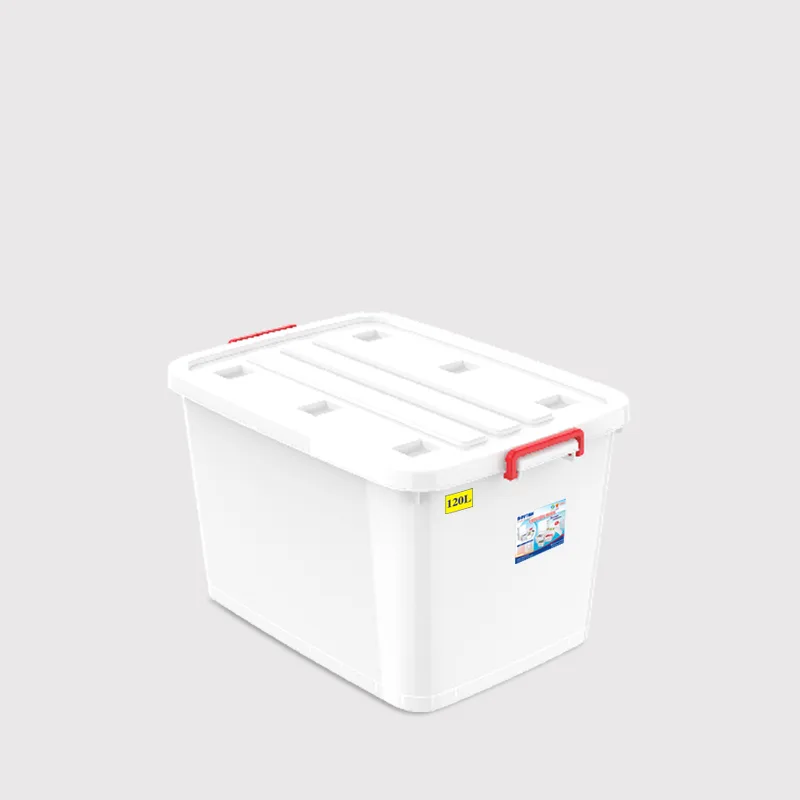
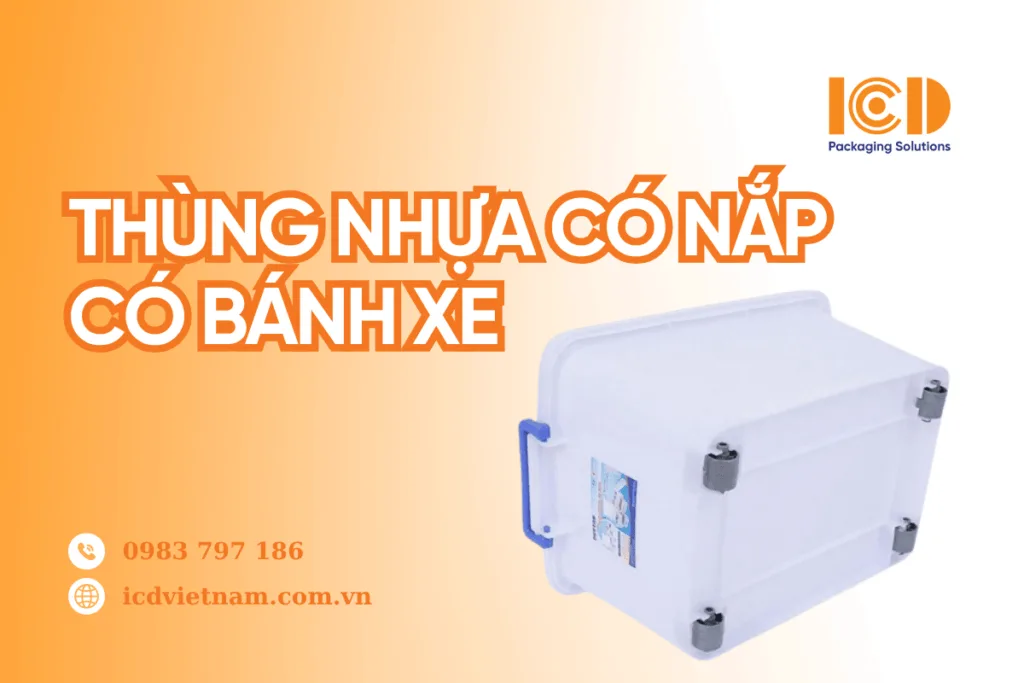
- Plastic crate with wheels: 4 swivel 360° wheels added underneath, making it easy to move around the warehouse without a forklift. Suitable for large crates (over 60 liters).
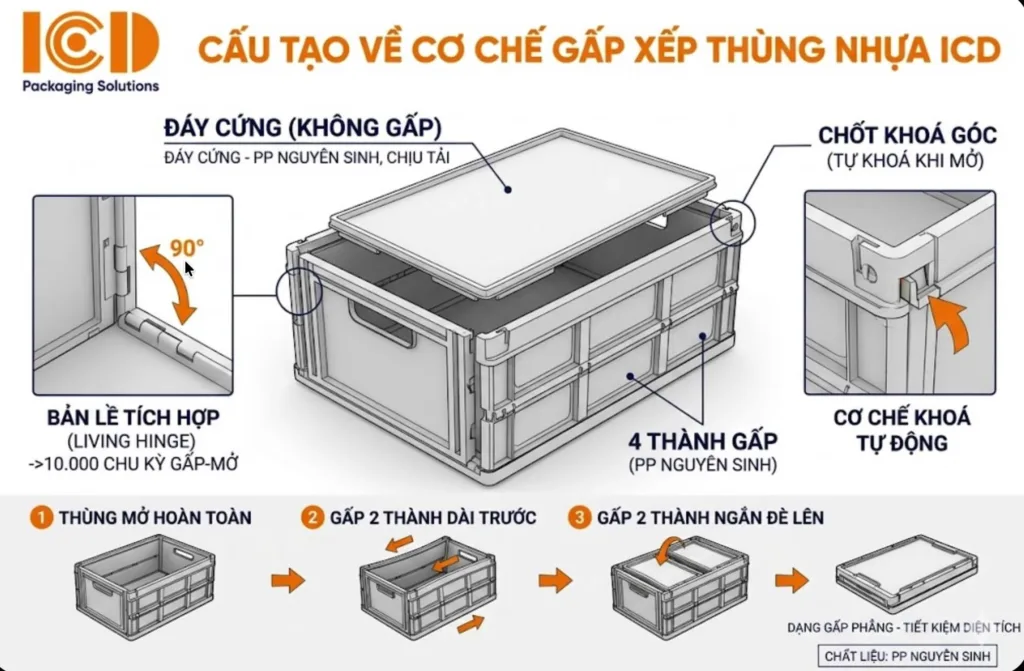
- Foldable plastic crate: Designed to fold flat when empty, reducing volume to about 25% of its open size. Saves significant cost shipping empty crates on the return leg.
- Anti-static plastic crate (ESD): Made from PP plastic blended with carbon to conduct electricity, protecting sensitive electronic components from static. Mandatory in electronics assembly lines.
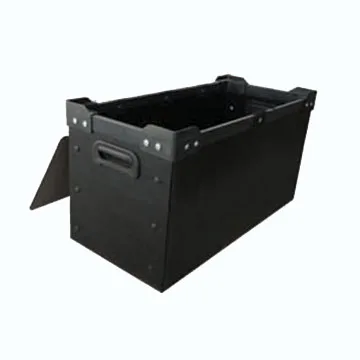
- Danpla plastic crate: Not a regular injection-molded crate - this is a crate made from hollow PP plastic sheet (similar to cardboard but plastic), lighter and more flexible to customize in size.
Plastic Crate Applications by Industry
Plastic crates are not a “one size fits all” product. Each industry has different requirements for size, material, features and hygiene standards. Below is practical guidance by the most common sectors in Vietnam.
- Logistics and warehousing: Prioritize solid plastic crates sized 600x400mm or 610x420mm compatible with standard pallets. You need types that stack well, have anti-slip ribs, and bear 50-80kg continuously. Korean logistics plastic crates (the EU line) are popular for their design optimized for automated conveyors.
- Electronics - components: Use virgin PP crates, optionally with dividers to sort small components. In PCB and semiconductor assembly environments, you must use ESD anti-static plastic trays to avoid damaging components from electrostatic discharge.
- Agriculture and food: Prioritize open plastic crates (plastic baskets) so produce does not get damp or crushed. The material must be uncolored or food-safe colored virgin PP/HDPE. FDA/HACCP standards require crates to be easy to clean with no crevices for bacteria to hide.
- Aquaculture: You need large-capacity HDPE plastic tanks (500-5000 liters) that withstand saltwater, disinfecting chemicals and constantly changing temperatures. Round HDPE tanks are a popular choice for intensive fish and shrimp farming.
- Chemicals and pharmaceuticals: Require high-grade virgin HDPE, with no recycled plastic additives, leaching-tested to standard. An airtight lid and pressure-relief valve are necessary features for volatile chemicals.
5 Common Mistakes When Choosing Plastic Crates
Through years of advising businesses, I have compiled the 5 mistakes that first-time buyers often make. Avoiding these will help you save significant cost and avoid having to rebuy.
- 1. Choosing by price instead of by specification. Cheap plastic crates usually use recycled or low-grade virgin plastic. After 6-12 months of high-intensity use, the crate starts to become brittle and crack at the corners. The cost of early replacement is far higher than investing in quality crates from the start.
- 2. Not checking compatibility with the pallet. Buying 500x350mm crates to use with a 1200x1000mm pallet - the result is crates that do not cover the pallet surface, with goods unstable in transport. Always check: number of crates x crate width = pallet width (±5mm).
- 3. Buying open crates for goods that need to be closed. Open crates (mesh) save cost and are lighter, but are not suitable for small goods, powder, or dust-sensitive products. Some customers buy open crates for small electronic components - and discover the components fall through the mesh holes after stacking.
- 4. Not accounting for the stacking load. The static load (crate at rest) and the load when stacked are very different. A crate that bears 50kg of goods inside may not bear 4-5 crates stacked on top during truck transport. Always ask the supplier about the stacking load, not just the static load.
- 5. Using recycled plastic for the food industry. This is the most serious mistake. Recycled plastic may contain heavy metals and unknown additives from previous use. If your product directly contacts the crate - for example produce, seafood, processed food - you must use food-safe certified virgin plastic.
How to Read Plastic Crate Specifications
Plastic crate catalogues usually list many specifications, but not all are equally important. Below are the specs you need to pay attention to when comparing different products.
- External dimensions (L x W x H): Used to calculate compatibility with pallets and racks.
- Internal dimensions: Used to calculate the actual goods volume.
- Load capacity: Clearly states the static load and stacking load - these two figures are completely different.
- Empty crate weight: Affects shipping cost and the physical effort of handling workers.
- Material: PP or HDPE, virgin or recycled, with safe color additives or not.
- Standards: ISO 9001, FDA/HACCP food-safety standards if used in the food industry.
Frequently Asked Questions
Which is more durable, PP or HDPE plastic crates?
There is no absolute answer because “durable” depends on the usage environment. PP is stiffer and more heat-resistant (up to 120°C), suitable for hot environments and food contact. HDPE is tougher, more impact-resistant at low temperatures and more chemical-resistant, suitable for cold storage, large-capacity crates and chemical environments. Under normal usage conditions (office or standard warehouse), both have similar lifespans if virgin plastic is used.
How many years can a plastic crate be used?
Good-quality virgin PP/HDPE plastic crates have an average lifespan of 5-10 years under normal industrial use. The lifespan drops to 1-3 years if recycled plastic is used, if regularly exposed to UV without UV-resistant additives, or cleaned with incompatible chemicals. Signs you need to replace a crate: cracks appearing at corners, the crate color turning chalky white, or becoming brittle under light impact.
Can I order plastic crates in a custom size?
Yes, but you need to order a large enough quantity (usually 500-1000 units/model depending on the manufacturer) so the mold cost is reasonably amortized. The cost of a new mold ranges from VND 15-50 million depending on size and complexity. If your quantity is smaller, find the nearest standard size instead of making a custom mold. ICD Vietnam can advise on the standard size best suited to your requirements.
What is the difference between a lidded and a lidless plastic crate?
A lidded crate protects goods from dust, moisture and insects, and helps with safer stacking. However, a lidded crate is heavier and 15-30% more expensive than a lidless crate of the same type. Choose a lidded crate for: dust/moisture-sensitive goods, food, pharmaceuticals, electronic components. Use a lidless crate for: bulk goods, produce needing ventilation, stored goods that are not moved much.
How do I tell virgin from recycled plastic crates?
Virgin plastic crates have uniform color, a glossy smooth surface, with no spots or odd color streaks. When tapped lightly, the ring is clear and distinct. Recycled crates usually have a dull, uneven color, possibly with black or brown specks, a slightly matte surface, and a duller sound when tapped. The surest way is to ask the supplier to present the material certificate and check the plastic symbol on the crate bottom (PP = triangle number 5, HDPE = triangle number 2).
Conclusion
A plastic crate is an important piece of industrial equipment - choosing the right type from the start saves significant cost in the long run. To summarize the core points to remember: prioritize virgin PP or HDPE plastic; choose a size compatible with the pallets and racks you use; distinguish solid and open crates by goods type; check the stacking load, not just the static load.
If you need specific advice for your business needs - which crate type suits you, what size, the quantity needed - the ICD Vietnam team is ready to help free of charge. We have stock available in Hanoi with over 50 models of industrial plastic crates in various sizes, nationwide delivery and VAT invoicing.
- North Vietnam: 0983 797 186 / 090 345 9186 / 090 5859 186
- South Vietnam: 098 6784 186
- Email: Sales@icdvietnam.com.vn
- Zalo: 090 345 9186