
Mục lục
- Overview - Slip sheets and pallets in the modern logistics chain
- Detailed comparison of slip sheet vs pallet - 8 important criteria
- When should you use a slip sheet instead of a pallet?
- When is a pallet still the better choice?
- Real cost - ROI analysis for businesses
- The global trend of switching from pallets to slip sheets
- Selection experience from real consulting at ICD Vietnam
- FAQ - Frequently asked questions about slip sheets and pallets
- Conclusion - Choose correctly to optimize logistics cost
Quick summary:
- A slip sheet weighs under 1kg, a wooden pallet weighs 12-20kg - the weight difference drives shipping cost
- Saves 30-70% in goods-handling cost, but requires investing in a push-pull attachment for the forklift
- Slip sheets are optimal for export and one-way shipments; pallets still dominate for heavy goods and internal warehousing
- The global slip sheet market is expected to double from $1.2B (2024) to $2.3B (2033)
Overview - Slip sheets and pallets in the modern logistics chain
Slip sheets and pallets are the two main ways to store, stack and transport goods in the global supply chain. A slip sheet - a thin sheet (0.6-1.5mm) - can replace a pallet in many situations, but is not always the optimal choice. Understanding this difference helps businesses cut costs by 30-70% while still keeping goods safe.
In real logistics consulting at ICD Vietnam, we see that many small and medium companies still use pallets out of habit, unaware that slip sheets can significantly save on shipping cost, especially for export and one-way shipments. Conversely, some companies force the use of slip sheets when goods are heavy or need high stacking, leading to damage. Understanding each type correctly is the key.
Detailed comparison of slip sheet vs pallet - 8 important criteria
| Criterion | Slip Sheet | Wooden Pallet |
|---|---|---|
| Weight | Under 1kg (0.6-1.5mm) | 12-20kg (~150mm thick) |
| Purchase price | VND 20,000 - 100,000 each | VND 100,000 - 300,000 each |
| Shipping cost per container | Saves 30-70%; +640kg for goods | Takes 3-5% of load; -640kg capacity |
| Container capacity | 15% more efficient (1,300 slip sheets = 10 pallets) | Takes much space; wastes area |
| Equipment needed | Push-pull attachment on forklift | Standard forklift (forks insert directly) |
| Standards & Fumigation | Meets ISPM 15, HACCP; NO fumigation needed | Needs heat treatment (HT) for export |
| Service life & Reuse | Single use; not recovered | 2-5 years if well maintained; can be recovered |
| Stacking safety | Max 1.0-1.5m; limited with heavy goods | 3-4m easily; safe with heavy goods 1,000+ kg |
The comparison table above shows that “new = good” is not always true. Slip sheets win on cost and international standards, but pallets remain unbeatable for handling heavy goods and high stacking in warehouses. The choice depends on each company’s specific factors.
When should you use a slip sheet instead of a pallet?
Slip sheets are most suitable when you export light to medium goods (under 1,000kg/unit) and ship only once. For example: textiles, footwear, toys, consumer electronics, or any goods that do not need long-term warehouse storage. A 30-70% reduction in shipping cost is a very attractive figure when multiplied by the number of export containers per month.
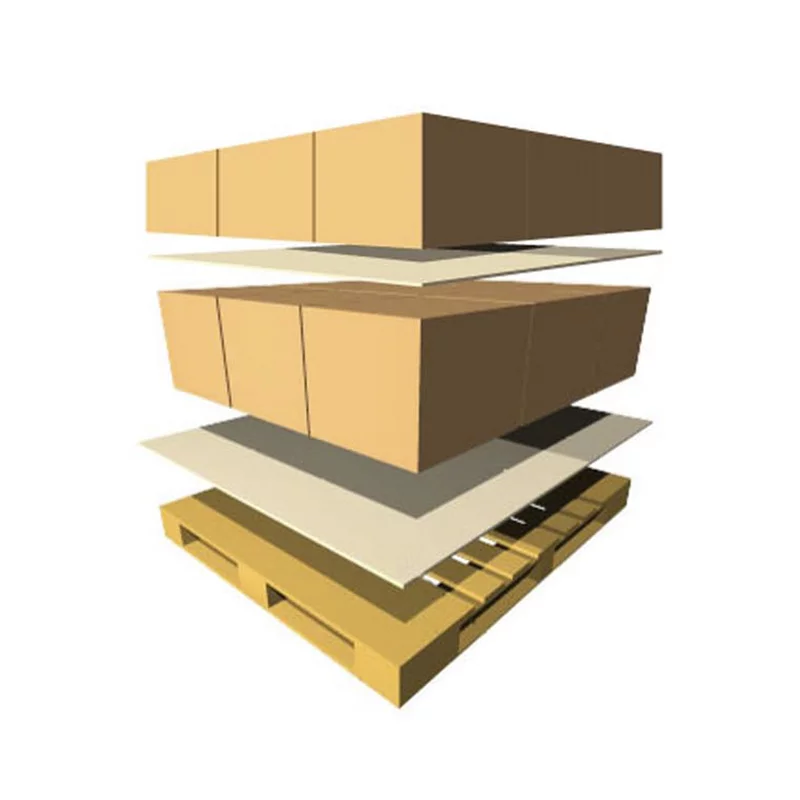
In addition, slip sheets are optimal when:
- International export: No fumigation needed, no worry about wood ISPM 15 standards, shortens customs time
- One-way shipment (ODL): No need to recover pallets at the destination; saves return-logistics cost
- Limited warehouse space: 1,300 slip sheets take only the space of 10 pallets - optimizes manual warehouses
- Customers require clean standards: Slip sheets meet HACCP, suitable for the food and pharmaceutical industries
When is a pallet still the better choice?
Pallets are used to handle heavy goods (over 1,000kg/unit) and high stacking in warehouses. A traditional warehouse with a 3-4m racking system still depends on pallets; slip sheets cannot bear the load and provide such stability. Manufacturing, construction, or any business with internal warehousing will continue to use pallets because it is a proven, safe technology that does not require additional expensive equipment.
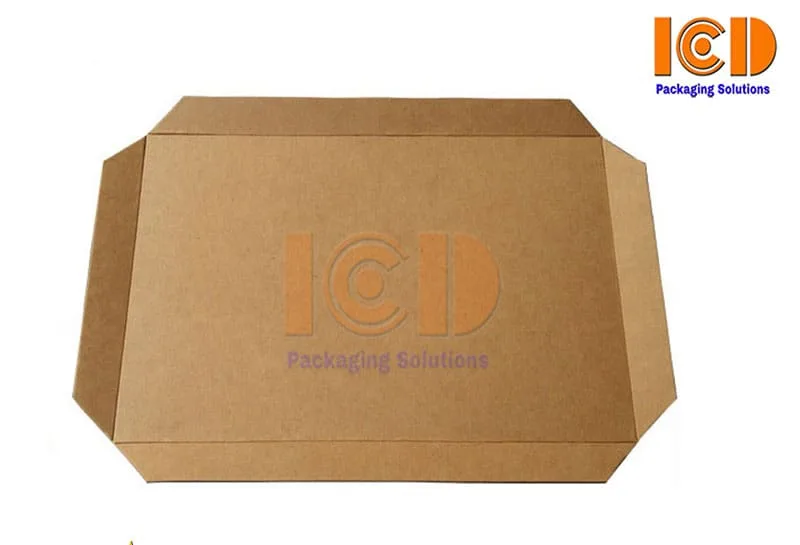
Further detail: pallets have a service life of 2-5 years if well maintained, and can be recovered and reused many times. At large logistics scale, pallet cost is averaged over many shipments, so compared with slip sheets (single use), the cost advantage gradually fades when goods are heavy or stored long-term.
Pallets are the leading choice when:
- Heavy goods (over 1,000kg/unit): Only pallets can bear this load without deforming
- High stacking in warehouses: A 3-4m racking system requires rigidity that only pallets can provide
- Repeated reuse: Recovering pallets reduces cost per shipment at large scale
- Complex internal logistics: Moving between warehouses, consolidating, breaking down goods - pallets are easier to handle
Real cost - ROI analysis for businesses
Let’s look at a concrete example: your company exports 100 containers/month, each container holding 20-25 wooden pallets or 260-280 slip sheets. With a pallet price of VND 200,000 and a slip sheet price of VND 50,000, the material cost per container is:
- Pallet option: 22 pallets x VND 200,000 = VND 4,400,000/container → VND 440,000,000/month
- Slip sheet option: 270 slip sheets x VND 50,000 = VND 13,500,000/container → VND 1,350,000,000/month
Looking at these figures, slip sheets seem more expensive! But this is a miscalculation. We need to also factor in:
- Shipping cost: 640kg saved/container (equivalent to over 1 ton per 20 containers) = VND 1,280,000,000 saved in freight/month (freight rate ~VND 1 million/ton)
- Pallet fumigation cost: 22 pallets x VND 100,000 = VND 2,200,000/container → VND 220,000,000/month (slip sheets do not need it)
- Pallet recovery cost: Return logistics ~VND 500,000/container → VND 50,000,000/month (slip sheets do not need it as they are single use)
Recalculating: Net saving with slip sheets = 1,280,000,000 + 220,000,000 + 50,000,000 - (13,500,000,000 - 440,000,000) = 1,550,000,000 - 1,060,000,000 = VND 490,000,000/month (equivalent to ~VND 5.8 billion/year). However, the push-pull attachment investment (VND 150-300 million) will pay back within 1-2 months.
The key point: The ROI of slip sheets is only positive when export scale is >= 30 containers/month. Below 30 containers, the push-pull attachment investment makes the payback period too long.
The global trend of switching from pallets to slip sheets
The global slip sheet market is growing rapidly. In 2024, the market size was estimated at around $1.2 billion USD, projected to double to $2.3 billion USD by 2033. The main reasons are:
- Pressure to cut logistics costs: Global companies need to cut costs and act fast; slip sheets deliver a 30-70% return immediately
- Stricter international standards: ISPM 15, HACCP, FDA - slip sheets meet them more easily than wooden pallets
- Sustainability trend: Single-use slip sheets reduce recycling-management cost; no fumigation needed (fewer chemicals)
- E-commerce flexibility: One-way shipments, no pallet recovery - fits international e-commerce
However, developed countries (US, EU, Japan) still keep pallets because their warehouse infrastructure has long been optimized for pallets. Conversely, emerging countries such as Vietnam, India and Indonesia are leading the transition, because they are building new logistics infrastructure along the slip sheet trend.
Selection experience from real consulting at ICD Vietnam
In over 10 years of logistics consulting at ICD Vietnam, we have helped hundreds of export companies choose between slip sheets and pallets. Experience shows:
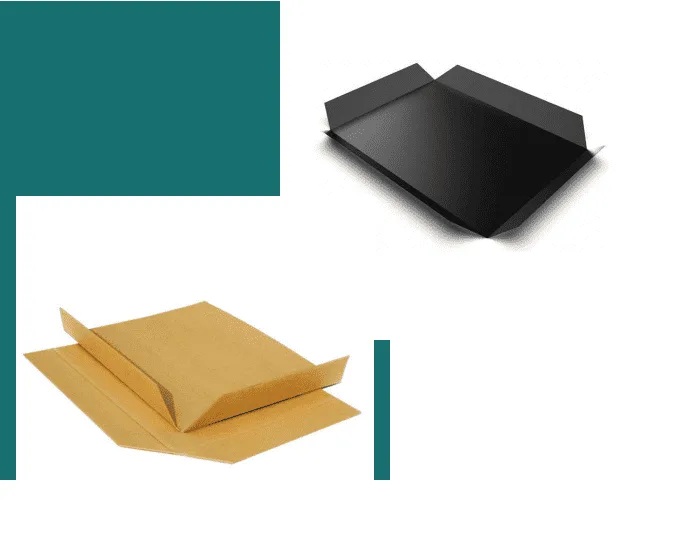
1. There is no “one-size-fits-all” solution - Companies often have to use both at once. Slip sheets for exporting light goods, pallets for heavy goods or internal storage. The choice depends on the specific goods, not switching the entire company to slip sheets completely.
2. Investing in a push-pull attachment is not always necessary - If a company uses slip sheets for under 10 containers/month, hiring a forklift service with a push-pull device is cheaper than investing. Only at >= 30 containers/month does buying your own attachment make sense.
3. Slip sheet quality greatly affects goods safety - Slip sheets are cheap but flimsy; if you choose a poor-quality type, it easily cracks during stacking or transport. Always choose slip sheets with ISPM 15, HACCP certification and an accompanying test load report.
4. Pallet storage time also has hidden costs - Pallets stored in the warehouse after use take up space and require care (checking for termites, repairing broken beams). This warehouse cost is often forgotten when calculating pallet ROI.
FAQ - Frequently asked questions about slip sheets and pallets
1. Can a slip sheet bear heavy goods like a pallet?
No. Slip sheets only suit goods under 1,000kg/unit; pallets can bear 1,000kg+ easily. If you force a slip sheet to carry overly heavy goods, it will crack or deform, damaging the goods above. Always check the maximum load of each slip sheet type before use.
2. Do you need to invest extra money in a push-pull attachment to use slip sheets?
Yes. Slip sheets require a special push-pull attachment on the forklift to pull them out from under the goods (pallets use ordinary forks). The attachment costs around VND 150-300 million; if a company uses slip sheets for >= 30 containers/month, the ROI will be within a few months. Below that, hiring a service is cheaper.
3. Do slip sheets require fumigation like wooden pallets?
No. Slip sheets meet ISPM 15 and do not need fumigation, saving VND 100,000-150,000/container for export. Wooden pallets require mandatory fumigation under international regulations, adding cost and customs processing time.
4. How long can a pallet be reused?
Wooden pallets have a service life of 2-5 years if well maintained (avoiding termites, moisture, excessive load). After that, they must be repaired or scrapped. Slip sheets are single use and cannot be reused, so the choice should consider long-term cost, not just the initial purchase price.
5. How do I know whether to choose a slip sheet or pallet for my business?
The specific answer depends on 3 factors: (1) Weight of goods per unit (under 1,000kg suits slip sheets), (2) Export scale per month (>= 30 containers makes the attachment investment reasonable), (3) Logistics type (one-way export choose slip sheets; long-term storage choose pallets). Contact ICD Vietnam for detailed free consultation.
Conclusion - Choose correctly to optimize logistics cost
Slip sheets and pallets are not a win-lose contest; they are two technologies serving different logistics needs. Slip sheets win on cost, international standards, and flexibility for export; pallets win on rigidity, high stacking capacity, and long-term reuse. The choice must be based on specific factors: goods weight, logistics scale, warehouse type, and careful ROI calculation.
If your company exports light to medium goods (under 1,000kg) at a scale of >= 30 containers/month, slip sheets will save 30-70% in shipping cost - a figure well worth testing. Conversely, if goods are heavy or stored long-term, pallets remain the safe and effective choice. Many large companies use both types at once, depending on each shipment.
Not sure which choice suits your business? ICD Vietnam provides free logistics consultation, detailed cost analysis and the most optimal solution for your specific situation. View the genuine slip sheets for sale at ICD now, or contact us:
- North Vietnam: 0983 797 186 / 090 345 9186 / 090 5859 186
- South Vietnam: 098 6784 186
- Email: Sales@icdvietnam.com.vn
- Zalo: https://zalo.me/719060935915885643
Let us help you save on logistics costs and optimize warehouse efficiency today!