Mục lục
QUICK SUMMARY
- Effective and affordable solution: Building a fish pond filter using plastic containers is the most cost-effective DIY method for maintaining consistently clean pond water, especially for Koi ponds.
- Complete guide: This article provides a detailed A-Z walkthrough on how to build a homemade pond filter using a 3-chamber overflow filter model - the most trusted DIY filtration system in the fishkeeping community.
- Material preparation: A full list of required materials, from choosing the right plastic containers and pipes to selecting the appropriate filter media for each chamber.
- 6-step process: Step-by-step instructions for building and installing a complete manual pond filter system for optimal filtration performance.
- Maintenance and operation: Key notes on regular filter system maintenance to keep it running reliably and efficiently over time.
A good filtration system is often called the “lungs” of a fish pond - it directly determines the health of the fish and the beauty of the pond. However, commercial filter systems are usually very expensive. Fortunately, with just a few plastic containers and simple materials, you can build an equally effective plastic container filter system yourself.
This article provides detailed instructions on how to build a fish pond water filter using the 3-chamber overflow model, a technique that has been proven highly effective.
1. Operating principles and benefits of a homemade fish pond filter
3-chamber overflow filtration principle
This system operates on the principle of natural water flow.
Dirty water from the pond is pumped into the first chamber.
When chamber 1 is full, water automatically overflows through a connecting pipe into chamber 2, then continues into chamber 3.
In the final chamber, clean water flows back to the pond through a separate pipe.
Each chamber contains different filter media that performs a specific function.
Benefits of a homemade fish pond filter
- Low cost: Much cheaper than commercial filter units of the same capacity.
- Large volume: Large plastic containers can hold a massive amount of fish pond filter media, enhancing biological filtration efficiency.
- Easy to customize: You can easily design, upgrade, and change filter media to suit your needs.
- Simple maintenance: Cleaning and maintaining each filter chamber is straightforward and intuitive.
2. Preparing materials and equipment
Detailed guide on choosing plastic containers for filter construction
Choosing the right plastic container is the foundation of a durable and safe filter system.
- Criterion 1: Plastic material
- Best choice: HDPE (High-Density Polyethylene) plastic - resin code 2. This is the plastic commonly used for industrial storage tanks, offering excellent flexibility, impact resistance, and especially strong resistance to UV rays and harsh outdoor weather.
- Alternative choice: PP (Polypropylene) plastic - resin code 5. This plastic is also very safe and often used for food-grade containers, but it is harder and may become more brittle than HDPE when exposed to sunlight for extended periods.
- Important note: Always prioritize containers made from virgin plastic. If using second-hand containers (such as paint or chemical drums), you must know their origin and ensure they have been professionally cleaned. However, for absolute safety of your fish, we always recommend using new containers or containers previously used only for food storage.
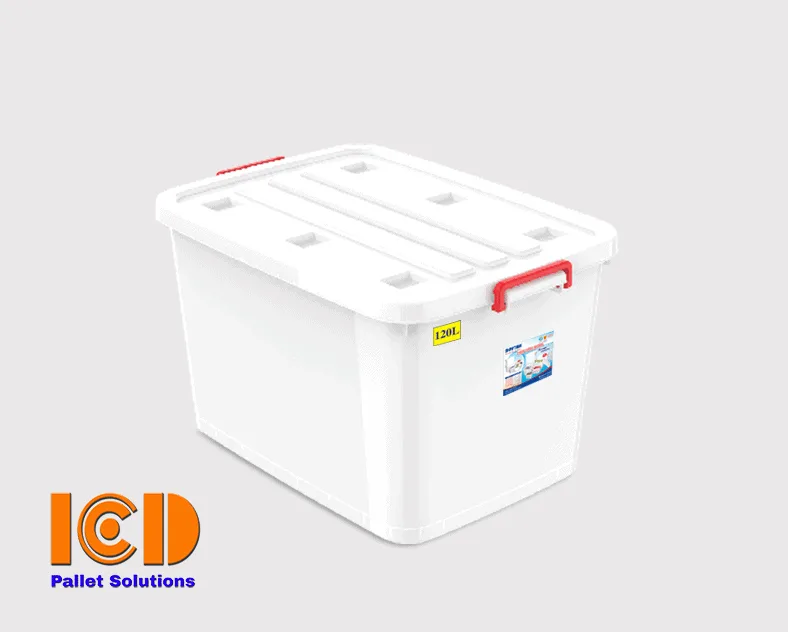
- Criterion 2: Capacity and dimensions
- Capacity rule: A rule of thumb is that the total capacity of the filter system should be approximately 10-20% of the total pond volume. For example, a 2,000-liter pond would require a filter system with a total capacity of 200-400 liters. You could choose 3 plastic containers of 100 liters each.
- Physical dimensions: Tall and narrow containers save floor space but require a more powerful pump. Short and wide containers are easier to clean and arrange filter media.
- Criterion 3: Design and durability
- Wall thickness: Choose industrial-grade containers with thick walls and external reinforcing ribs. Thin-walled containers may bulge or deform when filled with water and filter media.
- Color: Prioritize darker colored containers (blue, black, grey). Dark colors block sunlight and limit the growth of harmful algae inside the filter system.
- Lid: The container should have a tight-fitting lid. A lid prevents rain, leaves, and debris from falling in, while keeping the internal environment stable.
Pipe system
- PVC pipes with corresponding elbows, T-joints, and shut-off valves.
- Specialized PVC pipe adhesive.
Submersible pump
- Choose a pump with a flow rate (liters/hour) appropriate for your pond volume.
Fish pond filter media types
- Chamber 1 (Settlement and mechanical filtration): Filter brushes, Jmat (Japanese filter mat).
- Chamber 2 (Biological filtration): Ceramic rings, lava rock, Kaldnes media.
- Chamber 3 (Fine filtration): Fine filter wool, optionally activated carbon.
3. Building the homemade fish pond filter system
[Detailed diagram illustrating the 3-chamber overflow filter system, showing water flow direction and placement of filter media]
- Clean the containers: Thoroughly wash all 3 plastic containers.
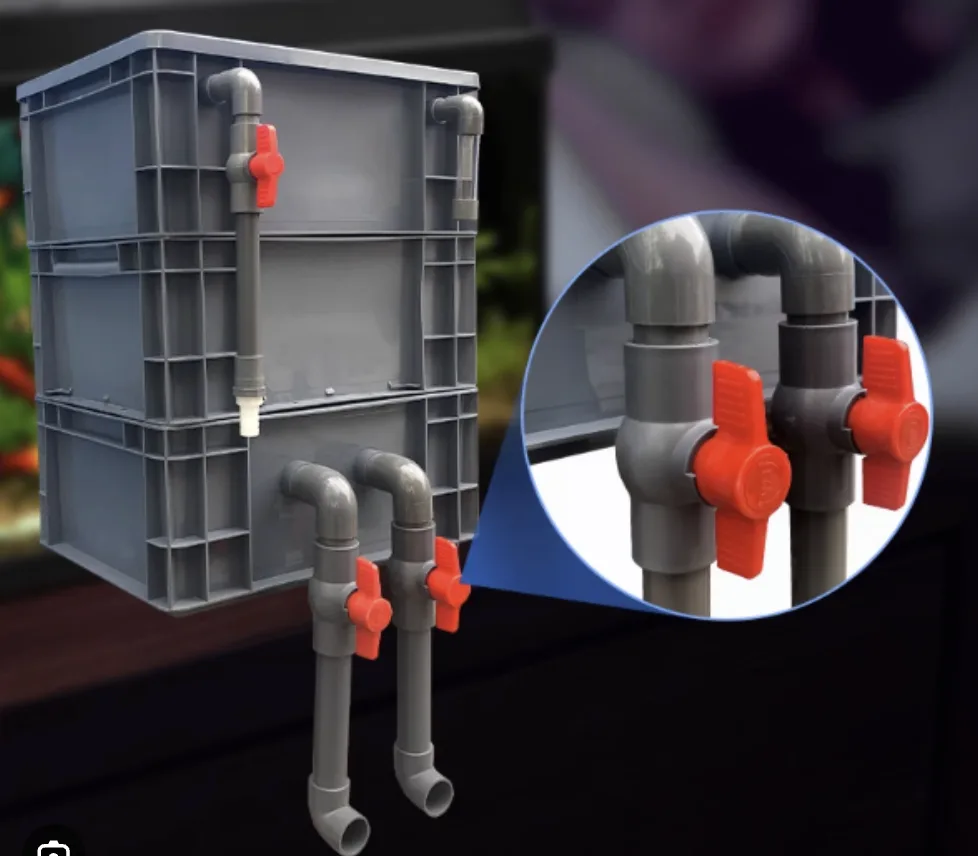
- Drill connecting holes: Place the 3 containers side by side. Drill holes to install the overflow connecting pipes between chambers. Note: The outlet hole of chamber 1 must be 3-5 cm higher than the outlet of chamber 2 to create natural flow.
- Install the pipe system: Use specialized adhesive to attach the connecting pipes, ensuring they are completely watertight.
- Arrange filter media: Place the prepared filter media into the correct functional chambers in order.
- Install the pump and start operation: Place the submersible pump inside the fish pond and connect the pump outlet pipe to filter chamber 1.
4. Maintaining the water filter system and managing water quality
- Regular maintenance:
- Weekly: Drain sediment from the bottom of the settlement chamber.
- Monthly: Clean filter brushes and Jmat by rinsing with water taken from the pond itself.
- Water quality management: The filter system helps stabilize the water environment, but you still need to change approximately 20-30% of the pond water each week.
Frequently Asked Questions (FAQ)
1. Why use 3 filter chambers instead of one large one?
Dividing into 3 chambers clearly separates the functions: mechanical filtration -> biological filtration -> fine filtration. This makes the system more efficient and each chamber easier to clean independently.
2. How often should I clean all the filter media at once?
You should avoid cleaning everything at the same time, especially biological filter media (ceramic rings, lava rock), as this will eliminate a large population of beneficial microorganisms. Only clean them when absolutely necessary.
3. Can I use old paint containers to build the filter?
It is possible, but you must ensure the containers have been soaked and scrubbed extremely thoroughly to completely remove all paint residue and chemicals. The safest option remains new plastic containers.