
Table of Contents
- What parts does a lidded plastic container with wheels have?
- How to calculate a safe load for a container with wheels
- Should you choose a container with wheels of 90, 120 or 140 litres?
- When should you use a 5-wheel plastic crate instead of a lidded container?
- What should you note about wheeled containers used in hospitals and for waste?
- Ordering containers with wheels to your own requirements: what to prepare?
- Frequently asked questions about lidded plastic containers with wheels
- How much load can a plastic container with wheels carry?
- Should I use a plastic container with wheels for food?
- Does ICD Vietnam have lidded containers with wheels?
- Can a plastic container with wheels be left outdoors?
- How do 120-litre and 140-litre containers with wheels differ?
- Can hospitals use plastic containers with wheels for waste?
- Should I choose plastic wheels or rubber or PU?
- Contact and quotation for ICD Vietnam containers with wheels
Reviewed and updated by ICD - Week 43/2026
A large lidded plastic container with wheels is a PP or HDPE container of about 90 to 140 litres with a separate lid and swivel wheels under the base, used to hold goods and then push them around warehouses, workshops, hotels and hospitals instead of carrying them. When calculating load, count only the number of wheels minus 1 as sharing the weight, and keep the total load within the published rating of the container body.
I am Le Van Thang and I have worked at ICD Vietnam since 2011. Customers asking to buy a container with wheels usually only mention the capacity, but what decides whether it lasts or breaks a wheel after a few months is the load per wheel, the wheel type and the floor surface. This article goes through four things: what parts the container has, how to calculate a safe load, choosing capacity and wheels by where it is used, and what to ask when ordering. If you only need a lidded container without wheels, also see the article Large lidded plastic containers.
What parts does a lidded plastic container with wheels have?
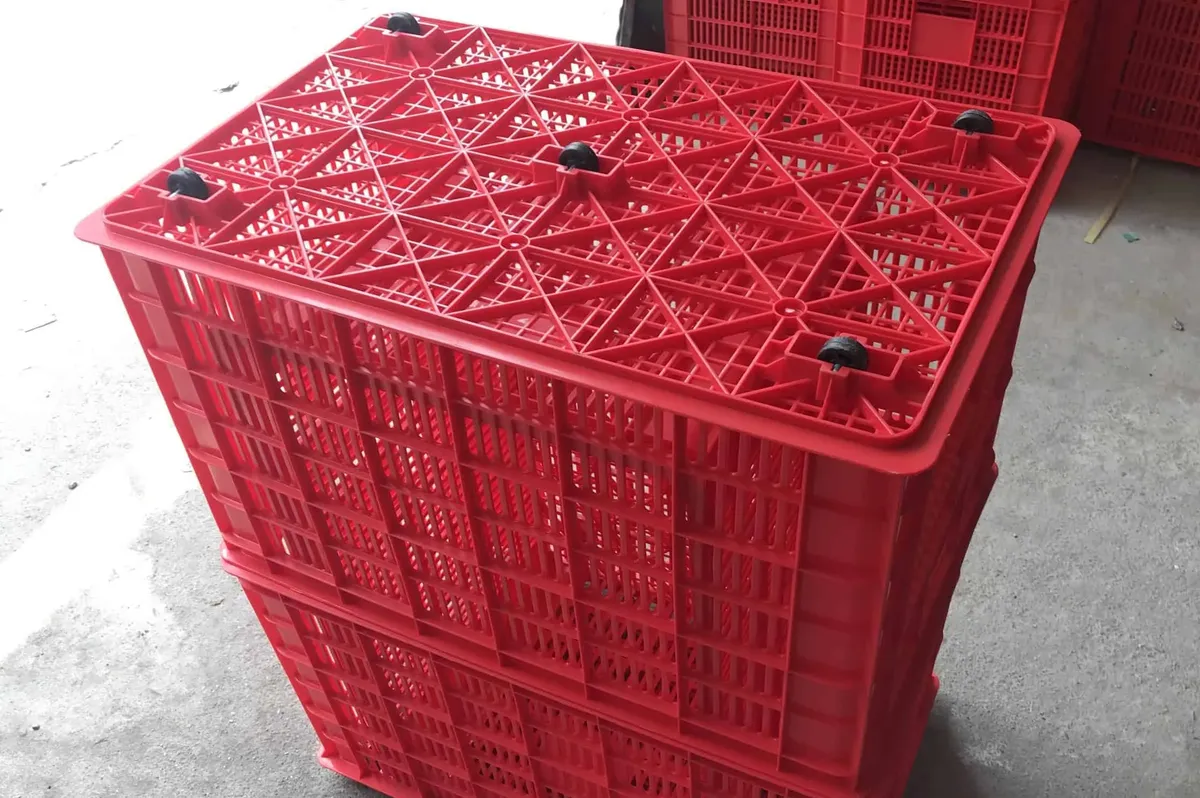
A large lidded plastic container with wheels has four parts: the body, the lid, the wheels and the handles. Each part fails in a different way, so when choosing a container look at every part and not just the capacity printed on the label.
A virgin PP body is light and stiff, suited to dry stores and textiles. HDPE is more flexible, takes impact and low temperature better, and suits cold places or frequent knocks. The most common weak point of a container with wheels is not the body but where the wheels attach: a thin base or screws set into recycled plastic will crack around the screw holes when a heavily loaded container goes over a door threshold. So when you look at a sample, turn the container over and check the base thickness and how the wheels are fixed, instead of just pressing on the walls.
How to calculate a safe load for a container with wheels
The safe load when pushing a container is the rated load of one wheel multiplied by the number of wheels minus 1, and it must not exceed the published rating of the container body itself. Industrial caster manufacturers use the formula load per wheel = (weight of empty container + goods) / (number of wheels - 1). The reason is that warehouse floors are rarely perfectly flat: pushing across a joint, a door threshold or a sunken patch, there are moments when one wheel is off the floor and the remaining wheels carry the whole container and its goods.
| Rated load per wheel | Number of wheels | Safe moving load (wheels - 1) | If divided equally among all wheels |
|---|---|---|---|
| 50 kg | 4 | 150 kg | 200 kg |
| 80 kg | 4 | 240 kg | 320 kg |
| 80 kg | 5 | 320 kg | 400 kg |
| 100 kg | 4 | 300 kg | 400 kg |
The figures in the table are examples to show the gap between the two methods, not the specification of a particular container model. For a 4-wheel container, dividing equally by 4 gives a load about one third higher than the 3-wheel calculation, and that gap is exactly what makes a wheel axle break or wear unevenly after a short time. Remember to add the weight of the empty container to the total load. ICD Vietnam’s lidded container product pages do not currently publish the load per wheel, so when you need to carry heavy loads, ask for the wheel load and body load for the exact model before ordering.
Choosing wheel material by floor surface
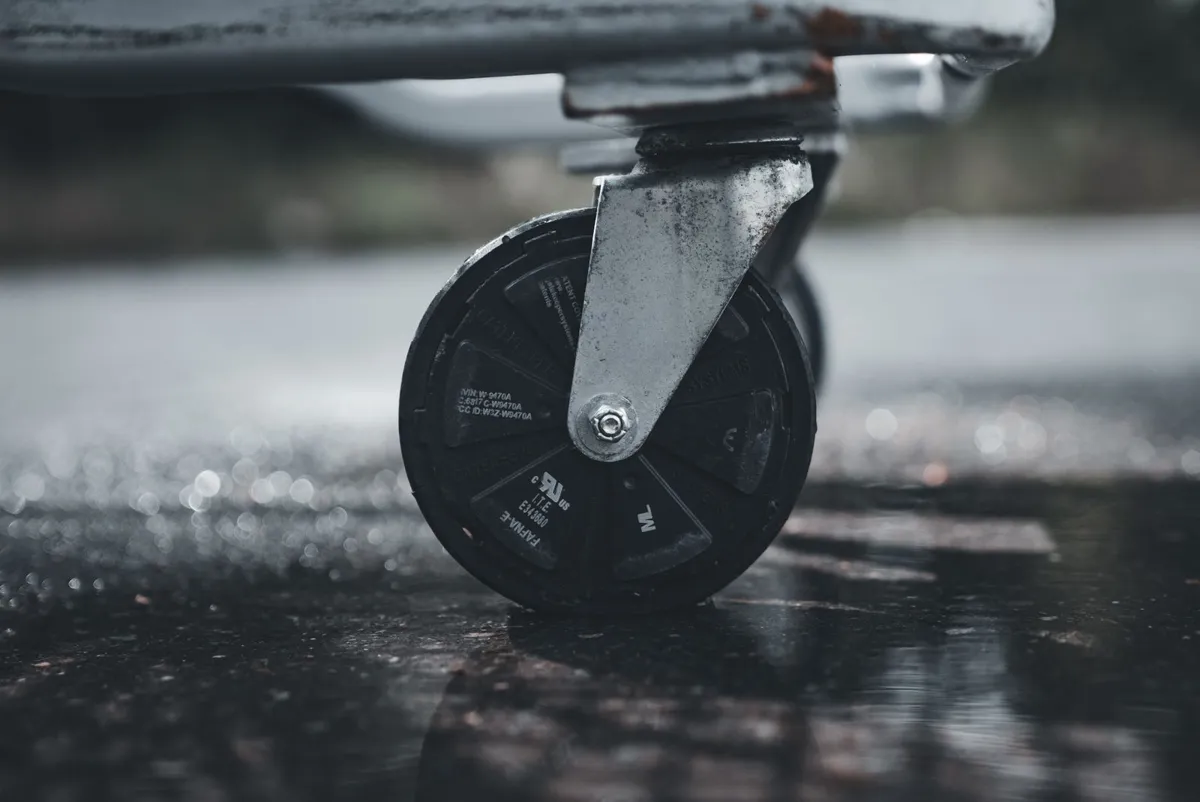
After load, the wheel material decides whether the container pushes lightly or heavily, whether it is noisy and whether it leaves marks on the floor. Hard plastic wheels roll lightly and resist chemicals, suiting concrete floors in dry stores. Rubber wheels are quiet, grip the floor and make little noise, suiting hospital corridors, hotels and offices. Polyurethane (PU) wheels are both quiet and abrasion-resistant, and leave few marks on epoxy floors and the tiled floors of clean workshops.
Should you choose a container with wheels of 90, 120 or 140 litres?
Choose the capacity by the real weight of goods and the width of the aisle, not the largest size just to be safe. The bigger the container, the heavier it is when full, the harder it is to get over thresholds and the easier it is to exceed the wheel load. The table below takes outside dimensions from ICD Vietnam’s white plastic container specification table, the line listing opaque lidded containers with wheels; the 220-litre size comes from the No.853 product page.
| Capacity | Outside dimensions (L x W x H) | Suitable for |
|---|---|---|
| 90 litres | 700 x 490 x 410 mm | Tools, components, blankets and pillows in a small room |
| 120 litres | 745 x 530 x 450 mm | Clothes, bedding, light supplies in warehouses and hotels |
| 140 litres | 785 x 560 x 470 mm | Textiles, bulky supplies, apartment storage rooms, garment workshops |
| 220 litres | 1020 x 605 x 460 mm | Light, high-volume goods; the product page does not mention wheels, so ask when ordering |
An easy rule to remember: for heavy goods choose a small size, and only choose a large size for light bulky goods. A 140-litre container full of paper or metal components can exceed the wheel load even though the lid still closes, while the same container holding textiles is very light. Before ordering, measure the width of the doors and lifts the container has to pass through; a 140-litre container is 560 mm wide, and with the handles and clearance on both sides it takes up nearly a whole single door.
When should you use a 5-wheel plastic crate instead of a lidded container?
When goods are heavy, loaded and unloaded many times a day or run between production lines, a plastic crate with wheels is usually more durable than a household container with wheels. ICD Vietnam’s solid and open-sided crates with 5 wheels measure 780 x 500 x 430 mm; according to the product pages, the solid crate weighs 4.1 kg and the open-sided crate 3.3 kg not counting wheels, made from PP and HDPE, with optional logo printing, card holders, dividers and lids.
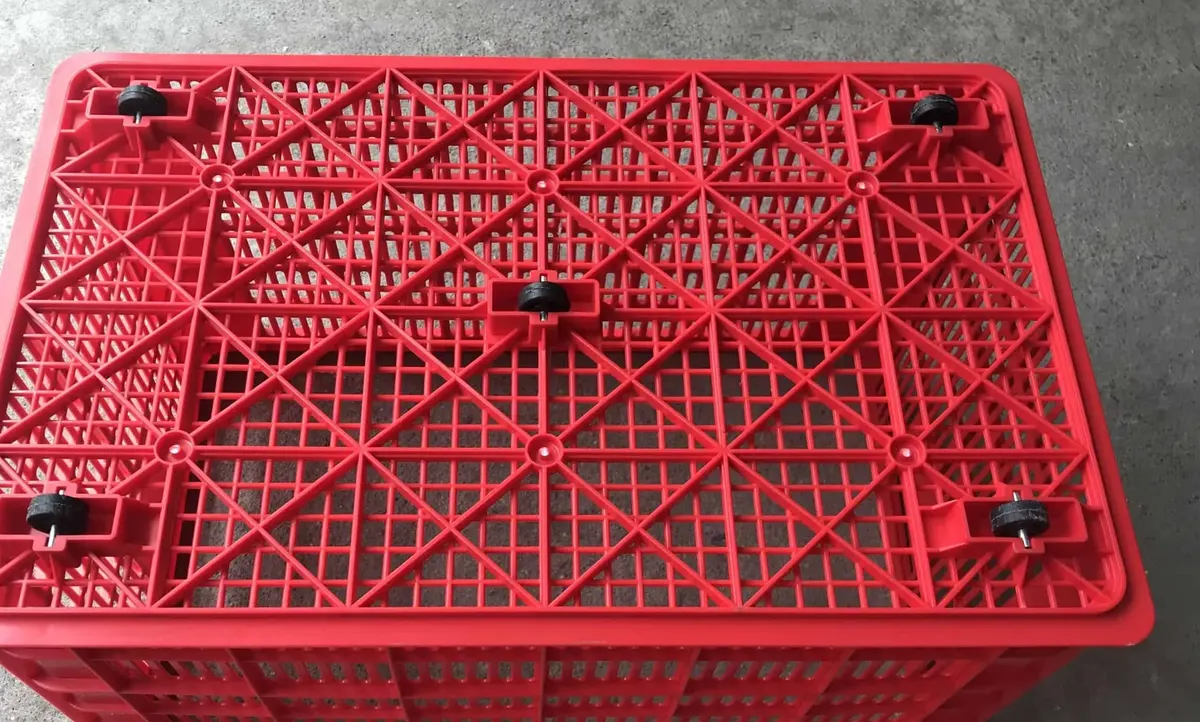
The fifth wheel at the centre of the base is the main difference. With a 4-wheel container, nothing supports the middle of the base, so when heavily loaded the base sags and force concentrates on the wheel corners. The middle wheel shares the load for the base and keeps it flat. If you need a container with both a lid and wheels for carrying heavy goods in a factory, the sensible option is a 5-wheel solid crate with a lid rather than a large household container.
What should you note about wheeled containers used in hospitals and for waste?
In healthcare facilities, container colour is a mandatory requirement and not just for visibility. Under Circular 20/2021/TT-BYT of the Ministry of Health, medical waste containers must be leak-proof and seepage-proof, have a lid that opens and closes conveniently, be reusable after cleaning and disinfection, and use the right colour for each waste type.
| Container colour | Type of medical waste | Notable requirement |
|---|---|---|
| Yellow | Infectious waste (sharp, non-sharp, high-risk, pathological) | Tightly closed lid, animal-proof; sharp objects go in puncture-resistant boxes |
| Black | Hazardous non-infectious waste | Liquids are held in tightly sealed containers, labelled with the waste code and name |
| Green | General solid waste that is not recycled | Bag, container or container lined with a bag |
| White | General solid waste for recycling | Bag, container or container lined with a bag |
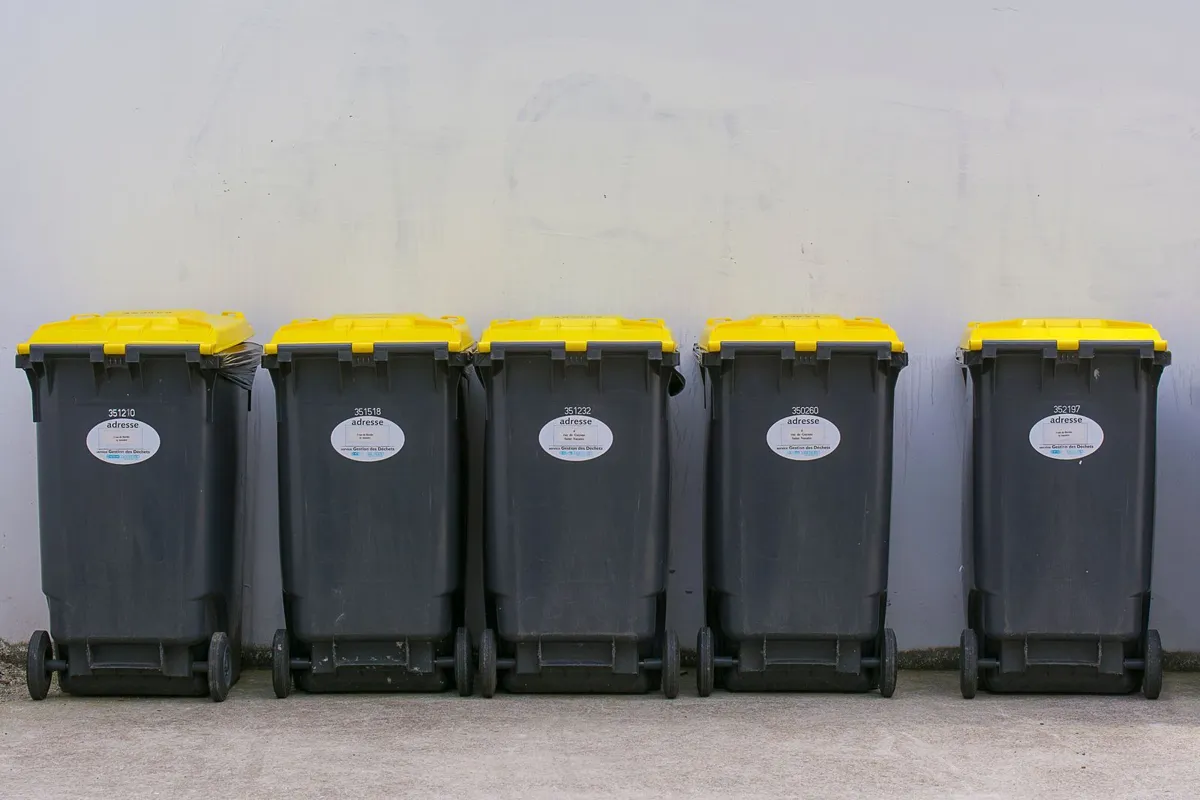
The circular also stipulates that packaging and containers for medical waste to be treated by incineration must not be made from PVC plastic, so PP or HDPE containers are more suitable. For outdoor household waste, mobile waste containers under the European standard EN 840 are divided into 2-wheel types (capacity up to about 400 litres) and 4-wheel types (from about 500 litres up), to match the lifting mechanism of collection trucks. Containers placed outdoors permanently need plastic with a UV additive; PP and HDPE without UV stabilisation fade and gradually turn brittle in the sun.
Ordering containers with wheels to your own requirements: what to prepare?
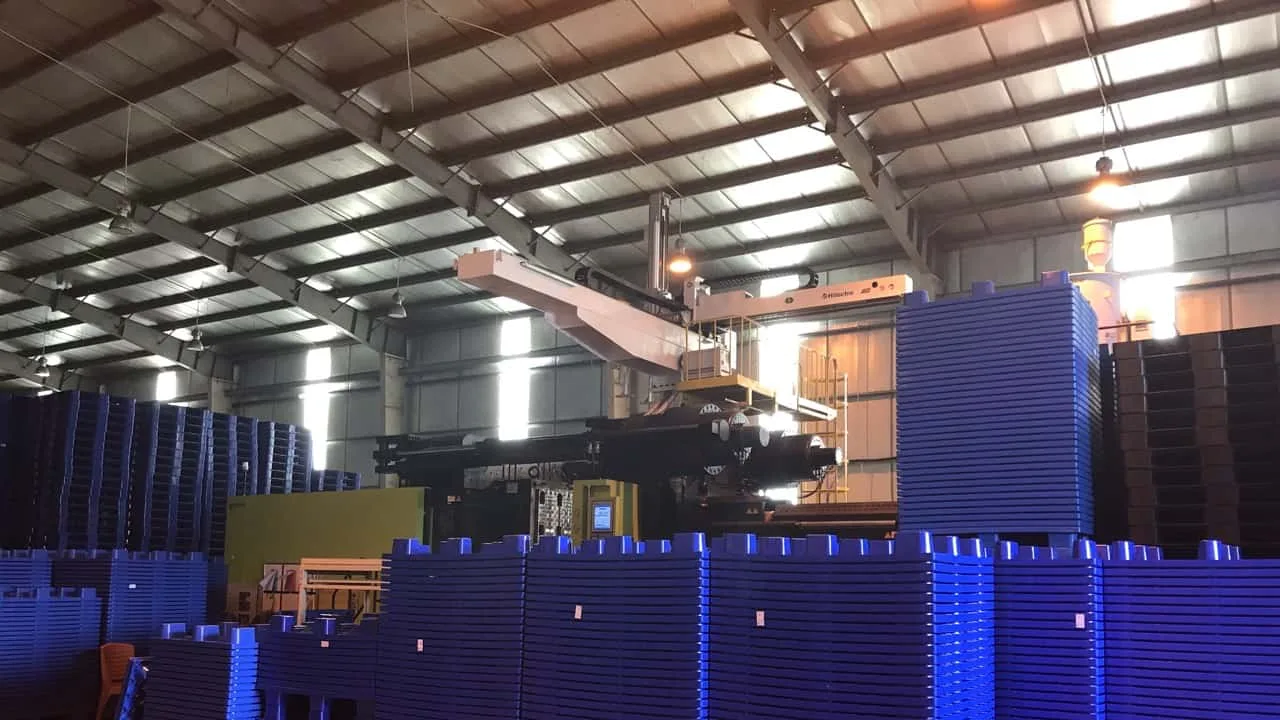
Containers with wheels can be ordered to your requirements for material, wheel type, colour and printed identification. ICD Vietnam injection-moulds plastic containers itself, with a minimum order of 50 containers per model; price: contact for a quote according to quantity and options. For a fast and accurate quote, send the following information in advance:
- The capacity or outside dimensions you need.
- The type of goods held and the weight when each container is full.
- The number of wheels, wheel material and number of locking wheels.
- Where it will be used: indoors, in a cold store or outdoors in the sun.
- Container colour, logo printing content or card holders.
- The number of containers per batch and the total annual requirement.
When you receive a quotation, check three figures: the load per wheel, the published rating of the container body and the weight of the empty container. Without one of the three you cannot calculate the safe load as described above. ICD Vietnam plastic containers carry a 12-month warranty under the warranty policy published on the website.
Frequently asked questions about lidded plastic containers with wheels
How much load can a plastic container with wheels carry?
Calculate it as the rated load of one wheel multiplied by the number of wheels minus 1, including the weight of the empty container, and do not exceed the published rating of the container body. For example, a 4-wheel container with 80 kg per wheel has a safe moving load of about 240 kg, not 320 kg as when divided equally by 4 wheels.
Should I use a plastic container with wheels for food?
Yes, if the container is made from virgin PP or HDPE and has documentation showing it meets QCVN 12-1:2011/BYT on plastic packaging and utensils in direct contact with food. Do not use recycled plastic containers for food.
Does ICD Vietnam have lidded containers with wheels?
ICD Vietnam’s white plastic container specification table lists lidded containers with wheels from 30 to 140 litres; the product pages do not yet state the number of wheels and the wheel load, so confirm this when ordering. For carrying heavy goods, ICD has solid and open-sided 5-wheel crates of 780 x 500 x 430 mm, with an optional lid.
Can a plastic container with wheels be left outdoors?
Yes, if the plastic has a UV additive. PP and HDPE without a UV stabiliser fade and gradually turn brittle in the sun, so a container without UV protection should be kept under a roof.
How do 120-litre and 140-litre containers with wheels differ?
According to ICD Vietnam’s specification table, the 120-litre container measures 745 x 530 x 450 mm outside and the 140-litre 785 x 560 x 470 mm. The 120-litre is more compact and passes narrow doors more easily; the 140-litre suits textiles and light bulky supplies. For heavy goods choose the smaller size so you do not exceed the wheel load.
Can hospitals use plastic containers with wheels for waste?
Yes, if the container is the right colour for the waste type and has a lid that opens and closes conveniently under Circular 20/2021/TT-BYT: yellow for infectious waste, black for hazardous non-infectious waste, green for general waste that is not recycled, white for recyclable waste. Containers for infectious waste must have a tightly closed lid and be animal-proof.
Should I choose plastic wheels or rubber or PU?
Hard plastic wheels roll lightly, resist chemicals and suit concrete floors in warehouses. Rubber and PU wheels are quiet, leave few marks on floors, and are for hospitals, hotels and epoxy floors. Where the container must stay still during loading, choose a model with at least two locking wheels.
Contact and quotation for ICD Vietnam containers with wheels
ICD VIETNAM INDUSTRIAL MANUFACTURING CO., LTD
Hanoi warehouse: 3rd Floor, Thang Long A1 Building, Bau Hamlet, Thien Loc Commune, Hanoi - Hotline 090 345 9186 / 0983 797 186 / 090 5859 186
Southern workshop: 551/212 Le Van Khuong Street, Tan Thoi Hiep Ward, District 12, Ho Chi Minh City - 098 6784 186
Email: sales@icdvietnam.com.vn
Tell us the goods held, the weight per container and where it will be used, and ICD Vietnam will advise a suitable container size and wheel type. Price: contact for a quote. Minimum order 50 containers per model.
References
- Ministry of Health, Circular 20/2021/TT-BYT on medical waste management within healthcare facility grounds (Article 4 on packaging and containers; Article 6 on classification).
- TENTE, Calculating the dynamic load capacity: load per wheel formula = (equipment weight + load) / (number of wheels - 1).
- Institute of Caster and Wheel Manufacturers (ICWM, part of MHI), ANSI/ICWM standards for industrial casters.
- EN 840, Mobile waste and recycling containers: 2-wheel and 4-wheel mobile waste containers.
- Ministry of Health, QCVN 12-1:2011/BYT on the hygiene and safety of synthetic plastic packaging and utensils in direct contact with food.
- ICD Vietnam, white plastic container specification table (lidded containers with wheels, 30-140 litres) and lidded container product page No.853, 5-wheel solid and open-sided crates, checked on 17/10/2026.