

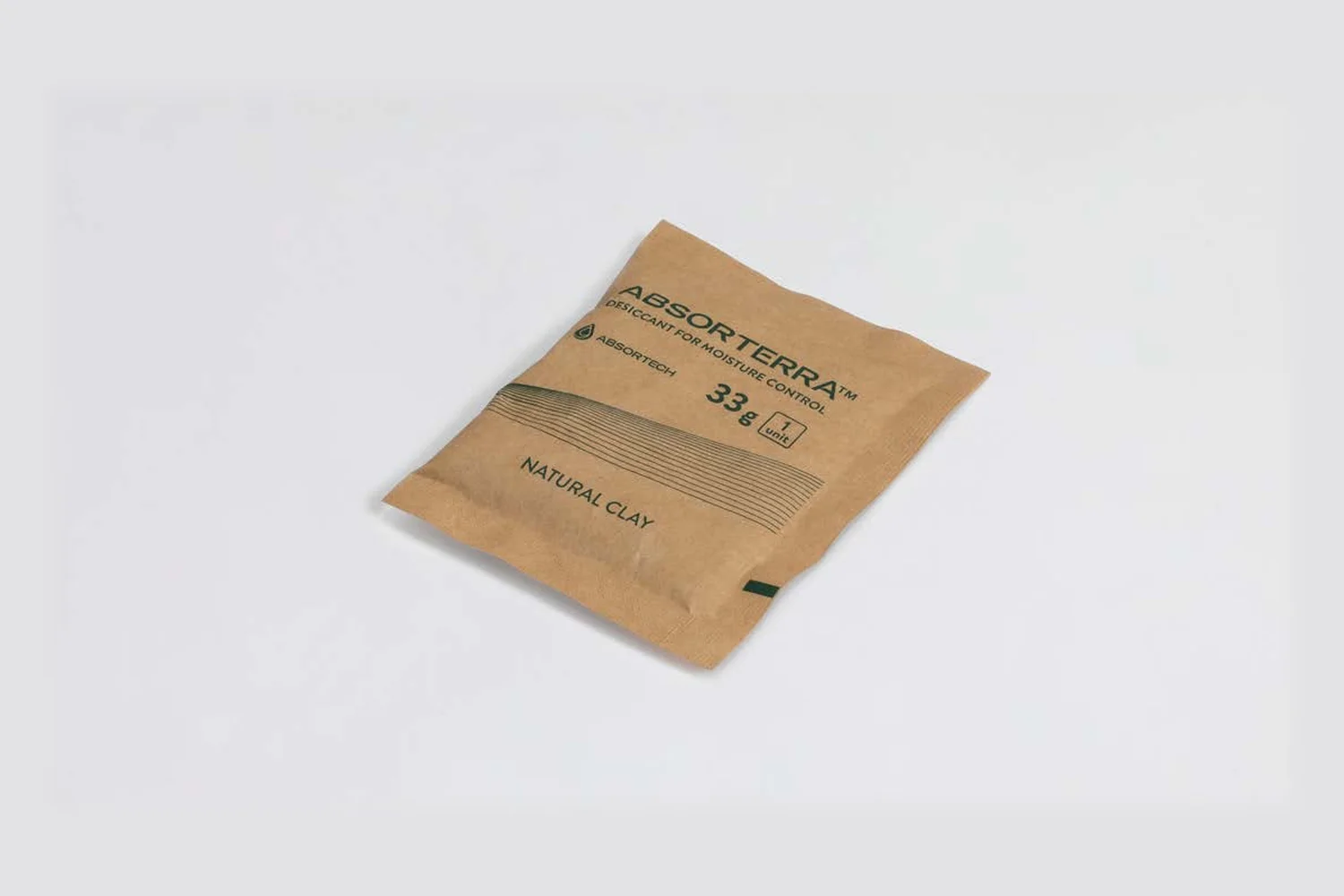
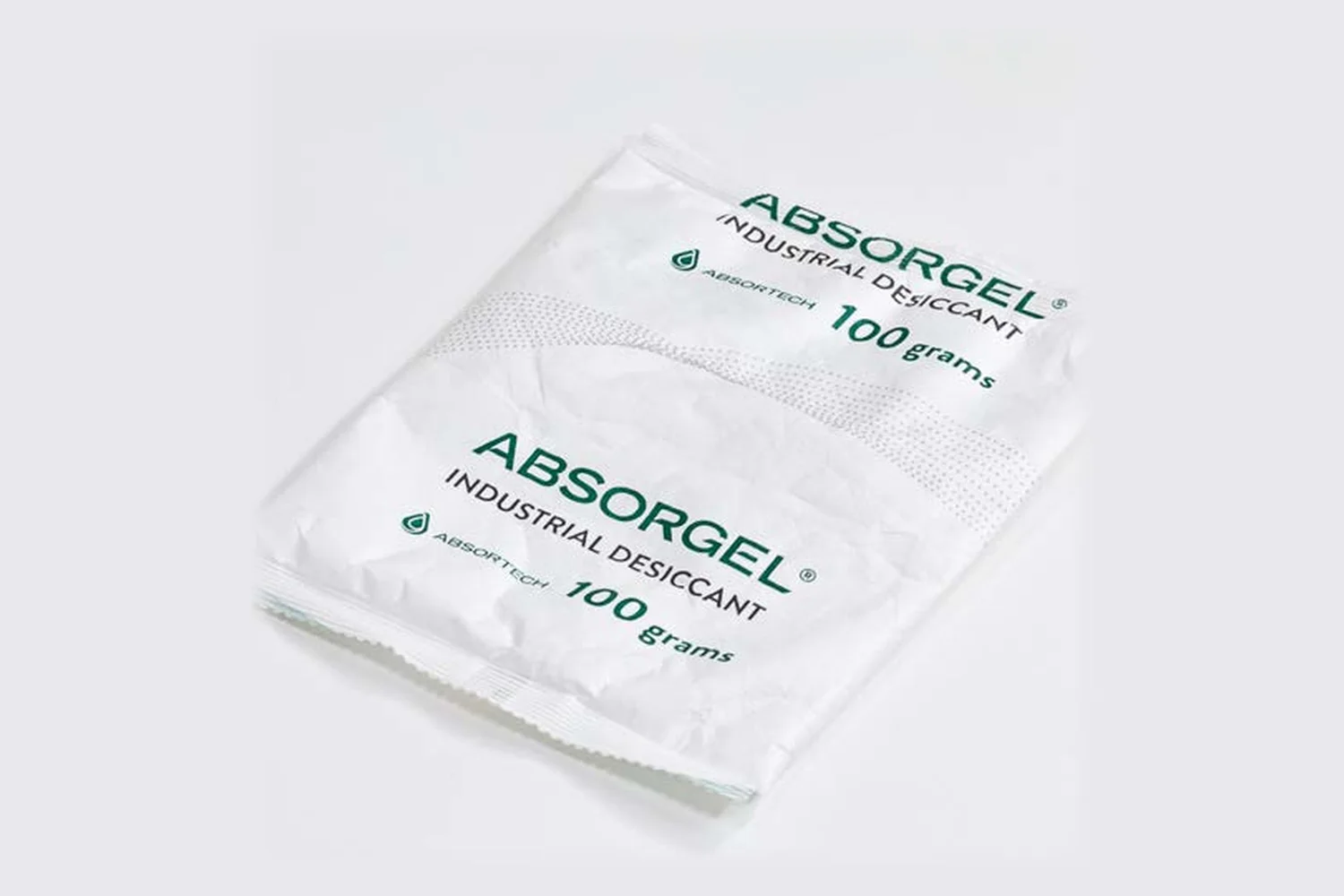
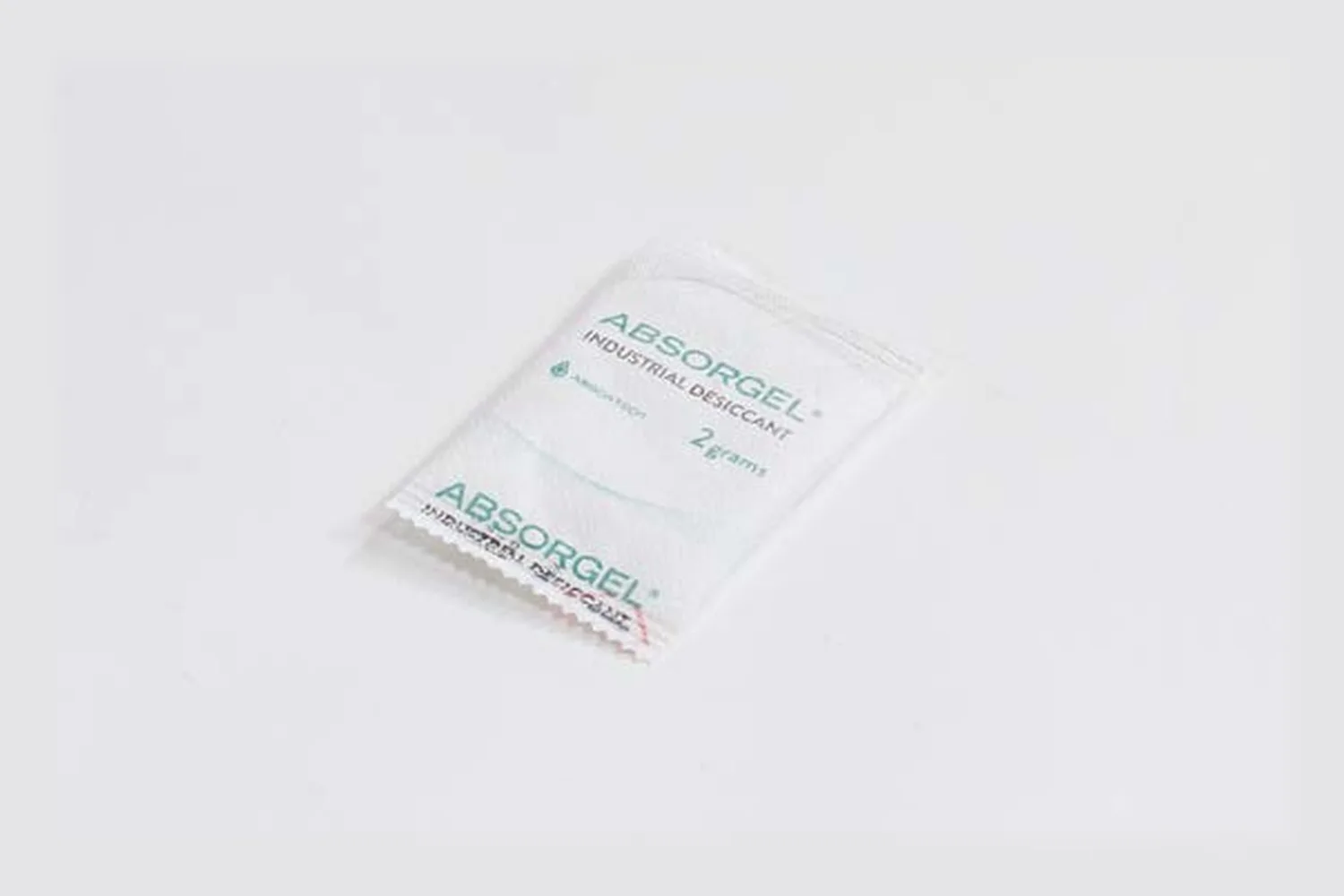
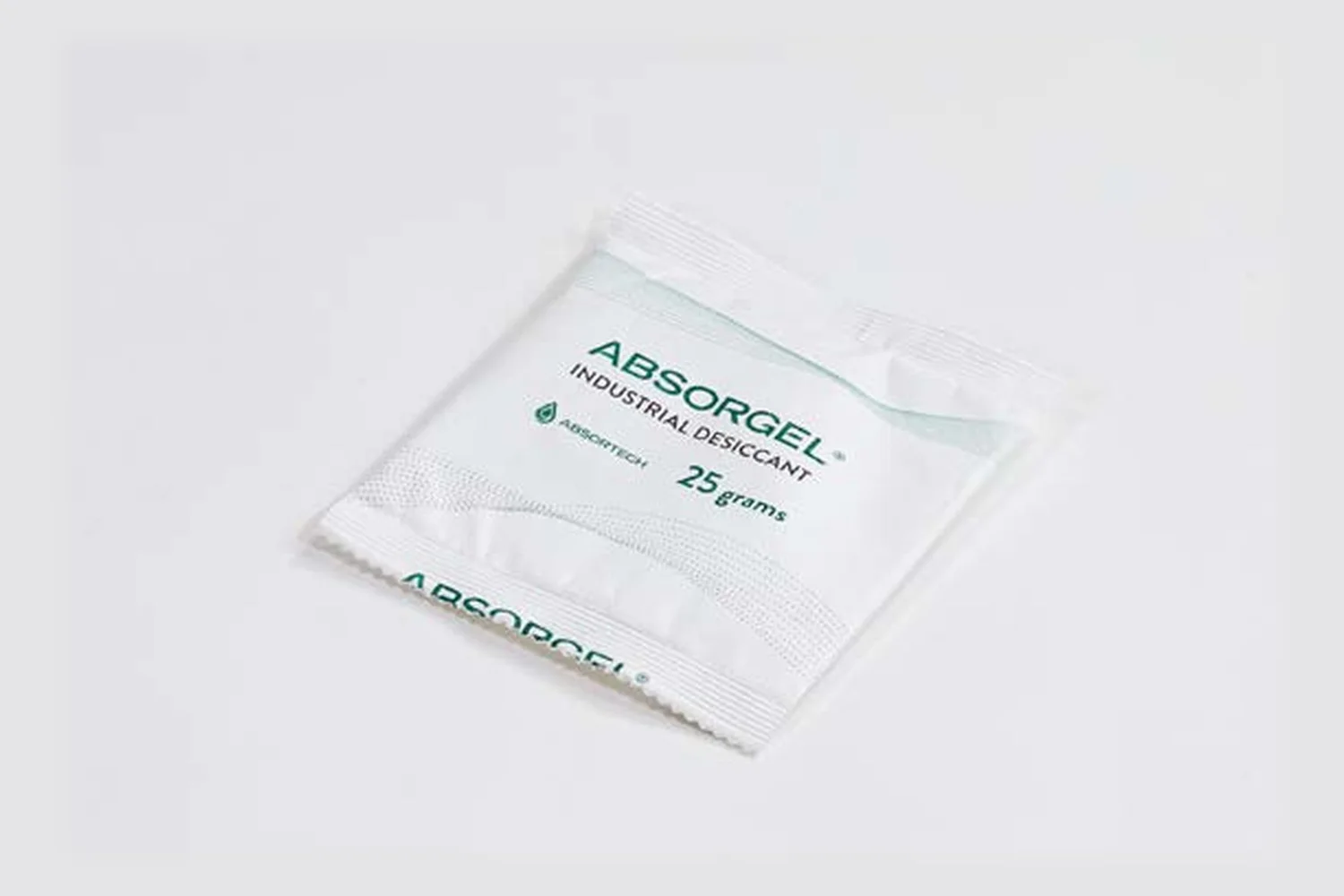
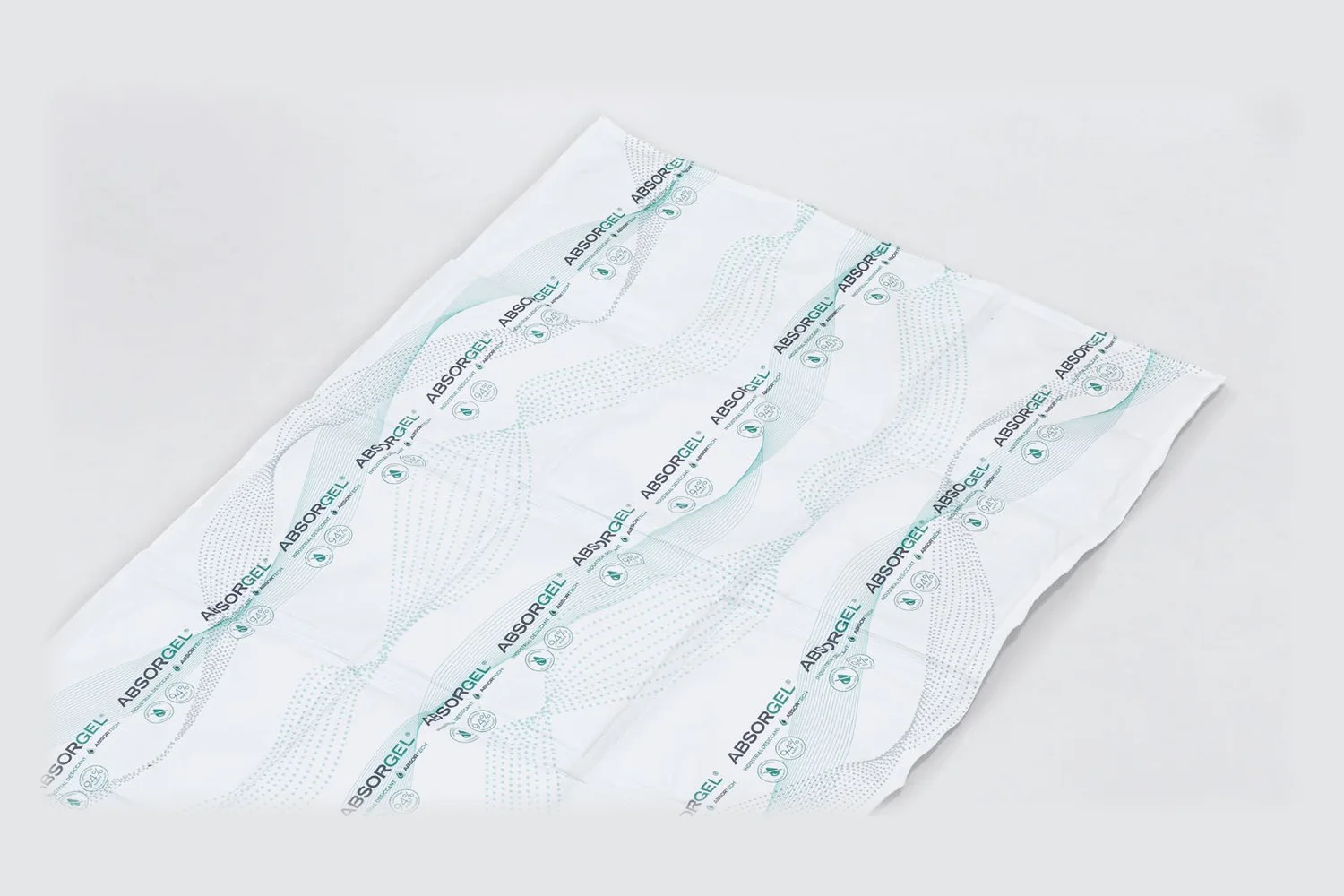
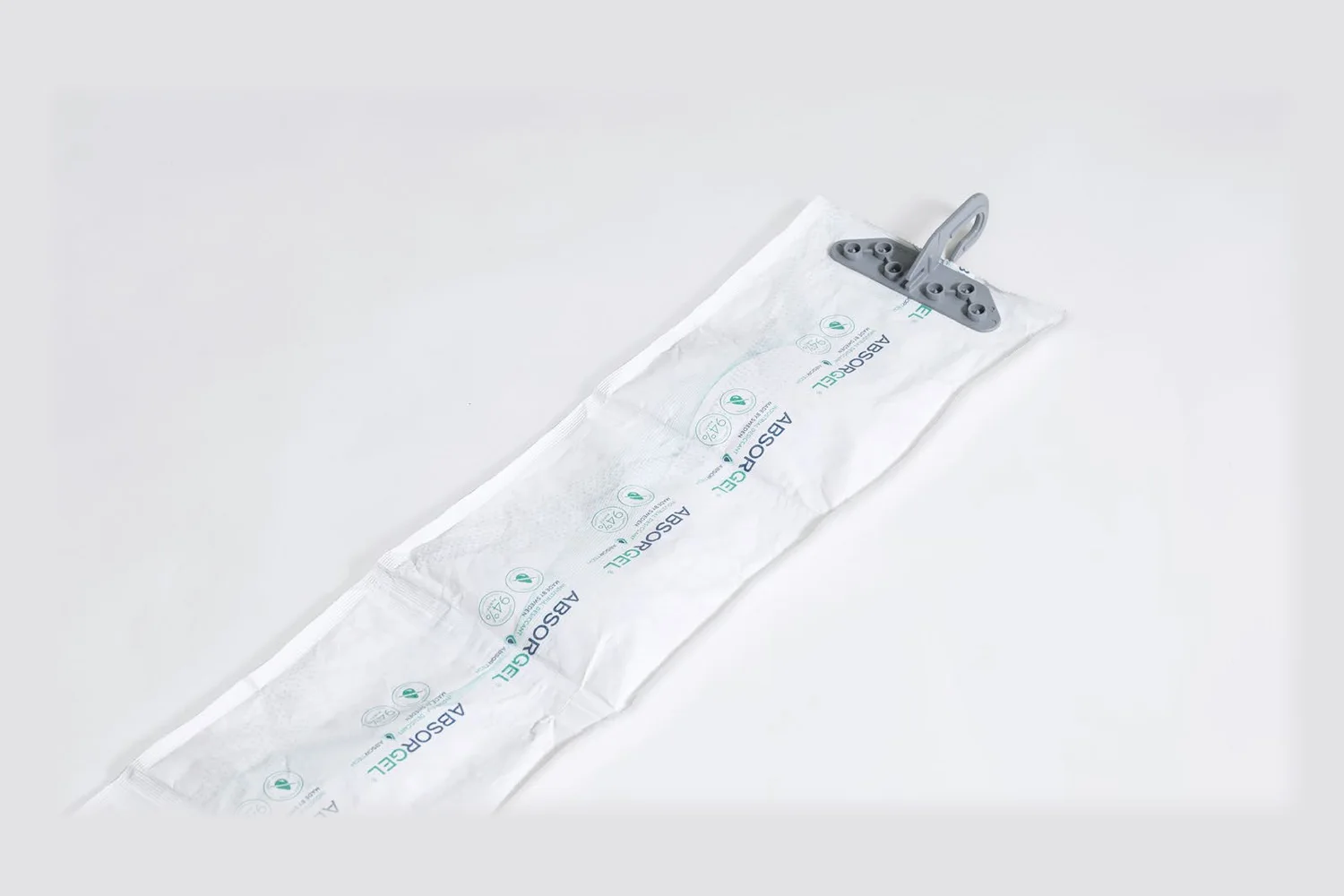


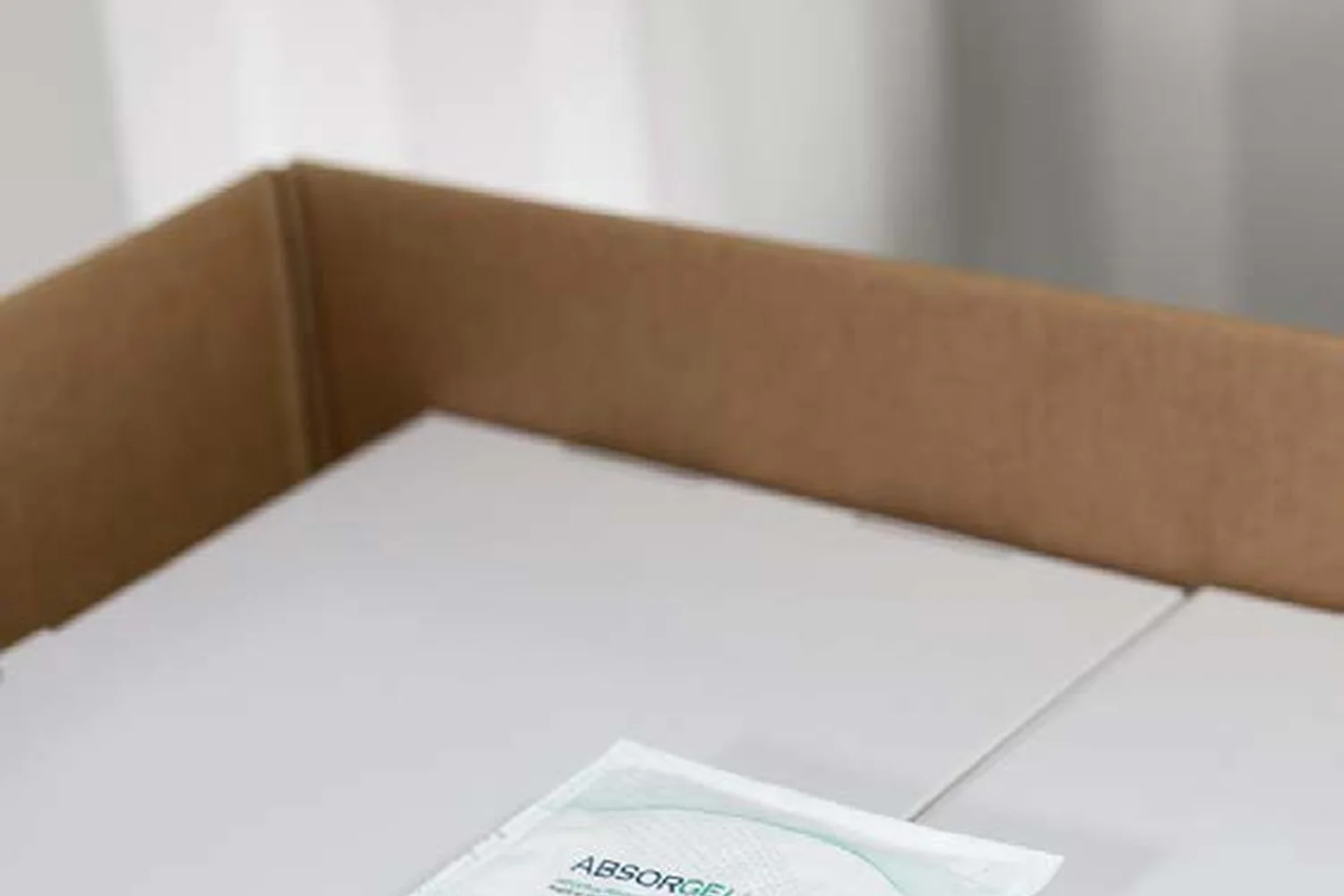
ICD’s desiccant packs are Absortech packets, bags and blankets for export cargo and containers, protecting cartoned and containerised goods from mould, rust and container rain. The range has 7 lines in 23 sizes: 2-528 g packets for use inside cartons, 0.5 kg and 1.0 kg bags that hang on container walls, and a 2.0 kg blanket laid on top of the cargo. It is one branch of ICD’s packaging supplies for export cargo.
1. Desiccant packs ICD supplies
The AbsorGel lines use over 94% calcium chloride mixed with modified starch: the salt draws water vapour from the air and turns into a gel, giving a high capacity and limiting leaks. The AbsorTerra line uses natural montmorillonite clay, which absorbs less but comes in a kraft paper casing with no plastic.
| Product line | Size | Absorption (by weight) | Use |
|---|---|---|---|
| Hanging-C 1.0 kg bag | 180 × 1,620 × 25 mm | Over 300% | Hangs on the container wall |
| Hanging-C 0.5 kg bag | 180 × 840 × 25 mm | Over 300% | Hangs on the wall, covers more points |
| Blanket-C 2.0 kg | 530 × 1,090 × 10 mm | Over 300% | Laid flat on top of the cargo |
| Pouch-X packet | 100 g, 125 g | Over 300% | Large cartons and crates |
| Pouch-S packet | 25, 50, 100, 125 g | Over 250% | Large cartons, wooden crates |
| Pouch-D packet | 2, 5, 10, 25, 50 g | 200-250% | Small cartons, packet against the goods |
| AbsorTerra clay packet | 9 sizes, 2-528 g | 20-30% | Cartons and boxes needing plastic-free packaging |
By the manufacturer’s figures, a 1.0 kg calcium chloride bag holds more than 3 kg of water and a 33 g clay packet about 7-10 g. An unopened box kept dry (no more than 60% humidity, 5-25 °C) lasts 3 years for AbsorGel and 1 year for AbsorTerra.
2. In-box desiccant packets: choosing the size in grams
In cartons, wooden crates or sealed plastic boxes, the packet goes in with the goods just before the carton is closed. The Pouch-D, 2-50 g, has two casing layers of non-woven fabric and HDPE and suits packets lying against garments, footwear or components. The single-layer HDPE Pouch-S, 25-125 g, is for large cartons and crates; the Pouch-X, 100-125 g, replaces several small packets with one.
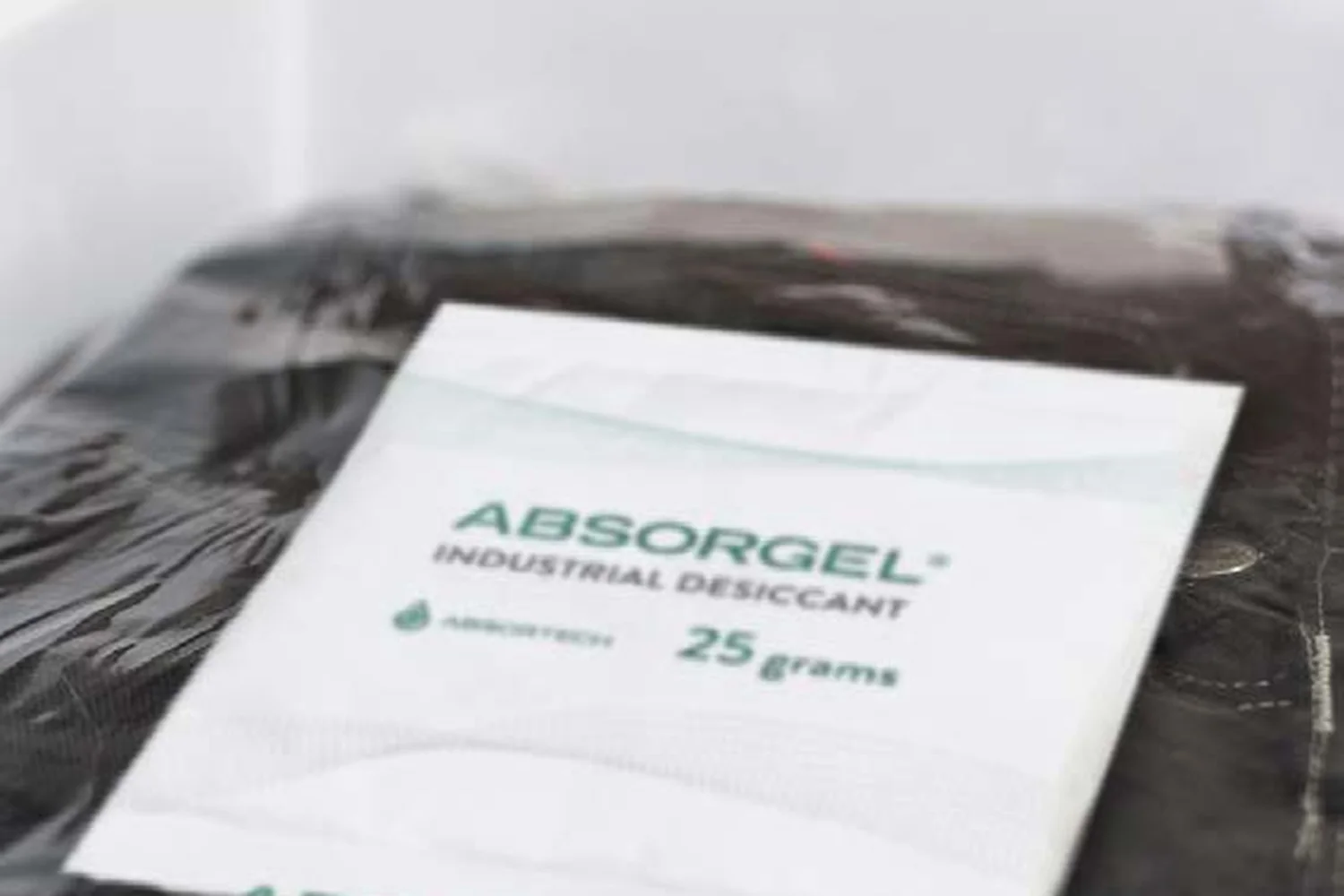
In-box packets have no fixed dosing table; ICD calculates the number from the carton size, the goods and the route. Open the sealed bag only right before placing them. Placement and replacement are covered in how to use desiccant packets correctly: dosage and placement.
3. Container desiccant bags and blankets
Cargo that spends weeks at sea often meets container rain: moisture condenses on the walls and roof as the temperature swings between day and night, then drips onto the goods. The humidity each type of goods tolerates is set out in safe humidity levels for goods in warehouses and containers.
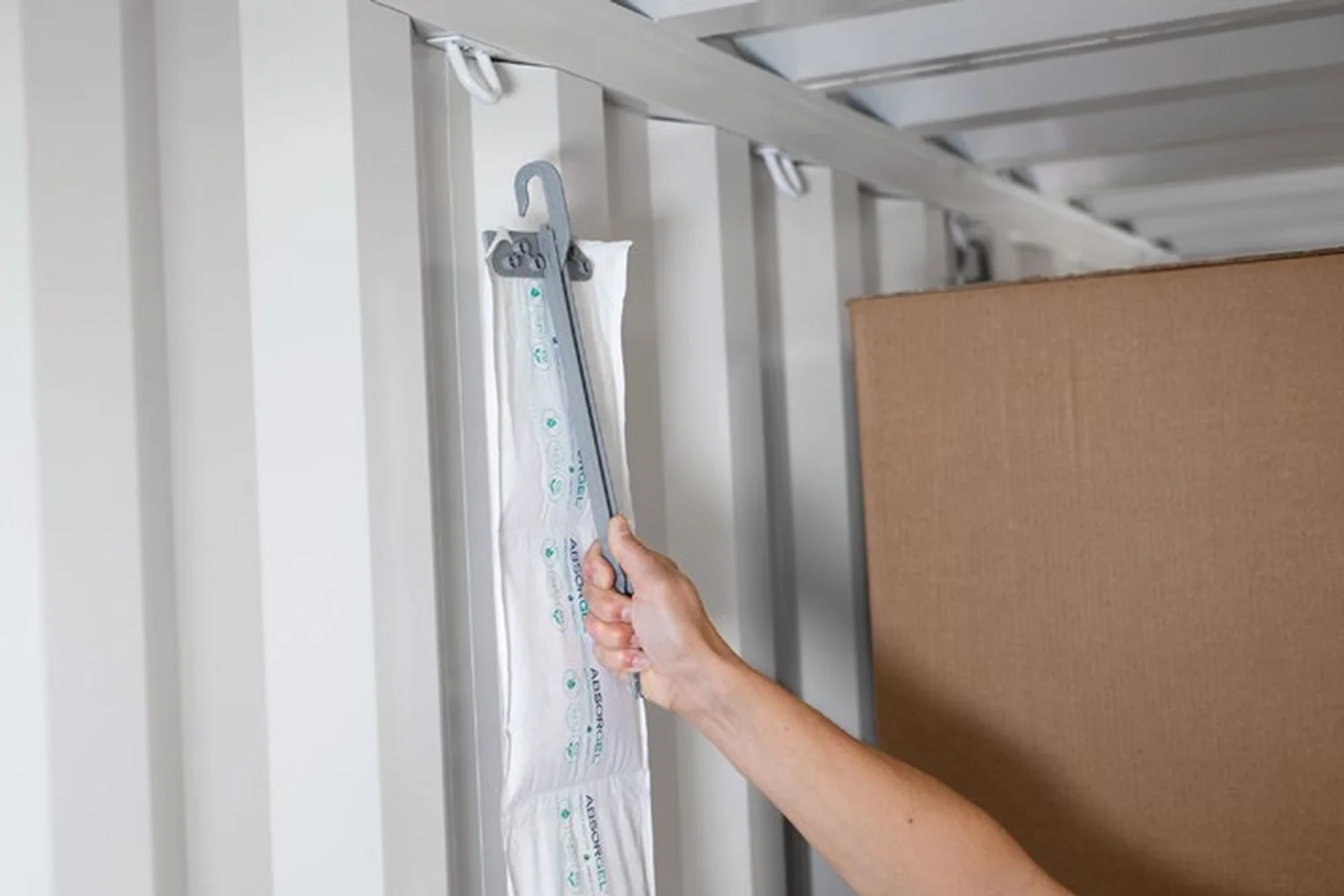
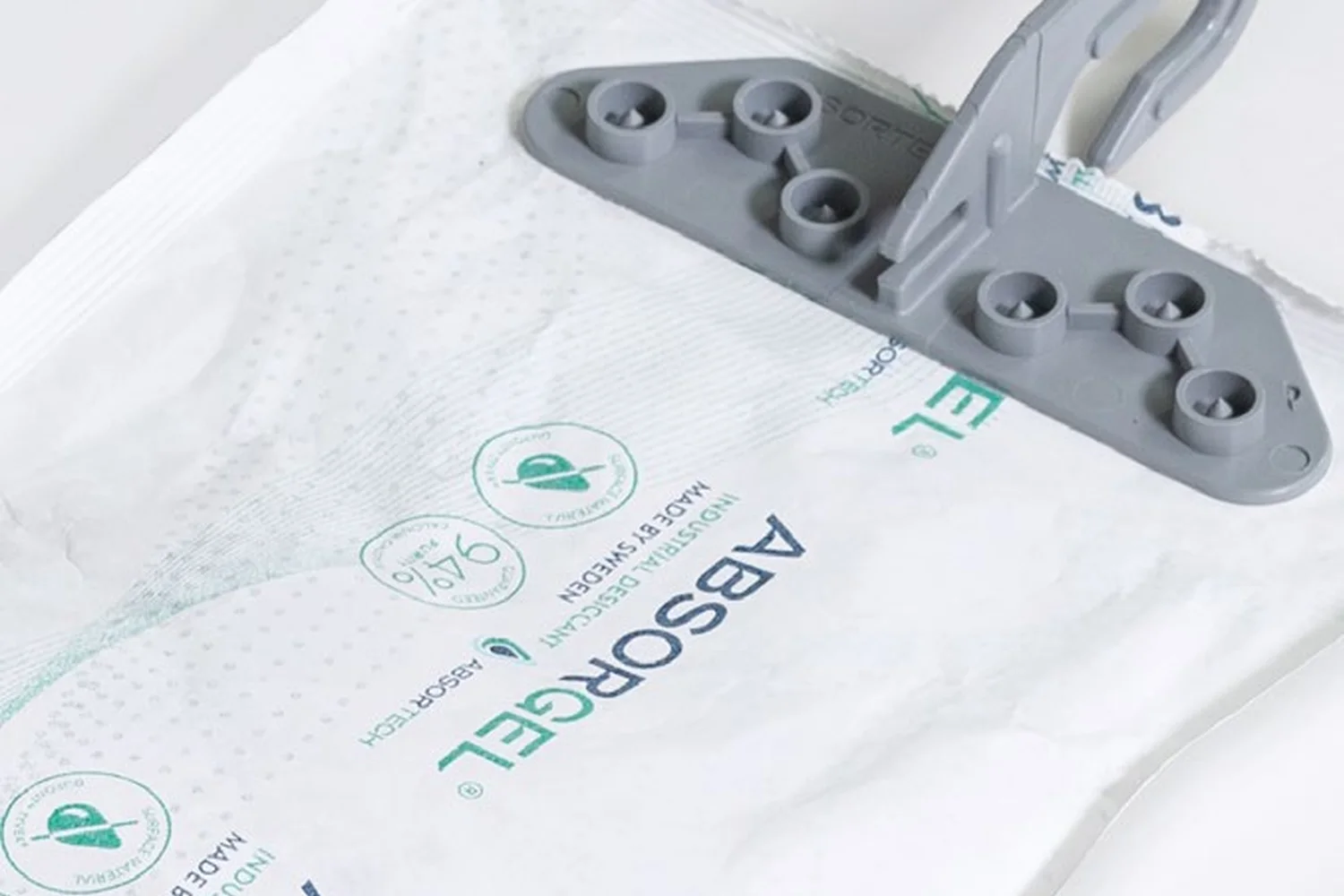
The Hanging-C bag comes with a pre-attached AbsorHook that clips into the corrugation of the container wall and needs only a 25 mm gap from the cargo; the optional AbsorStick pole reaches the lashing rings high up. The 0.5 kg bag spreads the capacity over more points, which suits 20ft containers or cargo stacked against the wall.
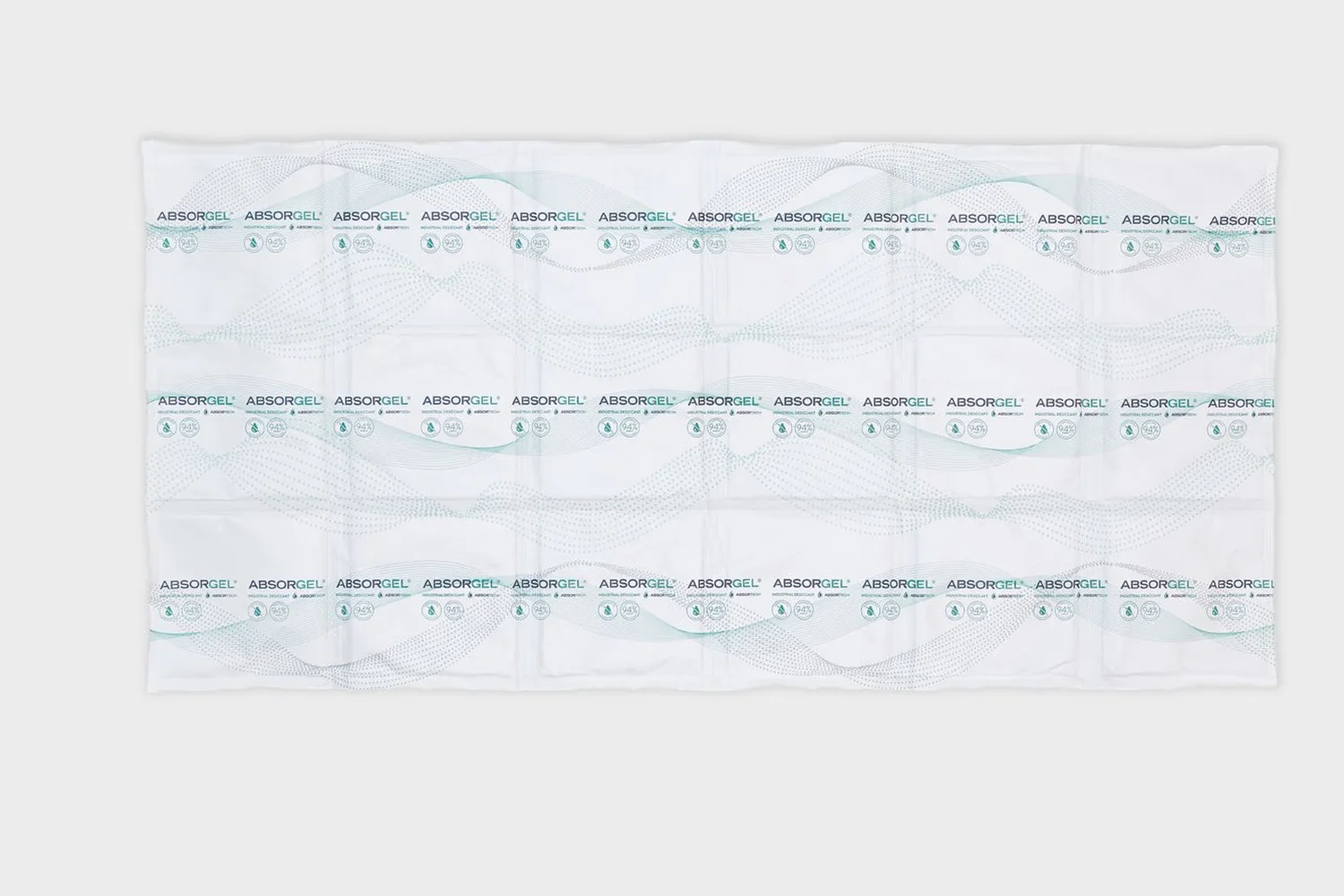
For cargo stacked to the roof, reefer containers or trailers with no hanging rings, the manufacturer points to the 2.0 kg Blanket-C, laid flat on top of the pallets and held by 4 adhesive patches. Gaps between packages are best filled with air dunnage bags that keep the packages from shifting.
Palletised cargo should combine desiccant bags with PE stretch film wrapped tightly around each pallet, rather than rely on the bags on the wall alone.
4. How many desiccant bags for a 20ft or 40ft container
The manufacturer’s reference quantities for a short route of about 30 days and a long route of about 60 days:
| Container, route, cargo | Hanging-C 1.0 kg | Hanging-C 0.5 kg | Blanket-C 2.0 kg |
|---|---|---|---|
| 20ft, short route, dry cargo | 5 bags | 10 bags | 2 blankets |
| 20ft, short route humid cargo or long route dry cargo | 7 bags | 14 bags | 3 blankets |
| 20ft, long route, humid cargo | 11 bags | 22 bags | 5 blankets |
| 40ft, short route, dry cargo | 9 bags | 18 bags | 4 blankets |
| 40ft, short route humid cargo or long route dry cargo | 11 bags | 22 bags | 5 blankets |
| 40ft, long route, humid cargo | 14 bags | 28 bags | 7 blankets |
In each case the three options put roughly the same weight of desiccant into the container, so choose by how they install. The real quantity also depends on the route climate and the cargo; ICD recalculates for each shipment.
5. Calcium chloride or clay: choose by route and packaging requirement
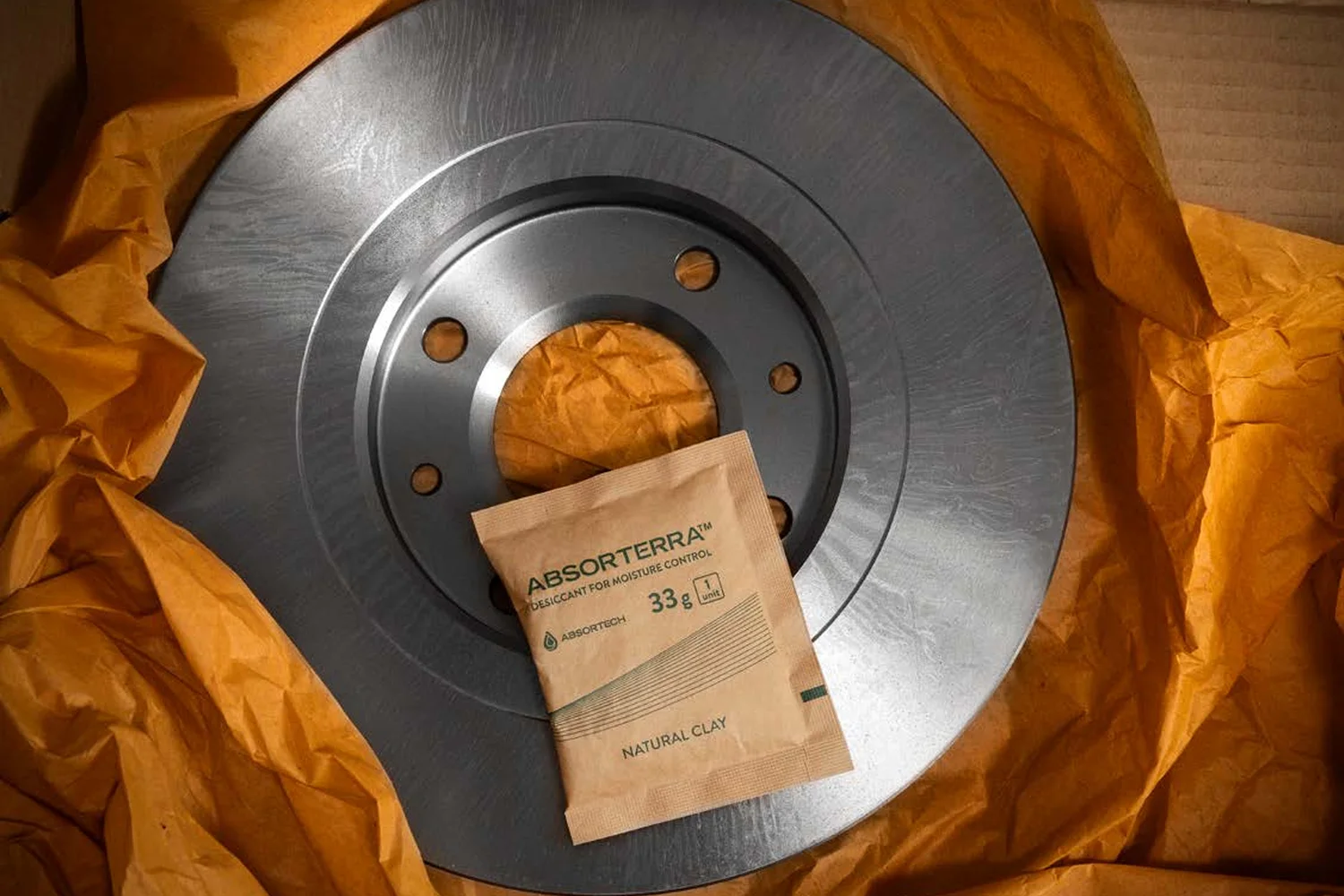
AbsorTerra comes in 9 sizes, 2-528 g, counted in 33 g units. Clay works best at 30-60% relative humidity and suits metal parts, garments and orders that require plastic-free packaging. Long sea routes through hot, humid regions call for calcium chloride: by the two lines’ specifications, AbsorGel absorbs roughly ten times as much as clay. More on the main desiccant types in types of desiccant and which one suits each job.
6. Related articles on desiccant packs
- What a desiccant is
- Where to buy desiccant packets and prices
- Desiccant packet hot, wet or leaking
- HS code for desiccants and import procedure in Vietnam
- What VCI anti-corrosion is
7. Frequently asked questions about desiccant packs
1. Are desiccant packs toxic?
They are not for eating. The calcium chloride in AbsorGel is classified under the GHS as causing serious eye irritation (H319): wear gloves when installing and keep packs away from children. Rinse eyes with plenty of clean water; if a pack is swallowed, seek medical help. More in what happens if you swallow a desiccant packet.
2. Can desiccant packs be used for food?
The manufacturer states AbsorGel should not be used where it touches food directly. Food packaging needs packets with food-contact documentation, confirmed in writing by the supplier.
3. Is there a 1 g desiccant pack?
No. The smallest size is 2 g (Pouch-D and AbsorTerra); 5 g comes in the Pouch-D and the nearest clay size is 6 g.
4. What should I do with a torn desiccant pack?
Do not reuse it. Wearing gloves, collect the powder or gel into a sealed bag, keep it off the goods and eyes, and dispose of it under local waste rules rather than down a drain.
5. Can calcium chloride desiccant be reactivated?
No. Calcium chloride that has absorbed its full load cannot be restored in ordinary conditions, and the saturation of a used clay packet cannot be controlled, so each pack serves one shipment.
6. What temperature range do desiccant packs work in?
By the manufacturer’s specification, AbsorGel and AbsorTerra work from -20 °C to 70 °C.
7. Clay desiccant vs silica gel: which should I choose?
ICD stocks no silica gel, so it has no datasheet to compare. AbsorTerra clay is natural montmorillonite in a plastic-free kraft casing, absorbing 20-30% of its weight; compare it against the silica gel supplier’s own specification for the humidity of your shipment.
8. Contact ICD for a desiccant quote
ICD Vietnam Industrial Production Co., Ltd
Northern Vietnam: Floor 3, Thang Long A1 Building, Thon Bau, Thien Loc, Hanoi - 0983 797 186 / 090 345 9186 / 090 5859 186
Southern Vietnam: 551/212 Le Van Khuong, Tan Thoi Hiep, District 12, Ho Chi Minh City - 098 6784 186
Email: sales@icdvietnam.com.vn
Zalo: Chat on Zalo
Quotes by quantity - Dosing calculated per shipment - Packet size advice per carton


