
Table of Contents
- Common desiccant packet sizes
- What the price depends on
- Comparing prices properly: calculate by water absorbed
- Desiccant cost for one container
- Where to buy desiccant packets
- What to prepare before asking for a price
- Frequently asked questions
- How many desiccant bags does a 20 ft container need?
- How many desiccant bags does a 40 ft container need?
- How should desiccant packets be compared on price?
- What sizes do desiccant packets come in?
- How much does container desiccant cost?
- Where can I buy desiccant in bulk?
- Why not compare prices by the grams printed on the packet?
- Contact us for ICD Vietnam desiccant advice
- References
- Related articles
Reviewed and updated by ICD - Week 47/2026
Desiccant packets are sold in sizes from a few grams to 1 kg per packet, so prices cannot be compared packet by packet: compare by the amount of water the packet absorbs at the humidity you actually face. The final price depends on the type of desiccant, the mass per packet, the wrapping material, the documents supplied, the order quantity and shipping; for industrial container desiccant, the price is by packet and type, so a quote based on quantity is needed.
This article does not list ICD Vietnam selling prices (prices are by quotation; contact us for a quote). Instead it gives you what lets you compare properly: sizes by place of use, how to calculate cost per unit of water absorbed, how many bags a container needs according to the manufacturer’s dosage table, and a list of information to prepare before asking for a price.
Common desiccant packet sizes
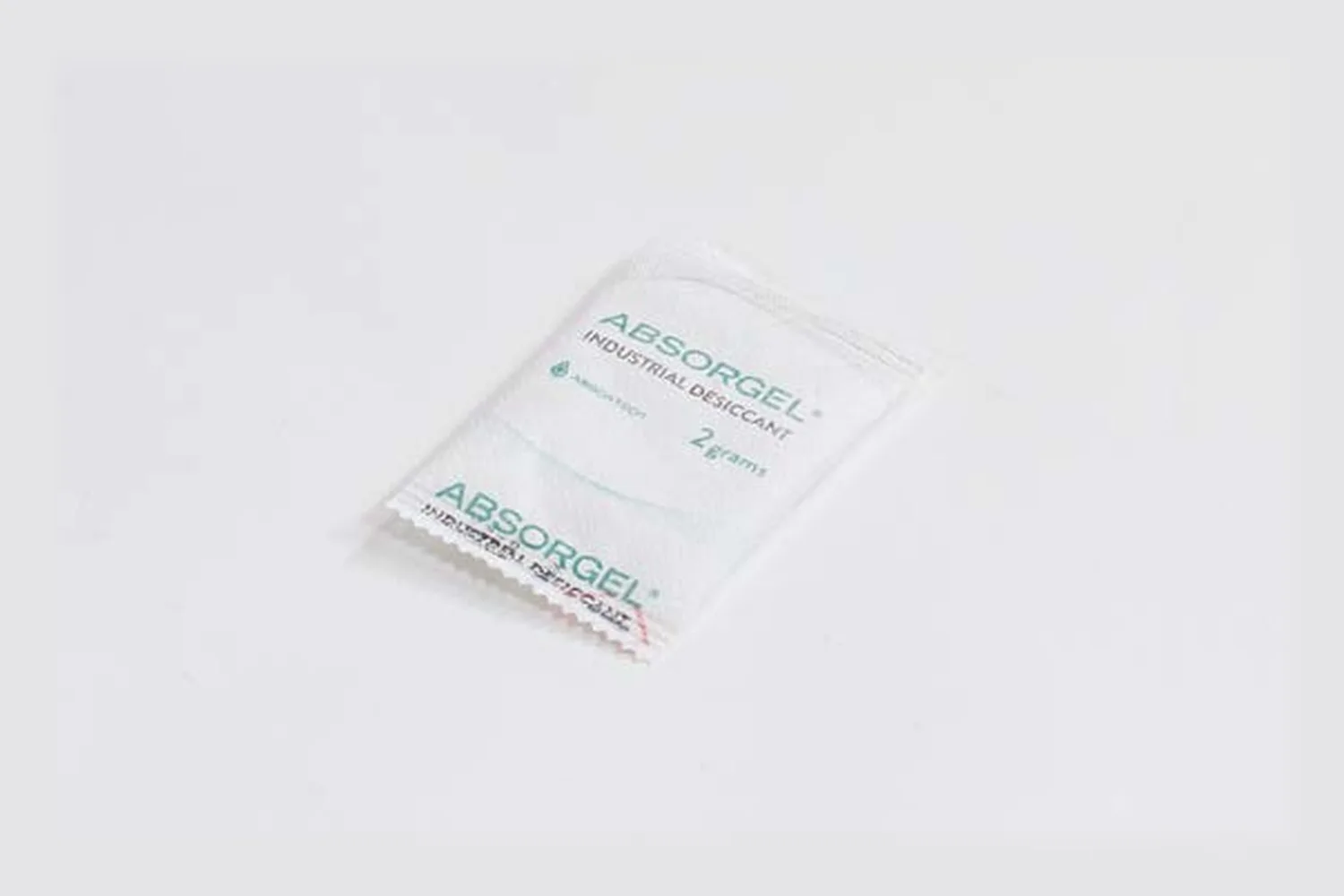
Small packets of a few grams to a few tens of grams are used for cake boxes, component boxes, handicrafts, cameras, pharmaceuticals and small packs of food, and are usually silica gel. Packets of a few hundred grams suit wardrobes, shoe cabinets and safes. Cargo in containers and export crates uses hanging calcium chloride bags of 0.5 to 1 kg, or sheets; large bags of loose beads are for transformer breathers, air dryers or repacking. These are suggestions based on typical use; each group has its own article, such as those on food, wardrobes, cars and industrial beads.
| Absortech product lines at ICD Vietnam | Desiccant mass | Form and use |
|---|---|---|
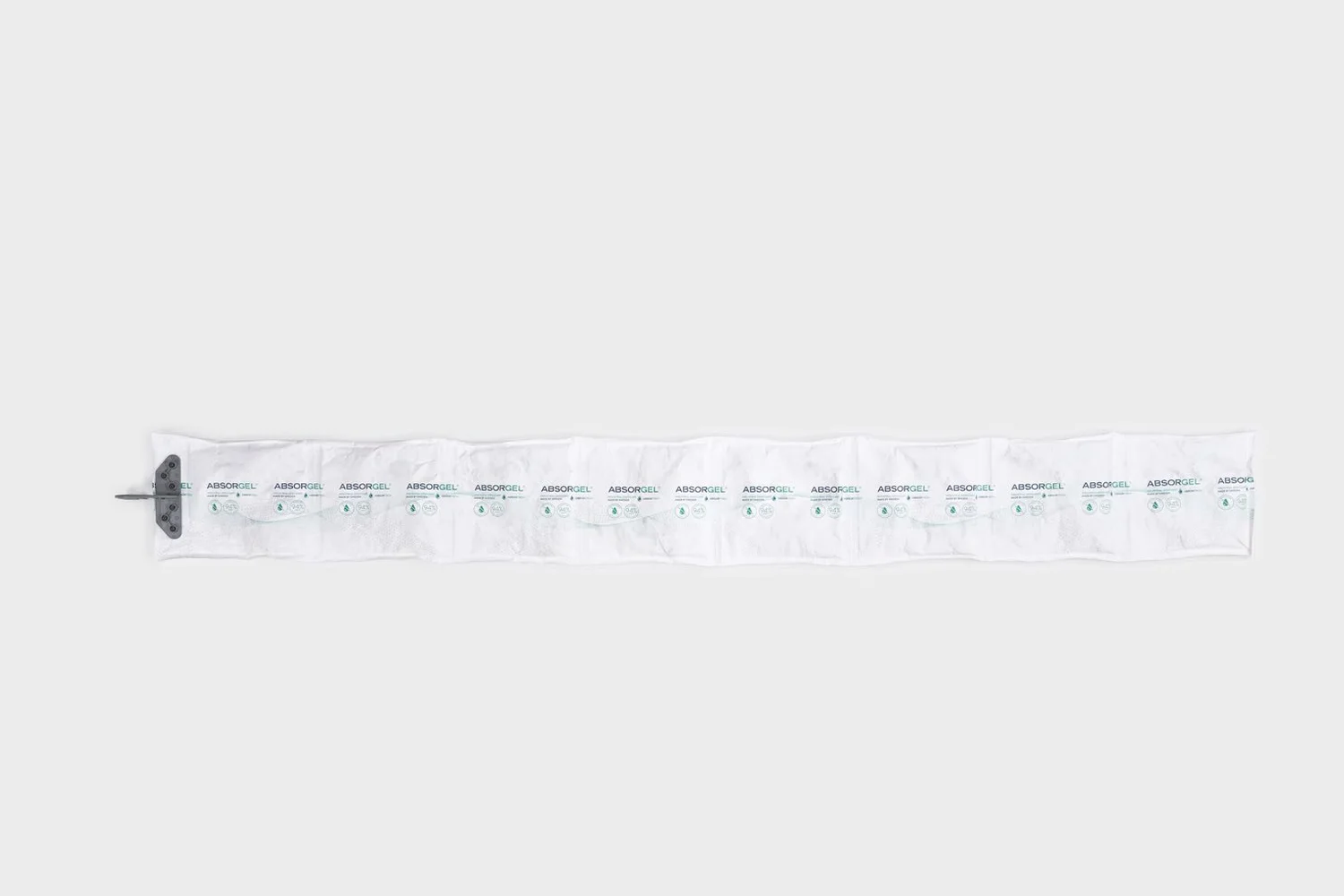
| AbsorGel Hanging-C | 0.5 kg and 1.0 kg per bag | Hanging calcium chloride bag, hung along the container wall |
| AbsorGel Blanket-C | 2.0 kg per sheet | Calcium chloride sheet, laid on top of the cargo or pallet in the container |
| AbsorGel Pouch-S, Pouch-X | 25, 50, 100, 125 g per packet | Calcium chloride packet for cartons and sealed boxes |
| AbsorGel Pouch-D (two layers) | 2 to 50 g per packet | Small two-layer packet for boxes and small sealed bags |
| AbsorTerra (clay) | 2 g to 528 g; 33 g is 1 unit | Clay packet for cargo crates and storage boxes |
Capacity figures for each line follow the documents of the manufacturer Absortech; details of each product are in the ICD desiccant packet category (listed at the end of this article).
What the price depends on
The first factor is the type of desiccant: silica gel, clay, calcium chloride and molecular sieve differ in price and absorption capacity, and the capacity table by humidity is in the article on types of desiccant. Look at the real absorption capacity rather than the grams printed on the packet: at the same 100 g, a calcium chloride packet absorbs many times more than a clay packet at high humidity, so compare price by the amount of water absorbed and not by price per packet.
The wrapping material (paper, non-woven fabric, mesh bag) affects dust, durability and suitability for food contact. Documents supplied, such as a test report or a declaration of compliance for exports or food, add cost but reduce the risk of claims. Finally there is the order quantity, since ordering by the carton or pallet usually gets a better price than buying singly, and shipping, because packets are light but bulky, and calcium chloride packets in particular are charged by volume.
Comparing prices properly: calculate by water absorbed
The price per kg of beads cannot be compared with the price per bag of calcium chloride because the absorption capacities differ many times over. A sensible comparison is the cost per kg of water absorbed at the humidity you actually face, usually 80 to 90% relative humidity inside a sea container: cost per kg of water = unit price per kg of desiccant divided by absorption capacity (as a percentage of its mass).
| Type of desiccant | Absorption capacity normally used for calculation | Source of the figure |
|---|---|---|
| Silica gel | Over 12% at 20% RH, over 27% at 50% RH, over 36% at 80% RH (25 °C) | Farnell silica gel datasheet |
| Clay | About 20 to 30% | Tested to DIN 55473 |
| Calcium chloride | Over 250% in a 30 °C, 90% RH, 30-day test; the manufacturer advises calculating the dose at about 150% | Absortech |
A hypothetical example to illustrate the calculation, not the price of ICD or of anyone else: if two types of desiccant are both quoted at VND 100,000 per kg, silica gel absorbing 36% at 80% RH costs about VND 277,800 per kg of water, while calcium chloride dosed at 150% costs about VND 66,700 per kg of water, which is about four times cheaper even though the price per kg of desiccant is the same. At low humidity, below 40% RH for example, the advantage of calcium chloride is no longer clear and silica gel or molecular sieve may suit better; so always compare at the real humidity where you will use it.
Desiccant cost for one container
For exports, calculate cost per container (or per pallet) rather than per packet. The manufacturer’s dosage table for 1.0 kg hanging bags is as follows; details on how to hang them, spacing and adjustments are in the article on using desiccant packets correctly.
| Container | Number of 1.0 kg bags (short dry / short humid / long dry / long humid) | How to work out the cost |
|---|---|---|
| 20 ft | 5 / 7 / 7 / 11 bags | Number of bags multiplied by the unit price per bag in the quote |
| 40 ft | 9 / 11 / 11 / 14 bags | Number of bags multiplied by the unit price per bag in the quote |
The final number of bags needs adjusting for the type of cargo, packaging and the actual journey (cargo that absorbs moisture easily, a long journey or a humid route belongs in the right-hand columns of the table). Compared with the value of the shipment, the desiccant cost is usually a very small part, while the consequences of mould, rust or moisture can be a rejected consignment or a discount on the whole lot. So budget for desiccant as a precaution, not as a cost to cut. Prices exclude tax and shipping; large orders usually receive a discount.
Where to buy desiccant packets
Small packets for the home, wardrobes and shoes can be bought at household goods shops or on e-commerce sites; choose ones with a clear indicator and avoid packets with unclear contents. Packets for food and pharmaceuticals need a supplier with food-grade documents, and you should ask for a food contact declaration. Packets for containers and exports are best bought from a specialist packaging or industrial desiccant supplier, together with a dosage table, a chemical safety data sheet (SDS) and a test certificate. Loose beads for industrial equipment are bought from chemical and industrial supply companies, and cobalt-free indicator types are preferable.
ICD Vietnam supplies industrial desiccant from the Absortech range (AbsorGel calcium chloride packets and hanging bags, AbsorTerra clay) for exports and warehouses, with a warehouse in Hanoi and a southern workshop, delivering nationwide. See the ICD desiccant packet category and contact us for a quote based on quantity. For customs procedures and HS codes, see the article on HS code for desiccant.
What to prepare before asking for a price
To get a quick and accurate quote, have this information ready: what it is for (container, food, wardrobe, equipment), the type of cargo, packaging and route if exporting, quantity and order frequency, document requirements such as an SDS, a test certificate or a food contact declaration, and the delivery address and deadline.
Frequently asked questions
How many desiccant bags does a 20 ft container need?
According to the Absortech dosage table for 1.0 kg hanging bags: 5 to 11 bags for a 20 ft container, depending on whether the journey is short or long and the cargo dry or humid. The cost is the number of bags multiplied by the unit price in the quote.
How many desiccant bags does a 40 ft container need?
9 to 14 bags of 1.0 kg according to the same dosage table. Prices exclude tax and shipping, and large orders usually receive a discount.
How should desiccant packets be compared on price?
By cost per kg of water absorbed at the real humidity (80 to 90% RH in a container): the unit price per kg of desiccant divided by the absorption capacity as a percentage of its mass.
What sizes do desiccant packets come in?
Small packets of a few grams to a few tens of grams, packets of a few hundred grams for cabinets, and hanging calcium chloride bags of 0.5 to 1 kg or 2 kg sheets for containers.
How much does container desiccant cost?
It is charged by packet and type (calcium chloride, clay) and depends on quantity. Calculate the cost per container and ask for a quote.
Where can I buy desiccant in bulk?
From a packaging and industrial desiccant supplier, with test documents, an SDS and a dosage table; order by the carton or pallet for a better price.
Why not compare prices by the grams printed on the packet?
Because absorption capacity differs many times between desiccant types; at the same mass, calcium chloride absorbs many times more than clay or silica gel at high humidity.
Contact us for ICD Vietnam desiccant advice
ICD Vietnam Industrial Manufacturing Co., Ltd.
North: 3rd Floor, Thang Long A1 Building, Bau Hamlet, Thien Loc Commune, Hanoi, 0983 797 186 / 090 345 9186 / 090 5859 186
South: 551/212 Le Van Khuong Street, Tan Thoi Hiep Ward, District 12, Ho Chi Minh City, 098 6784 186
Email: sales@icdvietnam.com.vn
Zalo: Chat on Zalo now
References
- Absortech, AbsorGel Hanging-C Technical Product Sheet (table of bags by journey, maximum use time 6 months) - absortech.com
- Non-Indicating Silica Gel datasheet (absorption capacity by humidity, regeneration 120-150 °C) - farnell.com
- MIL-D-3464E, Desiccants, activated, bagged, packaging use and static dehumidification (1987) - protectivepackaging.net