
Table of Contents
Reviewed and updated by ICD - Week 43/2026
PP (polypropylene) is safe when used for its intended purpose: food-grade PP meets food contact rules in the US, Europe and Vietnam, but not every PP container can go in the microwave or be used for cooking directly. This guide explains what PP is, draws its figures from technical documents and legal texts, and states the heat limits clearly so you can choose correctly. I am Le Van Thang, in charge of crates and plastic pallets at ICD Vietnam since 2011; the questions customers ask most about PP are “how many degrees can it take” and “is it toxic”.
What is PP plastic
PP, or polypropylene, is a semi-crystalline thermoplastic made from the monomer propylene, formula (C3H6)n. It is stiffer than polyethylene, more heat resistant and light: density is only about 0.90-0.91 g/cm³ per resin makers’ datasheets, so it floats on water. On packaging, PP carries code 5 in the resin identification system. The US Environmental Protection Agency (EPA) also describes PP as having a higher working temperature and being stiffer than PE, especially suited to hinged parts used over and over, such as flip-top caps.
PP can be made opaque or relatively clear; the clarity of homopolymer is fairly limited, with haze of about 30% at 1 mm thickness per one manufacturer’s datasheet, so products that need to be transparent usually choose random copolymer.
Origin of PP
In 1951, the chemists J. Paul Hogan and Robert Banks of Phillips Petroleum were the first to show that propylene could be polymerized. In March 1954, Giulio Natta and Karl Rehn discovered a selective polymerization that produced isotactic polypropylene, opening the way to industrial production; the Italian company Montecatini began in 1957. Natta was also the first to synthesize syndiotactic polypropylene. According to Wikipedia, making PP from biological sources is under research.

Properties of PP
The melting point of PP is about 160-165 °C for commercial homopolymer (the FDA specification for PP homopolymer gives 160-180 °C). That is the point at which the material flows, not a usable temperature. The heat deflection temperature at 0.45 MPa load of common PP grades is only about 95-102 °C, and at 1.8 MPa only about 57 °C; the Vicat softening temperature is about 85-92 °C (Basell and Ducor datasheets). So in practice, PP products carrying load at high temperature deform very early, long before reaching the melting point.
In the other direction, PP turns brittle in the cold. A plastic tank maker warns that PP products are brittle at 0 °C and may crack if dropped. Homopolymer PP is more brittle in the cold, while copolymer with ethylene resists impact better, according to the technical handbook of the plastic sheet maker Simona.
Chemically, PP is inert to most acids, alkalis and alcohols at room temperature, so containers for liquids such as cleaning agents are often made of PP. A manufacturer’s technical document says PP does not suffer environmental stress cracking the way some HDPE grades do. The weakness is UV: polyolefins can all degrade when left in the light for long, so outdoor products need UV stabilizers.
Types of PP
PP has three main groups. Homopolymer is the pure form, the stiffest and most heat resistant, used for household goods, rigid packaging and many engineering parts. Random copolymer has ethylene scattered randomly in the chain, is clearer and more flexible, and suits containers and packaging where you need to see inside. Block (impact) copolymer contains ethylene blocks, resists impact much better at low temperature and is often used for containers, car parts and toys. The main differences among the three are clarity, impact strength and heat resistance; to know which one a particular crate or pallet is made from, ask the supplier for the resin specification rather than guessing from the color.
Applications of PP
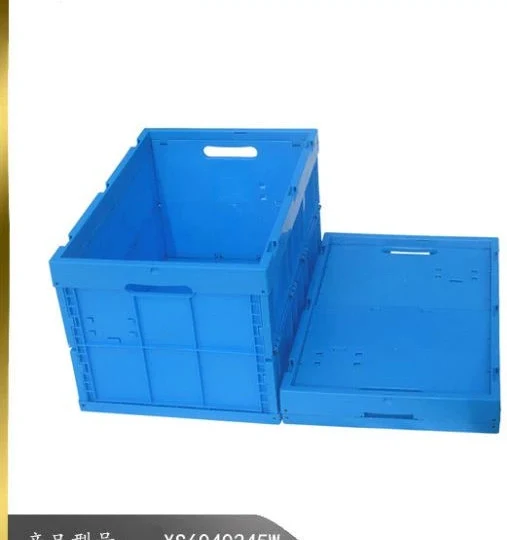
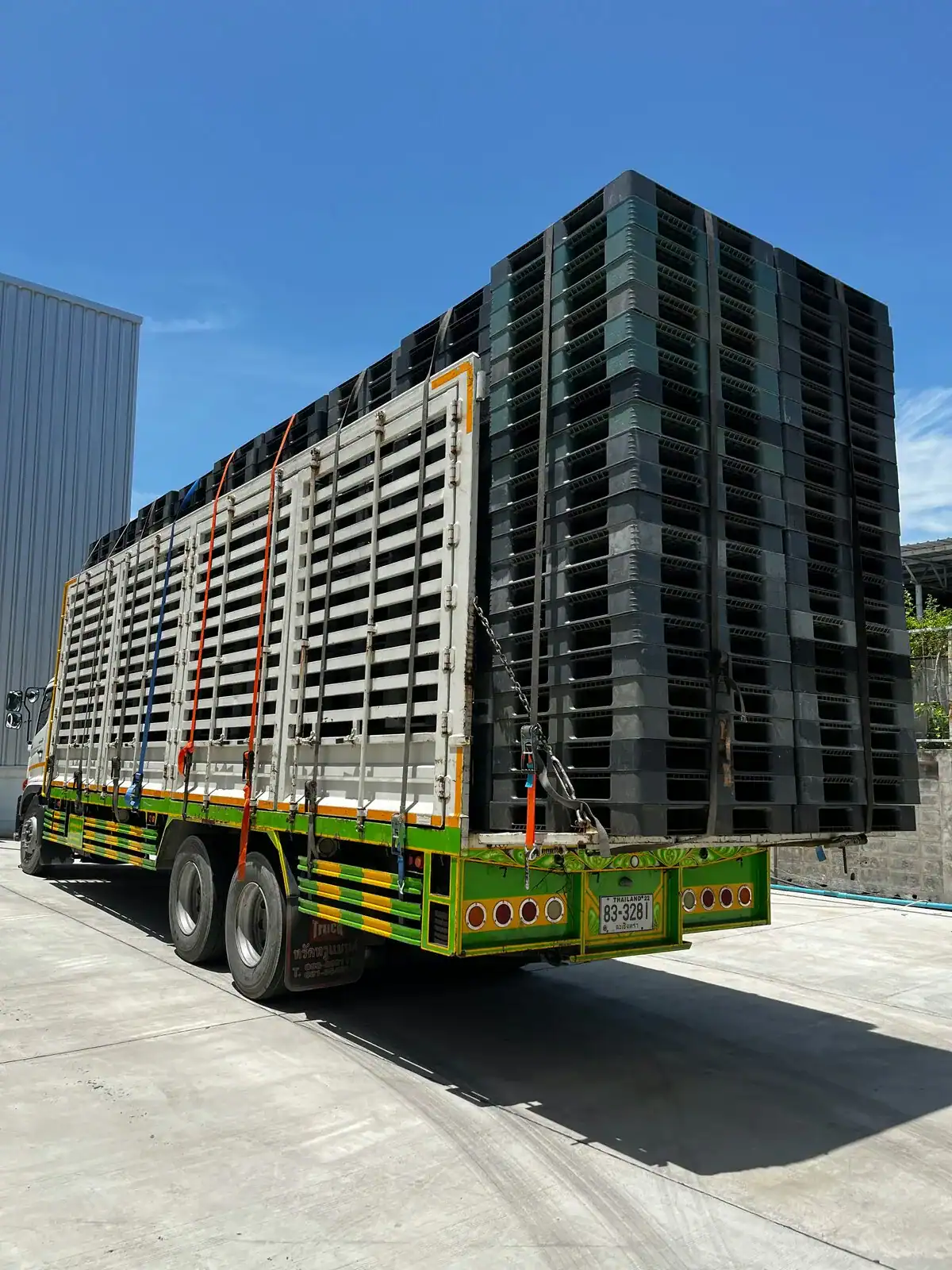
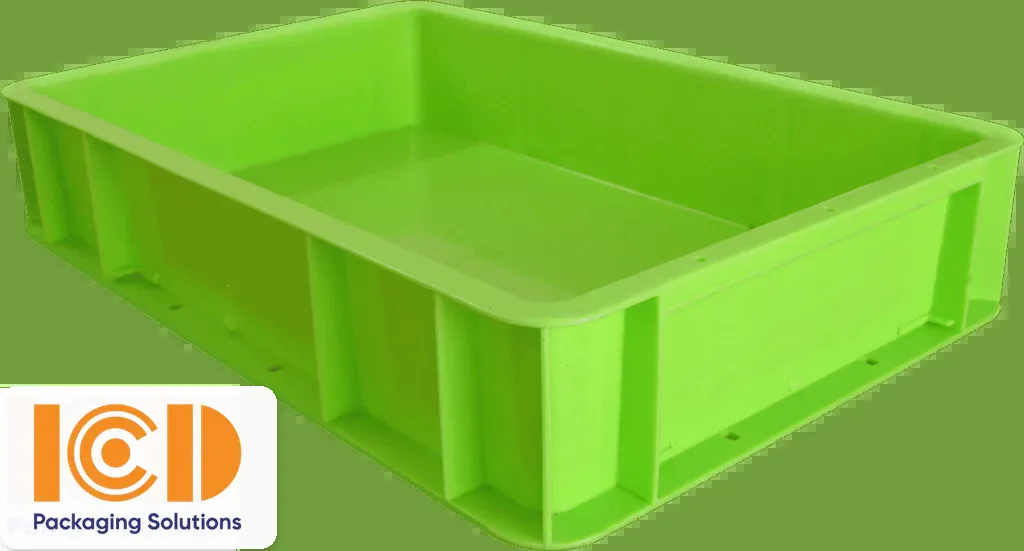
In daily life, PP is found in food containers, bottle caps, jars and toys. In industry, PP makes returnable crates and trays, bins, car parts, equipment housings and packaging. PP is also drawn into fiber for carpet, rope, nonwovens and filter media. The part ICD Vietnam cares about most is crates, boxes and pallets: rigid, light, chemical resistant and easy to clean, which suits warehouses, factories and supply chains.
Is PP plastic safe
The answer comes with conditions: PP is a plastic widely used for food contact, and it is safe when the container is made of food-grade resin and used within its heat limit. The legal basis rests on three documents.
| Document | Scope | Key conditions |
|---|---|---|
| 21 CFR 177.1520 (FDA, US) | Olefin polymers, including polypropylene, used as food contact material | Sets requirements for density, melting point and the maximum amount of extractables |
| Regulation (EU) No 10/2011 | Food contact plastics on the European market | Overall migration limit 10 mg/dm²; substances without a specific limit at most 60 mg/kg |
| QCVN 12-1:2011/BYT (Circular 34/2011/TT-BYT) | Synthetic plastic packaging and utensils in contact with food in Vietnam | PE and PP: dry residue at most 30 µg/ml; test at 95 °C for 30 minutes for utensils used above 100 °C; conformity declaration is mandatory |
That does not make every PP product absolutely safe. A scratched container or one used for a long time releases more. If a product has no known origin, no conformity declaration and no resin specification, you have no basis to claim it is safe, even if the material is labeled PP.
Shelf life and reusability
PP can be reused many times if the product stays intact, but there is no single shelf-life figure for every product. Lifetime depends on the resin grade, thickness, UV stabilizers, load and use temperature. For crates and pallets, real service life is mostly decided by impact, prolonged compressive load and UV if left in the sun. So when you ask how long it lasts, ask about the load and the environment instead of asking for a number of years.
How PP is made
The base raw material is propylene from oil refining or from gas; propylene is polymerized with a catalyst into PP resin, using technologies such as gas phase or liquid phase. The resin is then compounded with additives (stabilizers, colorants, UV stabilizers) and fed into forming machines. Common forming methods include injection molding (crates, boxes, lids), extrusion (sheet, pipe, fiber) and blow molding (bottles, jars). The product can then be trimmed, printed and assembled before packing.
Can PP be sterilized with UV light
The answer cannot be given as one general figure. PP resists heat better than PE: a laboratory supplies vendor states PP can withstand autoclave sterilization. UV is the opposite: the same document warns that all polyolefins can degrade with long exposure to light. In other words, wiping and rinsing with hot water within the heat limit is the safer way, while frequent UV exposure will make PP brittle and discolored over time.
Recycling PP
PP is recyclable, but the 5 on the product is only a resin identification code and does not mean your area collects it. The identification code under ASTM D7611 only tells you the plastic type. EPA figures for 2018 show a recycling rate of 29.1% for PET bottles and 29.3% for natural HDPE bottles, while the whole plastic packaging group reached only 13.6%; PP falls in the other packaging group, so the EPA does not publish a separate figure.
There are three routes. Mechanical recycling is the most common: collect, sort, shred, wash, then press into pellets for reuse. Chemical recycling takes the plastic back to the molecular level to make chemicals or fuel. Energy recovery burns it for heat or electricity. Recycled PP pellets are typically used for industrial fiber, household goods such as pots and bins, and wood-plastic composites. For food contact packaging specifically, Europe requires under Regulation (EU) 2022/1616 that recycled plastic go through a recycling process assessed and authorized by the European Food Safety Authority (EFSA), because collected plastic can carry contaminants.
Comparing PP with other plastics
The table below compares three plastics often confused when choosing crates, boxes and pallets. The melting point only shows the limit of the material; the real use temperature is always much lower, as noted under properties.
| Plastic | Identification code | Melting | Points to remember |
|---|---|---|---|
| PP (polypropylene) | 5 | about 160-165 °C | Rigid, light, more heat resistant than PE; homopolymer is brittle in the cold |
| HDPE | 2 | about 132 °C | Tougher at low temperature; lower heat resistance than PP |
| PET | 1 | about 250-260 °C | Rigid, clear, often used for water bottles; structurally very different from PP |
In short: if you need heat and chemical resistance, you usually choose PP; if you need toughness in the cold, look at HDPE or PP copolymer; for clear bottles, PET. A deeper comparison of PP and HDPE is in the HDPE article under Related articles.
Frequently asked questions
What is PP plastic?
PP (polypropylene) is a semi-crystalline thermoplastic, rigid and light, melting at about 160-165 °C and carrying code 5 on packaging.
Is PP safe for food?
Yes, when you use a grade that meets food contact rules (FDA 21 CFR 177.1520, EU 10/2011, QCVN 12-1:2011/BYT) and stay within its heat limit. Only put in the microwave containers labeled as safe for it.
When was PP invented?
J. Paul Hogan and Robert Banks (Phillips Petroleum) showed that propylene could be polymerized in 1951; Giulio Natta and Karl Rehn developed selective polymerization in 1954, and Montecatini began industrial production in 1957.
Is PP suitable for plastic pallets?
Yes, PP is rigid, light and chemical resistant, so it is used for crates and pallets; the specific resin grade affects durability, so ask for the specification when buying.
Contact ICD Vietnam for crate and plastic pallet advice
ICD Vietnam Industrial Production Co., Ltd.
Northern Vietnam: 3rd Floor, Thang Long A1 Building, Bau Hamlet, Thien Loc Commune, Hanoi - 0983 797 186 / 090 345 9186 / 090 5859 186
Southern Vietnam: 551/212 Le Van Khuong Street, Tan Thoi Hiep Ward, District 12, Ho Chi Minh City - 098 6784 186
Email: sales@icdvietnam.com.vn
Zalo: Chat on Zalo now
References
- Wikipedia, Polypropylene (melting point, history, clarity, applications) - en.wikipedia.org
- US FDA, 21 CFR 177.1520 Olefin polymers - law.cornell.edu
- Commission Regulation (EU) No 10/2011 on plastic materials and articles intended to come into contact with food - eur-lex.europa.eu
- Commission Regulation (EU) 2022/1616 on recycled plastic food contact materials (OJ L 243, 20.9.2022, EUR-Lex)
- QCVN 12-1:2011/BYT, National technical regulation on safety and hygiene for synthetic plastic packaging and utensils in direct contact with food - nafiqad5.gov.vn
- Harvard Health, Microwaving food in plastic: dangerous or not? - health.harvard.edu
- Wikipedia, Resin identification code (code 5 under ASTM D7611)
- US EPA, Containers and Packaging: Product-Specific Data (2018 recycling rates) - epa.gov
- Basell, Moplen HP500N datasheet (HDT, Vicat, density) - pimd.vn
- Ducor Petrochemicals, DuPure G 87 E and G 72 TF datasheet - ducorchem.com
- Poly Processing, Polyolefins technical data (PP brittle at 0 °C, UV) - tanks.polyprocessing.com
- Simona, technical Handbook (PP homopolymer brittle in the cold, copolymer impact resistant) - simona.de
- INEOS, Environmental Stress Crack Resistance of Polyethylene - ineos.com
Related articles
- What is HDPE plastic? Applications in plastic pallet manufacturing
- What material is best for pallets
See also: what is PP plastic number 5 | can PP plastic hold hot water