
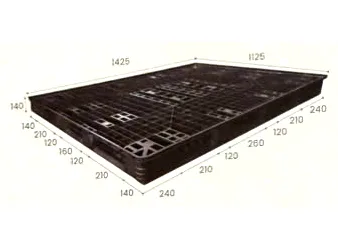

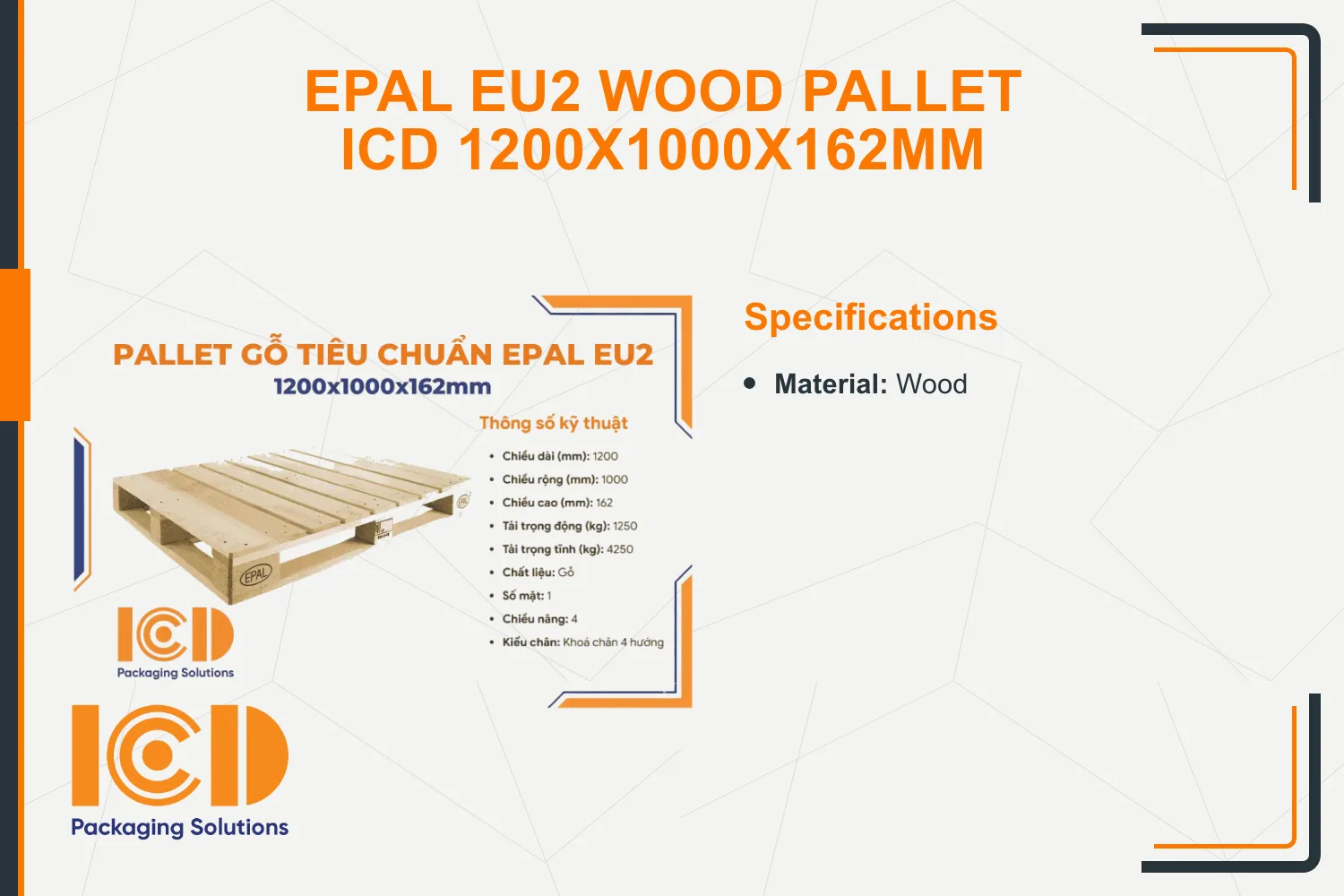
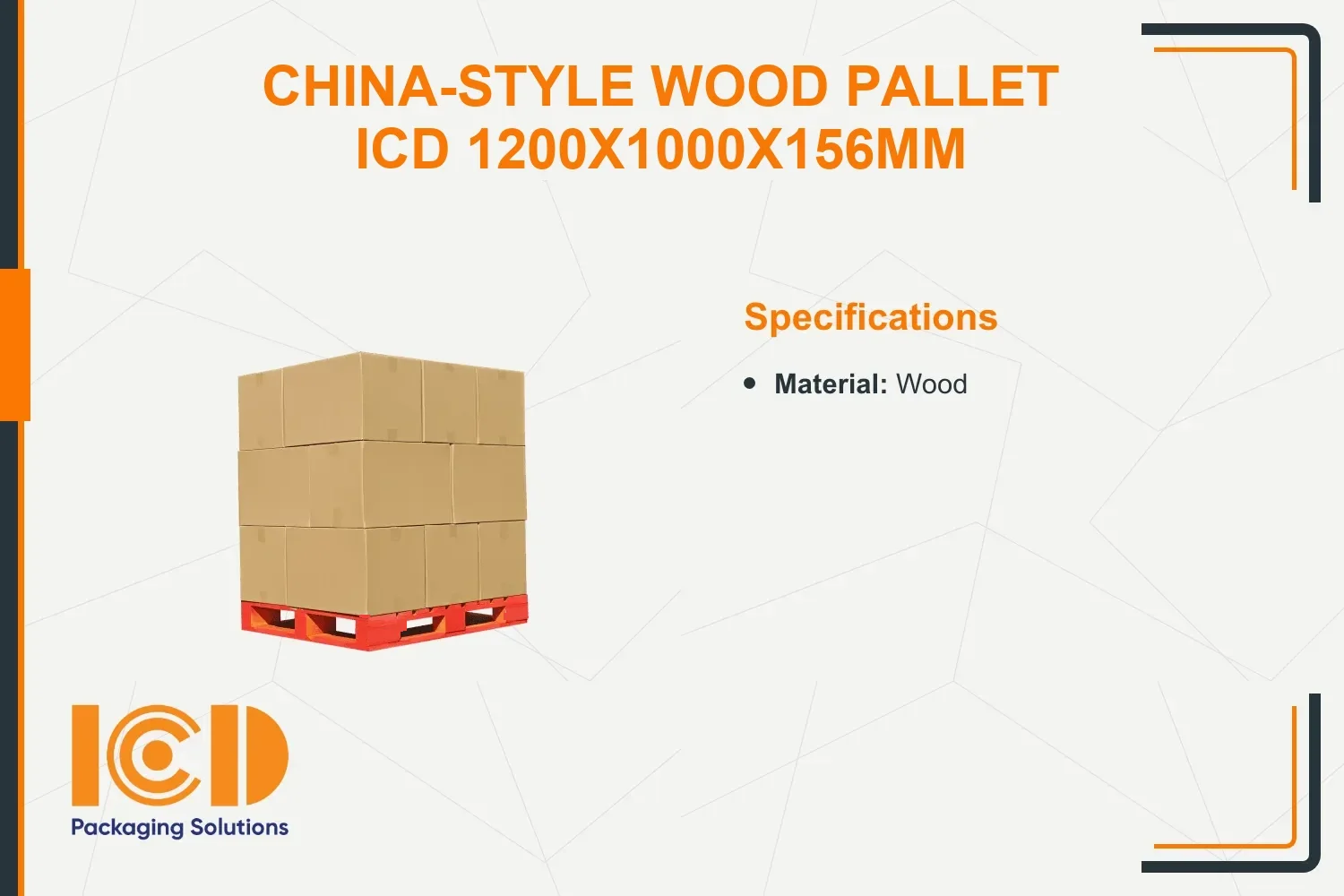
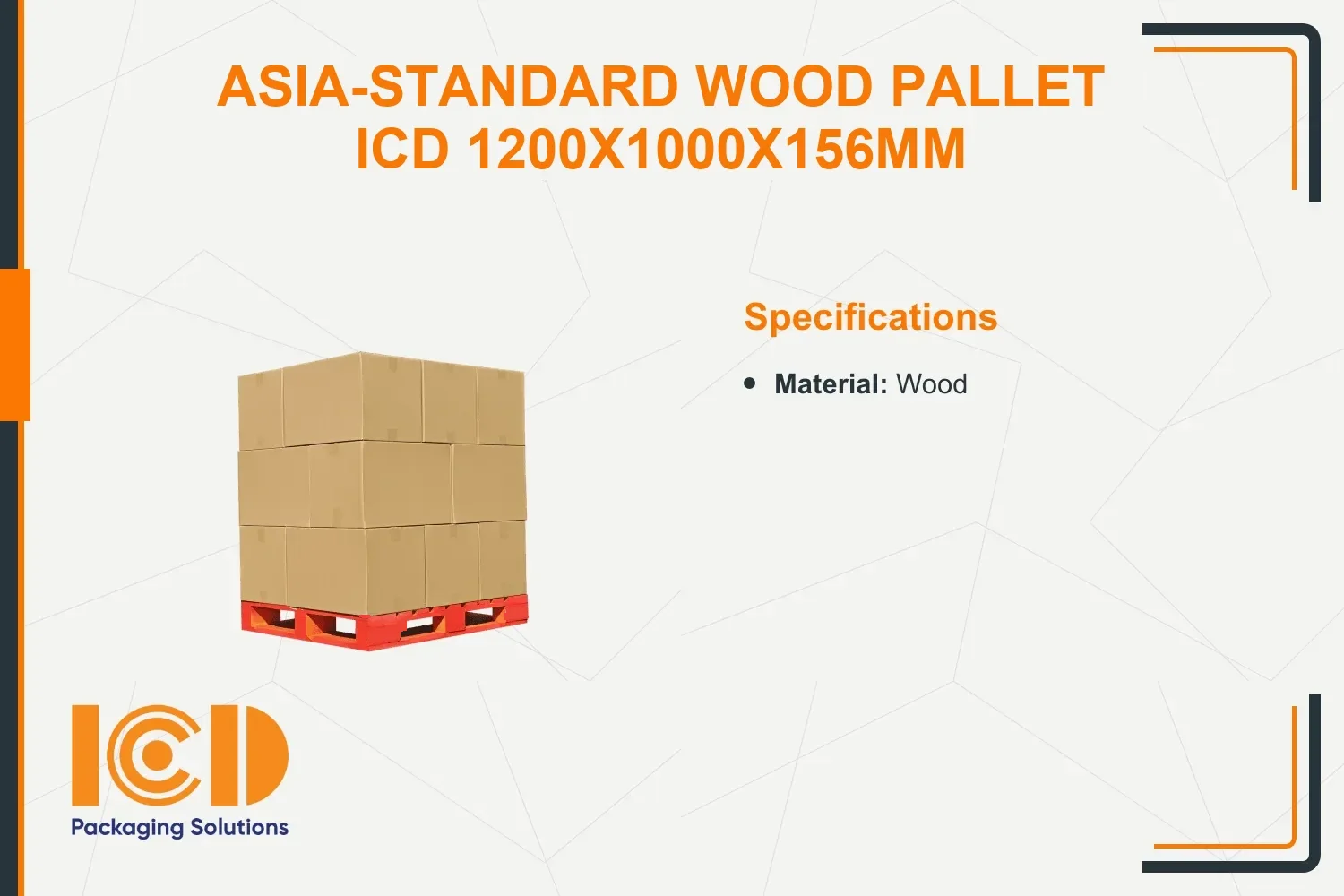
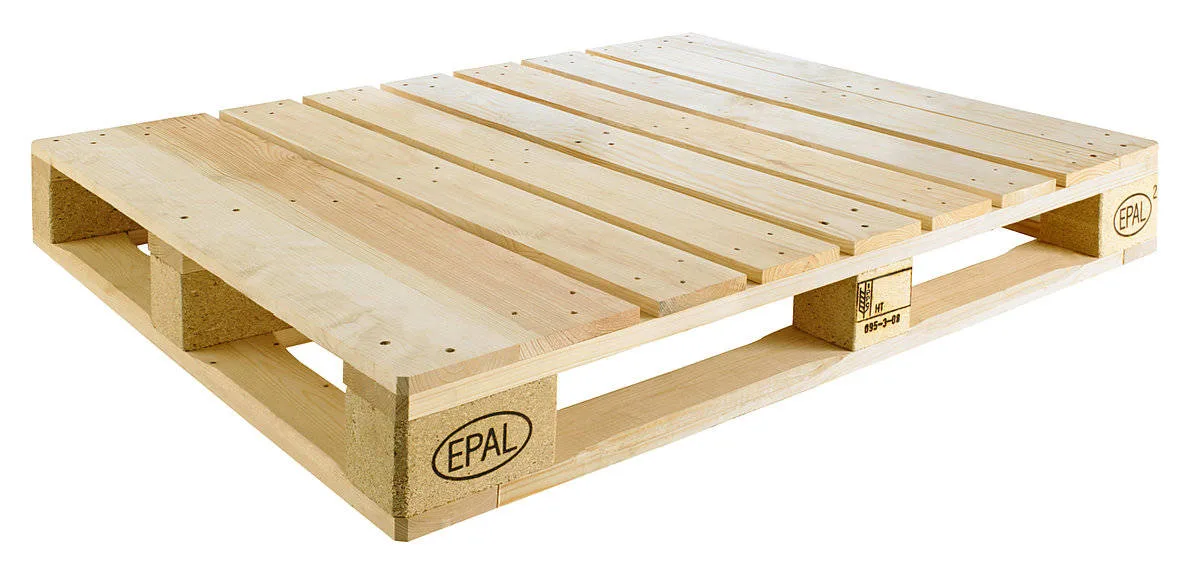
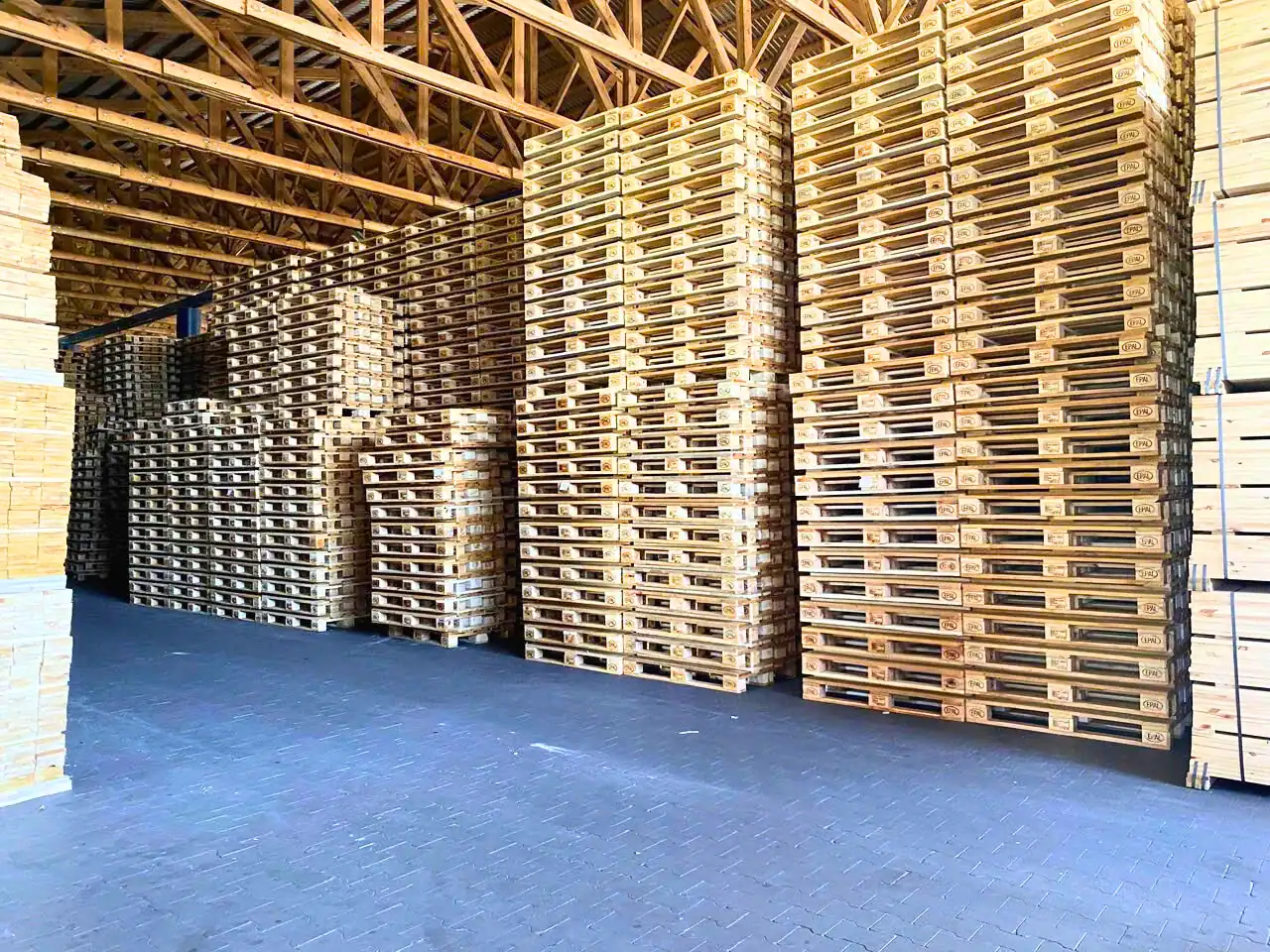
ICD Vietnam supplies new wooden pallets built from acacia, rubber wood, pine and earleaf acacia (tram), EPAL pallets for Europe-bound cargo, Asia-standard 1200×1000 mm pallets and pallets made to your own drawing. Listed prices run from 155,000 VND to 580,000 VND per pallet depending on wood and size, with dynamic load up to 1,500 kg and static load up to 6,000 kg on the 1200×1000×156 mm line. Export pallets are heat-treated and stamped with the IPPC mark under ISPM 15 on request.
A printable spec sheet for purchasing teams is available in the ICD EPAL pallet catalogue (PDF).
1. What a wooden pallet is and what it is used for
A wooden pallet is a load platform made of deck boards on top of stringers or wooden blocks, so forklifts and pallet jacks can slide their forks in and lift the whole unit load. Businesses use wooden pallets to build unit loads, store goods, stuff containers and ship one way to overseas buyers, where the pallet travels with the goods and does not come back.
Wood’s biggest advantages are a low purchase price, any size without a mould, and easy repair when a board breaks. The points to watch are that wood absorbs moisture, can grow mould in a damp store, and must be treated under ISPM 15 when it crosses borders. Some private buyers use pallets as a bed base or display shelf; for that, choose a new, kiln-dried pallet with a flat deck and sand it again before using it indoors.
2. ICD wooden pallet price list 2026
The table shows the listed price of each model for single orders, excluding VAT. Real prices depend on the wood, board thickness, number of stringers, heat treatment and quantity; volume orders are quoted separately. How each of these factors moves the price is covered in the wooden pallet price guide 2026.
| Pallet model | Size (mm) | Dynamic / static load | Unit price |
|---|---|---|---|
| Single-face two-way pallet | Made to order | 500 / 1,000 kg | 155,000 VND |
| Earleaf acacia (tram) wood pallet | 1200×1000 (made to order) | To specification | 185,000 VND |
| Rubber wood pallet | Made to order | To specification | 200,000 VND |
| Acacia wood pallet | Made to order | To specification | 230,000 VND |
| Double-face two-way pallet | Made to order | To specification | 245,000 VND |
| Asia-standard pallet | 1200×1000×156 | 1,500 / 6,000 kg | 285,000 VND |
| Pine wood pallet | 1200×1000, 1200×800, 1100×1100 | To specification | 300,000 VND |
| Single-face four-way pallet, locked feet | Made to order | To specification | 315,000 VND |
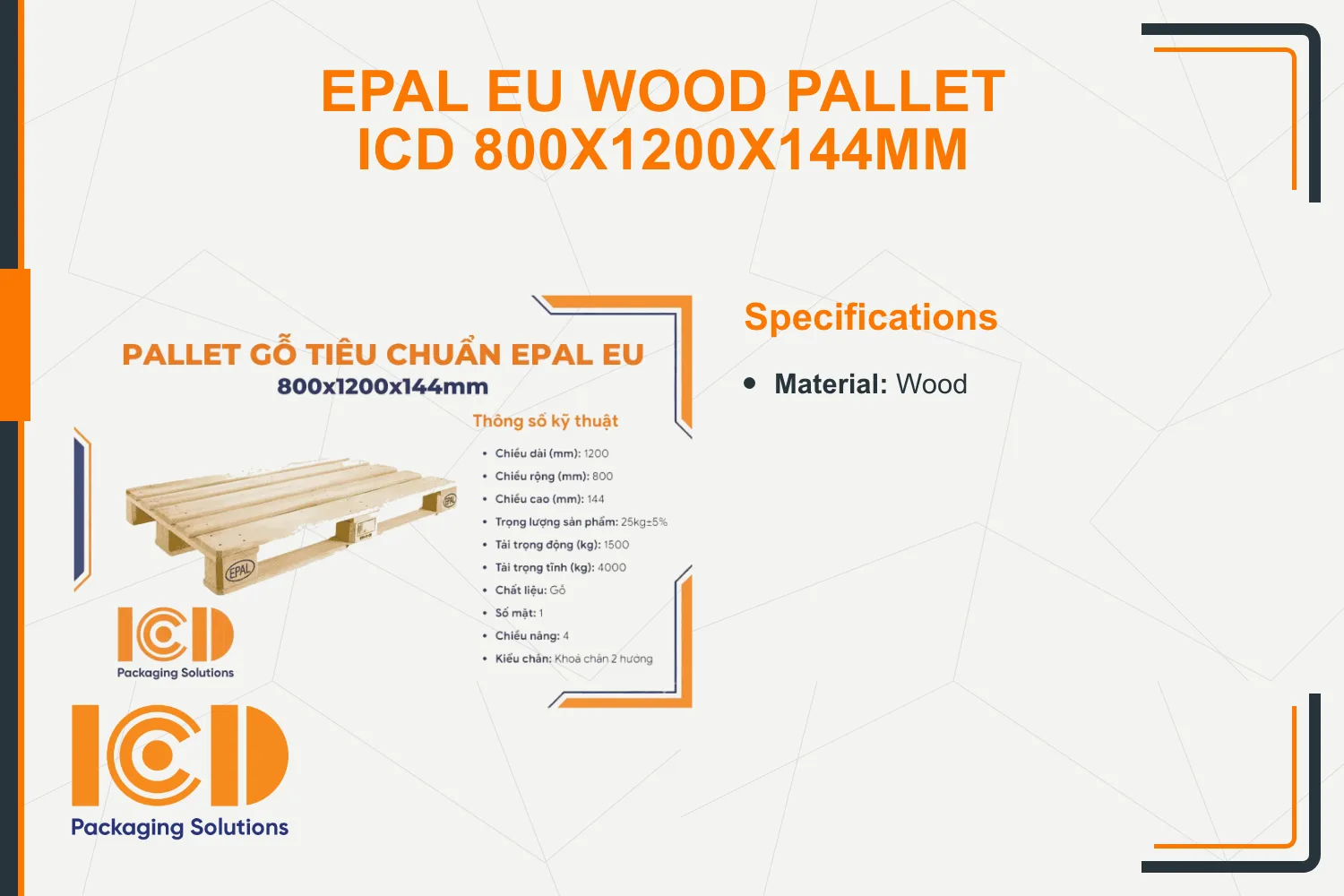
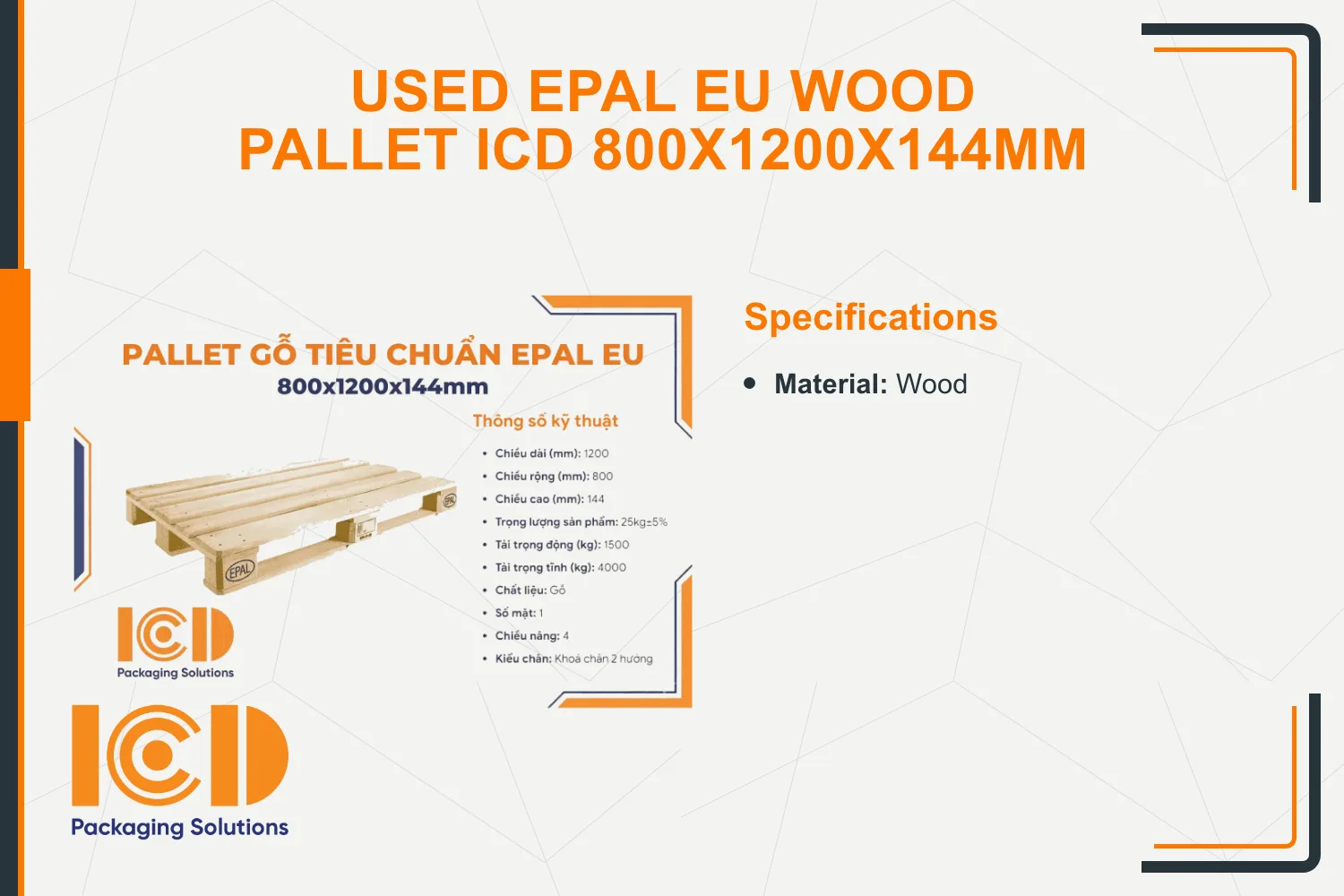
| EPAL EU (Euro pallet) | 1200×800×144 | 1,500 / 5,500 kg | 420,000 VND |
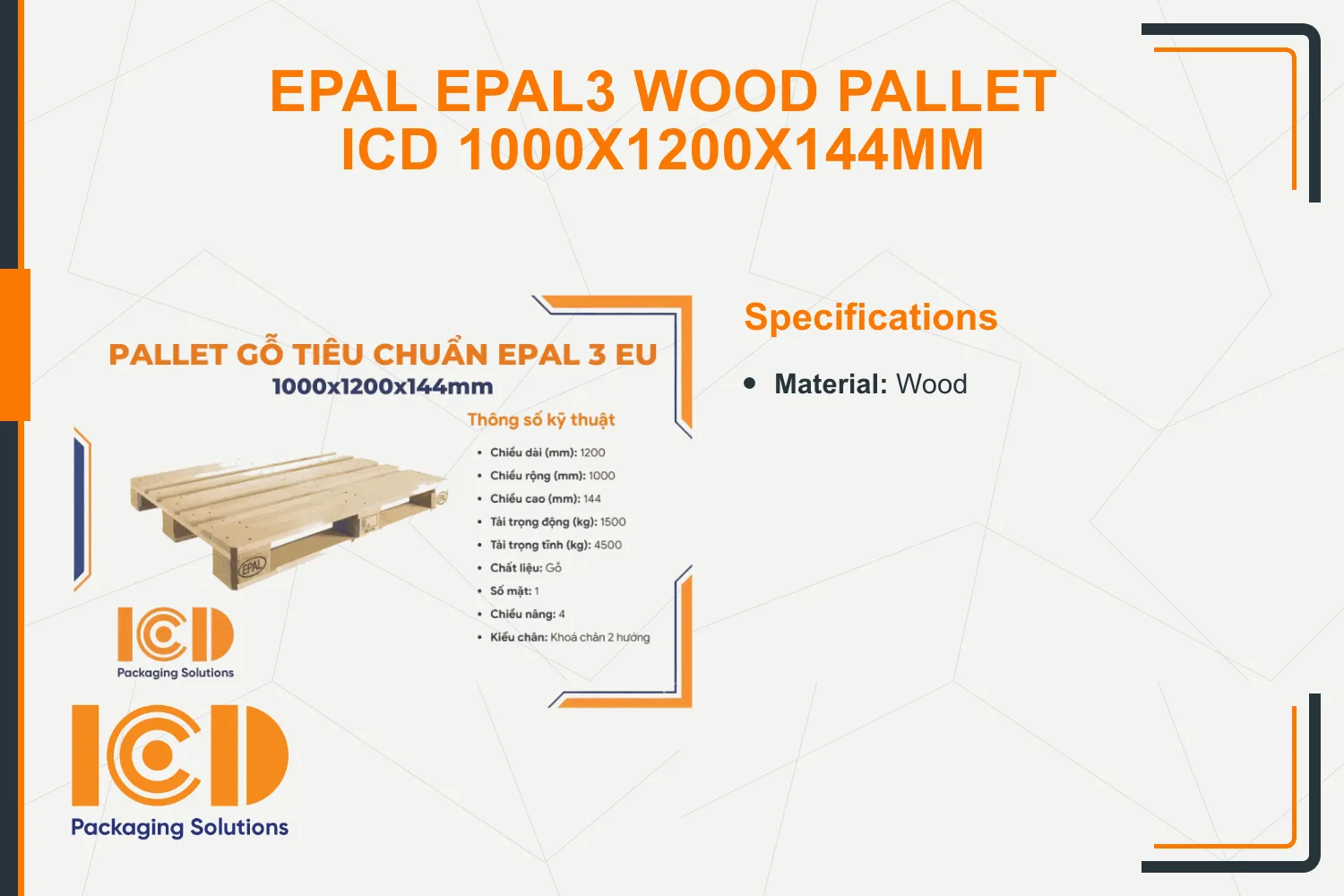
| EPAL 3 | 1200×1000×144 | 1,500 / 4,500 kg | 580,000 VND |
Prices updated October 2026 from ICD’s product catalogue, excluding VAT. Contact the hotline or Zalo for a quote by quantity and delivery point.
3. Acacia, rubber wood, pine or earleaf acacia: which to choose
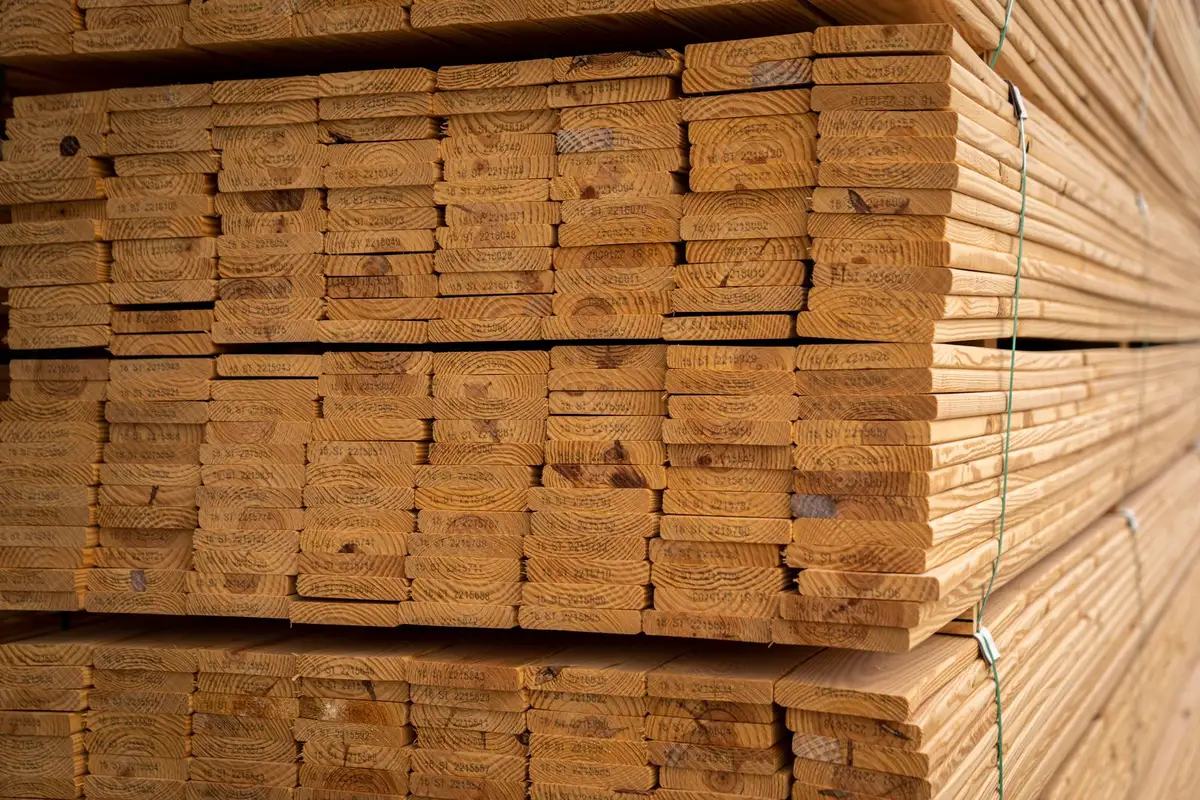
The wood species sets the hardness, weight and price of a pallet. Acacia is hard and takes impact well, which suits heavy goods and stores that turn pallets over many times. Pine is lighter, straight-grained and splits less when nailed, so it is the usual choice for EPAL pallets and cargo to Europe and the US. Rubber wood must be treated and kiln-dried to prevent mould; in return its price is moderate and supply is steady. Earleaf acacia (tram) is the cheapest of the natural woods and suits pallets used within Vietnam.
| Wood | Characteristics | Best for | ICD price from |
|---|---|---|---|
| Acacia | Hard, impact-resistant, heavier than pine | Heavy goods, high-turnover stores | 230,000 VND |
| Pine | Light, straight grain, splits less when nailed | EPAL, exports to Europe and the US | 300,000 VND |
| Rubber wood | Needs treatment and drying against mould, moderate price | Domestic use and heat-treated export pallets | 200,000 VND |
| Earleaf acacia (tram) | Low price, easy to source | Domestic pallets, light and medium goods | 185,000 VND |
A detailed comparison of hardness, density and timber price is in wood types for pallet manufacturing. If the goods ship one way and the lowest price matters most, also look at pressed wood pallets: they are moulded from wood chips under heat and pressure, so they need no fumigation for export.
4. Wooden pallet sizes and construction
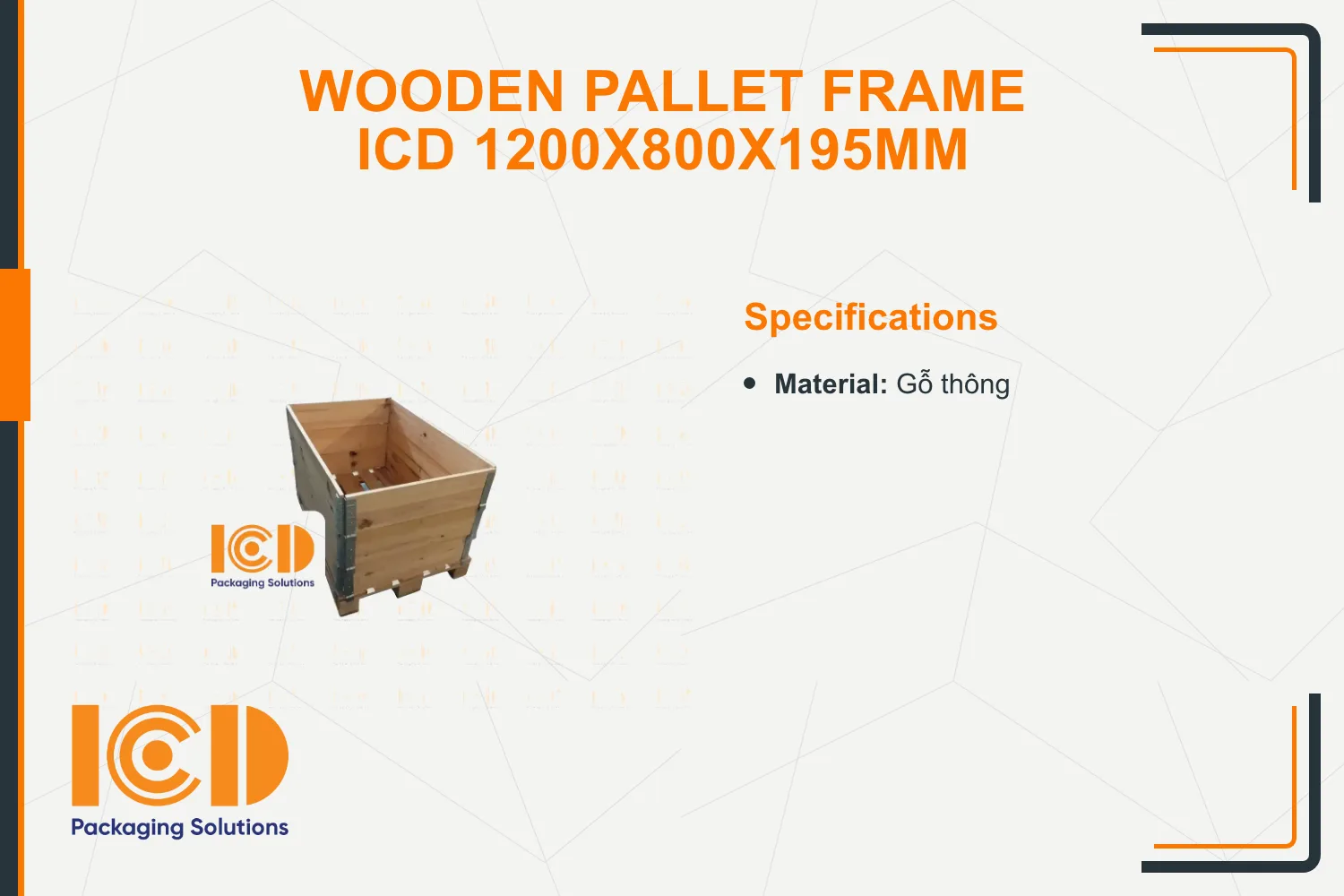
In Vietnam the two most common sizes are 1200×1000 mm and 1100×1100 mm; Europe-bound cargo uses 1200×800 mm (the Euro pallet) and US-bound cargo uses 1219×1016 mm (48×40 inches). ISO 6780 lists six international pallet sizes: 1200×800, 1200×1000, 1219×1016, 1165×1165, 1100×1100 and 1067×1067 mm. ICD wooden pallets are 138 mm high (EPAL CP line) to 162 mm (EPAL 2), with the Asia-standard line at 156 mm; when goods need side walls, the 1200×800×195 mm wooden pallet collar turns a pallet into a stackable box.
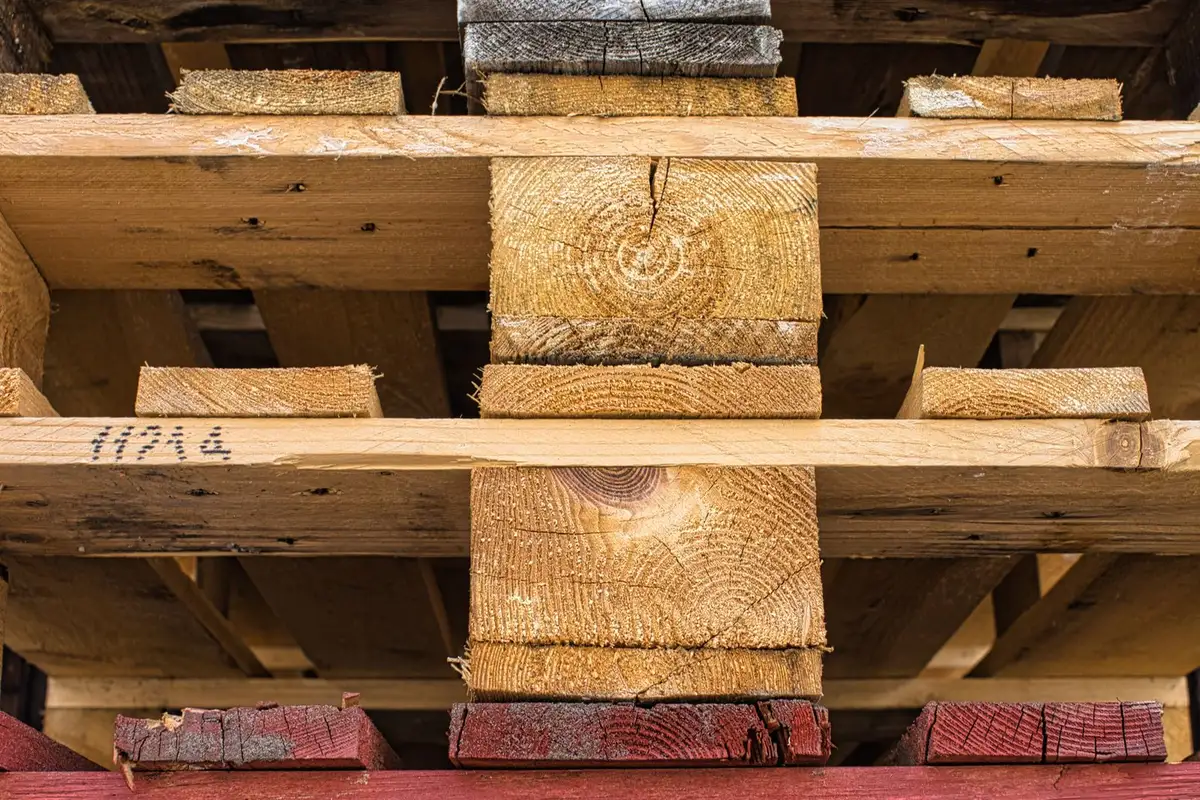
On construction, a single-face pallet has boards on top only, so it is light and cheap; a double-face pallet adds bottom boards, which spread the load better when stacked or placed on racking. A two-way pallet uses continuous stringers, so forks enter from two sides only. A four-way pallet uses blocks or notched stringers, so forks enter from all four sides, which helps in narrow aisles and containers. Photos of each type with their specifications are in the wooden pallet types photo guide.
For a custom size, a hand sketch or CAD file with dimensions is enough for ICD to quote.
5. How much weight a wooden pallet can hold
Every pallet has three load ratings. Dynamic load is what it carries while a forklift is moving; static load is what it carries sitting on the floor, including the bottom pallet of a stack; racking load is what it carries when supported only on two beams, and is usually the lowest. Across ICD models, the single-face two-way pallet carries 500 kg dynamic and 1,000 kg static; EPAL EU and EPAL 3 carry 1,500 kg dynamic; the Asia-standard 1200×1000×156 mm line carries 1,500 kg dynamic and 6,000 kg static.
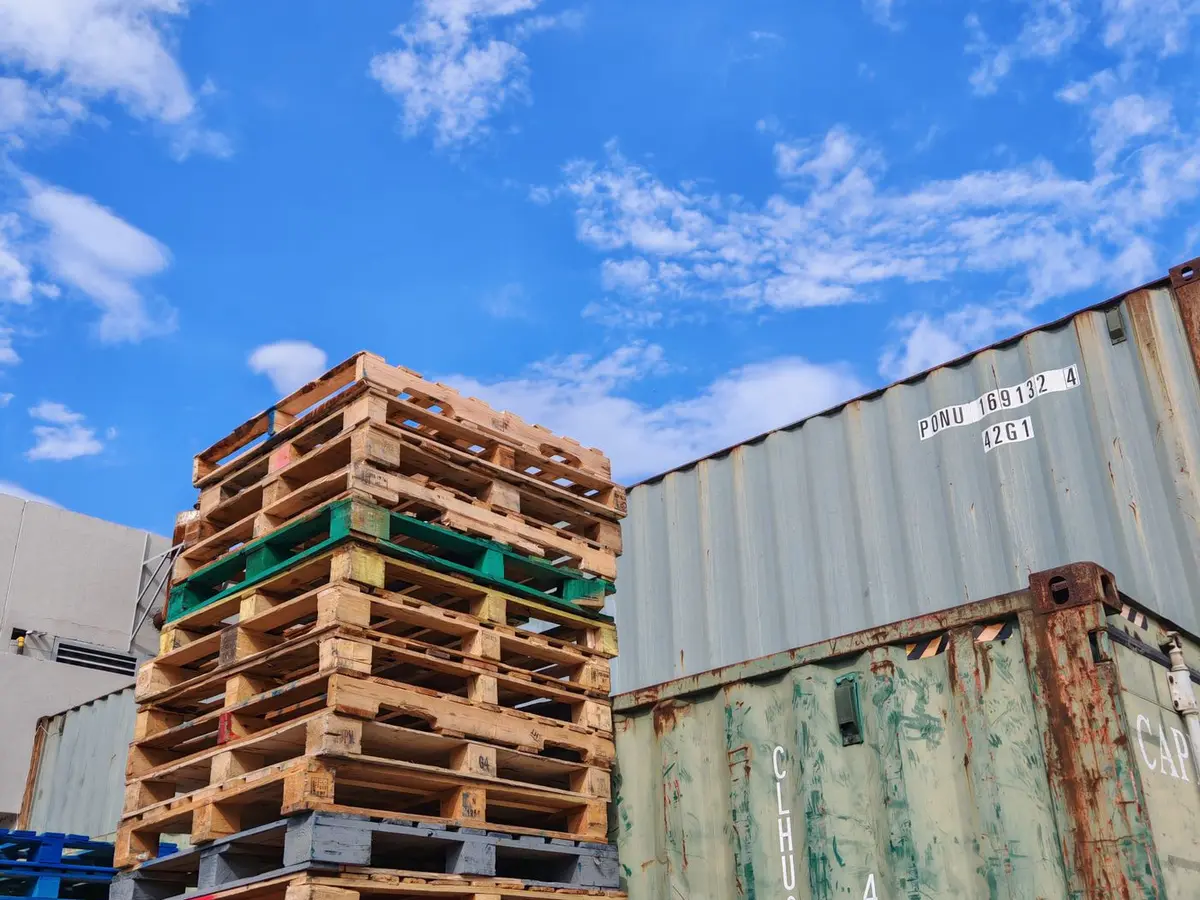
To choose, multiply the weight of one unit load by a safety factor and compare it with the dynamic load, because that is when the pallet works hardest. If you stack several tiers, the bottom pallet carries all the tiers above, so compare with the static load. Worked examples are in the wooden pallet weight capacity guide.
6. Export wooden pallets and ISPM 15
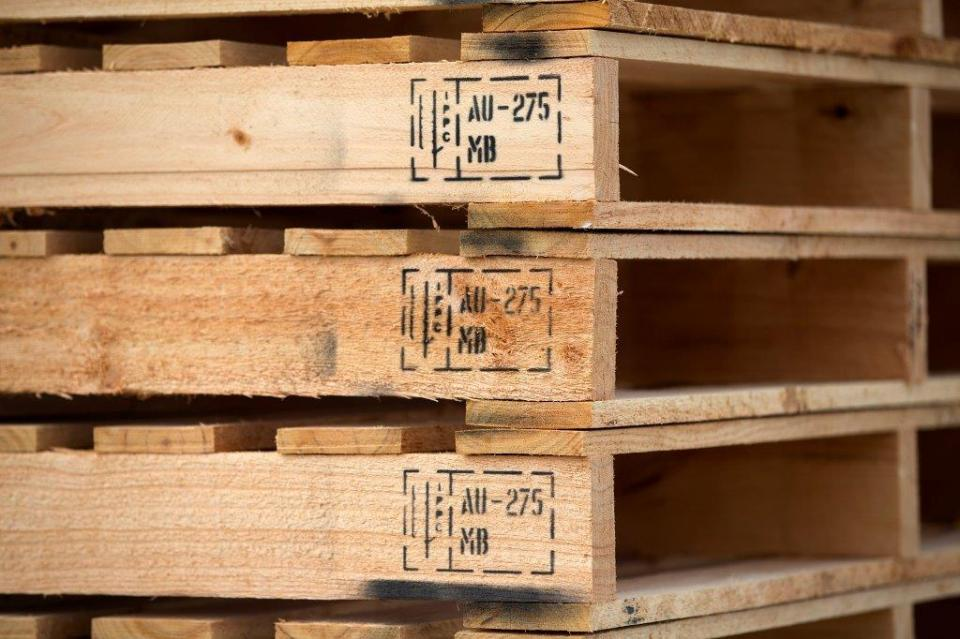
ISPM 15 is the phytosanitary standard of the IPPC (International Plant Protection Convention) for wood packaging material made from raw wood in international trade, including pallets and dunnage. The wood must be debarked and treated by a method approved under ISPM 15; the most common is heat treatment (HT) to at least 56°C at the core for at least 30 continuous minutes, alongside dielectric heating (DH) and methyl bromide (MB) fumigation at the prescribed dose. After treatment the pallet is stamped with the IPPC mark, showing the IPPC symbol, the country code (VN), the treatment provider’s number and the treatment code (HT, DH or MB).
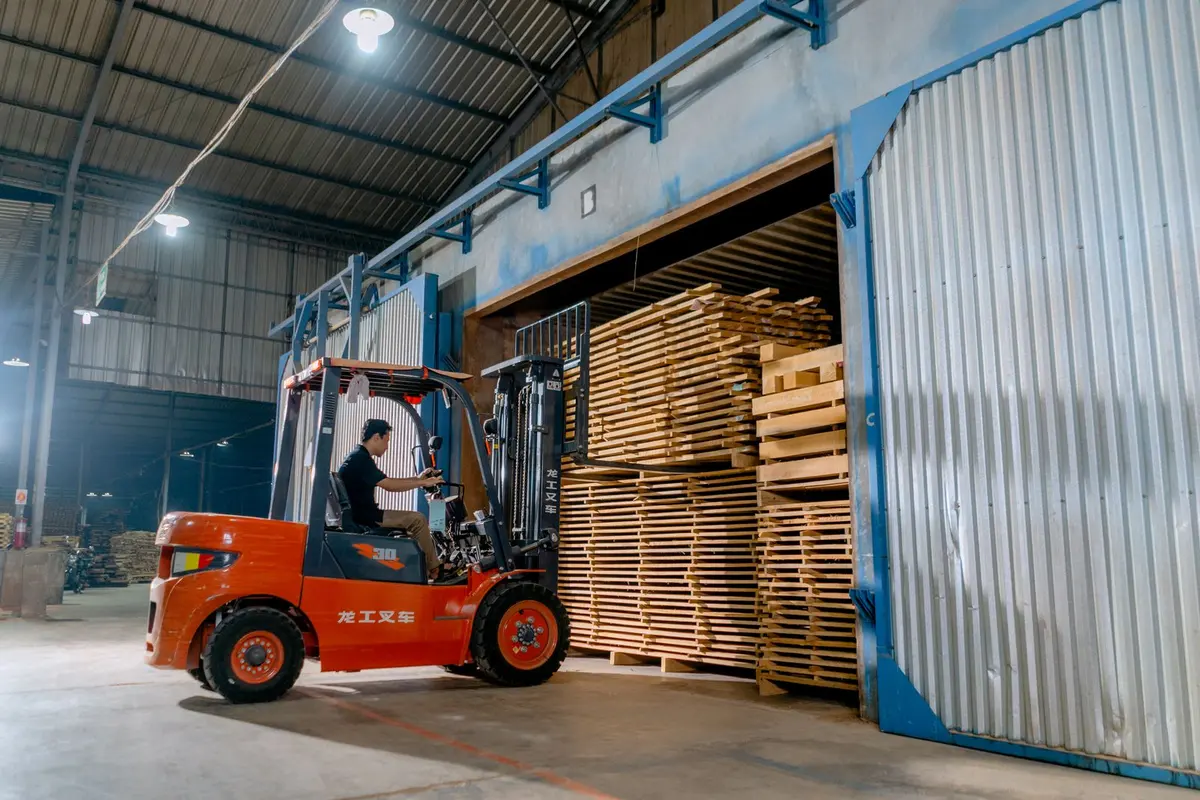
Pallets used only within Vietnam do not have to be treated. Processed wood such as plywood, particleboard, OSB and pressed sawdust pallets falls outside ISPM 15. Heat treatment kills insects and nematodes already in the wood but does not stop new pests from getting in, and it does not make the wood waterproof, so treated pallets still need dry storage. How to obtain the certificate and the stamping mistakes to avoid are explained in ISPM 15: what it is and how to get certified.
7. EPAL pallets and CP chemical pallets
EPAL is the association that runs the European pallet exchange system. The EPAL 1 Euro pallet measures 1200×800×144 mm, weighs about 25 kg, has a safe working load of 1,500 kg, and the bottom pallet of a stack on a flat floor may carry up to 5,500 kg. Only pallets with the EPAL mark can enter the exchange system in Europe; a pallet built to Euro size without the mark is just an ordinary pallet. ICD supplies the following models:
| Model | Size (mm) | Dynamic / static load (ICD) | Unit price |
|---|---|---|---|
| EPAL EU | 1200×800×144 | 1,500 / 5,500 kg, 25 kg | 420,000 VND |
| EPAL 2 | 1200×1000×162 | 1,250 / 4,250 kg, 35 kg | 450,000 VND |
| EPAL 3 | 1200×1000×144 | 1,500 / 4,500 kg, 30 kg | 580,000 VND |
| EPAL 6 (half pallet) | 800×600×144 | 750 / 1,500 kg, 10 kg | 280,000 VND |
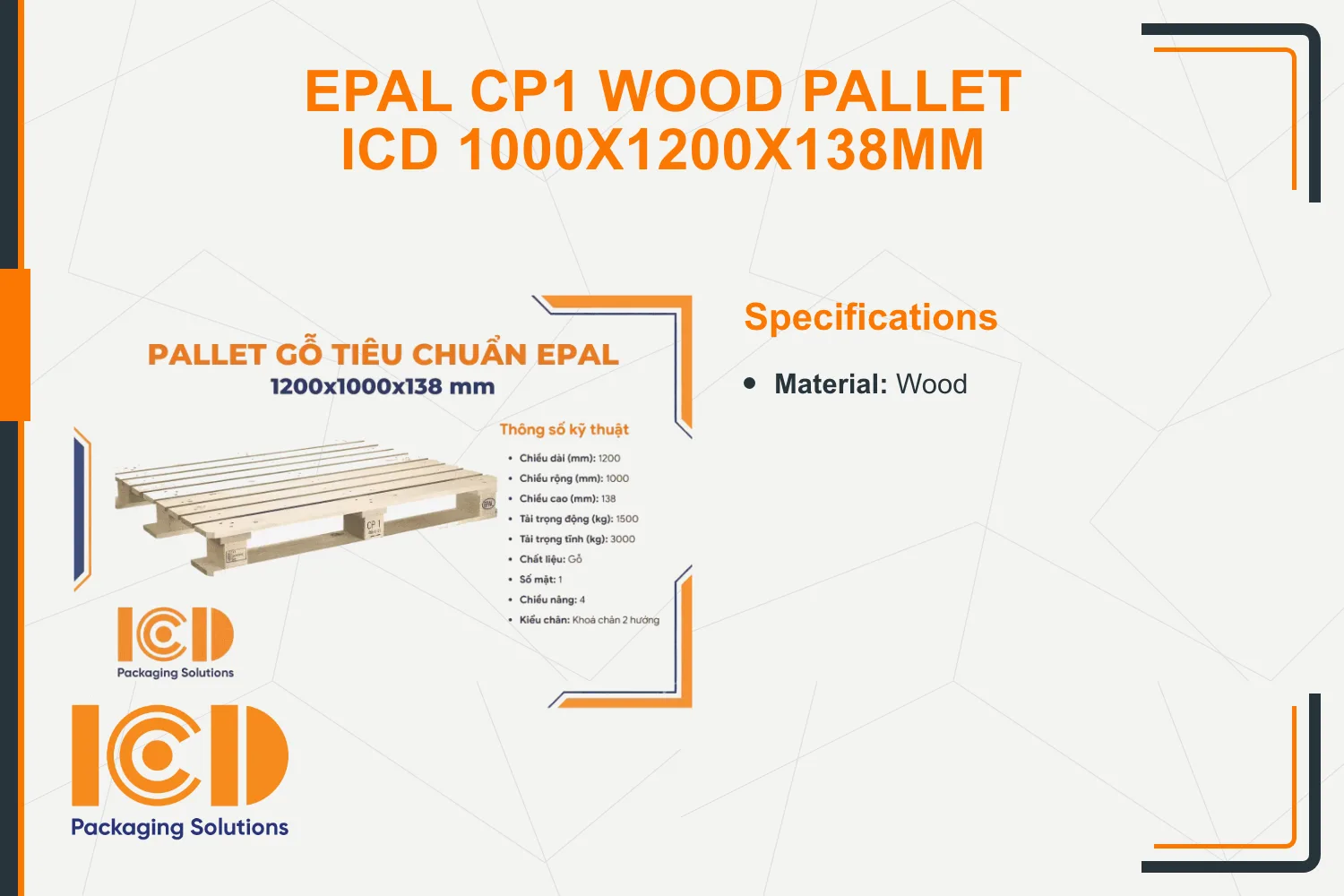
| EPAL CP1 | 1200×1000×138 | 1,500 / 3,000 kg | 480,000 VND |
| EPAL CP2 | 1200×800×138 | On request | 450,000 VND |
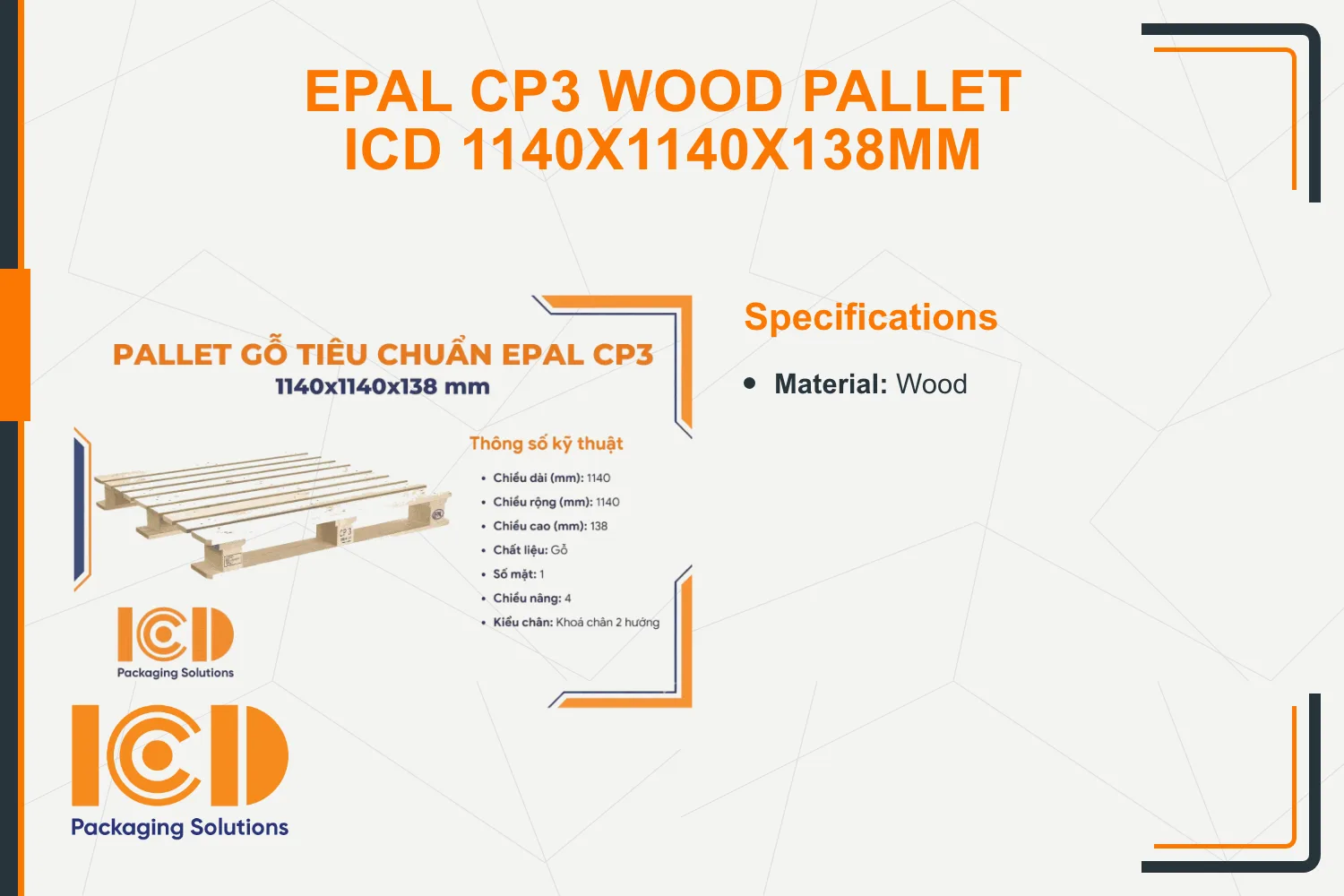
| EPAL CP3 | 1140×1140×138 | On request | 420,000 VND |
| EPAL CP4 | 1300×1100×138 | On request | Contact us |
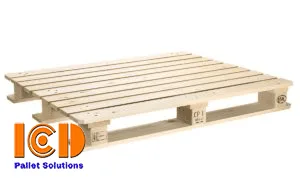
The CP (Chemical Pallet) line has three bottom boards running lengthwise, for sacks, drums and cans of chemicals and plastic resin. How to read each mark on an EPAL block and tell genuine pallets from copies is covered in the EPAL pallet system and Euro pallet marks.
8. Wooden pallets built to your drawing
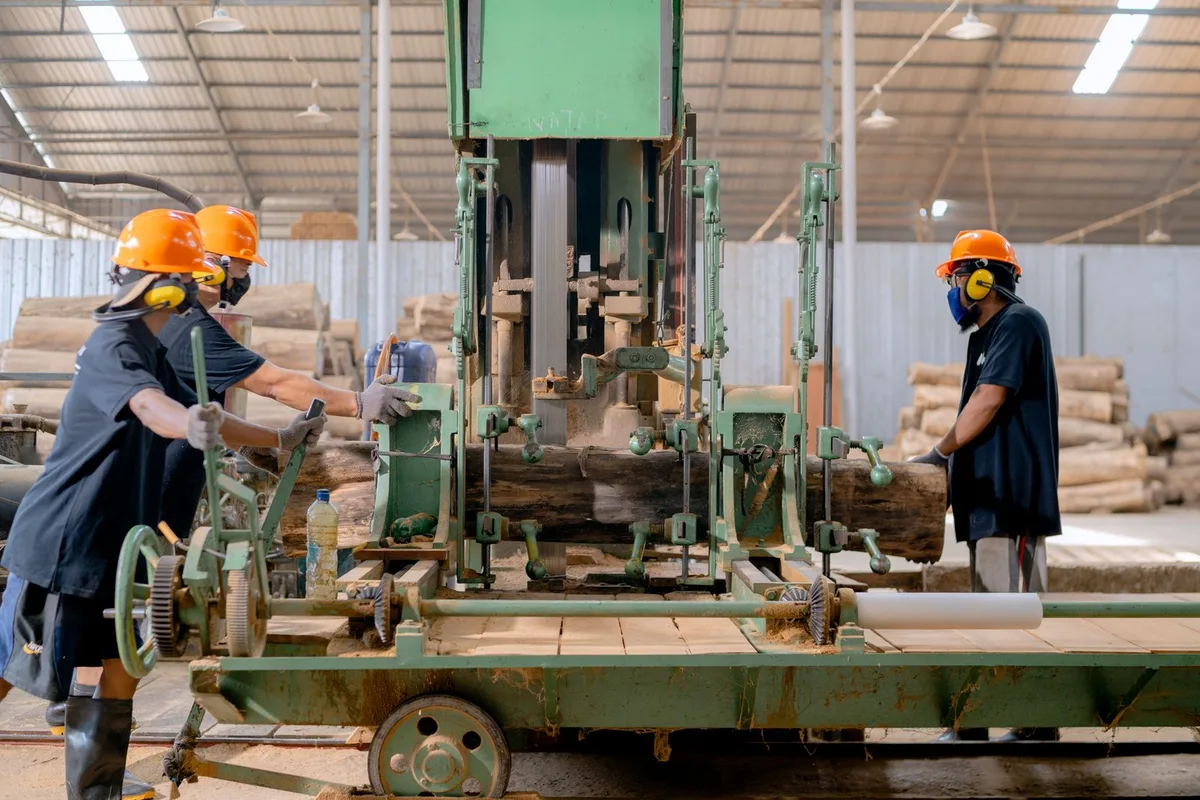
When goods have non-standard dimensions, machinery needs its own base, or an overseas buyer sends a fixed specification, ICD builds pallets to drawing: size, board thickness, board spacing, number of bottom stringers, foot style and heat treatment all follow the order. Quotes are based on a CAD file, photos of a sample or a hand sketch with dimensions.
For a fast quote, send:
- Length × width × height and number of faces (single or double).
- Weight of one unit load and number of stacked tiers in the store.
- Entry ways needed: two-way or four-way.
- Domestic use or export, and the destination country.
- Quantity per batch and delivery point.
The process from drawing to sample to series delivery is described in wooden pallet assembly service. Requests can also be sent through the ICD contact page.
9. Used wooden pallets: when they make sense
Used wooden pallets cost less than new ones and are good enough for in-house storage, temporary staging and light goods. ICD currently has used EPAL EU pallets measuring 1200×800×144 mm at 215,000 VND. ICD does not buy back used wooden pallets.
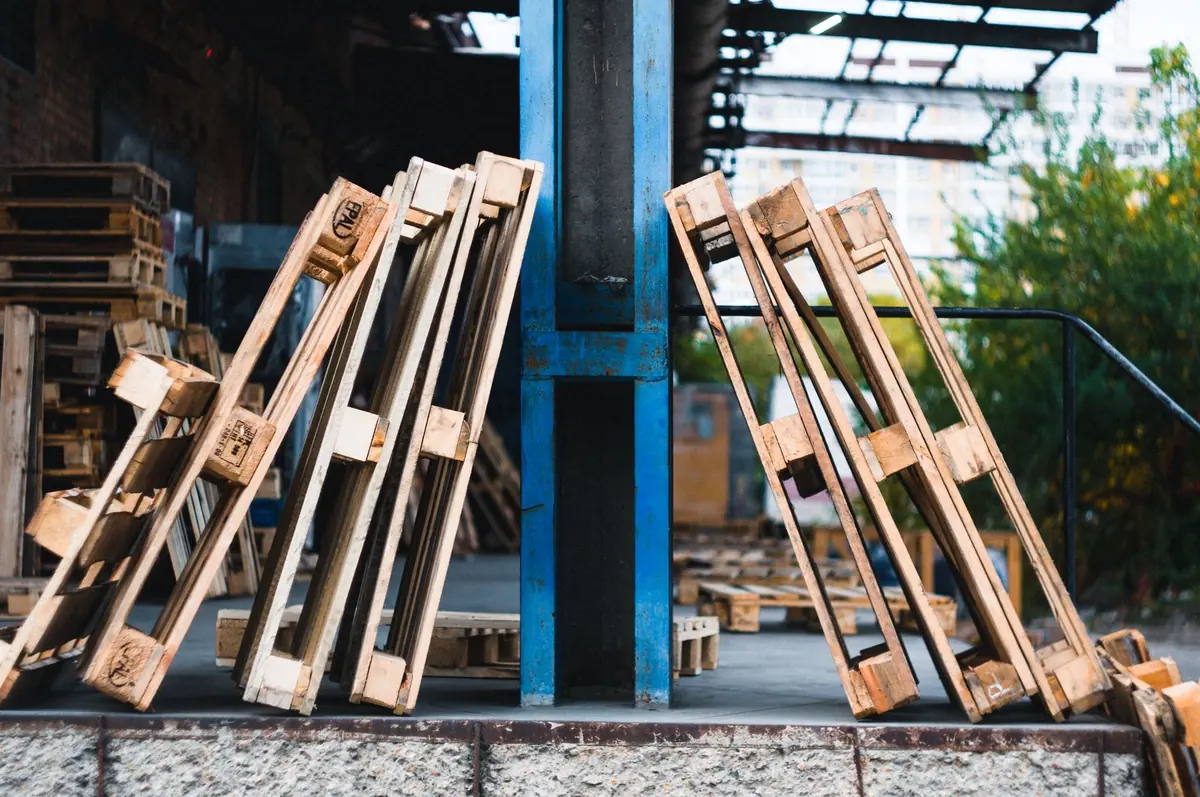
For export, use new pallets: a used pallet may have been repaired with untreated boards, so its IPPC mark no longer covers the whole pallet. How to check boards, stringers and nails when buying used stock is in used wooden pallets: a cost-saving guide.
10. Wooden pallet or plastic pallet
Wooden pallets are cheaper to buy: at ICD a 1200×1000×156 mm wooden pallet costs 285,000 VND, while most plastic pallets of the same size sit around 600,000 VND. Wood can also be built to any size and repaired when a board breaks. On the other hand, plastic pallets do not absorb water, can be washed, need no ISPM 15 treatment for export and last for many years, which suits cold stores, food, pharmaceuticals and continuous-turnover warehouses.
A simple rule: one-way exports, heavy goods and odd sizes point to wood; long-term pooling or strict hygiene points to plastic. A full lifetime-cost comparison is in plastic pallet vs wooden pallet: which one to choose.
11. Inspecting and storing wooden pallets
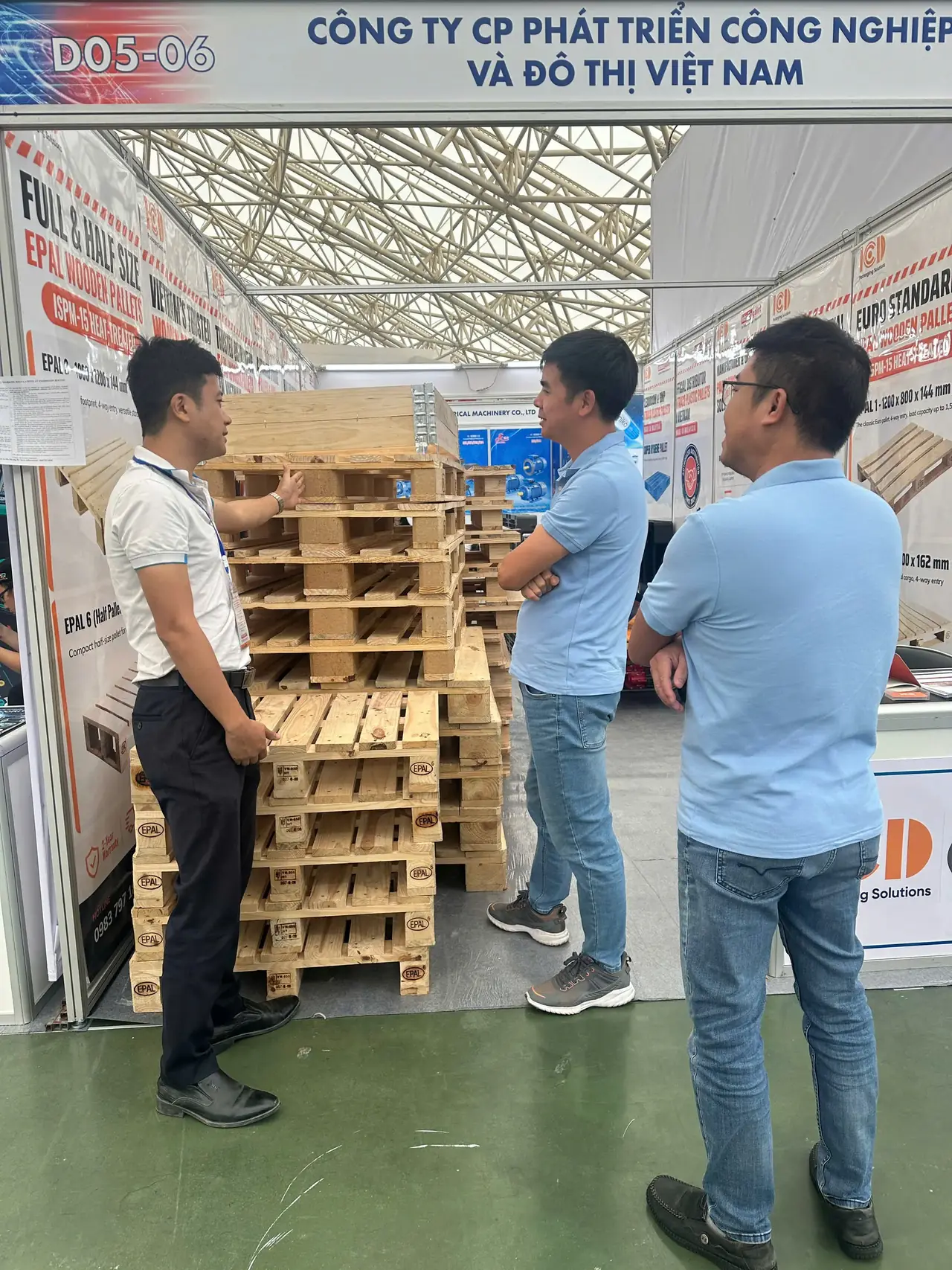
How long a wooden pallet lasts depends largely on storage. Do not place pallets directly on damp ground or out in the rain: wet wood gets heavier, grows mould and warps. Stack pallets neatly, set aside any with broken boards or split blocks, and hammer down raised nails before putting them back into use.
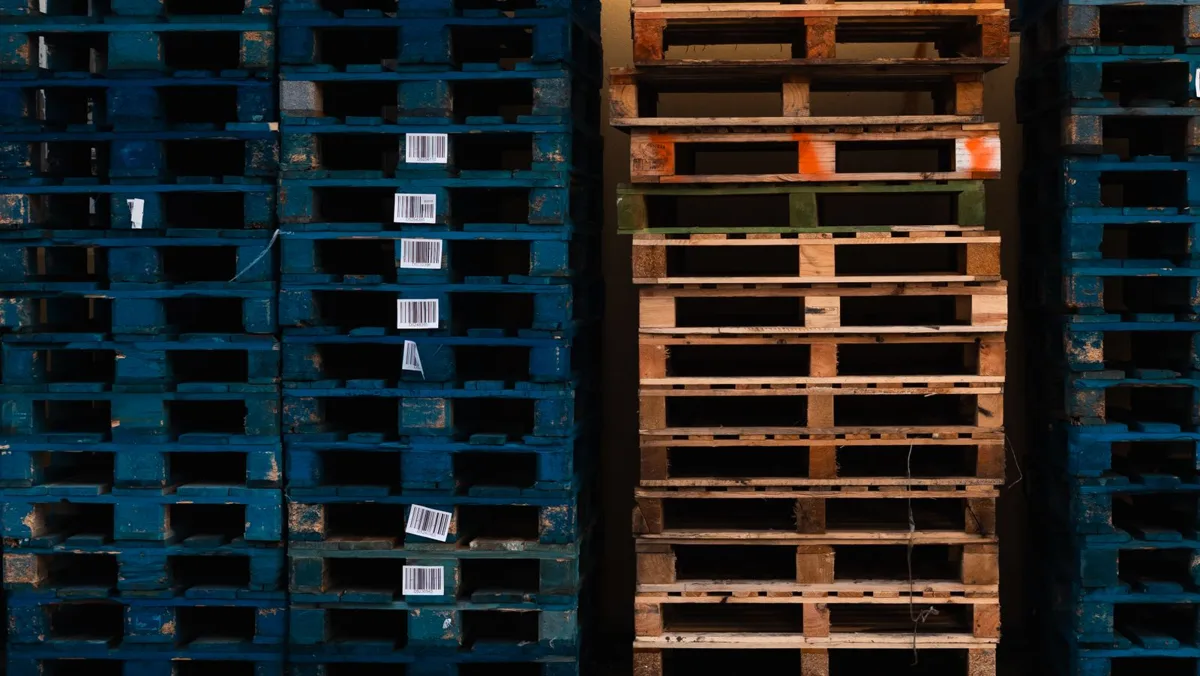
When a batch arrives, check these points before signing the delivery note:
- The actual quantity matches the delivery note.
- Size and height match the ordered specification.
- Deck boards have no long cracks or breaks and no raised nails.
- Stringers or blocks are solid, not split or bent.
- The IPPC mark is legible on two opposite sides for export orders.
12. Related wooden pallet articles
- Wooden pallet dimensions
- What is pallet fumigation? ISPM 15 treatment methods
- Wooden pallet manufacturing process in 6 steps
- Export wooden pallet requirements and regulations
- Wooden pallets in Hanoi: specs, prices and delivery
13. Frequently asked questions about wooden pallets
1. How much does a wooden pallet cost?
At ICD, new wooden pallets cost from 155,000 VND (single-face two-way) to 580,000 VND (EPAL 3); a 1200×1000×156 mm pallet is 285,000 VND and an EPAL EU 1200×800 mm pallet is 420,000 VND, excluding VAT. Volume orders and pallets built to drawing are quoted separately.
2. What are the types of wooden pallets?
By wood: acacia, rubber wood, pine, earleaf acacia (tram) and pressed wood. By construction: single-face, double-face, two-way and four-way entry. By standard: EPAL, CP chemical pallets, Asia-standard pallets and custom pallets. By condition: new and used.
3. What are standard wooden pallet dimensions and height?
The most common sizes in Vietnam are 1200×1000 mm and 1100×1100 mm; the Euro pallet is 1200×800 mm and the US pallet 1219×1016 mm (48×40 inches). ICD wooden pallets are 138 mm to 162 mm high.
4. How much does a wooden pallet weigh?
It depends on size and wood. Across ICD models, the EPAL 6 half pallet (800×600 mm) weighs about 10 kg, EPAL EU about 25 kg, the 1200×1000×156 mm pallet and EPAL 3 about 30 kg, and EPAL 2 about 35 kg, within ±5%.
5. How much weight can a wooden pallet hold?
A single-face two-way pallet carries 500 kg dynamic and 1,000 kg static. An EPAL EU pallet has a safe working load of 1,500 kg and, at the bottom of a stack on a flat floor, carries up to 5,500 kg. The 1200×1000×156 mm line carries 1,500 kg dynamic and 6,000 kg static.
6. Do wooden pallets need to be fumigated or heat treated?
Only when they travel with export goods: the wood must be treated under ISPM 15 (usually heat treatment, HT, or methyl bromide fumigation, MB) and stamped with the IPPC mark. Pallets used only within Vietnam do not have to be treated.
7. Are heat treated pallets treated with chemicals?
No. A pallet stamped HT has been treated by heat only, so it carries no chemical residue; an MB stamp means the pallet was fumigated with methyl bromide, so avoid MB pallets when reusing them as indoor furniture. Pressed wood pallets and plywood are processed with heat and pressure and fall outside ISPM 15.
8. Can heat treated pallets get wet? Do wooden pallets rot?
Heat treatment does not make wood waterproof. Pallets left wet for long periods absorb water, grow mould and can rot or attract insects again, so store them dry and under cover, off damp ground.
9. What is the difference between a Euro pallet and a standard pallet?
A Euro pallet (EPAL 1) is 1200×800×144 mm, built to EPAL rules and marked so it can enter the European exchange system. A standard pallet in Vietnam is usually 1200×1000 or 1100×1100 mm, built to the buyer’s specification, and has no exchange value.
10. How many pallets fit in a 20 ft or 40 ft container?
Single-stacked, a 20 ft container takes about 11 Euro pallets (1200×800 mm) or 8-9 pallets of 1200×1000 mm; a 40 ft container takes about 25 Euro pallets or 20-21 pallets of 1200×1000 mm, depending on the loading pattern. Layouts are worked out in how to load pallets into a container.
11. What is the HS code for wooden pallets?
Wooden pallets, box pallets and other load boards of wood are declared under HS code 4415.20.00.
12. Is a wooden pallet cheaper than a plastic pallet?
Yes, at purchase. In the 1200×1000 mm size, an ICD wooden pallet costs 285,000 VND while most plastic pallets of the same size sit around 600,000 VND. Plastic pallets last longer and need no fumigation.
13. Does ICD buy used wooden pallets?
No. ICD sells new wooden pallets, used EPAL pallets and custom pallets built to drawing, but does not buy back used wooden pallets.
14. How long does delivery take?
Stock items: order processing takes 1-2 days, delivery within Hanoi and Ho Chi Minh City 1-3 days, between regions 2-5 days and other provinces 3-7 days. Pallets built to drawing take 5-10 days depending on quantity; EPAL pallets with ISPM 15 treatment take 7-14 days.
14. Contact ICD for a wooden pallet quote
ICD Vietnam Industrial Production Co., Ltd
Northern Vietnam: Floor 3, Thang Long A1 Building, Thon Bau, Thien Loc, Hanoi - 0983 797 186 / 090 345 9186 / 090 5859 186
Southern Vietnam: 551/212 Le Van Khuong, Tan Thoi Hiep, District 12, Ho Chi Minh City - 098 6784 186
Email: sales@icdvietnam.com.vn
Zalo: Chat on Zalo
Send the size, load, quantity and export market for a matching wooden pallet quote. VAT invoice, nationwide delivery.