Table of Contents
- The Most Common Wood Species for Pallets Today
- The Standard 6-Step Wooden Pallet Building Process at ICD Vietnam
- Custom Wooden Pallets - When to Order and What to Note
- Reference Custom Wooden Pallet Price Table 2026
- 5 Common Mistakes When Building Wooden Pallets and How to Avoid Them
- Building Export Wooden Pallets - Mandatory Requirements to Know
- Why Should Companies Choose ICD Vietnam to Build Wooden Pallets?
- Conclusion
- Frequently Asked Questions
- How long does it take to build custom wooden pallets?
- What is the minimum quantity to order custom wooden pallets?
- Which wood is cheapest for pallets today?
- Do custom wooden pallets come with a fumigation certificate?
- Does ICD Vietnam deliver wooden pallets to southern provinces?
- How are wooden pallets built correctly?
- What size pallet is used for chemical goods exported to Europe?
- What should you note when loading goods on wooden pallets?
- Contact ICD Vietnam
- References
- Related Articles
A custom wooden pallet service means a workshop designs and builds pallets to the exact size, load rating and use of each shipment, through 6 steps from survey and drawing to acceptance. ICD Vietnam builds wooden pallets to drawings approved by the customer and processes orders within 1-2 working days before delivery; pallets for export cargo are treated and marked with the IPPC stamp under ISPM-15 through a licensed treatment provider.
Quick summary:
- Building a custom wooden pallet has 6 steps: survey - choose wood - saw boards - check moisture and treat - assemble - inspect and accept.
- Prices are quoted per order, depending on wood species, size, structure, ISPM-15 treatment requirements and quantity; volume discounts apply.
- ICD Vietnam builds wooden pallets to custom sizes; export pallets are treated and given the IPPC mark under ISPM-15 through a licensed treatment provider.
- Orders are processed in 1-2 days; delivery takes 1-3 days within Hanoi and Ho Chi Minh City, 2-5 days between regions and 3-7 days to other provinces.
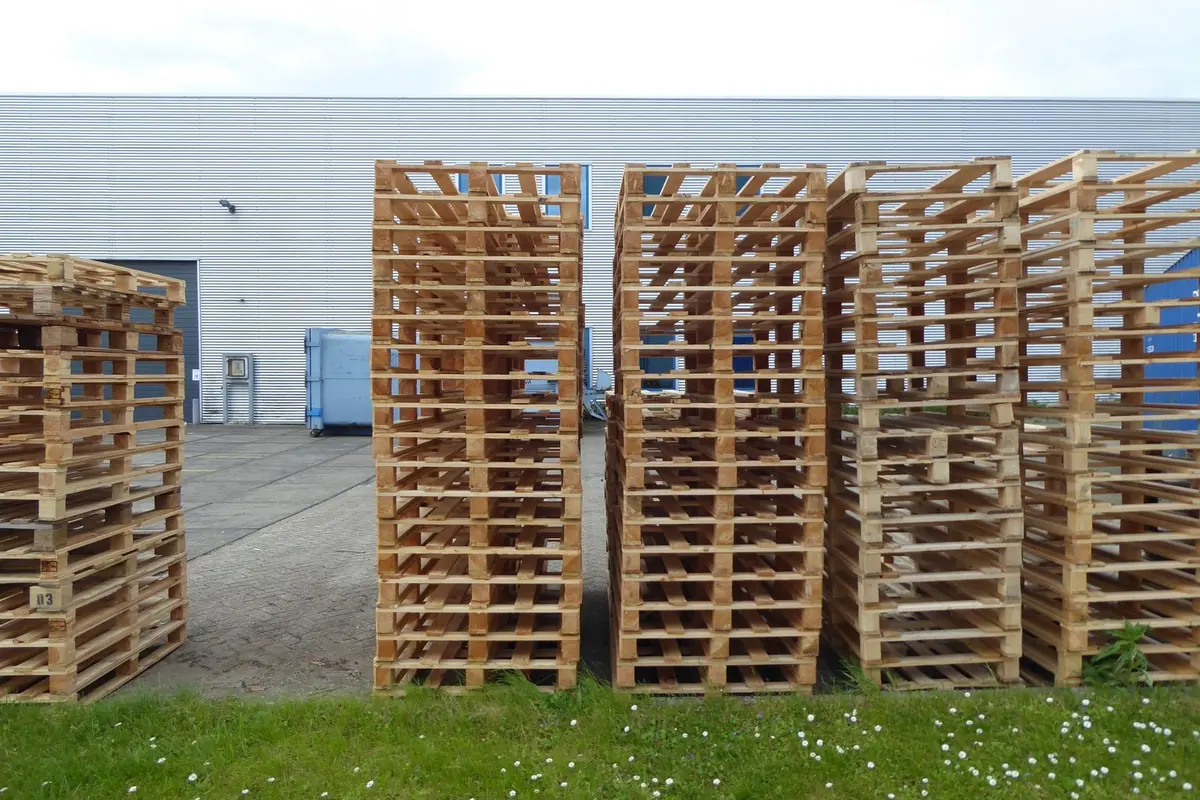
In 15 years making wooden pallets at ICD Vietnam, I have met quite a few companies contacting us for the first time who were using pallets that did not fit their goods. The direct result is goods shifting in transit, carton edges overhanging the pallet and getting crushed, and rising compensation costs for damaged goods.
That is why manufacturers and logistics companies increasingly choose custom wooden pallets instead of buying one ready-made size for every kind of goods. Before ordering, three groups of information need to be clear.
A wooden pallet looks simple, but for it to really serve a business well it takes careful calculation, from the wood species and board thickness, to a 2-way or 4-way entry structure, and the fumigation requirement if the pallet is for export. This article answers all of those questions.
If you are looking for a company that builds wooden pallets to your own size, with a VAT invoice and nationwide delivery, the sections below explain the working process and how to optimise cost when ordering.
The Most Common Wood Species for Pallets Today
The three woods used most for pallets in Vietnam are acacia (melaleuca), pine and rubber wood; acacia is the cheapest and easiest to buy, pine is the lightest, and rubber wood has the hardest and smoothest surface. Wood is the largest cost of a pallet and decides its lifespan, so choosing the wrong species can raise costs considerably without better quality.
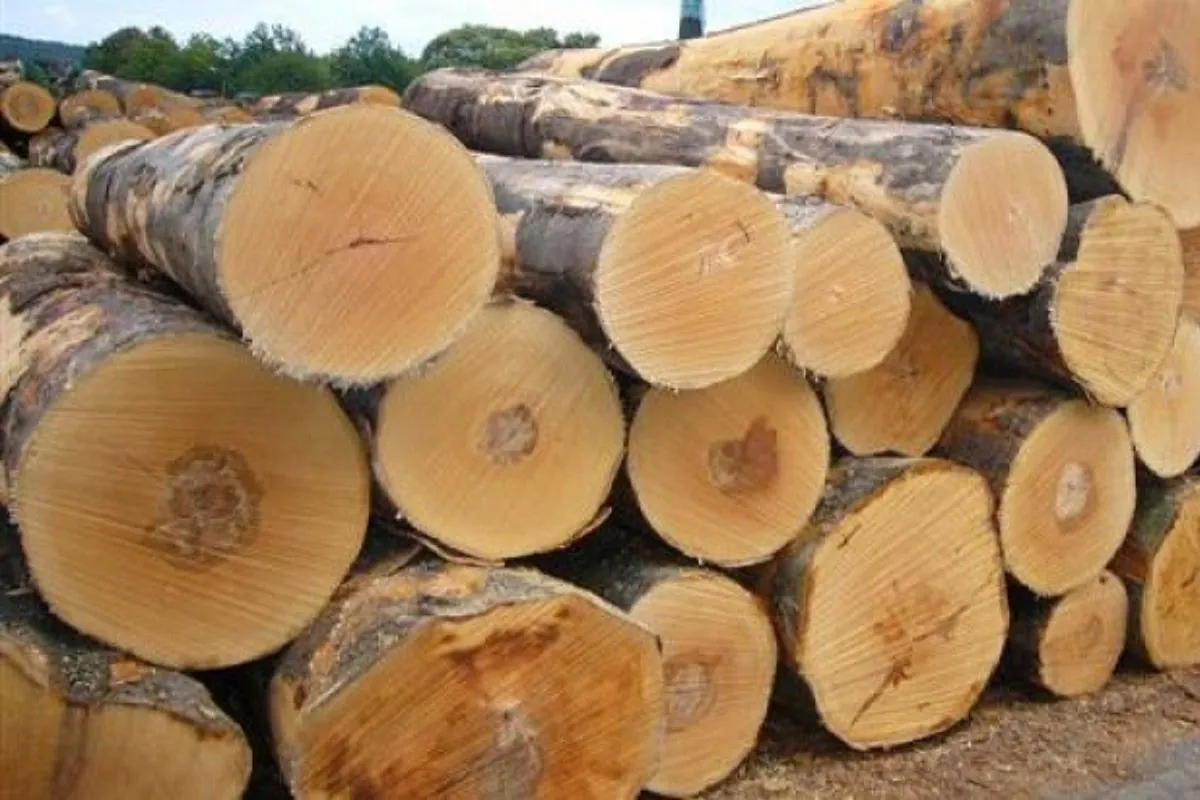
Acacia, including Acacia mangium, hybrid acacia and Acacia auriculiformis (the species often called melaleuca), is the most common in the pallet industry thanks to plentiful plantation supply in the North and Central regions. Its density is about 550-650 kg/m3, it carries load well and it is the cheapest of the three. Acacia pallets suit domestic warehousing, supporting goods in factories and sea export cargo after ISPM-15 treatment. The point to control is moisture: acacia that is not dry enough shrinks, cracks boards and gets mould, so it must be below 20% before building.
Pine is used a lot for export pallets because it is light (imported pine about 400-550 kg/m3), pale and attractively grained. Pine pallets usually cost more than acacia of the same specification, in return for a lower tare weight, which helps most when goods travel by air. Rubber wood has a density of about 595 kg/m3 and a Janka hardness of 4,280 N per The Wood Database, with a smooth surface suited to food and pharmaceuticals; but the same source places rubber wood in the group of poor natural durability, prone to fungi and insects, so it must be treated and dried thoroughly.
A mistake I often see is a company choosing pine for pallets that sit in a factory warehouse long term. For a pallet that stays still in storage, light weight brings no benefit; an acacia pallet of the same size is cheaper and still carries enough load. According to ICD Vietnam’s product pages, standard-size single-face 4-way wooden pallet models have a static load of 2,000-6,000 kg depending on specification. Pine should only be used when pallet weight must be cut to optimise freight cost, or when the buyer specifies it.
The Standard 6-Step Wooden Pallet Building Process at ICD Vietnam
The process has 6 steps: survey and drawing, choosing wood, sawing boards, checking moisture and treatment, assembly and nailing, and inspection and acceptance; the customer approves the drawing before production.
A wooden pallet that meets requirements is not simply a few boards put together. At ICD Vietnam, every custom order goes through the 6 steps below so the pallet matches the approved drawing and, for export cargo, meets ISPM-15. Details of each stage are in the article on the wooden pallet manufacturing process.
Step 1: Survey Requirements and Design the Drawing
The technical team takes the size of the goods, weight of each package, how it will be used (storage, racking or export) and the quantity. From this ICD Vietnam produces a drawing with the overall size, number of deck boards, stringer board thickness, leg type (blocks or connecting boards) and the forklift entry direction. The customer approves the drawing before production.
Step 2: Select and Inspect Raw Wood
Wood arriving at the workshop is inspected on entry to reject cracked logs, spongy heart or many dead knots. For acacia, the workshop uses plantation wood. This step matters because poor wood getting through lowers the finished pallet’s load rating and can make it break in use.
Step 3: Saw the Wood into Boards to Specification
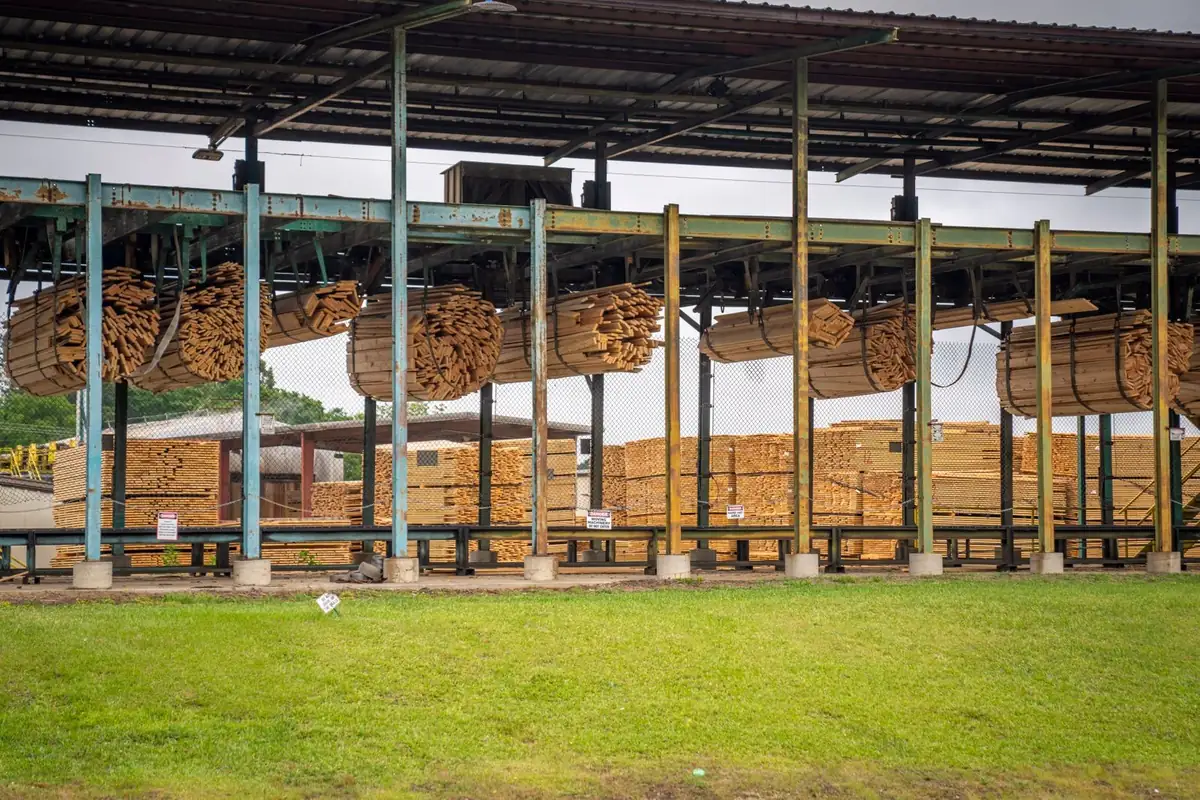
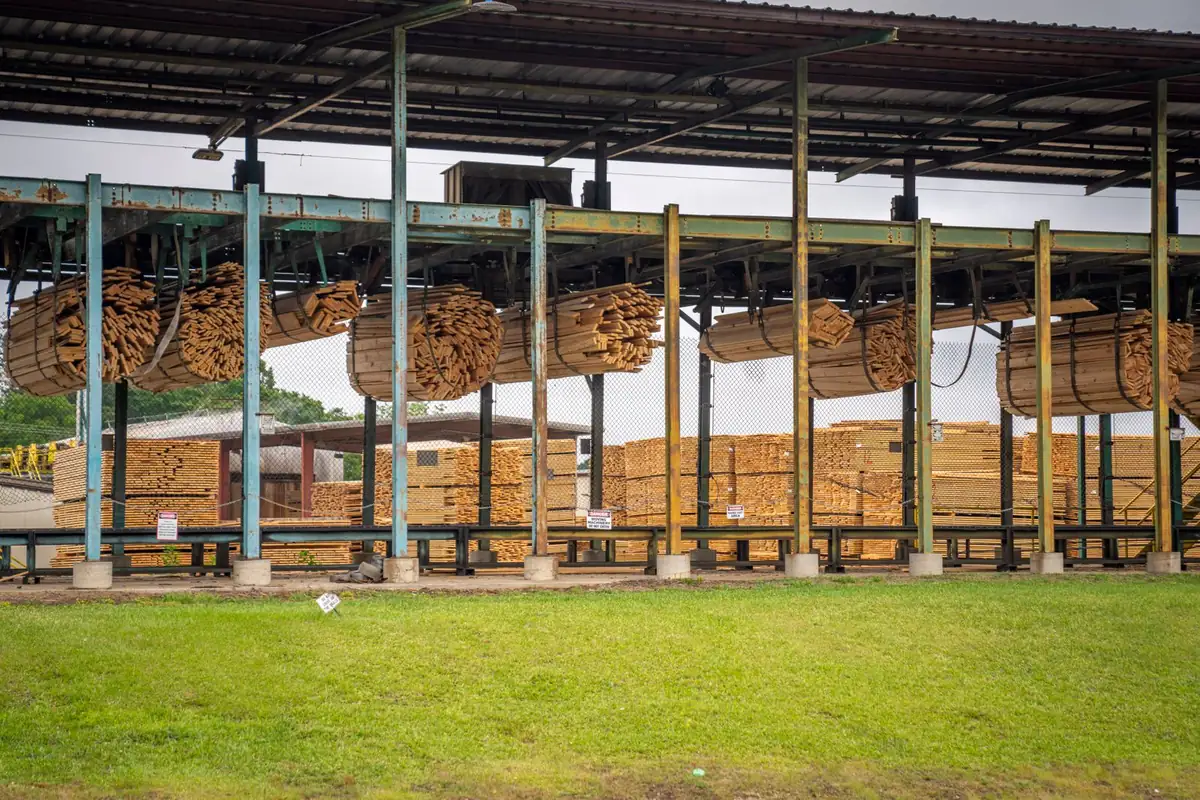
Wood is sawn into boards of the exact size in the drawing. Deck boards are usually 15-22 mm thick and stringer boards 70-100 mm depending on the load required. After sawing, QC checks each board to reject boards that are short of size or have dead knots affecting strength.
Step 4: Check Moisture and Treat as Required
Boards are stacked with spacers for airflow and checked for moisture before building; moisture should be below 20% to limit mould, shrinkage and loose nails. Pallets for export cargo are treated under the ISPM 15 standard, most commonly HT heat treatment until the wood core reaches at least 56°C for 30 continuous minutes, then marked with the IPPC stamp. Treatment and marking are carried out by a licensed provider.
Step 5: Assemble and Nail
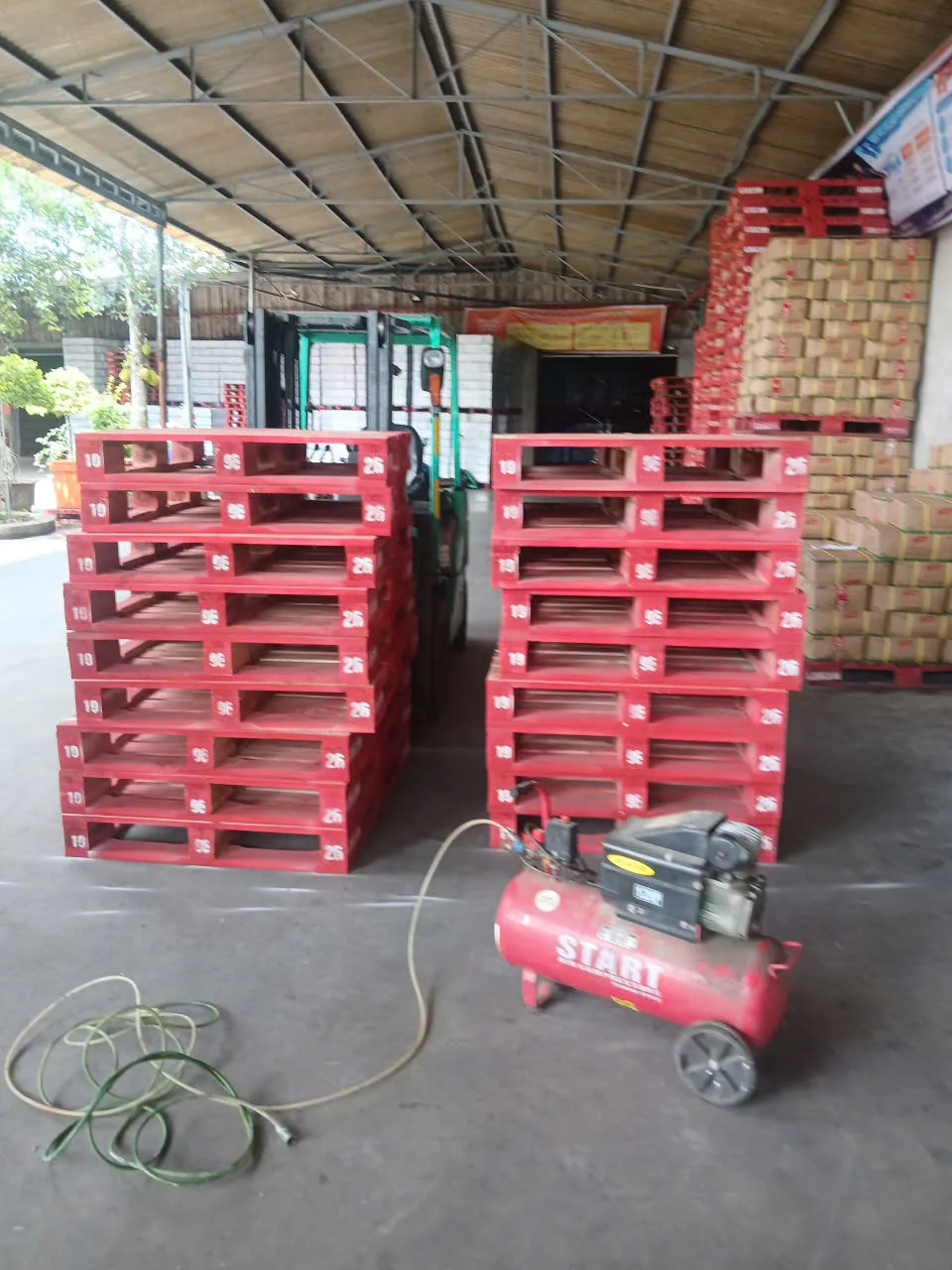
The boards are joined to the drawing with industrial spiral nails. The spiral shank grips the wood grain and holds tighter than a smooth straight nail, so the pallet is less likely to lose nails under heavy load or impact. At ICD Vietnam this step uses pneumatic nail guns so pallets in the same lot are uniform.
Step 6: Inspect, Accept and Store
The finished pallet gets a final check of overall size (tolerance to drawing, usually ±3 mm), surface flatness, firmness of the nailed joints and the wood surface. Pallets that pass are stacked neatly and covered from rain, awaiting delivery to the customer.
Custom Wooden Pallets - When to Order and What to Note
Order custom pallets when goods are non-standard in size, very heavy, or the destination market requires its own specification; for goods of common size and no special load, buying a ready-made standard wooden pallet is faster and cheaper.
The first case is when goods are non-standard in size. For example, a company producing 3-metre steel pipes cannot use an ordinary 1200x1000mm pallet and needs a specially built 3200mm pallet.
The second case is for extra-heavy goods, requiring a reinforced pallet with thicker stringer boards, added diagonal braces and pallet load rating calculated carefully for goods weighing several tonnes per pallet.
The third case is export to markets with specific container-size requirements, for example 1140x1140mm pallets for the European chemicals market.
The 1140 x 1140 mm size belongs to the set of 9 European chemical industry pallet models (CP1 - CP9). The technical rules for each CP model are published by EPAL. The table below summarises the size of each model for reference when a customer asks for a CP pallet.
| CP model | Size (mm) | Typical goods |
|---|---|---|
| CP1 | 1000 x 1200 | Sacks, cartons, jumbo bags |
| CP2 | 800 x 1200 | Cartons, fibre drums, jerrycans |
| CP3, CP9 | 1140 x 1140 | Drums, jumbo bags, octabins |
| CP4 | 1100 x 1300 | Sacks, cartons |
| CP5 | 760 x 1140 | Cartons, jerrycans |
| CP6 | 1200 x 1000 | Mixed packaged goods |
| CP7 | 1300 x 1100 | Mixed packaged goods |
| CP8 | 1140 x 1140 | Octabins with bottom discharge |
When ordering custom pallets, a company should give the manufacturer all the information below. Each item directly affects the amount of wood, the structure and the price:
- Length x width x height, for example 1200 x 1000 x 150 mm, decides the amount of wood, the price and how pallets load into a container.
- Static and dynamic load, for example static 3,000 kg and dynamic 1,000 kg, decide board thickness and the number of blocks.
- Single-face or double-face pallet, 2-way or 4-way entry, decides the structure and price.
- Wood species: acacia, pine or rubber wood, affects price, weight and lifespan.
- Quarantine treatment requirement, for example HT heat treatment and the IPPC mark, affects cost and delivery time.
- Quantity and delivery place, for example 500 pallets delivered to Bac Ninh, affect unit price and freight.
The minimum quantity for each custom specification is confirmed by ICD Vietnam when quoting, according to the size and structure in the drawing.
Reference Custom Wooden Pallet Price Table 2026
ICD Vietnam quotes custom wooden pallets per order, because the price depends on wood species, size, structure, ISPM-15 treatment requirements and quantity; the table below lists the specifications often ordered so you can prepare information when asking for a price.
From 15 years of ICD Vietnam’s experience, the three factors with the greatest effect on wooden pallet prices are the wood (the largest cost), the size and structure of the pallet, and separate processing items such as ISPM-15 treatment, planing smooth, colour painting or logo printing. Order quantity also has a considerable effect, and ICD Vietnam applies volume discounts. For a full price comparison, see the wooden pallet price guide.
| Wooden pallet type | Size (mm) | Material | Price |
|---|---|---|---|
| 2-way entry, single-face pallet | 800 x 1200 | Acacia | Contact for a quote |
| 4-way entry, single-face pallet | 1100 x 1100 | Acacia | Contact for a quote |
| 4-way entry, single-face pallet | 1200 x 1000 | Pine | Contact for a quote |
| Double-face, 2-way entry pallet | 1100 x 1100 | Acacia | Contact for a quote |
| Export pallet (ISPM-15 treated) | 1200 x 1000 | Pine or acacia | Contact for a quote |
| Special-size pallet | To order | Optional | Contact for a quote |
The makeup of the price can be estimated with a formula: unit price of the pallet = raw wood cost + processing cost (sawing, nailing) + separate treatment cost (ISPM-15, planing, logo printing) + freight. To get an accurate quote, the company sends the size, wood species, quantity and delivery place; shipping terms are quoted together with the unit price.
5 Common Mistakes When Building Wooden Pallets and How to Avoid Them
The five common mistakes are wood not dried enough, using straight nails, miscalculating load, skipping ISPM-15 treatment for export pallets and not planing smooth the surfaces that touch the goods.
After many years in the trade, I have seen quite a few companies suffer losses because of seemingly small errors when ordering pallets. Below are the 5 common mistakes and how to check for them right on receiving the goods.

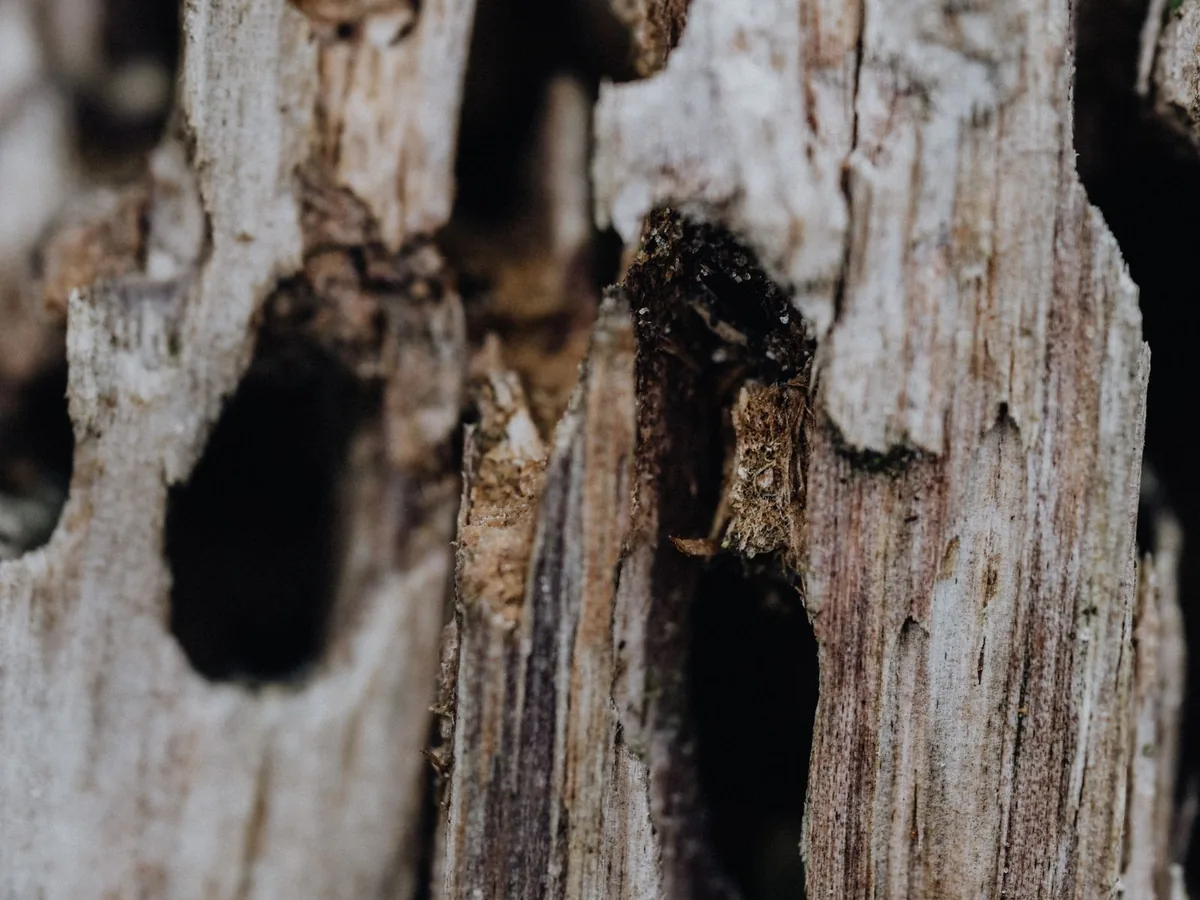
The first mistake is using wood that is not dry enough. Wood with moisture above 20% shrinks after building, causing open joints, loose nails, warping and mould, and the pallet quickly loses its load capacity. How to prevent it: state the maximum moisture in the order and measure a few boards at random with a handheld moisture meter on receipt.
The second mistake is using smooth straight nails instead of spiral nails. Straight nails are cheaper but have clearly lower holding force, so joints work loose easily under the continuous knocks of forklift handling. When receiving goods, look at the head and shank of a spare nail and try shaking the deck board joints.
The third mistake is miscalculating load, choosing stringer boards that are too thin for heavy goods; the check is to measure board thickness and compare with the approved drawing. The fourth mistake is skipping ISPM-15 treatment for export pallets, which can cause the shipment to be held at the port of arrival; check for a clear IPPC mark on at least 2 opposite sides. The fifth mistake is not planing the wood surface smooth when the pallet touches packaging directly, tearing sacks and damaging goods; run a hand over the board surface that touches the goods and check that no nail heads stick out.
Building Export Wooden Pallets - Mandatory Requirements to Know
Raw wood pallets used for export cargo must be treated under ISPM-15 and stamped with the IPPC mark; without the mark, the shipment can be held at the port of the importing country.
Under the ISPM 15 standard of the International Plant Protection Convention (IPPC), solid wood packaging in international trade must be treated by an approved method, most commonly heat treatment (HT) or methyl bromide (MB) fumigation, and then marked. Packaging made entirely of processed wood such as plywood, particle board and OSB is exempt.
In Vietnam, HT heat treatment is used more widely because it is safe for the environment and for workers’ health.
After treatment, the pallet is stamped with a clear IPPC mark in a visible position, usually on at least 2 opposite sides. The mark has these components:
- The IPPC symbol (wheat ear), confirming the packaging has been treated under ISPM-15.
- The 2-letter ISO country code of the treating country, which for Vietnam is VN.
- The registration number of the treatment or production facility issued by the quarantine authority.
- The treatment method code: HT (heat treatment) or MB (methyl bromide).
Many first-time exporters do not know that ISPM-15 treatment adds only a small amount to the pallet price, but without it a container can be held at the port of the importing country, causing container storage fees, late delivery penalties and even re-treatment or re-export of the shipment. Compared with this risk, the treatment cost is worth paying.
Why Should Companies Choose ICD Vietnam to Build Wooden Pallets?
ICD Vietnam has supplied pallets since 2011, with a workshop and warehouse in Hanoi and a southern workshop in District 12, Ho Chi Minh City, taking both small orders to custom specifications and large industrial orders. Pallets are inspected before leaving the warehouse.
The ordering process at ICD Vietnam has 5 steps: the customer sends the requirement, ICD Vietnam advises and quotes, the customer approves the drawing, the workshop produces, then delivery with a VAT invoice. Orders are processed within 1-2 working days before delivery; build time for custom specifications is agreed when the order is confirmed. Wooden pallets carry no warranty; ICD Vietnam accepts returns within 7 days if the product does not match the agreed description or has a technical defect, under the return policy.
Besides wooden pallets, ICD also supplies plastic pallets for companies that need a more durable alternative in damp environments.
Conclusion
Custom wooden pallets help a company optimise freight cost, protect goods better and meet international export standards.
The key points are choosing the right wood for the right purpose, controlling moisture and ISPM-15 treatment for export, and working with a manufacturer that keeps quality stable. ICD Vietnam is ready to advise and quote for every custom wooden pallet requirement.
Frequently Asked Questions
How long does it take to build custom wooden pallets?
ICD Vietnam processes orders within 1-2 working days; delivery takes 1-3 days within Hanoi and Ho Chi Minh City, 2-5 days between regions and 3-7 days to other provinces under the shipping policy. For custom specifications, urgent orders or orders needing ISPM-15 treatment, the build time is agreed specifically before the order is confirmed.
What is the minimum quantity to order custom wooden pallets?
The minimum quantity for each custom specification is confirmed by ICD Vietnam when quoting, depending on the size and structure in the drawing. Large orders get volume discounts.
Which wood is cheapest for pallets today?
Plantation acacia (melaleuca) is the cheapest pallet wood. Even so, cheap does not mean saving: an acacia pallet that is dried and built to the proper process lasts far longer than one made of mixed scrap wood, so both the initial cost and the service life should be counted.
Do custom wooden pallets come with a fumigation certificate?
Pallets for export cargo are treated and marked with the IPPC stamp under ISPM-15 through a licensed provider; if the buyer or shipping line requires a treatment certificate (Fumigation/Heat Treatment Certificate), it is issued by the treatment provider, and you need to say so when ordering so it is counted in the quote and delivery time. A Phytosanitary Certificate is a different document issued for goods by the quarantine authority; for the pallet itself, a correct IPPC mark is the basis for inspection.
Does ICD Vietnam deliver wooden pallets to southern provinces?
Yes. ICD Vietnam delivers wooden pallets nationwide, with a southern workshop at 551/212 Le Van Khuong Street, Tan Thoi Hiep Ward, District 12, Ho Chi Minh City. Freight is charged by distance and quantity; southern companies can call hotline 098 6784 186 for a freight quote.

How are wooden pallets built correctly?
A pallet built correctly uses dried wood and spiral or ring nails long enough to go through the deck board into the block or stringer board, nails driven away from the board ends to avoid cracking, and nail heads sunk flush with the board surface. The spacing between deck boards, the number of blocks and the stringer board thickness are calculated from the load and the lift method in the approved drawing.
What size pallet is used for chemical goods exported to Europe?
The European chemicals industry uses the set of 9 pallet models CP1 - CP9; the common ones are CP1 (1000 x 1200 mm), CP3 and CP9 (1140 x 1140 mm) for drums and jumbo bags. When ordering CP pallets, send the drawing of the specific CP model, because the height and bottom type of each model differ.
What should you note when loading goods on wooden pallets?
Goods should be stacked neatly within the pallet edge, never overhanging, with heavy goods at the bottom and load spread evenly over the blocks. Packages must be wrapped in PE film or strapped to the pallet, and total weight must not exceed the dynamic load when lifted by forklift.
Contact ICD Vietnam
ICD Vietnam has a workshop and warehouse in Hanoi and a southern workshop at 551/212 Le Van Khuong Street, Tan Thoi Hiep Ward, District 12, Ho Chi Minh City, building custom wooden pallets for warehouse use and export cargo; export pallets are treated and marked with the IPPC stamp under ISPM-15 through a licensed treatment provider. Orders are processed within 1-2 working days; delivery takes 1-3 days within Hanoi and Ho Chi Minh City, 2-5 days between regions and 3-7 days to other provinces under the shipping policy. Wooden pallets carry no warranty and can be returned within 7 days under the return policy; volume discounts apply.
- North: 0983 797 186 / 090 345 9186 / 090 5859 186.
- South: 098 6784 186.
- Email: sales@icdvietnam.com.vn.
- Zalo: 090 345 9186.
References
- List of ISPM standards, including ISPM 15 on wood packaging in international trade: International Plant Protection Convention (IPPC).
- Requirements for wood packaging entering the EU: European Commission, Requirements for wood packaging and dunnage.
- EU rules on ozone-depleting substances, including the 18 March 2010 end date for methyl bromide use: Regulation (EU) 2024/590, EUR-Lex.
- Technical rules for the CP1 - CP9 chemical industry pallets: EPAL, CP9 Pallet - Facts and figures.
- Density, hardness and natural durability of rubber wood: The Wood Database, Rubberwood.
- Moisture threshold below 20% for mould control: Ibach, Biological Properties of Wood, USDA Forest Products Laboratory.
- TCVN 12619-2:2019 Wood - Classification - Part 2: By physical and mechanical properties.
- ICD Vietnam, load rating specifications on the wooden pallet category product pages and shipping and return policies (October 2026).
Related Articles
FEATURED ARTICLE Latest wooden pallet price table
Articles on wooden pallets:
- Common wood species for pallets
- Top 5 reputable wooden pallet companies
- Cheap wooden pallets - updated 2026
- Used wooden pallets: a money-saving solution
- Cheap wooden pallet boards in Hanoi
- Top 10 companies selling cheap wooden pallets in Ho Chi Minh City
- Used wooden pallet liquidation in Hanoi
- Wooden pallet photo guide