Table of Contents
- What Is ISPM 15
- Which Materials Need Treatment and Which Are Exempt
- The 4 Treatments Under ISPM 15
- How to Read the IPPC Mark on a Pallet
- IPPC Mark and Treatment Certificate
- Do Reused and Repaired Pallets Need Re-treatment
- Countries That Apply It and the Rules in Vietnam
- Check Before Loading the Container
- Frequently Asked Questions
- What is the ISPM 15 standard?
- How many treatment methods does ISPM 15 recognise?
- What are the advantages of heat treatment over methyl bromide?
- How long is the ISPM 15 mark on a wooden pallet valid?
- Do pressed wood pallets and sawdust pallets need the ISPM 15 mark?
- What do the DH and SF codes on an ISPM 15 mark mean?
- Are wooden pallets subject to plant quarantine in Vietnam?
- Contact ICD Vietnam
- References
Reviewed and updated by ICD - Week 43/2026
ISPM 15 is the international phytosanitary standard for wood packaging used in international trade. Pallets, crates and dunnage made from raw wood thicker than 6 mm must be debarked, treated against pests by one of 4 approved methods (the most common is heat treatment, with the wood core held at a minimum of 56 °C for 30 continuous minutes) and marked with the IPPC stamp before they travel with export cargo. A valid IPPC mark is the proof of treatment that importing countries accept.
The question export customers ask us most is not “how heavy is the pallet” but “will this pallet pass quarantine”. The answer sits almost entirely inside ISPM 15: has the wood been debarked, which treatment was used, and is the IPPC mark correct and still legible. This article walks through each point using the current ISPM 15 text from the IPPC and the plant quarantine rules still in force in Vietnam, so that purchasing and documentation teams can check a pallet lot themselves before the container is loaded.
What Is ISPM 15
ISPM 15 (International Standards for Phytosanitary Measures No. 15) is the 15th standard in the series of international standards on phytosanitary measures. It was adopted by the Commission on Phytosanitary Measures (CPM) of the International Plant Protection Convention (IPPC), whose Secretariat is hosted by the Food and Agriculture Organization of the United Nations (FAO). Its purpose is to reduce the risk of wood-boring insects and nematodes spreading to other countries inside wood packaging material (WPM).
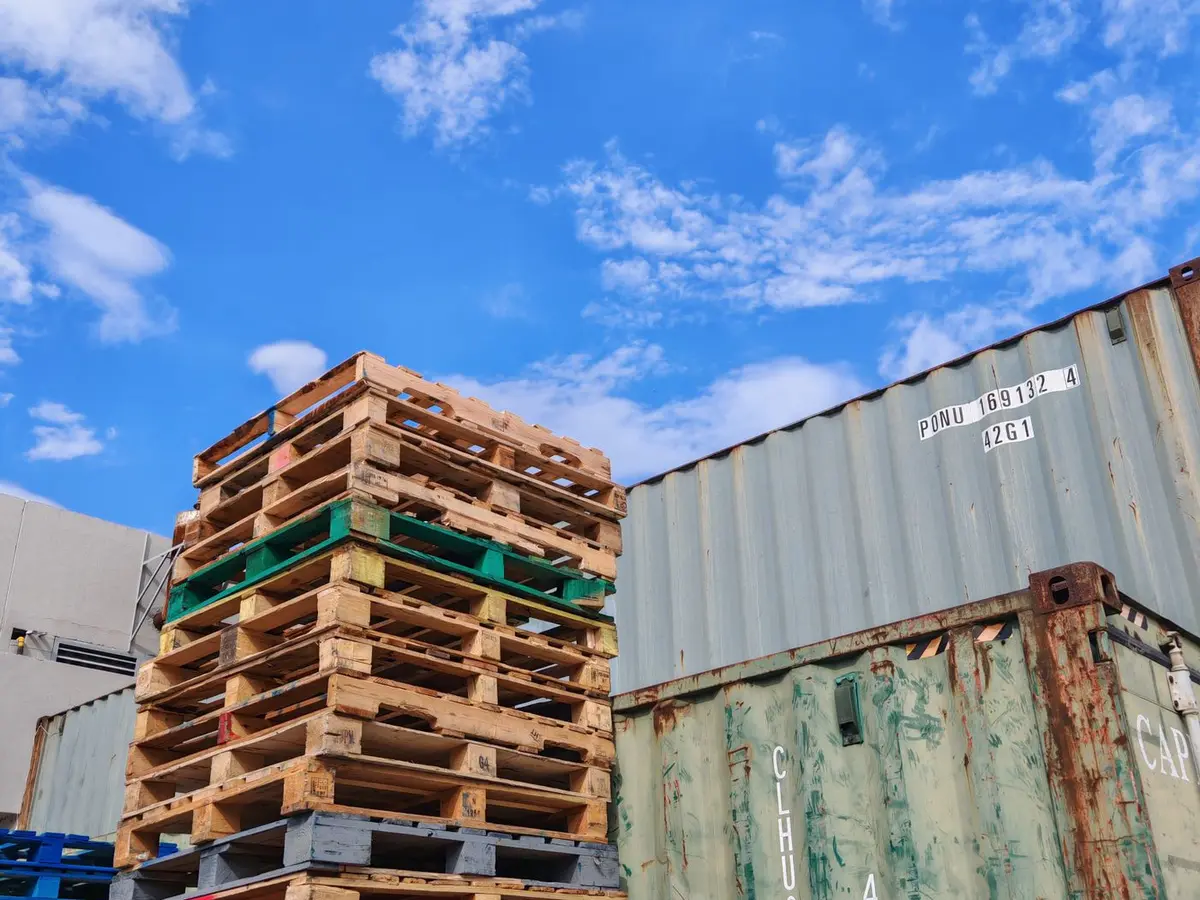
Wood packaging is a high-risk category because untreated raw wood can carry pests, while pallets are reused and repaired through many cycles, so the origin of the wood can hardly be traced. For that reason ISPM 15 does not assess risk lot by lot; it sets one common measure that every country accepts. For an exporter the benefit shows up in three ways: pests in the wood are killed before the shipment leaves the exporting country, a valid IPPC mark is accepted by the importing country for wood packaging, and the shipment avoids having its packaging re-treated, destroyed or sent back, with the cost and delay that follow.
The standard has been revised several times. The first version was adopted in 2002 under the title Guidelines for regulating wood packaging material in international trade. In 2009 ISPM 15 was thoroughly revised, adding a tolerance for bark remnants and requirements for repaired and remanufactured pallets. In 2013 Annex 1 added dielectric heating (code DH), and in 2018 it added sulfuryl fluoride fumigation (code SF). The edition in force is ISPM 15 (2009) with Annexes 1 and 2 amended in 2018, recognising 4 treatments, two more than most older guides mention.
Which Materials Need Treatment and Which Are Exempt
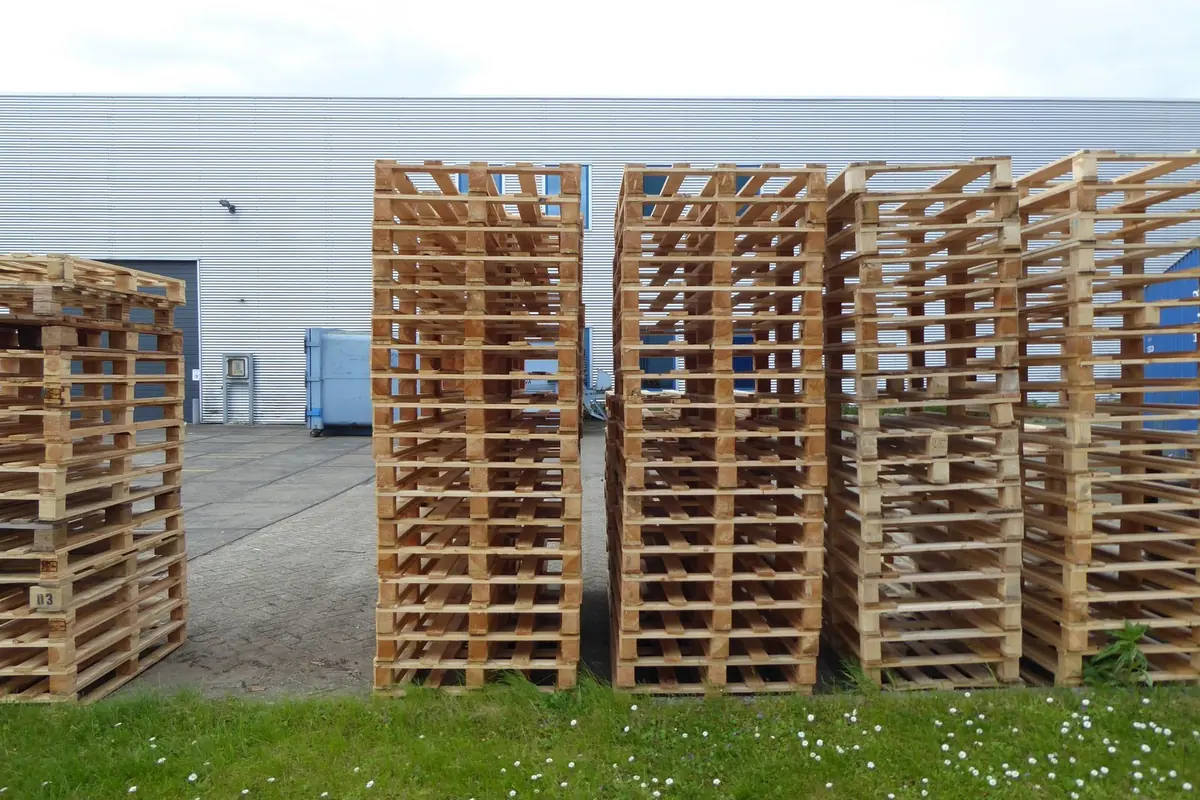
Treatment under ISPM 15 is required for all wood packaging made from raw wood and used in international shipping: wooden pallets, wooden crates, wooden cases and dunnage. ISPM 15 applies to producers, treatment providers and exporters who use wood packaging. The exemption list in section 2.1 of the standard has 6 groups; read the conditions of each carefully, because even among wooden boxes some types are exempt and others are not:
- Packaging made entirely of thin wood, 6 mm thick or less.
- Packaging made entirely of processed wood such as plywood, particle board, OSB and veneer, produced with glue, heat, pressure or a combination.
- Wine and spirit barrels that were heated during manufacture.
- Gift boxes for wine, cigars and other goods made from processed wood or produced in a way that eliminates pests.
- Sawdust, wood shavings and wood wool used as cushioning material.
- Wooden parts permanently attached to a vehicle or container and not removed with the cargo.
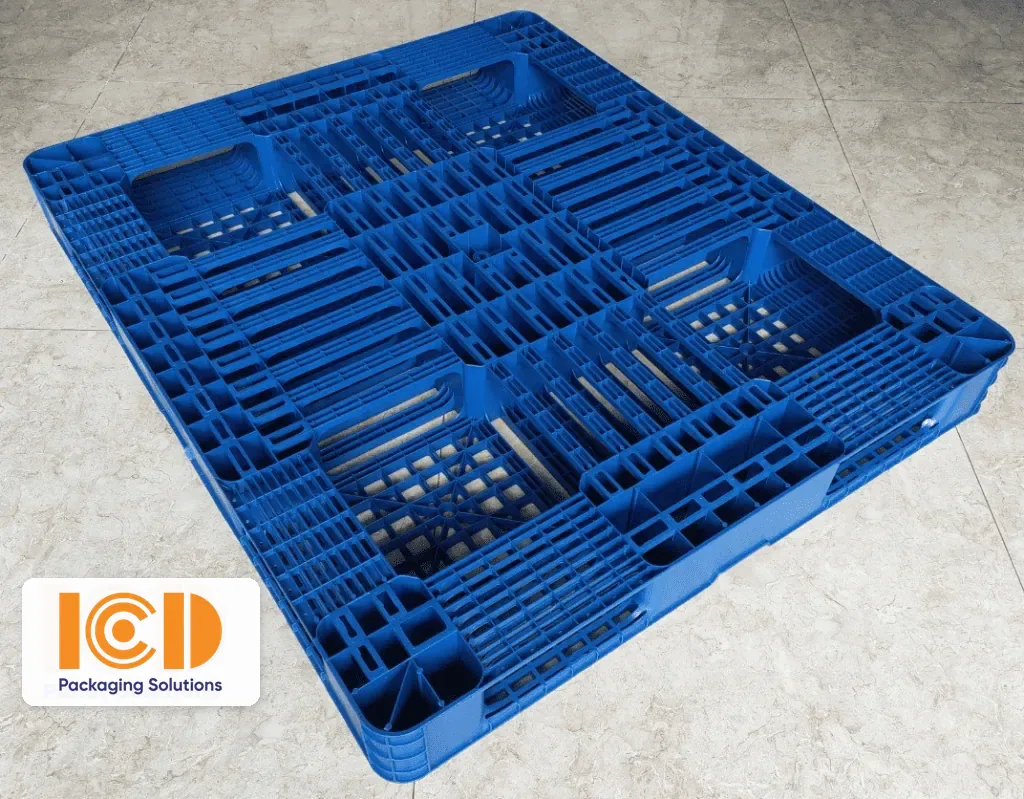
This is why pressed wood pallets and sawdust pallets (made from wood that has been glued, heated and pressed) need neither treatment nor the IPPC mark. Packaging that is not made of wood is also outside the standard, for example an export plastic pallet: plastic pallets are exempt because they are not wood, and no treatment certificate is needed.
The 4 Treatments Under ISPM 15
ISPM 15 recognises 4 treatments in Annex 1 as amended in 2018: heat treatment (HT), dielectric heating (DH), methyl bromide fumigation (MB) and sulfuryl fluoride fumigation (SF). Each has its own code printed on the mark and its own minimum conditions:
| Code on the mark | Treatment | Minimum conditions | Main limitation |
|---|---|---|---|
| HT | Heat treatment in a steam or drying kiln | 56 °C for 30 continuous minutes across the whole wood cross-section, including the core | No limit on wood size |
| DH | Dielectric heating (microwave, radio waves) | 60 °C for 1 continuous minute across the whole cross-section, including the surface | Treatment schedule approved by the national plant protection organization |
| MB | Methyl bromide fumigation | Wood and air at 10 °C or above, at least 24 hours, reaching the specified concentration-time (CT) product | Smallest wood cross-section no more than 20 cm; must be debarked first |
| SF | Sulfuryl fluoride fumigation | Wood at 20 °C or above, 24 hours (from 30 °C) or 48 hours (from 20 °C) | No more than 20 cm, wood moisture no more than 75%; must be debarked first |
Heat Treatment (HT)
The wood is heated in a steam or drying kiln until the coldest point, usually the core of the thickest piece, reaches 56 °C and holds it for 30 continuous minutes. This is the most common method for export pallets because it uses no chemicals, leaves no residue, has no limit on wood size and is accepted by every country that applies ISPM 15. In return, heat treatment consumes energy and requires time to heat a whole batch, and the kiln is expensive to build, so it is usually handled by a specialist treatment provider. With HT, debarking may be done before or after treatment.
Methyl Bromide Fumigation (MB)
The wood is placed in a sealed chamber or under a tarpaulin, methyl bromide gas is released and held for at least 24 hours at the specified concentration. The advantage is that a whole lot of pallets already built in the warehouse can be treated without a kiln. The drawbacks are just as clear: methyl bromide depletes the ozone layer and is tightly controlled, it is toxic to people if handled wrongly, and the wood must be debarked first because bark blocks gas penetration. ISPM 15 itself refers to the CPM’s 2008 recommendation on replacing or reducing the use of methyl bromide, so unless the importing country requires otherwise, HT heat treatment is the better choice.
Debarking Requirement
For every method the wood must be debarked. ISPM 15 allows only bark remnants narrower than 3 cm (no limit on length), or, if wider than 3 cm, with a surface area of no more than 50 cm² per piece.
How to Read the IPPC Mark on a Pallet
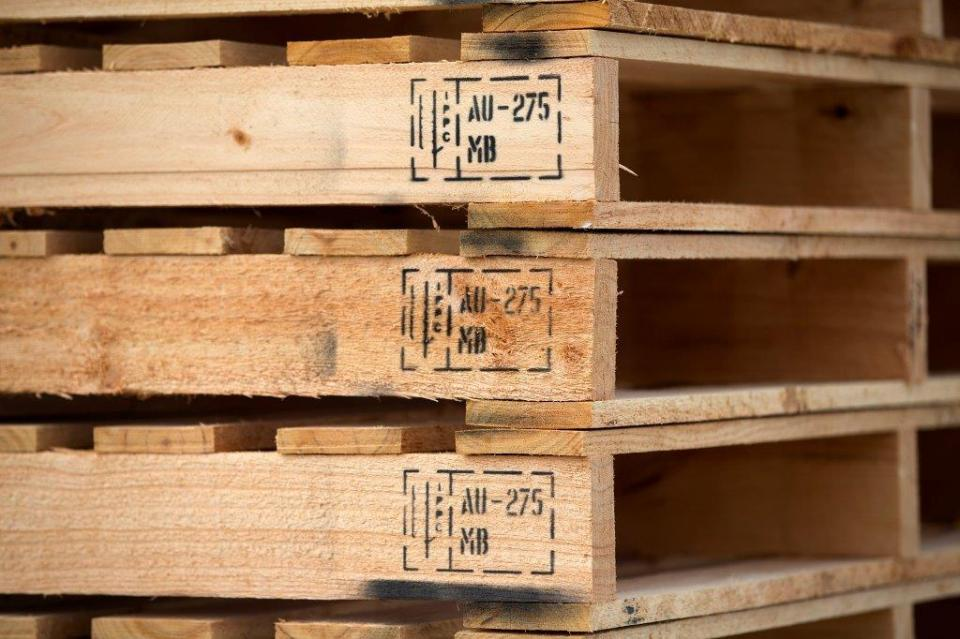
Packaging that has been treated correctly carries the IPPC mark, made up of the IPPC wheat-ear symbol, the country code, the facility code and the treatment code. The mark is read from left to right; the quarantine authority of the importing country uses the facility code to trace the treating company when pests are found.
Annex 2 of ISPM 15 also sets out how the mark must be applied:
- The mark is legible, durable and cannot be transferred to other items.
- It sits in a visible position when the pallet is in use, ideally on at least 2 opposite sides.
- It is not hand-drawn; avoid red and orange (the colours used for dangerous goods labels).
- No other information is added inside the border.
A compliant pallet can pass through 3 different companies, or be handled by a single one: the treatment provider (heat kiln or fumigation to a schedule approved by the plant protection organization), the manufacturer (builds the pallet from debarked, treated wood) and the marking company (holds a facility code and is responsible for applying the mark correctly to treated pallets).
IPPC Mark and Treatment Certificate
Under ISPM 15 the IPPC mark replaces the phytosanitary certificate for wood packaging; a treatment certificate is only needed when the contract or the importing country asks for one. Section 3.1 of the standard states that marking makes a phytosanitary certificate for wood packaging unnecessary, and importing countries should accept the mark without adding separate requirements. In practice, the sales contract, the letter of credit (L/C) or the shipping line may still ask for a treatment certificate (fumigation certificate) in the document set, so ask the consignee before loading the container.
In Vietnam the plant quarantine authority is the Department of Crop Production and Plant Protection under the Ministry of Agriculture and Environment (before 1 March 2025 it was the Plant Protection Department under the Ministry of Agriculture and Rural Development, per Decision 58/QD-BNNMT), together with the regional plant quarantine sub-departments. The usual process when a shipment needs documents:
- The exporter orders pallets that are already treated, or hires a licensed treatment provider to heat treat or fumigate the pallet lot.
- The treatment provider applies the IPPC mark and issues a treatment certificate stating the method, dose and duration.
- If the importing country or the contract requires a phytosanitary certificate for the shipment, the exporter registers for quarantine with the regional plant quarantine sub-department.
Do Reused and Repaired Pallets Need Re-treatment
A pallet that has been treated and marked correctly, and has not been repaired or modified, does not need re-treatment or re-marking during its whole life. ISPM 15 divides repaired and remanufactured pallets by the share of components replaced:
| Case | ISPM 15 requirement |
|---|---|
| Reused as is | No repair, no replaced boards: keep the original mark |
| Repaired, about 1/3 of components or fewer replaced | Replacement boards are treated wood marked piece by piece, or processed wood; the quarantine authority may require the old mark to be removed and the whole pallet re-treated |
| Remanufactured, more than 1/3 of components replaced | All old marks permanently removed by painting over or grinding, the whole pallet re-treated and a new mark applied |

When you buy second-hand wooden pallets for export cargo, check whether the pallet carries several different marks or has new boards without a mark. This is a situation where the importing country’s quarantine authority is likely to hold the shipment for inspection, because it cannot tell which boards have been treated.
Countries That Apply It and the Rules in Vietnam
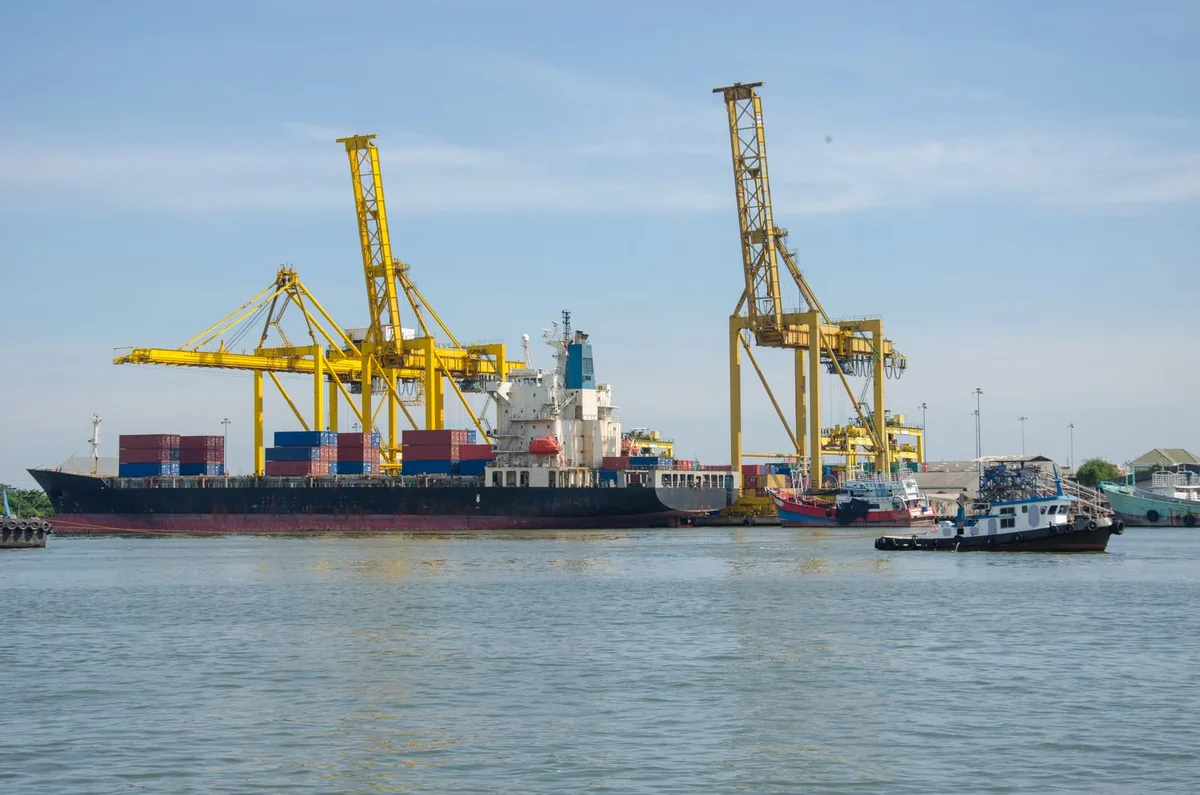
ISPM 15 is the common standard of the 185 contracting parties to the International Plant Protection Convention (IPPC), according to the IPPC Secretariat list for 2026, including major markets such as the United States, Canada, the European Union, Australia, China and Japan. Vietnam acceded to the Convention on 22 February 2005 according to the FAO treaty record on ECOLEX.
Under Vietnamese law, wooden pallets are objects subject to plant quarantine. The current list issued with Circular 14/2024/TT-BNNPTNT (effective 15 December 2024, replacing Circular 30/2014/TT-BNNPTNT) expressly includes the group “round logs, sawn timber, wooden pallets, sawdust, coconut peat”. The procedures for export and import plant quarantine still follow Circular 33/2014/TT-BNNPTNT, which the Ministry of Agriculture and Environment’s list of legal documents in force as of 1 October 2026 records as partly in force, amended several times, most recently by Circular 22/2026/TT-BNNMT. The Ministry is consulting on a draft circular to replace Circular 33/2014, so check the latest text before preparing the paperwork.
Check Before Loading the Container
Before loading the container, check these four points on the pallet lot and the document set:
- Turn each pallet over and check that the mark on 2 opposite sides has the country code, facility code and treatment code, and is still legible.
- A newly replaced board without a mark must be dealt with before shipping.
- Compare the document requirements in the contract and the L/C: is a treatment certificate or a phytosanitary certificate needed.
- Treated wooden pallets still release moisture inside a sealed container; for long sea voyages add container hanging desiccant bags to prevent condensation.
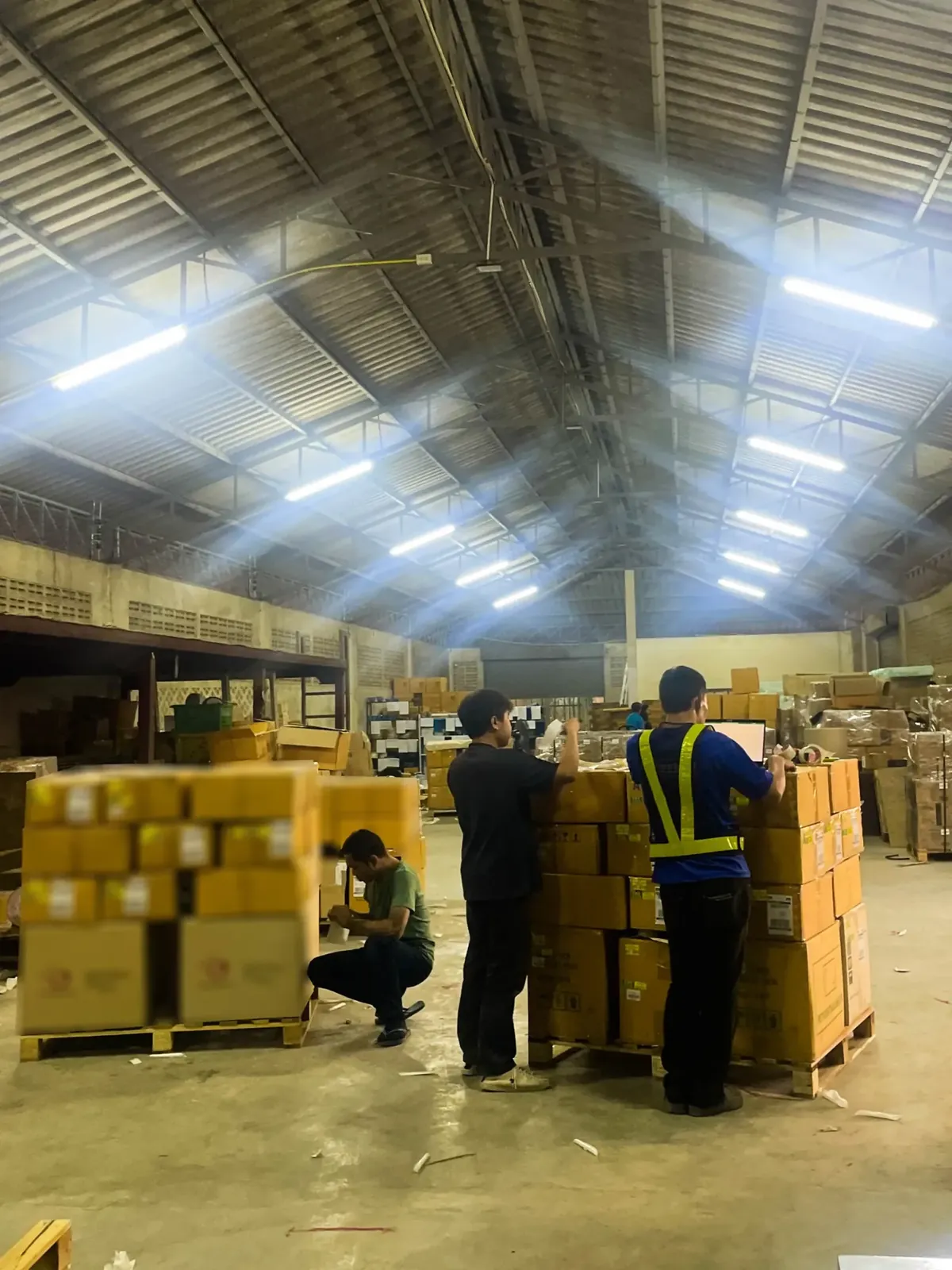
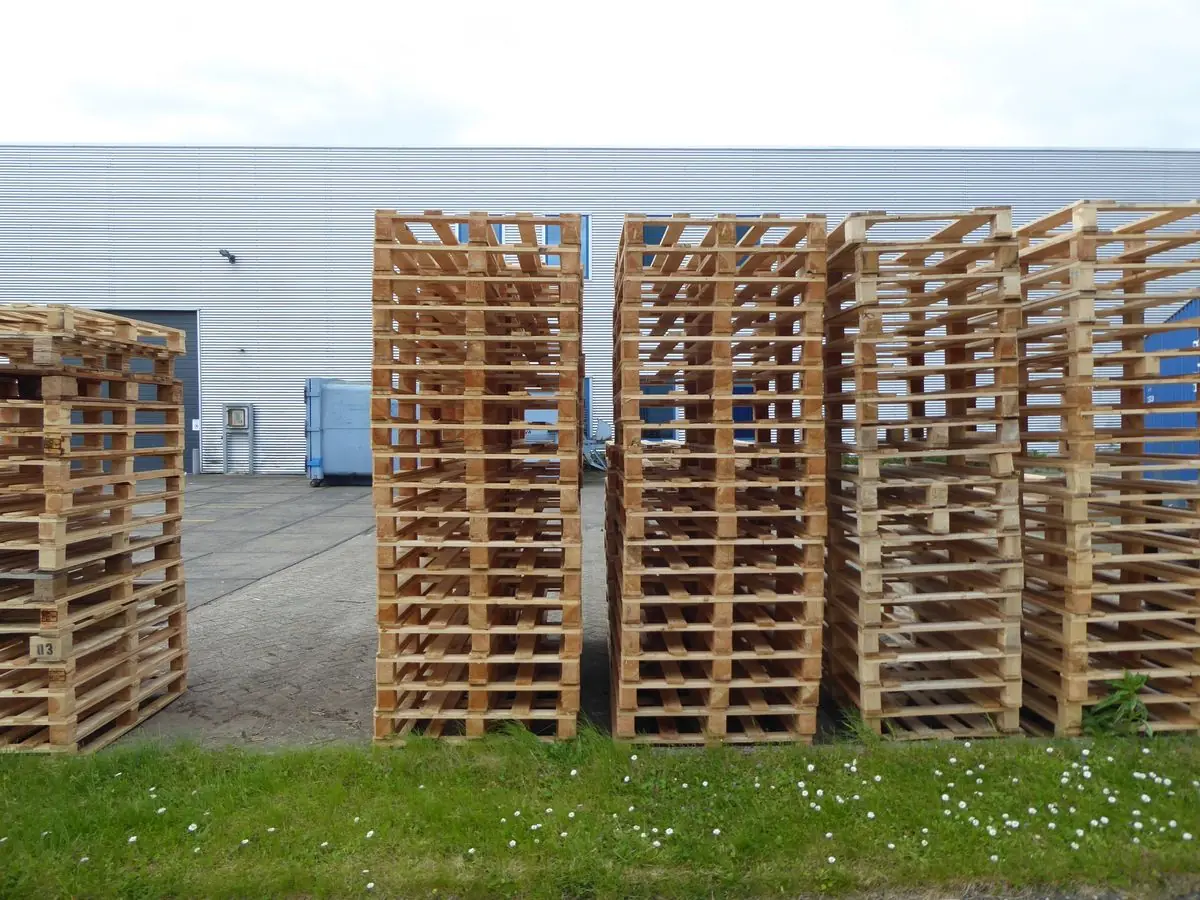
Wooden pallets supplied by ICD Vietnam for export cargo are treated and marked with the IPPC stamp under ISPM 15 before delivery. When ordering, tell us the importing country, the required treatment method (HT or MB) and the documents that must accompany the shipment, so that the pallet lot and the paperwork match the contract from the start.
Frequently Asked Questions
What is the ISPM 15 standard?
It is the international phytosanitary standard adopted by the CPM of the IPPC. It requires wood packaging used in international trade to be debarked, treated against pests and marked with the IPPC stamp.
How many treatment methods does ISPM 15 recognise?
4 methods: heat treatment (HT, the most common), dielectric heating (DH), methyl bromide fumigation (MB) and sulfuryl fluoride fumigation (SF).
What are the advantages of heat treatment over methyl bromide?
It uses no chemicals, has no limit on wood size and is accepted by every country that applies ISPM 15, whereas methyl bromide depletes the ozone layer and is being restricted.
How long is the ISPM 15 mark on a wooden pallet valid?
ISPM 15 sets no expiry date for the mark. A pallet that has been treated and marked correctly, and has not been repaired or modified, does not need re-treatment during its whole life.
Do pressed wood pallets and sawdust pallets need the ISPM 15 mark?
No. Packaging made entirely of wood processed with glue, heat or pressure, such as plywood, particle board and OSB, is exempt, so pressed wood pallets and sawdust pallets need neither treatment nor the IPPC mark.
What do the DH and SF codes on an ISPM 15 mark mean?
DH is dielectric heating by microwave or radio waves, reaching 60 °C for 1 continuous minute across the whole wood cross-section. SF is sulfuryl fluoride fumigation for wood whose smallest cross-section is no more than 20 cm. These two codes were recognised in 2013 and 2018 respectively and carry the same standing as HT and MB.
Are wooden pallets subject to plant quarantine in Vietnam?
Yes. The list of objects subject to plant quarantine issued with Circular 14/2024/TT-BNNPTNT, effective 15 December 2024, includes wooden pallets together with round logs, sawn timber, sawdust and coconut peat.
Contact ICD Vietnam
ICD Vietnam has a workshop and warehouse in Hanoi and a southern workshop at 551/212 Le Van Khuong Street, Tan Thoi Hiep Ward, District 12, Ho Chi Minh City, supplying wooden pallets for warehouse use and export cargo; export pallets are treated and marked with the IPPC stamp under ISPM 15. Orders are processed within 1-2 working days; delivery takes 1-3 days within Hanoi and Ho Chi Minh City, 2-5 days to neighbouring provinces and 3-7 days to other provinces under the shipping policy. Wooden pallets carry no warranty and can be returned within 7 days under the return policy; volume discounts apply.
- North: 0983 797 186 / 090 345 9186 / 090 5859 186.
- South: 098 6784 186.
- Email: sales@icdvietnam.com.vn.
- Zalo: Chat with ICD Vietnam on Zalo.
References
- List of adopted ISPM standards: International Plant Protection Convention (IPPC).
- ISPM 15 text, Annexes 1 and 2 amended in 2018: FAO, ISPM 15 Regulation of wood packaging material in international trade.
- Membership of the International Plant Protection Convention: ECOLEX (FAO, IUCN, UNEP).
- Functions and duties of the Department of Crop Production and Plant Protection: Decision 58/QD-BNNMT.
- List of objects subject to plant quarantine: Circular 14/2024/TT-BNNPTNT.
- Legal status of Circular 33/2014/TT-BNNPTNT: Ministry of Agriculture and Environment, list of legal documents in force as of 1 October 2026.