Table of Contents
- What is wooden pallet fumigation?
- Why must export wooden pallets be fumigated?
- Pallet treatment methods under ISPM 15
- Should you choose heat treatment (HT) or methyl bromide (MB)?
- How do the fumigation mark and the fumigation certificate differ?
- How does pallet fumigation differ from fumigating goods or containers?
- When is pallet fumigation not needed?
- How does the pallet fumigation process work?
- How do you keep a treated pallet from being rejected?
- Frequently asked questions
- Do ‘fumigation’ and ‘disinfection’ of wooden pallets differ?
- How long can a fumigated wooden pallet be kept before it must be treated again?
- Which export markets require wooden pallet fumigation?
- Do plastic pallets need fumigation?
- Can I fumigate wooden pallets myself?
- Do new wooden pallets need extra fumigation?
- What is pallet fumigation in English and Chinese?
- Which agency manages wooden pallet fumigation in Vietnam?
- Contact ICD Vietnam
- References
Reviewed and updated by ICD - Week 43/2026
‘Pallet fumigation’ is the familiar Vietnamese term for treating pallets and wooden crates with heat or gas to kill pests before export, under ISPM 15. A compliant pallet is stamped with the IPPC mark; the most common treatments are heat treatment HT (wood core at least 56 °C for 30 minutes) and methyl bromide fumigation MB.
This article is an overview for pallet buyers and export shippers: what pallet fumigation is, why it is required, how it differs from fumigating a container, when it is exempt, and what to check before loading. The in-depth parts on each method and each type of document are written as separate articles and linked within each section.
What is wooden pallet fumigation?
Wooden pallet fumigation is the treatment of wood packaging material, including pallets, wooden boxes, crates and dunnage, with heat or gas to kill insects, larvae and nematodes living in the wood grain. The purpose is not to clean the pallet surface, but to stop invasive organisms from traveling with a shipment to another country and harming forests and crops in the importing country.
English and Chinese terms used on documents
In the English text of ISPM 15, the word fumigation is used only for gas treatments such as methyl bromide (MB) or sulphuryl fluoride (SF); heat treatment is called heat treatment (HT). When preparing documents or talking with overseas partners, use the term that matches the method applied. Common pairs:
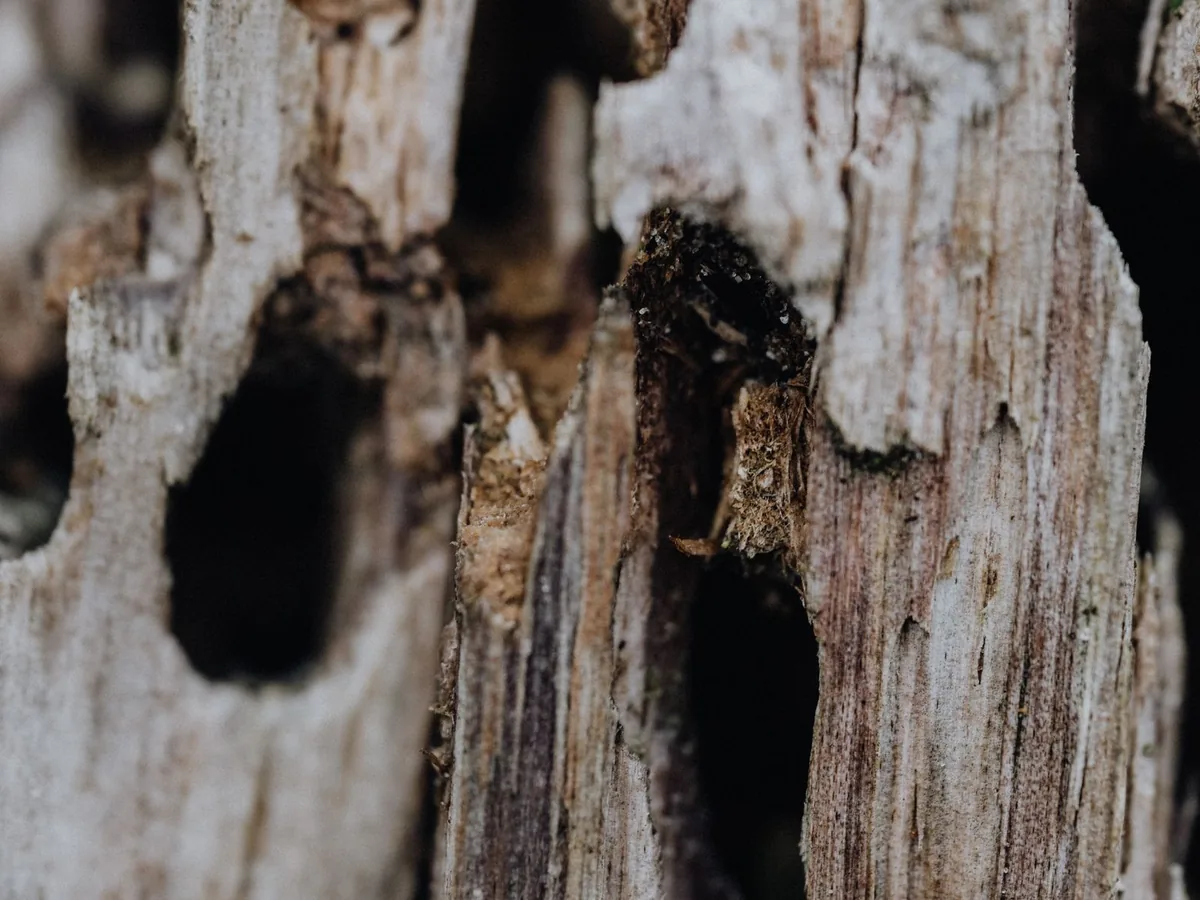
Untreated natural wood can contain wood-boring beetles, longhorn beetle larvae, termites or nematodes. The treatment temperature or gas must reach the core of the thickest piece to kill these organisms at every stage: eggs, larvae, pupae and adults. That is why ISPM 15 sets parameters by wood core temperature or by gas concentration throughout the treatment time, not by how the wood looks.
- Fumigation: fumigation, Chinese 熏蒸 (xunzheng).
- Heat treatment: heat treatment (HT), Chinese 热处理 (re chuli).
- Wooden pallet: wooden pallet, Chinese 木托盘 (mu tuopan).
- Wood packaging material: wood packaging material (WPM), Chinese 木质包装 (muzhi baozhuang).
- Fumigation certificate: fumigation certificate, Chinese 熏蒸证书 (xunzheng zhengshu).
- IPPC mark: IPPC mark or ISPM 15 mark, Chinese IPPC标识 (IPPC biaoshi).

Why must export wooden pallets be fumigated?
For export wooden pallets, ISPM 15 treatment is the condition for a shipment to pass quarantine in the importing country, not an option. ISPM 15 is the common standard of the 185 contracting parties to the International Plant Protection Convention (IPPC) per the IPPC Secretariat’s 2026 list, including the United States, Canada, the European Union, the UK, Australia, New Zealand, China, Japan and Korea.
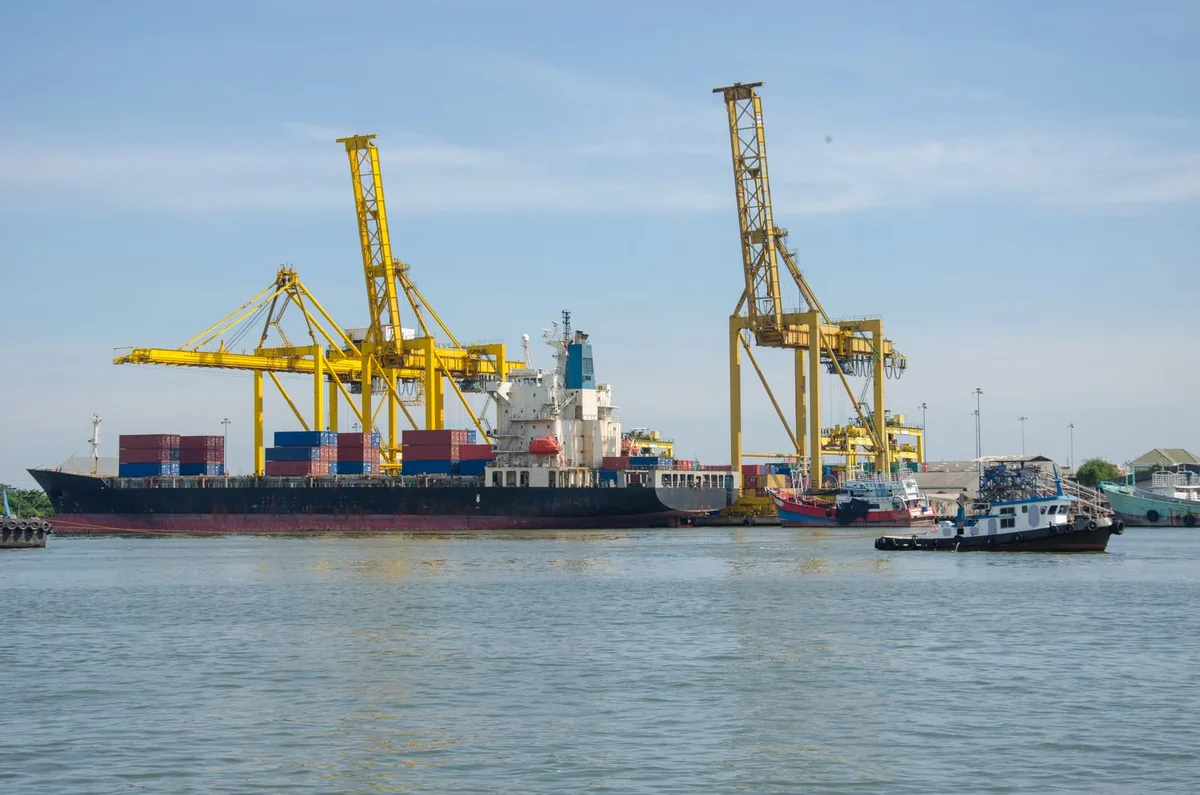
Under section 4.6 of ISPM 15, when wood packaging has no valid mark or live organisms are found, the importing country may hold the shipment, require re-treatment, destroy the packaging or return the shipment. In practice, shippers commonly meet one of these situations:
- Goods are held at the destination port for re-treatment, incurring storage fees and treatment fees in the importing country.
- Goods must be separated from the non-compliant pallets and moved to new compliant pallets.
- Wood packaging is destroyed under supervision, or the whole shipment is sent back to the exporting country.
- The company is recorded as having a quarantine violation, and later shipments may be inspected more closely.
Conversely, wooden pallets used only domestically fall outside ISPM 15, unless the buyer or an industry such as food or pharmaceuticals sets its own requirement. Some markets also have rules beyond ISPM 15, so when ordering pallets, state the destination country so the supplier prepares the right treatment and accompanying papers.
Pallet treatment methods under ISPM 15
ISPM 15 currently recognizes four treatments: standard heat treatment (HT), dielectric heating (DH), methyl bromide fumigation (MB) and sulphuryl fluoride fumigation (SF). In Vietnam, export pallets are mainly treated by HT or MB. Kiln drying alone (KD) is not a separate ISPM 15 method:
| Mark code | Method | Main parameters under ISPM 15 | Note when choosing |
|---|---|---|---|
| HT | Heat Treatment | The whole wood section, core included, reaches at least 56 °C continuously for 30 minutes | No chemicals, no limit on the size of the timber |
| DH | Dielectric heating (microwave, radio waves) | The whole wood section, surface included, reaches at least 60 °C continuously for 1 minute | Few facilities use it in Vietnam; the mark carries the code DH |
| MB | Methyl Bromide fumigation | Fumigated in a sealed space for at least 24 hours, wood and air at 10 °C or above, dose depending on temperature | Must be debarked before fumigation; not for wood whose smallest cross-section dimension exceeds 20 cm |
| SF | Sulphuryl fluoride fumigation | Gas fumigation by the dose and time schedule in Annex 1 of ISPM 15 | Added to ISPM 15 in 2018, rarely seen in Vietnam |
| KD | Kiln drying alone (kiln-dried) | Counts as HT only when it is proven that the wood core reached 56 °C for 30 minutes | A pallet marked only KD, without the IPPC mark, can still be rejected |
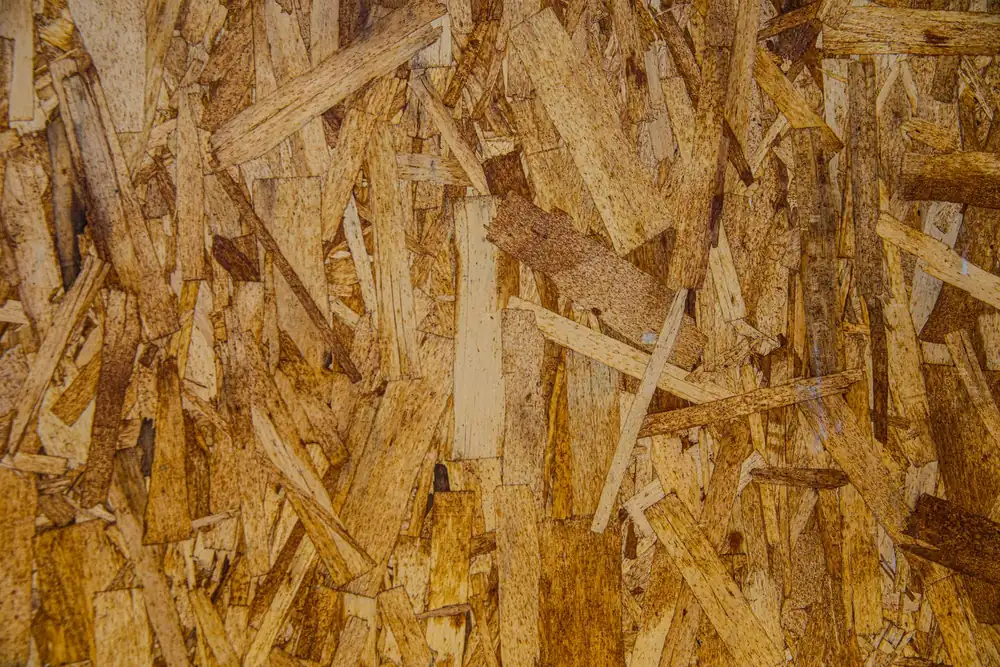
Wood that has been industrially processed with glue, heat and pressure, such as plywood, particleboard, OSB and veneer, is outside ISPM 15, so a pallet made entirely of these materials needs no treatment and carries no mark. The detailed parameters, where to place temperature sensors and who may stamp HT in Vietnam are covered in the article on heat treatment; the MB dose, toxicity and ban status by region are in the article on methyl bromide.
Should you choose heat treatment (HT) or methyl bromide (MB)?
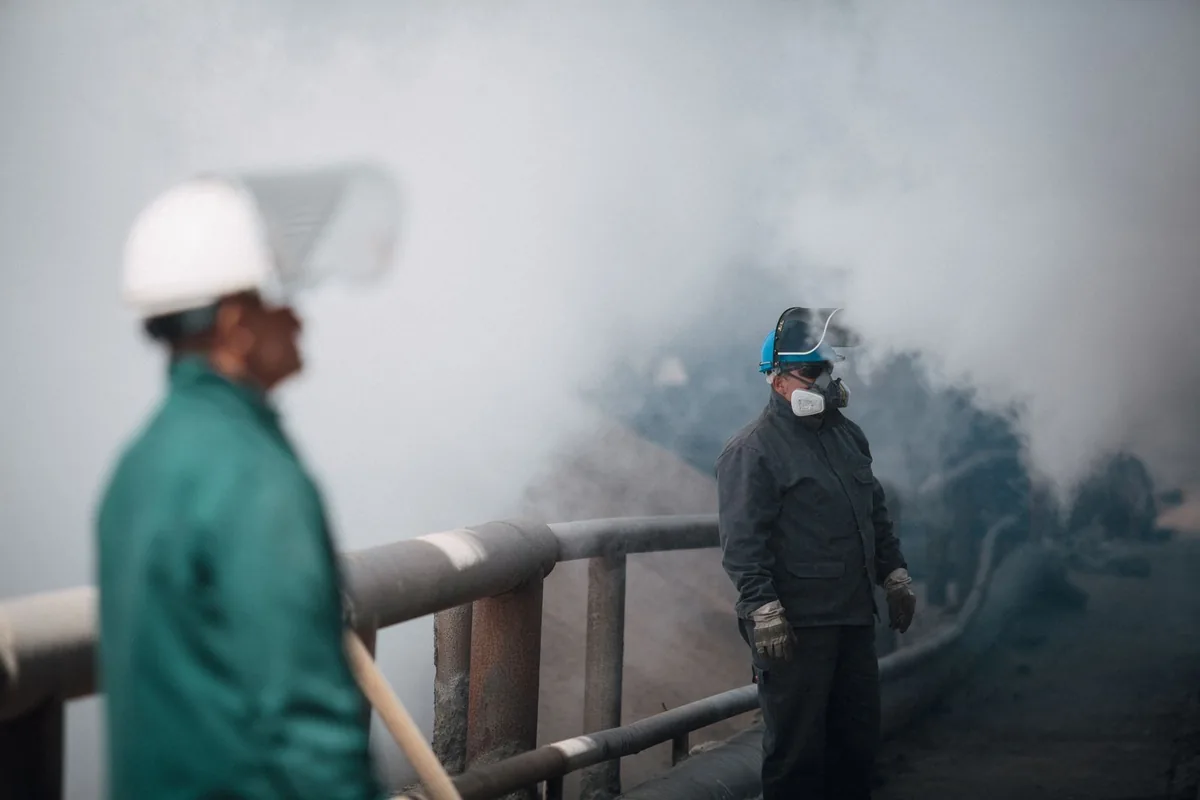
For most orders to the US, EU, Japan and Korea, an HT heat-treated pallet is the lowest-risk choice because it uses no toxic gas, needs no aeration time after treatment and leaves no residue on the wood. HT is a physical process: the wood core only needs to reach the right temperature for the right time. MB is toxic gas fumigation in a sealed space, after which the load must be aerated before handling; methyl bromide is also an ozone-depleting substance on the control list of the Montreal Protocol.
Both methods are recognized by ISPM 15 if done to the parameters. The European Union banned the use of methyl bromide inside the bloc from 18 March 2010 under Regulation (EU) 2024/590, but still accepts imported pallets fumigated with MB in line with ISPM 15, per the European Commission’s guidance on wood packaging. So many European importers require HT as their own policy, not because the MB mark is banned.
How do the fumigation mark and the fumigation certificate differ?
The main evidence that ISPM 15 requires is the mark stamped directly on the pallet; the fumigation certificate is a supplementary per-shipment document, needed only when the importing country, the contract or the L/C requires it. The two kinds of evidence are often both called ‘fumigation’ but differ in role:
- The mark stamped on the pallet, also called the IPPC mark: it consists of the IPPC symbol, the country code (VN), the treatment facility code and the method code (HT, DH, MB or SF). See also how to read the fumigation mark on a pallet.
- The fumigation certificate: a document issued by the treatment provider for each shipment, part of the export document set. Details in the article on the fumigation certificate.
The mark must be clear, durable, not handwritten and not in red or orange, colors reserved for dangerous goods labels. Many markets require only the IPPC mark on the pallet; some countries or commodities require an accompanying certificate as well. A company should ask its forwarder or importing partner before loading so it prepares everything and does not have to add papers after the cargo is on the vessel.
How does pallet fumigation differ from fumigating goods or containers?
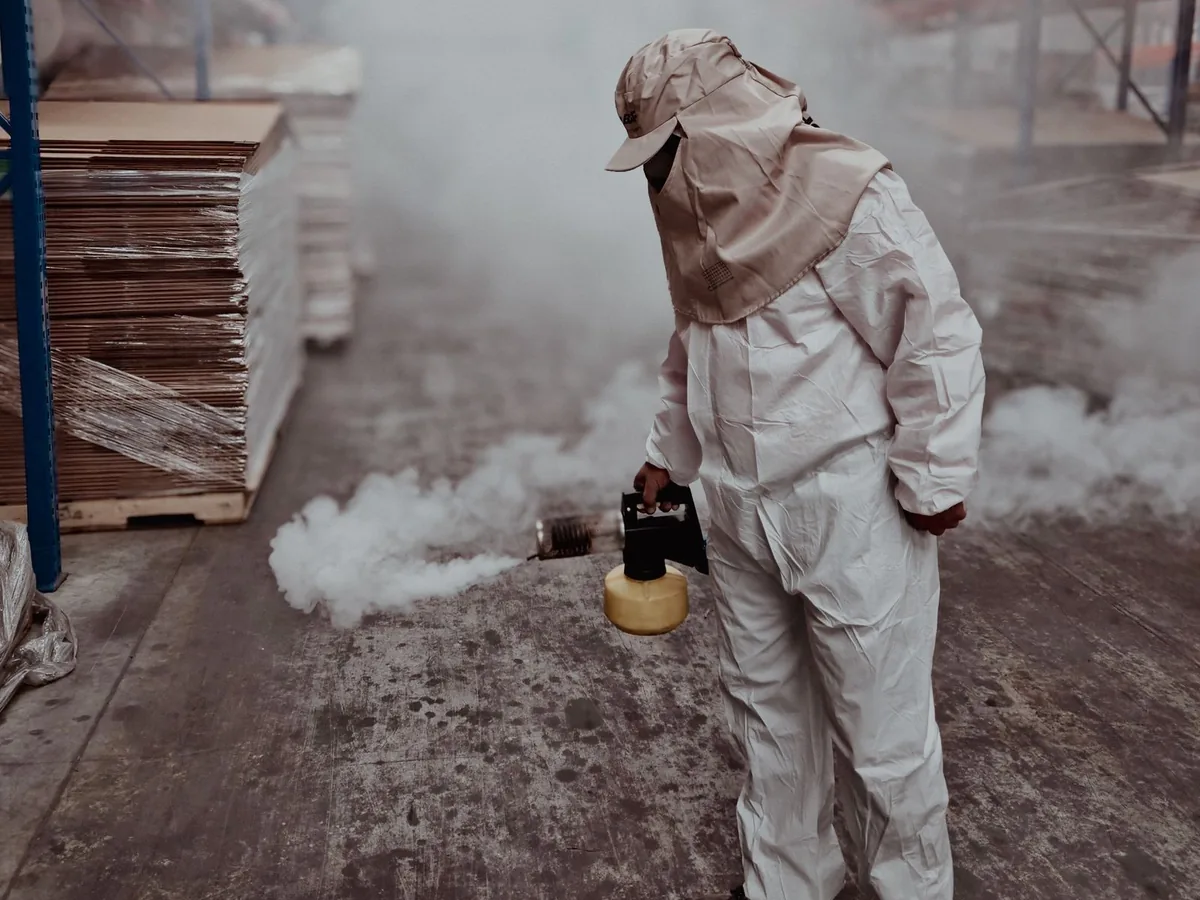
Pallet fumigation treats wood packaging material under ISPM 15, while fumigating goods or a container treats the shipment itself under the importing country’s or the buyer’s quarantine requirements. The two are easily confused because both are called fumigation and both come with certificates, but they cannot substitute for each other:
| Criterion | Wooden pallet fumigation | Fumigating goods or containers |
|---|---|---|
| Subject | Pallets, boxes, crates and dunnage made of natural wood | The shipment itself, for example farm produce, raw timber, goods prone to insects |
| Basis | The ISPM 15 standard, applied to all commodities | Quarantine requirements of the importing country for each commodity, or contract terms |
| Timing | Before the pallet is used to pack goods | After the goods are packed, usually fumigated right inside the container |
| Evidence | IPPC mark on the pallet; certificate if the buyer requires it | Fumigation certificate for the shipment, with a phytosanitary certificate if the commodity requires it |
Point to remember: fumigating a whole container does not replace the ISPM 15 mark on each pallet. EU import rules require the wood packaging material itself to carry the mark; a pallet without it can still be held even if the shipment has a container fumigation certificate.
When is pallet fumigation not needed?
Not every wooden pallet has to be treated. ISPM 15 and EU import rules exempt the following cases:
- Goods circulating domestically: ISPM 15 governs only wood material crossing borders.
- Pallets made entirely of industrially processed wood: plywood, particleboard, OSB, veneer.
- Pallets that are not wood: plastic pallets, paper pallets, steel pallets, aluminum pallets.
- Wood 6 mm thick or less, sawdust, shavings and fine wood chips.
If a company exports regularly and wants to drop the quarantine treatment step altogether, switching to plastic pallets is the definitive solution: reusable for many trips, no mark needed, no worry about termites and borers. In return, a plastic pallet costs more each, so it fits best when pallets can be recirculated or the cargo has high hygiene requirements.
How does the pallet fumigation process work?
At a licensed provider, a treatment batch has five steps, of which holding the parameters in full and recording the temperature or gas concentration is the decisive one:
- Receive the pallets, check the wood species, any remaining bark and the thickness of the thickest piece.
- Load into the heat chamber (HT) or sealed space (MB), attach a sensor to the core of a piece at the slowest-heating point, or set the gas concentration measuring points.
- Hold the parameters per ISPM 15 and keep a record of temperature or concentration over time.
- Stamp the IPPC mark on at least two opposite faces of the pallet.
- Issue a certificate for the shipment if the customer requires it.
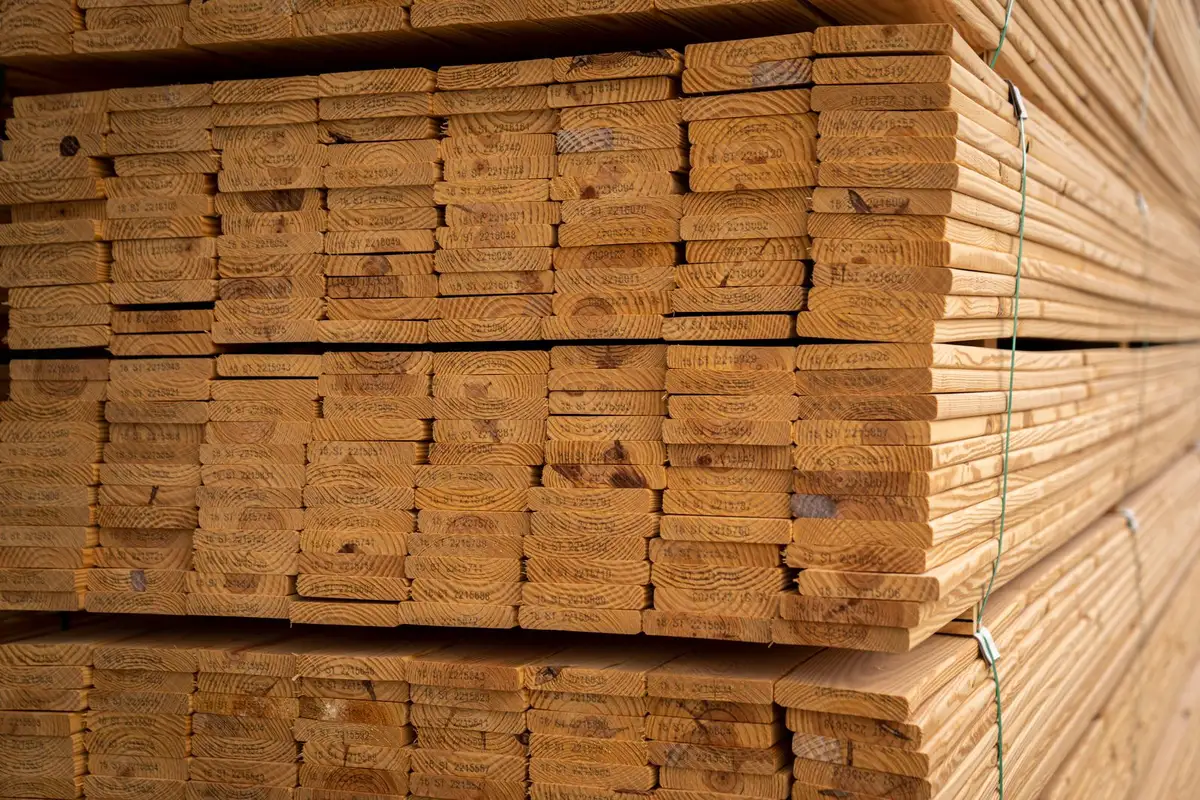
In Vietnam, only an organization holding a Certificate of Practice for treating objects subject to plant quarantine may treat and stamp. According to a reply from the Department of Crop Production and Plant Protection (Ministry of Agriculture and Environment) dated 17 April 2026, this is a conditional business line; the conditions for the certificate are under Decree 66/2016/ND-CP, amended by Decree 33/2026/ND-CP. ICD Vietnam does not fumigate or dry pallets itself; our wooden pallets for export cargo are treated and IPPC-stamped through a certified provider.
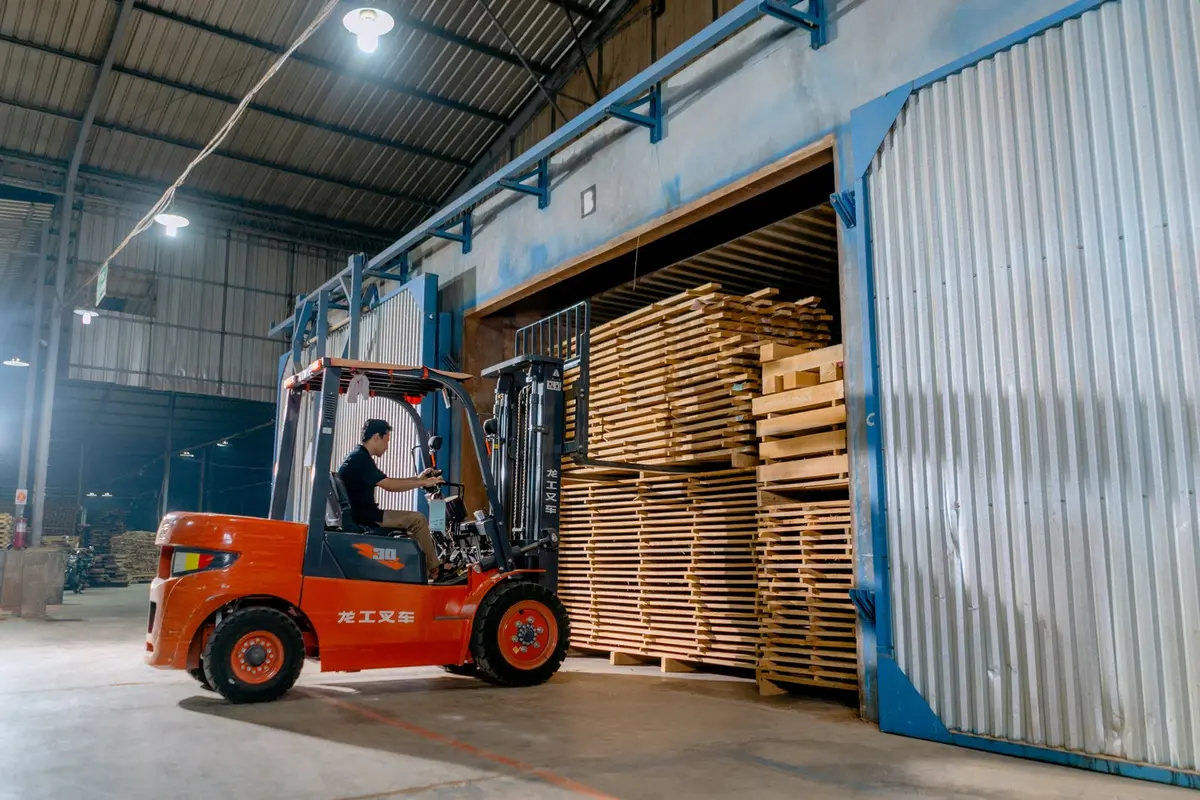
From the exporter’s side, pallet treatment is just one link. The pallet must also be stored and re-checked before loading:
Treatment cost depends on the method, the number of pallets per batch, the thickness of the timber and whether a separate certificate is needed for the shipment. New pallets for export cargo are usually quoted with treatment and stamping included. When comparing quotes, ask clearly what is included:
- HT or MB method; with MB, extra aeration time is needed before handling.
- Number of pallets per batch and the thickest piece, since these two factors decide treatment time.
- Only the IPPC mark, or also a certificate for the shipment at the buyer’s request.
- Price at the treatment site, or including delivery to the loading warehouse.
How do you keep a treated pallet from being rejected?
The IPPC mark certifies that the wood was treated at the time of treatment and does not protect against reinfestation. In a 2021 reply to companies, the Ministry of Agriculture and Rural Development (now the Ministry of Agriculture and Environment) stated that heat treatment at 56 °C for 30 minutes kills insects only at the time of treatment. A stamped pallet can still be rejected by the importing country’s customs if:
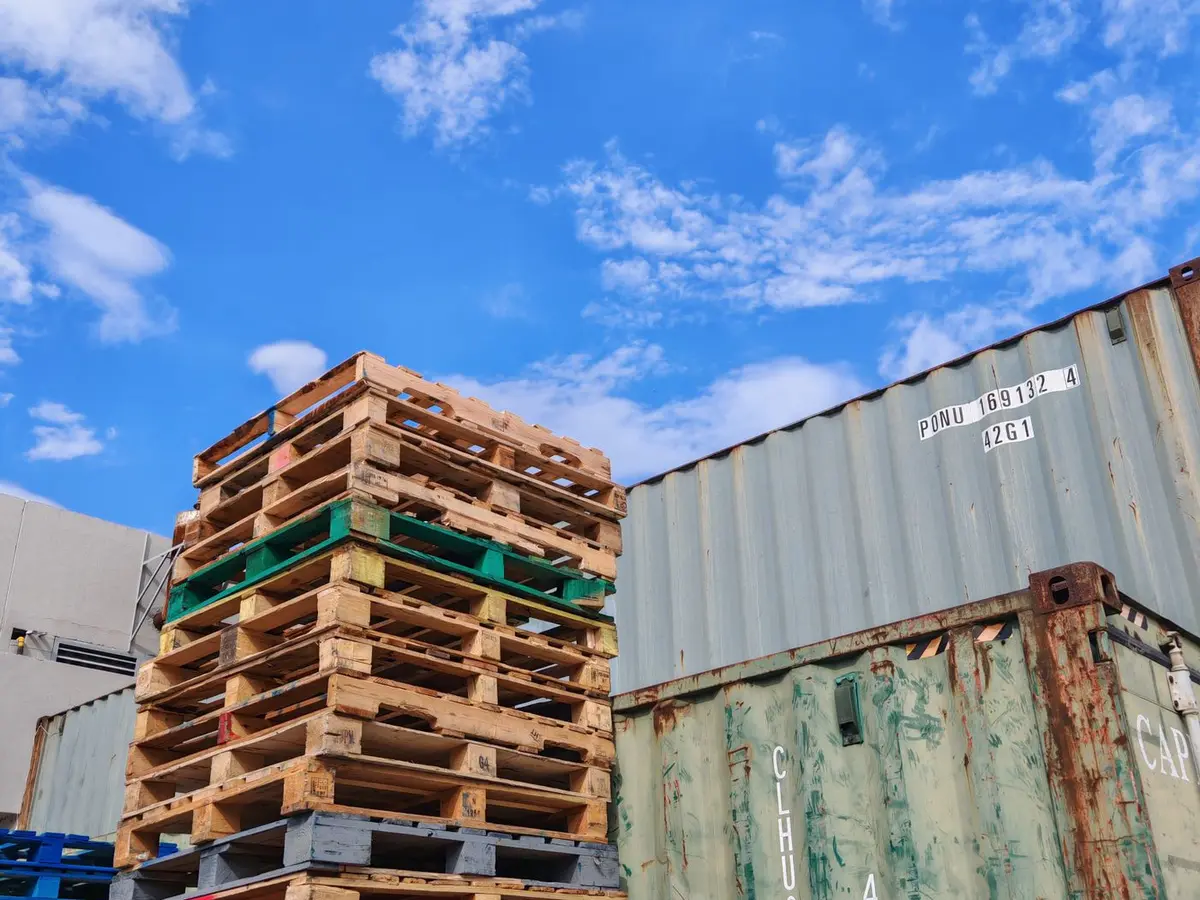
- It is damp or moldy from storage in a humid place or exposure to rain.
- It has new bore holes, wood dust or live insects.
- It was repaired with untreated boards but kept the old mark.
- It carries mud, plant debris or large patches of bark.
So export wooden pallets need to be covered, raised, kept apart from untreated wood and used within a reasonable time. Right before loading, flip and check the IPPC mark, the condition of the wood and any replaced boards. A repaired pallet must use replacement wood treated under ISPM 15 and be marked as the standard requires for repaired pallets in section 4.3.
Frequently asked questions
Do ‘fumigation’ and ‘disinfection’ of wooden pallets differ?
In the wooden pallet trade the two words are often used interchangeably, both meaning treating wood under ISPM 15 with heat or gas to kill pests. ‘Heat disinfection’ is the HT method.

How long can a fumigated wooden pallet be kept before it must be treated again?
ISPM 15 sets no fixed expiry for the mark. As long as the wood stays dry, free of termites and borers, free of mold and has not been replaced with untreated wood, the mark remains valid. Only the interval between the treatment date and the shipping date is set by some importing countries in certain cases, so ask before loading.
Which export markets require wooden pallet fumigation?
Countries that apply ISPM 15, which covers almost every major market: the United States, EU, UK, Australia, New Zealand, Canada, China, Japan and Korea. The EU accepts every method recognized by ISPM 15, MB included; many importers ask for HT themselves because the EU bans MB use within its territory.
Do plastic pallets need fumigation?
No. ISPM 15 applies only to wood packaging material made of natural wood. Plastic pallets, paper pallets, metal pallets and pallets made entirely of pressed wood and particleboard do not need treatment.
Can I fumigate wooden pallets myself?
No. Treatment and IPPC stamping are valid only when done by an organization holding a Certificate of Practice for treating objects subject to plant quarantine, with its own treatment facility code and subject to inspection by the regulator.
Do new wooden pallets need extra fumigation?
If the pallet is delivered already treated under ISPM 15 and the mark is clear, the company does not need to treat it again, only store it properly and check it before loading.
What is pallet fumigation in English and Chinese?
In English it is usually called pallet fumigation or wood packaging fumigation; for heat treatment use heat treatment (HT). In Chinese: fumigation is 熏蒸 (xunzheng), heat treatment is 热处理 (re chuli), and a fumigation certificate is 熏蒸证书 (xunzheng zhengshu).
Which agency manages wooden pallet fumigation in Vietnam?
The Department of Crop Production and Plant Protection under the Ministry of Agriculture and Environment (from 1 March 2025) is the plant quarantine authority, receiving applications and issuing the Certificate of Practice for treating objects subject to plant quarantine.
Contact ICD Vietnam
ICD Vietnam Industrial Manufacturing Co., Ltd. makes new wooden pallets to order; pallets for export cargo are treated and IPPC-stamped under ISPM 15 through a certified provider. We have a production workshop, a Hanoi warehouse and a southern workshop; price: contact for a quote, with volume discounts, returns within 7 days.
- North: 3rd Floor, Thang Long A1 Building, Bau Hamlet, Thien Loc Commune, Hanoi; 0983 797 186 / 090 345 9186 / 090 5859 186.
- South: 098 6784 186; southern workshop: 551/212 Le Van Khuong, Tan Thoi Hiep, District 12.
- Zalo: Chat on Zalo. Email: sales@icdvietnam.com.vn.
References
- IPPC, International Standards for Phytosanitary Measures (ISPM 15).
- FAO, IPPC, ISPM 15 Regulation of wood packaging material in international trade, Annexes 1 and 2.
- European Commission, Requirements for wood packaging and dunnage.
- Regulation (EU) 2024/590 on substances that deplete the ozone layer, EUR-Lex.
- Australian Department of Agriculture, Fisheries and Forestry, notice 145-2025 on methyl bromide fumigation certificates.
- How to get certification for export wooden pallets? Reply of the Department of Crop Production and Plant Protection on Chinh sach online, 17 Apr 2026.
- Ministry of Agriculture and Rural Development reply on plant quarantine for wood packaging, Government Electronic Newspaper, 9 Mar 2021.
- UNEP Ozone Secretariat, Montreal Protocol.