Table of Contents
- 1. Which group does rubber wood belong to?
- 2. Why is group VII rubber wood still widely used for pallets?
- 3. Rubber wood compared with pine for pallets
- 4. Uses of rubber wood at ICD Vietnam
- 5. Conclusion
- Frequently asked questions
- Which group is rubber wood in the Vietnamese timber classification?
- What are the characteristics of group VII timber?
- Why is rubber wood still widely used in industry although it is in a light group?
- What is the latest timber group classification document?
- Which group is finger-jointed rubber wood in?
- Can group VII timber be used to build export pallets?
- Is rubber wood heavier or lighter than pine?
- Contact us for rubber wood pallet advice
- References
Reviewed and updated by ICD - Week 43/2026
Rubber wood (Hevea brasiliensis) belongs to group VII in the 8-group timber table issued with Decision 2198/CNR of 1977 by the Ministry of Forestry. Ranked by mechanical properties under the national standard TCVN 12619-2:2019, rubber wood falls in group IV, with a density of 0.55 g/cm³ listed in the table.
Summary of key points:
Rubber wood in Vietnam’s timber classification sits among the light species with lower commercial value than the groups above it. For pallets and packaging, the group number does not decide quality: how dry the wood is, how it is treated and how the pallet is built decide it.
I checked this article directly against the original Decision 2198-CNR, TCVN 12619-2:2019 and the USDA rubber wood data sheet on 17 October 2026, to separate clearly what the documents say from what is only a common market expression.
1. Which group does rubber wood belong to?
Under the 8-group timber table issued with Decision 2198-CNR of 1977, rubber wood (Hevea brasiliensis) is in group VII; under TCVN 12619-2:2019, rubber wood is in group IV.
Group VII holds light species with lower use and commercial value than the groups above. The group number in the 1977 table does not measure load-bearing strength directly, so rubber wood is not used for long-term structural loads the way heavy group II timbers (ironwood, for example) are, but it is entirely suitable for pallets and crates when properly dried, treated and designed.
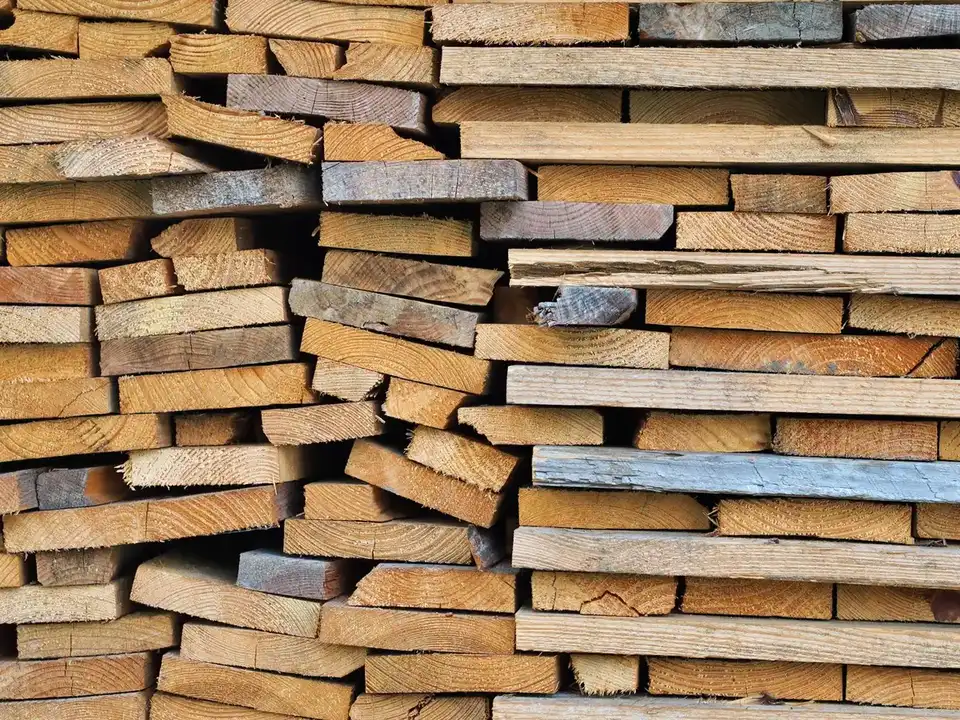
Which timber classification table is in use?
Two timber grouping systems are commonly cited, and rubber wood sits at different positions in each. When a contract or quote says ‘timber group number’, you need to establish which system is meant.
| Document | Number of groups | Basis for grouping | Rubber wood |
|---|---|---|---|
| Decision 2198/CNR of 26 Nov 1977 of the Ministry of Forestry, applied from 1 Jan 1978; some species adjusted by Decision 334/CNR of 10 May 1988 | 8 groups, I to VIII | Use value and commercial value of each species; Decision 334/CNR states that the ranking is used in timber handover and payment | Group VII |
| TCVN 12619-2:2019 Timber - Classification - Part 2: By physical and mechanical properties, published by the Ministry of Science and Technology | 6 groups: precious, rare and special groups, and groups I to V | Density is the leading criterion, combined with compressive strength parallel to grain and static bending; shrinkage and natural durability are supplementary criteria | Group IV, density 0.55 g/cm³ |
The 8-group table is still the most common way of speaking in the market, so the familiar answer ‘rubber wood group VII’ is not wrong. Even so, the Vietnamese Academy of Forest Sciences itself judged that the 8-group table, applied for over 30 years, no longer fits, and the Ministry of Agriculture assigned research on the scientific basis for reclassification from 2007. TCVN 12619-2:2019 is the result of that direction: grouping mainly by density and mechanical strength, so it reflects the load-bearing ability of the wood more closely.
One point often misunderstood is that ‘group VII wood is light, so rubber wood pallets are light’. In fact dry rubber wood weighs 595 kg/m³ on average per The Wood Database, about 16% heavier than the radiata pine used for pallets (515 kg/m³). For air freight charged by weight, a pine pallet is lighter; in return, the rubber wood board face is harder (Janka 4,280 N against 3,150 N) and dents less in handling.
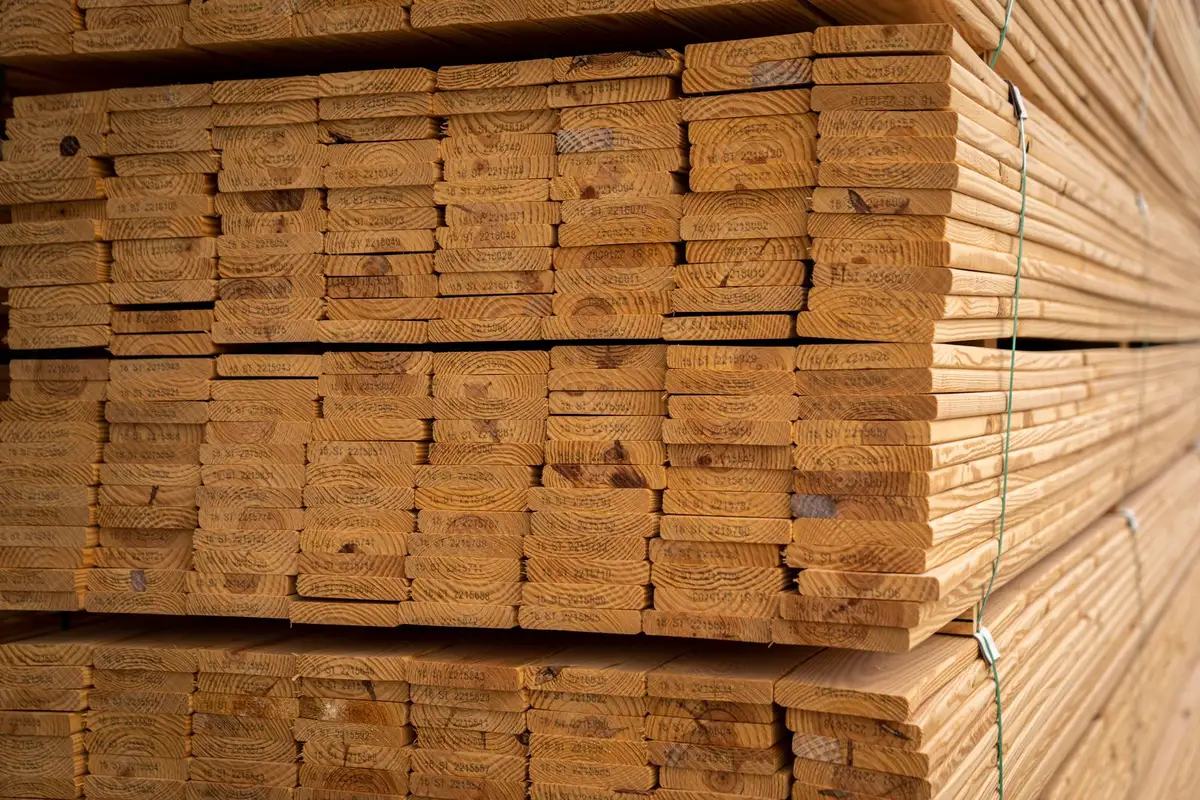
Which timbers are in group 7?
Group VII in Decision 2198-CNR has 46 species, with rubber wood (Hevea brasiliensis) at the head of the list. Other species include Adina sessilifolia, Quercus poilanei, tamarind (Tamarindus indica), white Canarium (Canarium album), black Canarium (Canarium nigrum), royal poinciana (Delonix regia), and many other forest timbers rarely seen on the market.
Among these, rubber wood has the largest and steadiest supply for industry, because the wood is recovered from rubber plantations that have finished their latex cycle. That is why, when people in the furniture and packaging trades say group VII timber, they usually think of rubber wood.
2. Why is group VII rubber wood still widely used for pallets?
Rubber wood is widely used for pallets because there is a large domestic plantation supply, the board face is hard and easy to work; group VII is a commercial-value ranking and does not reflect load capacity once the wood is dried, treated and designed correctly.
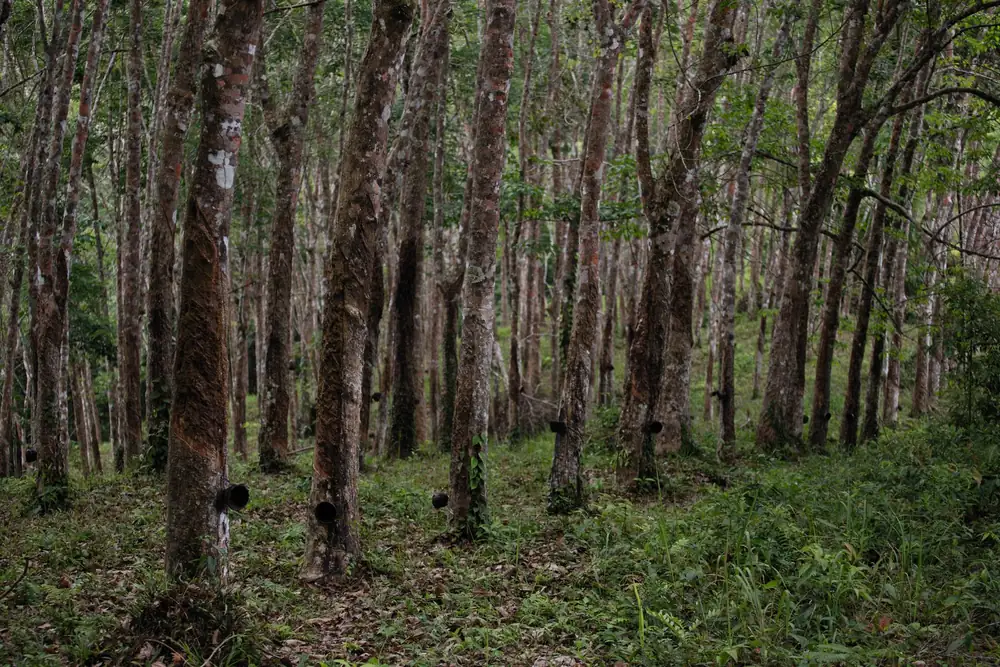
According to the Vietnam Rubber Association, the country has about 909 thousand hectares of rubber in 2024, concentrated in the Southeast and the Central Highlands. In the south, rubber wood is the easy-to-find timber for load-bearing pallets because it is close to the growing areas.
2.1. Hard board face that resists knocks in handling
In warehousing, pallets are constantly struck by forklift tines and shaken in containers. Rubber wood reaches 4,280 N on the Janka scale, about 36% harder on the face than radiata pine, so the board face and block edges dent and chip less after many lifts.
To be accurate: rubber wood is not more ‘elastic’ than other timbers. The Wood Database states that the name comes from the tree being grown for latex, and the modulus of elasticity of rubber wood (9.07 GPa) is even lower than pine. The USDA data sheet also records only that its reported mechanical strength is comparable to or higher than Scots pine.
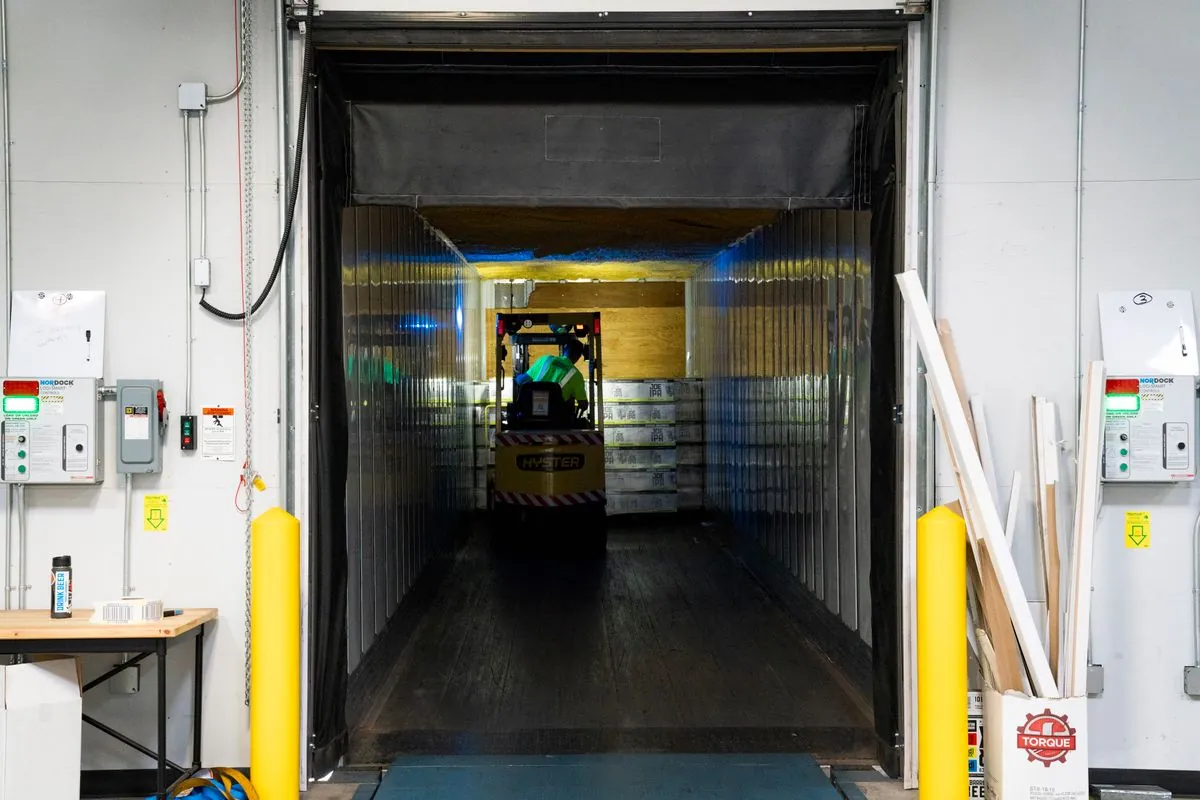
2.2. Good nail holding when the wood is dry and nailed correctly
Rubber wood has a fine grain and is easy to saw and plane smooth, but the USDA records a tendency to split when nailed. So the strength of nail joints on a rubber wood wooden pallet depends on the wood being dried to the right moisture, nails placed far enough from the board ends and a nail type suited to the board thickness.
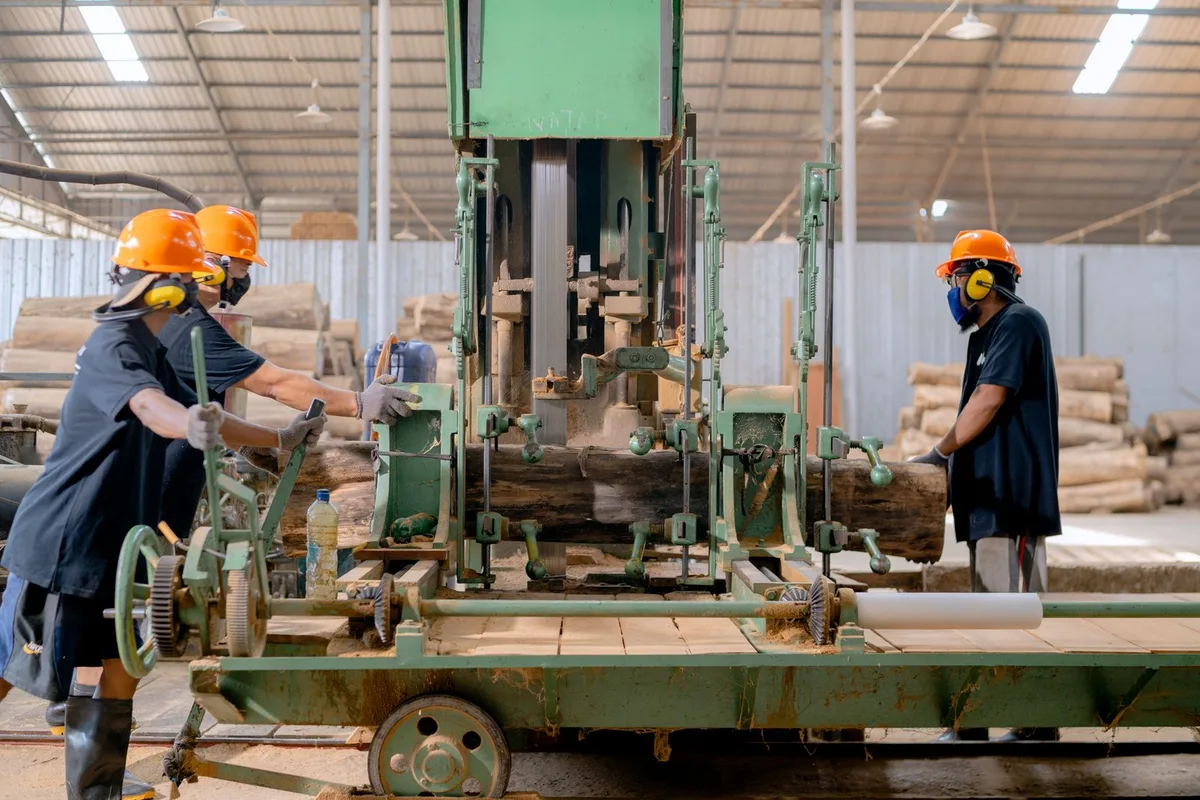
2.3. ISPM 15 treatment does not depend on the timber group
Rubber wood has poor natural durability: the USDA classes it as perishable, prone to staining and attack by borers and termites, so the wood must be dried or treated against mold and borers soon after sawing. Rubber wood takes preservative well, but preservative only protects against termites and borers; it does not make the wood harder.
For pallets used for export cargo, the wood must also be treated under ISPM 15 by one of four methods: heat treatment HT, dielectric heat treatment DH, methyl bromide fumigation MB or sulphuryl fluoride fumigation SF, then IPPC-stamped. ICD Vietnam does not treat, dry or fumigate itself; our export pallets are treated under ISPM 15 and IPPC-stamped through a licensed provider.
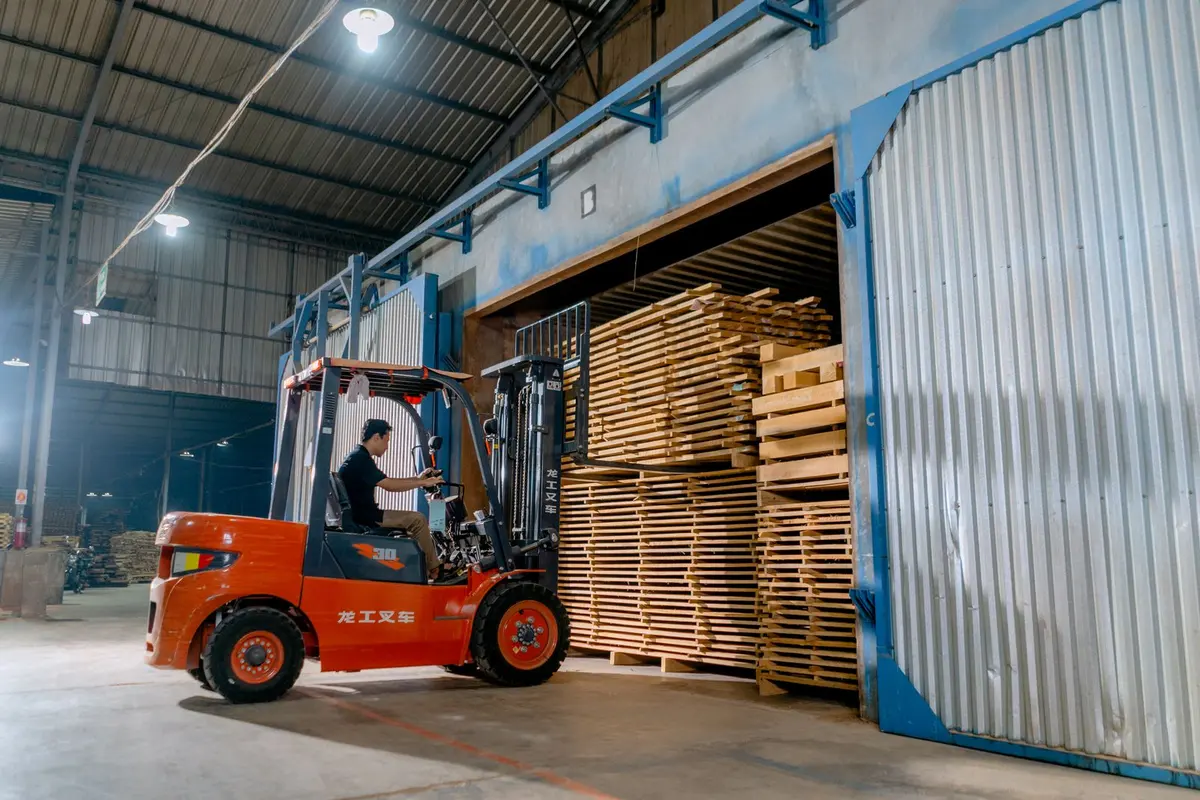
3. Rubber wood compared with pine for pallets
Compared with pine, rubber wood is heavier, harder on the face and shrinks less; pine is lighter and slightly stronger in bending; both have poor natural durability, so both need drying and dry storage.
According to The Wood Database, dry rubber wood weighs 595 kg/m³ and radiata pine 515 kg/m³; Janka hardness is 4,280 N against 3,150 N; volumetric shrinkage 7.5% against 10.7%. So rubber wood suits heavy cargo moved by road, sea and warehouses with a lot of handling; pine suits cargo charged by weight or when a customer wants a light-colored pallet. Acacia, or tram wood, is also a domestic plantation timber often used for pallets, and the choice between timbers should rest on the drawing, the committed load and a specific quote.
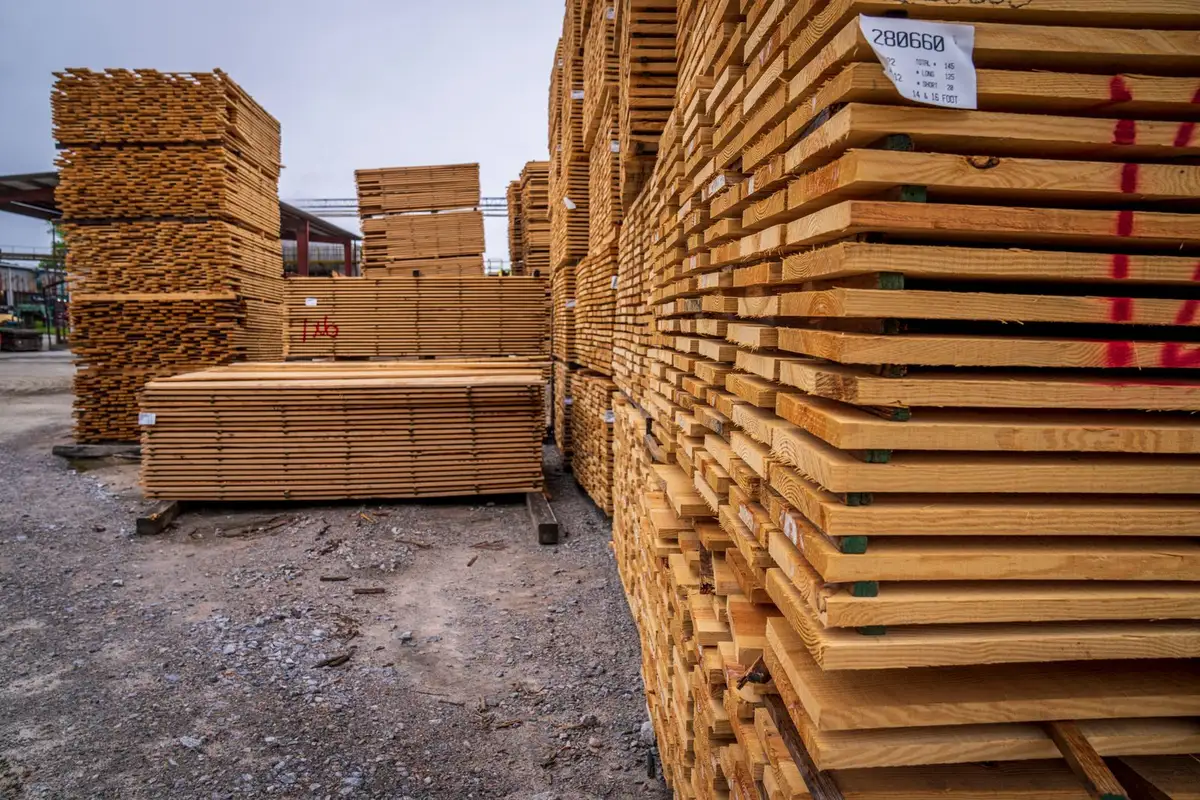
Technical specifications of rubber wood
The figures below help explain why rubber wood is strong enough for pallets, and why it must be treated before use. The figures come from the USDA data sheet on plantation rubber wood (Tropical Timbers of the World, 1984) and TCVN 12619-2:2019.
| Property | Value | What it means for pallets |
|---|---|---|
| Density (TCVN 12619-2:2019) | 0.55 g/cm³ | Lighter than many hardwoods, reducing the weight of the load |
| Air-dry weight (USDA) | 35-40 lb/ft³, about 560-640 kg/m³ | Varies with moisture and tree age |
| Shrinkage from green to oven-dry | Radial 2.3%, tangential 5.1% | Must be dried thoroughly before building, to avoid warping and loose nails |
| Mechanical strength | Comparable to or higher than Scots pine (Pinus sylvestris) | Enough for medium and heavy pallet loads if designed correctly |
| Natural durability | Poor; prone to staining, attacked by borers and termites | Preservative treatment and drying are mandatory |
| Treatability | Takes preservative well | Preservative treatment is effective at reasonable cost |
4. Uses of rubber wood at ICD Vietnam
Rubber wood at ICD Vietnam goes into three main product groups: 2-way and 4-way entry pallets, wooden crates, and loose components such as boards, stringers and blocks.
Rubber wood pallets, 2-way and 4-way entry
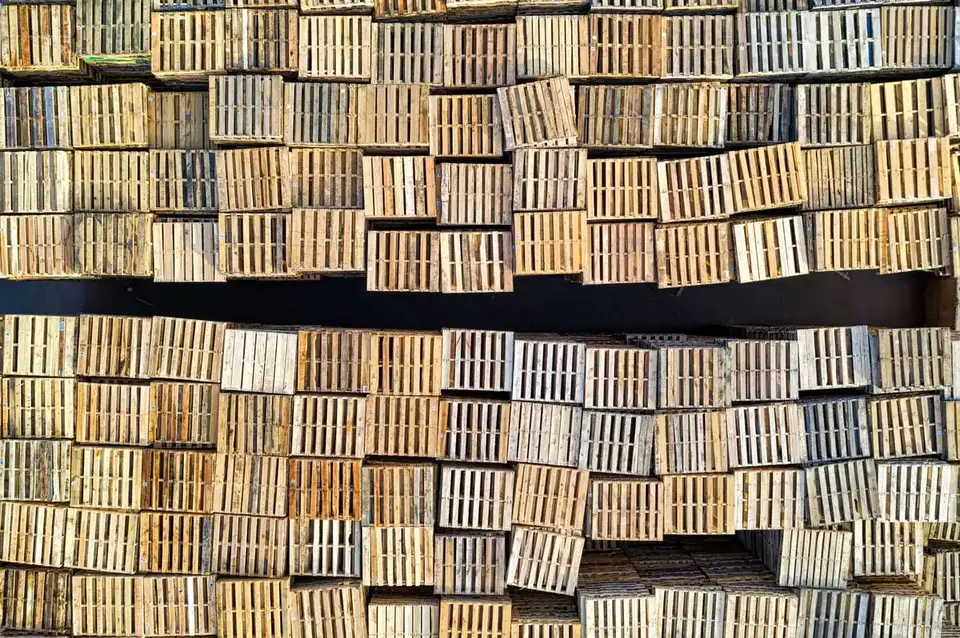
This is the main product line. The load rating of each model is decided by its construction: for example, the single-face 4-way entry block pallet models ICD Vietnam publishes on its website have a static load of 4,000 - 6,000 kg and a dynamic load of 1,250 - 1,500 kg, while the single-face 2-way entry pallet model has a static load of 1,000 kg and a dynamic load of 500 kg.
Wooden crates and packaging boxes
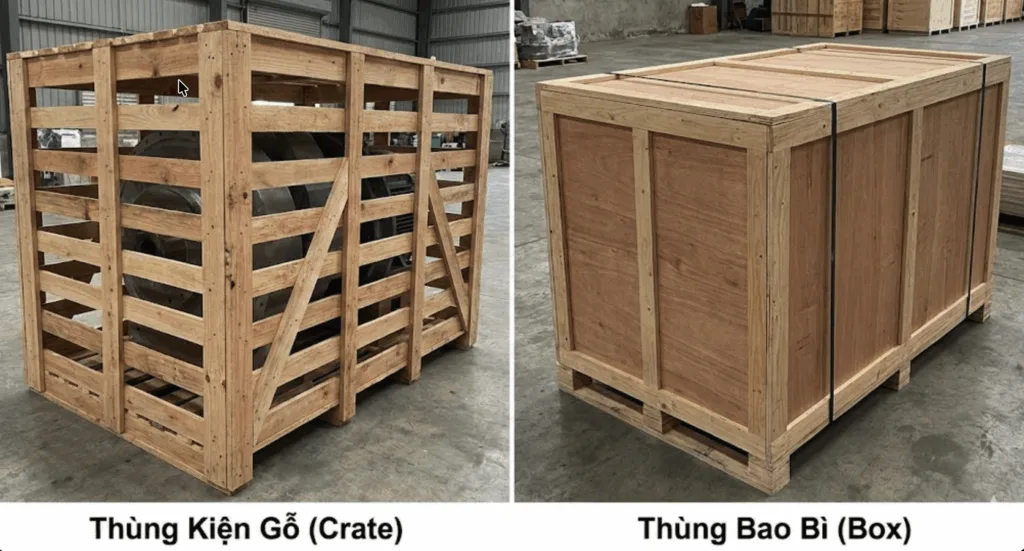
For machinery or electronic components that need careful protection, dried sawn rubber wood strips are used to build open crates or closed boxes. Dry wood means the crate shrinks less and nails loosen less in transit; crates for export cargo must also be treated under ISPM 15 like pallets.
Boards, stringers and blocks
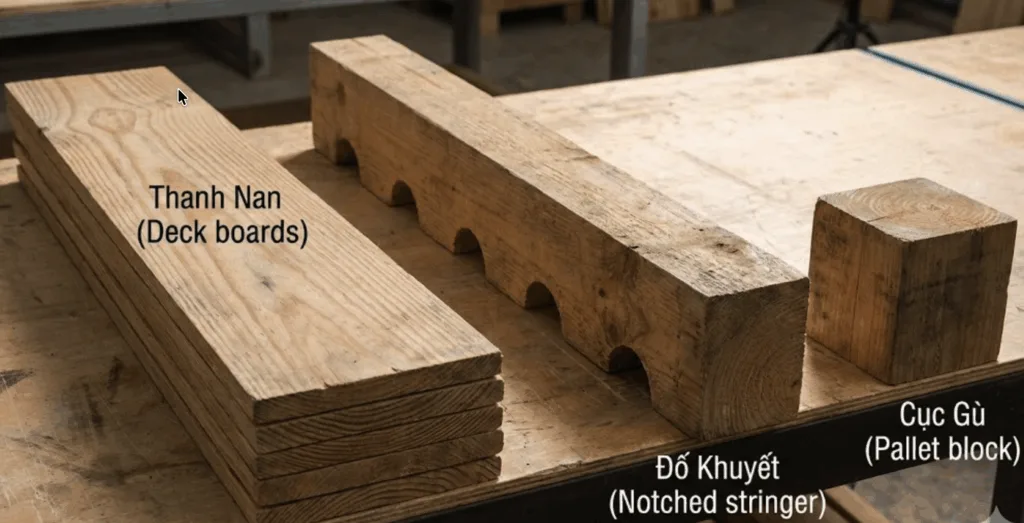
We also supply loose components from prepared rubber wood so that companies can build their own pallets or use them as dunnage in containers. Dunnage that travels with export cargo also falls under ISPM 15.
5. Conclusion
In short, rubber wood is group VII under the 1977 8-group timber table and group IV under TCVN 12619-2:2019; for pallets and packaging, what decides quality is moisture, treatment and construction, not the group number.
When ordering rubber wood pallets, I advise customers to ask three things instead of asking the timber group: to what moisture the wood has been dried, whether the pallet has ISPM 15 treatment and the IPPC mark, and what static and dynamic load the drawing commits to.
Frequently asked questions
Which group is rubber wood in the Vietnamese timber classification?
Group VII under the 8-group table of Decision 2198-CNR (1977), and group IV under TCVN 12619-2:2019 with a density of 0.55 g/cm³.
What are the characteristics of group VII timber?
Group VII holds light species with use and commercial value lower than the groups above, such as rubber wood, Adina sessilifolia, Quercus poilanei, tamarind, white and black Canarium, and royal poinciana. Rubber wood in this group has poor natural durability and needs drying and treatment before use.
Why is rubber wood still widely used in industry although it is in a light group?
Because the domestic plantation supply is large, the board face is hard (Janka 4,280 N), it is easy to saw and plane and takes preservative well. Rubber wood suits pallets and machinery crates when dried, treated and nailed with the right technique.
What is the latest timber group classification document?
The 8-group timber table under Decision 2198/CNR of 1977, with some species adjusted by Decision 334/CNR of 1988, is still the common way of speaking. The newer standard is TCVN 12619-2:2019, dividing timber into 6 groups by density and mechanical strength; under this standard rubber wood is in group IV.
Which group is finger-jointed rubber wood in?
The grouping tables apply to solid wood species and give no separate group for jointed boards. Finger-jointed rubber wood board is made from rubber wood, so when a group needs to be stated it is still given by species: group VII under the 8-group table or group IV under TCVN 12619-2:2019. The quality of a jointed board is judged by face grade (AA, AB, AC), glue and moisture.
Can group VII timber be used to build export pallets?
Yes. ISPM 15 does not set a species or timber group for export pallets; a pallet only needs to be made from debarked wood, treated by a recognized method such as HT heat treatment and IPPC-stamped. Rubber wood needs thorough treatment and drying because of its poor natural durability.
Is rubber wood heavier or lighter than pine?
Heavier. Dry rubber wood weighs 595 kg/m³ on average and radiata pine 515 kg/m³, so for the same volume of wood, a rubber wood pallet is about 16% heavier.
Contact us for rubber wood pallet advice
For advice on choosing timber and the construction of rubber wood pallets, send ICD Vietnam the dimensions, cargo load and export requirements. Wooden pallet price: contact for a quote, with volume discounts; wooden pallets carry no warranty and can be returned or exchanged within 7 days.
ICD Vietnam Industrial Manufacturing Co., Ltd.
- Hanoi warehouse: 3rd Floor, Thang Long A1 Building, Bau Hamlet, Thien Loc Commune, Hanoi - 0983 797 186 / 090 345 9186 / 090 5859 186.
- Southern workshop: 551/212 Le Van Khuong, Tan Thoi Hiep, District 12, Ho Chi Minh City - 098 6784 186.
- Email: sales@icdvietnam.com.vn. Zalo: Chat with ICD Vietnam on Zalo.
- Delivery: orders are processed in 1 - 2 days, within Hanoi and Ho Chi Minh City 1 - 3 days, between regions 2 - 5 days, other provinces 3 - 7 days.
References
- Decision 2198-CNR of 26 Nov 1977 of the Ministry of Forestry issuing the provisional classification of timbers used uniformly nationwide: National Legal Document Database, checked 17 Oct 2026.
- TCVN 12619-2:2019 Timber - Classification - Part 2: By physical and mechanical properties, published by the Ministry of Science and Technology: LuatVietnam.
- Vietnam timber grouping: Vietnamese Academy of Forest Sciences.
- Chudnoff M. (1984), Tropical Timbers of the World, sheet Hevea brasiliensis (plantation): USDA Forest Products Laboratory.
- Rubberwood (Hevea brasiliensis), Radiata Pine: The Wood Database.
- General statistics of Vietnam rubber in 2024: Vietnam Rubber Association (VRA).
- ISPM 15 Regulation of wood packaging material in international trade: FAO, IPPC.
- Wooden pallet specifications, delivery and return policy of ICD Vietnam: website icdvietnam.com.vn, checked 17 Oct 2026.