
Table of Contents
- 1. What is tram wood?
- 2. The Vietnamese timber grouping tables and where earleaf acacia sits
- 3. Common types of tram wood
- 4. What is earleaf acacia wood most often used for?
- 5. Why does timber group not fully decide pallet quality?
- 6. Conclusion
- Frequently asked questions
- 1. Which group is earleaf acacia in the Vietnamese timber classification?
- 2. Is Group IV earleaf acacia good for pallets?
- 3. Which is more durable, earleaf acacia or other acacia?
- 4. Is earleaf acacia attacked by termites and borers?
- 5. How long until earleaf acacia can be harvested?
- 6. Are tram wood and acacia wood the same thing?
- 7. Which timber group are tram sung and tram tia in?
- 8. What treatment do tram wood export pallets need?
- 9. Do tram wood pallets come with a warranty?
- Contact us about tram wood pallets
- References
Reviewed and updated by ICD - Week 43/2026
Earleaf acacia wood (tram bong vang, Acacia auriculiformis) belongs to Group IV under the national standard TCVN 12619-2:2019, with a density of 0.59 g/cm³ and a static bending strength of 101 MPa. The 8-group table in Decision 2198-CNR of 1977 does not list this species; the trees called “tram” in that table are other species, ranked in Group V or VI. It is a good wood for pallets and everyday wood products, but it needs drying and treatment because its natural durability is only rated as non-durable.
1. What is tram wood?
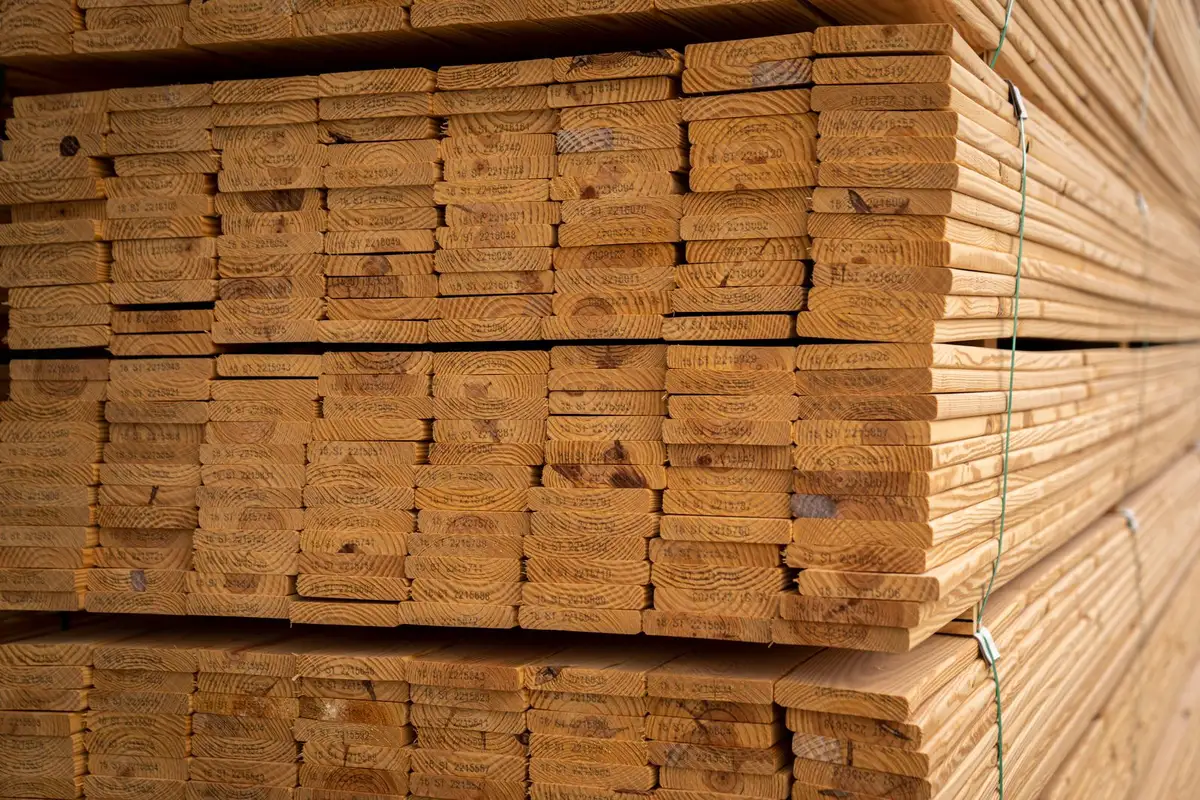
The tram wood used for pallets and wood products is natural timber harvested from the earleaf acacia tree (tram bong vang), an acacia species in the legume family (Fabaceae); it is different from the cajuput and tram cu trees of the genus Melaleuca in the myrtle family (Myrtaceae). It is a widely planted forestry tree in Vietnam, fast growing and tolerant of poor soil, so its wood appears in many industries from industrial packaging to furniture and pulp.
1.1 Origin and biology of the earleaf acacia tree
According to PROSEA (Plant Resources of South-East Asia), earleaf acacia grows naturally in northern Australia, south-western Papua New Guinea and Indonesia, and has since been planted widely across tropical Asia. In favourable conditions the tree reaches 30 m, with a branch-free bole up to 12 m and a diameter of about 50 cm; planted trees are usually shorter, with crooked stems and many branches.
The name “tram bong vang” (yellow-flowered tram) comes from its flower spikes, 7 - 10 cm long, golden yellow and fragrant; the main flowering season varies by planting region. What people usually call leaves are really flattened leaf stalks (phyllodes), curved like a sickle and 10 - 16 cm long. The tree usually flowers after about 2 years, and PROSEA records that plantations grown for timber are usually harvested at 10 - 12 years.
1.2 Which group is tram wood in?
Earleaf acacia belongs to Group IV under TCVN 12619-2:2019. If you look up the 8-group table in Decision 2198-CNR of 1977, you will not find this acacia species. In that document, the species with the exact name “Tram” (Melaleuca leucadendron, usually called tram cu or narrow-leaved tram) is in Group VI; in addition tram sung (Eugenia chanlos) and tram tia (Syzygium sp.) are both in Group V. None of these three is earleaf acacia. Some online sources list tram wood as “Group IV, number 57” under Decision 2198-CNR; checked against the full text, number 57 is the species “Tram” Melaleuca leucadendron in the Group VI list, not Group IV and not earleaf acacia.
Group IV in TCVN is the group of timber with medium density, fairly strong for its weight and easy to work. The natural durability of earleaf acacia (resistance to termites, borers and fungi) is rated by the standard as non-durable, so the wood needs drying and treatment before use. Domestic supply is steady, so it suits industrial and household products.
The two grouping systems being cited give different results, because the 1977 table was written before acacia was planted on a large scale in Vietnam. The table below compares woods that are often confused by name.
| Common name | Scientific name | Decision 2198-CNR (1977) | TCVN 12619-2:2019 | Density (TCVN) |
|---|---|---|---|---|
| Earleaf acacia (tram bong vang) | Acacia auriculiformis | Not listed | Group IV | 0.59 g/cm³ |
| Hybrid acacia (keo lai) | A. mangium x A. auriculiformis | Not listed | Group IV | 0.57 g/cm³ |
| Acacia mangium (keo tai tuong) | Acacia mangium | Not listed | Group IV | 0.58 g/cm³ |
| Tram cu (narrow-leaved tram) | Melaleuca leucadendra | Group VI (listed as “Tram”) | Group IV | 0.73 g/cm³ |
| Tram sung | Eugenia chanlos | Group V | Not cross-checked | Not cross-checked |
| Tram tia | Syzygium sp. | Group V | Not cross-checked | Not cross-checked |
| Rubberwood | Hevea brasiliensis | Group VII | Group IV | 0.55 g/cm³ |
TCVN 12619-2:2019 was compiled by the Forest Industry Research Institute under the Vietnamese Academy of Forest Sciences and published by the Ministry of Science and Technology. The standard divides timber into 6 groups (the rare and precious group and Groups I to V), using density as the main criterion, combined with compressive strength parallel to grain, static bending and natural durability. The old 8-group table is still commonly used in the timber trade, so when you read “which group is this wood”, ask which system is meant.
2. The Vietnamese timber grouping tables and where earleaf acacia sits
In the 8-group table, earleaf acacia is not named; its Group IV position comes from TCVN 12619-2:2019, where earleaf acacia sits in the same group as hybrid acacia, Acacia mangium, eucalyptus and rubberwood.
The provisional classification table issued with Decision 2198-CNR of 26/11/1977 of the Ministry of Forestry divides natural timber into 8 groups, I to VIII, based on durability, hardness, colour, grain and use value. Decision 334-CNR of 1988 later adjusted the ranking of some species, for example moving sao den from Group III to Group II. The list contains no acacia species; the document states that species not yet in the table are to be proposed by the provinces for addition.
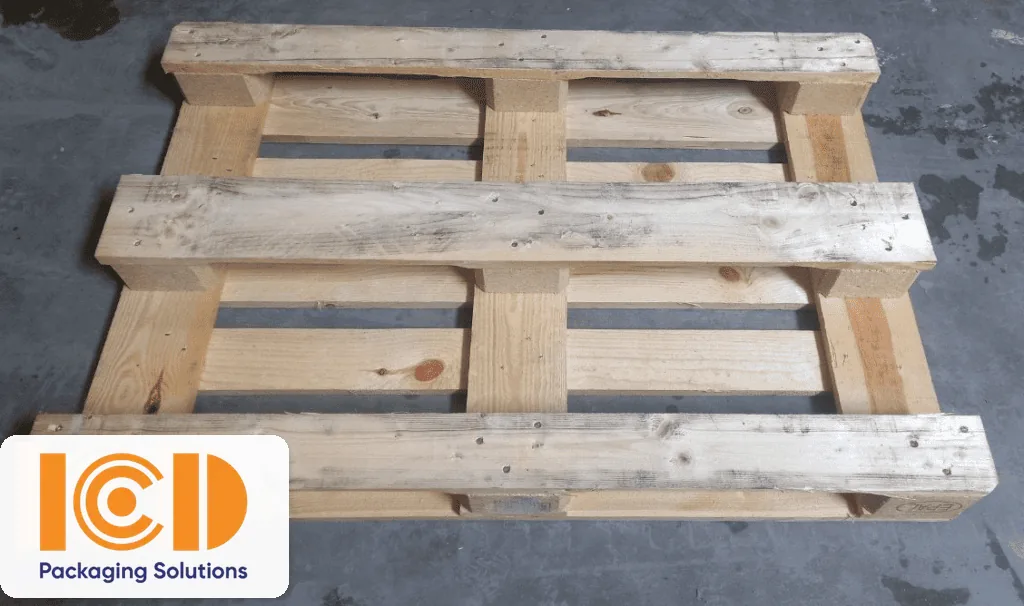
Going from the top, Group I holds precious timbers such as gu, cam lai, trac and po mu; Group II has dinh, lim xanh, nghien, sen mat and tau mat. Group III is durable, tough timber such as cho chi, cho chai and teak. Group IV has mo, re gung and three-needle pine; Group V has resin pine and xa cu together with tram sung and tram tia. Group VI is general-purpose timber such as eucalyptus, xoan dao and the species “Tram”; Group VII has rubberwood, and Group VIII is light, soft timber such as bo de, gao and vong.
The smaller the group number, the more valuable, the better the grain and the more durable the wood, but also the scarcer and more expensive. The timber used for pallets and industrial packaging in Vietnam is mainly plantation wood such as acacia, eucalyptus and rubberwood, plus imported pine, so most of it sits in Groups IV to VII of the old table or is not named in the table at all.
Why is the heavier earleaf acacia still in Group IV?
Earleaf acacia has a density of 0.59 g/cm³, higher than is usual in Group IV, but TCVN 12619-2:2019 still places it in this group. The reason lies in the standard’s own criteria: wood with a density above the Group IV range but which does not meet the technical requirements of the higher groups, has poor natural durability or is a medium-sized tree of low economic value is still placed in Group IV. Earleaf acacia is recorded as non-durable, so it cannot move up to Group III like three-needle pine (0.71 g/cm³) or resin pine (0.67 g/cm³).
According to TCVN 12619-2:2019, earleaf acacia (Group IV) has a density and bending strength comparable to hybrid acacia - the two main timbers for making wooden pallets in Vietnam. The table below gives the figures for the Group IV species commonly met in the pallet industry.
| Timber (TCVN 12619-2:2019, Group IV) | Density | Compression parallel to grain | Static bending | Natural durability |
|---|---|---|---|---|
| Earleaf acacia (tram bong vang) | 0.59 g/cm³ | 46 MPa | 101 MPa | Non-durable |
| Hybrid acacia | 0.57 g/cm³ | 42 MPa | 101 MPa | Non-durable |
| Acacia mangium | 0.58 g/cm³ | 43 MPa | 99 MPa | Non-durable |
| Tram cu (Melaleuca) | 0.73 g/cm³ | 63 MPa | No data | No data |
These figures show the three acacias are almost equal on standard samples; the real difference between lots of wood depends more on the age of the tree, the planting region and the moisture content when the pallet is built than on the species name.
3. Common types of tram wood
The three types usually lumped together as “tram wood” are earleaf acacia (an acacia species in the legume family) and two Melaleuca species of the myrtle family, cajuput and tea tree; only earleaf acacia is widely used for building pallets.
3.1 Earleaf acacia wood
Timber harvested from the earleaf acacia tree (Acacia auriculiformis). According to PROSEA, the sapwood is yellow, the heartwood light brown to dark reddish-brown, the grain straight, the surface fine to medium and often attractively figured. Heartwood makes up over 70% of the stem volume and is rated moderately durable by PROSEA, so it is less prone to termites and borers than the yellow sapwood; the wood does not contain essential oil like the Myrtaceae tram species.
The wood is easy to work and polishes well, but boards tend to crack when sawn. Besides pallets, it is used for furniture, veneer, house posts, small-dimension sawn timber and, above all, as pulp raw material.
3.2 Cajuput (tram gio) wood
Timber harvested from the cajuput tree (Melaleuca cajuputi). The wood of Melaleuca species is fairly heavy and hard (TCVN 12619-2:2019 gives a density of 0.73 g/cm³ for the narrow-leaved species), but the stem is usually small and crooked so it is rarely sawn into boards. Cajuput essential oil is widely used in medicine.
3.3 Tea tree (tram tra) wood
The tea tree (Melaleuca alternifolia) is grown to distil tea tree oil for the cosmetics and medical industries. We did not find this species in the 8-group table of Decision 2198-CNR or in the density figures of TCVN 12619-2:2019, so this article gives no timber group for tea tree.
4. What is earleaf acacia wood most often used for?
Earleaf acacia wood is used mostly as pulp raw material, small-dimension sawn timber and wooden pallets. According to PROSEA, plantation earleaf acacia is widely used for pulp and small sawn timber; in the pallet industry, it is one of the domestic plantation timbers used alongside hybrid acacia, Acacia mangium, eucalyptus and rubberwood.
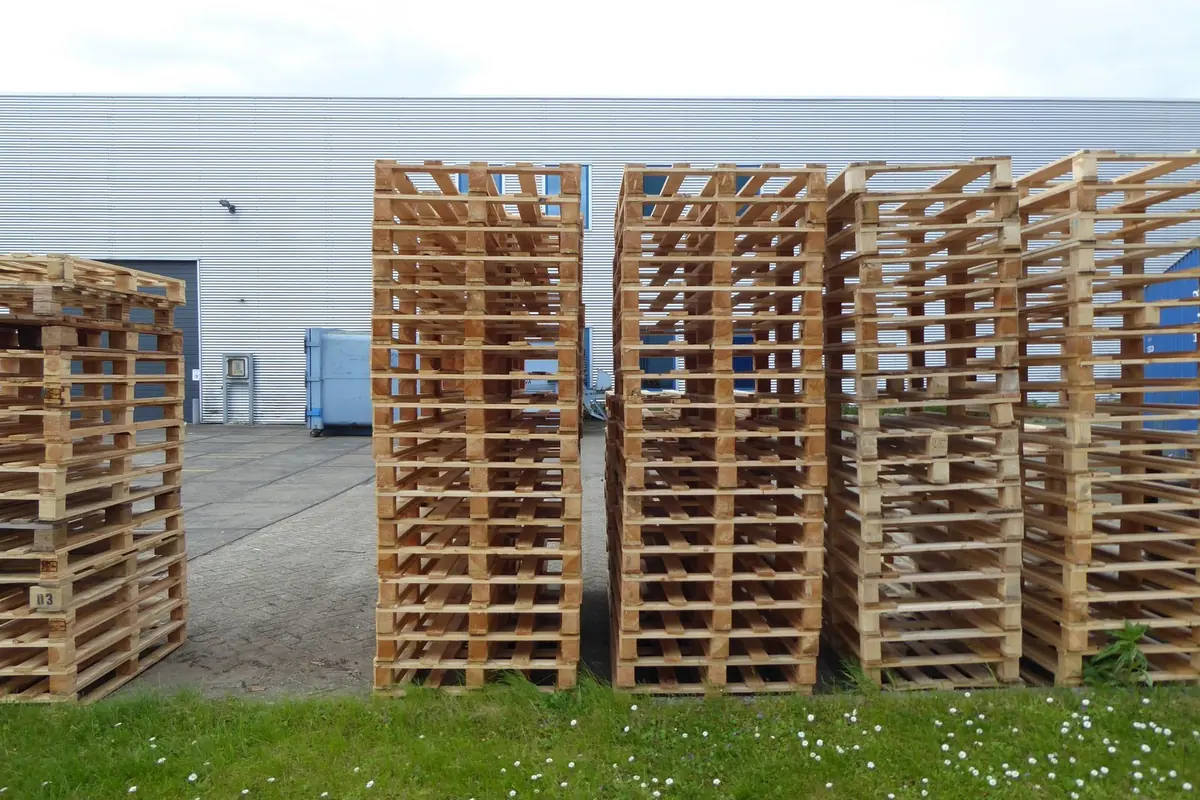
Earleaf acacia is chosen for pallets for reasons that can be verified:
- Fairly strong for its weight: static bending strength of 101 MPa, the same as hybrid acacia (TCVN 12619-2:2019).
- Plentiful supply: widely planted in Vietnam and harvested at 10 - 12 years (PROSEA).
- Easy to work, nail and heat treat under ISPM 15, like other plantation timbers.
One point to note is that the wood does not resist moisture or termites and borers by itself: TCVN 12619-2:2019 rates the natural durability of earleaf acacia as non-durable, and the yellow sapwood is easily attacked by insects. So tram wood pallets used in cold stores or damp environments need to be dried and treated beforehand, and you should not expect the wood to last on its own. Pallet price depends on specification, wood moisture content and treatment requirements, so ICD Vietnam quotes by drawing and quantity.
Criterion by criterion: in density and strength the wood is comparable to hybrid acacia and Acacia mangium, so it suits heavy cargo and pallets for repeated use. In natural durability the heartwood is fairly durable but the sapwood is prone to borers, so it needs drying, preservative treatment or heat treatment. In working, the wood is easy to work but boards crack easily when sawn, so boards with end checks must be removed before building. In stem form, planted trees are often crooked and branchy, so it is hard to find long pieces for the stringers of large pallets.
5. Why does timber group not fully decide pallet quality?
Timber group reflects only the natural properties of the species, not the quality of the finished pallet. A Group IV tram wood pallet can still outlast a pallet made from a higher-group timber if it is treated correctly, because the final quality depends on processing and not only on “which group” the wood is in.
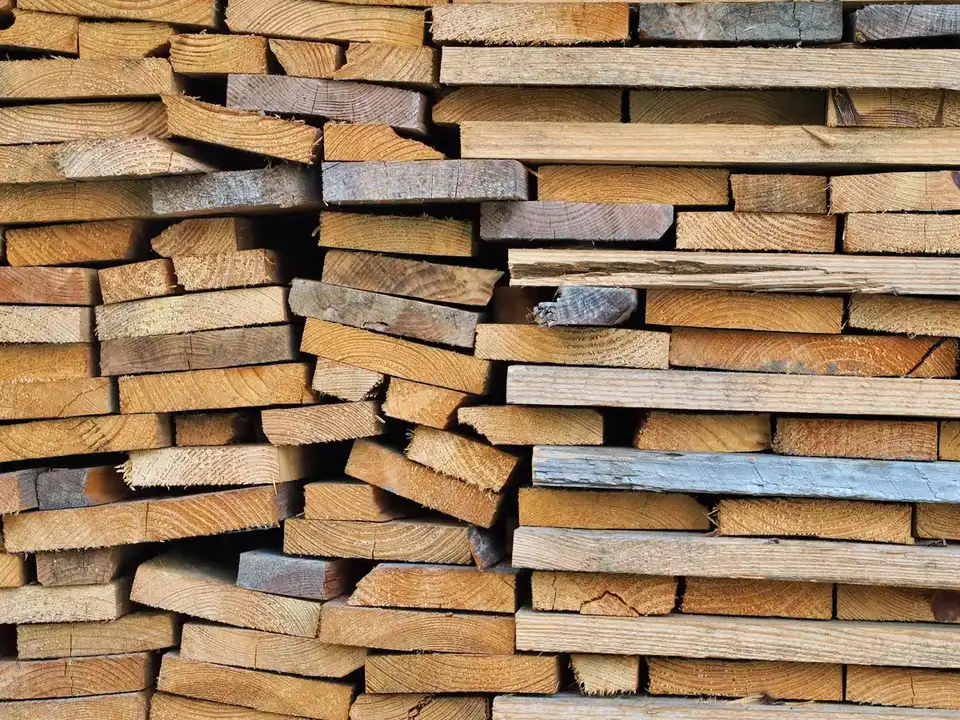
Three factors decide real pallet durability: how dry the wood is, how it is treated against termites, borers and mould, and the way it is assembled. Green wood has a very high moisture content; the Wood Handbook of the US Forest Products Laboratory (USDA) states that decay fungi struggle to grow when wood is below about 20% moisture, so pallet boards are usually dried to below 20% to limit mould, warping and loose nails.
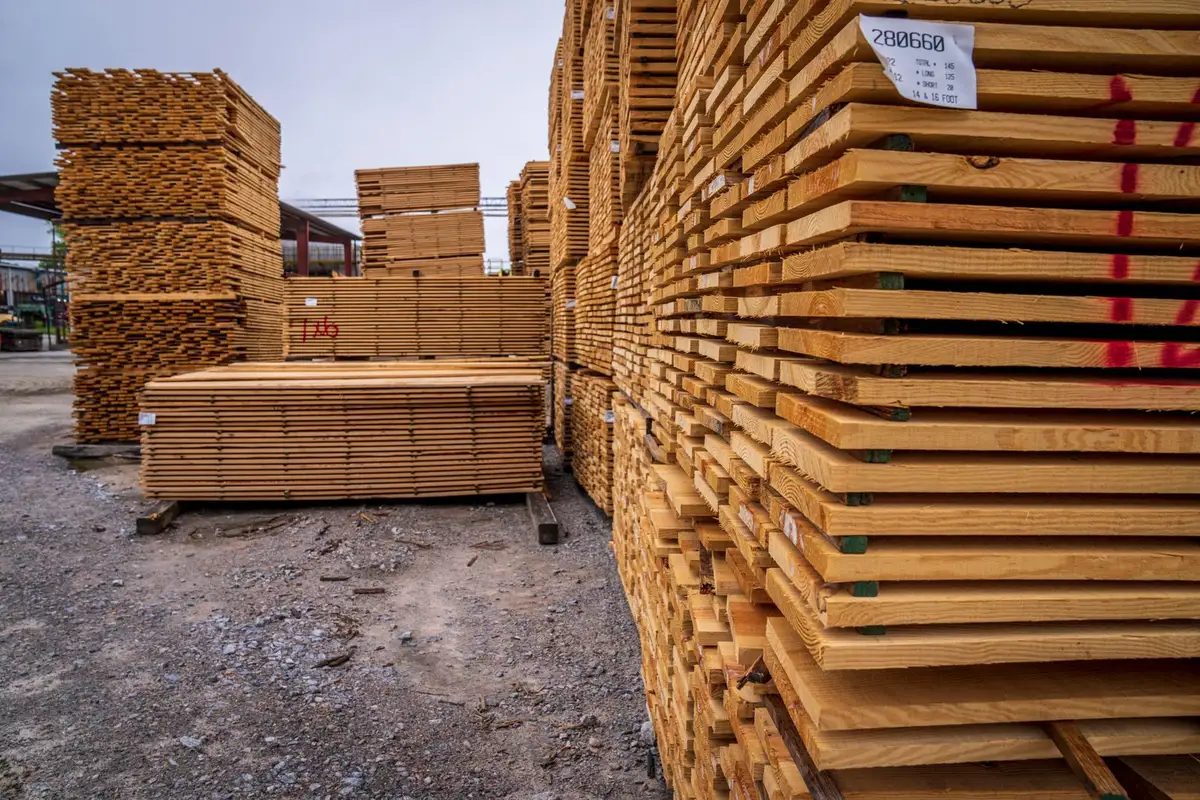
So when choosing a pallet, the technical specification and treatment process matter more than which group the wood belongs to. Points to ask the supplier:
- Wood moisture content when built: below 20%, because damp wood moulds easily and shrinkage loosens nails.
- Wood treatment: heat drying or preservative treatment; export cargo is treated under ISPM 15.
- Deck board and block thickness: to match the real cargo load.
- Nail type and count: ring-shank or screw nails, in the number shown on the drawing, because damaged pallets usually start at the nail joints.
6. Conclusion
Earleaf acacia belongs to Group IV under TCVN 12619-2:2019 and is not named in the 1977 8-group table; the “tram” species in the old table are tram cu (Group VI), tram sung and tram tia (Group V). The wood is fairly strong, comparable to hybrid acacia, and domestic supply is steady, so it is widely used to build pallets.
The weaknesses of the wood are poor natural durability and boards that crack easily when sawn. Whether a tram wood pallet lasts depends on drying the wood to below 20%, treating it correctly and building it to a structure that suits the load, more than on the timber group number.
Frequently asked questions
1. Which group is earleaf acacia in the Vietnamese timber classification?
Earleaf acacia (Acacia auriculiformis) belongs to Group IV under TCVN 12619-2:2019; the 8-group table of Decision 2198-CNR of 1977 does not name this species. Group IV is the group of timber with medium density, easy to work and with steady supply.
2. Is Group IV earleaf acacia good for pallets?
Yes, provided the wood is dried and treated properly. The wood is fairly strong, comparable to hybrid acacia under TCVN 12619-2:2019, and domestic supply is plentiful; but natural durability is poor so it must be dried to below 20% and treated before use.
3. Which is more durable, earleaf acacia or other acacia?
Both are in Group IV and have similar durability in pallets: under TCVN 12619-2:2019, the static bending strength of earleaf acacia and hybrid acacia is 101 MPa for both. Earleaf acacia is slightly heavier (0.59 against 0.57 g/cm³), while hybrid acacia often gives a straighter stem. The final durability depends on the manufacturer’s drying and treatment.
4. Is earleaf acacia attacked by termites and borers?
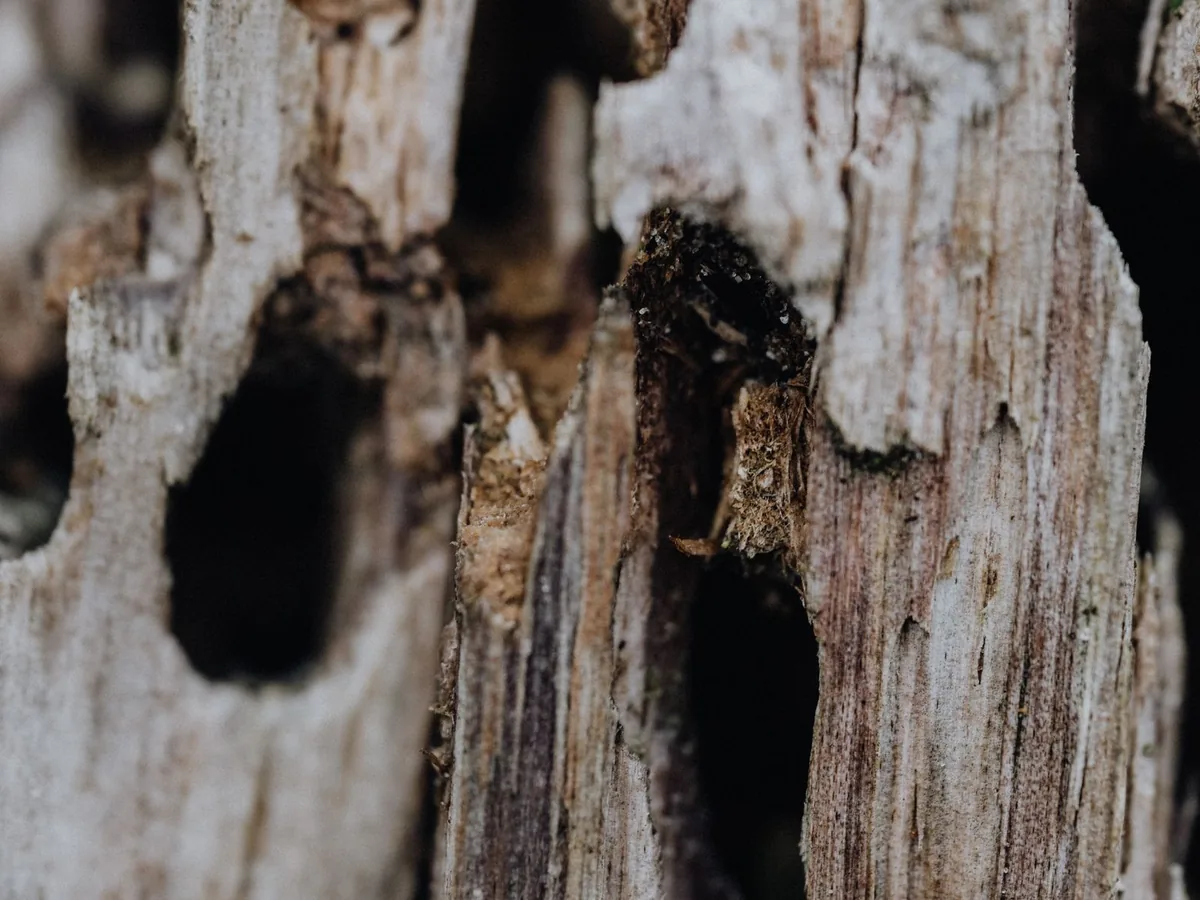
Yes, especially the yellow sapwood when the wood is still damp and untreated. Heartwood makes up most of the stem and is fairly durable, but TCVN 12619-2:2019 still rates the natural durability of earleaf acacia as non-durable, so pallets need to be dried, treated with preservative or heat treated before use.
5. How long until earleaf acacia can be harvested?
According to PROSEA, plantations of earleaf acacia grown for timber are usually harvested at 10 - 12 years; in favourable conditions the tree can reach 15 m after 5 years. The older the tree, the larger the stem diameter and the share of heartwood, and the longer the sawn pieces you can get.
6. Are tram wood and acacia wood the same thing?
Earleaf acacia is an acacia species (Acacia auriculiformis), so botanically it is acacia wood, but it is a different species from Acacia mangium. Hybrid acacia is a natural or bred cross of these two species. The cajuput and tram cu trees belong to the genus Melaleuca in the myrtle family and are completely different from acacia.
7. Which timber group are tram sung and tram tia in?
Under Decision 2198-CNR, tram sung (Eugenia chanlos) and tram tia (Syzygium sp.) are in Group V; the species listed as “Tram” (Melaleuca leucadendron) is in Group VI. None of the three is earleaf acacia, so do not use their group to infer the group of earleaf acacia wood.
8. What treatment do tram wood export pallets need?
Export wooden pallets must be treated under ISPM 15 by one of the recognised methods, most commonly heat treatment (HT), and stamped with the IPPC mark on at least 2 opposite faces. Treatment and stamping are carried out by a facility that has been given a code by the plant protection authority. The European Union has banned the use of methyl bromide inside the bloc since 18 March 2010 but still accepts imported pallets treated by HT or MB in line with ISPM 15.
9. Do tram wood pallets come with a warranty?
Wooden pallets at ICD Vietnam carry no warranty because wood is a natural material, but they can be exchanged or returned within 7 days. Price: contact for a quote, with volume discounts.
Contact us about tram wood pallets
If you need advice on choosing between tram wood, acacia or pine pallets for your cargo load and shipping route, send us the dimensions, load, quantity and export market. ICD Vietnam has a production workshop, a Hanoi warehouse and a southern workshop; price: contact for a quote, with volume discounts. Wooden pallets carry no warranty but can be exchanged or returned within 7 days.
ICD Vietnam Industrial Manufacturing Co., Ltd.
- North Vietnam (Hanoi warehouse): 3rd Floor, Thang Long A1 Building, Bau Hamlet, Thien Loc Commune, Hanoi - 0983 797 186 / 090 345 9186 / 090 5859 186.
- Southern workshop: 551/212 Le Van Khuong Street, Tan Thoi Hiep Ward, District 12, Ho Chi Minh City - 098 6784 186.
- Email: sales@icdvietnam.com.vn. Zalo: Chat on Zalo with ICD Vietnam.
References
- Decision 2198-CNR of 26/11/1977 of the Ministry of Forestry issuing the Provisional classification of timbers used uniformly nationwide: Legal documents database, Ministry of Agriculture.
- Decision 334-CNR of 10/5/1988 of the Ministry of Forestry adjusting the ranking of some timbers in the 8-group classification: Hethongphapluat.
- TCVN 12619-2:2019 Timber - Classification - Part 2: By physical and mechanical properties, published by the Ministry of Science and Technology: PDF of the standard.
- Summary report of the project Scientific basis for classifying Vietnamese timber: Vietnamese Academy of Forest Sciences.
- Acacia auriculiformis (tree characteristics, wood, growth, harvesting): PROSEA, Pl@ntUse.
- Wood moisture content and decay fungi - Wood Handbook: Wood as an Engineering Material, Forest Products Laboratory, US Department of Agriculture (USDA).
- Requirements for wood packaging imported into the EU: European Commission.
- ISPM 15 Regulation of wood packaging material in international trade: International Plant Protection Convention (IPPC).