Table of Contents
- A few notes on tram wood
- Current price of tram wood
- How much does a tram cu pole (tram nuoc) cost?
- Price of tram wood sawn into battens for pallets
- 5 factors that make tram wood prices move
- Worked example: how much timber does it take to build 100 tram wood pallets?
- Frequently asked questions
- How much does tram wood cost per cubic metre?
- How much does earleaf acacia cost per cubic metre?
- How much does a tram cu pole cost?
- Is it better to buy green or dried tram wood to build pallets?
- How is the price of tram wood sawn into battens calculated?
- Why did acacia and tram wood prices rise in 2026?
- Does ICD Vietnam quote for tram wood pallets?
- Contact ICD Vietnam
- References
The price of tram wood in 2026 depends first of all on which tram it is. Earleaf acacia (tram bong vang, Acacia auriculiformis) is sold by the tonne as round logs in the same group as plantation acacia, commonly about 1.2 - 2.0 million VND per tonne according to local press figures from April to September 2026; tram cu poles (tram nuoc) are sold per pole, about 45,000 - 64,000 VND per pole for poles 4 - 4.8 m long according to the price announcement of the Vinh Long Department of Construction in August 2026.
Tram wood sawn into battens for building pallets has no public price list from a state body or trade association; prices are quoted lot by lot, by batten specification and moisture content. So this article gives only figures with a clear source and publication date, together with the conversions you need to check the quotes you receive. We at ICD Vietnam follow these figures because tram wood is one of the main timbers we use to build pallets.
A few notes on tram wood
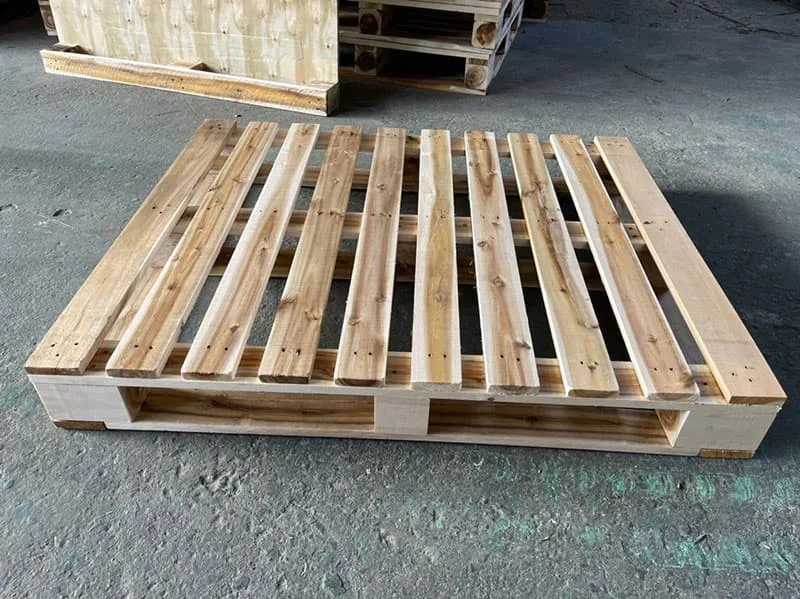
“Tram wood” is a general name for two very different groups of trees, so you need to tell them apart before you ask for a price. The tram wood used to build pallets and make glued panels is earleaf acacia, a plantation acacia of the genus Acacia; cajuput and tram cu belong to the genus Melaleuca and are used mainly for essential oil and foundation poles. The two groups have different markets, units of sale and price levels:
| Type of tram | Scientific name | Main use | Usual way to price |
|---|---|---|---|
| Earleaf acacia (tram bong vang) | Acacia auriculiformis | Pallets, glued panels, furniture, pulp | By the tonne (round logs), by m³ (sawn timber, panels) |
| Cajuput (tram gio) | Melaleuca cajuputi | Cajuput essential oil | By weight of leaves, essential oil |
| Tram cu (tram nuoc) | Melaleuca cajuputi | Poles to reinforce soft ground | By the pole, by diameter and length |
| Tram dat | - | A local name, rarely seen in the timber market | No public transaction price |
1. Earleaf acacia (tram bong vang)
Earleaf acacia has the scientific name Acacia auriculiformis. According to the PROSEA database (Plant Resources of South-East Asia), the species originates in northern Australia, Papua New Guinea and Indonesia and is now widely planted across the tropics. The wood has a density of 490 - 840 kg/m³ at 15% moisture and the heartwood makes up over 70% of the stem volume, so it is hard enough for the deck boards and feet of pallets carrying ordinary loads, and is also raw material for glued panels, furniture and pulp.
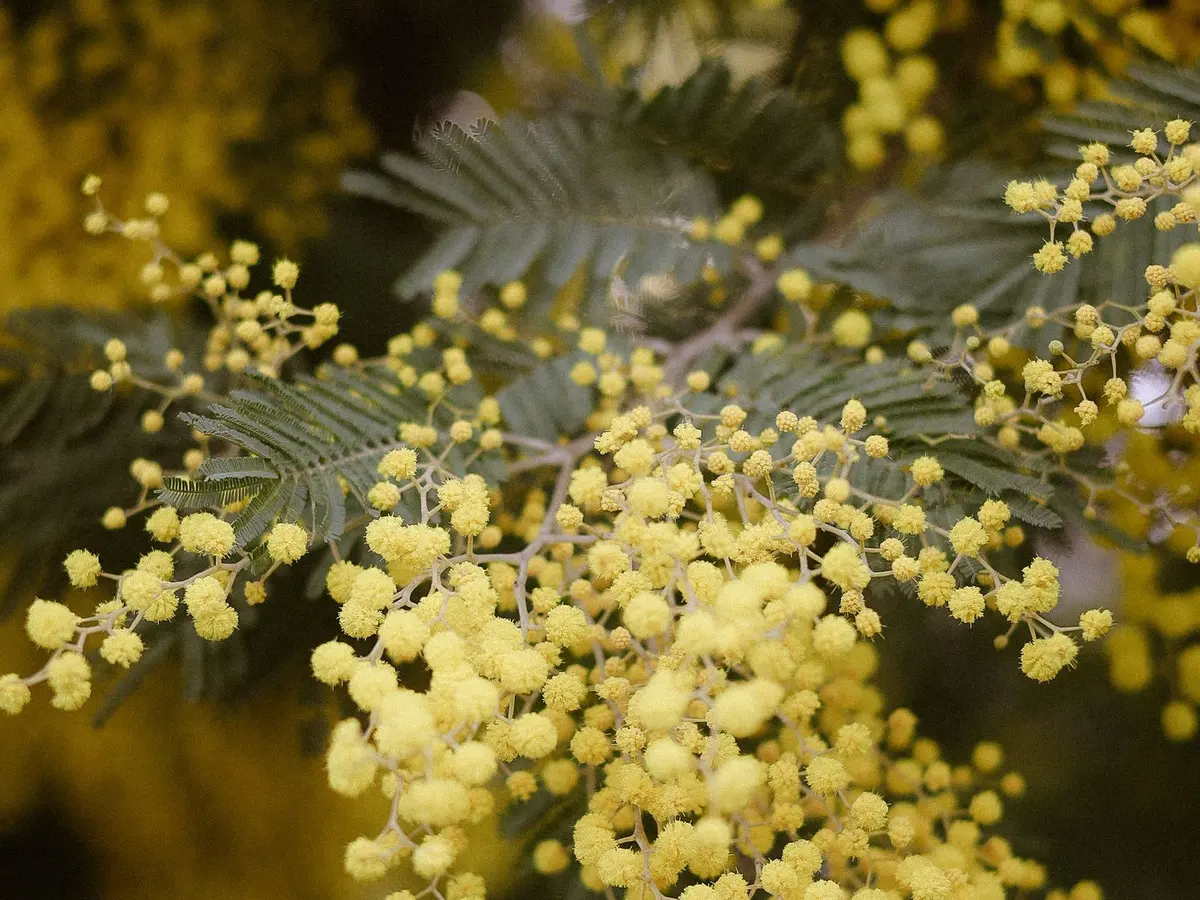
In Vietnam, earleaf acacia is one of the main plantation trees alongside hybrid acacia. According to a review by the Southern Institute of Forest Sciences published on agri.vn (6/2026), some earleaf acacia clones such as Clt7, Clt26, Clt98 and AA1 have shown promising growth on acid sulphate soil in the Mekong Delta. When traders or mills quote tram wood by the tonne, it is almost always round logs of this group.
2. Cajuput (tram gio) wood
Cajuput is a tree of the genus Melaleuca, and its economic value lies in the leaves distilled into cajuput oil, familiar in the North Central provinces. It is not traded by the cubic metre of wood, so when you ask for a price of tram wood by volume to build pallets, the seller almost always understands earleaf acacia.
3. Tram cu (tram nuoc) wood
Tram cu is a native tram tree that grows on acid sulphate soil and in flooded areas, with a straight stem and good tolerance of water, so it is cut as poles to reinforce the foundations of houses, roads and irrigation works. The large growing areas are in Long An, the Plain of Reeds, Kien Giang and U Minh (Ca Mau). According to Dr Vu Dinh Huong of the Southern Institute of Forest Sciences (agri.vn, 6/2026), the Mekong Delta has nearly 80 thousand ha of plantation on acid sulphate soil, of which about 60 thousand ha is tram, mostly tram nuoc.
The economic return of tram cu is lower than hybrid acacia. Thanh Nien newspaper (5/8/2026) quotes forest growers in U Minh Ha: over the same production cycle, 1 ha of tram brings in about 100 million VND while hybrid acacia brings in about 300 million VND, so many households have switched to acacia.
4. Tram dat wood
Tram dat is a local name rarely seen in the timber market. We have not found a reliable source on the transaction price or harvesting status of this type, so the article gives no price for tram dat.
Current price of tram wood
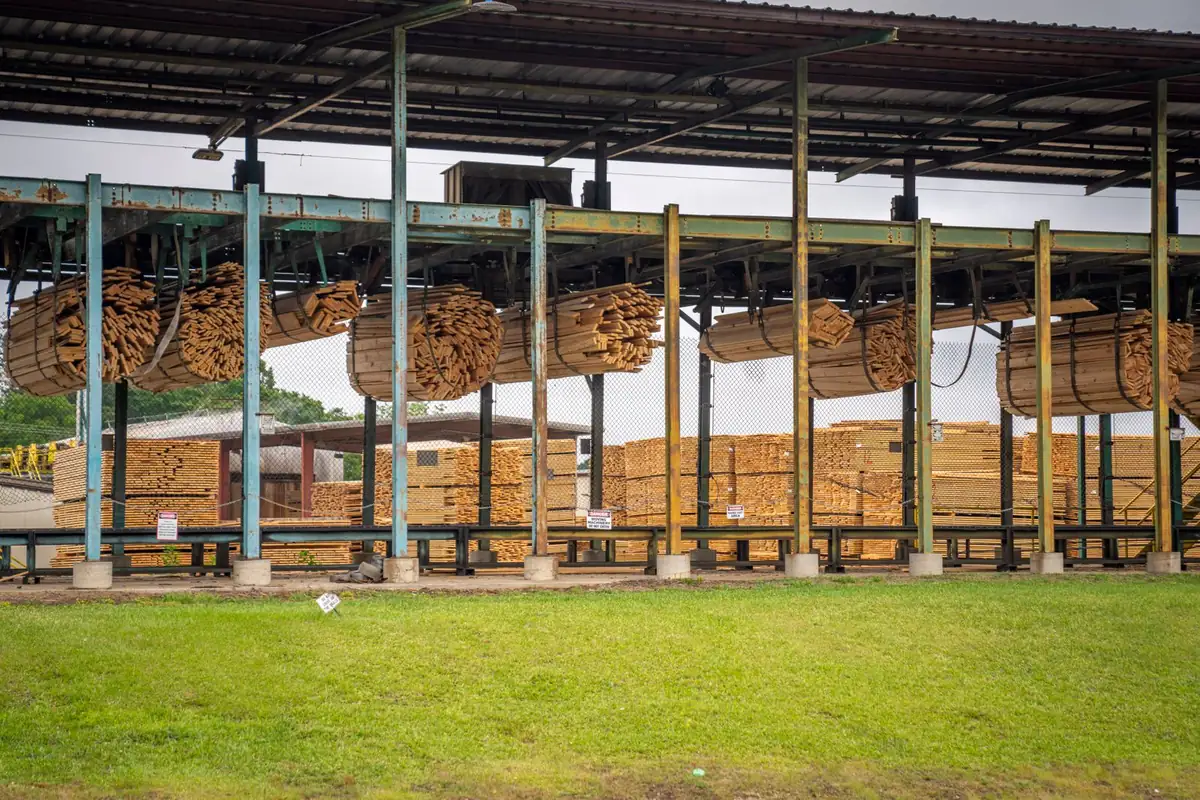
In 2026, round acacia and earleaf acacia raw timber was commonly bought at about 1.2 - 2.0 million VND per tonne, the highest in many years. The price rises with the age of the tree and the end use: small wood sold for chips and wood pellets is cheapest, and large wood for veneer peeling is dearer. The table below collects the prices published by local press during the year:
| Place, time | Type of wood | Recorded price |
|---|---|---|
| Gia Lai, 4/2026 | Plantation raw timber in general | 1.4 - 1.75 million VND/tonne |
| Gia Lai, 4/2026 | Debarked acacia (price the grower sells at) | 1.5 million VND/tonne |
| Gia Lai, 4/2026 | Acacia 4 - 5 years old / 7 - 8 years old and above | 1.68 / 1.75 million VND/tonne |
| Gia Lai, 4/2026 | Small wood and branches for wood pellets | 1.25 - 1.27 million VND/tonne |
| Ca Mau, 8/2026 | Commercial hybrid acacia | About 1.2 million VND/tonne |
| Bac Ninh, 9/2026 | Acacia for veneer peeling / acacia chipped for chips | 1,900 - 2,000 / 1,650 - 1,700 VND/kg |
| Bac Ninh, 9/2026 | Peeled acacia veneer | 3.3 - 3.5 million VND/m³ |
Sources of the figures: Gia Lai newspaper (10/4/2026), Thanh Nien newspaper (5/8/2026) and Bac Ninh newspaper (15/9/2026). The prices reported by the press are for round timber bought at the forest, at the yard or delivered to the mill, not the price of timber sawn into battens. Earleaf acacia and hybrid acacia both belong to the genus Acacia and so are traded together in the plantation acacia group; finished wooden pallets have their own price by size and load rating.
Converting prices by kg, by tonne and by cubic metre
Round timber is quoted by the kg or the tonne, while sawn timber and peeled veneer are quoted by the m³, so to compare you must convert to the same unit. Converting from kg to tonnes just means multiplying by 1,000: 1,900 VND/kg equals 1.9 million VND/tonne. Converting from tonnes to m³ is harder because freshly felled wood still holds a lot of water: the density of 490 - 840 kg/m³ given by PROSEA is at 15% moisture, and green wood is considerably heavier. The surest way is to weigh a sample lot of known volume, then multiply the price per tonne by the number of tonnes in 1 m³.
How much does a tram cu pole (tram nuoc) cost?
Tram cu poles are sold by the pole, with the price rising with length and butt and tip diameter. According to the construction material price announcement annex of the Vinh Long Provincial Department of Construction for the period 1 - 15/8/2026 (the former Ben Tre area), prices, excluding value added tax and transport, were as follows:
- Tram cu pole 4 m long, 8 cm butt, 3.5 cm tip: 45,000 - 47,000 VND per pole.
- Tram cu pole 4 m long, 8 - 10 cm butt, 4 cm tip: 47,000 - 49,000 VND per pole.
- Tram cu pole 4.8 m long, 8 - 10 cm butt, 4.5 cm tip: 62,000 - 64,000 VND per pole.
The prices announced by the Department of Construction are average prices for drawing up project estimates, not for payment, and each province announces a different level. Tram cu poles are a construction material, not used to build pallets; if you are looking for the price of tram wood to make pallets, the prices to watch are earleaf acacia in the section above and sawn timber in the section below.
Price of tram wood sawn into battens for pallets
Tram wood sawn into battens for pallets has no official public price list per m³; the price is quoted by each sawmill by batten specification, moisture content and lot volume. The March 2026 timber market report of Thi Truong Go (Industry News Agency) recorded sawn timber prices rising nationwide, with sawn tram and rubberwood in the South up by 10 thousand VND/m³ against the previous month because raw timber prices stayed high.
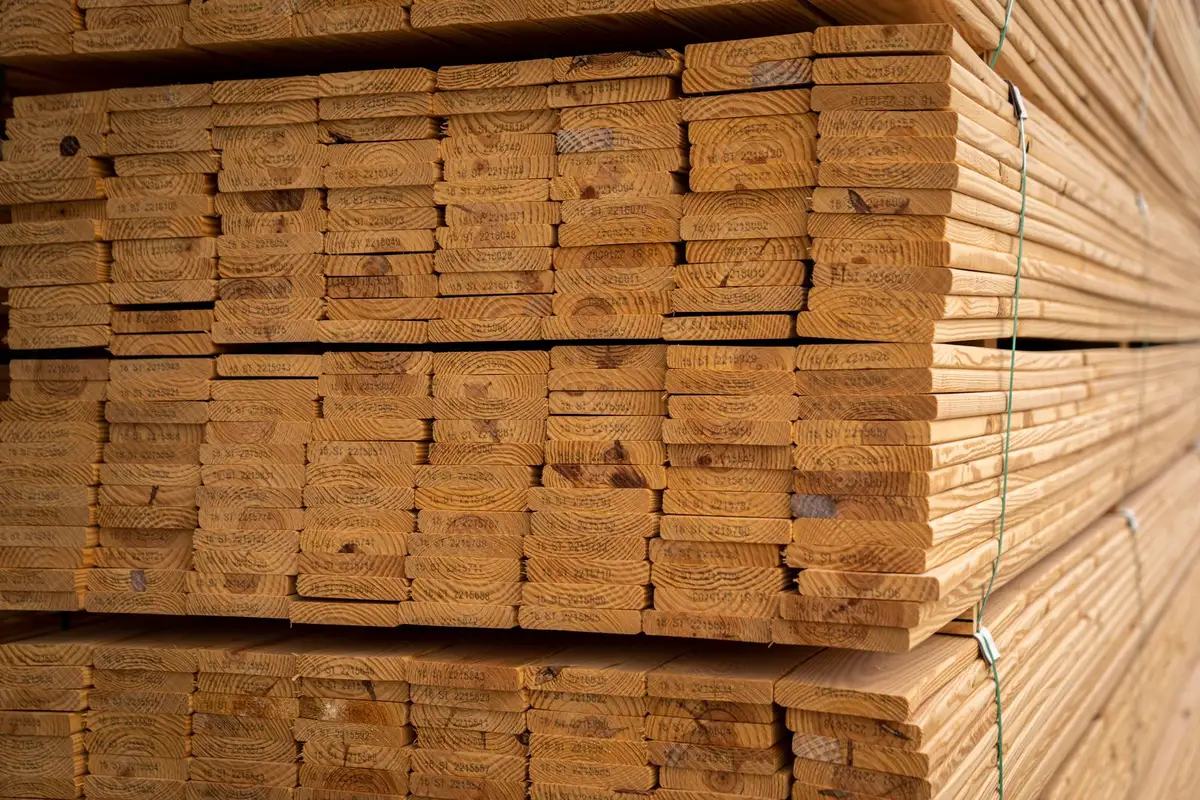
Sawn timber prices are always higher than the converted price of round timber because they add the loss in sawing (slabs, sawdust), the sawing labour, drying if any and transport. So when you receive a quote for battens, ask four things: whether the wood is green or dried and its moisture content, the thickness, width and length of the battens, the share of knots and sapwood accepted, and where the price includes delivery to.
How to price a lot of battens
The volume of a lot of battens is thickness x width x length (converted to metres) x number of battens, then multiply by the price per m³ on the quote. For example 1,000 battens of 20 x 100 x 1,200 mm have a volume of 0.02 x 0.1 x 1.2 x 1,000 = 2.4 m³; with the same cross-section, 1,500 mm battens give 3.0 m³ and 2,000 mm battens give 4.0 m³. The longer the batten, the harder it usually is to saw to standard from small-diameter plantation wood, so the price per m³ may be higher; ask for a separate quote for each length.
5 factors that make tram wood prices move
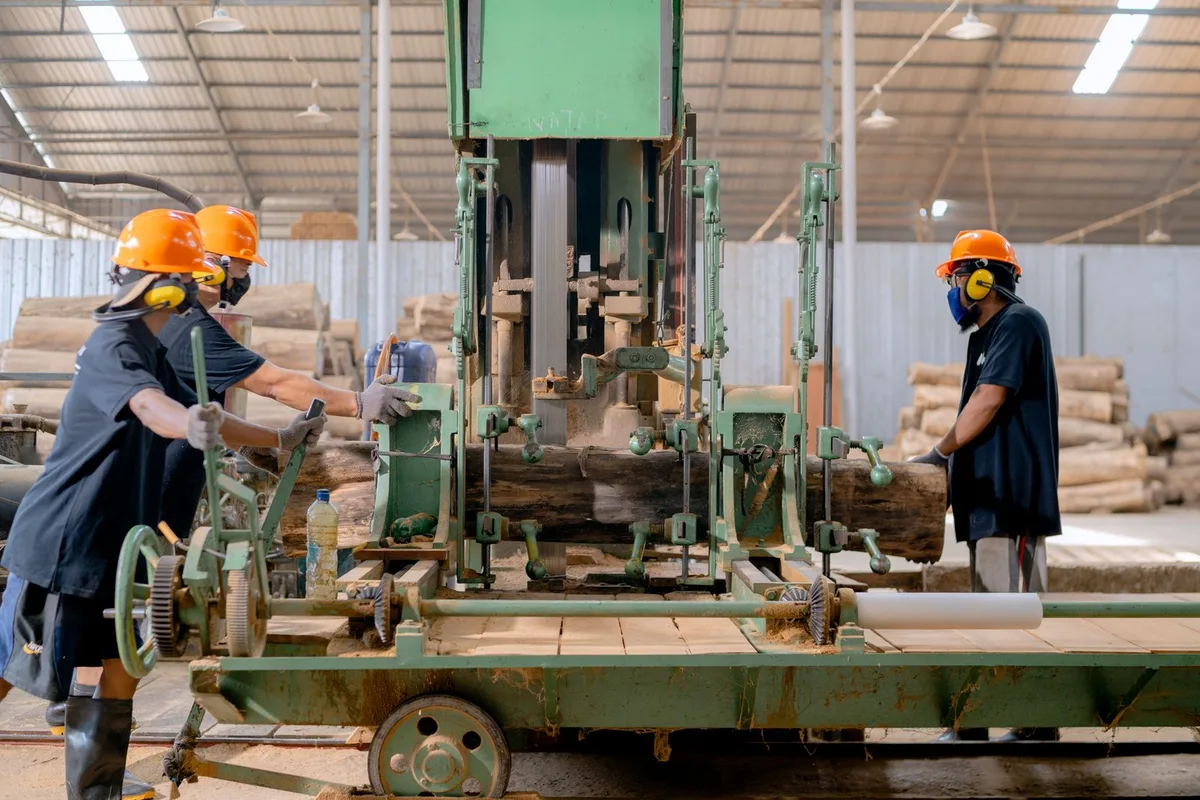
The price of tram wood in 2026 is affected by five factors recorded by the press and market reports: supply after storms, transport and labour costs, demand for wood chips and pellets, tree age and end use, and harvest season.
The first is supply. Bac Ninh newspaper (9/2026) reports that hundreds of thousands of ha of forest in the North were damaged after Typhoon Yagi in 2024 and the storms of 2025, exactly the area that should be harvested now; peeled acacia in Bac Ninh rose about 600 VND/kg against the same period of 2025. In Gia Lai, Storm No. 13 at the end of 2025 felled many forest areas and the timber had to go to chips and pellets.
The second is harvesting cost. According to Gia Lai newspaper (4/2026), timber haulage rose from about 120 thousand to 200 - 300 thousand VND/tonne depending on distance, and harvest labour at 400 - 450 thousand VND/day is still hard to hire; the price of debarked acacia rose 200 - 300 thousand VND/tonne against 2025 but growers’ profit did not rise to match.
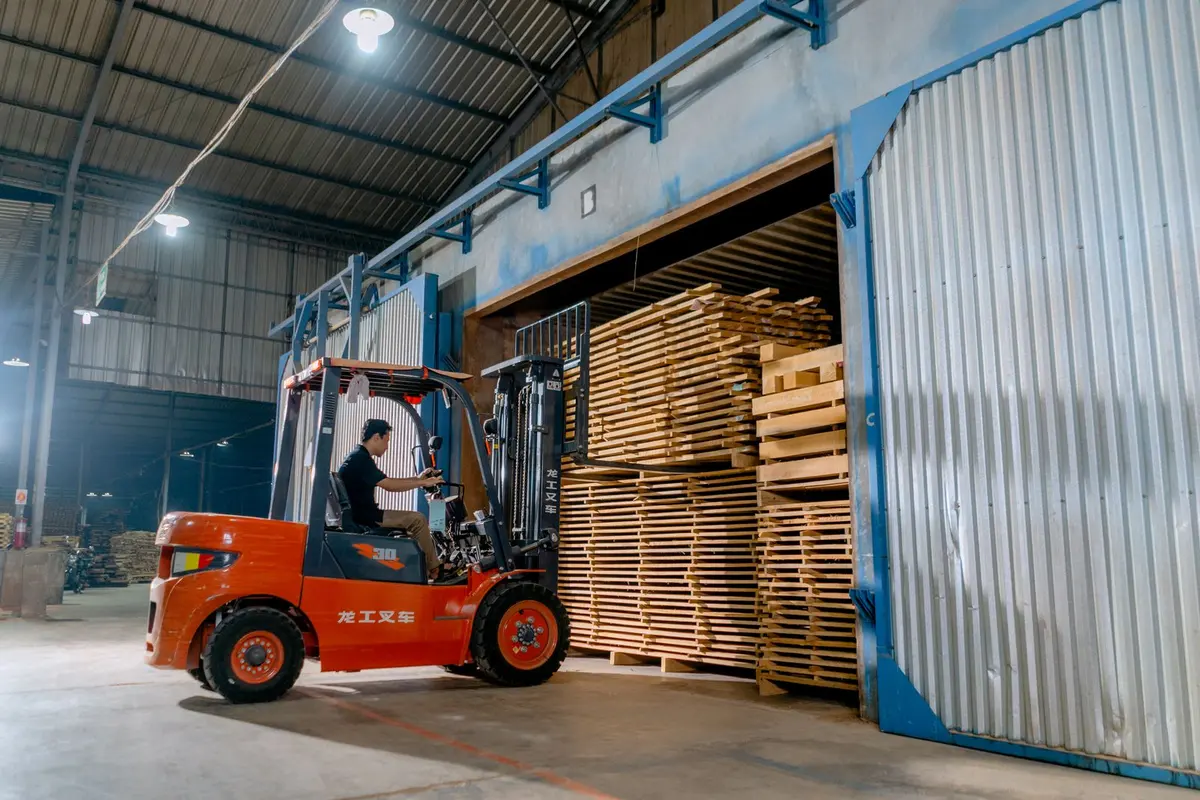
The third is demand for wood chips and pellets. The March 2026 report of Thi Truong Go recorded the FOB price of wood chips exported to China up 9 USD/tonne to 167 - 172 USD/tonne; when chip mills buy heavily, young acacia and tram wood is pulled into chips, pushing up the domestic raw timber price.
The fourth is tree age and end use. In Gia Lai, acacia 7 - 8 years old was bought at 1.75 million VND/tonne, higher than acacia of 4 - 5 years (1.68 million); in Bac Ninh, acacia for veneer peeling was 1,900 - 2,000 VND/kg, higher than acacia for chipping at 1,650 - 1,700 VND/kg. The fifth is harvest season: according to agri.vn (6/2026), acacia in the Central region is hard to harvest in the rainy season, while acacia in Ca Mau is hard to harvest in the dry season, so supply in each region runs out of step with the seasons.
See also the price of finished wooden pallets to weigh buying raw timber to build your own against ordering finished pallets. If your business is also considering investing in a pallet stretch wrapping machine, try the stretch wrapper payback (ROI) calculator to compare with current tram wood costs.
Worked example: how much timber does it take to build 100 tram wood pallets?
For a 1100 x 1100 mm tram wood pallet of the ordinary stringer design, each pallet needs about 0.046 m³ of finished timber, or about 4.6 m³ for 100 pallets, before the sawing loss. This figure is calculated from a specific example; a real pallet may be thicker or thinner depending on the load rating:
- 10 deck boards 1100 x 100 x 15 mm: 10 x 0.00165 = 0.0165 m³.
- 3 stringers 1100 x 100 x 75 mm: 3 x 0.00825 = 0.02475 m³.
- 3 bottom boards 1100 x 100 x 15 mm: 3 x 0.00165 = 0.00495 m³.
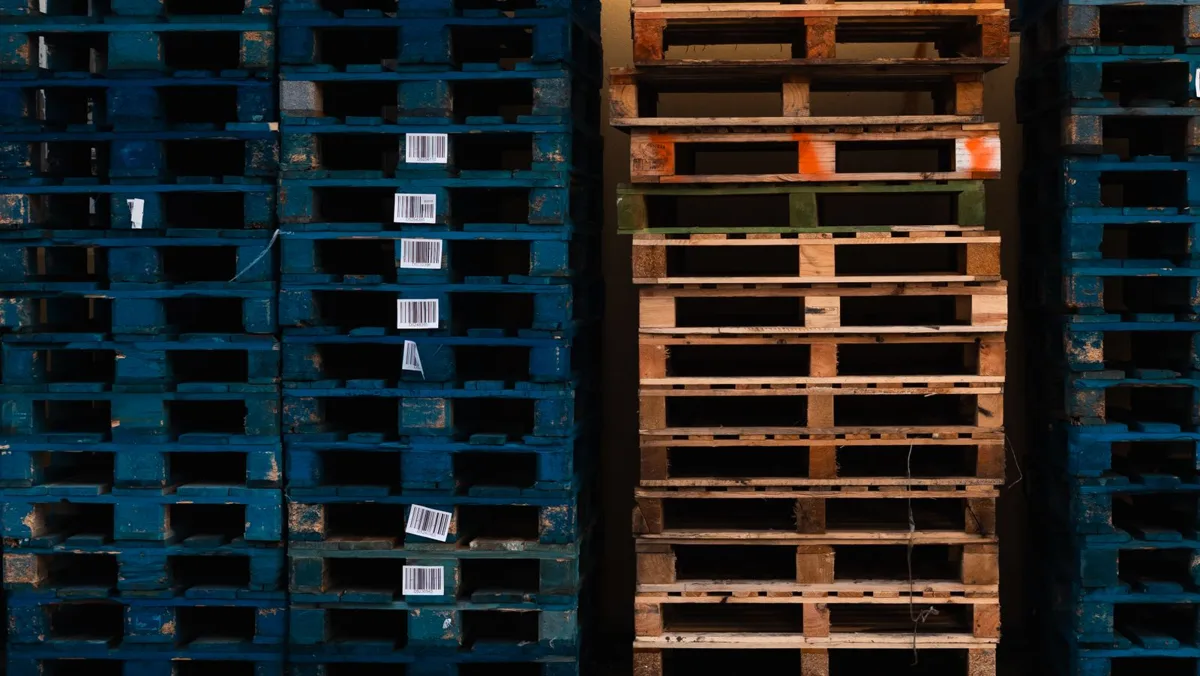
The total comes to about 0.0462 m³ per pallet. Multiplying by the sawn timber price on the quote you receive gives the timber cost, to which you add nails, assembly labour and treatment if needed; this is the basis for comparing buying raw timber to build yourself against ordering finished pallets directly from ICD Vietnam.
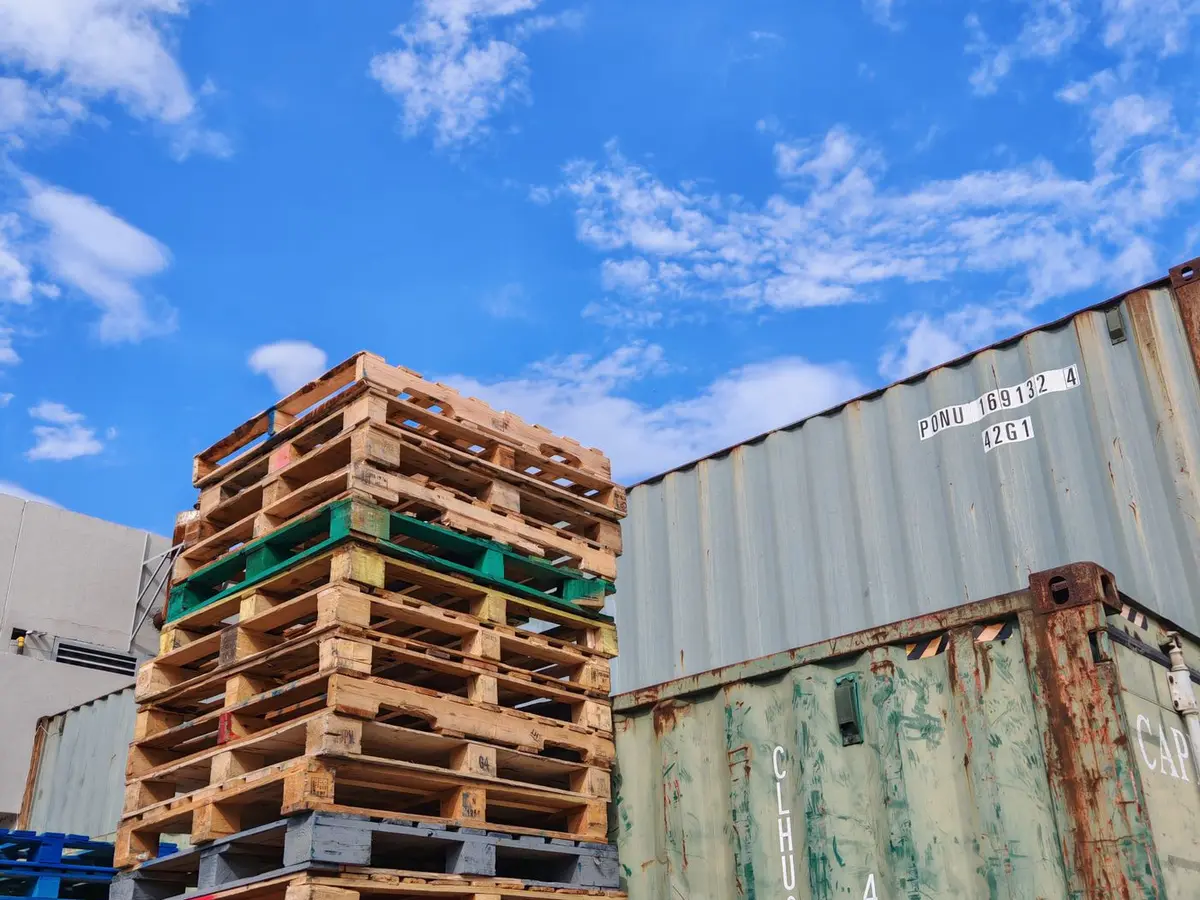
If pallets travel with export cargo, add the cost of treatment under the ISPM 15 standard of the International Plant Protection Convention (IPPC): heat treatment (HT) or methyl bromide fumigation (MB), followed by an IPPC stamp. The European Union has banned the use of methyl bromide inside the bloc since 18 March 2010, but still accepts imported pallets treated by HT or MB in line with ISPM 15. ICD Vietnam does not fumigate itself; our export pallets are treated and stamped with the IPPC mark through a licensed facility.
Frequently asked questions
How much does tram wood cost per cubic metre?
Round earleaf acacia is usually sold by the tonne, about 1.2 - 2.0 million VND/tonne in 2026 according to Gia Lai, Thanh Nien and Bac Ninh newspapers; to convert to cubic metres you must weigh a sample lot because green wood is heavier than dry wood. Tram wood sawn into battens has no official public price list, and the price follows the quote for each lot and specification.
How much does earleaf acacia cost per cubic metre?
Earleaf acacia (tram bong vang) is traded together in the plantation acacia group: round logs about 1.2 - 2.0 million VND/tonne in 2026, peeled acacia veneer 3.3 - 3.5 million VND/m³ in Bac Ninh (9/2026). Sawn timber and glued panels from earleaf acacia cost more because they add sawing loss, sawing labour, drying and gluing.
How much does a tram cu pole cost?
According to the construction material price announcement of the Vinh Long Department of Construction for 1 - 15/8/2026, a 4 m tram cu pole costs 45,000 - 49,000 VND per pole and a 4.8 m pole 62,000 - 64,000 VND depending on diameter, excluding VAT and transport.
Is it better to buy green or dried tram wood to build pallets?
Wood dried to a low moisture content warps less and moulds less in a container but costs more because of the added drying step; green wood is cheaper but moulds easily if the pallet travels far or sits in storage for long. When ordering, ask for the moisture content to be stated on the quote.
How is the price of tram wood sawn into battens calculated?
Sawn battens are priced by m³: thickness x width x length (m) x number of battens, multiplied by the unit price. For example 1,000 battens of 20 x 100 x 1,200 mm come to 2.4 m³; longer battens may have a different price per m³, so a separate quote is needed for each length.
Why did acacia and tram wood prices rise in 2026?
Supply of plantation timber fell because many areas were damaged after Typhoon Yagi in 2024 and the storms of 2025, while chip and veneer mills kept buying heavily; haulage and harvest labour costs also rose, according to Bac Ninh newspaper (9/2026) and Gia Lai newspaper (4/2026).
Does ICD Vietnam quote for tram wood pallets?
Yes. ICD Vietnam builds tram wood pallets to your size, load rating and ISPM 15 treatment requirement; price: contact for a quote by specification, with volume discounts, exchange or return within 7 days (wooden pallets carry no warranty). Call hotline 0983 797 186 or chat on Zalo to get a quote.
Contact ICD Vietnam
For a quote on tram wood pallets by size, load rating and ISPM 15 treatment requirement, contact ICD Vietnam (ICD Vietnam Industrial Manufacturing Co., Ltd.). We have a production workshop, a Hanoi warehouse and a southern workshop; price: contact for a quote. Orders are processed in 1 - 2 days, with delivery in 1 - 3 days within Hanoi and Ho Chi Minh City, 2 - 5 days between regions and 3 - 7 days to other provinces.
- North Vietnam: 0983 797 186 / 090 345 9186 / 090 5859 186.
- South Vietnam: 098 6784 186; southern workshop: 551/212 Le Van Khuong Street, Tan Thoi Hiep Ward, District 12.
- Zalo: Chat on Zalo. Email: sales@icdvietnam.com.vn.
References
- Gia Lai: Raw timber prices rise but profit from planting forest is not high, Gia Lai newspaper, 10/4/2026.
- Ca Mau wants to keep the value of acacia timber by developing processing industry, Thanh Nien newspaper, 5/8/2026.
- Bac Ninh: Plantation timber prices rise, forest growers earn high profit, Bac Ninh newspaper, 15/9/2026.
- Annex III of the construction material price announcement of Vinh Long province, August 2026 (1 - 15/8/2026), Vinh Long Provincial Department of Construction.
- Timber market report for March 2026 and outlook, Thi Truong Go (Industry News Agency), 7/4/2026.
- Mekong Delta raw timber: opportunity from acacia forest on acid sulphate soil, agri.vn, 13/6/2026.
- Acacia auriculiformis, PROSEA (Plant Resources of South East Asia), Pl@ntUse.
- ISPM 15, regulation of wood packaging material, IPPC.