Table of Contents
| Product type | Main application | Reference price |
|---|---|---|
| Rubber wood blank (per m3) | Manufacturing, furniture | 4,200,000 - 5,800,000 (VND/m3, gỗ cao su xẻ/sấy làm vật tư sản xuất) |
| Rubber wood board 10-12mm | Tabletops, shelves | 12,000,000 - 15,000,000 (VND/m3, ≈ 430,000 - 540,000/tấm 1220x2440mm) |
| Rubber wood board 18mm | Premium furniture | 10,500,000 - 13,500,000 (VND/m3, ≈ 560,000 - 720,000/tấm 1220x2440mm) |
| Acacia wood (reference) | Pallet, light furniture | approx. 15-20% lower |
Market survey 21/09/2026. Reference price; contact hotline 0983 797 186 for exact quote. Call 0983 797 186 or Zalo ICD for the most accurate quote.
Sapele (the African “xoan dao”) is harder, heavier and more expensive than rubberwood and suits furniture that needs a red colour and attractive grain; rubberwood is far cheaper, has a large and steady domestic supply and stays dimensionally stable after drying, which makes it the economical choice for pallets. According to The Wood Database, African sapele weighs 665 kg/m³ with a Janka hardness of 6,060 N, while rubberwood weighs 595 kg/m³ with a hardness of 4,280 N.
Xoan dao and rubberwood sit in two different segments of the timber trade. Xoan dao is chosen for beds, wardrobes, doors and altar furniture, where buyers pay for the colour and grain. Rubberwood is plantation timber processed at industrial scale and used widely for everyday furniture and packaging such as pallets and crates. This article compares the two woods with sourced mechanical data, ranks them by the Vietnamese timber classification, and explains why, for pallets, we almost always recommend treated and dried rubberwood over expensive hardwood.
1. Two completely different segments
Xoan dao is a natural timber used for formal furniture, while rubberwood is plantation timber used for everyday furniture and industrial packaging; the two differ from species and origin to timber group.
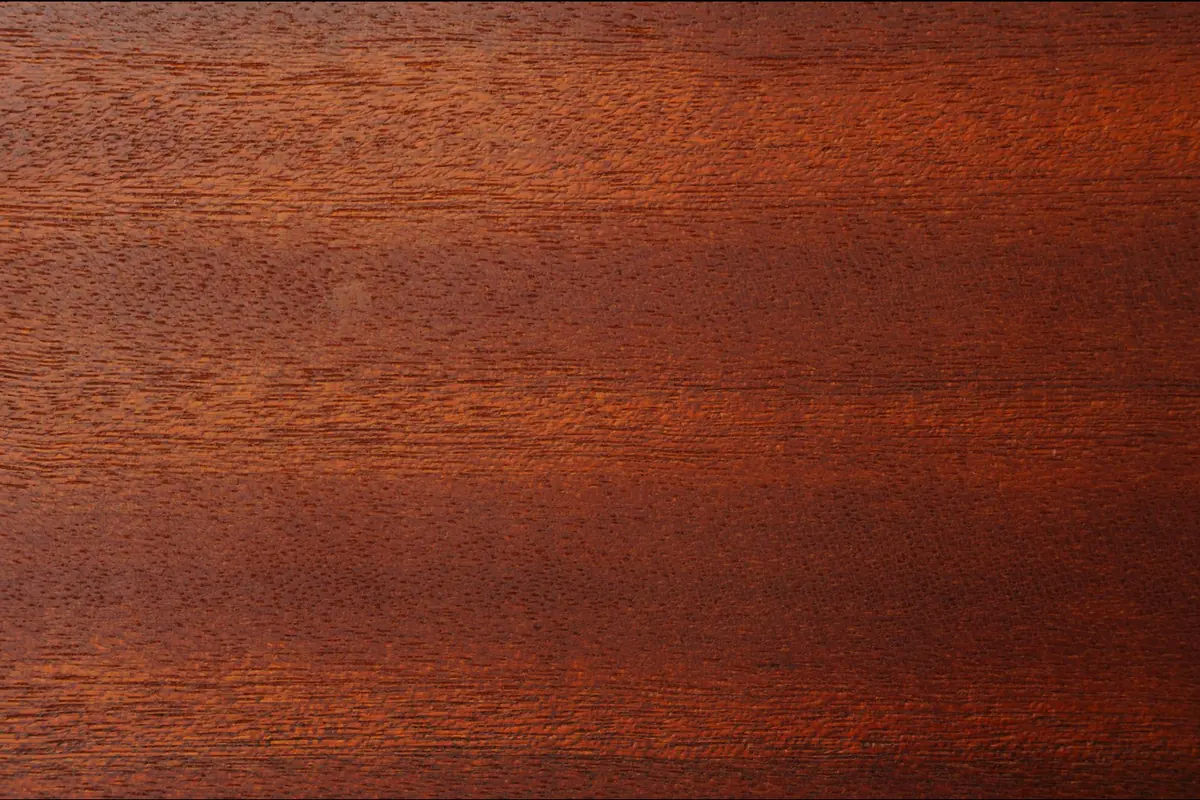
Xoan dao is a traditional timber familiar to Vietnamese buyers. Its deep red colour and sharp grain make it the choice for pieces that must last and look dignified, such as beds, wardrobes and large plank divans. Rubberwood, by contrast, is harvested and processed at industrial scale and is common in modern minimalist furniture and in pallet production for packing goods.
One point is often confused: the name. The domestic xoan dao and African xoan dao are in fact two different tree species that share only a pinkish-red wood colour. The identification table below separates them clearly:
| Criterion | Rubberwood | Xoan dao (domestic) | African xoan dao (sapele) |
|---|---|---|---|
| Scientific name | Hevea brasiliensis | Pygeum arboreum (Prunus arborea) | Entandrophragma cylindricum |
| Plant family | Spurge (Euphorbiaceae) | Rose (Rosaceae) | Mahogany (Meliaceae) |
| Origin | Plantation, trees at the end of the latex cycle | Natural forest, upland plantation | Tropical African natural forest, imported |
| Timber group (Decision 2198-CNR) | Group VII | Group VI | Not in the classification table |
| Main uses | Pallets, wooden crates, everyday furniture | Beds, wardrobes, doors, altar furniture | Sliced veneer, furniture, flooring, musical instruments |
The group ranking in the table follows Decision 2198/CNR of the Ministry of Forestry on the provisional classification of timbers used uniformly across the country. The smaller the group number, the heavier and harder the wood; xoan dao (Group VI) and rubberwood (Group VII) are both light-wood groups and neither is a precious timber.
2. Comparing technical and economic criteria
Xoan dao wins on hardness, colour and decorative value; rubberwood wins on price, supply and dimensional stability after drying.
On colour, rubberwood is a bright yellow that takes paint easily in other tones, while xoan dao is deep red with clear grain and usually needs only a clear finish. On hardness, rubberwood is medium and fairly tough, while xoan dao is harder, denser and heavier. On price, sawn-timber quotes vary from mill to mill, but xoan dao is always several times more expensive than rubberwood because the supply is scarcer. On use, rubberwood goes into pallets, wooden crates and modern dining furniture; xoan dao goes into divans, altar cabinets, wooden doors and staircases.
On resistance to termites and borers, many online sources claim that xoan dao is “naturally resistant to borers” or that rubberwood is “never attacked by termites”. Neither claim matches the measured data, as the sections below explain.
2.1. Mechanical data: how far apart are rubberwood and African xoan dao?
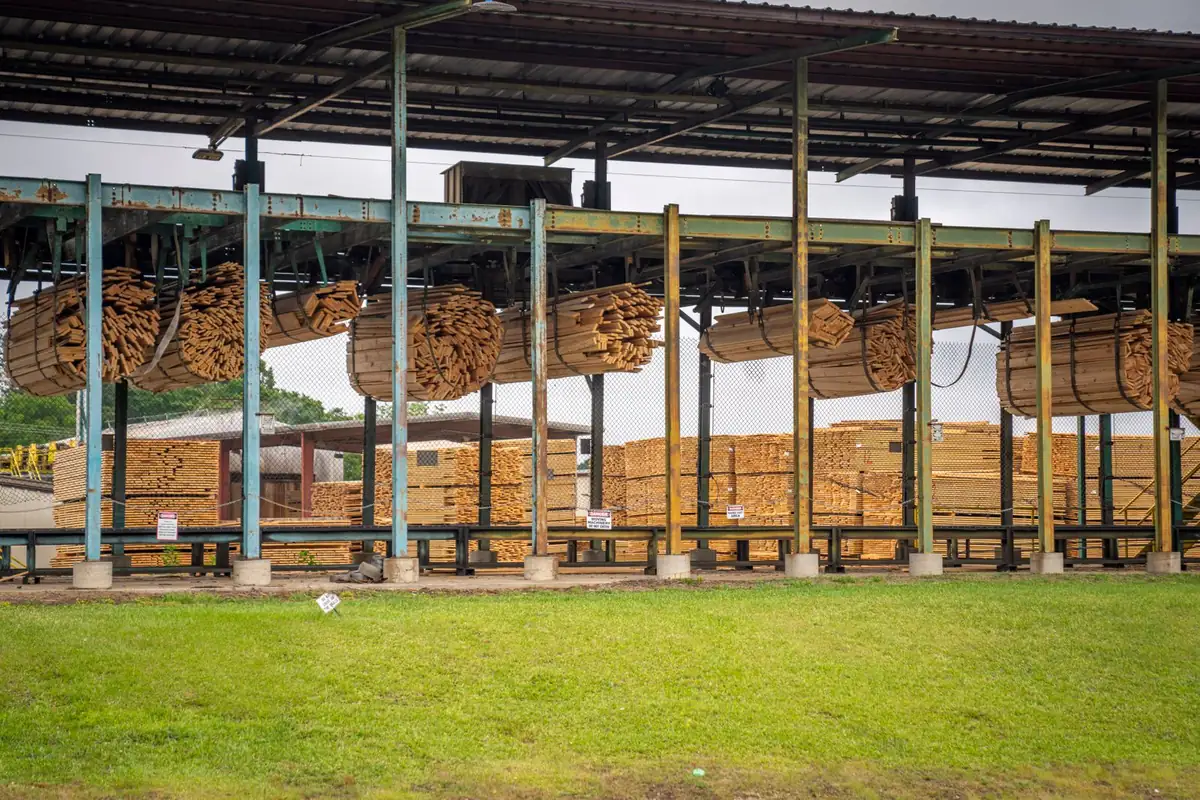
Sapele (African xoan dao) is about 42% harder than rubberwood and about 54% stronger in bending, but it shrinks almost 1.7 times as much on drying. The figures below come from The Wood Database, measured at 12% moisture content. The domestic xoan dao (Pygeum arboreum) has no comparable published data set, so it is left out of the table.
| Property | Rubberwood | African xoan dao (sapele) | What it means for a pallet |
|---|---|---|---|
| Dry density | 595 kg/m³ | 665 kg/m³ | A sapele pallet of the same size weighs about 12% more |
| Janka hardness | 4,280 N | 6,060 N | Sapele dents less on the board face under impact |
| Bending strength (MOR) | 71.9 MPa | 110.9 MPa | Sapele carries bending load on the boards better |
| Modulus of elasticity (MOE) | 9.07 GPa | 12.35 GPa | Sapele sags less under load |
| Compressive strength parallel to grain | 42.1 MPa | 58.9 MPa | Both are enough for ordinary pallet feet and blocks |
| Volumetric shrinkage (green to dry) | 7.5% | 12.9% | Rubberwood is more dimensionally stable after drying |
| Natural durability | Poor, prone to fungi and insects | Moderate to good, moderate insect resistance | Both need treatment before long-term use |
For pallets, the mechanical advantage of sapele is rarely used to the full: a pallet’s load capacity depends more on the cross-section of the boards, the spacing of the blocks and the number of nails than on the species. Making rubberwood boards a few millimetres thicker usually reaches the required load at a much lower cost than switching to an expensive timber.
3. Telling the xoan dao types on the market apart
On the market, timber sellers usually split xoan dao into three lines by where the wood comes from: Gia Lai or Laos, South Africa (sapele) and the Northwest. Quality and price depend heavily on origin and the age of the tree.
Gia Lai or Laos xoan dao is rated highest for its large trunks, fine grain and attractive figure, and it is also the most expensive line. African xoan dao has a very large, straight trunk and even grain; the quality is good but the price is usually softer than the Gia Lai line. Northwest xoan dao is usually young wood with open grain and lower strength than the other two, the cheapest of the xoan dao group but still dearer than rubberwood. Exact prices change with the grade, dryness and timing, so when buying you should get a quote for the exact grade you need.
The name “African xoan dao” is a trade name: sapele actually grows in the tropical forests of West and Central Africa and is not the domestic xoan dao species. Sapele is now on the IUCN Red List as vulnerable because its populations are declining. For domestic supply, Directive 13-CT/TW of 12 January 2017 of the Party Central Committee requires a halt to logging of natural forest nationwide, so xoan dao from natural forest is very limited. That is why xoan dao prices are slow to fall and supply struggles to meet large orders.
4. Why is rubberwood so widely used for pallets?
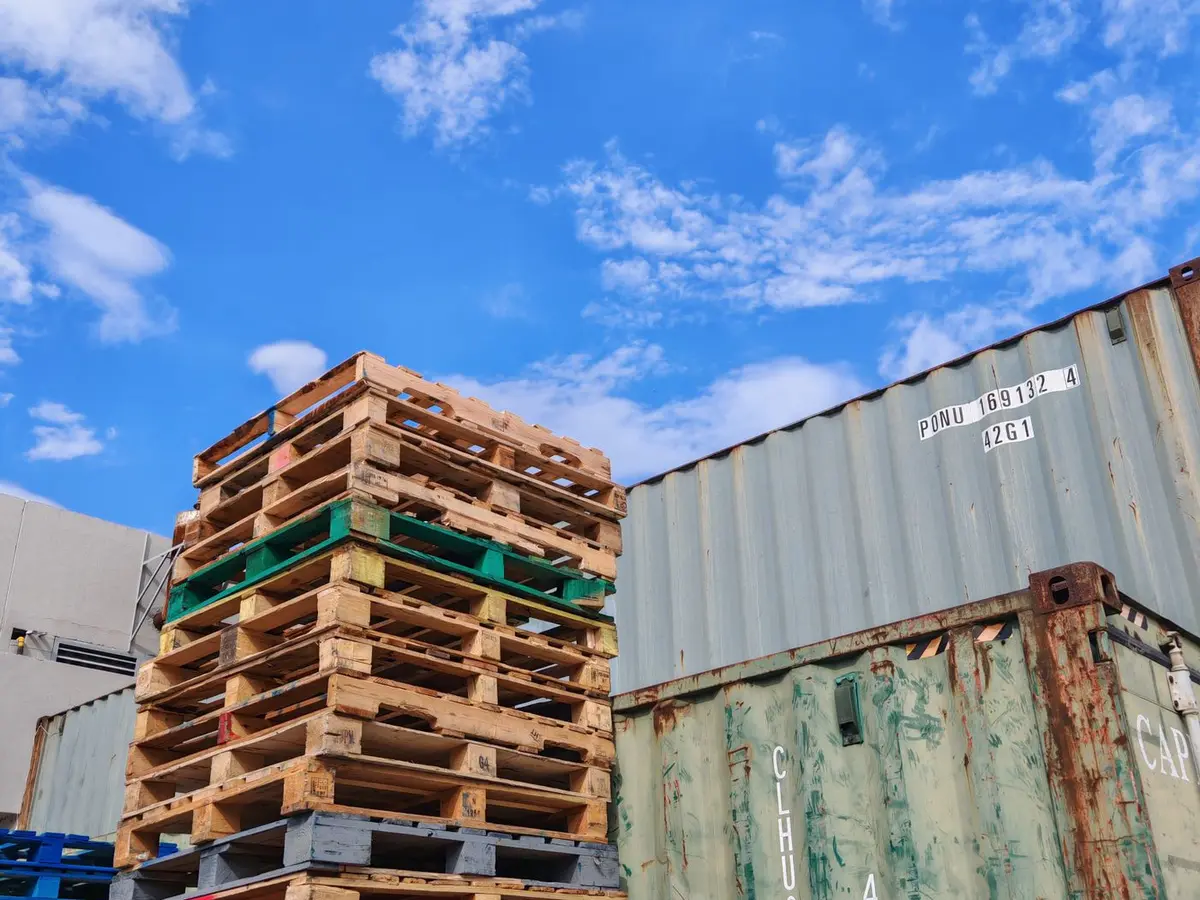
Rubberwood dominates pallet production for three reasons: low raw material cost, a large and steady domestic supply, and a plantation origin that does not come from natural forest.
4.1. Cost is the deciding factor
The price of a pallet depends mainly on the volume of wood, the size, the load rating and the treatment required. For the same size and load, the amount of wood is almost the same, so the price of wood per cubic metre decides most of the difference. Building pallets from xoan dao means paying furniture-timber prices for a packaging material that usually just supports cargo and, for the most part, travels one way.
A rubberwood pallet built to the right design meets common load ratings at a much lower cost. In our view, if you need a pallet for heavier loads, the sensible route is to increase the board cross-section or add rubberwood blocks, not to switch to an expensive hardwood. Across a batch of hundreds or thousands of pallets, the difference is large. ICD Vietnam quotes pallets by the size, load and quantity of each order.
4.2. Plentiful and steady supply
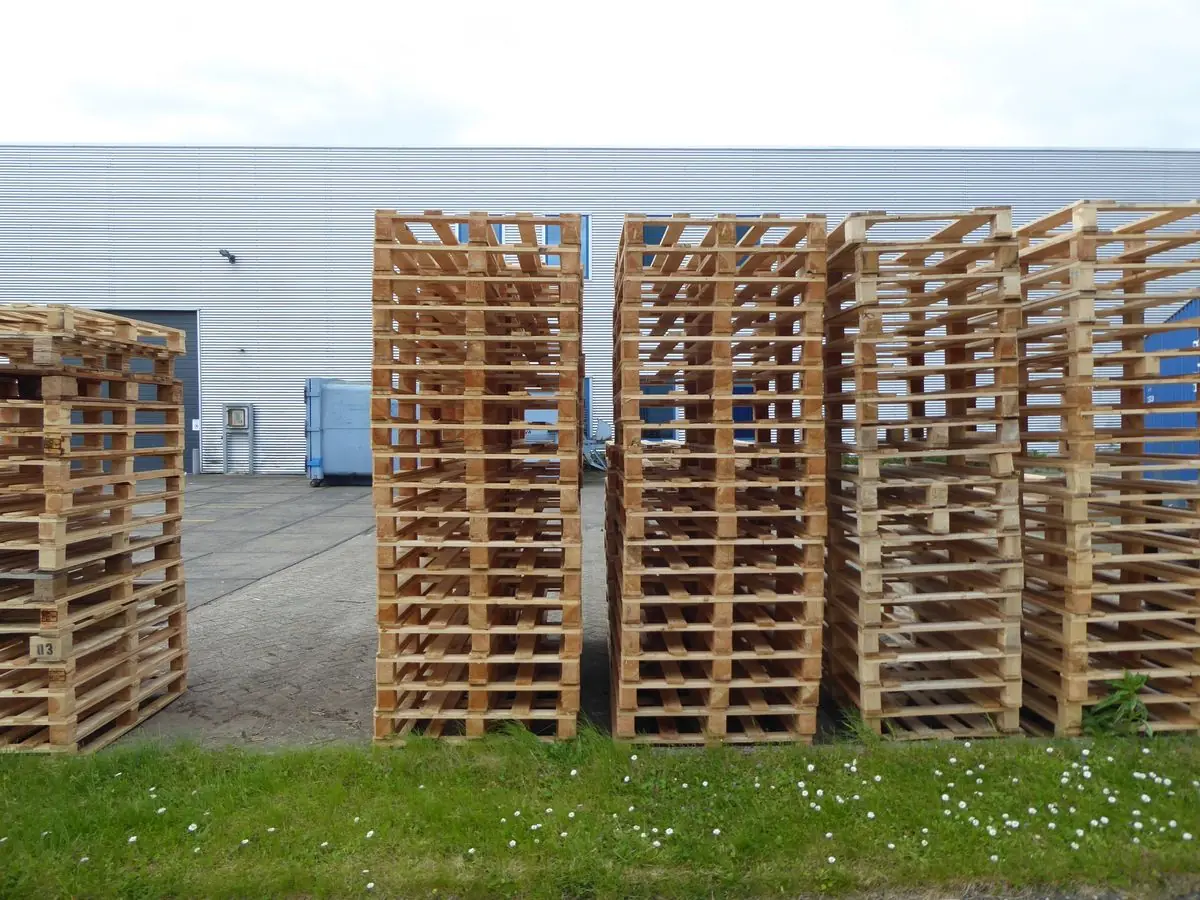
Xoan dao today depends mostly on imports or small plantations, while logging in natural forest has stopped. This makes large pallet orders, up to tens of thousands of units a month, difficult.
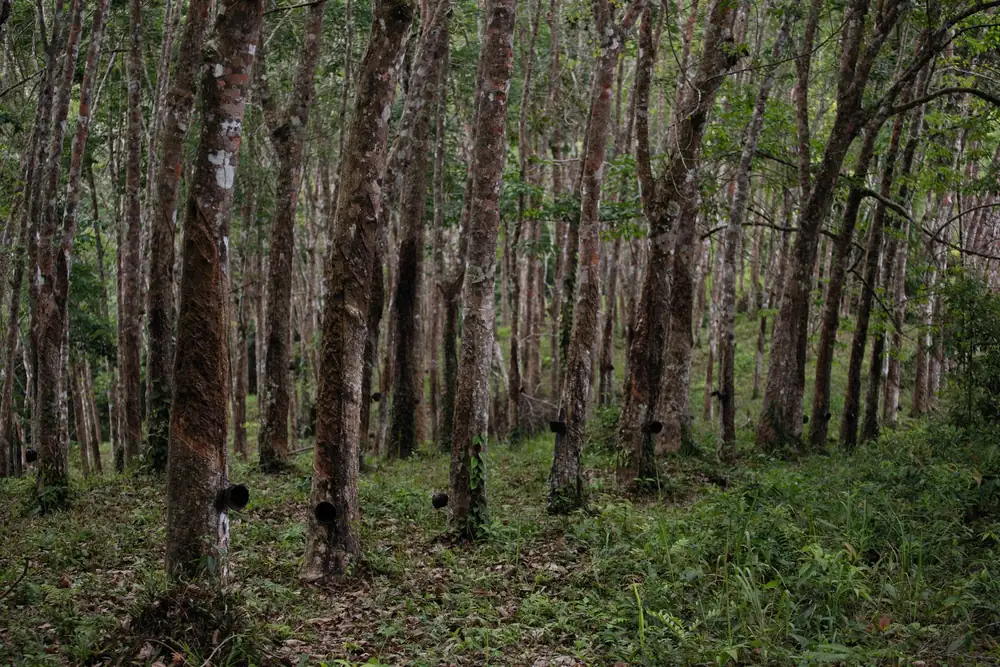
Rubberwood, by contrast, is a product of large domestic rubber plantations. According to the Vietnam Rubber Association, in 2024 the country had 909.3 thousand ha of rubber, of which 734.8 thousand ha were being tapped. Plantations that have finished their latex cycle are felled regularly, giving pallet workshops in the Southeast and Central Highlands a steady source of timber and the ability to fill large orders for industrial parks.
4.3. Responsibility to the environment
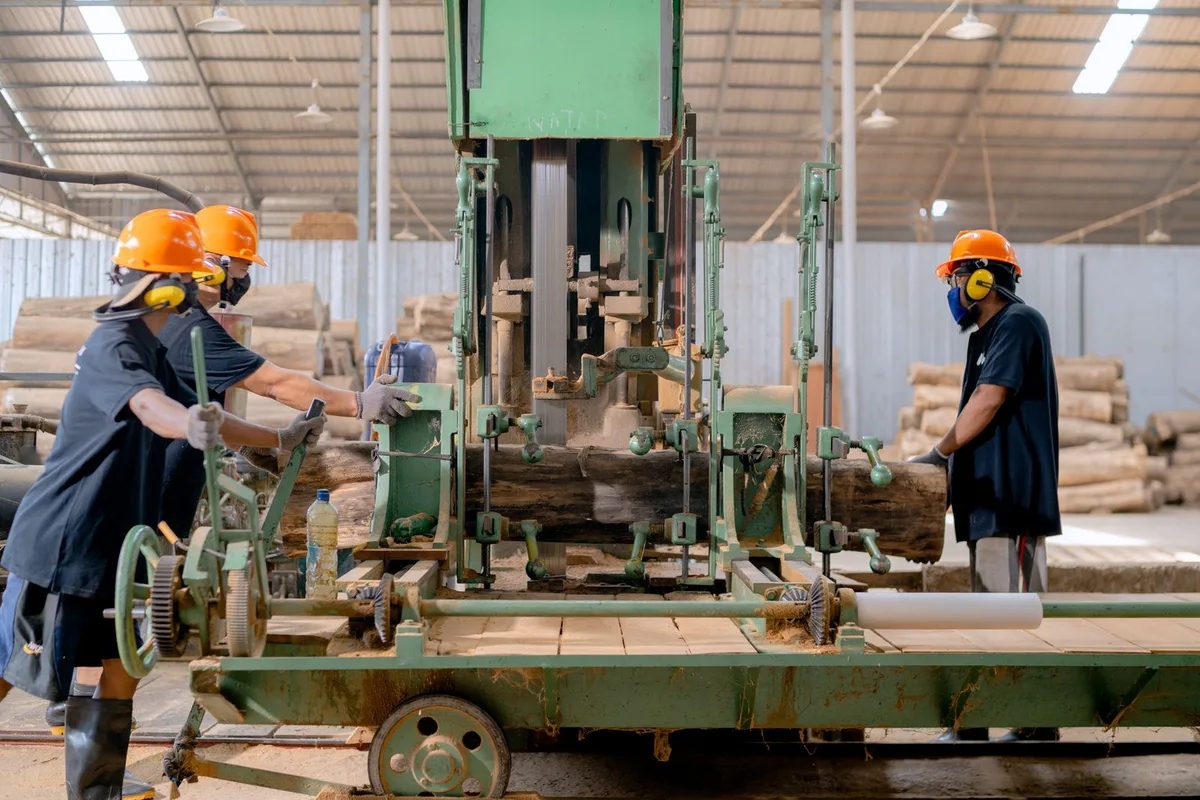
Rubberwood comes from trees that have finished their latex cycle; instead of being burned, the trunks are sawn into useful material. Using rubberwood for packaging reduces demand for natural timbers such as xoan dao, whose harvest is already restricted.
4.4. What does rubberwood for pallets need in the way of treatment?
Rubberwood for pallets needs three treatment steps: chemical treatment against fungi and insects right after sawing; drying to a stable moisture content; and, for export cargo, heat treatment under ISPM 15 followed by an IPPC stamp.
- Preservative treatment: green rubberwood is very prone to staining fungi and insects because it is rich in starch, so it must be treated, usually with a boron compound, right after sawing.
- Kiln drying: brings the wood to a stable moisture content to cut weight and limit warping and mould.
- ISPM 15 treatment for export cargo: the wood core reaches at least 56 °C continuously for 30 minutes, then receives the HT mark.
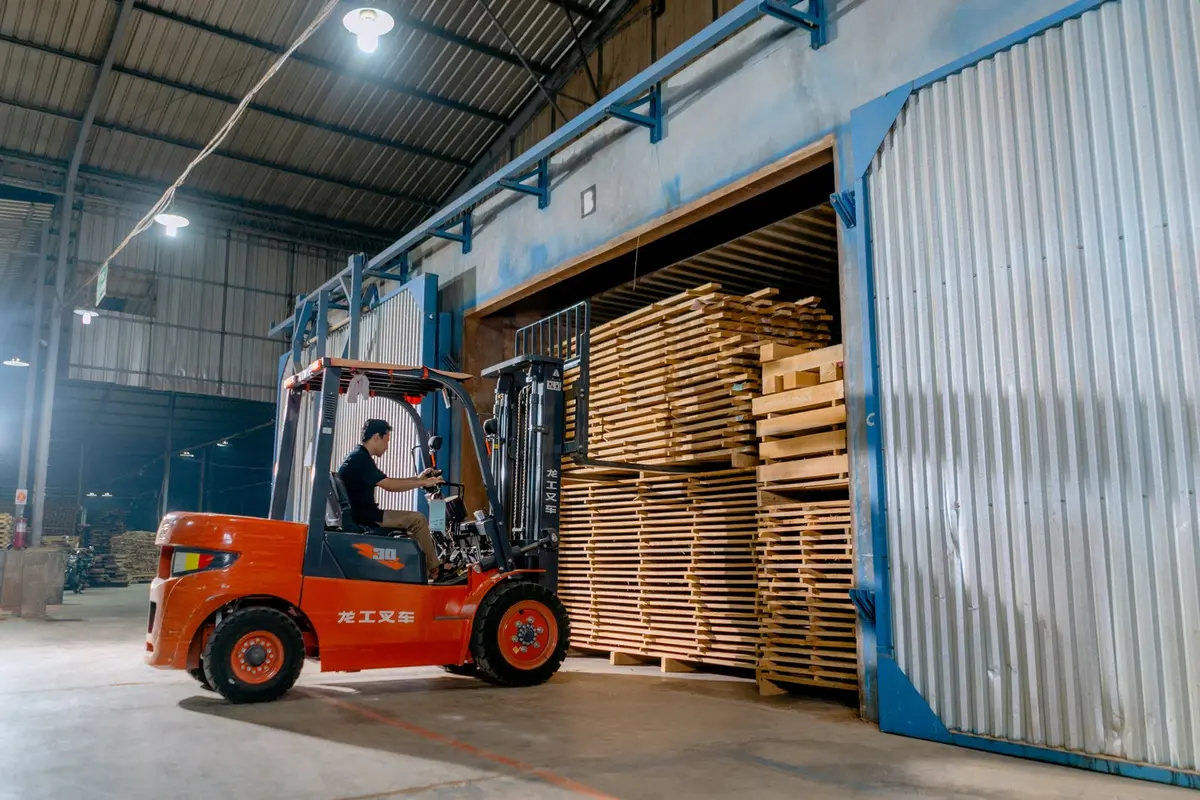
According to the rubberwood processing manual of the International Tropical Timber Organization (ITTO), at many mills the tree is felled, sawn, treated and dried within about 7 to 10 days; logs should be sawn within 3 days, otherwise a temporary protective spray is needed. Drying time depends on board thickness and kiln temperature: one study of 30 mm rubberwood boards recorded 117 hours at 60 °C, falling to 54 hours at 90 °C but using about 22% more energy.
ISPM 15 is the wood packaging standard of the International Plant Protection Convention (IPPC) and applies to every type of raw wood, xoan dao included. It exists to stop pests spreading across borders and does not replace the preservative treatment against termites and borers for wood in long-term use.
5. Conclusion
Choose xoan dao when you need decorative value and long-lasting furniture durability; choose rubberwood when you need large volume, low cost and steady supply, as with pallets and crates.
In short, choose the wood by purpose: xoan dao for living spaces that need elegance; rubberwood that has been properly treated, dried and processed for logistics, crating and export pallets.
Frequently asked questions
How do xoan dao and rubberwood differ?
Xoan dao is a hard, heavy, deep red wood with attractive grain, suited to high-end furniture such as altar cabinets, divans and wooden doors. Rubberwood is plantation timber that is light in colour, lighter, cheaper and dimensionally stable after drying, widely used for pallets and everyday furniture.
How much cheaper is rubberwood than xoan dao?
Timber prices change with source, grade, dryness and timing, so there is no fixed ratio. Sawn-timber quotes on the market show xoan dao costing several times more than rubberwood. For pallets, ICD Vietnam quotes by size, load and quantity.
Why do logistics companies prefer rubberwood?
Because raw material is cheap, domestic supply from felled rubber plantations is large, the wood is dimensionally stable after drying and it can be given ISPM 15 treatment for export cargo.
Which group is xoan dao in?
Under the timber classification issued with Decision 2198/CNR in 1977, xoan dao (Pygeum arboreum) is in Group VI and rubberwood is in Group VII. Both are light-wood groups and neither is a precious timber.
Is xoan dao attacked by borers?
It can be. According to The Wood Database, sapele (African xoan dao) is only moderately insect resistant; the domestic xoan dao also needs drying and treatment before use. Rubberwood has lower natural durability, so it must be treated and dried.
Is African xoan dao good wood?
African xoan dao (sapele) is hard and strong in bending, with a Janka hardness of 6,060 N and a bending strength of 110.9 MPa according to The Wood Database, suiting furniture and sliced veneer. Its drawbacks are high shrinkage on drying (12.9% by volume), interlocked grain that tears when planed, and a high price.
Should you use xoan dao for pallets?
Usually not. Pallets are mostly one-way or used for internal circulation and do not need attractive colour and grain; load capacity depends more on the board cross-section and the number of blocks than on the species. Treated and dried rubberwood does the job at a much lower cost.
Contact ICD Vietnam
ICD Vietnam supplies wooden pallets in standard sizes or to your drawing; pallets for export cargo are treated and stamped with the IPPC mark under ISPM 15 through a licensed facility. ICD Vietnam has a production workshop, a Hanoi warehouse and a southern workshop; price: contact for a quote, with volume discounts. Wooden pallets carry no warranty and no 7-day return.
- North Vietnam: 0983 797 186 / 090 345 9186 / 090 5859 186; Hanoi warehouse: 3rd Floor, Thang Long A1 Building, Bau Hamlet, Thien Loc Commune.
- South Vietnam: 098 6784 186; southern workshop: 551/212 Le Van Khuong Street, Tan Thoi Hiep Ward, District 12.
- Email: sales@icdvietnam.com.vn.
- Zalo: Chat on Zalo with ICD Vietnam.
References
- Mechanical data for rubberwood and sapele: The Wood Database (Sapele; Rubberwood).
- Provisional classification of timbers used uniformly nationwide: Decision 2198/CNR of 26/11/1977 of the Ministry of Forestry (vbpl.vn).
- Vietnam’s rubber area in 2024: Vietnam Rubber Association (VRA), general statistics.
- Directive 13-CT/TW of 12 January 2017 on strengthening the Party’s leadership in the management, protection and development of forests: Thu Vien Phap Luat.
- Rubberwood Processing Manual (treating and drying rubberwood): International Tropical Timber Organization (ITTO).
- Srivaro S., Wongprot T., Matan N. (2008), Accelerated conventional temperature drying of 30 mm thick rubberwood lumber: DOAJ.
- ISPM 15 standard for treating wood packaging: International Plant Protection Convention (IPPC).