Table of Contents
- 1. Pine wooden pallets
- 2. Acacia wooden pallets
- 3. Pressed-wood pallets
- 4. Made-to-order wooden pallets
- 5. EPAL wooden pallets
- How to recognise wooden pallet types from photos
- Conclusion
- Frequently asked questions
- What are the characteristics of a pine wooden pallet?
- What treatment does a pine pallet need to meet export standards?
- What types of wooden pallets are common?
- How do you recognise a genuine EPAL pallet from photos?
- How do 2-way and 4-way entry wooden pallets differ in photos?
- What is a CP wooden pallet?
- Contact ICD Vietnam
- References
Reviewed and updated by ICD - Week 43/2026
Wooden pallets seen in Vietnam fall into 5 groups: pine pallets, acacia pallets, pressed-wood pallets, made-to-order pallets and EPAL pallets. Tell them apart quickly by the feet of the pallet (9 blocks or 3 stringers), the EPAL mark and the IPPC mark on the block. This article collects 19 wooden pallet photos with dimensions, from the EPAL Euro 800 x 1200 x 144 mm to the CP series and colour-painted pallets.
Wooden pallets are the load carriers used in transport and storage, letting forklifts move goods quickly and stack them neatly in the warehouse. Each type of wooden pallet has a different construction, material and treatment requirement, so when looking at photos a buyer needs to know where to look to recognise the right type. Below we go through each group, with an illustrative photo and identifying features for each.
1. Pine wooden pallets
Pine pallets are widely used because the wood is light, straight-grained, easy to work and easy to nail. Pine itself has poor natural durability: according to The Wood Database, the heartwood of radiata pine is rated as non-durable to poorly durable against decay fungi, with an average dry weight of about 515 kg/m³. Heat treatment or fumigation under the ISPM 15 standard kills pests present in the wood at the time of treatment so the pallet qualifies for export, but it does not make the wood immune to termites later, so pallets must be kept dry in storage.
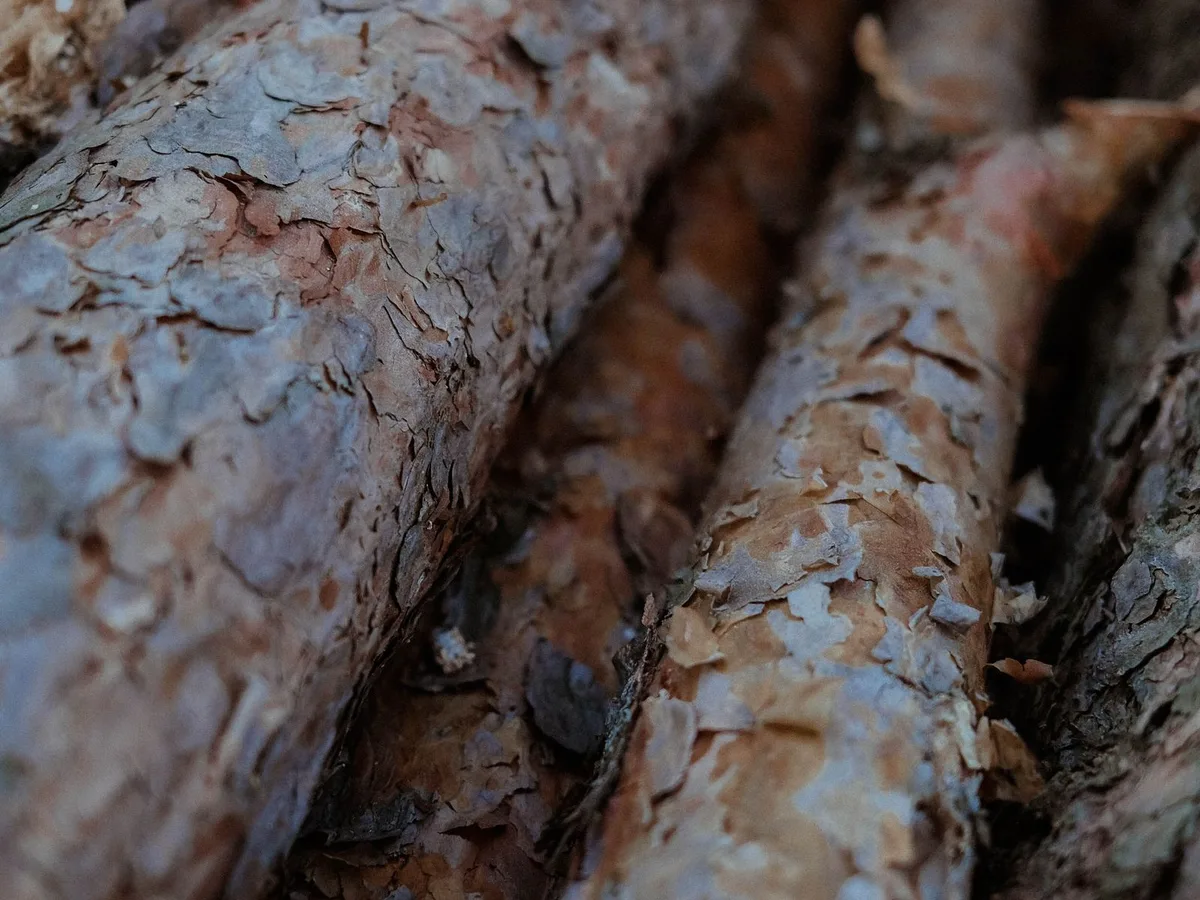
Pine is light in colour and easy to reuse and recycle. Pine pallets carry well for their weight, are easy to move and have a clean surface, so they are often used for export goods, especially agricultural products and light goods.
2. Acacia wooden pallets
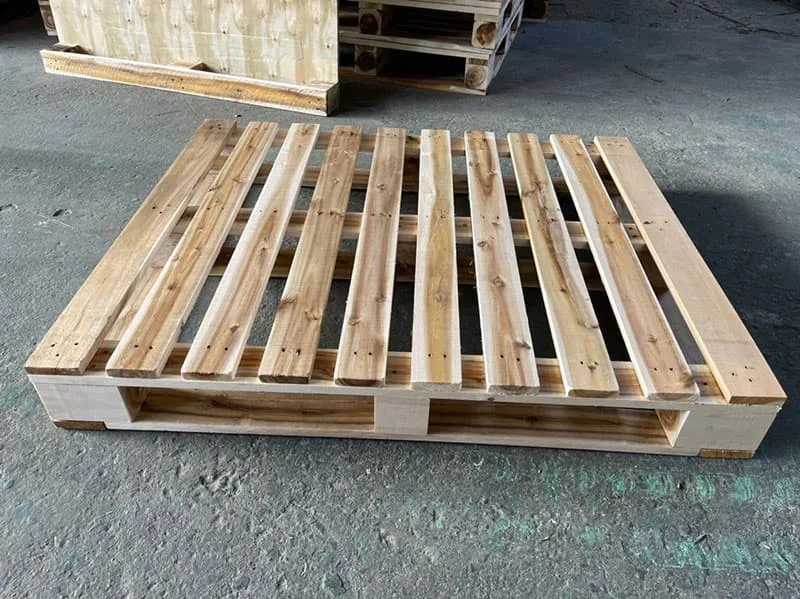
Acacia pallets are made from Acacia auriculiformis, a plantation timber common in Vietnam. Acacia is heavier and harder than pine, so the pallet is heavier to handle in return. Acacia pallets are therefore often used for heavy goods, warehouses that need high sturdiness and heavy industries.
3. Pressed-wood pallets
Pressed-wood pallets are made from wood chips or sawdust mixed with glue and hot-pressed in a mould into a one-piece deck and feet. This is different from plywood (multi-layer board), the material used to build flat-deck pallets. The advantages of pressed-wood pallets are that they need no fumigation or heat treatment, are rarely attacked by insects and nest together to save space; the drawbacks are that they cannot carry loads as heavy as natural wood pallets and resist water poorly.
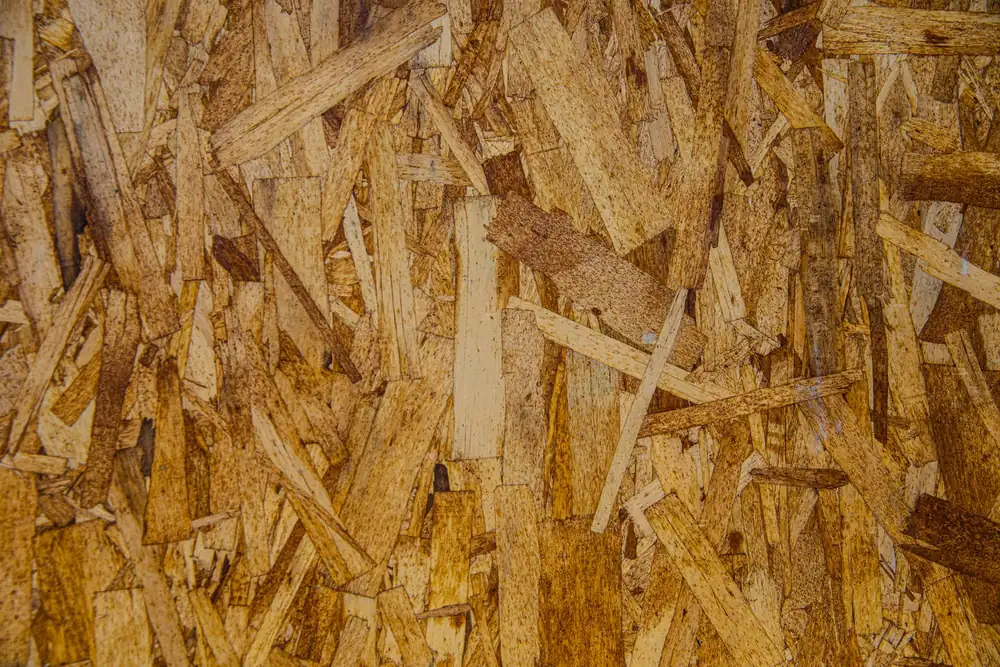
Pressed-wood pallets need no fumigation because the wood has been processed with glue, heat and pressure. The ISPM 15 standard exempts packaging made entirely of processed wood material such as plywood, particle board and OSB, so these pallets do not carry the IPPC mark. That makes pressed-wood pallets suited to light export goods that need insect control and where the buyer wants to avoid treatment procedures.
4. Made-to-order wooden pallets
Besides ordinary wooden pallets, many businesses need to have pallets built to their own requirements for size and structure to suit particular goods. Made-to-order pallets are rated for the real load, so they can be built stronger than standard pallets exactly where load is carried, and are often used for machinery, heavy equipment and goods of non-standard size.
To get a made-to-order pallet right from the first drawing, a business should prepare the following 4 pieces of information:
5. EPAL wooden pallets
EPAL wooden pallets are produced to the standard of the European Pallet Association and are widely used in international trade, especially in industries that ship continuously in large volumes. EPAL pallets have fixed specifications, high load capacity and are heat treated, and are recognised by the oval EPAL logo on the corner block.
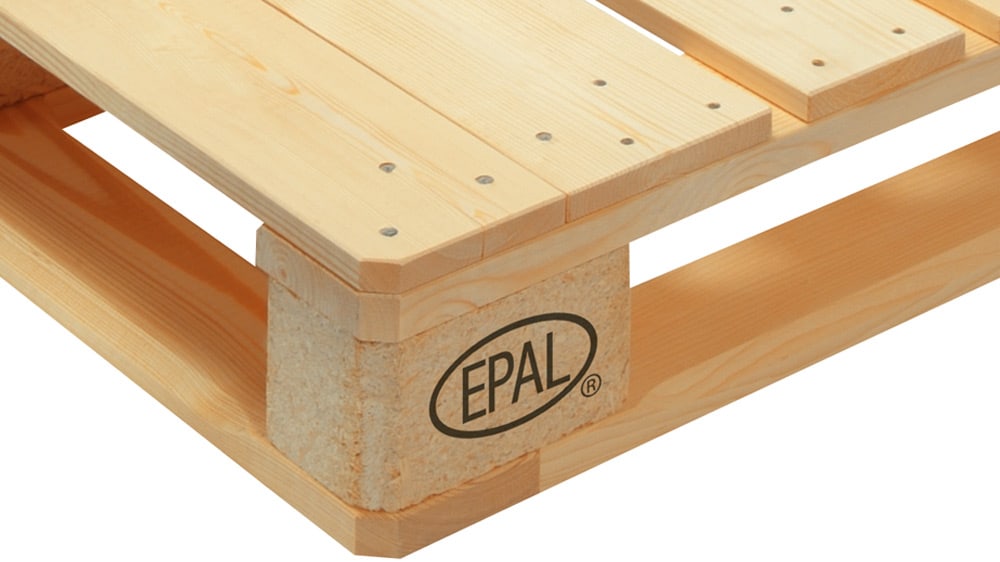
According to the European Pallet Association (EPAL), each EPAL model has a fixed number of boards, nails and load rating, so with a photo you only need to match the dimensions to identify the model:
| EPAL model | Dimensions (mm) | Construction | Safe working load | Bottom pallet when stacked |
|---|---|---|---|---|
| EPAL 1 (Euro pallet) | 800 x 1200 x 144 | 11 boards, 78 nails, 9 blocks, about 25 kg | 1,500 kg | 5,500 kg |
| EPAL 2 | 1200 x 1000 x 162 | 17 boards, 133 nails, 9 blocks, about 35 kg | 1,250 kg | 4,250 kg |
| EPAL 3 | 1000 x 1200 x 144 | 13 boards, 84 nails, 9 blocks, about 30 kg | 1,500 kg | 4,500 kg |
| EPAL 6 (half pallet) | 800 x 600 x 144 | 13 boards, 69 nails, 6 blocks, about 9.5 kg | 750 kg | 1,500 kg |
The load figures apply when the load is evenly distributed and the pallet sits on a flat, hard floor. Since 01/01/2010, every EPAL pallet must carry the IPPC heat-treatment mark, so a compliant EPAL pallet in a photo always shows both the EPAL logo and the IPPC mark.
How to recognise wooden pallet types from photos
To recognise a wooden pallet from a photo, look at 4 places in turn: the structure of the feet, the marks on the block, the paint colour and the wood surface. These four details tell you how many entry directions the pallet has, whether it meets the EPAL standard, whether it has been treated to ISPM 15 and whether it is made from sawn timber or pressed wood.
| Look at | Seen in the photo | Meaning |
|---|---|---|
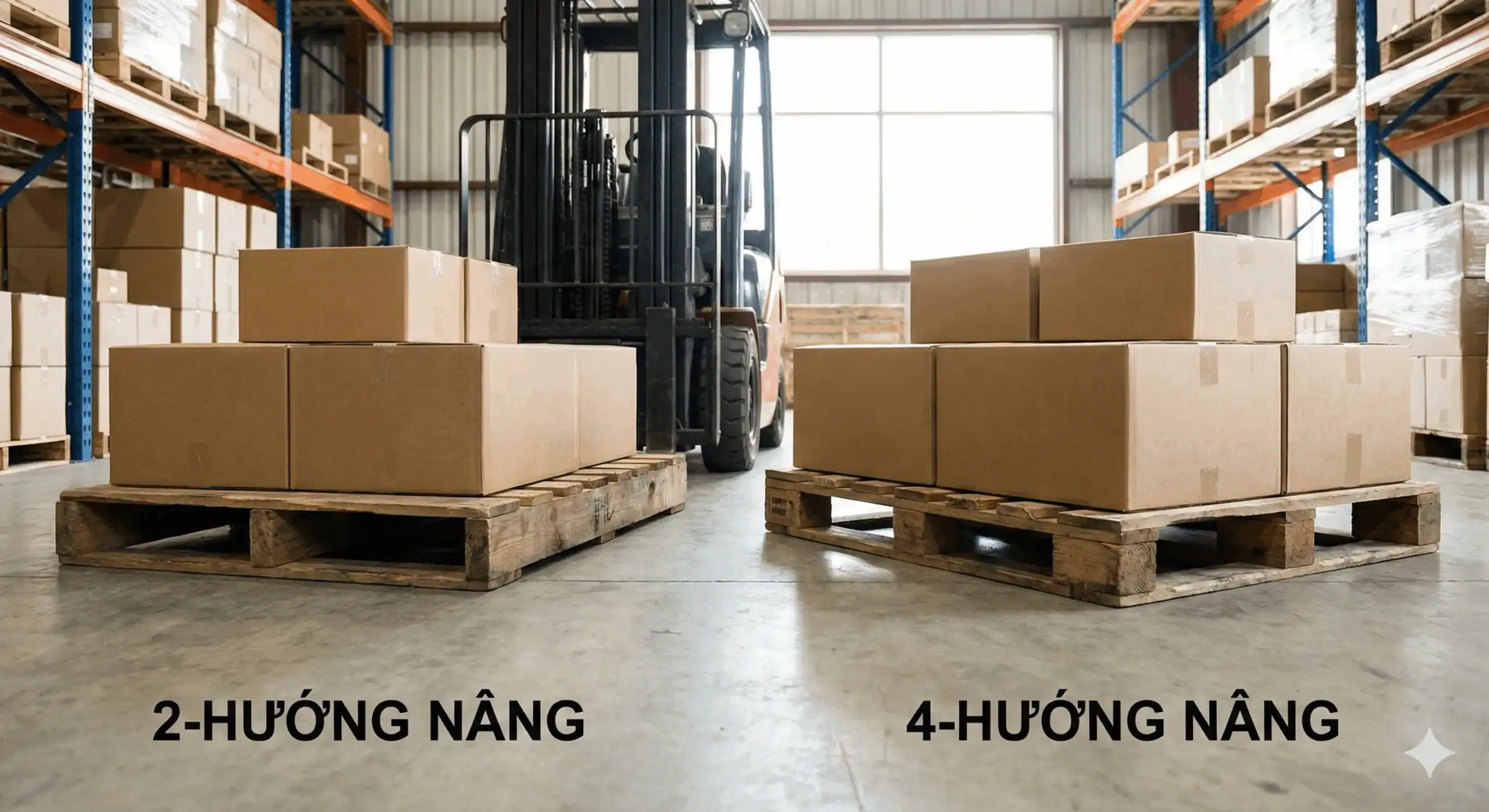
| Pallet feet | 9 square blocks, with stringer boards joining the feet | Block pallet, forklift enters from 4 sides, such as EPAL, CP and Asian standard |
| Pallet feet | 3 stringers running the full length | Stringer pallet, usually 2-way entry; notched stringers add 2 more entry directions |
| Corner block | EPAL logo in an oval, control nail | EPAL pallet built by a licensed manufacturer |
| Middle block | IPPC wheat-ear symbol, country code, registration number, HT or MB | Treated to ISPM 15, usable for export goods |
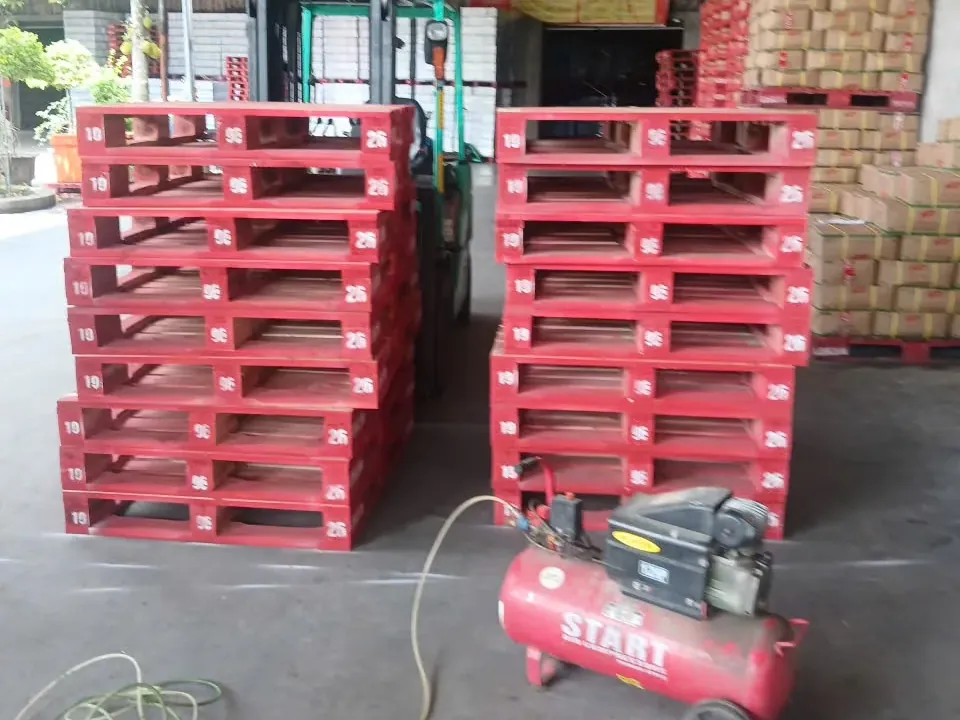
| Paint colour | Body painted red or yellow, with the lettering of the rental company | Asian standard pallet, size 1000 x 1200 or 1200 x 1000 mm |
| Wood surface | Tightly pressed chips, no continuous grain | Pressed-wood pallet, exempt from ISPM 15 treatment |
Besides the 4 EPAL models above, a pallet photo with the CP mark on the block belongs to the EPAL CP series, designed for the chemical and plastics industries. The CP models differ mainly in size:
| Model | Dimensions (mm) | Model | Dimensions (mm) |
|---|---|---|---|
| CP1 | 1000 x 1200 x 138 | CP6 | 1200 x 1000 x 156 |
| CP2 | 800 x 1200 x 138 | CP7 | 1300 x 1100 x 156 |
| CP3 | 1140 x 1140 x 138 | CP8 | 1140 x 1140 x 156 |
| CP4 | 1100 x 1300 x 138 | CP9 | 1140 x 1140 x 156 |
| CP5 | 760 x 1140 x 138 |
Conclusion
Depending on the goods and export needs, a business chooses the suitable wooden pallet. Pine, acacia and pressed-wood pallets each have their own strengths and weaknesses; natural wood pallets for export goods must be heat treated or fumigated to ISPM 15, while pressed-wood pallets are exempt from treatment. Besides the woods above, pallets can also be made from plantation acacia, also used in furniture; according to The Wood Database, Acacia mangium has an average dry weight of about 585 kg/m³ and, like pine, must be kept dry and treated properly to limit termites and mould.
Below are the groups of wooden pallet photos by type for you to compare:
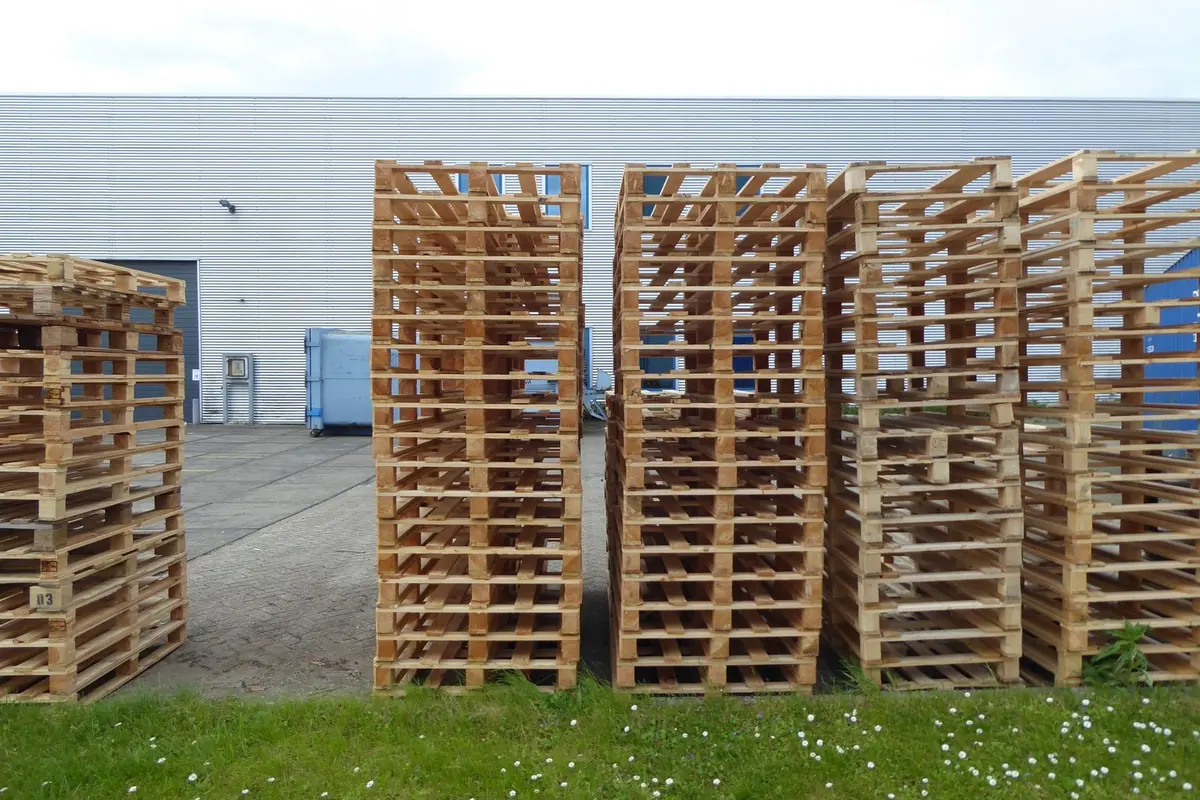
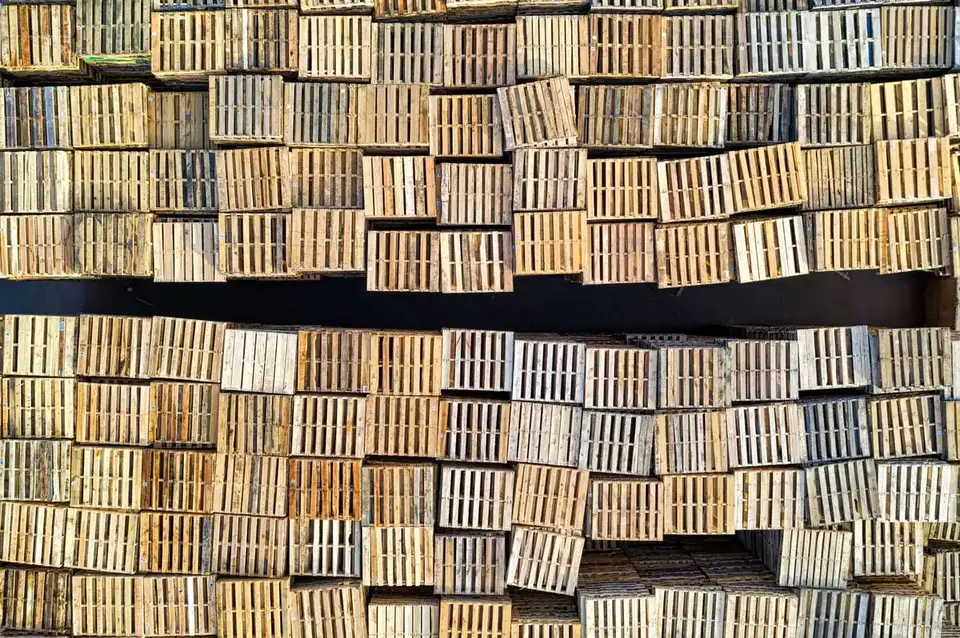
Wooden pallets photographed in a real warehouse and yard
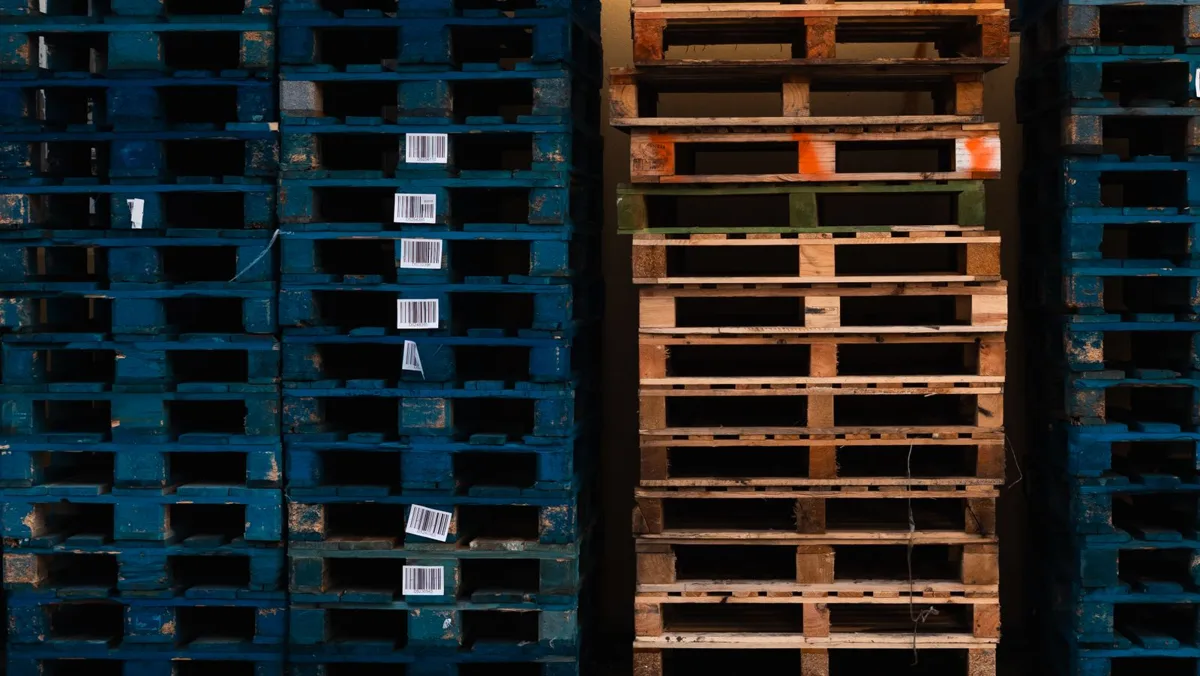
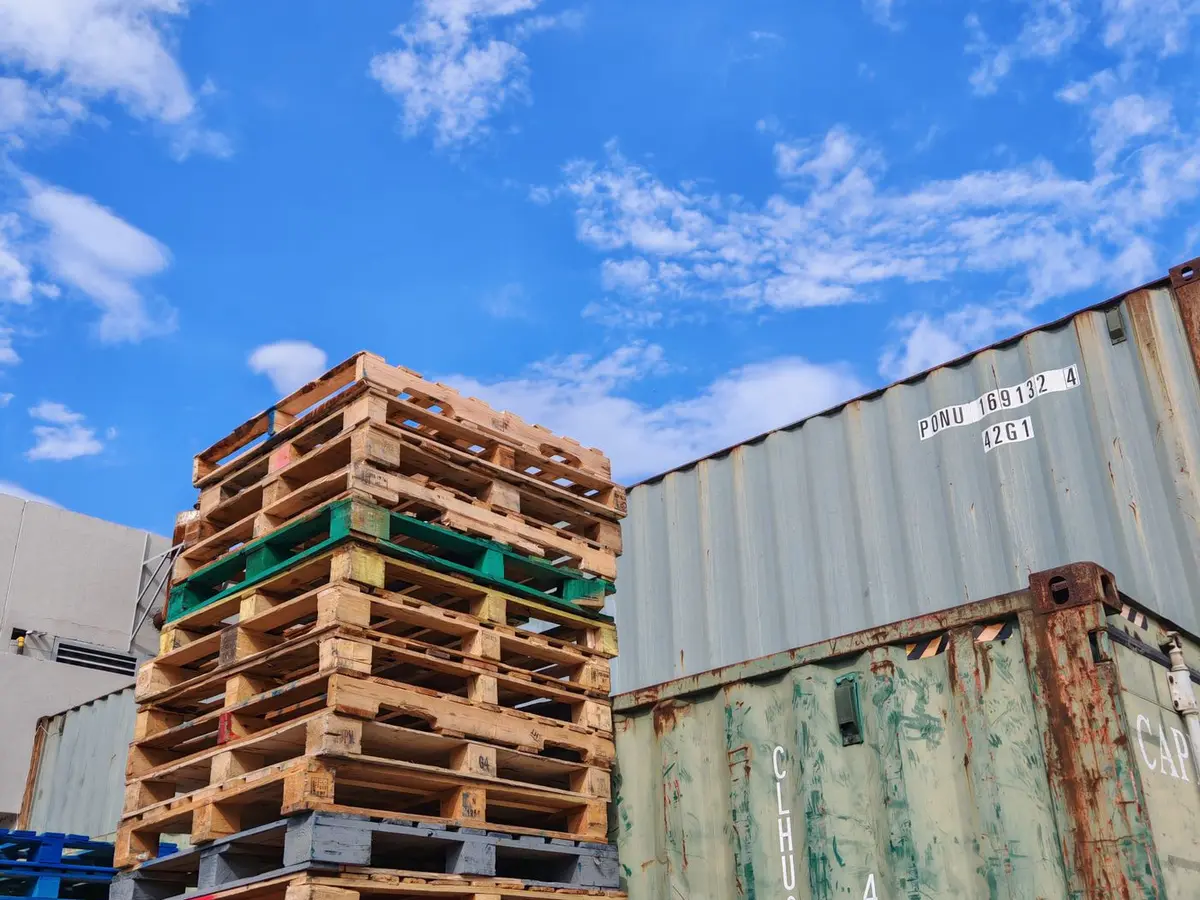
The three photos below show real sawn-timber wooden pallets, showing the wood colour, grain, block structure and the way they are stacked in storage.
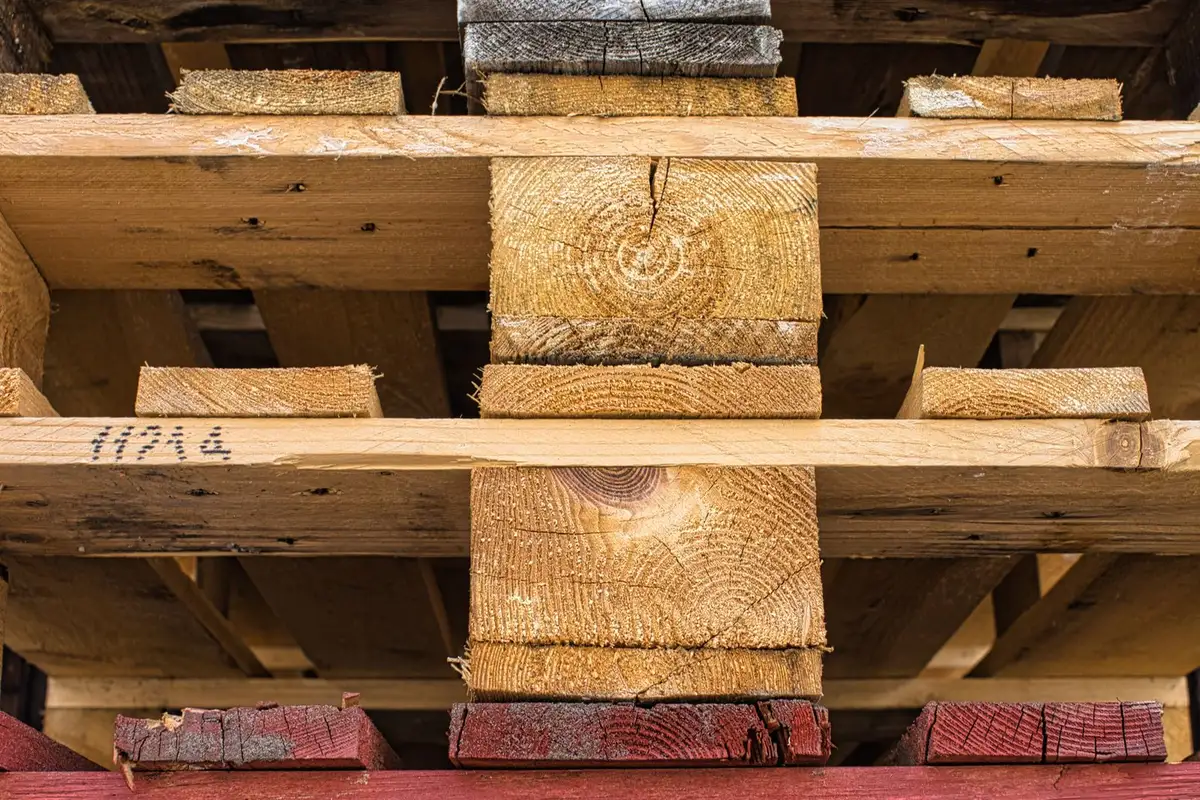
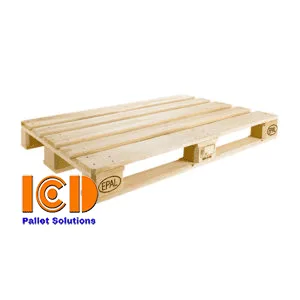
EPAL Euro and EPAL 2 wooden pallets
The EPAL photo group is recognised by 9 blocks, the stringer boards running lengthways and the EPAL logo on the corner block. Each photo states the model and dimensions so you can compare with the table above.

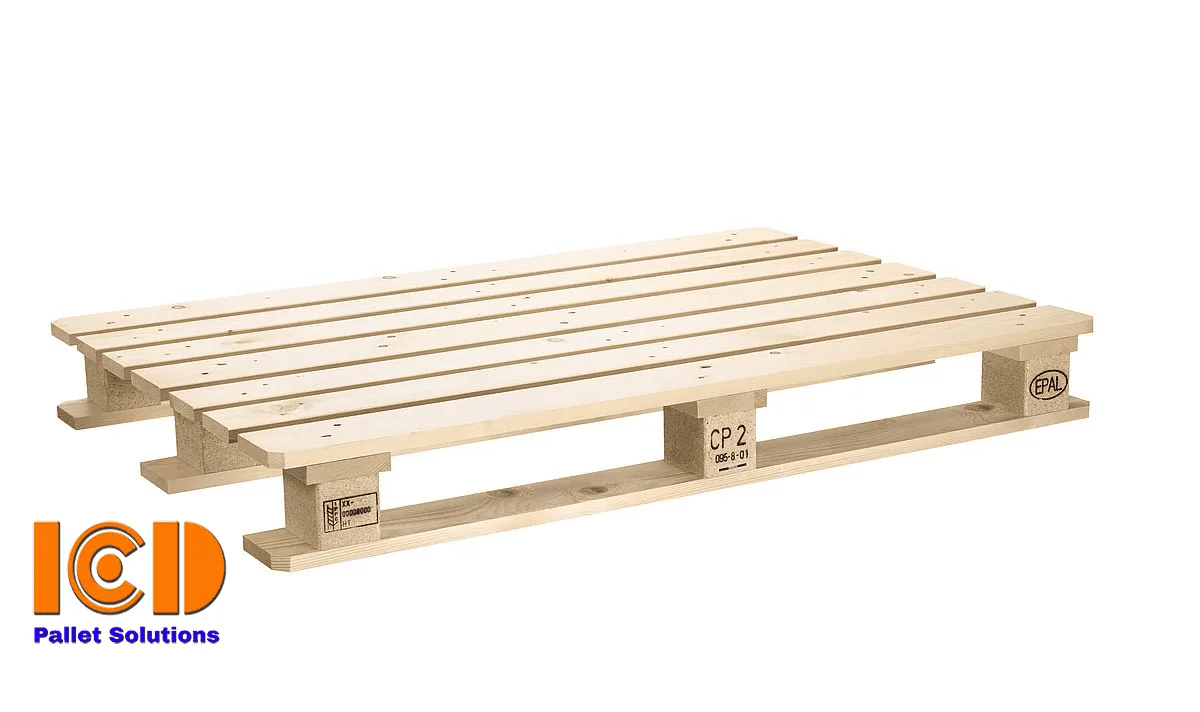
EPAL CP series wooden pallets
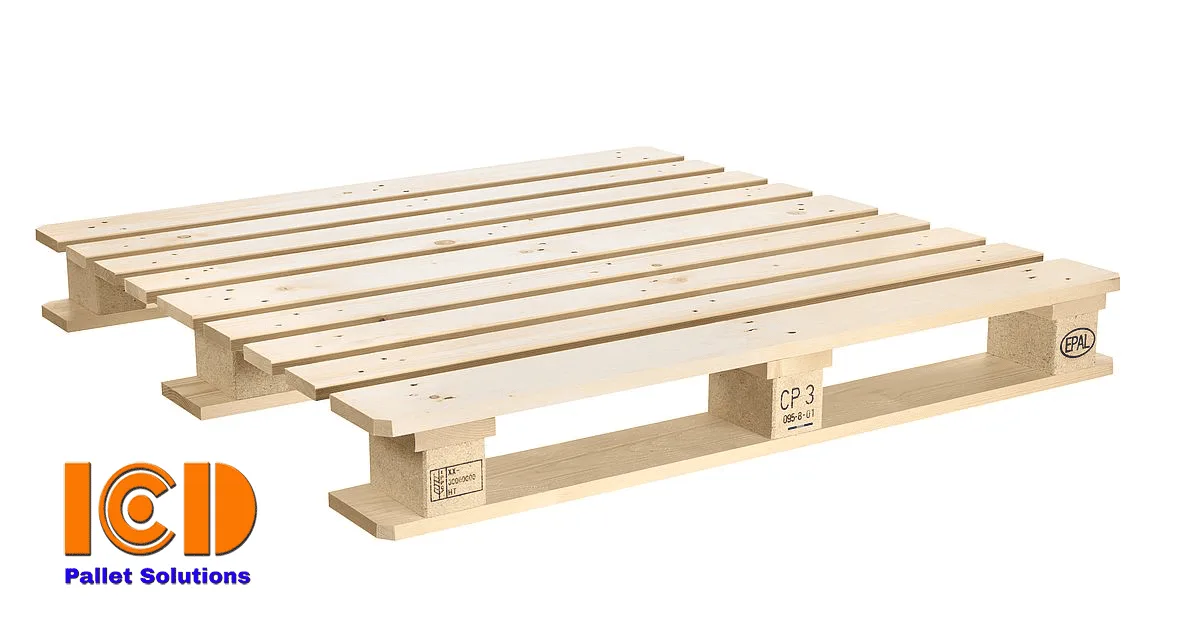
CP pallets have a bottom deck running solid in one direction, a height of 138 or 156 mm, and the CP mark printed on the block.

Colour-painted wooden pallets
Asian standard pallets are easy to recognise by their coloured body and the rental company’s lettering on the stringer board. Colour-painted wooden pallets are also used to distinguish pallets by customer, warehouse zone or type of goods.
Stringer wooden pallets and common build types
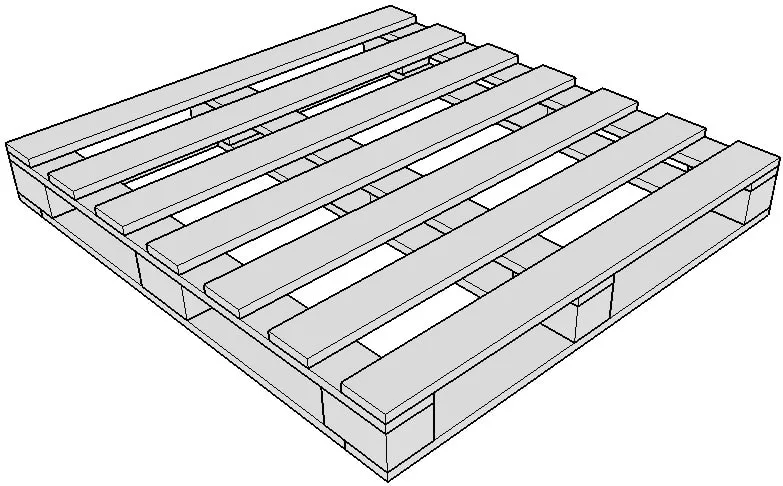
Stringer pallets use 3 pieces of wood running the full length in place of blocks, and are easy to build to the particular size of each kind of goods. When the stringers are notched, the forklift can enter from 2 more directions.

If you need more detailed photos or specifications for each type of wooden pallet, contact us using the details at the end of the article.
Frequently asked questions
What are the characteristics of a pine wooden pallet?
Light wood, straight grain, easy to work and widely used. Pine has poor natural durability, so pallets for export goods must be heat treated or fumigated to ISPM 15 and kept dry in storage.
What treatment does a pine pallet need to meet export standards?
Heat treatment (HT) or fumigation under the ISPM 15 standard, then the IPPC mark, to qualify for quarantine when exporting.
What types of wooden pallets are common?
There are 5 common groups: pine, acacia, pressed-wood, made-to-order and EPAL pallets. Each type has its own characteristics and strengths, suited to different uses.
How do you recognise a genuine EPAL pallet from photos?
A genuine EPAL pallet has the EPAL logo in an oval on the corner block, the IPPC heat-treatment mark on the middle block and the EPAL control nail. The EPAL Euro model has 11 boards, 78 nails, 9 blocks, dimensions of 800 x 1200 x 144 mm and weighs about 25 kg. Without the logo or the IPPC mark it is only a pallet built to EPAL dimensions.
How do 2-way and 4-way entry wooden pallets differ in photos?
A 2-way entry pallet has 3 stringers running the full length as feet, so the forklift enters only from the 2 ends. A 4-way entry pallet uses 9 blocks or notched stringers, so a photo taken from the long side still shows a gap for the forks.
What is a CP wooden pallet?
CP pallets are a wooden pallet series in the EPAL system, with 9 models from CP1 to CP9, originally designed for the chemical and plastics industries. Common models are CP1 1000 x 1200 x 138 mm and CP3 1140 x 1140 x 138 mm, often used for bags of plastic pellets and drums.
Contact ICD Vietnam
If you need more detailed photos or specifications for each wooden pallet model, send the dimensions and type of goods to ICD Vietnam. We have a Hanoi warehouse and a southern workshop; pallets for export goods are treated to ISPM 15 through a licensed provider. Price: contact for a quote, with volume discounts. Wooden pallets carry no warranty, with exchange or return within 7 days.
Hotline: 0983 797 186 / 090 345 9186 / 090 5859 186. Zalo: Chat on Zalo. Email: sales@icdvietnam.com.vn.
North Vietnam: 3rd Floor, Thang Long A1 Building, Bau Hamlet, Thien Loc Commune, Hanoi
Southern workshop: 551/212 Le Van Khuong Street, Tan Thoi Hiep Ward, District 12, Ho Chi Minh City - 098 6784 186
References
- European Pallet Association (EPAL), EPAL Euro Pallet, EPAL 2, EPAL 3, EPAL 6, EPAL CP pallets: specifications and marking rules (read 17/10/2026).
- IPPC, FAO, ISPM 15 Regulation of wood packaging material in international trade.
- The Wood Database, Radiata Pine and Mangium (Acacia mangium): weight, natural durability.