Table of Contents
- A pallet that supports goods or a pallet that is the goods
- ISPM 15 treatment and marking
- Commonly missed points: bark, thin wood, repaired pallets
- Size of wooden pallets going to the US
- Documents to prepare
- If a pallet fails inspection at a US port
- Inspect pallets before loading the container
- Frequently asked questions
- What standard must wooden pallets exported to the US be treated to?
- Can a wooden pallet be imported into the US without the ISPM 15 mark?
- What is the most common wooden pallet size in the US?
- Does a wooden pallet going to the US need a fumigation certificate?
- Can a wooden pallet that already has the ISPM 15 mark be reused for the US?
- Does a pressed-wood or plastic pallet going to the US need the ISPM 15 mark?
- Can a pallet fumigated with methyl bromide enter the US?
- What extra must be declared when selling wooden pallets to a US customer?
- Contact ICD Vietnam
- References
Reviewed and updated by ICD - Week 43/2026
Wooden pallets going to the US must be treated and marked to ISPM 15: debarked wood, heat treated to a minimum core temperature of 56 °C for 30 continuous minutes (HT) or fumigated with methyl bromide for at least 24 hours (MB), then stamped with the IPPC mark carrying the VN country code, the treatment facility code and the HT or MB code, ideally on 2 opposite faces. For pallets used only to support or brace cargo, the US does not require an accompanying certificate: the mark is the proof, and without it the shipment may be ordered re-exported.
The US inspects wooden pallets at the port of arrival, under US Department of Agriculture rules. This article collects the requirements read directly from the texts and guidance pages of the US agencies (APHIS, CBP), cross-checked against the ISPM 15 standard, so exporters can prepare pallets and documents correctly from the start. We only summarise the rules; for the specific case of each shipment, confirm further with the US importer and their customs broker.
A pallet that supports goods or a pallet that is the goods
Before preparing documents, work out which case applies, because the declarations differ. The common case is a pallet that supports or braces cargo: a pallet carrying machinery, furniture or farm produce to the US. The pallet must then be treated and ISPM 15 marked, but is exempt from the Lacey declaration because it is only packaging material.
The second case is a pallet as goods: selling new wooden pallets themselves to a US customer, classified under HTS 4415. The pallet must still be treated and ISPM 15 marked like any wood packaging material, and the importer must also file a Lacey declaration when the shipment enters by formal entry (usually from USD 2,500 and above).
ISPM 15 treatment and marking
The US legal basis is 7 CFR 319.40-3, in force since 16/9/2005: wood packaging material, whether supporting cargo or imported as a commodity, may enter the US under a general permit only when treated and bearing a mark recognised by the IPPC under ISPM 15. The US Animal and Plant Health Inspection Service (APHIS) sets the rules and US Customs and Border Protection (CBP) inspects at the port.
ISPM 15 currently has 4 treatment codes: HT, DH, MB and SF. On the US side, 7 CFR 319.40-3 and the APHIS import guidance page (updated 27/7/2026) name only HT or MB on the mark; the CBP guidance page also names dielectric heating DH, and SF is not mentioned in these guidance pages. So for goods going to the US, a pallet stamped HT is the lowest-risk choice. The table below compares the 4 methods.
| Criterion | Heat treatment (HT) | Dielectric heating (DH) | Methyl bromide fumigation (MB) | Sulfuryl fluoride fumigation (SF) |
|---|---|---|---|---|
| Minimum conditions | Wood core 56 °C continuously for 30 minutes | 60 °C for 1 continuous minute across the whole cross section | At least 24 hours, wood and air from 10 °C | 24 or 48 hours, wood from 20 °C |
| Debarking | Before or after treatment is fine | Bark counts toward the size limit | Mandatory before fumigation | Mandatory before fumigation |
| Wood limits | No size limit | Per the size specified for the method | Not used when any smallest cross-section dimension is over 20 cm | Not over 20 cm, moisture not over 75% |
| Residue | Leaves no chemical | Leaves no chemical | Must be aired after treatment | Must be aired after treatment |
| US guidance | Named by APHIS and CBP | Named by CBP | Named by APHIS and CBP | Not named |
Some guidance pages still give 16 hours for methyl bromide fumigation: that was the rule of the 2002 ISPM 15, replaced by a minimum of 24 hours since the 2009 revision. ISPM 15 also encourages plant protection organisations to promote alternatives to methyl bromide, a substance that depletes the ozone layer.
The mark must be clear, durable, non-fading and placed in a visible position, ideally on at least 2 opposite faces of each pallet. Under 7 CFR 319.40-3, the mark consists of the IPPC wheat-ear symbol, the 2-letter ISO code of the producing country (VN), a number issued by the national plant protection organisation to the treatment facility so the treater can be traced back, and the treatment code HT or MB.
Commonly missed points: bark, thin wood, repaired pallets
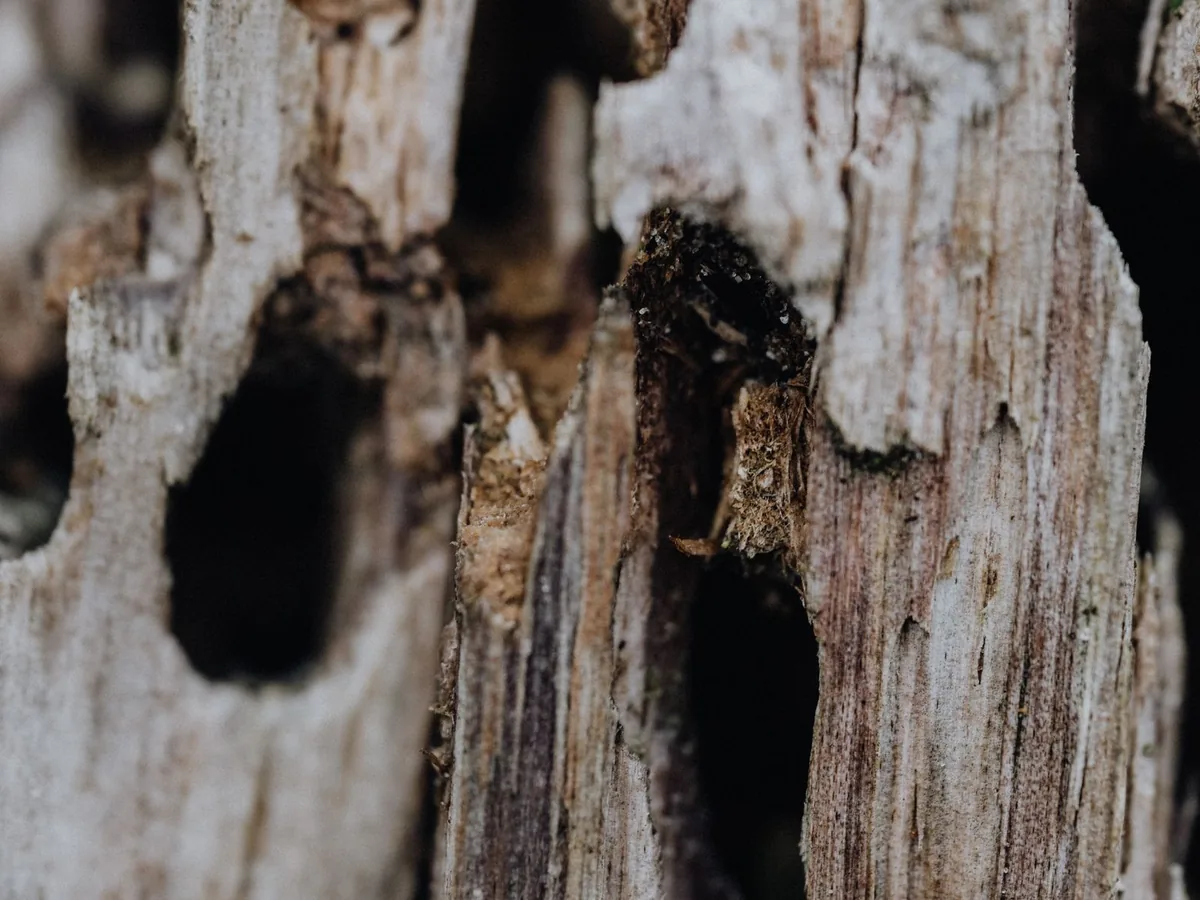
Besides treatment and marking, ISPM 15 has a few rules that often get US shipments held even when the pallet carries the mark. Wood must be debarked: only pieces of bark narrower than 3 cm may remain, or wider pieces with an area under 50 cm² each. Before packing, check the edges of the battens and the pallet feet and scrape off any bark still attached.
Exempt material includes wood 6 mm thick or less and wood processed with glue, heat and pressure such as plywood, particle board and OSB; APHIS also lists plastic pallets and metal frames as material outside the scope. However, a pallet with natural wood battens added must still have that wood treated and marked.
A repaired pallet may have at most about 1/3 of its components replaced, and each new component must be treated, marked wood; replacing more is considered remanufacturing, so the old marks must be removed and the whole pallet treated and marked again. A reused pallet that has been treated, marked and not repaired does not need retreatment, as long as the old mark is still legible and there is no sign of new infestation.
Size of wooden pallets going to the US
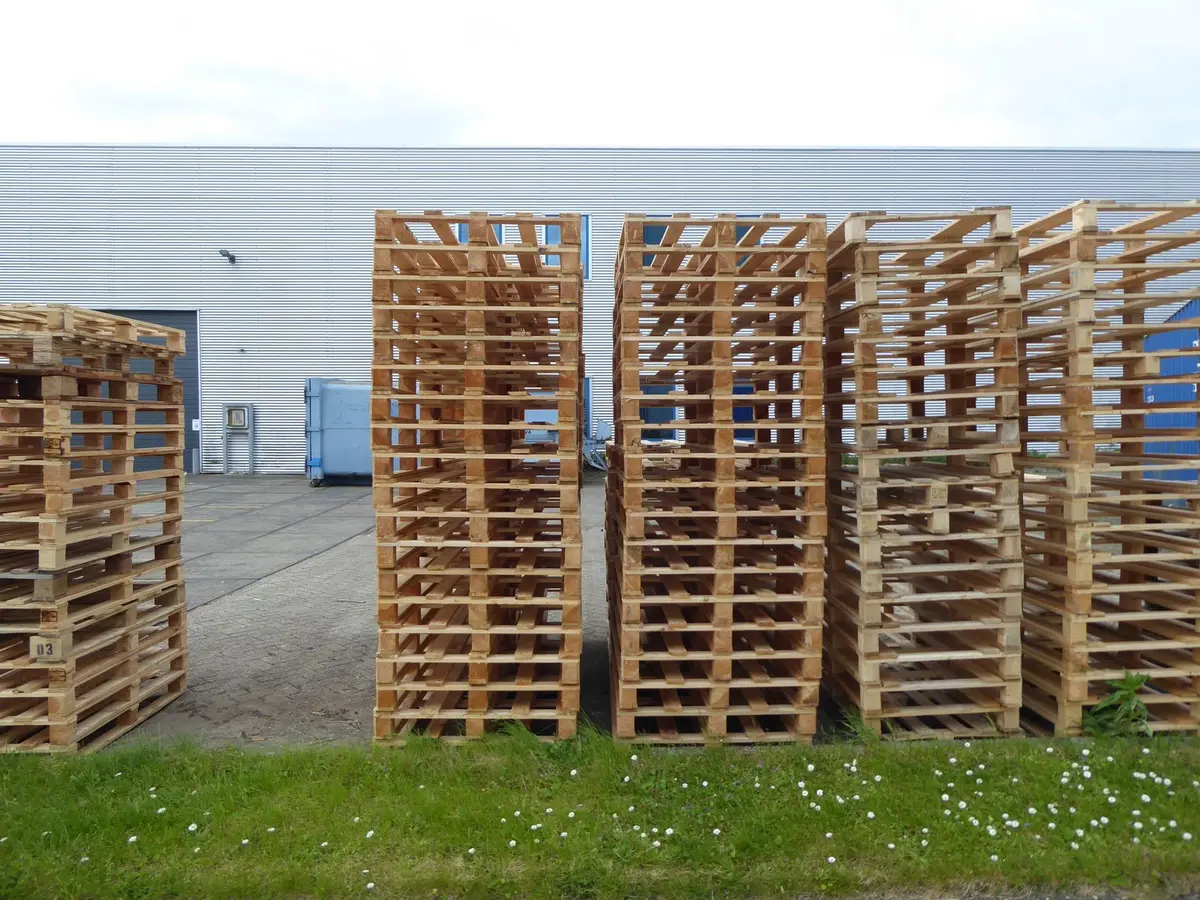
The US does not set a fixed wooden pallet size, so size is a buyer requirement, not a customs clearance condition. The most common size in the US is 48 x 40 inches (1219 x 1016 mm), usually a notched stringer pallet so a forklift can enter from 4 sides, unlike the European block pallet.
The 1200 x 1000 mm size, the standard commonly used in Asia, can be used if the receiver accepts it. The European 1200 x 800 mm size is rarely used in the US and should be chosen only when the customer requests it. Machinery and oversize cargo are built on pallets to the cargo base, but must still be treated and marked like any other pallet.
If the US customer specifies a size, fix 3 parameters in writing: length x width, number of entry directions and the dynamic load required. ICD Vietnam builds wooden pallets to the size and number of entry directions of the order, including the 48 x 40 inch size when the customer specifies it; export pallets are treated and stamped with the IPPC mark through a licensed treatment provider.
Documents to prepare
The basic document set for every US-bound shipment includes a commercial invoice (description of goods, quantity, value, seller, buyer, Incoterms), packing list, bill of lading and customs declaration. For the wooden pallet part specifically, how mandatory each item is depends on whether the pallet supports cargo or is itself the goods:
| Document | Pallet supporting or bracing cargo | Pallet as goods (HTS 4415) |
|---|---|---|
| ISPM 15 mark on the pallet | Mandatory | Mandatory |
| Treatment and fumigation certificate | The US does not require it to accompany the shipment; keep a copy in case the customer or shipping line asks | Same as left |
| Phytosanitary certificate | Not required separately for the pallet; depends on the goods carried | Not required under the general permit; only when the buyer requests it |
| Lacey declaration (PPQ 505) | Exempt: material used only to support or protect cargo | Required for new pallets entering by formal entry; used 4415 pallets used to carry goods are exempt |
| EPAL standard | Not a US requirement | Only when the customer orders an EPAL-standard wooden pallet |
| ISF security filing (10+2) | Filed by the US importer before sea cargo is loaded on the ship | Same as left |
| Proof of ownership, insurance | Only when the contract, L/C or buyer requires it | Same as left |
If a pallet fails inspection at a US port
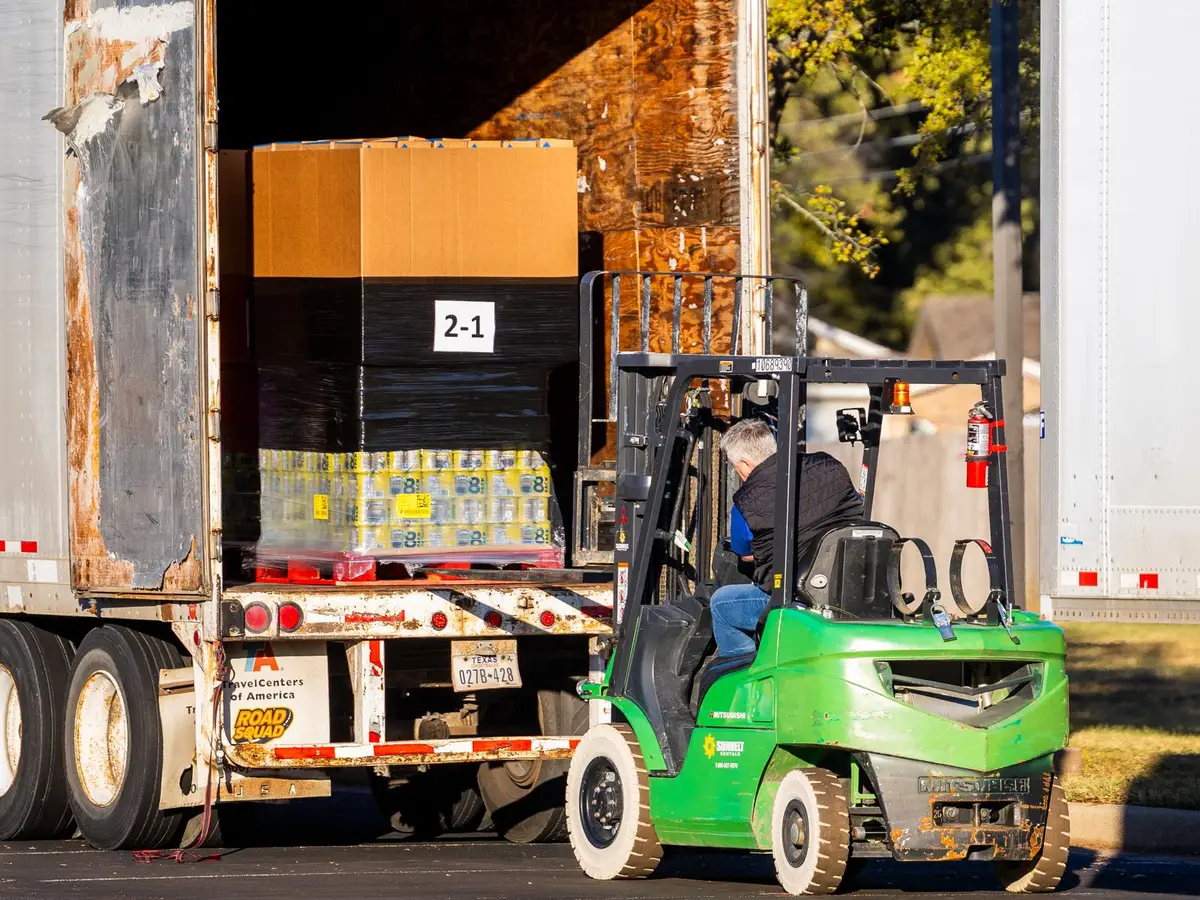
When a pallet lacks the mark, the mark is illegible or there are live borers, the quarantine officer may issue an Emergency Action Notification (EAN). The responsible party (importer, carrier or bonded warehouse) must comply with the EAN and bear all costs. Depending on the severity, APHIS names three courses of action:
- Protect the shipment on site: tarpaulin cover, emergency fumigation or isolation under supervision.
- Destroy the non-compliant pallets under APHIS supervision.
- Re-export the shipment to the country of origin or another country if it cannot be remedied.
APHIS and CBP then also trace the violation back to the exporter, supplier and the pallet maker, so the US importer often asks the exporter for an explanation and a commitment not to repeat it.
Since 1/11/2017, CBP can fine from the very first violation under 19 USC 1595a(b) or 19 USC 1592, replacing the earlier threshold of 5 violations, according to CBP notice CSMS 17-000612; there is no annual reset when counting repeat violations. The cost of one pallet without the mark is therefore not just a new pallet, but also storage fees, handling and possibly a fine for the consignee.
Inspect pallets before loading the container
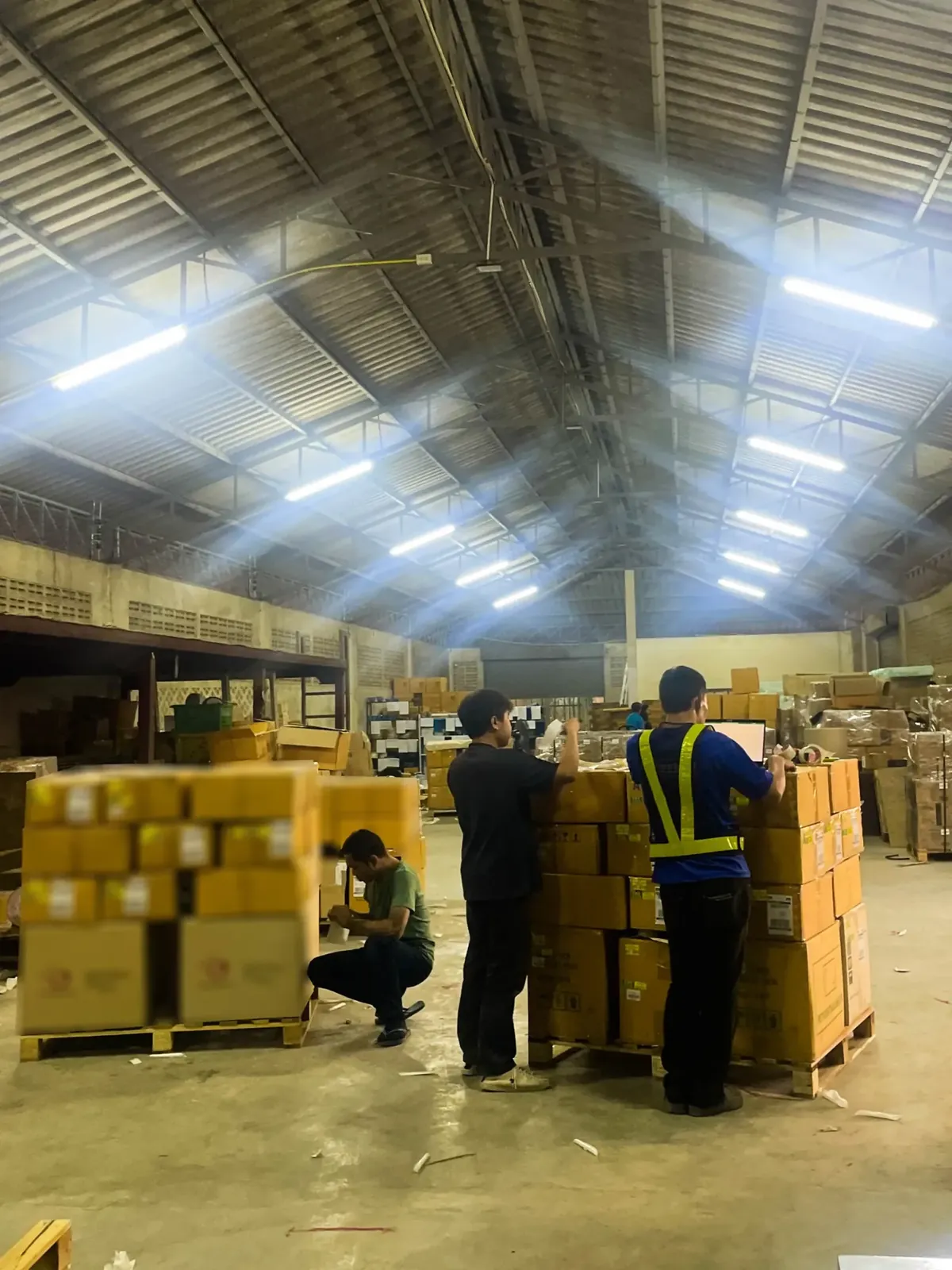
The four steps below catch non-compliant pallets in Vietnam, when replacing a pallet is still cheap and quick.
When inspecting each pallet in step 3, check against the following list:
- The IPPC mark has the full symbol, VN, facility code, HT or MB and is clearly legible on 2 opposite faces; if missing, have it re-stamped at a facility with an issued code, never hand-drawn.
- No bark patches beyond the permitted amount; for MB, bark must be removed before fumigation.
- No new bore holes, frass or live insects; a pallet showing these must be set aside, not packed with cargo.
- The surface is dry with no mould spots; a mouldy pallet should be replaced.
- Size and number of entry directions match the purchase order and the receiving warehouse’s forklifts.
Heat treatment kills insects but does not stop wood taking up moisture again. Sea freight to the US often sits in a container for weeks, so the dryness of the pallet matters as much as the mark; see also desiccant packs and bags against mould in containers.
Frequently asked questions
What standard must wooden pallets exported to the US be treated to?
ISPM 15 of the IPPC and 7 CFR 319.40-3: heat treatment (at least 56 °C at the wood core for at least 30 minutes) or methyl bromide fumigation for at least 24 hours at 10 °C or above, then the IPPC mark with the HT or MB code. A pallet stamped HT is the lowest-risk choice.
Can a wooden pallet be imported into the US without the ISPM 15 mark?
No. A pallet without the IPPC mark (symbol, country code, facility code, treatment code) is treated as not properly treated; the shipment may have to be treated on site, the pallets destroyed or the cargo re-exported, and CBP can fine from the very first violation.
What is the most common wooden pallet size in the US?
48 x 40 inches (about 1219 x 1016 mm). The US does not set a fixed pallet size, so pallet size follows the buyer’s requirement.
Does a wooden pallet going to the US need a fumigation certificate?
Not required for pallets used only to support or brace cargo. Pallets enter the US under the APHIS general permit, and the IPPC mark is proof of treatment. Still, many buyers and shipping lines ask for a certificate, so keep a copy from the treatment facility.
Can a wooden pallet that already has the ISPM 15 mark be reused for the US?
Yes, if the pallet has not been repaired or had components replaced, the mark is still clearly legible and there are no signs of new borers. If more than about 1/3 of the components are replaced, the whole pallet must be treated and marked again.
Does a pressed-wood or plastic pallet going to the US need the ISPM 15 mark?
No. ISPM 15 exempts wood processed with glue, heat or pressure such as plywood and pressed wood, and plastic pallets are not wood material. If a pressed-wood pallet has natural wood battens added, that natural wood must still be treated and marked.
Can a pallet fumigated with methyl bromide enter the US?
Yes. 7 CFR 319.40-3 and the APHIS import guidance accept the MB mark if fumigated correctly to ISPM 15 (at least 24 hours, wood and air from 10 °C, debarked before fumigation). Because ISPM 15 encourages replacing methyl bromide, many buyers still prefer HT pallets.
What extra must be declared when selling wooden pallets to a US customer?
New wooden pallets sold as goods (HTS 4415) must still be treated and ISPM 15 marked, and the importer must file a Lacey Act declaration when entering by formal entry. Used 4415 pallets used to carry imported cargo are exempted by APHIS from this declaration.
Contact ICD Vietnam
If you need wooden pallets for a US-bound shipment, built to the 48 x 40 inch size or a custom size, contact ICD Vietnam. We have a production workshop, a Hanoi warehouse (3rd Floor, Thang Long A1 Building, Bau Hamlet, Thien Loc Commune) and a southern workshop (551/212 Le Van Khuong Street, Tan Thoi Hiep Ward, District 12, Ho Chi Minh City). Export pallets are treated and stamped with the IPPC mark to ISPM 15 through a licensed treatment provider. Price: contact for a quote, with volume discounts.
- North Vietnam: 0983 797 186 / 090 345 9186.
- South Vietnam: 098 6784 186.
- Email: sales@icdvietnam.com.vn.
References
- 7 CFR 319.40-3 - Electronic Code of Federal Regulations (eCFR), read 17/10/2026.
- Import ISPM 15-Compliant Wood Packaging Material into the United States - USDA APHIS, updated 27/7/2026. Lacey Act Declaration Requirements - USDA APHIS, updated 24/12/2025.
- Wood Packaging Materials - U.S. Customs and Border Protection (CBP).
- CSMS 17-000612: Updated wood packaging material penalty guidance - CBP, 26/9/2017.
- Importation of Wood Packaging Material (16/9/2004, effective 16/9/2005) - Federal Register.
- ISPM 15 Regulation of wood packaging material in international trade (2018 edition), Annexes 1 and 2 - IPPC.