Table of Contents
Reviewed and updated by ICD - Week 43/2026
Pine is softwood from species of the genus Pinus: light (density about 515 - 710 kg/m³), straight-grained, easy to work and cheaper than many hardwoods, so it works well for pallets, crates and indoor furniture. The drawback is that it is soft, scratches easily and has low durability against moisture and decay fungi unless it is dried and treated. Imported kiln-dried sawn pine in 2026 has a reference price of about VND 4 - 10 million per m³ depending on species, origin and grade.
ICD Vietnam uses pine as one of the raw materials for building pallets, alongside acacia, melaleuca, rubber wood and pressed wood. So this article looks at pine from both angles: the furniture buyer who wants to know whether the wood is durable, and the company needing pallets who wants to know whether it bears load and can go on export cargo.
What Is Pine Wood?
Pine wood is timber harvested from pine trees of the genus Pinus, family Pinaceae: a light softwood, pale yellow to light brown, with many resin canals, so sawing usually gives off a mild turpentine smell. Pines are widespread in the temperate zones of North America, Europe and Russia, and there are also tropical species growing on mountains and plateaus in Asia, including Vietnam.
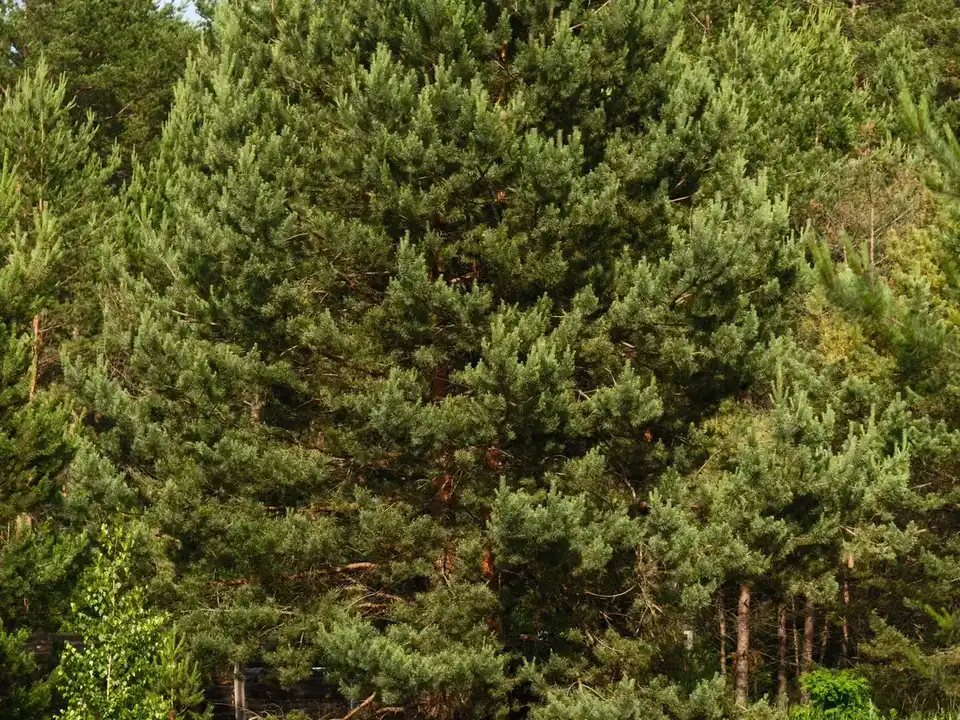
Vietnam has three common timber pines: Khasi pine (Pinus kesiya) in Lam Dong and the Central Highlands, Masson pine (Pinus massoniana) and Merkus pine (Pinus merkusii). Most of the sawn pine used for pallets and jointed board on the market is imported, with radiata pine (Pinus radiata) grown mainly in Chile, Australia and New Zealand according to The Wood Database. The table below compares the species by density and wood group:
| Pine species | Scientific name | Density | Group per Decision 2198-CNR (1977) | Group per TCVN 12619-2:2019 |
|---|---|---|---|---|
| Khasi pine | Pinus kesiya | 0.71 g/cm³ | Group IV | Group III |
| Masson pine | Pinus massoniana | 0.64 g/cm³ | Group V | Group III |
| Merkus pine (Vietnamese pine, two-needle pine) | Pinus merkusii | 0.67 g/cm³ | Group V | Group III |
| Radiata pine (imported) | Pinus radiata | 515 kg/m³ | Not in the table | Not in the table |
Densities of the domestic species follow TCVN 12619-2:2019 (Wood - Classification - Part 2: By physical and mechanical properties); the radiata pine figure follows The Wood Database at 12% moisture. The same species can fall into two different groups because Decision 2198-CNR of 1977 groups by use value, while TCVN 12619-2:2019 groups by density and mechanical strength.
Common Types of Pine Wood Today
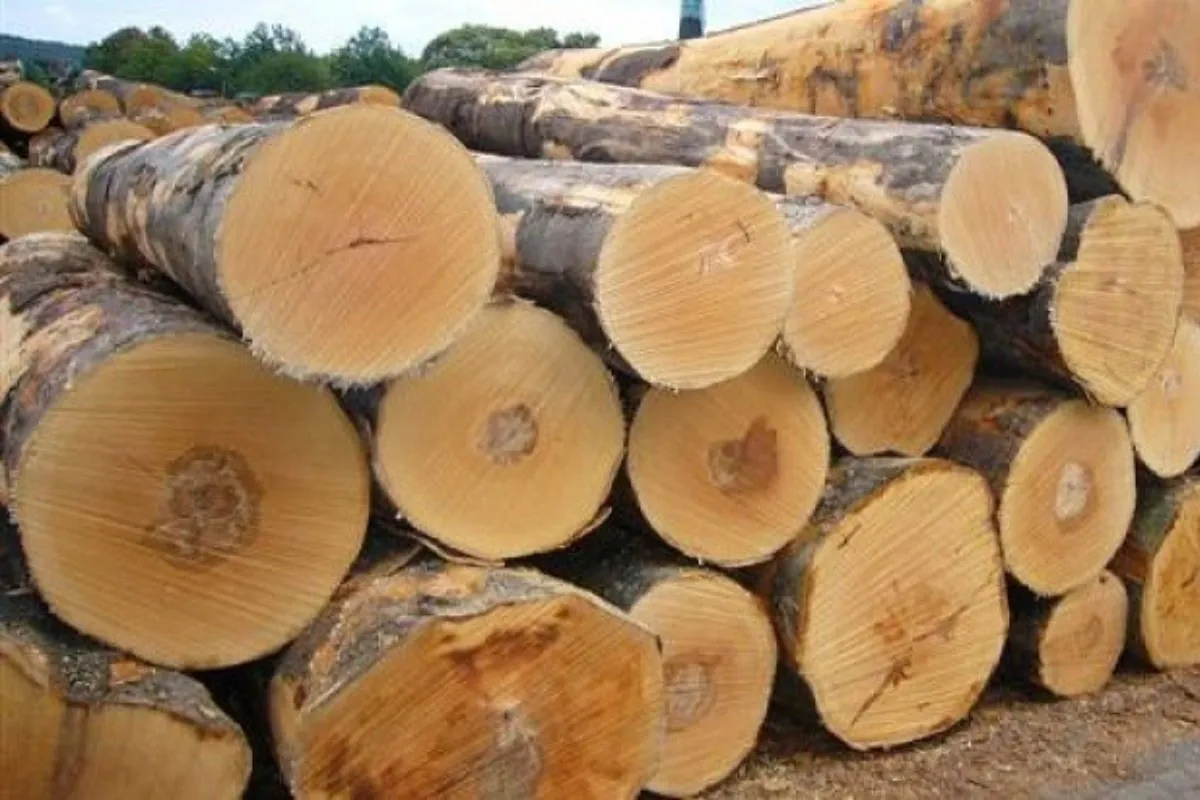
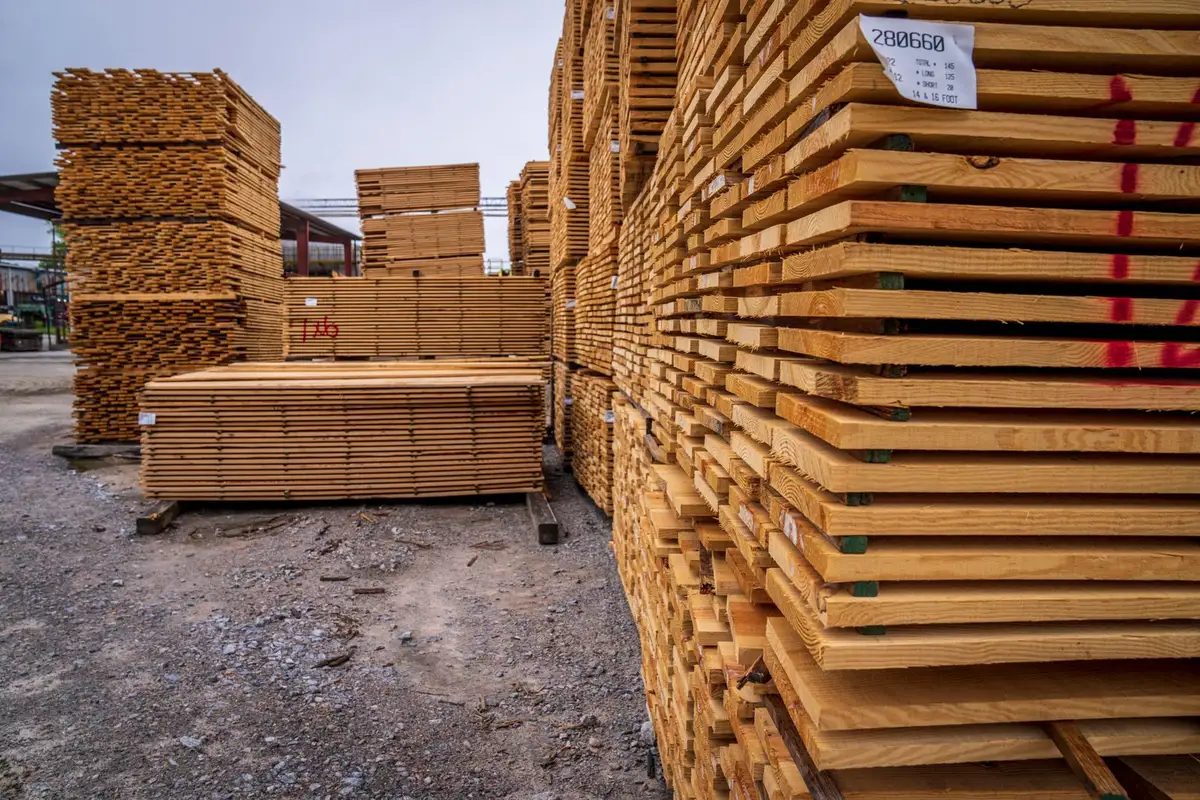
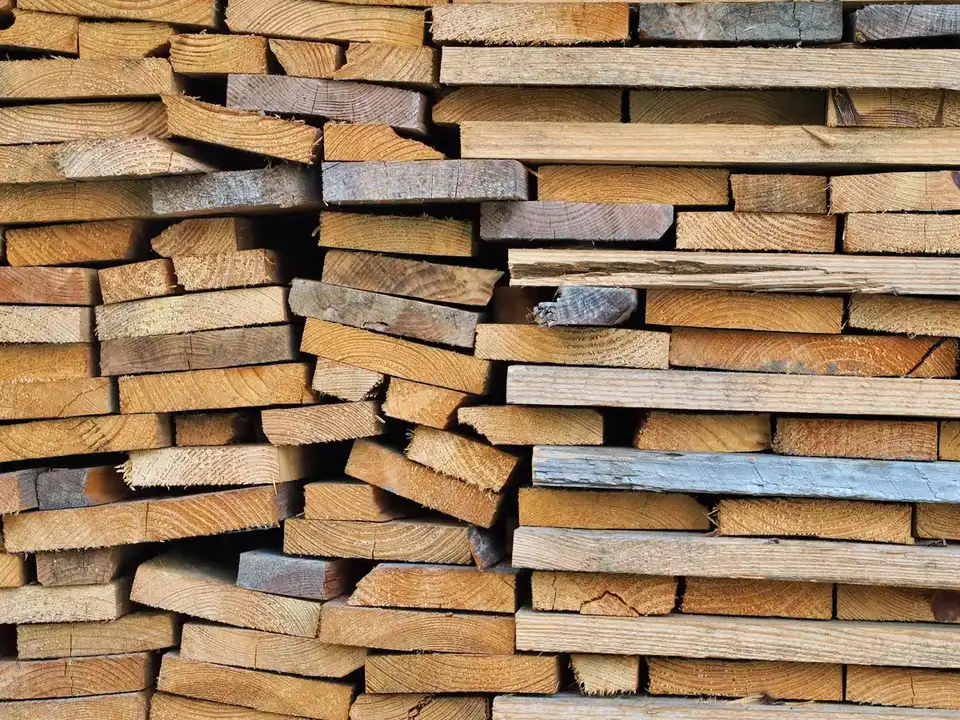
On the market, pine is sold mainly in two forms: jointed pine board for furniture, and sawn pine and pallet timber for packaging and transport. Sellers also usually classify by origin (Chile, New Zealand, Finland, US, domestic pine) and by quality grade, because these two factors decide the knots, colour and price.
Jointed Pine
Jointed pine, also called finger-jointed board, is made by joining dried pine pieces together with finger joints and glue and then pressing them into a panel. Because each piece has been dried and cut free of defects before joining, the board warps less than a solid panel of the same size and has a reasonable price. This board is used for tables, chairs, cabinets, shelves and decorations for homes and offices; the wood has been dried, which limits weevils, but that does not mean it is immune if left in a damp place for a long time.
Pallet Pine
A wooden pallet is a product formed by joining wooden boards into a solid flat surface used to support and transport goods. Pine is one of the woods often used for pallets because it is light, straight-grained, easy to nail and reasonably priced; for heavier loads, boards are sawn thicker or a heavier, harder wood is used. After its service life, a pine pallet is also reused as tables, chairs, bookshelves and decorations.
Pine pallets for export cargo must be treated under the ISPM 15 standard of the International Plant Protection Convention (IPPC). The most common method is heat treatment (HT), requiring the wood core to reach at least 56 °C continuously for 30 minutes; methyl bromide (MB) fumigation is also an accepted method. After treatment the pallet is stamped with the IPPC mark. Wooden pallets from ICD Vietnam for export cargo are treated and marked with the IPPC stamp under ISPM 15 through a licensed treatment provider.
Is Pine Wood Good?
Pine is good for pallets, crates and indoor furniture because it is light, easy to work and reasonably priced; it is not suited to damp places for long periods or to hard impact unless it has been treated. In other words, pine is good when it is used in the right place and dried and protected properly.
The most obvious advantages are weight and workability. Light wood is easy to transport and install, and for pallets it reduces the tare weight of the shipment. Moderately soft wood is easy to drill, screw and nail, and takes glue and paint well. The pale, natural grain is popular in minimalist furniture. The resin-rich heartwood helps resist insects, but wide sapwood still needs drying or treatment. Radiata pine is mostly plantation grown, so supply is steady and the price is kinder than many hardwoods.
The disadvantages come with those same advantages. Soft wood scratches and dents easily under impact. The wood absorbs moisture quickly if it is not dried and surface coated, and warps and goes mouldy easily in a damp place. Knots, especially black dead knots, lower the look of a furniture surface. The table below gives mechanical figures for radiata pine, the imported pine most often seen in sawn timber and pallets:
| Property | Radiata pine | What it means in use |
|---|---|---|
| Density (12% moisture) | 515 kg/m³ | Light, reducing pallet weight and freight cost |
| Janka hardness | 3,150 N | Soft, easy to nail but dents and scratches easily |
| Bending strength (MOR) | 79.2 MPa | Enough for deck boards of a medium-load pallet |
| Natural durability against decay fungi | Not durable to poorly durable | Needs drying, avoid long outdoor exposure |
Figures from The Wood Database for radiata pine. The point to note is the low natural durability: the heartwood is rated not durable to poorly durable against decay fungi, while the sapwood takes up preservative easily. So pine is only durable when it is dried and kept dry, and pine pallets for cold stores and damp warehouses should be the dried, heat-treated kind.
How to Recognise Pine Wood
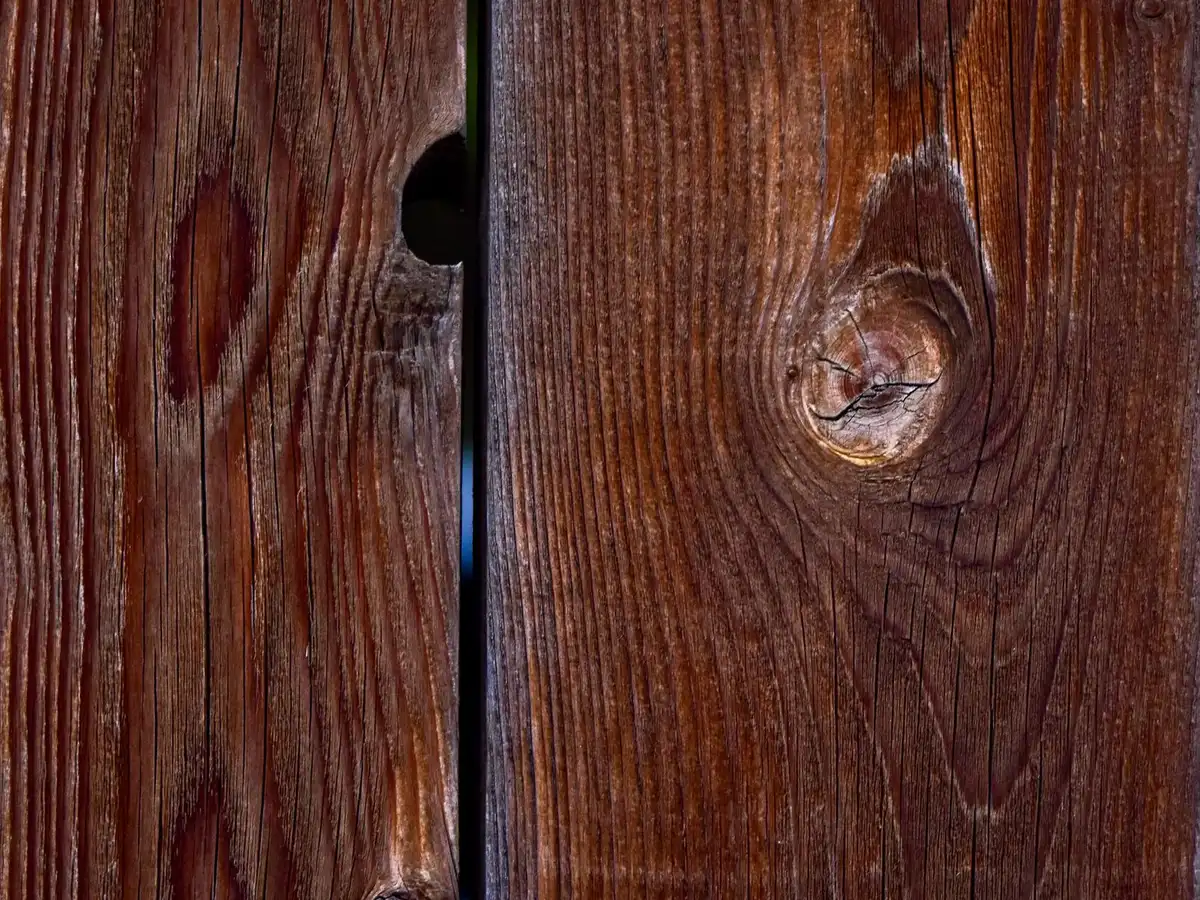
Pine can be recognised from a few easy observations. The wood is pale yellow to light brown, with sapwood wider and lighter than the heartwood. The grain is straight, the growth rings clear, and the surface usually shows round knots. When sawn or planed, the wood gives off a mild turpentine smell; look closely at the cut end and you will see many small resin canals spread evenly. A board also feels clearly lighter in the hand than a hardwood of the same size.
How Much Does Pine Wood Cost?
Imported kiln-dried sawn pine in 2026 has a reference price of about VND 4 - 10 million per m³ for radiata pine, depending on origin, thickness and quality grade. According to a reference price list from a timber workshop published in An Giang Newspaper (July 2026), radiata pine is about VND 4 - 10 million per m³, Canadian pine VND 6 - 10 million and US pine VND 10 - 14 million per m³.
The price range is this wide because pine is sold in many grades: low-knot stock for furniture costs far more than industrial stock for packaging. Origin also matters: New Zealand and Northern European stock is usually higher than Chilean and Brazilian. Add the exchange rate, sea freight and drying costs. Jointed pine board is priced by the sheet or by m², so it cannot be compared directly with the per-m³ price of sawn timber.
For pallets, the finished price also depends on size, board thickness, number of legs, load rating and ISPM 15 treatment requirements, so ICD Vietnam quotes per specification (contact for a quote). See also: Price of one cubic metre of pine pallet timber
What Is Pine Wood Used For?
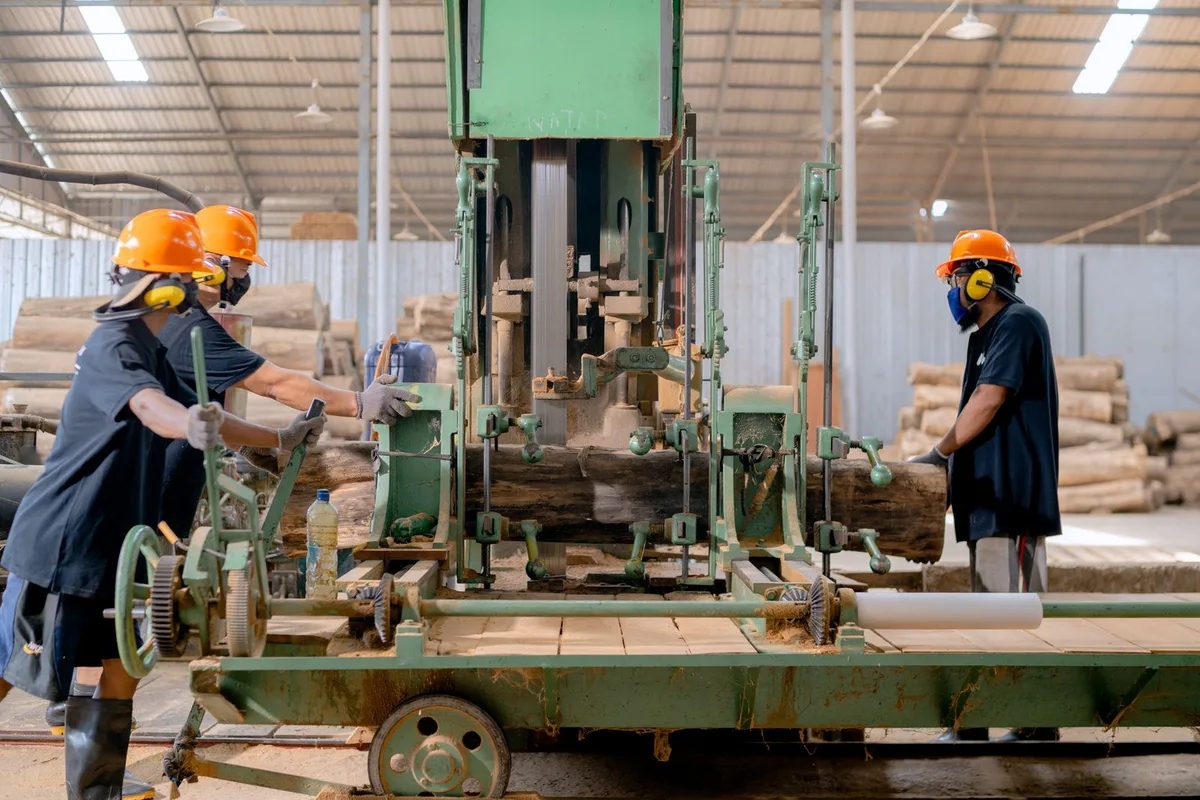
Pine is used for two main groups of products: indoor furniture and decoration, and packaging material such as pallets and crates. Indoors, pine makes beds, wardrobes, wine cabinets, dining tables, sofa tables, shelves, gift boxes, handmade items, flooring and doors; the pale grain and easy finishing are the main reasons. Pine is also used for wall cladding and saunas because of its mild resin smell and insulating ability.
In the industrial group, pine pallets are a common use, along with crates and load boards: this is where the light weight and easy nailing of pine are best used. According to The Wood Database, radiata pine is also used for veneer, plywood, pulp and construction timber. After its service life, a pine pallet is usually recycled into furniture.
Where Should You Buy Pine and Pine Pallets?
Pine furniture is sold in craft villages, furniture markets, furniture shops and e-commerce platforms; for pine pallets, buy directly from a pallet manufacturer to choose the right specification and ISPM 15 treatment. Wherever you buy, ask clearly whether the wood is dried and what its moisture is, the origin and grade of the wood, the type of glue (for jointed board) and the return policy.
For pallets, besides size and load rating, a company should give the supplier three specific requirements: the thickness of deck and bottom boards, the number of legs and the lift height, and the treatment method and IPPC mark if the goods are for export. Writing these three requirements in the order helps avoid disputes at acceptance.
Frequently Asked Questions
Which group is pine in?
It depends on the species and on the classification table. Under Decision 2198-CNR (1977), Khasi pine is in group IV, Masson pine and Merkus pine in group V; under TCVN 12619-2:2019, which classifies by density and mechanical strength, all three species are in group III.
Is pine water resistant?
Not well. Pine absorbs moisture quickly and has low natural durability against decay fungi, so it needs to be dried and surface coated or waterproofed; do not leave pine furniture in regular contact with water.
Can pine be left outdoors?
Yes, if it has been treated thoroughly. The heartwood of radiata pine is poorly durable against decay fungi, but the sapwood takes up preservative easily, so treated wood is still used outdoors; untreated wood should only be used under cover.
Can pine get termites or weevils?
It can if it is not treated. Natural resin helps the heartwood resist insects, but sapwood and wood that is still damp are still prone to weevils and mould; pine needs to be dried, heat treated or preservative treated for long-term use.
Which wood is most commonly used in the pallet industry?
There are no official statistics on the share of each species. In Vietnam, wooden pallets are usually built from acacia, melaleuca, rubber wood and pine; ICD Vietnam makes pallets from all four of these woods and pressed wood, and advises on choosing wood by load and market.
How much does one cubic metre of pine cost?
Kiln-dried sawn radiata pine in 2026 has a reference price of about VND 4 - 10 million per m³. For the updated price table by source and specification, see the article on the price of one cubic metre of pine. Actual prices change with origin, moisture, grade and sawing specification.
How does imported pine differ from Vietnamese pine?
The most common imported pine is radiata pine grown in Chile, Australia and New Zealand, light (about 515 kg/m³) with straight grain. Domestic species such as Khasi pine and Merkus pine are heavier (0.64 - 0.71 g/cm³ per TCVN 12619-2:2019) and have more resin.
Is jointed pine good?
Jointed pine is made from dried pieces joined with finger joints and glue, so it warps less than a solid panel of the same size and has a reasonable price; it suits indoor furniture and should not be used in damp places for long periods.
Contact ICD Vietnam
For advice on pine pallets by size, load rating and ISPM 15 treatment requirement, contact ICD Vietnam. We have a manufacturing workshop, a Hanoi warehouse and a southern workshop; price: contact for a quote.
- North: 0983 797 186 / 090 345 9186 / 090 5859 186.
- South: 098 6784 186; southern workshop: 551/212 Le Van Khuong Street, Tan Thoi Hiep Ward, District 12.
- Zalo: Chat on Zalo. Email: sales@icdvietnam.com.vn.
References
- Biological characteristics of pine species: Vietnam Timber and Forest Product Association (VIFOREST).
- Decision 2198-CNR of 26 November 1977 of the Ministry of Forestry promulgating the provisional classification table of timbers used uniformly nationwide.
- TCVN 12619-2:2019 Wood - Classification - Part 2: By physical and mechanical properties, published by the Ministry of Science and Technology.
- Mechanical figures, natural durability, uses: The Wood Database, Radiata Pine (Pinus radiata).
- Treatment of wood packaging material: IPPC, ISPM 15.
- Reference prices for imported pine: An Giang Newspaper, 17 July 2026 (republished on vietnam.vn); 2026 listed price tables of pine importers.