Table of Contents
- 1. Oak and rubber wood: origin and characteristics
- 2. Comparing the technical properties of rubber wood and oak
- 3. Why is rubber wood widely used for pallets and packaging?
- 4. When is it worth investing in oak?
- 5. Conclusion
- Frequently asked questions
- How do rubber wood and oak differ?
- Where is oak usually imported from?
- Why are pallets usually made from rubber wood and not oak?
- Which is better, rubber wood or oak?
- Is rubber wood heavier than oak?
- Is ‘Malaysian oak’ a kind of oak?
- Can pallets be made from oak?
- Is rubber wood furniture as durable as oak?
- Contact ICD Vietnam for a quote
- References
Reviewed and updated by ICD - Week 43/2026
Oak is harder, heavier and more durable than rubber wood: white oak weighs 755 kg/m³, has a bending strength of 102.3 MPa and a very durable heartwood; rubber wood weighs 595 kg/m³, has a bending strength of 71.9 MPa and must be treated and dried to last. Rubber wood wins on price, domestic supply and weight, so it suits pallets and everyday furniture; oak suits high-end furniture.
Summary of key points: The biggest difference between oak and the characteristics of rubber wood lies in natural durability and intended use. Oak, white oak above all, suits items used for many years such as floors, stairs and kitchen cabinets; rubber wood suits pallets, crates and everyday furniture.
This article puts the two timbers side by side on one set of mechanical figures, explains why pallets in Vietnam are often made of rubber wood, and points out two common misunderstandings: that rubber wood is ‘elastic’ and that ‘Malaysian oak’ is a kind of oak.
1. Oak and rubber wood: origin and characteristics
Oak is a temperate hardwood that Vietnam must import, heavy and (for white oak) very durable; rubber wood is a domestic plantation timber, lighter and easy to work but with poor natural durability.
The two common oaks on the market are white oak (Quercus alba) and red oak (Quercus rubra), both native to the northeastern United States. Oak has pronounced grain, is heavy and firm, and is commonly used for kitchen cabinets, furniture, flooring and decorative paneling. According to a 2020 report of the US Foreign Agricultural Service (USDA FAS), Vietnam is the third largest market for US hardwood, and oak is among the best-selling species in both log and sawn form, mainly for furniture.
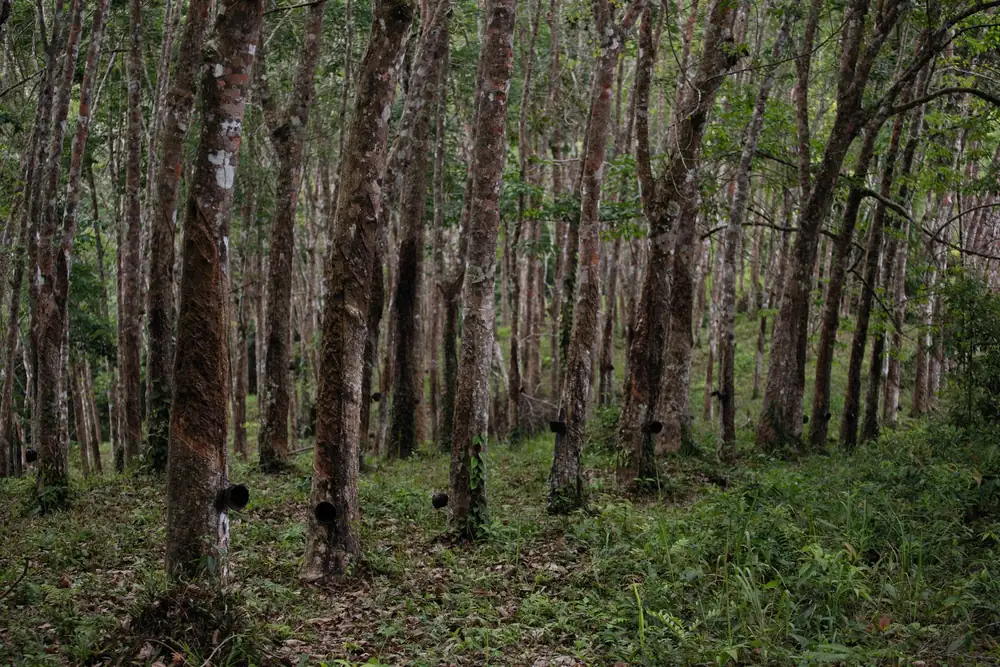
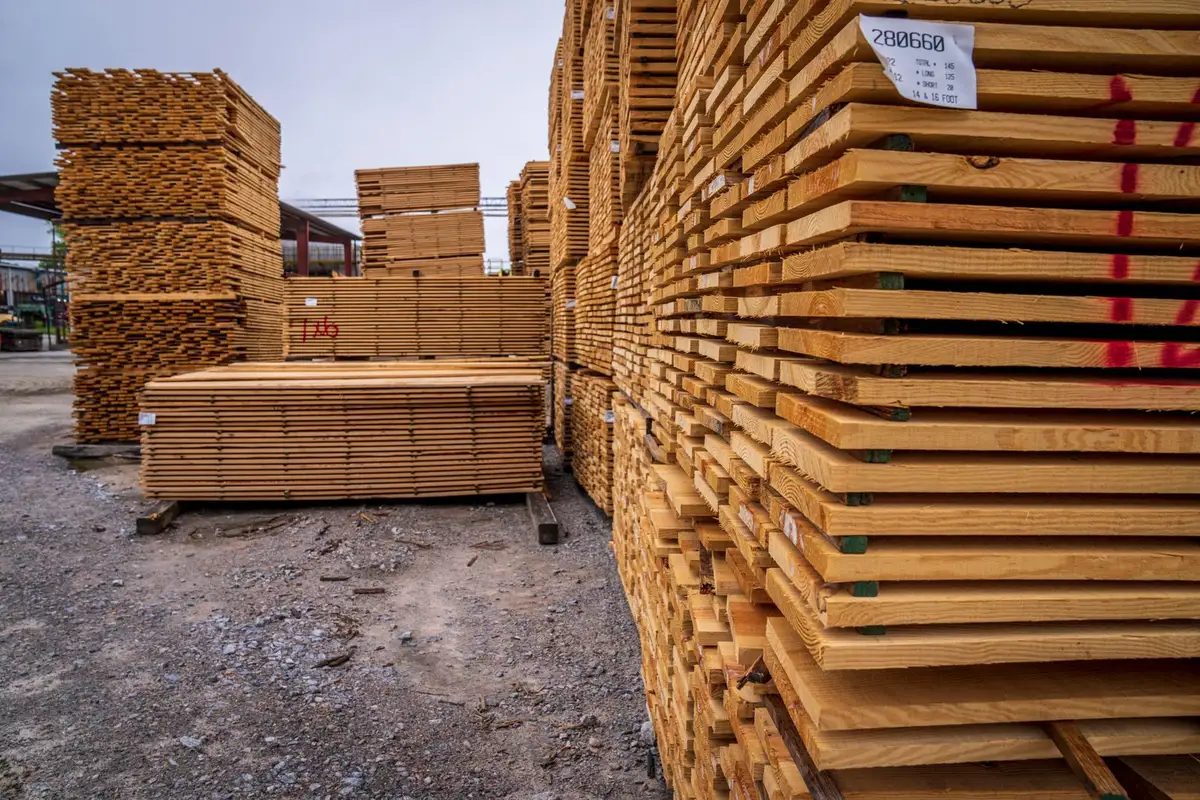
Rubber wood is a common plantation timber in Vietnam, harvested when the trees have finished their latex cycle, usually after about 30 years. Under the timber table issued with Decision 2198-CNR (1977), rubber wood belongs to group VII. The wood is a light cream color with straight grain, easy to saw and plane and takes paint well, but is prone to mold and borers if left sawn for long without treatment and drying.
Thanks to the domestic supply and ease of working, rubber wood is widely used for industrial products such as wooden pallets, crates and warehouse racking shelves.
Beware of the name ‘Malaysian oak’
‘Malaysian oak’ is not oak. The Wood Database states that rubber wood is sometimes sold under vague names such as ‘plantation hardwood’ or ‘Malaysian oak’, although the tree has no relation to the oak genus Quercus. When buying furniture described as oak, I advise you to ask for the scientific name or origin of the wood (white oak or North American red oak), because the two differ considerably in hardness, durability and price.
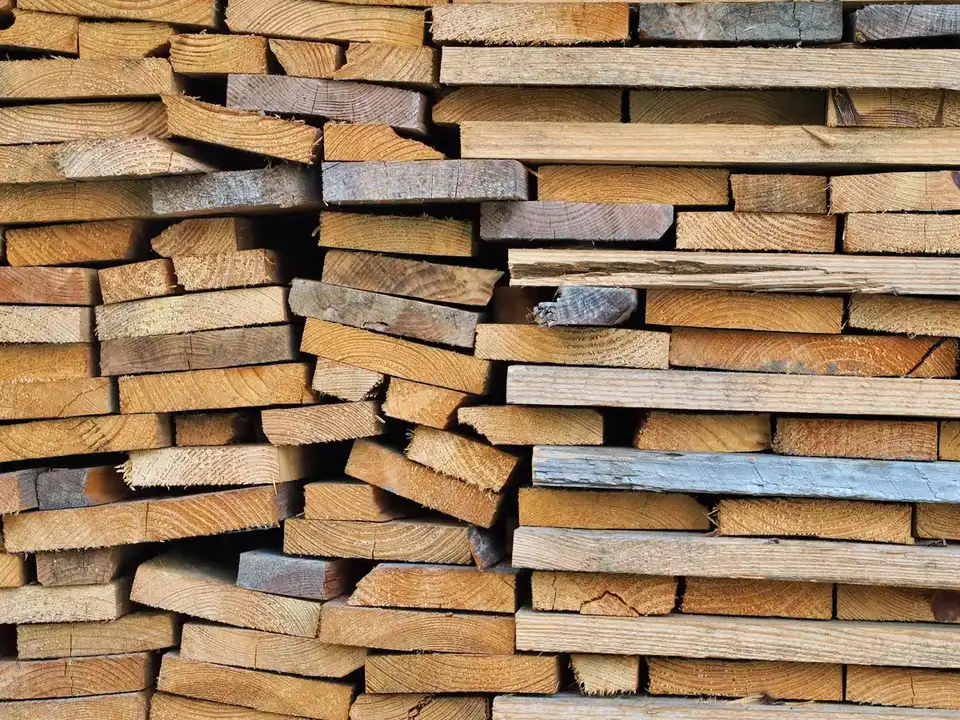
2. Comparing the technical properties of rubber wood and oak
Mechanically, oak beats rubber wood in hardness, bending strength and natural durability; rubber wood is ahead on price, weight and supply.
By weight, rubber wood is about 21% lighter than white oak, so rubber wood pallets and furniture are easier to handle by hand. On supply, rubber wood is available domestically, while oak depends on imports, so price and lead time are affected by exchange rates and shipping schedules.
The table below sets figures measured to the same standard (12% moisture) side by side for direct comparison. Red oak has grain and a price close to white oak but lower natural durability, so when buying ‘oak’ furniture, ask clearly whether it is white oak or red oak.
| Property (12% moisture) | Rubber wood | White oak | Red oak |
|---|---|---|---|
| Density | 595 kg/m³ | 755 kg/m³ | 700 kg/m³ |
| Janka hardness | 4.280 N | 5.990 N | 5.430 N |
| Bending strength (MOR) | 71,9 MPa | 102,3 MPa | 99,2 MPa |
| Modulus of elasticity (MOE) | 9,07 GPa | 12,15 GPa | 12,14 GPa |
| Compressive strength parallel to grain | 42,1 MPa | 50,8 MPa | 46,8 MPa |
| Volumetric shrinkage (green to oven-dry) | 7,5% | 16,3% | 13,7% |
| Natural durability against decay fungi | Perishable; prone to staining fungi and insect damage | Very durable | Not durable to perishable, poor insect resistance |
| Workability | Easy to saw, plane, glue and paint; prone to warping when dried | Works well; high shrinkage, wet wood in contact with iron stains easily | Works well; high shrinkage, wet wood in contact with iron stains easily |
Figures per The Wood Database. Rubber wood is about 71% as hard as white oak and about 70% as strong in bending, while about 21% lighter.
How to read the table
Oak beats rubber wood on every strength measure, but there is one point where rubber wood is clearly ahead: volumetric shrinkage of only 7.5%, against 16.3% for white oak and 13.7% for red oak. The Wood Database notes that oak has medium dimensional stability, especially flat-sawn boards, while rubber wood tends to warp during drying but is fairly stable once dried. For finger-jointed furniture and wide tabletops, low shrinkage is an advantage when air humidity changes with the seasons.
In real weight, a pallet using 0.04 m³ of dry wood would weigh about 23.8 kg in rubber wood, 28 kg in red oak and 30.2 kg in white oak. A detail few people notice: oak reacts with iron when wet and leaves dark stains, so oak furniture or oak pallets nailed with steel nails can stain around the nail heads if left in a damp place.
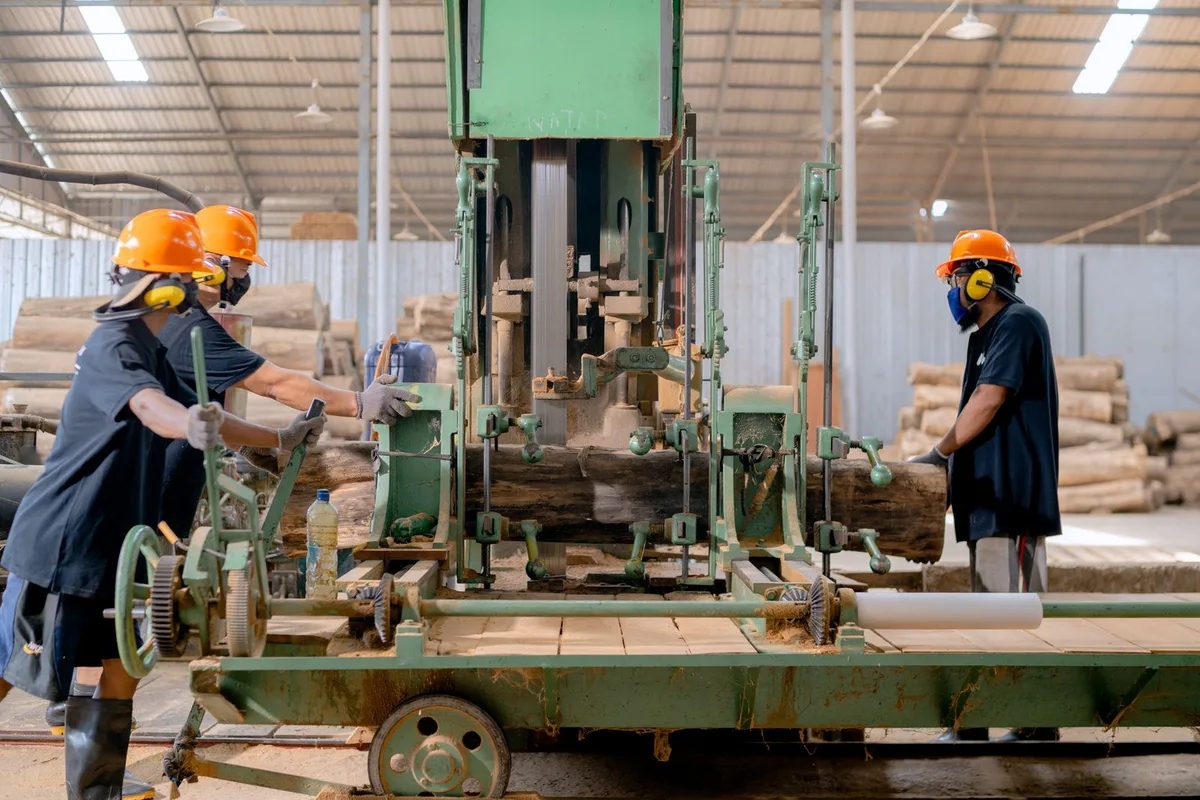
Natural durability: white oak is very different from red oak
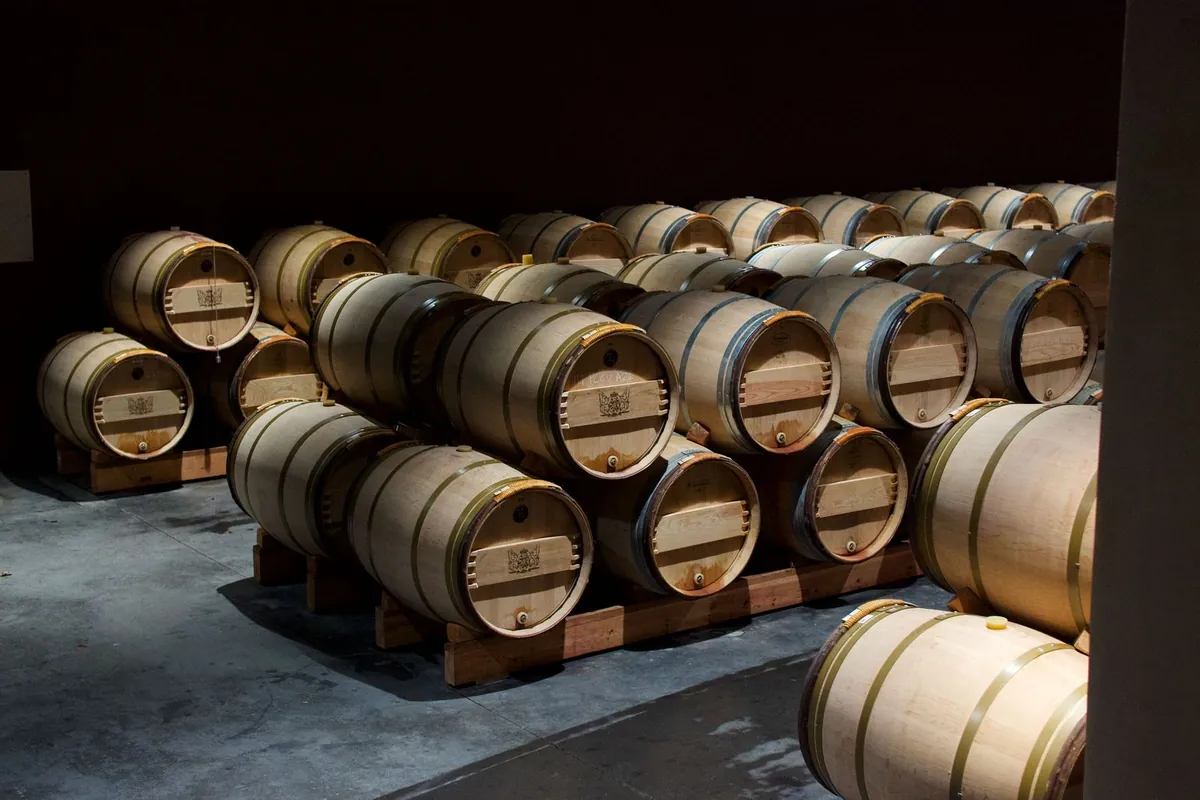
The Wood Database rates white oak as very durable, long used for shipbuilding and wine barrels. The reason lies in its structure: the vessels of white oak are filled with many tyloses, so the wood is almost watertight. Red oak is the opposite, its vessels so open that you can blow air through a straight-grained piece, and its durability against decay fungi is only not durable to perishable. So the phrase ‘oak is very durable’ is true only for white oak.
3. Why is rubber wood widely used for pallets and packaging?
In Vietnam rubber wood is chosen for pallets because it is available domestically, hard enough on the face for forklift handling, about 21% lighter than oak and shrinks little; while a pallet is a supply used for one or a few trips, not needing decades of durability like furniture.
Many companies in industrial parks at first tend to think that the harder the wood, the better the pallet. In fact, a pallet’s load rating is decided more by construction than by species: board thickness, number of blocks, foot type and how it is nailed.
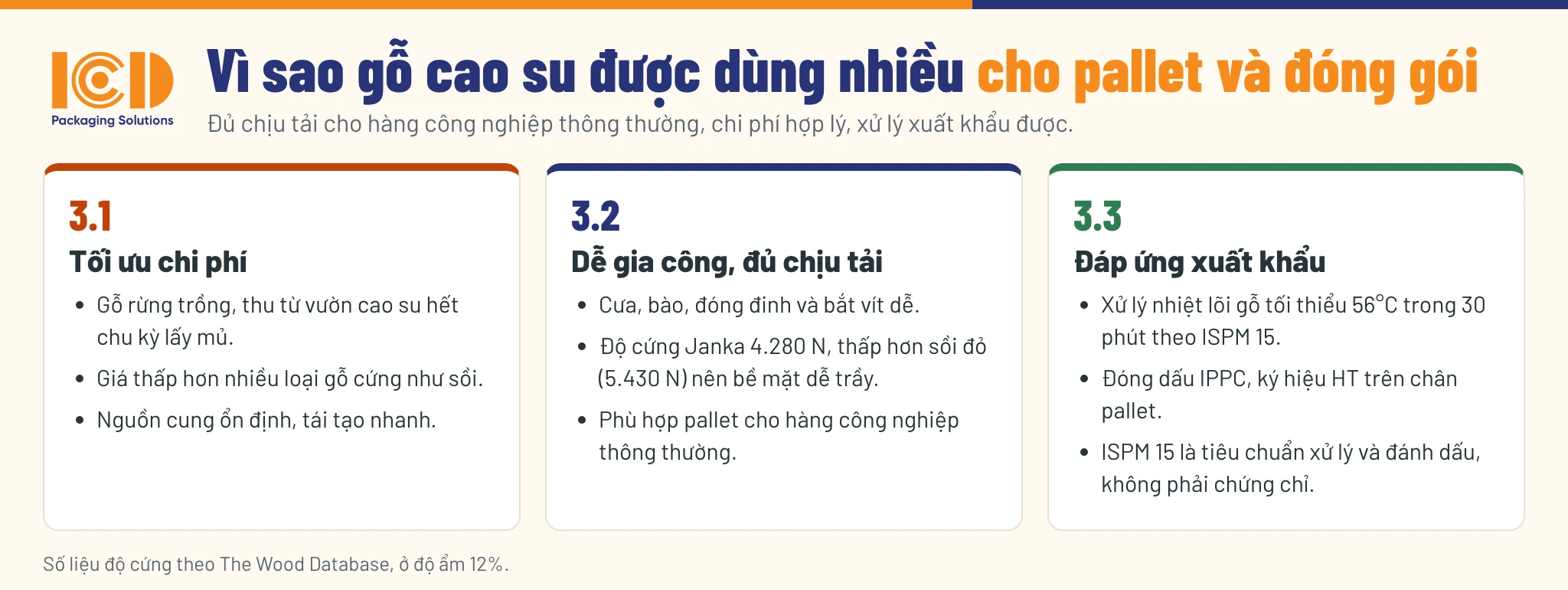
3.1. Cost and use efficiency
For a pallet, the needed property is enough load capacity for the cargo and a reasonable cost per use cycle, not maximum hardness; rubber wood meets this better than oak in the Vietnamese market.
Rubber wood has a bending strength of about 70% of white oak (71.9 against 102.3 MPa per The Wood Database). That gap is made up by slightly increasing the board section, while imported oak is priced by the furniture timber market. The right way to compare cost is to set the same drawing and the same committed load and compare quotes; pallet prices at ICD Vietnam are contact for a quote, with volume discounts.
3.2. Impact resistance of rubber wood pallets
Rubber wood pallets handle warehouse impacts well thanks to moderately thick boards, straight grain and firm nail joints; the toughness of the wood is on par with other hardwoods of the same density.
In a warehouse, wooden pallets are often hit head-on by forklift tines or dropped during handling. Rubber wood has straight grain, few knots and holds nails well; per The Wood Database, the name ‘rubber’ comes from the latex tree, and the wood itself is not more elastic than other hardwoods.
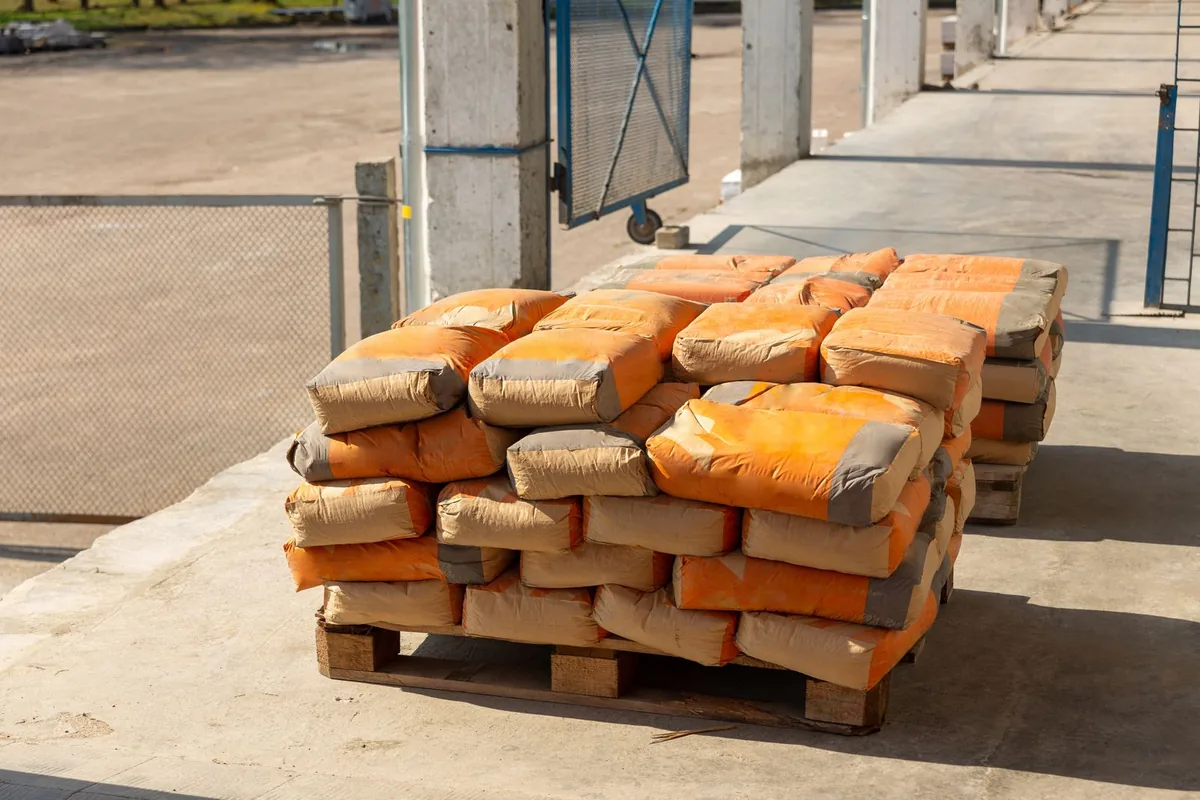
So how a rubber wood pallet holds up to forklift tines depends mainly on board thickness, the number of blocks and how it is nailed, not on the name ‘rubber’. For example, the single-face 4-way entry block pallet models ICD Vietnam publishes on its website have a static load of 4,000 - 6,000 kg and a dynamic load of 1,250 - 1,500 kg, while the single-face 2-way entry pallet model has only a static load of 1,000 kg and a dynamic load of 500 kg.
Load when a pallet sits on a rack is lower than the static load and needs its own design; do not use the static load figure to calculate for racking.
3.3. Meeting international export standards
Export rubber wood pallets can meet ISPM 15 by heat-treating the wood core to at least 56°C for 30 minutes and then IPPC-stamping.
Sawn rubber wood strips have a fairly uniform structure, take preservative easily and can be dried in an industrial drying chamber, so they suit export pallets if treated by the correct process.
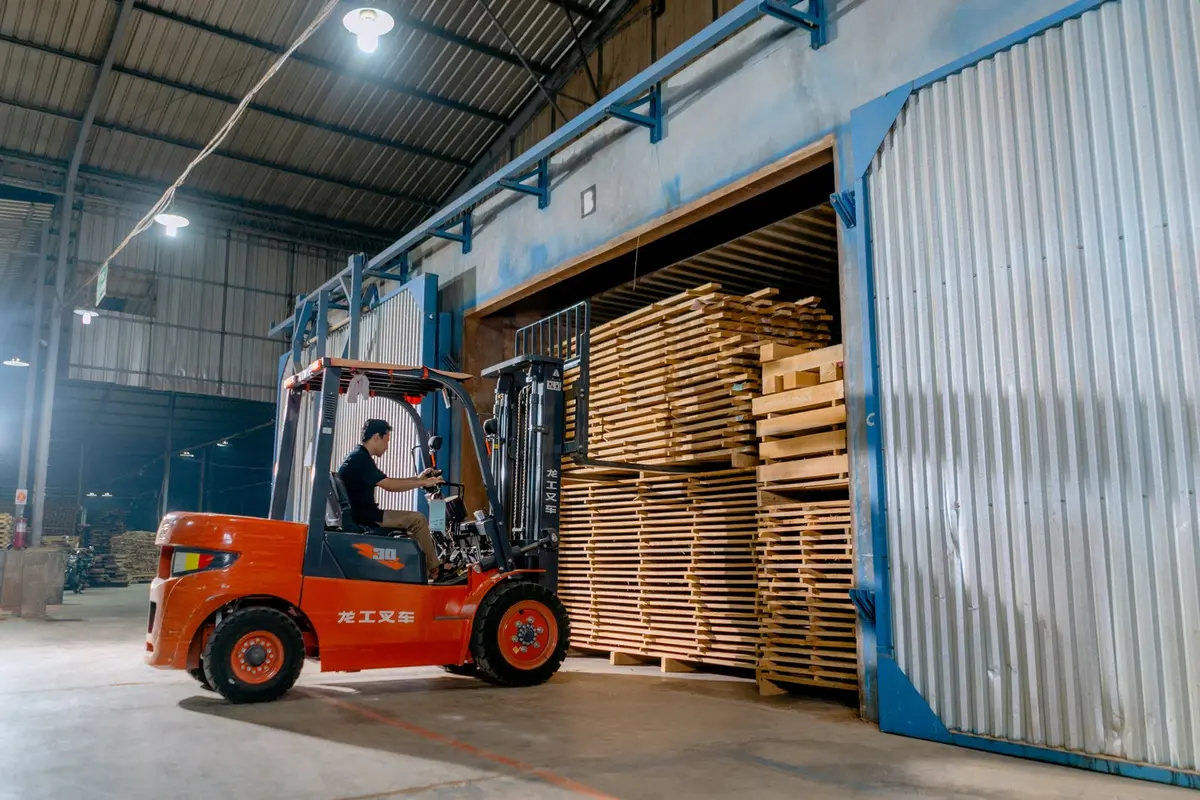
At ICD Vietnam, pallets for export cargo are treated under ISPM 15 and IPPC-stamped through a licensed treatment provider. ISPM 15 is a treatment and marking standard, not a certification, and accepts four methods: heat treatment (HT), dielectric heating (DH), methyl bromide fumigation (MB) and sulphuryl fluoride fumigation (SF). The European Union banned methyl bromide use within the bloc from 18 March 2010 but still accepts imported pallets treated with MB in line with ISPM 15; for demanding markets such as the US, Europe or Japan, ask the importer which method they require before ordering pallets.
4. When is it worth investing in oak?
Choose oak when you need durability for many years, a hard wood surface and attractive grain, for example meeting tables, wood floors, stairs or long-lasting furniture.
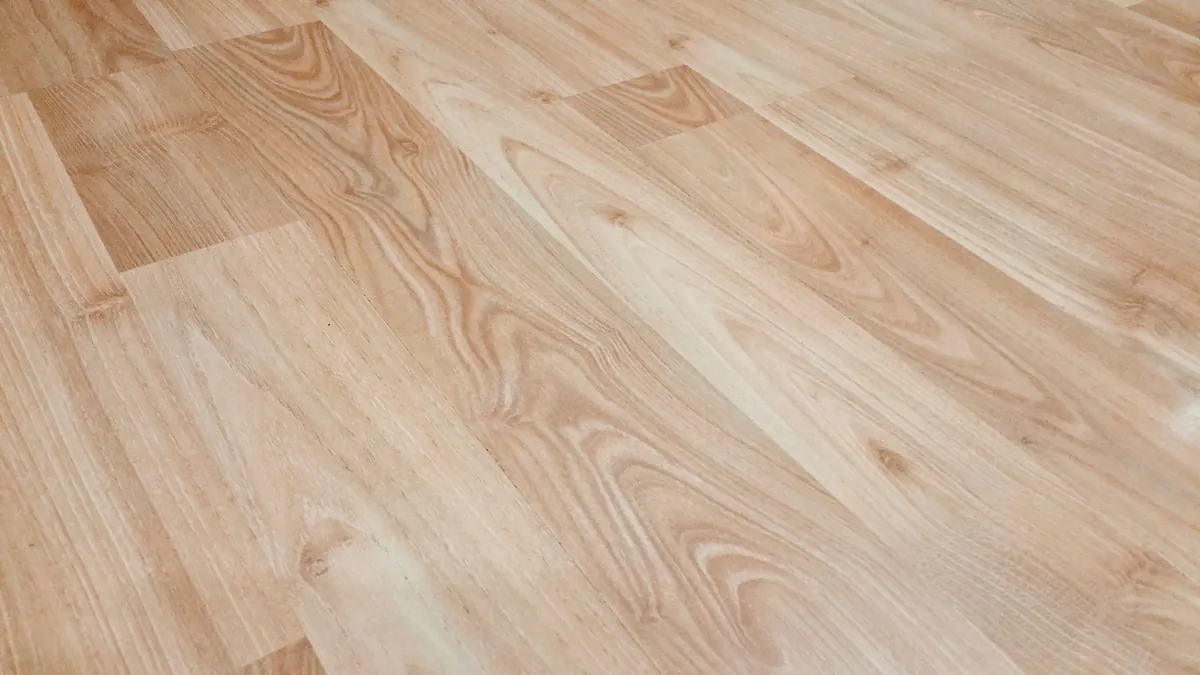
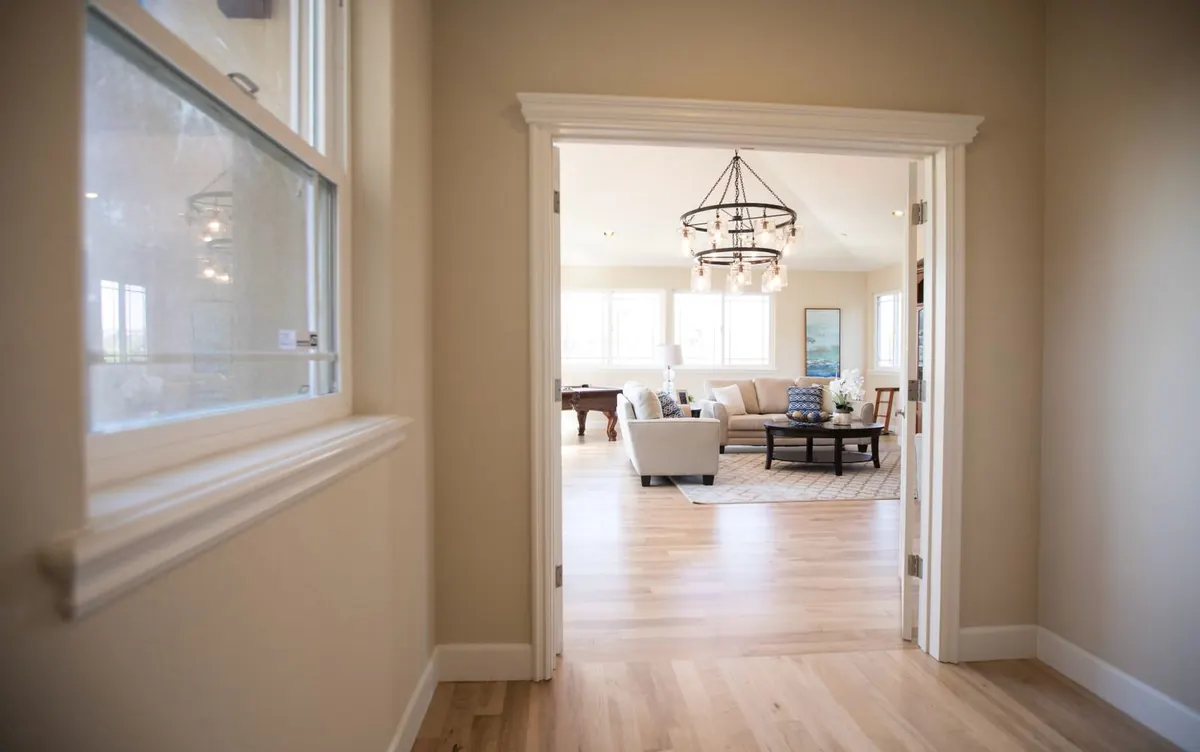
Oak shows its value where both durability and looks are needed: wood floors, stairs, kitchen cabinets, meeting tables, desks and furniture used for many years. The pronounced oak grain, especially quarter-sawn boards with ray flecks, is something dyed rubber wood can hardly replace.
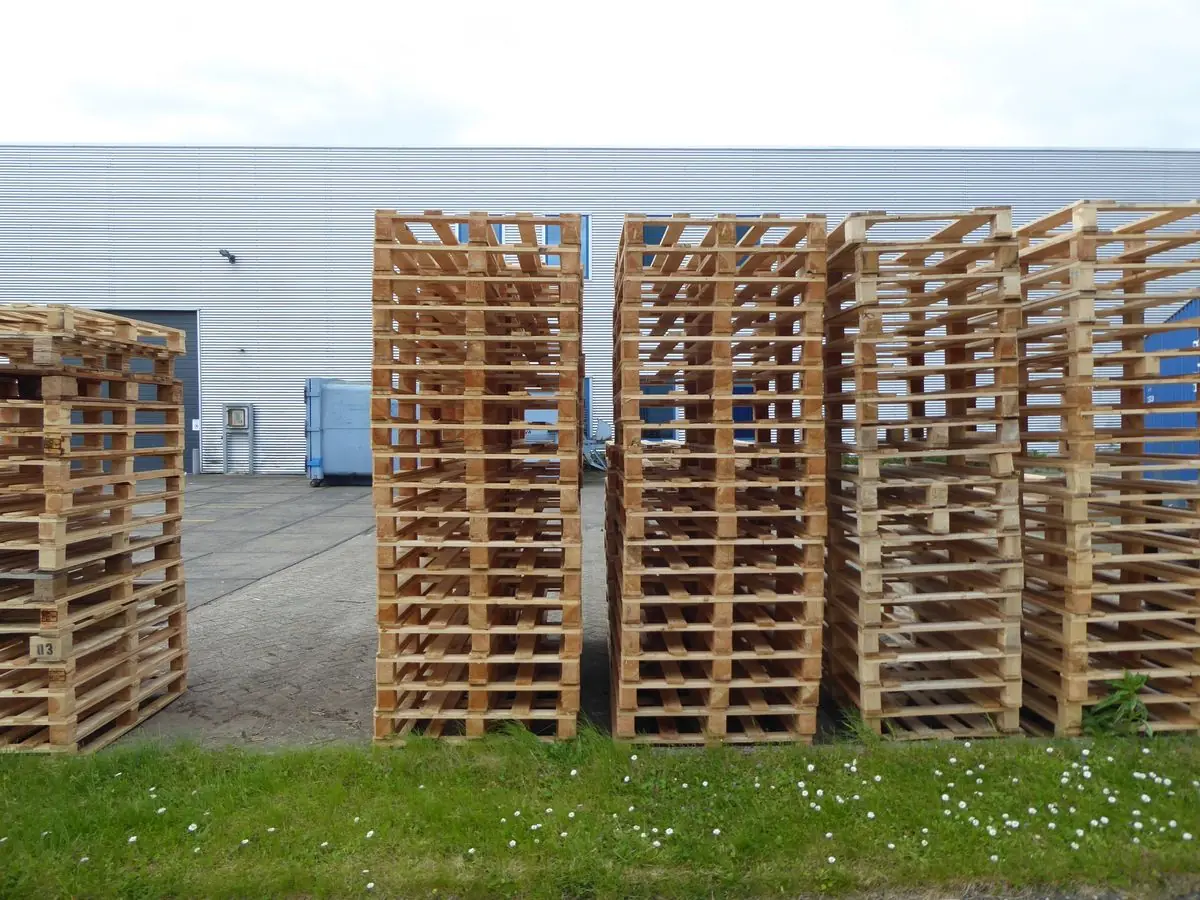
As for pallets, almost nobody in Vietnam builds them from oak, but the reason is economic, not technical. In the US, where oak grows locally, a USDA Forest Service survey found that in 2006 the pallet industry used 63.6% hardwood, and oak was the single most used hardwood species, accounting for 26.9% of hardwood volume. An earlier survey by the same agency (1982) explained that pallets in the northern and Midwest states were almost all oak and other hardwood because low-grade hardwood there is both plentiful and cheap. In Vietnam, oak is imported for export furniture, so using it for pallets is wasteful.
| Need | Choose | Reason |
|---|---|---|
| Pallets, crates, warehouse racking shelves | Rubber wood | Hard enough on the face for handling, lighter, domestic timber supply, treatable under ISPM 15 |
| Everyday household tables, chairs and cabinets | Rubber wood | Paints well, shrinks little once dried; the wood must be treated and dried |
| Wood floors, stairs, wear-resistant tabletops | Oak | About 40% harder on the face (Janka 5,990 against 4,280 N) |
| High-end furniture, used for many years | White oak | Very durable heartwood, pronounced grain |
| Damp areas (kitchen, bathroom) | White oak or rubber wood with a sealed coating | Red oak and rubber wood are both weak when damp, prone to mold if edges are left exposed |
5. Conclusion
Oak is better in hardness and durability, rubber wood is better in cost; which is ‘better’ depends on whether you are making long-lasting furniture or pallets and industrial packaging.
If the goal is floors, stairs or long-lasting furniture, white oak is a worthwhile investment. If you need a pallet with good load capacity, a reasonable price and ISPM 15 compliance for export, rubber wood is the option to look at first, as long as the wood is dried and the pallet is designed for the right load.
For advice on a rubber wood pallet model by load and cargo type, you can contact ICD Vietnam using the details at the end of the article.
Frequently asked questions
How do rubber wood and oak differ?
Oak is heavy, hard and (for white oak) very durable, must be imported, and suits furniture used for years. Rubber wood is a domestic plantation timber, about 21% lighter, shrinks little but is prone to mold and borers if not treated and dried, and suits pallets, packaging and everyday furniture.
Where is oak usually imported from?
The two common types are North American white oak and red oak, growing in the eastern United States and southeastern Canada. According to USDA FAS (2020), Vietnam is the third largest market for US hardwood and oak is among the best-selling species.
Why are pallets usually made from rubber wood and not oak?
Because rubber wood is available domestically, hard enough on the face for handling, lighter than oak and shrinks little, while a pallet is used for only one or a few trips. In Vietnam oak is imported for furniture, so using it for pallets is uneconomical.
Which is better, rubber wood or oak?
Oak is better in mechanical properties and durability: white oak has a Janka hardness of 5,990 N, a bending strength of 102.3 MPa and a very durable heartwood, against 4,280 N and 71.9 MPa for rubber wood. Rubber wood is better on price and weight, so it suits pallets and everyday furniture.
Is rubber wood heavier than oak?
No. Dry rubber wood weighs about 595 kg/m³, about 21% lighter than white oak (755 kg/m³) and about 15% lighter than red oak (700 kg/m³).
Is ‘Malaysian oak’ a kind of oak?
No. Per The Wood Database, ‘Malaysian oak’ is a trade name for rubber wood (Hevea brasiliensis), not part of the oak genus Quercus. When buying, ask for the scientific name of the wood.
Can pallets be made from oak?
Yes. In the US, oak is the single most used hardwood for pallets, accounting for 26.9% of hardwood volume in 2006 per the USDA Forest Service. In Vietnam, oak is imported for furniture, so oak pallets are rare and less economical than rubber wood pallets.
Is rubber wood furniture as durable as oak?
Less durable in the same conditions, because natural rubber wood is prone to mold and borers. Rubber wood furniture that has been treated and dried, sealed with a coating and kept in a dry place still lasts steadily for many years; in damp places, white oak is safer.
Contact ICD Vietnam for a quote
- Hotline 1: 0983 797 186
- Hotline 2: 0903 459 186
- Hotline 3: 0905 859 186
ICD Vietnam has a Hanoi warehouse at 3rd Floor, Thang Long A1 Building, Bau Hamlet, Thien Loc Commune, Hanoi, and a southern workshop at 551/212 Le Van Khuong, Tan Thoi Hiep, District 12, Ho Chi Minh City (southern hotline 098 6784 186). Wooden pallet price: contact for a quote, with volume discounts; wooden pallets carry no warranty and can be returned or exchanged within 7 days. Under our delivery policy, orders are processed in 1 - 2 days, with delivery in 1 - 3 days within Hanoi and Ho Chi Minh City, 2 - 5 days between regions and 3 - 7 days to other provinces.
References
- Rubberwood (Hevea brasiliensis), White Oak (Quercus alba), Red Oak (Quercus rubra): The Wood Database, checked 17 Oct 2026.
- Vietnam Wood Processing Industry, GAIN Report 06/2020: USDA Foreign Agricultural Service.
- Bush R.J., Araman P.A. et al., Hardwoods in U.S. wood pallet production (2011): USDA Forest Service, Southern Research Station.
- McKeever D.B. et al., Wood Used in Pallets Manufactured in the United States, 1982: USDA Forest Service, Forest Products Laboratory.
- Decision 2198-CNR (1977) issuing the provisional classification of timbers used uniformly nationwide: National Legal Document Database.
- ISPM 15 Regulation of wood packaging material in international trade: IPPC, FAO.
- Requirements for wood packaging material and dunnage: European Commission.
- Wooden pallet load specifications, delivery and return policy of ICD Vietnam: website icdvietnam.com.vn, checked 17 Oct 2026.