Table of Contents
- Why must rubberwood be treated and dried?
- The 3-step rubberwood treatment and drying process in detail
- Strict quality criteria for rubberwood after treatment
- Treated and dried rubberwood in ICD Vietnam pallets
- Conclusion
- Frequently asked questions
- Why must rubberwood be treated and dried?
- What happens to rubberwood that is not treated and dried in time?
- What technology is usually used to treat and dry rubberwood?
- Is treated and dried rubberwood still attacked by borers?
- How long does it take to dry rubberwood?
- Can treated and dried rubberwood be used outdoors?
- Does treated and dried rubberwood still need ISPM 15 heat treatment for export pallets?
- Does treated and dried rubberwood need ISPM 15 treatment for export pallets?
- Contact ICD Vietnam for a quote
- References
Reviewed and updated by ICD - Week 43/2026
The rubberwood treatment and drying process has 3 steps: sawing blanks to size, treating them with a boron-based preservative (borax, boric acid) straight after sawing, usually by vacuum-pressure impregnation, and then kiln drying to bring the moisture content to about 8 - 10%; a 30 mm board spends roughly 7 - 9 days in the kiln. Rubberwood has to be treated and dried because green wood is rich in water, sugar and starch and has poor natural durability, so it is quickly attacked by mould and borers.
Rubberwood, once a by-product of latex harvesting, has become the main raw material of the furniture and pallet industries, and the turning point lies in treatment and drying. This article explains each step of vacuum-pressure impregnation and kiln drying, the parameters measured in research, and how a buyer can check treated rubberwood for themselves.
This is industry knowledge we have compiled from forestry research institutes in Malaysia, India, Sri Lanka, Thailand and the United States. ICD Vietnam does not operate treatment or drying kilns; our rubberwood pallets are built from wood that has already been treated and dried, so understanding this process helps us and our customers know what to check in the timber before it becomes a pallet.
Why must rubberwood be treated and dried?
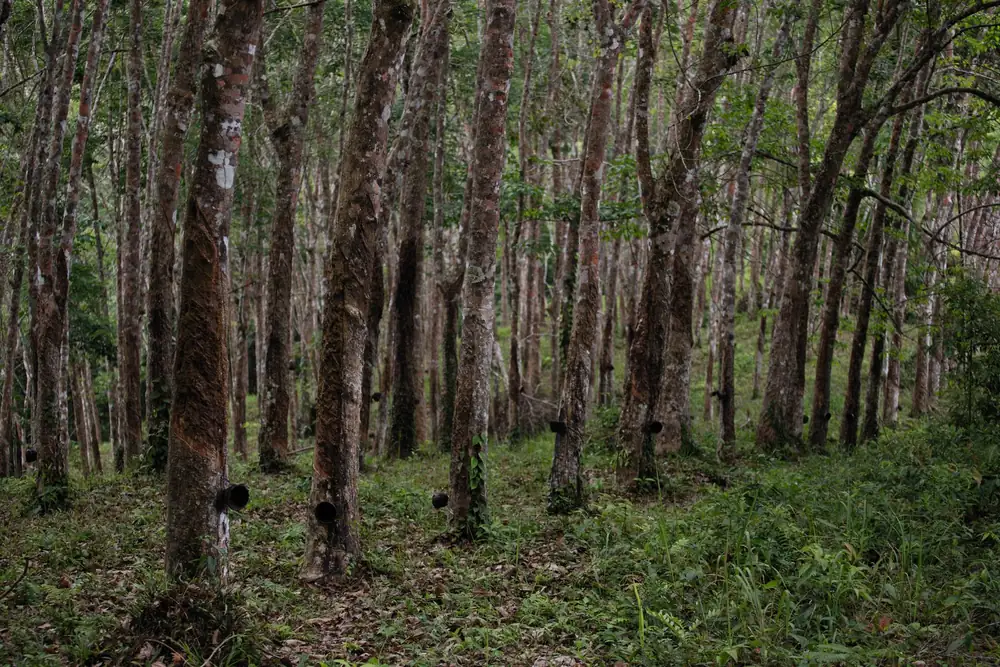
Rubberwood must be treated and dried because green wood holds a lot of water, sugar and starch, while the wood itself has poor natural durability against fungi and insects.
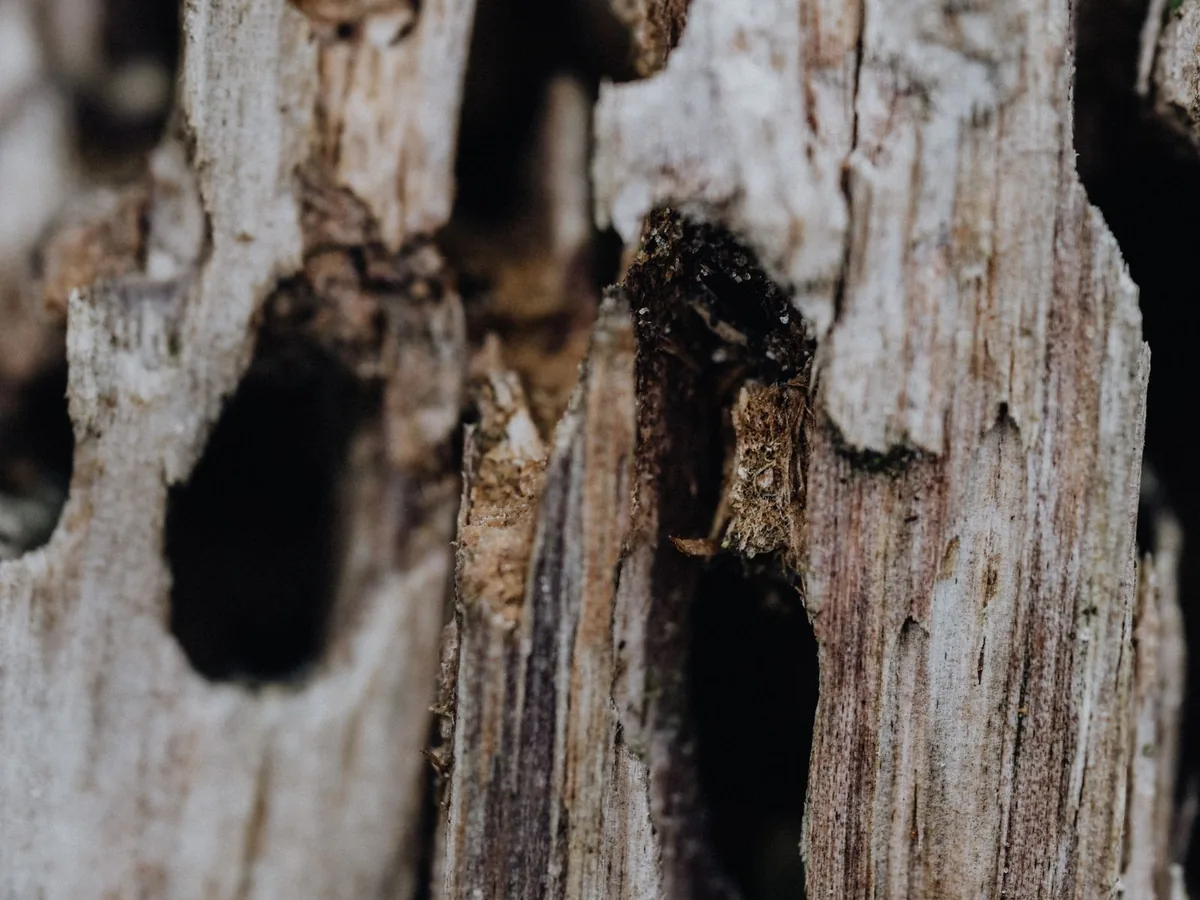
Unlike natural-forest timbers with dense fibres and a high content of protective resins, rubberwood has some quite specific biological traits. The sugars and starch in green wood are an ideal food for blue-stain fungi and borers, so wood left too long after felling and sawing without treatment quickly discolours and gets bored through. Each agent attacks rubberwood in its own way, and preservative treatment and drying deal with each one differently:
| Agent | Signs on the wood | Main remedy |
|---|---|---|
| Staining fungi, mould | Blue-grey and black streaks on the surface and inside the grain | Treat with a fungicidal preservative right after sawing, dry to a low moisture content |
| Powderpost beetles (family Bostrichidae) | Small round holes, fine wood dust falling around the timber | Boron treatment with enough retention to reach the core |
| Termites | Mud tunnels, wood hollowed out inside | Boron treatment, keep the wood dry and off the ground |
| Decay fungi | Soft, spongy wood that loses load-bearing strength | Dry the wood, store it in a dry place, keep it out of the rain |
If it is not treated in time, the wood goes black, rots and loses its usable value. That is why treatment and drying is not just a production step but the step that turns “firewood” into commercial timber. The end goal is to bring the wood’s moisture content (MC) below about 12%, so that the structure is stable and suitable for furniture and export pallets.
According to The Wood Database, dry rubberwood (Hevea brasiliensis) has a density of about 595 kg/m³ and is rated as having poor natural durability, easily attacked by insects. So the durability of a piece of rubberwood depends almost entirely on the quality of treatment and drying, not on the species itself.
The 3-step rubberwood treatment and drying process in detail
The standard rubberwood treatment and drying process has 3 consecutive steps: sawing blanks, treating by vacuum-pressure impregnation and steam kiln drying.
In timber mills, these 3 steps demand tight control of both time and temperature. Each step has a common fault: leaving green blanks too long before treatment, treating with a weak solution or a short pressing time, and raising kiln temperature too fast so that the wood cracks and warps. When you buy rubberwood or rubberwood pallets, these are also the 3 points to ask your supplier about.
Step 1: Sawing blanks to size
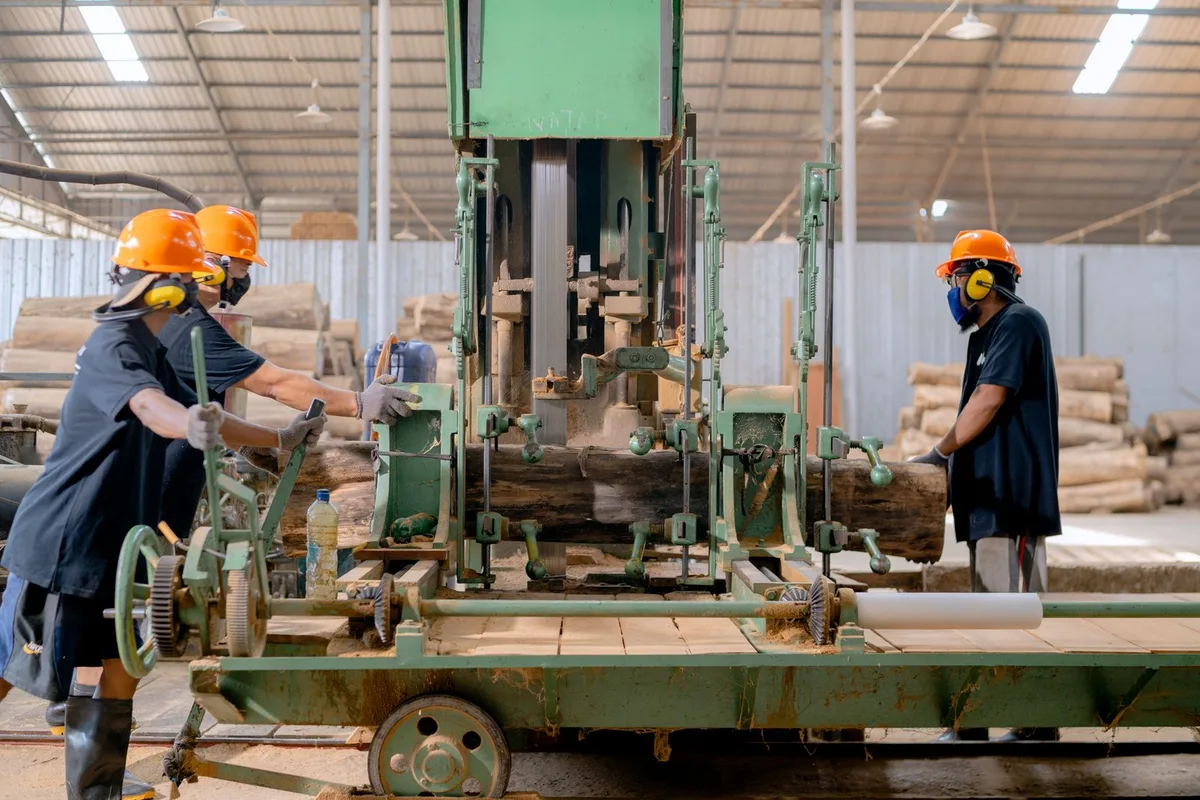
After the logs reach the mill they are debarked and sawn into blanks. Depending on the order, the wood is sawn to common thicknesses such as 20 mm, 25 mm or 30 mm. Calculating the thickness at sawing is important because the shrinkage after drying has to be added, so that the final dimensions of the finished piece are right.
Step 2: Vacuum-pressure impregnation, the key to resisting termites and borers
Vacuum-pressure impregnation removes air from the wood grain in a sealed tank, then pumps in a boron preservative solution under pressure so that the chemical penetrates deeper than by spraying or dipping.
This step decides the durability of rubberwood. Instead of spraying chemicals on the surface, the wood is stacked in a sealed treatment tank (Vacuum Pressure Impregnation). First a vacuum pump draws the air out of the wood grain; then a solution of borax, boric acid and a fungicide is pumped into the tank under high pressure, driving the preservative through the wood vessels deep into the timber. A schedule quoted in review literature for green rubberwood blanks 50 - 70 mm thick is a 90 kPa vacuum for 45 minutes, pressing at 1,050 kPa for 75 minutes and a final 15-minute vacuum, with a 3% borax solution.
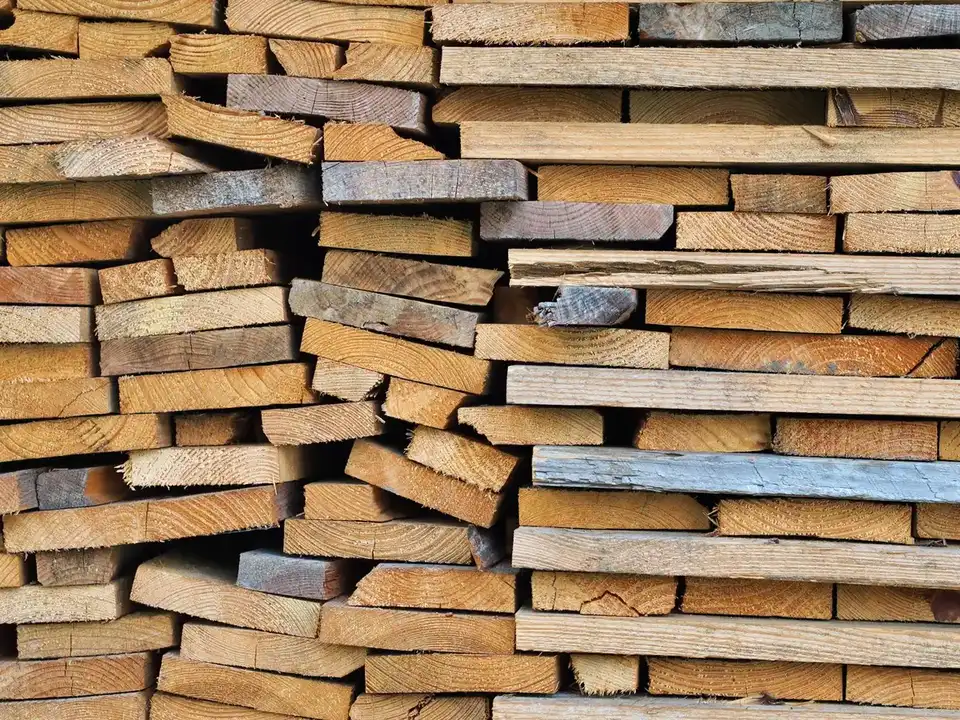
The effectiveness of the treatment step is measured by the amount of preservative retained in the wood, in BAE units (boric acid equivalent). According to a report by the Kerala Forest Research Institute (India), the requirement of the British Wood Preserving Association (BWPA) is an average of 0.4% BAE across the whole cross-section, with the condition that the core reaches more than 0.2% BAE; the 0.2% level at the core is a New Zealand regulation for hardwoods prone to Lyctus borers. The same report states that rubberwood treated to 0.4% BAE is enough to resist the borer Sinoxylon anale.
Pressure does not carry the preservative to the core immediately. A test by the Forest Research Institute Malaysia (Hong and Liew, 1989) with a 3% borax and boric acid solution showed that the outer 10 mm layer of wood retained 0.36 - 1.51% BAE, while the core of green sawn wood reached only 0.04 - 0.21% BAE. The preservative in the outer layer then keeps diffusing into the core during stacking and drying. That is why Malaysian researchers advise stacking the wood for at least 1 week after pressure treatment before it goes into the kiln; with a shorter period, wood at a depth of 12 mm and more does not reach the 0.2% BAE threshold.
| Method | How it is done | Suitable for |
|---|---|---|
| Diffusion soak | Soak green blanks in a boron solution, then store them sealed so the preservative diffuses in | Small operations, green wood, long storage time available |
| Hot-and-cold soak | Soak in hot solution for several hours, then let it cool in the solution | Green wood |
| Vacuum-pressure | Draw a vacuum, then force the solution into the wood in a sealed tank | Best results on wood that has lost some moisture; high output, controllable parameters |
A study in Sri Lanka compared 4 boron treatment methods for rubberwood: diffusion soak, hot-and-cold soak (soaking in an 80 degrees C solution for 4 hours, then cooling in the solution for 12 hours), steaming followed by a cold soak, and vacuum-pressure. The result: vacuum-pressure gave the highest termite resistance when the wood had been dried down to about 12%, while for green wood the hot-and-cold soak did better. Vacuum-pressure also had the highest treatment cost per cubic metre, and diffusion soak the lowest. So the treatment parameters should be chosen according to the moisture content of the blanks when they enter the tank and the risk level of the wood’s use.
Step 3: Steam kiln drying to stabilise the structure
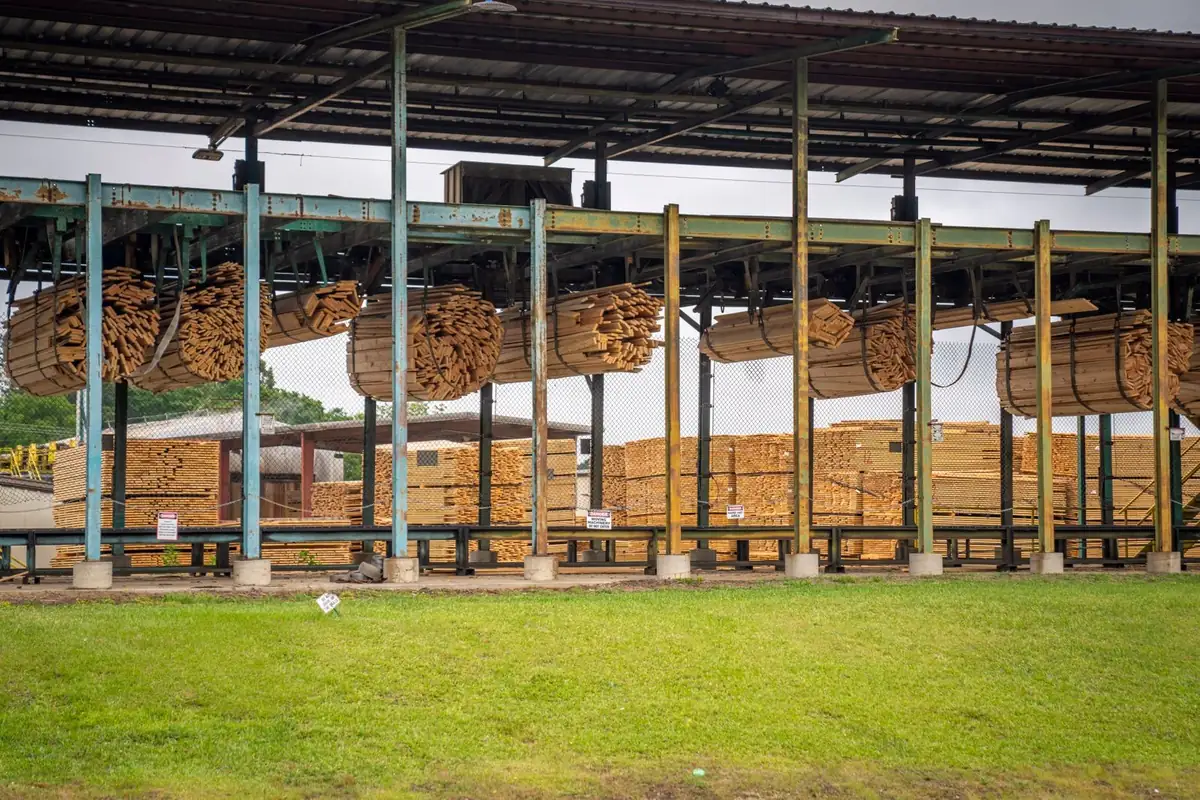
Steam kiln drying brings treated rubberwood to a moisture content of about 8 - 10% by raising the temperature slowly and releasing moisture in stages; according to the Forest Research Institute Malaysia, a 30 mm board takes about 7 - 9 days.
After treatment and stacking, the wood is loaded into a steam kiln. Raising the temperature slowly lets moisture escape evenly from the inside out; forcing the drying with high temperature from the start easily causes checking or deformation. Drying time depends mainly on blank thickness: according to Timber Technology Bulletin No. 26 of the Forest Research Institute Malaysia, 30 mm rubberwood boards kiln-dried to 8 - 10% moisture take about 7 - 9 days; thicker blanks or a kiln that vents moisture poorly will take longer.
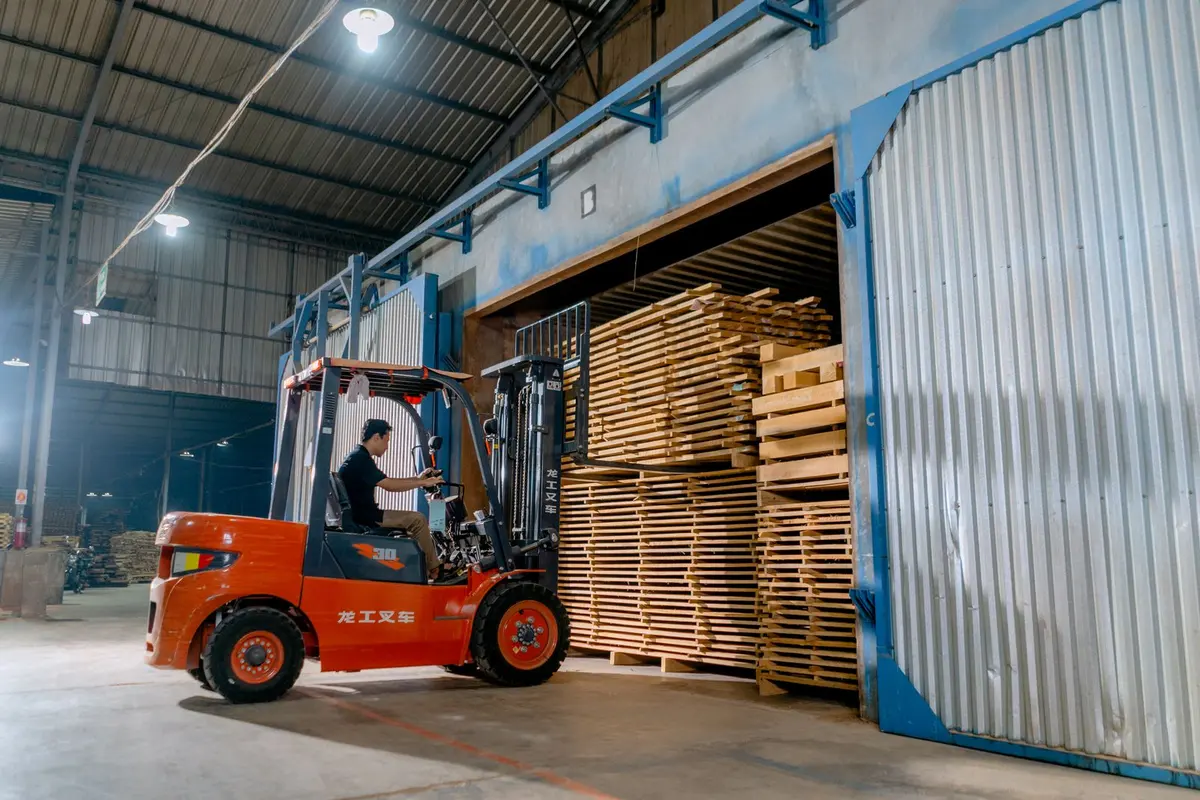
Kiln temperature is also a cost question. A study in Thailand on 30 mm rubberwood boards showed that raising the dry-bulb temperature from 60 degrees C to 90 degrees C cut the drying time from about 117 hours to 54 hours, but used about 22% more energy. High temperature has little effect on warping and colour but creates more surface stress, so a final conditioning stage is needed at the end of the drying run to release the stress. In our experience, that is why two lots of wood with the same moisture on leaving the kiln can still behave differently when they are re-sawn or planed.
Strict quality criteria for rubberwood after treatment
Properly treated and dried rubberwood has an even moisture content of about 8 - 12%, boron penetrating to the core, a bright yellow colour with no fungal streaks, no end checks or warping, and no borer holes.
Moisture content is the most important indicator: wood that is evenly dry at this level shrinks and swells little when the environment changes. After drying the wood must keep its characteristic bright yellow colour and a clean surface, with no dark mould marks or stains from residual chemicals; correctly dried wood also feels firmer and harder than green wood. Beyond a visual check, a buyer can accept treated and dried rubberwood with these simple steps:
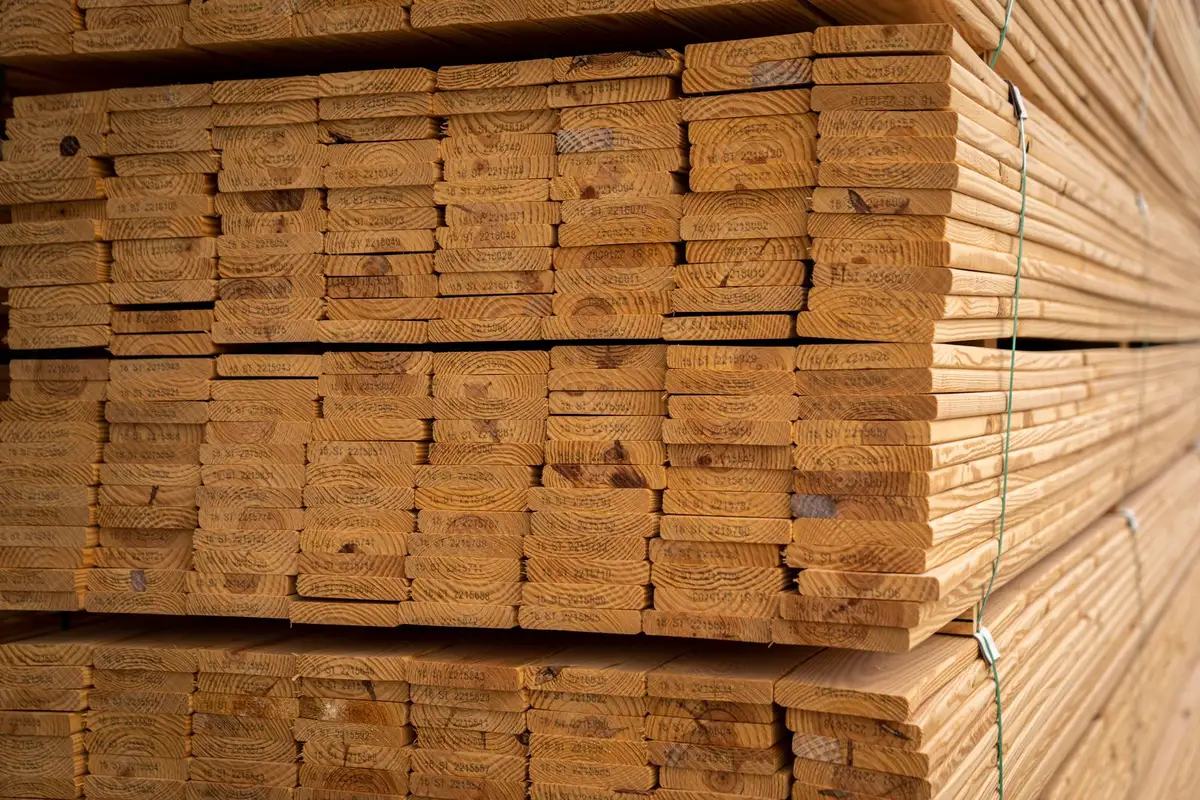
- Measure moisture with a handheld meter on many boards, including the middle of a board; it passes at about 8 - 12% with small differences between boards.
- Cut across 1 board and drip curcumin test reagent onto the cut face; it passes when the face turns an even red right to the core.
- Inspect the surface and the cut face; it passes when the wood is bright yellow with no blue or black fungal streaks.
- Look at the board ends and lay a board on a flat surface; it passes with no end checks, no surface checks and no clear warping.
- Check for holes and wood dust around the bundle; it passes with no borer holes and no fine wood dust falling out.
Treated and dried rubberwood in ICD Vietnam pallets
ICD Vietnam rubberwood pallets are built from wood that has been treated and dried, followed by a moisture check; pallets for export cargo are treated and stamped with the IPPC mark under ISPM 15 through a licensed facility.
With our rubberwood pallet range, we always ask customers to watch the moisture content of the wood when pallets travel in sealed containers on long journeys: wood that has been treated and dried dry enough limits the risk of mould growing on pallets and packaging. ICD Vietnam does not operate treatment or drying kilns or carry out ISPM 15 treatment itself; our role is to choose blanks that have been properly treated, and to build pallets to the size and load capacity the customer needs.
Conclusion
The quality of a piece of furniture or a pallet starts with the quality of every grain of the wood. Do not save on upfront cost by choosing rubberwood that was only sun-dried by hand or dried carelessly: the product will warp, rot and be eaten by borers after a short time in use. Only wood treated with enough preservative to reach the core, stacked for enough time and dried on the right schedule gives stable durability.
Frequently asked questions
Why must rubberwood be treated and dried?
Because green rubberwood holds a lot of water, sugar and starch in its grain, which feed mould and borers, while the wood itself has poor natural durability. The wood needs preservative right after sawing and then drying so it does not discolour, rot or get bored through.
What happens to rubberwood that is not treated and dried in time?
The wood goes black from staining fungi, is bored through by beetles and may rot when damp for long periods, losing its usable value.
What technology is usually used to treat and dry rubberwood?
The most common is boron treatment by vacuum-pressure in a sealed tank, followed by stacking and steam kiln drying. Small operations or green wood may use diffusion soaking or hot-and-cold soaking, which cost less but need a longer storage time.
Is treated and dried rubberwood still attacked by borers?
Rubberwood treated with enough boron preservative to reach the core and dried to 8 - 12% resists borers well in dry conditions. Wood that is only lightly treated at the surface, not dried enough or left soaked in water for a long time can still be attacked again by borers and fungi.
How long does it take to dry rubberwood?
According to the Forest Research Institute Malaysia, a 30 mm board kiln-dried to 8 - 10% moisture takes about 7 - 9 days; thicker blanks or a kiln that vents moisture poorly will take longer. If the wood has just been pressure treated, stack it for about 1 more week before drying so the preservative diffuses into the core.
Can treated and dried rubberwood be used outdoors?
It should not be used outdoors for the long term. Boron preservatives are easily washed out by rain, so treated and dried rubberwood suits indoor furniture and pallets used in covered warehouses and containers best.
Does treated and dried rubberwood still need ISPM 15 heat treatment for export pallets?
Does treated and dried rubberwood need ISPM 15 treatment for export pallets?
Yes. Boron treatment is not a measure recognised by ISPM 15. Export pallets must be treated by an ISPM 15 method, usually heat treatment so that the wood core reaches 56 degrees C for 30 minutes (kiln drying that meets these parameters also counts), and stamped with the IPPC mark by a licensed facility.
Contact ICD Vietnam for a quote
- Hotline 1: 0983 797 186
- Hotline 2: 0903 459 186
- Hotline 3: 0905 859 186
ICD Vietnam has a production workshop, a Hanoi warehouse (3rd Floor, Thang Long A1 Building, Bau Hamlet, Thien Loc Commune) and a southern workshop (551/212 Le Van Khuong Street, Tan Thoi Hiep Ward, District 12). Price of rubberwood pallets: contact for a quote by size, load and quantity; volume discounts apply.
References
- Hong L.T. and Liew C.C.K., Protection of rubberwood timber. Part 1: Impregnation with boron preservatives - Forest Research Institute Malaysia (FRIM), IRG/WP 1989.
- Timber Technology Bulletin No. 26, rubberwood and Acacia mangium - FRIM.
- Research Report 15, Preservative treatment of rubber wood (Hevea brasiliensis) - Kerala Forest Research Institute (KFRI).
- Dhamodaran T.K. and Gnanaharan R., Preservative treatment and chemical modification of rubber wood - Cochin University of Science and Technology, 1996.
- Abeysinghe U.M. and Amarasekera H.S., Pressure and non-pressure preservation methods for rubber wood treatment by boron preservatives - International Forestry and Environment Symposium, University of Sri Jayewardenepura, 2011.
- Srivaro S. et al., Accelerated conventional temperature drying of 30 mm thick rubberwood lumber - Songklanakarin Journal of Science and Technology, 2008.
- Wood Handbook, Chapter 15 Wood preservation - US Forest Products Laboratory (USDA FPL).
- Rubberwood (Hevea brasiliensis) - The Wood Database.
- ISPM 15, Regulation of wood packaging material in international trade - IPPC.