Table of Contents
- Pallet as packaging or pallet as the product
- Technical Requirements for Export Wooden Pallets
- Do Reused or Repaired Pallets Need Re-treatment?
- Legal Documents When Exporting Wooden Pallets as Goods
- Export Wooden Pallet Sizes
- EU and US Requirements
- Documents and Process
- Frequently Asked Questions
- Which legal documents apply to exporting wooden pallets?
- What do legal forest product documents for export wooden pallets include?
- Which markets are strictest on export wooden pallets?
- What is the HS code for wooden pallets?
- Does a wooden pallet with an ISPM 15 mark need a fumigation certificate?
- Can an old wooden pallet with an IPPC mark be reused for export cargo?
- What is the maximum moisture for an export wooden pallet?
- What does a wooden pallet exported to the US need?
- Contact ICD Vietnam
- References
Reviewed and updated by ICD - Week 43/2026
Wooden pallets used for export cargo must be debarked, treated under ISPM 15 (most commonly by heating the wood core to 56 °C for 30 minutes) and marked with the IPPC stamp. If the pallet itself is the export product, the exporter also needs legal timber documents under Circular 26/2025/TT-BNNMT (amended by Circular 84/2025/TT-BNNMT) and must declare HS code 4415.20. Markets such as the US and the EU check the IPPC mark right at the port of arrival.
Pallet as packaging or pallet as the product
Wooden pallets are the most common load-carrying packaging in exports. Before preparing paperwork, work out which situation the shipment falls into, because the requirements differ quite a lot.
The most common situation is a pallet that is only packaging travelling with the goods: furniture, electronic components or farm produce loaded on pallets and then into a container. In that case the pallet only needs to be treated and marked with the IPPC stamp under ISPM 15. The second situation is a company selling wooden pallets themselves overseas. Here the pallet is the product, so besides ISPM 15 it needs legal timber documents, the correct HS code 4415.20 and a full set of commercial documents.
If you need the opposite direction, importing wooden pallets into Vietnam, see our guide to the procedures for importing wooden pallets.
Technical Requirements for Export Wooden Pallets
Under ISPM 15, a wooden pallet travelling internationally must meet 3 conditions. First, the wood must be debarked: only bark remnants narrower than 3 cm are allowed, or wider ones with an area under 50 cm² each; the standard does not require the surface to be planed smooth. Second, the wood must be treated against pests by one of the 4 recognised methods. Third, the pallet must carry the IPPC mark, made up of the wheat-ear symbol, country code, treatment facility code and method code, on at least 2 opposite sides, never hand-drawn.
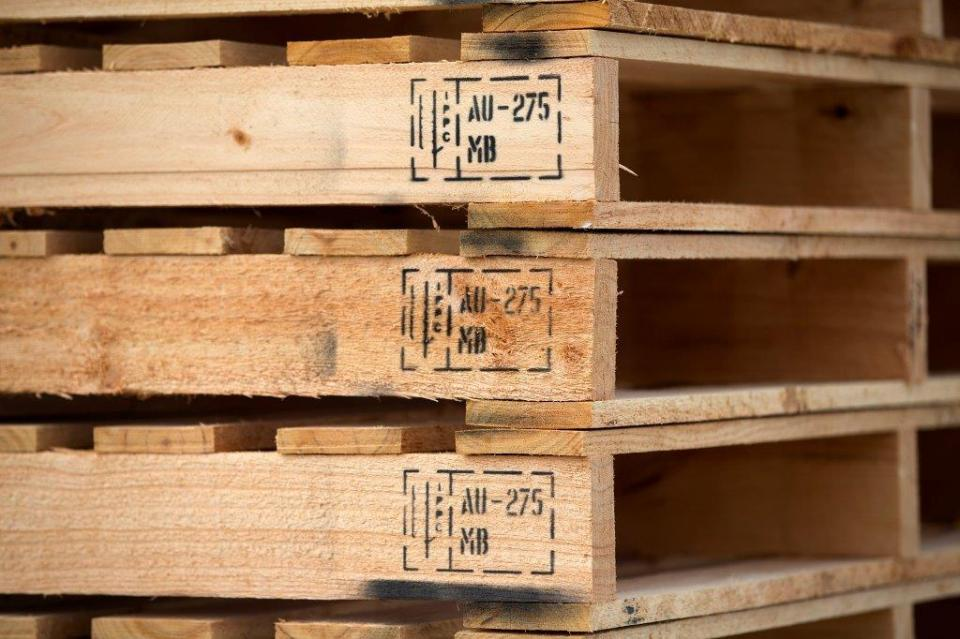
Besides ISPM 15, the wood must be free of weevils, mould and live insects at delivery, so pallets should be kept somewhere dry after treatment. Processed wood such as plywood, particle board and OSB falls outside the scope of ISPM 15, so a pallet made entirely of these materials does not need the IPPC mark. The four recognised treatments are:
| Code on the mark | Method | Minimum conditions | Notes |
|---|---|---|---|
| HT | Heat treatment (steam or drying kiln) | Core at 56 °C for 30 continuous minutes | Most common, no chemicals, no limit on wood size |
| DH | Dielectric heating (microwave, radio waves) | 60 °C for 1 continuous minute across the whole cross-section | Few facilities in Vietnam use it |
| MB | Methyl bromide fumigation | Wood and air at 10 °C or above, at least 24 hours | Must be debarked before fumigation and aired afterwards; the IPPC recommends reducing use because it depletes the ozone layer |
| SF | Sulfuryl fluoride fumigation | Per the ISPM 15 dosage table | Wood with moisture above 75% cannot be treated |
Do Reused or Repaired Pallets Need Re-treatment?
We hear this often when customers want to reuse old pallets for a new shipment. ISPM 15 divides it into three cases. A pallet that has been treated, is marked and has not been repaired or had any component replaced can be reused and does not need re-treatment during its whole life. A repaired pallet, meaning one with up to about a third of its components replaced, may only use treated wood, and each new board must carry its own mark; the plant protection authority may require the old mark to be removed and the whole pallet re-treated.
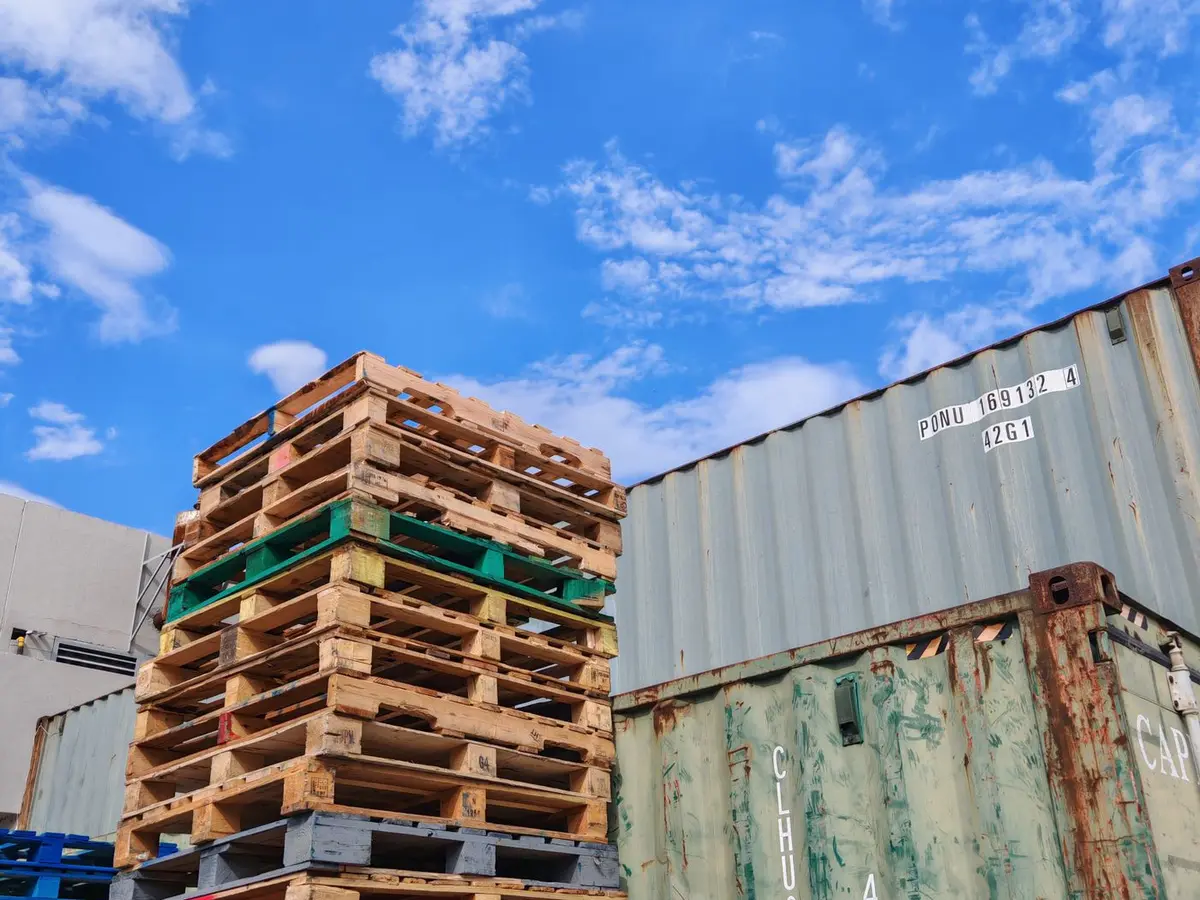
A pallet with more than about a third of its components replaced is treated as remanufactured. The old marks must then be removed entirely, the whole pallet re-treated and a new mark applied. So for cargo going to markets that inspect closely, the safe choice is a new treated pallet, or an old pallet that is intact with a clear IPPC mark.
Legal Documents When Exporting Wooden Pallets as Goods
When the pallet is the product, the authorities care about 3 things: the wood has a legal origin, the HS code is declared correctly, and the wood is not on the export ban list.
On timber origin, the exporter needs a harvest permit, a purchase contract or valid import documents for the wood; for processed forest products such as pallets, a forest product list is prepared stating the wood species, volume and origin. The current text is Circular 26/2025/TT-BNNMT, effective 1 July 2025 and amended and supplemented by Circular 84/2025/TT-BNNMT from 1 January 2026.
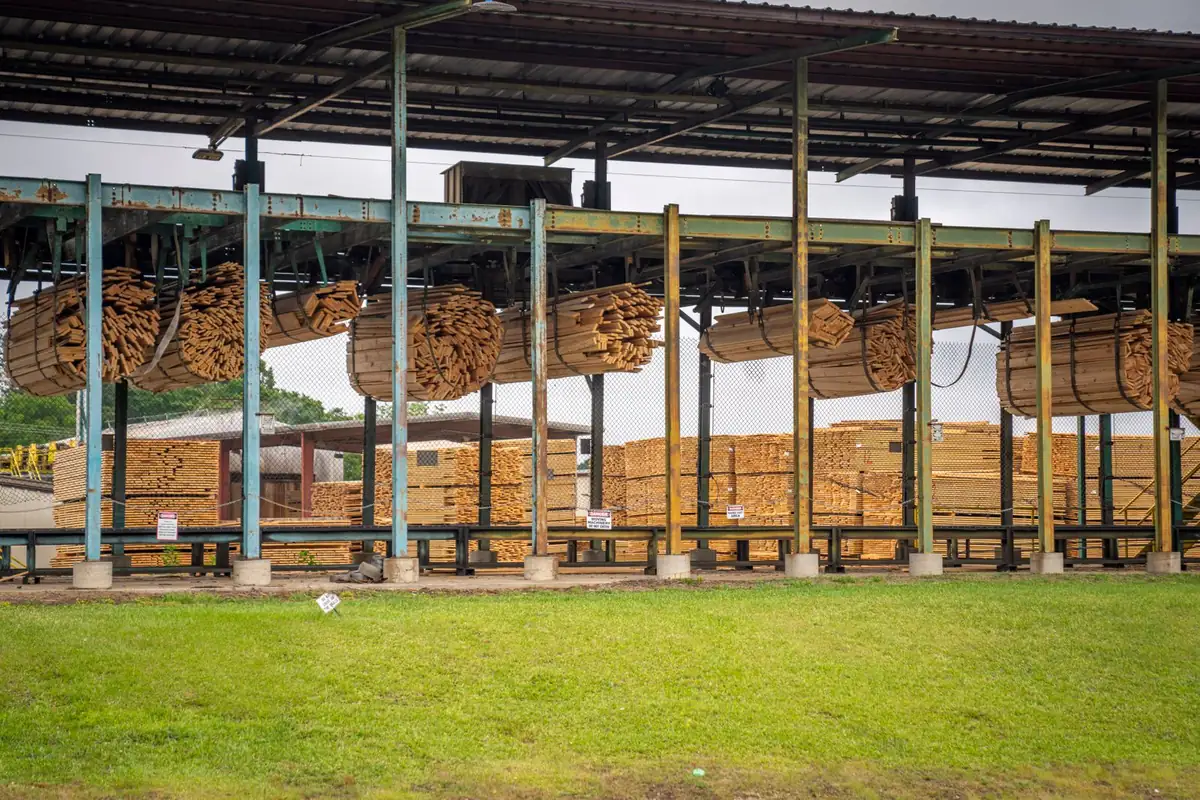
On the HS code, wooden pallets fall under subheading 4415.20, covering pallets, box pallets, other load boards and pallet collars; wooden cases, boxes, crates and cable drums fall under subheading 4415.10. The current table of HS codes for agricultural goods is Circular 01/2024/TT-BNNPTNT (effective 20 March 2024), replacing Circular 11/2021/TT-BNNPTNT. On the ban list, Item 20 of Appendix I of this circular prohibits exporting round logs and sawn timber of all kinds from domestic natural forests. Pallets built from plantation wood such as acacia, pine and rubber wood can still be exported, but must have documents proving their origin.
Many online sources still cite old documents. The table below shows the status of each one so that you do not prepare files under rules that have expired:
| Document | Content | Status (October 2026) |
|---|---|---|
| Document 07/VBHN-BNNPTNT (2016) | Consolidation of Circulars 01/2012 and 40/2015 on legal forest product documents | The original circulars expired on 1 January 2019 |
| Circular 24/2017/TT-BNNPTNT | Table of HS codes for agricultural goods | Replaced several times; the current HS table is Circular 01/2024/TT-BNNPTNT (effective 20 March 2024) |
| Circular 27/2018/TT-BNNPTNT | Forest product management and traceability | Expired on 15 February 2023 |
| Circular 26/2022/TT-BNNPTNT | Forest product management and traceability | Expired on 1 July 2025 |
| Circular 26/2025/TT-BNNMT | Forest product management | In force, amended by Circular 84/2025/TT-BNNMT from 1 January 2026 |
Export Wooden Pallet Sizes
There is no single mandatory size; the pallet size is chosen to fit the warehouse and forklift systems in the importing country. ISO 6780 recognises 6 sizes used in international transport: 1200 x 800 mm (Euro pallet, widely used in Europe), 1200 x 1000 mm (Europe, Asia), 1219 x 1016 mm (48 x 40 inch, North America), 1140 x 1140 mm (Australia), 1100 x 1100 mm (Asia) and 1067 x 1067 mm (North America, Europe, Asia).
ICD Vietnam’s wooden pallet range includes 800 x 1200 x 144 mm (static load 4,000 kg, dynamic load 1,500 kg), 800 x 600 x 144 mm (2,000 kg and 500 kg), 1200 x 1000 x 162 mm (4,250 kg and 1,250 kg) and 1200 x 1000 x 156 mm (6,000 kg and 1,500 kg), per the product pages as of October 2026. There are also sizes 1000 x 1200 x 144, 1000 x 1200 x 138, 800 x 1200 x 138, 1140 x 1140 x 138 and 1100 x 1300 x 138 mm; for these we quote load ratings order by order. All models are single-face pallets with 4-way forklift entry.
EU and US Requirements
Demanding markets check wooden pallets in 2 layers: the quarantine layer (the ISPM 15 mark, which applies to every wooden pallet) and the pallet technical standard layer such as EPAL, which applies only when the customer requires it.
| Market | Basis | Main requirement for wooden pallets |
|---|---|---|
| European Union | Implementing Regulation (EU) 2019/2072 | Treatment and marking under ISPM 15; EPAL pallets per EPAL rules if the customer requires them |
| United States | 7 CFR 319.40-3 (APHIS) | Treatment and IPPC marking with code HT or MB in a visible position, ideally on 2 opposite sides; an unmarked pallet may be ordered re-exported at the port of arrival |
| Other IPPC member countries (Japan, Australia and others) | ISPM 15 and the importing country’s own rules | Valid IPPC mark; ask the buyer about additional requirements before choosing the treatment method |
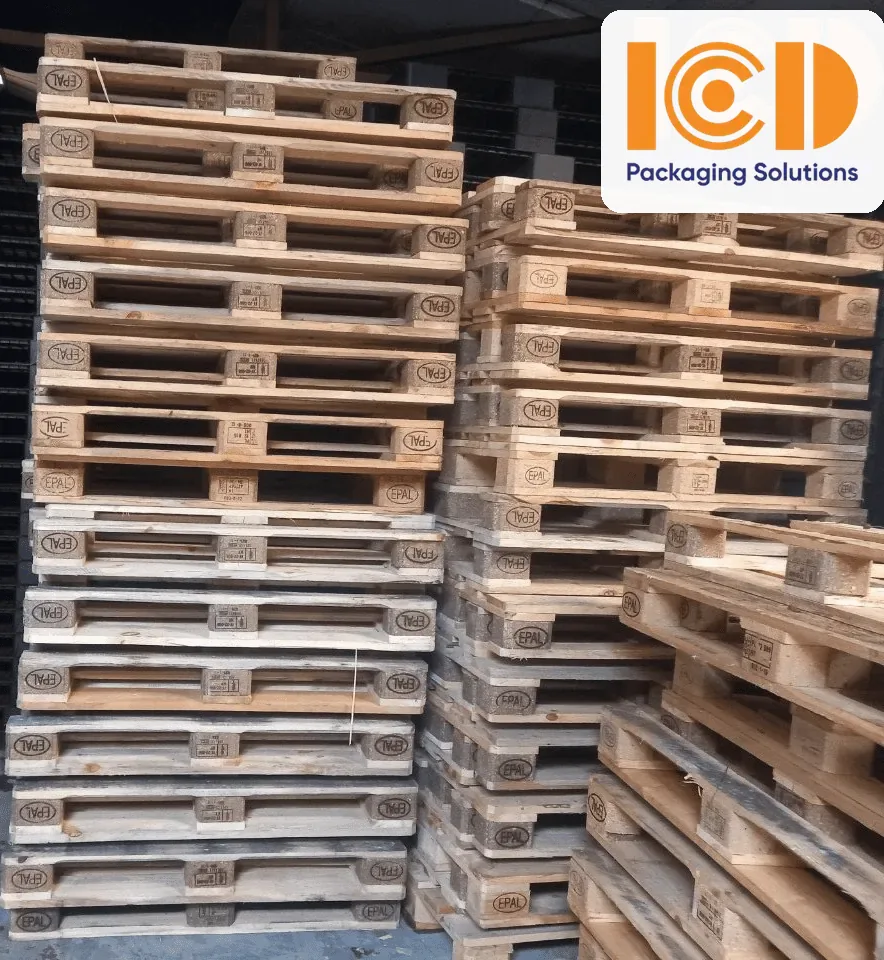
An EPAL Euro pallet under the European Pallet Association’s quality classification measures 800 x 1200 x 144 mm, with a rated load of 1,500 kg, ISPM 15 treated, chamber dried, with a maximum residual moisture of 22%. A pallet bearing the EPAL brand can only be made by a facility licensed by EPAL, so if the buyer states that a branded EPAL pallet is required, confirm this before ordering. For the US, a valid mark is itself the proof of treatment; the regulation does not require a treatment certificate to accompany it, although the commercial document set may still ask for one.
Documents and Process
The document set consists of the usual commercial documents plus 2 groups specific to the timber sector:
- Commercial documents: commercial invoice, packing list, sales contract, bill of lading.
- Forest product documents when the pallet is the product: timber origin papers, forest product list.
- ISPM 15 treatment certificate if the contract, letter of credit (L/C) or shipping line requires it.
Under section 3.1 of ISPM 15, a valid IPPC mark makes a phytosanitary certificate for wood packaging unnecessary. Even so, we still advise confirming with the buyer before packing, because if the L/C asks for a treatment certificate and the document set lacks one, the bank may treat the documents as non-compliant.
Treated wooden pallets still release moisture inside a sealed container. For long sea voyages, ICD supplies container desiccant beads and in-box desiccant packs from the same source as the pallets.
Frequently Asked Questions
Which legal documents apply to exporting wooden pallets?
The current ones are ISPM 15 on treating wood packaging, Circular 26/2025/TT-BNNMT on forest product management (effective 1 July 2025, amended by Circular 84/2025/TT-BNNMT from 1 January 2026) and Circular 01/2024/TT-BNNPTNT on the HS code table. Document 07/VBHN-BNNPTNT (2016) is for reference only because the circulars it consolidated expired on 1 January 2019.
What do legal forest product documents for export wooden pallets include?
A harvest permit, sales contract or valid import documents proving the origin of the wood; processed goods need a forest product list.
Which markets are strictest on export wooden pallets?
Europe, the US, Japan and Australia check the IPPC mark closely under ISPM 15; Europe also has EPAL pallets under their own rules when the customer requires them.
What is the HS code for wooden pallets?
Wooden pallets fall under HS subheading 4415.20, covering pallets, box pallets, other wooden load boards and pallet collars. Wooden cases, boxes and crates fall under subheading 4415.10.
Does a wooden pallet with an ISPM 15 mark need a fumigation certificate?
Under section 3.1 of ISPM 15, a valid IPPC mark makes a phytosanitary certificate for wood packaging unnecessary. Some contracts, letters of credit or shipping lines may still ask for a treatment certificate, so check with the buyer first.
Can an old wooden pallet with an IPPC mark be reused for export cargo?
Yes, if the pallet has not been repaired or had components replaced. A pallet repaired up to about a third of its components may only use treated wood for replacement boards; replacing more than that means removing the old mark, re-treating and applying a new mark.
What is the maximum moisture for an export wooden pallet?
ISPM 15 sets no moisture limit for heat treatment. An EPAL Euro pallet, per the European Pallet Association’s requirements, has a maximum wood moisture of 22%. For sulfuryl fluoride fumigation, ISPM 15 does not allow treating wood with moisture above 75%.
What does a wooden pallet exported to the US need?
Under 7 CFR 319.40-3, the wooden pallet must be treated and marked with the IPPC mark, made up of the symbol, country code, facility code and code HT or MB, in a visible position, ideally on at least 2 opposite sides. A pallet without the mark may be ordered re-exported right at the port of arrival.
Contact ICD Vietnam
ICD Vietnam supplies wooden pallets in standard sizes or to drawing; pallets for export cargo are treated and marked with the IPPC stamp under ISPM 15. Prices are quoted by quantity and specification.
- North: 0983 797 186 / 090 345 9186 / 090 5859 186.
- South: 098 6784 186.
- Email: sales@icdvietnam.com.vn.
- Zalo: Chat with ICD Vietnam on Zalo.
- Fanpage: ICD Vietnam on Facebook.
References
- IPPC, ISPM 15 Regulation of wood packaging material in international trade (issued 2002, revised 2009, Annexes 1 and 2 amended in 2013 and 2018).
- Ministry of Agriculture and Environment, Circular 26/2025/TT-BNNMT on forest product management; Circular 84/2025/TT-BNNMT amending and supplementing it.
- Ministry of Agriculture and Rural Development, Circular 01/2024/TT-BNNPTNT promulgating the table of HS codes (effective 20 March 2024).
- European Union, Implementing Regulation (EU) 2019/2072.
- USDA APHIS, 7 CFR 319.40-3 on imported wood packaging.
- European Pallet Association, EPAL Euro pallet quality classification table.
- ISO 6780 dimensions: Wikipedia, Pallet.