Table of Contents
- 1. What is the kraft process? The chemistry behind the strength
- 2. Wood through a kraft mill: step by step
- 3. Why kraft paper has superior mechanical strength
- 4. How ICD Vietnam applies this in practice
- Related articles
- Frequently asked questions about kraft paper manufacturing
- Contact ICD Vietnam for dunnage bag enquiries
Reviewed and updated by ICD - Week 36/2026
Kraft paper gets its strength from one decision made at the pulping stage: the kraft (sulfate) process uses a strong alkaline solution to dissolve lignin while leaving cellulose fibres as long and intact as possible. Long fibres bond at more points, which directly raises tensile strength and tear resistance. This is why kraft paper - not recycled paper, not sulfite paper - is the outer shell used in dunnage bags, jumbo sacks, and multi-wall packaging that must hold under dynamic compressive loads.
1. What is the kraft process? The chemistry behind the strength
Think of the kraft process as a controlled chemical cook. It is the most widely used pulp-production method in the world today, and its core purpose is to separate lignin from cellulose fibre.
Purpose and raw material
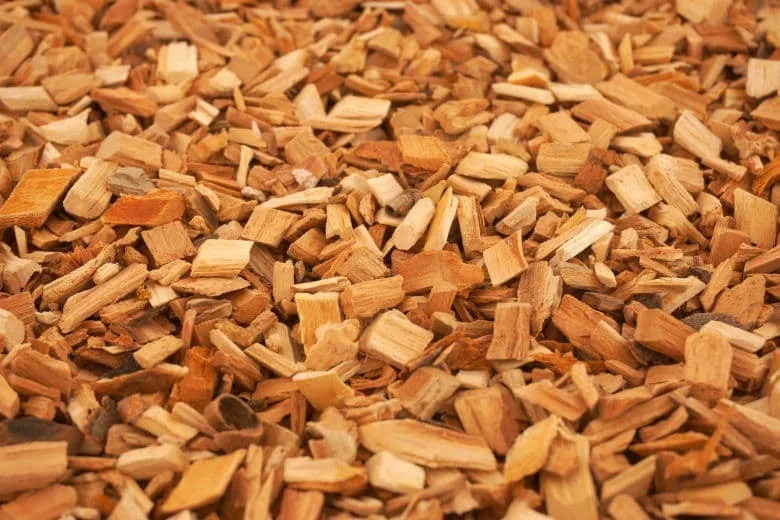
The single objective is to remove lignin - the rigid binder that holds wood cells together - while keeping the cellulose fibres undamaged. Cellulose fibre is the component that gives paper its strength and structure. The raw material is wood, typically softwood (conifer) or hardwood, chipped into small, uniform pieces so the cooking liquor can penetrate evenly.
Core chemical mechanism
The cooking liquor is called white liquor - a strongly alkaline solution of sodium hydroxide (NaOH) and sodium sulfide.
Wood chips enter a digester together with white liquor at 150-170 degrees C under elevated pressure. The alkaline chemicals dissolve and break down the lignin, freeing the cellulose fibres. Critically, the kraft process is far gentler on the fibres than alternative methods, so fibre length is largely preserved. Preserving fibre length is the key to high mechanical strength in the finished paper.
2. Wood through a kraft mill: step by step
Producing a finished kraft paper roll is a closed sequence of technical stages, from raw wood preparation through to the finished reel.
Wood preparation and pulp cooking
Logs are debarked, cleaned, and fed into chippers to produce uniform chips. The chips are then cooked in the digester with white liquor following the kraft process described above. The two outputs are kraft pulp and an important by-product: black liquor, which contains the dissolved lignin and spent cooking chemicals.
Washing, refining, and screening
The pulp is washed thoroughly in multiple stages to remove residual chemicals and any remaining lignin. It is then mechanically refined to create uniformity and increase inter-fibre bonding strength. Finally, the pulp is screened through fine meshes to remove contaminants and fibre bundles that have not been fully separated.
Chemical recovery: the economic and environmental core
This is the most important technical and economic step in the kraft process - it is what makes the process both cost-effective and environmentally sustainable. The black liquor is pumped to a recovery boiler and burned. Combustion recovers heat energy (generating steam and electricity) and regenerates the cooking chemicals. Those regenerated chemicals are reconstituted into fresh white liquor ready for the next cooking cycle. Because the mill recycles its own chemicals and generates much of its own energy, the kraft process carries a far lower environmental footprint and chemical cost than alternative pulping methods.
Paper forming on the paper machine
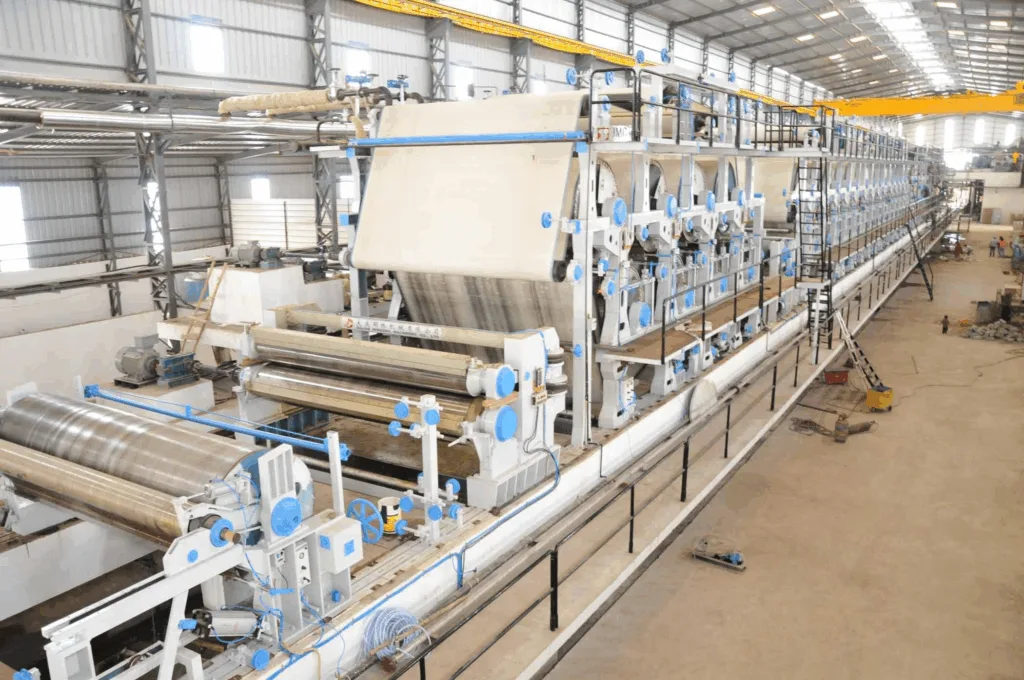
The refined pulp is fed onto a paper machine to form the finished sheet. The pulp slurry is spread evenly over a forming wire to drain free water, then the wet web is pressed and dried by a series of heated drying cylinders. Finally, the sheet is calendered to reach the target grammage and surface smoothness, and wound into large parent reels.
3. Why kraft paper has superior mechanical strength
What makes kraft paper the first choice for load-bearing packaging such as jumbo sacks, corrugated fiberboard, and especially dunnage bags - including kraft paper dunnage bags?
Long cellulose fibres are preserved
The defining advantage is fibre length. The kraft process is gentler than other pulping methods, so cellulose fibres retain their full length. Longer fibres create more bonding points with neighbouring fibres, which directly increases tensile strength and tear resistance - properties that far exceed those of recycled paper or sulfite-process paper.
Minimal bleaching: why natural brown kraft is stronger
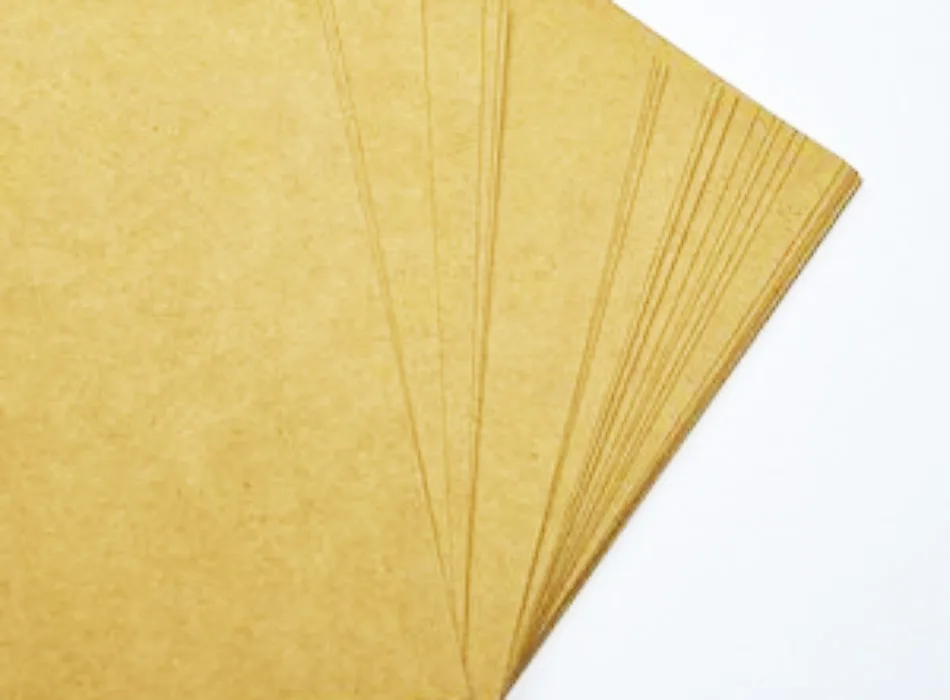
Natural brown kraft paper is virgin pulp that has been minimally bleached. Bleaching always weakens fibres. Because brown kraft undergoes little or no bleaching, it retains higher strength than white kraft. This natural strength is a mandatory requirement for the outer shell of a dunnage bag, where the paper must withstand extreme compressive force without rupturing.
High purity and compatibility for further processing
Kraft pulp is high in purity, with low levels of residual lignin and contaminants. This purity not only increases strength but also improves moisture resistance and compatibility when the paper is further processed. For example, when producing PE-laminated kraft paper, the PE film bonds easily to the clean fibre surface, creating a complete moisture barrier that protects the paper substrate throughout a damp container transit.
4. How ICD Vietnam applies this in practice
Understanding the steps of the kraft process lets ICD control incoming raw material quality at the tightest possible level.
Material selection for dunnage bags
ICD Vietnam specifies virgin kraft pulp produced by the kraft process, because only long-fibre paper can sustain dynamic compressive loads - the repeated impact and vibration forces that act on cargo during transit. Once the correct paper substrate is selected, ICD applies a PE laminate to protect the fibre structure from container humidity throughout the shipping journey.
Incoming material quality control
ICD runs regular tests on the tensile strength and tear strength of incoming kraft paper. This ensures every batch meets specification before entering production - especially for dunnage bag grades that must achieve AAR (Association of American Railroads) certification, where strength requirements are absolute and the loads being protected are high-value.
| Property tested | Why it matters | Typical standard |
|---|---|---|
| Tensile strength | Resists pulling apart under load | Per AAR Specification M-931 |
| Tear strength | Resists propagation of a tear under dynamic load | Per TAPPI T 414 |
| Grammage (gsm) | Controls paper weight and thickness per ply | Per ISO 536 |
Related articles
| What is kraft paper? Properties and uses | PE-laminated kraft paper for dunnage bags | Kraft paper dunnage bag: specs and applications |
Frequently asked questions about kraft paper manufacturing
1. What is the kraft process in paper manufacturing?
The kraft (sulfate) process is a chemical pulping method that cooks wood chips in white liquor - a solution of sodium hydroxide and sodium sulfide - at 150-170 degrees C under pressure. The alkaline chemicals dissolve lignin while preserving the cellulose fibres, producing strong virgin pulp.
2. Why is kraft paper brown?
Natural brown kraft paper is minimally bleached. The residual lignin and natural wood pigments give it the characteristic golden-brown colour. Bleaching would whiten it but would also weaken the fibres, so brown kraft retains higher strength than white kraft.
3. How does the kraft process differ from the sulfite process?
The kraft process uses alkaline white liquor (NaOH + sodium sulfide) and preserves longer fibres, producing stronger paper. The sulfite process uses acidic liquor, breaks fibres more, and produces weaker, softer paper. Kraft is dominant in packaging applications precisely because of this strength advantage.
4. What is black liquor and why does it matter?
Black liquor is the spent cooking liquor - white liquor that has absorbed dissolved lignin and other wood extractives during digestion. It is burned in a recovery boiler to generate heat and electricity and to regenerate white liquor for the next cook. This chemical recovery loop makes the kraft process economically and environmentally viable.
5. Why is kraft paper used for dunnage bags?
Dunnage bags must withstand repeated dynamic compressive forces during container transit without rupturing. Only long-fibre virgin kraft paper provides the combination of tensile strength, tear resistance, and dimensional stability needed. Recycled or short-fibre paper cannot meet AAR certification requirements for this application.
6. What grammage of kraft paper is used in dunnage bags?
ICD dunnage bags use multiple plies of kraft paper, typically 70-120 gsm per ply, combined to reach the total wall strength needed for the rated pressure. The outer plies are PE-laminated to resist container moisture.
7. Can kraft paper be recycled?
Yes. Virgin kraft pulp is derived from wood, and used kraft paper can be recycled into lower-grade paper products. However, recycled kraft paper has shorter fibres and lower strength than virgin kraft, which is why ICD uses virgin pulp for dunnage bag shells where strength is critical.
Contact ICD Vietnam for dunnage bag enquiries
ICD Viet Nam Industrial Production Company Limited
North: Floor 3, Thang Long A1 Building, Bau Hamlet, Thien Loc Commune, Hanoi - 0983 797 186 / 090 345 9186 / 090 5859 186
South: 551/212 Le Van Khuong, Tan Thoi Hiep, District 12, Ho Chi Minh City - 098 6784 186
Email: sales@icdvietnam.com.vn · Zalo: Chat on Zalo now
Send your cargo dimensions and load type, and ICD will recommend the correct dunnage bag grade and quote right away.
Reference
The kraft (sulfate) pulping process and resulting fibre strength - TAPPI (Technical Association of the Pulp and Paper Industry).