Table of Contents
- The Three Pallet Load Ratings: Static, Dynamic and Racking
- So How Many kg Can a Wooden Pallet Carry?
- How to Calculate the Pallet Load Rating You Need
- Which standard is pallet load tested under?
- What Affects the Load Capacity of a Wooden Pallet?
- Frequently Asked Questions
- How can I find the load rating of a pallet I already have?
- Which carries load better, a plastic pallet or a wooden pallet?
- How should cargo be loaded on a pallet to keep the load safe?
- What is the dynamic load of a pallet?
- How many kg can an EPAL pallet carry?
- Should wooden pallets be put on racking?
- How many kg can a single-face 2-way pallet carry?
- Contact ICD Vietnam
- References
Reviewed and updated by ICD - Week 43/2026
There is no single figure for every wooden pallet: each pallet has three load ratings, highest when it lies on the floor (static load), lower when on a forklift (dynamic load) and lowest when set on a rack. ICD Vietnam’s 1200 x 1000 mm wooden pallet models publish a dynamic load of 1,250 - 1,500 kg and a static load of 4,250 - 6,000 kg; the EPAL Euro pallet 800 x 1200 mm has a safe working load of 1,500 kg according to EPAL. Choose the pallet by the lowest rating that matches how you will really use it.
When customers ask how many kg a wooden pallet can carry, I usually ask back: how will you use it? Stacked on the floor, moving on a forklift or sitting on a rack, the same pallet gives three different numbers, and choosing the wrong one is a common cause of broken boards and collapsed loads. This article explains the three kinds of load, gives published specifications for some pallet models, shows how to calculate the load rating you need and covers the factors that make a pallet carry less.
The Three Pallet Load Ratings: Static, Dynamic and Racking
The three ratings are static load (the pallet lies on the floor), dynamic load (the pallet is on forklift tines) and racking load (the pallet is supported only at two edges); for the same pallet, the largest and smallest figures can differ several times over.
These three figures match three ways of supporting a pallet in the laboratory. According to the Center for Packaging and Unit Load Design at Virginia Tech, dynamic load is tested with the pallet on forklift tines, racking load with the pallet resting on two parallel supports, and static load with the pallet fully supported on the floor. A responsible manufacturer should state which kind its published figure is.
1. Static Load Capacity
Static load is the maximum total mass a pallet can carry while at rest on a hard flat surface such as a warehouse floor. It is always the largest figure, and it applies mainly to the bottom pallet when you stack several loaded pallets: that pallet carries its own cargo plus all the cargo and pallets above it.
2. Dynamic Load Capacity
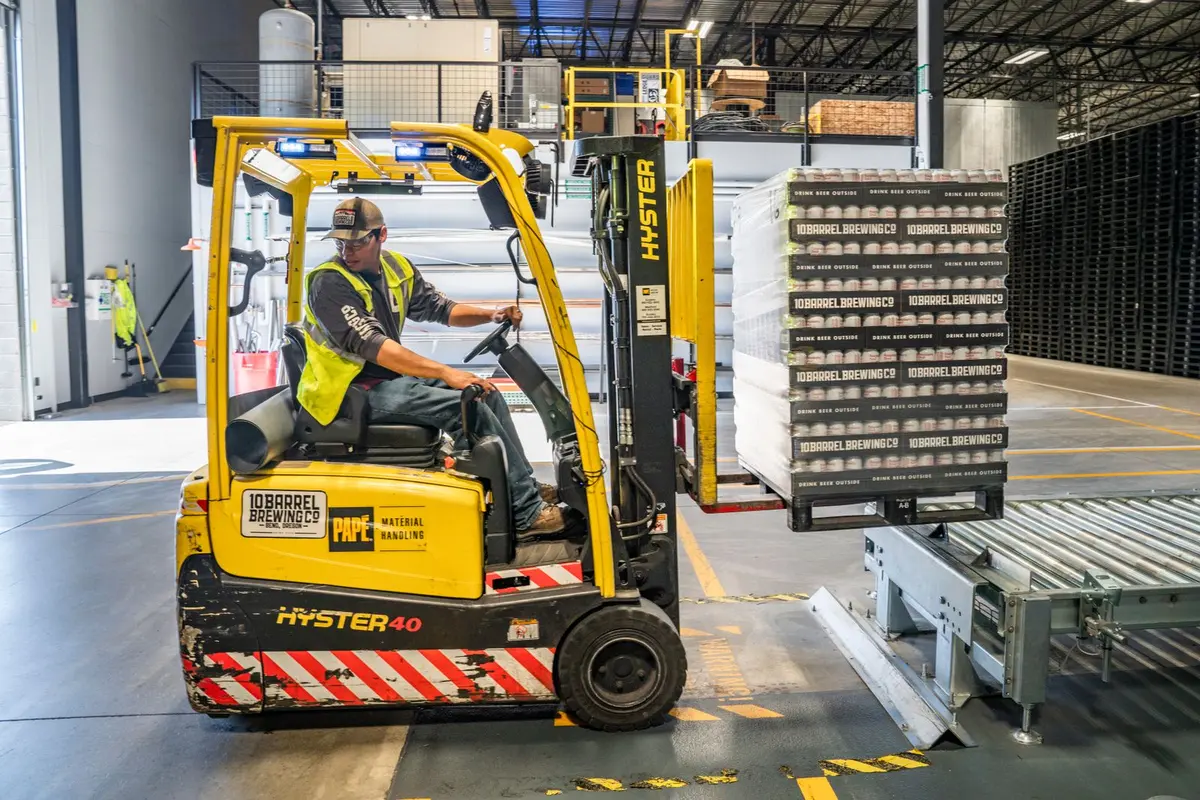
Dynamic load is the maximum cargo mass while the pallet is lifted and moved by a hand pallet truck or forklift. Force then concentrates where the tines touch, plus shaking when driving and braking, so dynamic load is always lower than static load. This is the most important figure for daily handling and transport in a warehouse or factory.

3. Racking/Shelving Load Capacity
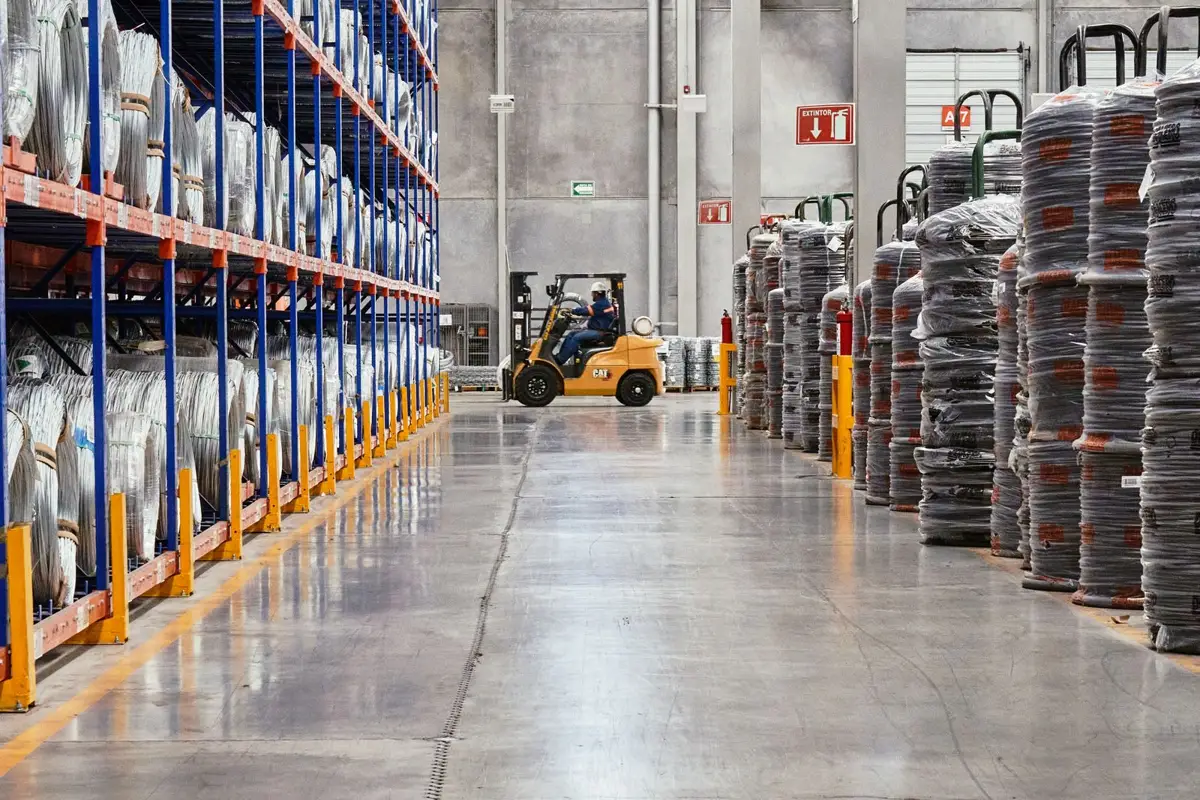
Racking load is the maximum mass when the pallet sits on rack shelving, where it is supported only at two edges on two beams and the middle is open. It is the lowest figure and the most important for rack safety. So never put a 1,000 kg load on a rack using a pallet with a racking load of 500 kg, even if that pallet’s own dynamic load is 1,500 kg.
So How Many kg Can a Wooden Pallet Carry?
It depends on the model: the wooden pallets with published specifications in the table below list a dynamic load of 500 to 1,500 kg and a static load of 1,000 to 6,000 kg, depending on size and structure; racking load is usually not available and must be asked from the manufacturer separately.
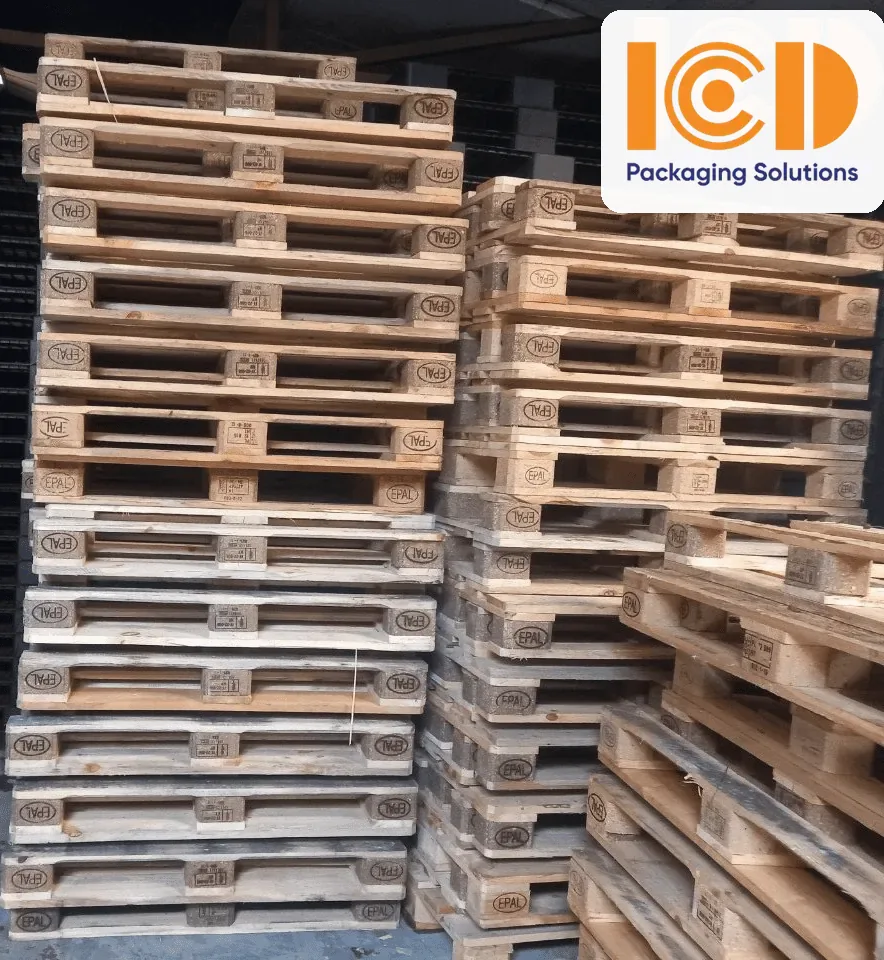
A standard pallet with specific published figures makes a better benchmark than a generic reference number. According to the European Pallet Association (EPAL), the Euro EPAL pallet 800 x 1200 x 144 mm weighs about 25 kg and has a safe working load of 1,500 kg; when loaded pallets are stacked on a flat, hard floor, the bottom pallet must not carry more than 5,500 kg.
| Wooden pallet model | Size (mm) | Dynamic load (kg) | Static load (kg) | Source |
|---|---|---|---|---|
| EPAL Euro | 800 x 1200 x 144 | 1,500 (safe working load) | 5,500 (bottom pallet when stacked) | EPAL |
| 4-way wooden pallet 800 x 1200 | 800 x 1200 x 144 | 1,500 | 4,000 | ICD Vietnam product page |
| 4-way wooden pallet 1200 x 1000 | 1200 x 1000 x 162 | 1,250 | 4,250 | ICD Vietnam product page |
| Asian standard wooden pallet | 1200 x 1000 x 156 | 1,500 | 6,000 | ICD Vietnam product page |
| Half pallet | 800 x 600 x 144 | 500 | 2,000 | ICD Vietnam product page |
| Single-face 2-way wooden pallet | Made to order | 500 | 1,000 | ICD Vietnam product page |
The table shows two things. First, within the same 1200 x 1000 mm footprint, static load can range from 4,250 to 6,000 kg depending on board thickness, number of blocks and joining style; a compact single-face 2-way pallet for light cargo is only at 1,000 kg. Second, the models above publish only static and dynamic load; if you plan to put pallets on a rack, ask separately for the racking load in the exact orientation the pallet will sit on the beams.
In the US, wooden pallets are usually designed and rated with the PDS (Pallet Design System) software of the National Wooden Pallet and Container Association (NWPCA). A public PDS analysis for a new hardwood GMA 48 x 40 inch pallet (about 1219 x 1016 mm) gives an average safe load in warehouse storage of 5,264 lb (about 2,390 kg), and only 3,290 lb (about 1,490 kg) per pallet when two loads are stacked. This is far lower than the static load often seen on quotes, because PDS calculates for cargo covering the full pallet deck and includes a safety factor.
How to Calculate the Pallet Load Rating You Need
The method is to add up the mass the pallet actually carries in each state, then compare it with the matching kind of load the manufacturer publishes. The process has 4 steps:
- Weigh the cargo on one pallet, including cartons, stretch film and strapping.
- Work out the load on the bottom pallet as its own cargo plus the cargo and pallets of every tier above, then compare with static load.
- Compare the cargo mass on one pallet with dynamic load, which applies to every pallet moved by a forklift.
- If the pallet goes on a rack, compare the cargo mass with the racking load in the exact orientation on the beams.
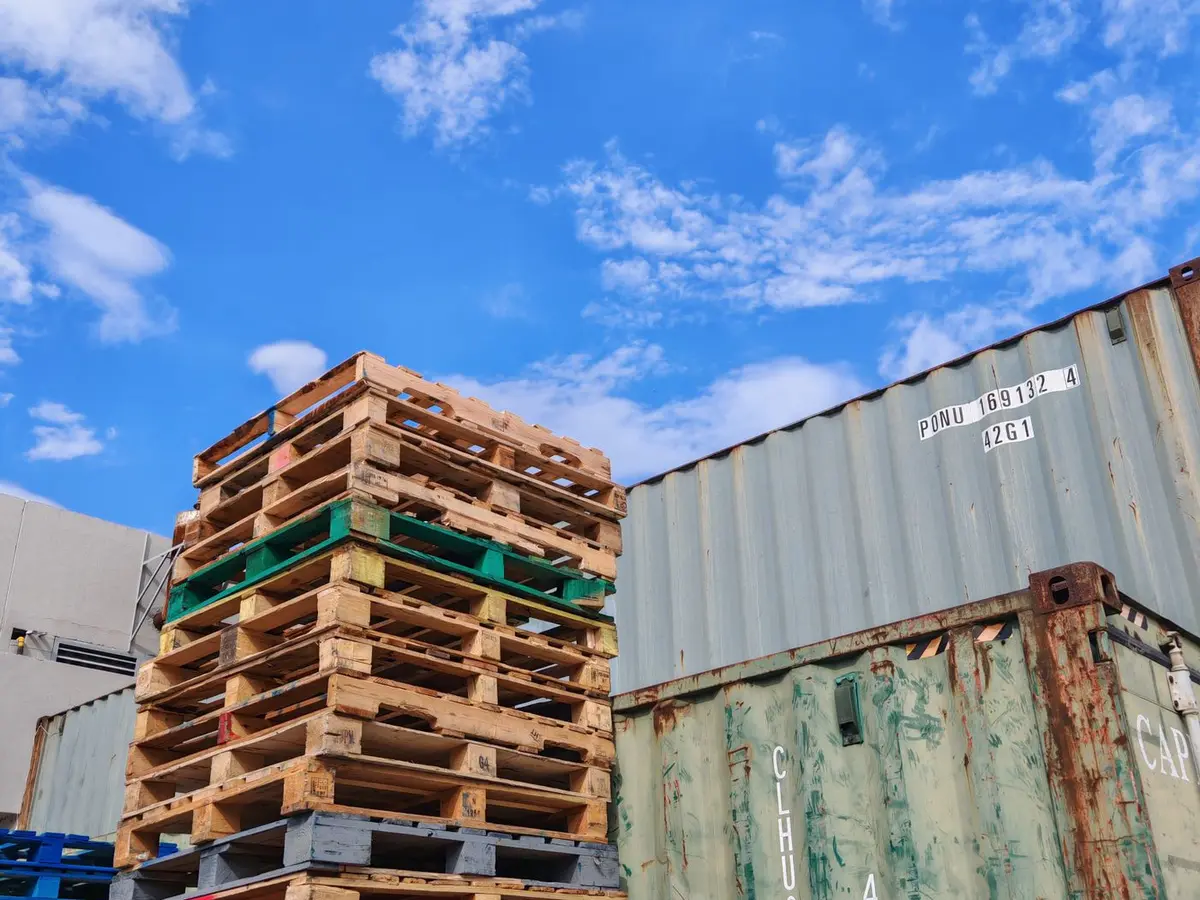
A pallet passes only when all three comparisons are met. Leave an extra safety margin when cargo concentrates load on one point, when the pallet has been reused many times or when the warehouse regularly handles roughly.
Take an example: each pallet carries 900 kg of cargo (cartons and film included), stacked 3 tiers high, and an empty pallet weighs 25 kg. The bottom pallet carries 900 + 2 x (900 + 25) = 2,750 kg, so it needs a static load of at least 2,750 kg. When the forklift moves it, each pallet carries only 900 kg of cargo, so it needs a dynamic load of 900 kg or more; if it goes on a rack, it needs a racking load of 900 kg or more. In this example, the Asian standard 1200 x 1000 mm model (static load 6,000 kg, dynamic load 1,500 kg) meets the first two conditions; the third needs the manufacturer to confirm a racking load of 900 kg or more. The tool below helps you do a similar calculation with your own figures.
Which standard is pallet load tested under?
Flat pallet load is determined by the ISO 8611 set of standards, which Vietnam has adopted as the TCVN 10173 set. TCVN 10173-1:2025 is fully equivalent to ISO 8611-1:2021, replaces TCVN 10173-1:2013 and takes effect on 15 March 2026; in the ISO system, the 2021 edition has been replaced by ISO 8611-1:2025. Part 1 sets out test methods in three groups: nominal load testing, maximum working load testing and comparative strength testing.
| Main test | Situation simulated | Related load type |
|---|---|---|
| Bending test | Pallet on a rack, supported at two edges; tested in the pallet’s weakest direction | Racking load |
| Forklifting test | Pallet on forklift tines or a hand pallet truck | Dynamic load |
| Block and stringer compression test | Any situation pressing on the pallet legs, including stacking | Static load |
| Stacking test | Top deck boards and bottom boards when pallets are stacked | Static load |
| Bottom board bending test | Pallet running on a two-rail conveyor or narrow beam rack | Racking and conveyor load |
Two concepts in the standard need to be told apart. Nominal load is the lowest safe load for one support condition, used to compare pallets with each other, not the mass of cargo allowed on the pallet. Maximum working load is tied to a specific kind of cargo and use, so when published it must come with a description of the cargo and how the pallet is supported. This is why a load figure with no stated conditions is only a rough reference.
Two concepts in the standard need to be told apart. Nominal load is the lowest safe load for one support condition, used to compare pallets with each other, not the mass of cargo allowed on the pallet. Maximum working load is tied to a specific kind of cargo and use, so when published it must come with a description of the cargo and how the pallet is supported. This is why a load figure with no stated conditions is only a rough reference.
What Affects the Load Capacity of a Wooden Pallet?
The real load capacity of a wooden pallet is decided by five factors: wood species and quality, structural design, nail type, wood moisture and the pallet’s condition. How the cargo is loaded, spread evenly or concentrated on one point, decides whether the pallet reaches its published load.
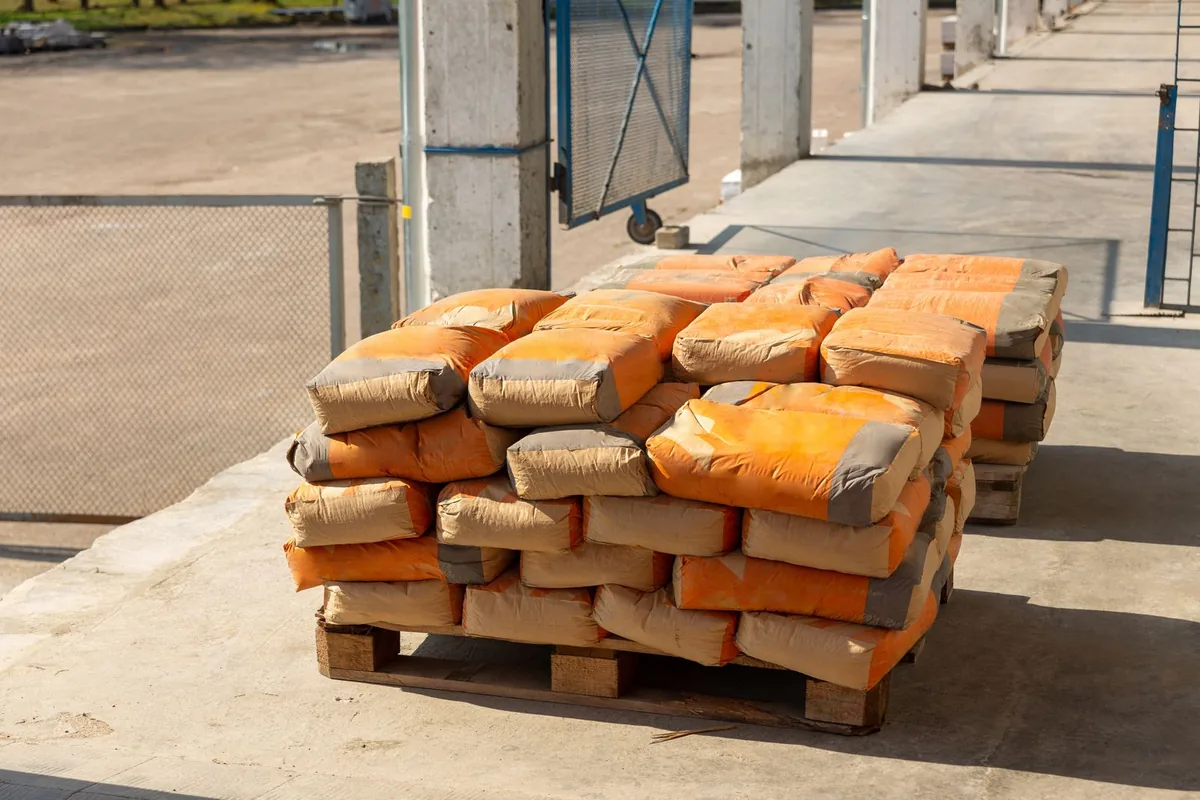
On wood species, it helps to understand that heavier, harder wood is not always better in bending. According to The Wood Database, the average bending strength of radiata pine is 79.2 MPa, higher than rubber wood (71.9 MPa); under TCVN 12619-2:2019, the static bending strength of Acacia auriculiformis is 101 MPa. The sources measure by different methods, so compare load by the published specification of each pallet model, not by inference from the wood name. Large knots, sloping grain or lengthwise cracks in load-bearing boards also cut load more than the species itself.
On structure, a pallet with more deck boards, thicker boards and solid blocks is stronger than one with thin boards and sparse legs. Spiral nails (nails with threads) have a higher withdrawal grip than smooth nails of the same size according to the Wood Handbook of the US Forest Products Laboratory, so joints work loose less under vibration. Dried wood is also stiffer and carries load better than green wood: the Wood Handbook records that most mechanical properties of wood rise as moisture falls below the fibre saturation point. Finally, only a new pallet with no defects reaches maximum load; an old pallet with cracked boards or missing nails loses load considerably.

Frequently Asked Questions
How can I find the load rating of a pallet I already have?
If it is an international standard pallet such as EPAL, the marks on the pallet show it meets the standard, the manufacturer is licensed and it has been heat treated, but they do not state load; in that case look up load in the published standard specification, for example the EPAL Euro has a safe working load of 1,500 kg. If it is a domestically made pallet or has no marks, the safest way is to ask the manufacturer for the technical specification. Never guess the load, especially racking load.
Which carries load better, a plastic pallet or a wooden pallet?
Both can be designed to carry very high loads. Plastic pallets are made in moulds, so load figures are more uniform from one pallet to the next, while wooden pallets can vary between pieces because of knots, grain and the moisture of each board. So compare by the published specification of each specific model.
How should cargo be loaded on a pallet to keep the load safe?
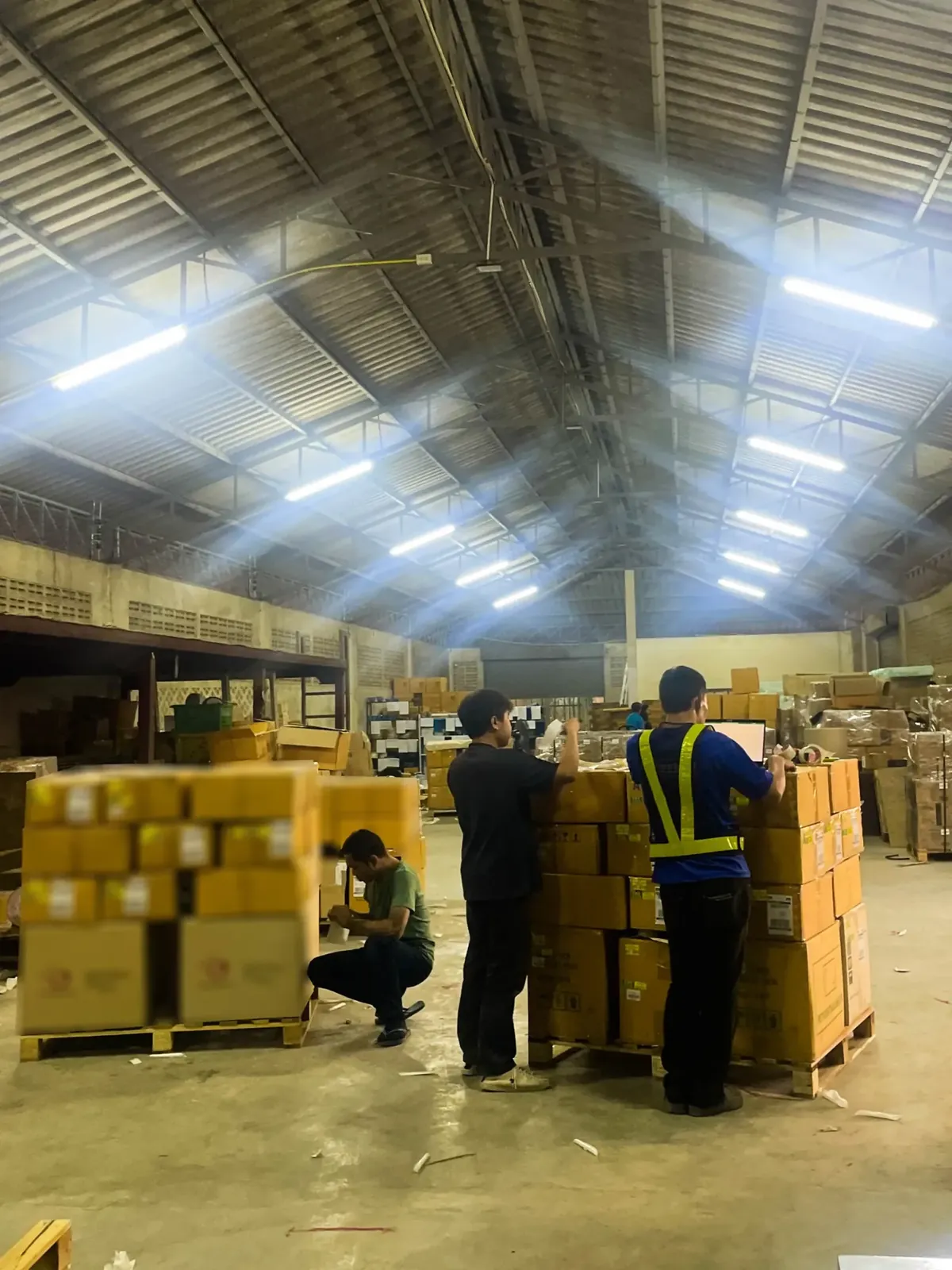
Spread the cargo mass evenly across the whole pallet deck, do not let cargo overhang the edge and do not pile weight on one point in the middle or to one side, because that easily breaks boards. Cargo with a small base such as machinery should have a load-spreading plate added or a pallet stronger than the calculated figure.
What is the dynamic load of a pallet?
Dynamic load is the maximum cargo mass a pallet can carry while a forklift or hand pallet truck lifts and moves it. Force then concentrates where the tines touch, plus shaking when driving and braking, so dynamic load is always lower than static load. ICD Vietnam’s 1200 x 1000 mm wooden pallet models publish a dynamic load of 1,250 - 1,500 kg.
How many kg can an EPAL pallet carry?
According to EPAL, the EPAL Euro pallet 800 x 1200 x 144 mm has a safe working load of 1,500 kg. When loaded pallets are stacked on a flat, hard floor, the bottom pallet carries at most 5,500 kg. Other EPAL sizes have their own specifications.
Should wooden pallets be put on racking?
Yes, if the pallet has a racking load published by the manufacturer that is greater than the cargo mass and it is placed in the same orientation as when tested. Handmade wooden pallets without a racking rating, and pallets with cracked boards or loose nails, should not go onto high racks.
See also: standard wooden pallet sizes
How many kg can a single-face 2-way pallet carry?
ICD Vietnam’s single-face 2-way wooden pallet model publishes a dynamic load of 500 kg and a static load of 1,000 kg. This is a compact, affordable pallet for light cargo or one-way shipments, not for heavy cargo stacked high or stored on racks.
Contact ICD Vietnam
To confirm static, dynamic or racking load for the right pallet model and your cargo, send ICD Vietnam the cargo mass, the number of tiers stacked and the type of rack in use. We have a production workshop, a Hanoi warehouse and a southern workshop; price: contact for a quote.
- North: 0983 797 186 / 090 345 9186 / 090 5859 186.
- South: 098 6784 186; southern workshop: 551/212 Le Van Khuong Street, Tan Thoi Hiep Ward, District 12.
- Zalo: Chat on Zalo. Email: sales@icdvietnam.com.vn.
References
- Concepts of dynamic, static and racking load and test conditions: Virginia Tech Center for Packaging and Unit Load Design, How Much Load Can My Pallet Carry?
- EPAL Euro pallet specifications and marking rules: European Pallet Association (EPAL), EPAL Euro Pallet.
- Flat pallet test methods: ISO 8611-1:2021 Pallets for materials handling, Flat pallets, Part 1: Test methods (replaced by ISO 8611-1:2025).
- TCVN 10173-1:2025 (ISO 8611-1:2021) Pallets for materials handling, Flat pallets, Part 1: Test methods, issued by the Ministry of Science and Technology.
- Analysis of the load of a hardwood GMA 48 x 40 inch pallet with NWPCA’s Pallet Design System software: PDS Pallet Structural Analysis, GMA Hardwood (2013).
- Bending strength of radiata pine and rubber wood: The Wood Database; Acacia auriculiformis: TCVN 12619-2:2019 Wood, Classification, Part 2.
- Spiral nails and the effect of moisture on wood strength: USDA Forest Products Laboratory, Wood Handbook (FPL-GTR-190).
- Load specifications of wooden pallet models: ICD Vietnam product pages, checked on 16 October 2026.