Table of Contents
- Standard wooden pallet footprint sizes by market
- Standard wooden pallet height
- Key considerations when choosing wooden pallet dimensions
- How to select the correct wooden pallet size
- Benefits of using standard-size wooden pallets
- Using Pallet Design System (PDS) software to determine size
- Why standard wooden pallet dimensions matter
- Related articles
- Frequently asked questions about wooden pallet dimensions
- Contact ICD Vietnam
Reviewed and updated by ICD - Week 36/2026
Wooden pallet dimensions must match the load base, the handling equipment entry, and the internal dimensions of the container or truck. Use the wrong footprint and cargo overhangs, equipment cannot enter, or the container wastes cube. This guide covers the standard wooden pallet sizes for Vietnam, ISO 6780 international trade, EPAL European export, and industry-specific applications - with height specifications by standard, material type and load rating - so you can specify correctly the first time. ICD Vietnam supplies wooden pallets in all standard sizes with a 2-year warranty and stock in Hanoi and Ho Chi Minh City.
Standard wooden pallet footprint sizes by market
Vietnam standard wooden pallet sizes
The most common wooden pallet dimensions in Vietnam are:
- 1000 x 1200 mm - suits a wide range of cargo types and transport vehicles.
- 1100 x 1100 mm - well matched to standard warehouse racking and containers.
- 800 x 1200 mm - widely used in food and fast-moving consumer goods.
ISO 6780 international wooden pallet dimensions
ISO 6780 defines six internationally recognised wooden pallet footprints used in global trade:
| Footprint (mm) | Primary market |
|---|---|
| 1219 x 1016 | North America (GMA pallet) |
| 1000 x 1200 | Europe and Asia (widely used) |
| 1165 x 1165 | Australia |
| 1067 x 1067 | North America and United Kingdom industrial |
| 1100 x 1100 | Asia |
| 800 x 1200 | Europe (EUR pallet) |
Export wooden pallet dimensions
Selecting the correct export pallet footprint avoids container waste and customs issues:
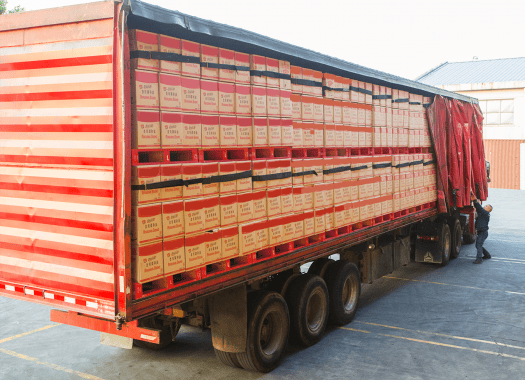
- 1000 x 1200 mm - fits most standard international containers.
- 800 x 1200 mm - the European standard; required for export to EU markets. See also: EPAL wooden pallet 800x1200x144mm.
- 1140 x 1140 mm - used in chemical and petroleum industries.
EPAL wooden pallet dimensions
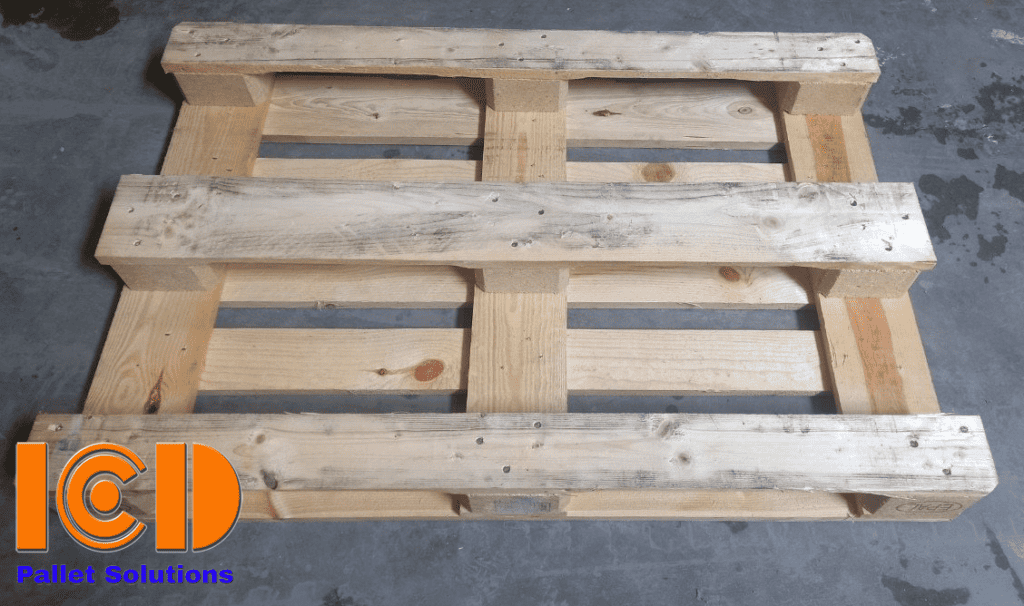
The European Pallet Association (EPAL) defines one single certified size: 800 x 1200 mm footprint, 144 mm height, with consistent quality markings accepted across global supply chains and pallet-pooling networks.
Warehouse wooden pallet sizes
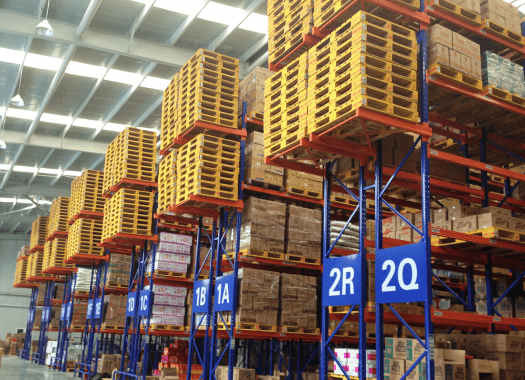
Choosing the right footprint for racking maximises aisle efficiency and storage density:
- 1100 x 1100 mm - ideal for square pallet racking bays.
- 1000 x 1000 mm - easy to stack and manoeuvre in compact storage.
Wooden pallet sizes by industry
| Industry | Recommended size (mm) | Reason |
|---|---|---|
| Food and beverage | 800 x 1200 | Meets hygiene and food-safety requirements |
| Electronics | 1100 x 1100 | Supports large-format equipment |
| Textiles and garments | 1000 x 1200 | Fits fabric rolls and packed garments |
Standard wooden pallet height
Pallet height determines forklift tine clearance, rack beam spacing and total stacked load height in containers. The detail below covers international standards, pallet types, material grades and load categories.
International standards for wooden pallet height
| Standard | Height range | Notes |
|---|---|---|
| ISO 6780 | 120 - 160 mm | EUR pallet standard height: 144 mm. Footprint: 1200 x 800 mm. |
| FEM (European Federation of Materials Handling) | 120 - 150 mm | Meets load-bearing and transport efficiency requirements. |
Common wooden pallet types and their heights
| Pallet type | Height (mm) | Footprint (mm) | Primary market |
|---|---|---|---|
| EUR wooden pallet (EPAL) | 144 | 1200 x 800 | Europe, global export |
| GMA wooden pallet (USA) | approx. 150 | 1219 x 1016 | North America, food and consumer goods |
Height by material type
- Solid wood pallets - height typically 120 - 160 mm, varying with load rating and footprint.
- Engineered wood (composite) pallets - lower profile, usually 120 - 140 mm; lighter than solid wood while still supporting medium loads.
Height by load category
- Light-duty pallets - 120 - 130 mm height; engineered or medium-grade solid wood for loads under 500 kg.
- Heavy-duty pallets - 144 - 160 mm or taller; designed for high-load or impact-sensitive cargo requiring maximum stability through the logistics chain.
Key considerations when choosing wooden pallet dimensions
- Match the cargo footprint - the pallet must support the full cargo base without overhang or wasted deck space.
- Check maximum load rating - verify the pallet’s static, dynamic and racking load ratings against your cargo weight.
- Consider storage and transport conditions - indoor racking, outdoor yard, container, refrigerated truck and export each have different requirements, including ISPM-15 heat treatment for cross-border shipments.
How to select the correct wooden pallet size
- Measure cargo dimensions and weight - precise measurements are the starting point for selecting the correct footprint and load rating.
- Follow the industry or market standard - each sector and destination market has specific pallet requirements; match the standard for your trade lane.
- Consult your logistics partner - confirm compatibility with handling equipment, racking and transport vehicles before ordering.
Benefits of using standard-size wooden pallets
- Fragile goods protection - the correct footprint holds cargo firmly and reduces breakage risk for glass, ceramics and electronics.
- Moisture prevention - the air gap between goods and floor blocks ground moisture from reaching cargo during storage.
- Reuse and repairability - standard-size pallets are easy to repair, pool and reuse, lowering total cost per trip.
- Environmental benefit - reusing wooden pallets reduces waste; wood is biodegradable and renewable.
Using Pallet Design System (PDS) software to determine size
Pallet Design System (PDS) software supports engineers and procurement teams in validating specifications before ordering:
- Optimal pallet design - inputs cargo data and transport requirements to recommend the correct footprint, height and timber grade.
- Cost optimisation - minimises material use while meeting structural requirements.
- Standards compliance - cross-checks designs against ISO 6780, EPAL and other applicable standards automatically.
Why standard wooden pallet dimensions matter
| Benefit | How it helps |
|---|---|
| Transport efficiency | Standard footprints maximise container and truck cube utilisation |
| Worker safety | Correctly sized pallets reduce tip and collapse risk during handling operations |
| International compatibility | ISO and EPAL sizes are accepted by ports, customs and logistics partners worldwide |
Related articles
| Wooden pallet price list | How much weight can a wooden pallet hold? | ISO wooden pallet production process |
Frequently asked questions about wooden pallet dimensions
1. What wooden pallet sizes are most common?
The most widely used footprints are 1000 x 1200 mm, 1100 x 1100 mm and 800 x 1200 mm. Two-way pallets (fork entry from two sides) suit narrow aisles; four-way pallets (fork entry from all four sides) offer greater handling flexibility.
2. What is the standard height of a wooden pallet?
ISO 6780 sets the standard height range at 120 - 160 mm. The EUR/EPAL pallet has a fixed height of 144 mm. Most pallets used in Vietnam measure 120 - 156 mm tall depending on timber grade and load rating.
3. What wooden pallet size should I use for export?
For Europe, use 800 x 1200 mm (EUR/EPAL). For North America, use 1219 x 1016 mm (GMA). For intra-Asia and general container export, 1000 x 1200 mm or 1100 x 1100 mm are the most common choices.
4. Can wooden pallets be recycled?
Yes. Wooden pallets can be repaired and reused multiple times. At end of life they can be shredded into mulch or biomass fuel. Wood is biodegradable and renewable, making it one of the more sustainable pallet materials available.
5. What factors affect wooden pallet price?
Timber species (hardwood vs softwood), footprint and height, construction type (two-way vs four-way entry), ISPM-15 heat-treatment certification, and order volume all affect unit price. Larger orders typically qualify for better pricing. See wooden pallet price list for current rates.
6. Should I buy or rent wooden pallets?
Buying is more cost-effective for long-term, repetitive use where pallets remain within your own supply chain. Renting or pooling suits short-term, seasonal or export-only runs where return logistics are difficult.
Contact ICD Vietnam
Hotline: 0983 797 186 / 090 345 9186 / 090 5859 186
Email: sales@icdvietnam.com.vn | Zalo: Chat Zalo
Reference
ISO 6780:2003 standard dimensions for flat pallets - ISO 6780:2003 - Flat Pallets for Intercontinental Materials Handling.