Table of Contents
- Acacia or Melaleuca? How to tell them apart and use the right one
- Standard English names of each tram and acacia species
- English terms for acacia wood in the pallet trade
- Examples used in export documents
- Wood treatment terms and HS code for export
- English terms for the woods used in export pallets
- Frequently asked questions
- What is ‘go tram’ in English?
- How do you write ‘pallet go tram’ in English?
- How do Acacia and Melaleuca differ?
- Are keo wood and tram wood the same in English?
- What is the HS code for acacia wood pallets?
- How is heat treatment written on documents?
- What is golden-flowered tram wood in English?
- What is keo wood in English?
- Is tram wood the same as Melaleuca?
- Can kiln drying (KD) replace HT heat treatment?
- Contact ICD Vietnam
- References
Reviewed and updated by ICD - Week 43/2026
In English, ‘go tram’ is usually called ‘Acacia wood’ or ‘Melaleuca wood’ depending on the species. In the wooden pallet and logistics trade, the one used for pallets is Acacia (golden-flowered tram, Acacia auriculiformis), so the standard term on export documents is ‘Acacia wood pallet’, pronounced /əˈkeɪ.ʃə wʊd ˈpæl.ət/.
If you need the exact species, the golden-flowered tram (Acacia auriculiformis) has the common English trade names northern black wattle or earleaf acacia; the swamp tram (tram gio, tram cu) is Melaleuca cajuputi, called cajuput or swamp tea-tree in English.
Acacia or Melaleuca? How to tell them apart and use the right one
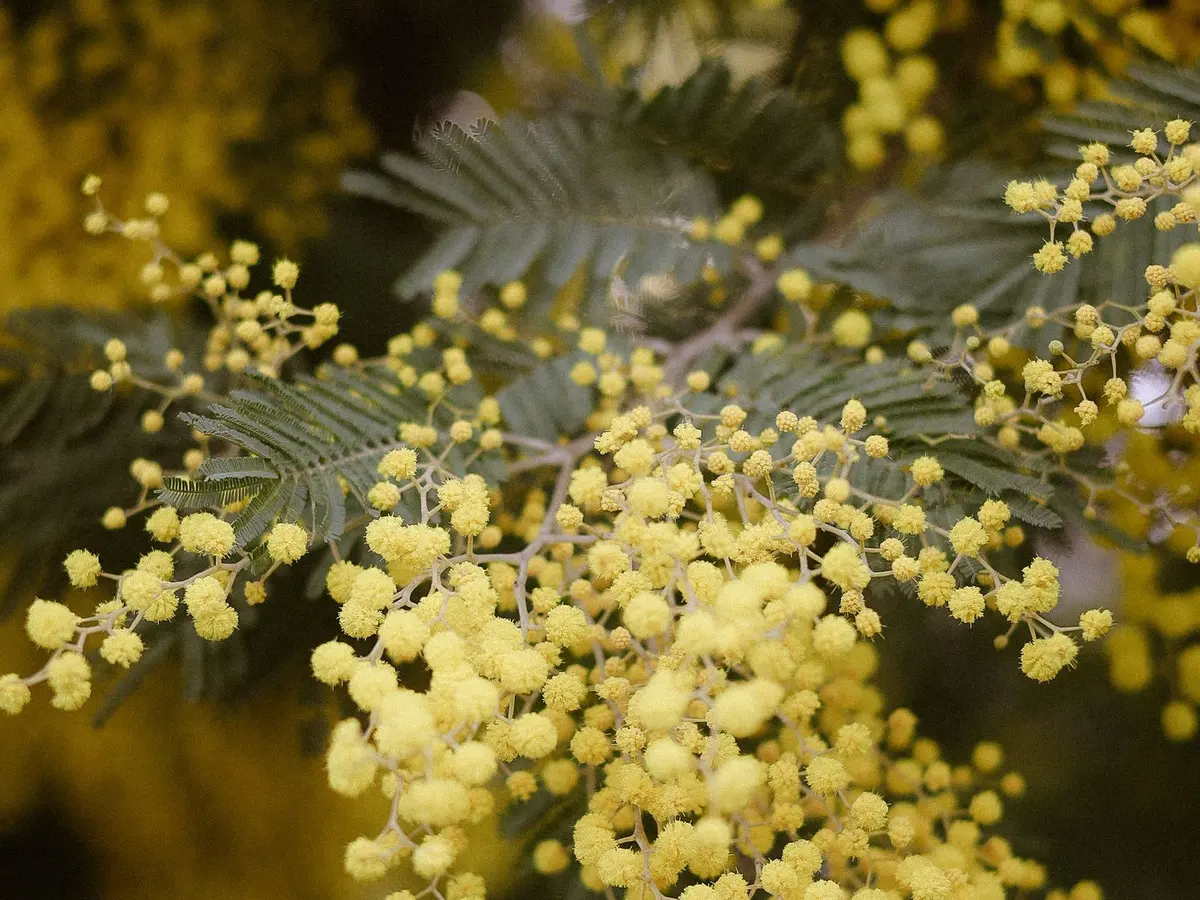
Acacia is the name used for the tram wood that makes pallets, while Melaleuca is the name of the swamp tram grown in flooded areas; the two genera are completely different botanically.
This is a common mix-up when translating ‘go tram’ into English. In Vietnamese, the word ‘tram’ is used for two groups of trees. The first is the golden-flowered tram (keo la tram) in the genus Acacia: hard, firm wood used for pallets and furniture, and this is the meaning used in the pallet trade. The second is the swamp tram (tram gio, tram cu, tram nuoc) in the genus Melaleuca: the trunks are commonly used as tram piles in construction and for distilling tram essential oil, and are rarely used for pallets.
In international pallet trade, we advise using ‘Acacia’ so partners do not mistake it for tram piles. The surest way is to add the scientific name in brackets, because the English trade names of trees often have many variants that overlap between species.
Standard English names of each tram and acacia species
Each species has one scientific name and a few English trade names; writing the scientific name in brackets is the surest way for foreign partners to understand correctly. The table below is compiled from the PROSEA database (Plant Resources of South-East Asia).
| Vietnamese name | Scientific name | Commonly used English names | Used for pallets |
|---|---|---|---|
| Golden-flowered tram (keo la tram) | Acacia auriculiformis | Northern black wattle (standard Australian trade name), earleaf acacia (US), ear-pod wattle | Yes, common |
| Keo tai tuong | Acacia mangium | Mangium, brown salwood, black wattle | Yes, common |
| Keo lai (hybrid acacia) | Acacia mangium x Acacia auriculiformis | Acacia hybrid | Yes |
| Swamp tram (tram gio, tram cu, tram nuoc) | Melaleuca cajuputi | Cajuput (cajeput), swamp tea-tree | Rarely, mainly used for piles and essential oil |
Note that the name ‘black wattle’ is recorded by PROSEA for Acacia mangium and also appears in the name ‘northern black wattle’ of Acacia auriculiformis, and in Australia it is also the common name of another acacia species. So writing black wattle without the scientific name can easily cause confusion in quarantine declarations.
Some online dictionaries translate the Vietnamese name as golden wattle only because both have yellow flowers. This translation names the wrong species: the golden-flowered tram has sickle-shaped phyllodes and flowers in long spikes, while golden wattle is an Australian native acacia and not a source of pallet wood in Vietnam.
English terms for acacia wood in the pallet trade
These terms are all built from ‘Acacia’ plus a product name or property, for example an acacia wood pallet is an Acacia wood pallet and acacia plywood is Acacia plywood. Below are the ones you meet most often when discussing orders:
- Acacia wood pallet: Acacia wood pallet
- Solid sawn acacia: Solid Acacia wood
- Glued acacia board: Acacia laminated board (or Acacia finger-joint board)
- Plywood made from acacia: Acacia plywood
- Pallet top boards: deck board; bearers and beams: stringer; spacer blocks: block
- Load-bearing pallet; pallet load capacity
- Freight transportation; warehouse storage; packing process
- Pallet reuse
Some English phrases are put together from the Vietnamese description, such as ‘yellow-flowered acacia wood’, ‘soft acacia’, ‘hard acacia’ or ‘Australian acacia wood’. These are not trade names, and foreign partners may not understand them or may read them as a different species; when you need to describe the species, use the names in the table above together with the scientific name.
Likewise, property descriptions such as ‘termite-resistant’ or ‘water-resistant’ should only be written when there are specific figures or treatment results. On documents, what quarantine authorities care about is which method the pallet was treated by and whether it carries the ISPM 15 mark.
Examples used in export documents
A standard goods description includes the wood type, the treatment method and the standard met, for example ‘Heat-treated Acacia wood pallet, ISPM-15 compliant’.
If the importer requires a moisture level, you can add ‘kiln-dried, moisture ≤ 18%’ (the figure follows the order requirement). Solid acacia deck boards are written as ‘solid Acacia deck board’. Each document needs a different level of detail; the table below suggests how to write it for a lot of heat-treated acacia pallets, 1200 x 1000 mm:
| Document | English name | Sample wording |
|---|---|---|
| Commercial invoice | Commercial invoice | Heat-treated Acacia wood pallets, 1200 x 1000 x 150 mm, ISPM 15 compliant, HS 4415.20 |
| Packing list | Packing list | Number of pallets, net and gross weight, dimensions of each package |
| Customs declaration | Customs declaration | HS code 4415.20, description consistent with the invoice |
| Mark on the pallet | ISPM 15 mark | IPPC symbol, country code VN, treatment provider code, method code (e.g. HT) |
| Phytosanitary certificate | Phytosanitary certificate | Issued by the plant quarantine authority when the importing country requires it |
The goods description should match word for word across documents, because a mismatch between the invoice and the declaration is a common reason for a file to be queried. HS code 4415.20 is used for wooden pallets, pallet-type crates and load boards, including acacia wood pallets.
Wood treatment terms and HS code for export
Heat treatment is heat treatment (HT mark), methyl bromide fumigation is MB, kiln drying is kiln-dried (KD), and the HS code of wooden pallets is 4415.20. KD alone is not a treatment method under ISPM 15.
ISPM 15 recognizes four treatments for wood packaging material: heat treatment HT (wood core at least 56 degrees C continuously for at least 30 minutes), dielectric heating DH, methyl bromide fumigation MB and sulphuryl fluoride fumigation SF. The method code printed on the IPPC mark is one of these codes. Acacia pallets exported by ICD Vietnam are treated under ISPM 15 through a licensed provider.
Kiln drying reduces wood moisture, which helps limit mold and warping; a lot can be both dried and heat-treated, but the letters KD on documents do not replace the HT mark. Conversely, a pallet with an HT mark can still be damp or moldy if the wood was not dried or was left in the rain, so when you need both, state the moisture requirement separately.
Under the International Plant Protection Convention (IPPC), the ISPM 15 mark on wood packaging material confirms it was treated to the standard; a pallet that accompanies goods and carries this mark usually needs no separate phytosanitary certificate for the pallet part. When the pallet is itself the exported goods (pallets for sale), quarantine requirements are set by the importing country.
Using the wrong terms on documents can get a shipment held at the port of import. See the procedure in the article on export wooden pallet requirements to prepare the right ISPM 15 file.
English terms for the woods used in export pallets
Tram and keo wood are both Acacia, pine wood is pine, rubber wood is rubberwood; the scientific name alongside helps tell each species apart.
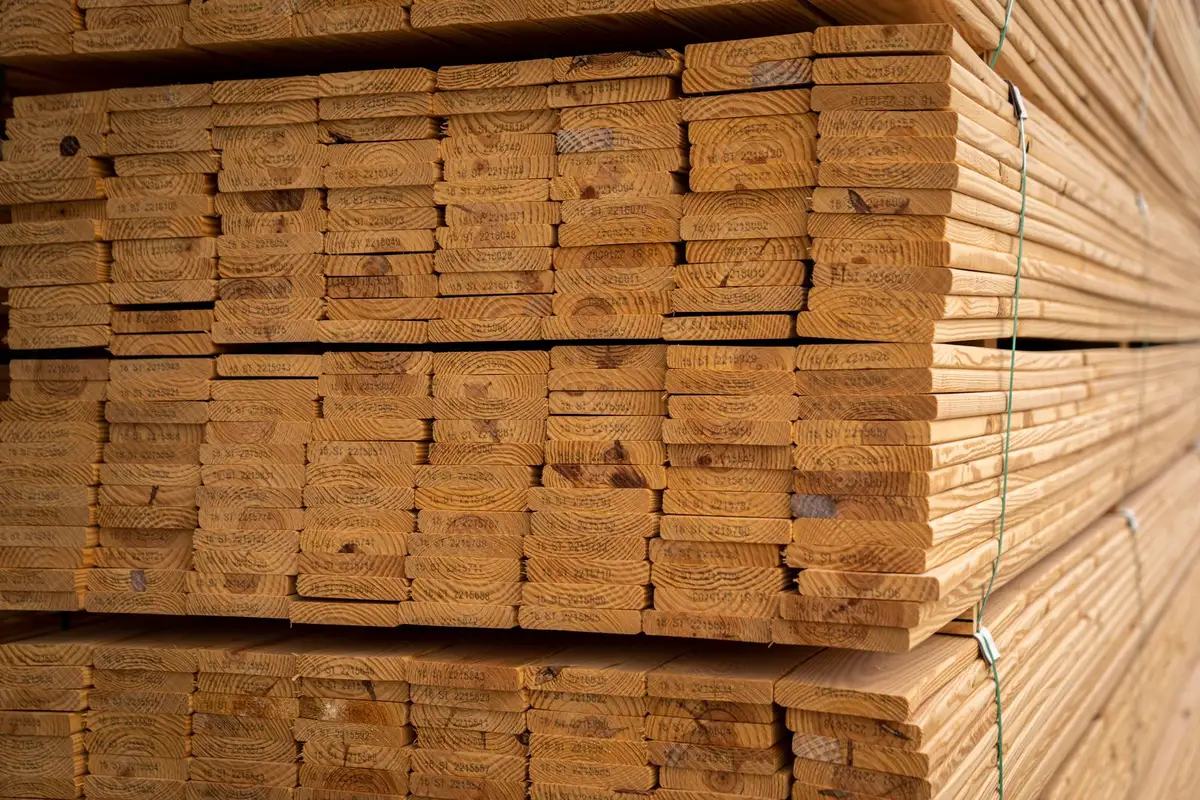
When preparing export documents, foreign buyers need to know the wood type exactly. Golden-flowered tram is Acacia auriculiformis, keo tai tuong is Acacia mangium; pine belongs to the genus Pinus; rubber wood is Hevea brasiliensis; and wooden pallets in general are wooden pallets. Using the right English names avoids discrepancies on the invoice and packing list.
Acacia mangium and Acacia auriculiformis and their hybrid are the main plantation timber source for Vietnamese wooden pallets. On documents, writing ‘Acacia’ clearly instead of a general ‘hardwood’ helps partners and quarantine authorities identify the right type.
Frequently asked questions
What is ‘go tram’ in English?
It is Acacia wood (the kind used for pallets, including golden-flowered tram and keo la tram) or Melaleuca wood (swamp tram). In the pallet trade, use Acacia wood.
How do you write ‘pallet go tram’ in English?
Acacia wood pallet, usually with heat-treated and ISPM-15 compliant when exporting, for example Heat-treated Acacia wood pallet, ISPM-15 compliant.
How do Acacia and Melaleuca differ?
Acacia is golden-flowered tram and keo: hard wood used for pallets and furniture. Melaleuca is the swamp tram: used for piles and essential oil distillation, rarely for pallets.
Are keo wood and tram wood the same in English?
Both belong to the genus Acacia, so English calls both Acacia. Keo tai tuong is Acacia mangium, golden-flowered tram (keo la tram) is Acacia auriculiformis. When exporting, write Acacia wood, with the scientific name if the partner needs the exact species.
What is the HS code for acacia wood pallets?
Wooden pallets, including acacia pallets, use HS code 4415.20 (pallets, pallet-type crates and load boards of wood). This is the code declared on the export customs declaration.
How is heat treatment written on documents?
Write Heat-treated Acacia wood pallet, ISPM-15 compliant; the HT code must match the IPPC mark on the pallet. ICD Vietnam supplies acacia pallets treated under ISPM 15 through a licensed provider, with a 7-day return, hotline 0983 797 186 for advice on export documents.
What is golden-flowered tram wood in English?
Golden-flowered tram has the scientific name Acacia auriculiformis. According to PROSEA, the standard English trade name in Australia is northern black wattle, and in the US it is called earleaf acacia; in the pallet trade it is enough to write Acacia wood with the scientific name. Do not translate it as golden wattle.
What is keo wood in English?
Keo wood is also Acacia. Keo tai tuong is Acacia mangium, with the English name mangium or brown salwood; keo la tram is Acacia auriculiformis; keo lai is Acacia hybrid.
Is tram wood the same as Melaleuca?
Only the swamp tram (tram gio, tram cu, tram nuoc) is Melaleuca (Melaleuca cajuputi, cajuput in English). The tram wood used for pallets is the golden-flowered tram in the genus Acacia, so do not write Melaleuca on pallet documents.
Can kiln drying (KD) replace HT heat treatment?
No. Kiln drying only reduces wood moisture; ISPM 15 recognizes only HT, DH, MB and SF. Export pallets need the IPPC mark with a method code, and the letters KD on documents cannot replace this mark.
Contact ICD Vietnam
North: 0983 797 186 / 090 345 9186 / 090 5859 186
South: 098 6784 186 - Email: sales@icdvietnam.com.vn - Zalo: Chat now
Hanoi warehouse: 3rd Floor, Thang Long A1 Building, Bau Hamlet, Thien Loc Commune, Hanoi.
Southern workshop: 551/212 Le Van Khuong, Tan Thoi Hiep, District 12, Ho Chi Minh City.
References
- Scientific name and botanical classification of the tram genus - Wikipedia, Vietnamese entry on the genus.
- Acacia auriculiformis, Acacia mangium, Melaleuca cajuputi - PROSEA (Plant Resources of South East Asia), Pl@ntUse.
- Acacia pycnantha (golden wattle) - Wikipedia.
- ISPM 15, Regulation of wood packaging material in international trade, Annex 1 treatments - IPPC, FAO.
- Regulation (EC) No 1005/2009 on substances that deplete the ozone layer, Article 12; now replaced by Regulation (EU) 2024/590 - EUR-Lex.
- Wood packaging material, requirements for wood packaging entering the EU - European Commission.
- Entry for acacia (pronunciation /əˈkeɪ.ʃə/) - Cambridge Dictionary.