Table of Contents
- ISO 6780, the international standard for pallet dimensions
- ISO 8611 for load testing and ISO 445 for terminology
- ISPM 15 for plant health and biosecurity
- Standards specific to each market
- The situation in Vietnam and advice for businesses
- Frequently asked questions
- Contact ICD Vietnam to buy wooden pallets
- References
Reviewed and updated by ICD - Week 43/2026
Wooden pallets for export cargo have to meet two main groups of international standards: ISO 6780:2003 for dimensions (six sizes: 1200 x 800, 1200 x 1000, 1219 x 1016, 1067 x 1067, 1100 x 1100 and 1140 x 1140 mm) and ISPM 15 for plant health (heat treatment to a wood core temperature of 56 degrees C for 30 minutes, or another recognised method, with an IPPC stamp). On top of these sit ISO 8611 for load testing, ISO 445 for terminology, and market standards such as EPAL in Europe and GMA in North America.
Wooden pallets are the main load carrier in export and logistics. For demanding overseas markets, the right size and the right plant health treatment decide whether a shipment moves smoothly: the wrong size wastes space in the container and on warehouse racking, and a missing ISPM 15 stamp can get a shipment held at the port of entry.
After years of advising exporters on pallets, the question we hear most is which standard the customer’s pallet has to meet. The answer depends on the destination market, the type of cargo and how the goods are stored in the importing country. Each standard governs a different aspect of a wooden pallet, and the table below summarises the scope and the edition currently in force:
| Standard | What it covers | Current edition | Mandatory? |
|---|---|---|---|
| ISO 6780 | Principal dimensions and tolerances of flat pallets | ISO 6780:2003 (confirmed again in 2026) | Voluntary, as required by the customer |
| ISO 8611 | Test methods, performance requirements, maximum working load | ISO 8611-1:2025, 8611-2:2021, 8611-3:2011 | Voluntary |
| ISO 445 | Pallet terminology | ISO 445:2013 | Voluntary |
| ISPM 15 | Phytosanitary treatment of wood packaging | Issued by the IPPC and applied in most countries | Mandatory for export cargo |
| EPAL | Construction, materials, production and repair of EUR pallets | EPAL technical regulations | Mandatory if you use a pallet carrying the EPAL mark |
| GMA (North America) | 48 x 40 inch pallet for consumer goods | Industry standard, no single certifying body | As required by the customer |
Of the six standards above, only ISPM 15 is mandatory under the plant health law of the importing country. The ISO standards are voluntary and become binding when they are written into the contract; EPAL applies only when the customer asks for a pallet bearing the EPAL mark for exchange within the European pallet pool.
ISO 6780, the international standard for pallet dimensions
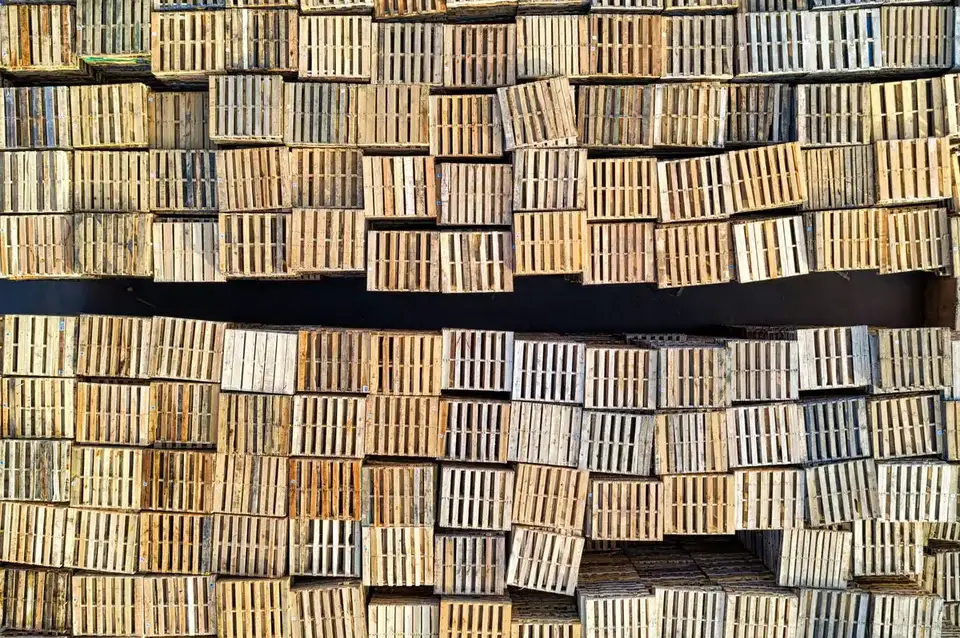
ISO 6780:2003 sets out six footprints for flat pallets used in intercontinental transport, three rectangular and three square, with a tolerance of +3/-6 mm on length and width.
The standard exists so that pallets can circulate worldwide: the same pallet fits the forks of a forklift, warehouse racking and the inside of a container in many countries. The 1100 x 1100 mm size is very common in Asia; 1200 x 1000 mm is widely used in Europe and Asia; 1200 x 800 mm is the most common size in Europe and is usually called the Euro pallet. The 1067 x 1067 mm size is used in North America, Europe and Asia alike, while 1219 x 1016 mm (48 x 40 inch) is the most familiar size in North America.
The third square size in ISO 6780:2003 is 1140 x 1140 mm. Australia widely uses a 1165 x 1165 mm pallet under its own national standard; that size is not part of ISO 6780:2003, yet many Vietnamese-language sources still list 1165 x 1165 mm by mistake as an ISO size.
| Size (mm) | Conversion (inch) | Where it is commonly used |
|---|---|---|
| 1200 x 800 | 47.2 x 31.5 | Europe (EUR pallet, EPAL) |
| 1200 x 1000 | 47.2 x 39.4 | Europe, Asia |
| 1219 x 1016 | 48 x 40 | North America (GMA pallet) |
| 1067 x 1067 | 42 x 42 | North America, Europe, Asia |
| 1100 x 1100 | 43.3 x 43.3 | Asia, especially Japan and South Korea |
| 1140 x 1140 | 44.9 x 44.9 | Europe, Asia |
ISO 6780:2003 is the second edition, replacing the 1988 version, and it is still current: according to the page of the International Organization for Standardization (ISO), the standard was reviewed and confirmed again in 2026. Besides dimensions, ISO 6780 covers the openings for forklift and pallet truck entry, the chamfering of bottom boards and the classification of 2-way and 4-way entry pallets. Vietnam has TCVN 9022:2011, which is fully equivalent to ISO 6780:2003.
See also: What is ISO 9001:2008?
ISO 8611 for load testing and ISO 445 for terminology
ISO 8611 is the international series that sets out how to test a flat pallet to establish its safe load, while ISO 445 standardises the names of pallet parts and load concepts.
The ISO 8611 series has three parts. Part 1 (ISO 8611-1:2025, fourth edition) describes the test methods for new flat pallets in three groups: nominal load tests, maximum working load tests and comparative strength tests. Part 2 sets performance requirements and explains how to choose tests for the conditions of use; Part 3 determines the maximum working load for a specific type of cargo. ISO itself notes that laboratory tests cannot replace field trials of each pallet design.
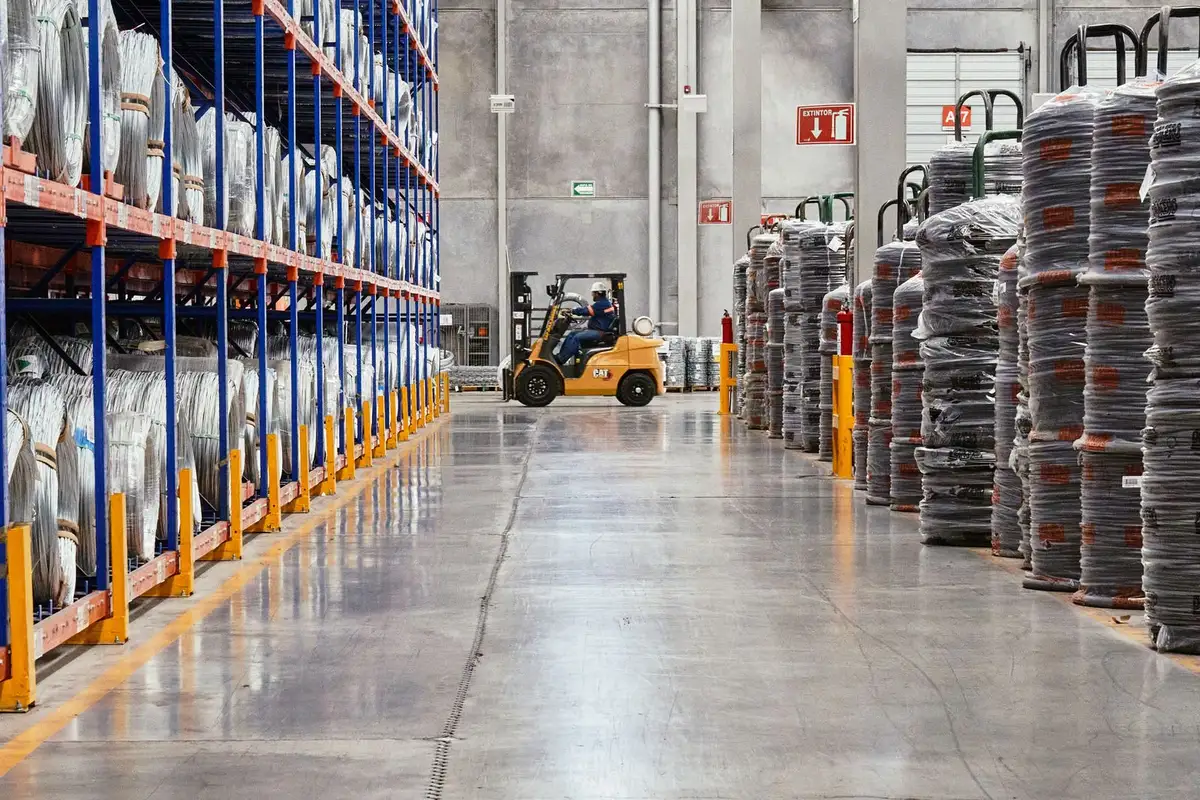
When a partner asks for a pallet that meets ISO 8611, ask how it will be used: on the floor, stacked, or on racking, because each condition gives a different load rating. A pallet that carries several tonnes on the floor may carry less than half of that when it rests on two rack beams.
ISPM 15 for plant health and biosecurity
ISPM 15 requires solid wood packaging in international trade to be debarked, treated by an approved method and marked with an IPPC stamp before export.
Next to dimensions, an equally important standard is ISPM 15 (International Standards for Phytosanitary Measures No. 15). It is mandatory for solid wood packaging used in international trade and exists to stop harmful insects and pests from crossing borders; processed wood such as plywood, particleboard and OSB, and wood 6 mm thick or less, is exempt.

ISPM 15 (2009 edition, Annex 1 amended in 2018) recognises four treatment methods, each with its own code on the stamp:
Heat treatment (HT) is the most common and safest method today: the wood is heated to a minimum core temperature of 56 degrees C and held continuously for at least 30 minutes. HT uses no chemicals, so it is safe for cargo and the environment; kiln drying that meets these parameters also counts as HT. Note that HT is heat treatment, not chemical fumigation.
Fumigation with methyl bromide (MB) uses a chemical gas to kill pests. It works quickly, but methyl bromide depletes the ozone layer and is toxic to people, so it is restricted in many countries; the European Union bans its use within the bloc.
The other two methods are less common in Vietnam. Dielectric heating (DH) uses microwaves or radio waves to bring wood to 60 degrees C continuously for 1 minute across the whole cross-section. Sulfuryl fluoride fumigation (SF), added in 2018, applies only to wood with a smallest cross-section of no more than 20 cm.
Once treated correctly, the pallet is stamped with the IPPC mark (International Plant Protection Convention) and a code for the treatment method. A valid mark sits inside a rectangular frame and contains the IPPC symbol, the two-letter ISO country code (VN for Vietnam), the treatment facility code issued by the national plant protection organisation, and the method code. The mark must be clear, not hand-drawn, and stamped on at least 2 opposite faces of the pallet. It is the proof that the pallet meets the standard and helps customs clearance at the border of the importing country.
Standards specific to each market
Besides ISO 6780 and ISPM 15, each major market has its own pallet sizes and standards: Europe uses the EPAL 800 x 1200 mm pallet, North America uses the GMA 48 x 40 inch pallet, Japan and South Korea prefer 1100 x 1100 mm, and Australia uses 1165 x 1165 mm. Knowing what each destination expects helps a business avoid needless risk.
The European market: EPAL (Euro pallet)
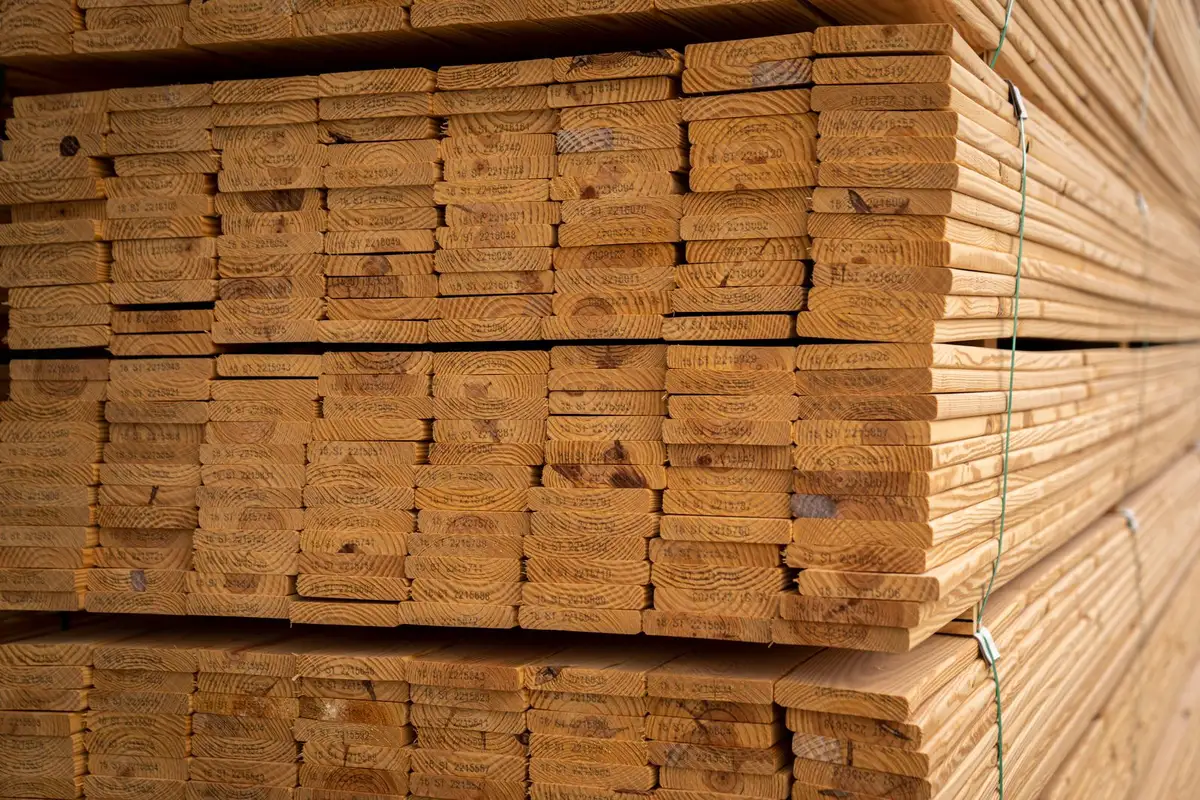
In Europe, a pallet used in the exchange system must not only measure 800 x 1200 mm but also follow the technical regulations of the European Pallet Association (EPAL), which control everything from production to repair. Only pallets built to those regulations and licensed carry the EPAL mark.
EPAL rules go down to the smallest detail: an EPAL 1 pallet (the Euro pallet, 800 x 1200 x 144 mm) has 11 boards, 9 blocks and 78 nails, weighs about 25 kg, has a safe working load of 1,500 kg, and when stacked on a flat surface the bottom pallet carries up to 5,500 kg. Since 1 January 2010, every new EPAL pallet must be heat treated under ISPM 15 and EPAL bans treatment with methyl bromide. It also helps to tell the EUR mark of the International Union of Railways (UIC) apart from the EPAL mark: since 1 May 2017, EPAL recommends no longer treating EUR pallets as equivalent in exchange.
Can wooden pallets for Europe be treated with methyl bromide?
The North American market: GMA pallets
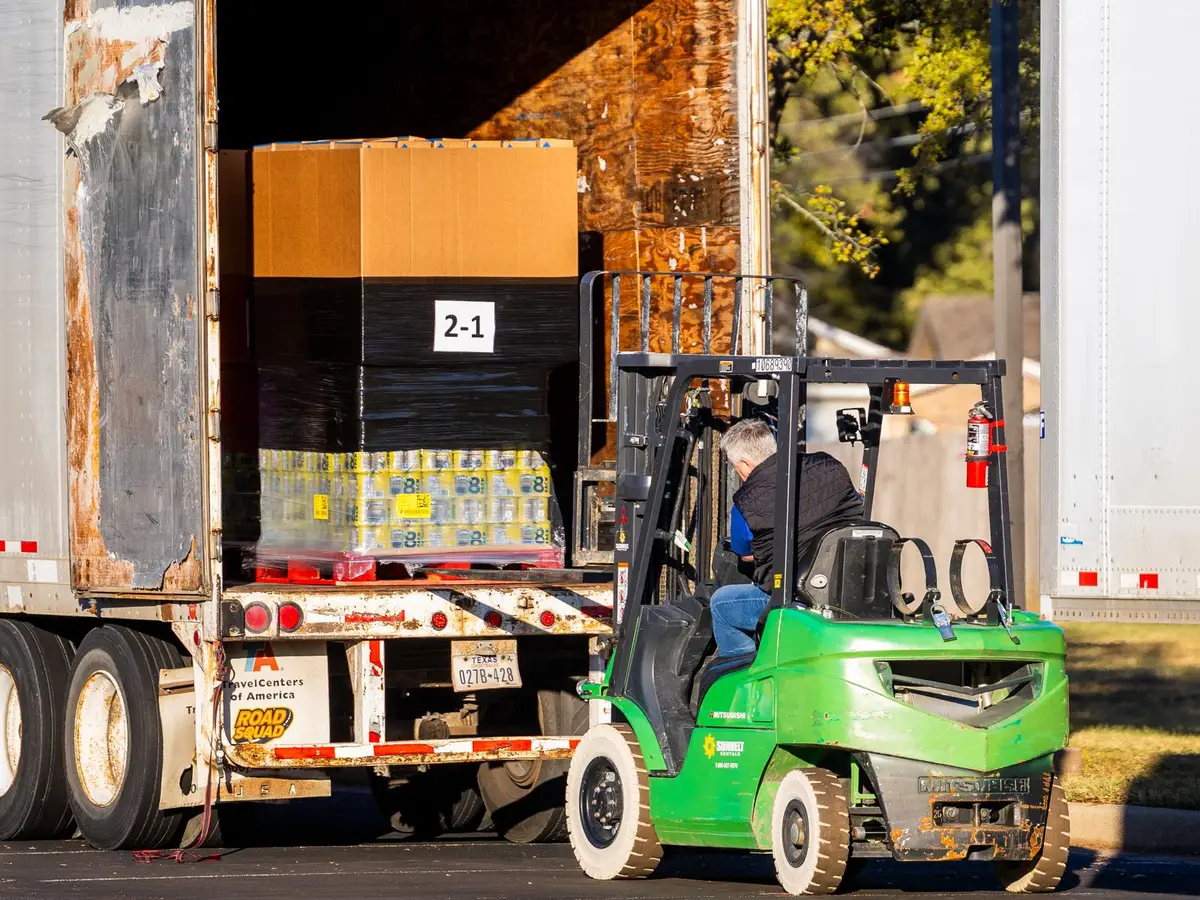
The United States and Canada have no single body that governs pallets the way EPAL does, and instead follow a de facto standard that grew out of the Grocery Manufacturers Association (GMA). The most common size is 48 x 40 inch (1219 x 1016 mm), usually a 3-stringer pallet with notched stringers so a forklift can enter from all 4 sides.
According to a survey by the US Forest Service and Virginia Tech, in 2016 the 48 x 40 inch size made up about 35% of new wooden pallets and 69% of recovered pallets in the United States; in the same year, custom-size pallets made up about 39% of new pallets. Wooden pallets entering this region must still be treated and stamped under ISPM 15.
Japan, South Korea and Australia
Japan and South Korea prefer the 1100 x 1100 mm pallet, usually called the T11; this size is in ISO 6780, so it is easy to meet. Australia uses a 1165 x 1165 mm square pallet under a national standard that is not in ISO 6780:2003, so for cargo going to Australia, ask the consignee whether they require this exact size or accept an ISO size.
The situation in Vietnam and advice for businesses
In Vietnam, wooden pallets for domestic cargo are usually built to custom dimensions, while pallets for export should follow the size of the destination market and must be treated and stamped under ISPM 15.
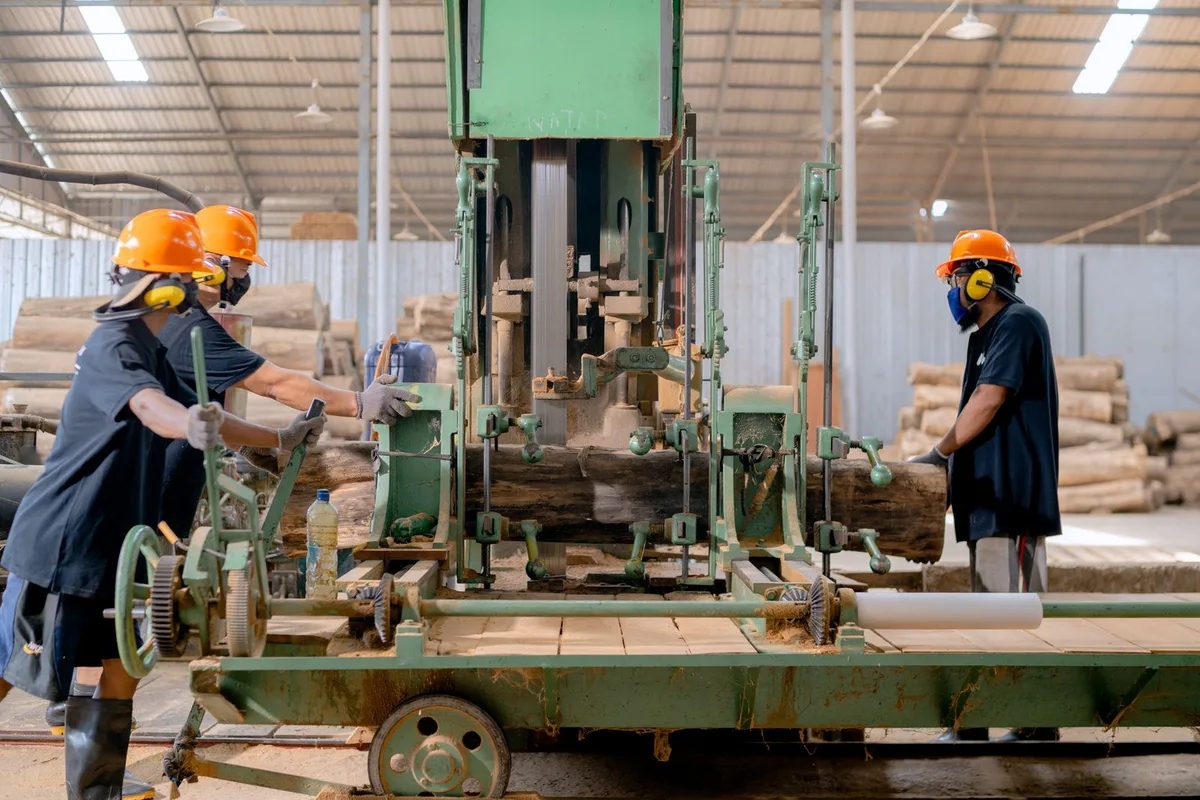
Custom sizes give flexibility for domestic cargo, because every product has a different package size. For export shipments, we always advise businesses to follow the standards above: a pallet in the right ISO size or the size the consignee asks for, treated under ISPM 15 and with all the paperwork required by the contract, helps the shipment move smoothly and avoids rejection or re-treatment costs at the import port.
That is why there are dedicated products for overseas orders, known together as the export wooden pallet range. ICD Vietnam export wooden pallets are treated and stamped with the IPPC mark under ISPM 15 through a licensed facility. Before ordering pallets for an export shipment, check these 4 points with the importing customer:
Frequently asked questions
How many pallet sizes does ISO 6780 specify?
ISO 6780:2003 specifies 6 flat pallet sizes: 1200 x 800, 1200 x 1000, 1219 x 1016, 1067 x 1067, 1100 x 1100 and 1140 x 1140 mm. These sizes let pallets work with forklifts, racking and containers in many countries; for example 1100 x 1100 mm is common in Asia and 1200 x 800 mm (the Euro pallet) is common in Europe.
What is ISPM 15 used for?
ISPM 15 is mandatory for solid wood packaging material in international trade and exists to stop insects and pests from spreading across borders. The most common method is heat treatment (HT), which brings the wood core to at least 56 degrees C for at least 30 minutes.

What does the IPPC stamp on a wooden pallet mean?
The IPPC stamp shows that the pallet was treated under ISPM 15. It contains the IPPC symbol, the country code, the treatment facility code and the method code (HT, DH, MB or SF). It is the proof that the pallet meets the standard and helps customs clearance at the border of the importing country.
Does ISO 6780 include a 1165 x 1165 mm pallet size?
No. ISO 6780:2003 covers 1200 x 800, 1200 x 1000, 1219 x 1016, 1067 x 1067, 1100 x 1100 and 1140 x 1140 mm. The 1165 x 1165 mm size is a separate standard common in Australia.
What is ISO 8611?
ISO 8611 is the international series of tests for flat pallets, made up of the test methods (ISO 8611-1:2025), performance requirements (ISO 8611-2) and the determination of maximum working load (ISO 8611-3). It is used to establish the safe load of a pallet design for each condition: on the floor, stacked or on racking.
Can wooden pallets for Europe be treated with methyl bromide?
Yes, if they are ordinary wooden pallets: the EU has banned the use of methyl bromide inside the bloc since 18 March 2010, but it still accepts imported pallets treated by HT or MB in line with ISPM 15. EPAL pallets alone may only be heat treated. Because pallets can circulate through several countries, choose heat treatment (HT) for cargo going to Europe.

Are EUR pallets and EPAL pallets the same?
They share the same 800 x 1200 mm size but use different marking systems. EUR is the mark of the International Union of Railways (UIC), while EPAL is the mark of the European Pallet Association; since 1 May 2017, EPAL recommends no longer treating EUR pallets as equivalent when exchanging pallets.
Contact ICD Vietnam to buy wooden pallets
ICD Vietnam has a production workshop, a Hanoi warehouse (3rd Floor, Thang Long A1 Building, Bau Hamlet, Thien Loc Commune) and a southern workshop (551/212 Le Van Khuong Street, Tan Thoi Hiep Ward, District 12). We build wooden pallets to ISO sizes, to the size of the destination market or to your own drawing. Send us the dimensions, load, quantity and destination market for advice; price of wooden pallets: contact for a quote, with volume discounts.
- North Vietnam: call 0983 797 186 / 090 345 9186 / 090 5859 186 for free advice and orders, or email sales@icdvietnam.com.vn.
- South Vietnam: call 098 6784 186 for free advice and orders, or email sales@icdvietnam.com.vn.
See also: ISO 6780:2003 | exporting to Europe
References
- ISO 6780:2003 Flat pallets for intercontinental materials handling - Principal dimensions and tolerances - International Organization for Standardization (ISO).
- ISO 8611-1:2025 Pallets for materials handling - Flat pallets - Part 1: Test methods - ISO.
- ISO 445:2013 Pallets for materials handling - Vocabulary - ISO.
- TCVN 9022:2011 Flat pallets for intercontinental materials handling - Principal dimensions and tolerances (Vietnamese national standard).
- ISPM 15, Regulation of wood packaging material in international trade - International Plant Protection Convention (IPPC/FAO).
- Requirements for wood packaging imported into the EU - European Commission.
- Regulation (EU) 2024/590 on substances that deplete the ozone layer (replacing Regulation (EC) 1005/2009) - EUR-Lex.
- EPAL Euro pallet technical regulations - European Pallet Association (EPAL).
- Gerber et al. (2020), Investigation of new and recovered wood shipping platforms in the United States - US Forest Service and Virginia Tech.