Table of Contents
- What is a pallet?
- What are pallets used for?
- When did pallets appear?
- Types of pallets by material
- What is the standard pallet size?
- Pallets in import-export: ISPM 15 and the IPPC mark
- Which type of pallet to choose: four questions I ask customers
- The word “pallet” in other contexts
- Frequently asked questions about pallets
- What is a pallet?
- What are palletised goods?
- What is palletising?
- Why must export wooden pallets carry an IPPC mark?
- What is the standard pallet size?
- How many kg can a pallet carry?
- How do two-way and four-way pallets differ?
- Why use pallets?
- How much does a wooden pallet cost?
- How do a pallet and a skid differ?
- Contact ICD Vietnam
- References
Reviewed and updated by ICD - Week 43/2026
A pallet is a flat platform of wood, plastic, paper or metal with openings for forklift tines, used to gather many packages into one unit that can be lifted, stored and shipped in a single move. Many pallets carry about 1,000 kg, and the ISO 6780 standard recognises 6 sizes for international trade, the most common being 1200 x 1000, 1200 x 800 and 1100 x 1100 mm.
I have worked with pallets at ICD Vietnam since 2011, and from the early years I saw that a pallet is more than a platform for goods. It is the foundation of the modern supply chain, the basic unit that carries goods from factory to port and into the receiver’s warehouse. A wrongly chosen pallet can ruin a whole shipment: it breaks on the road, is held at the port for lacking a quarantine mark, or does not fit the customer’s racking. This article explains what a pallet is, how it is built, what types exist, the standard sizes and the rules to know when exporting.
What is a pallet?
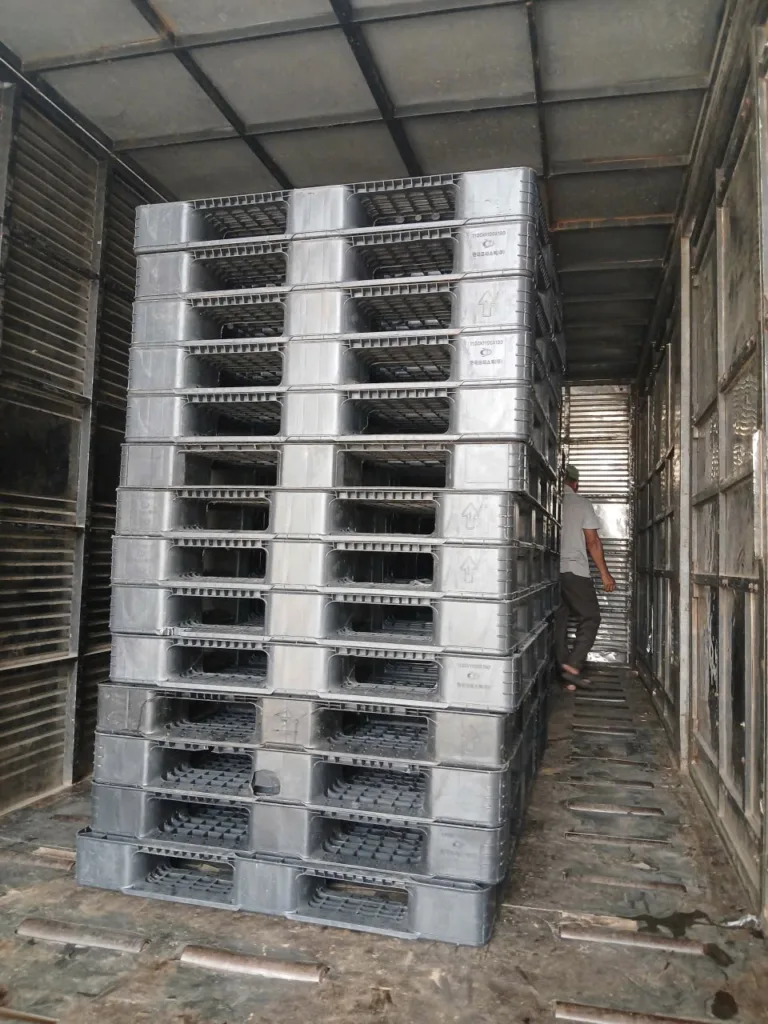
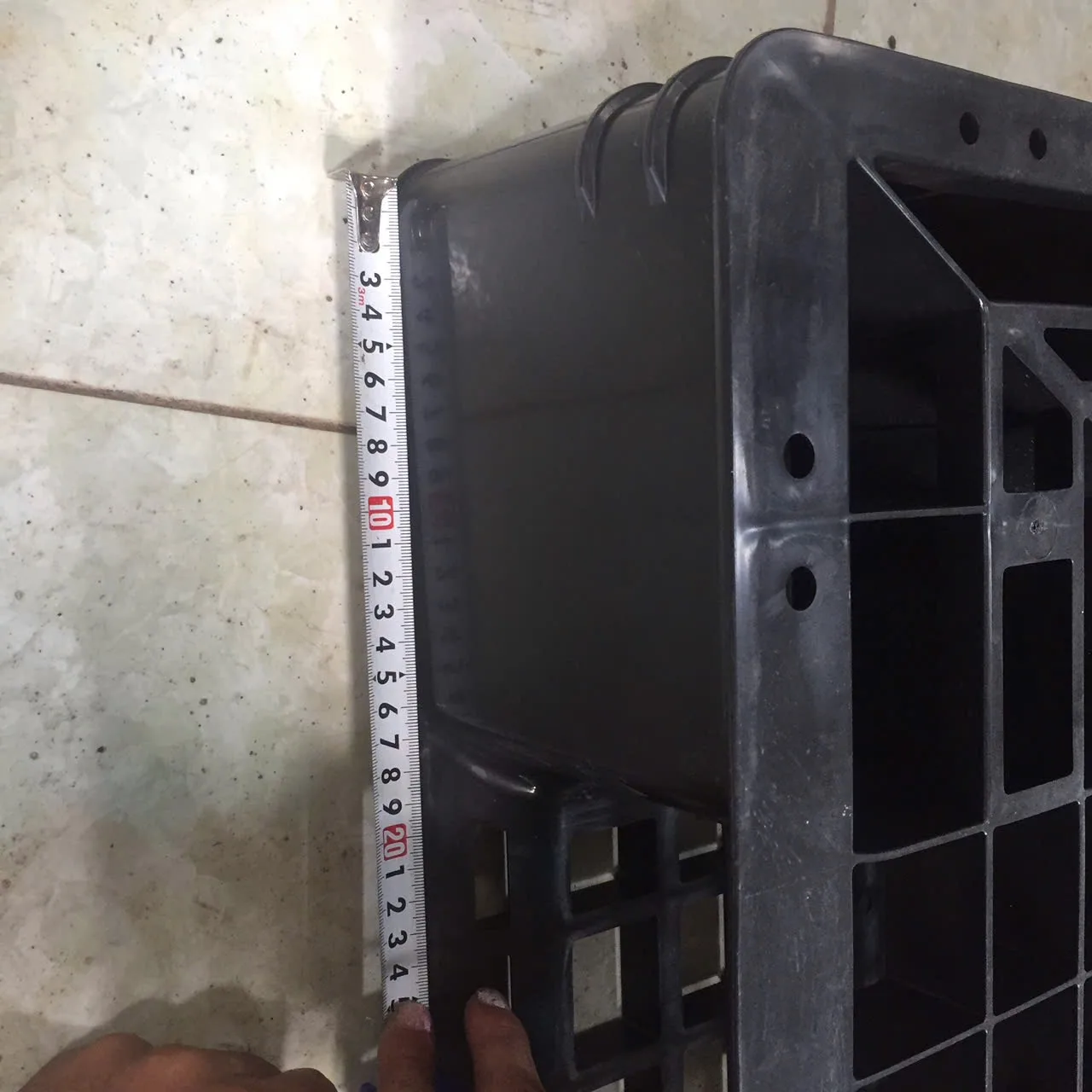
A pallet is a flat structure on which goods are placed and secured into one solid block, called a unit load. In Vietnamese, a pallet is also called a goods platform, goods rack or goods stand. What makes a pallet is not the material but the gaps or feet underneath, high enough for forklift tines or a hand pallet jack to slide in and lift the whole load.
English-language sources also use the word “skid”: according to Wikipedia, a skid has only a top deck and runners, with no bottom deck, so a nine-leg plastic pallet is technically a skid. In Vietnam both are called pallets, so when ordering, say clearly whether you want a bottom deck or not.
Construction of a pallet
A pallet has four parts: a top deck to hold the goods, legs or stringers that support the deck, openings for forklift tines to enter, and a bottom deck (on a double-deck pallet) to spread load onto the floor or racking.
Structurally, every pallet belongs to one of two large groups. A stringer pallet uses three or more parallel beams as its frame with deck boards nailed on top; it usually lets forklifts enter from two sides, and can be notched to allow entry from the other two sides, though lifting along the stringers is still sturdier. A block pallet uses block feet at the corners and mid-edges, so hand pallet trucks can enter from all four sides. A one-piece moulded plastic pallet has no nails and no splinters and is easy to clean, but when it breaks it usually has to be replaced rather than repaired.
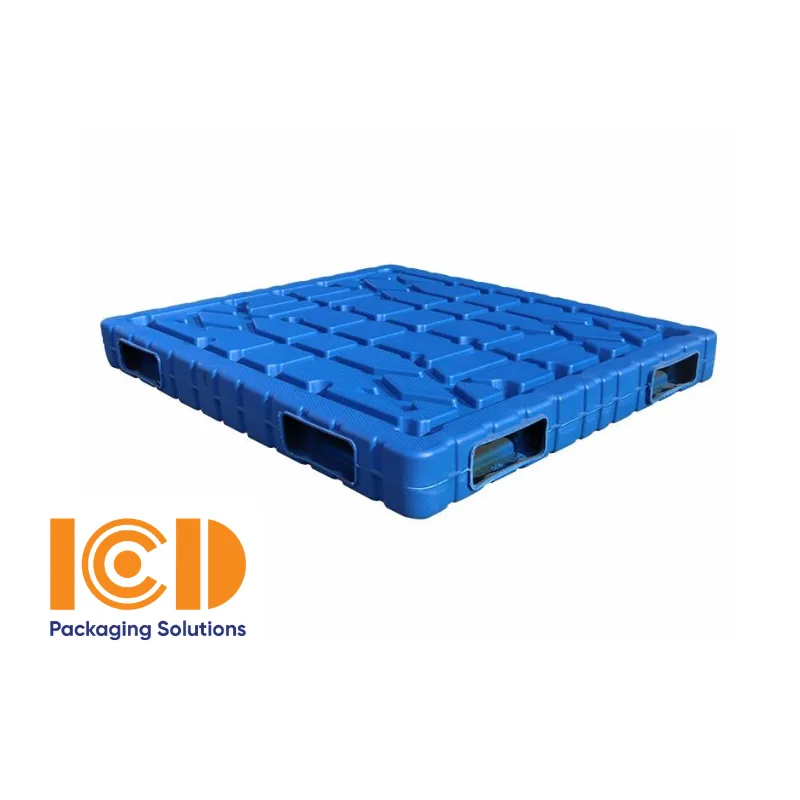
A small tip when reading drawings or quotes for wooden pallets: by the usual convention for stating dimensions, the first number is the length of the stringers and the second is the length of the deck boards. A 1200 x 1000 and a 1000 x 1200 pallet can therefore differ in the direction a forklift enters, even though their area is the same.
What are pallets used for?
The main purpose of a pallet is unitisation. Instead of handling small boxes one by one, people palletise, meaning they stack many boxes on a pallet and then wrap it with PE film or strap it. The whole block is then handled as one unit, bringing four main benefits:
- Fast handling: a forklift moves the whole load in one trip instead of dozens of trips by hand.
- Compact storage: goods on pallets can be stacked or placed on multi-tier racking, saving floor space.
- Protection of goods: goods sit clear of the floor, away from damp and dust and with fewer knocks in transit.
- Less labour: the number of people needed for each receipt and dispatch drops considerably.
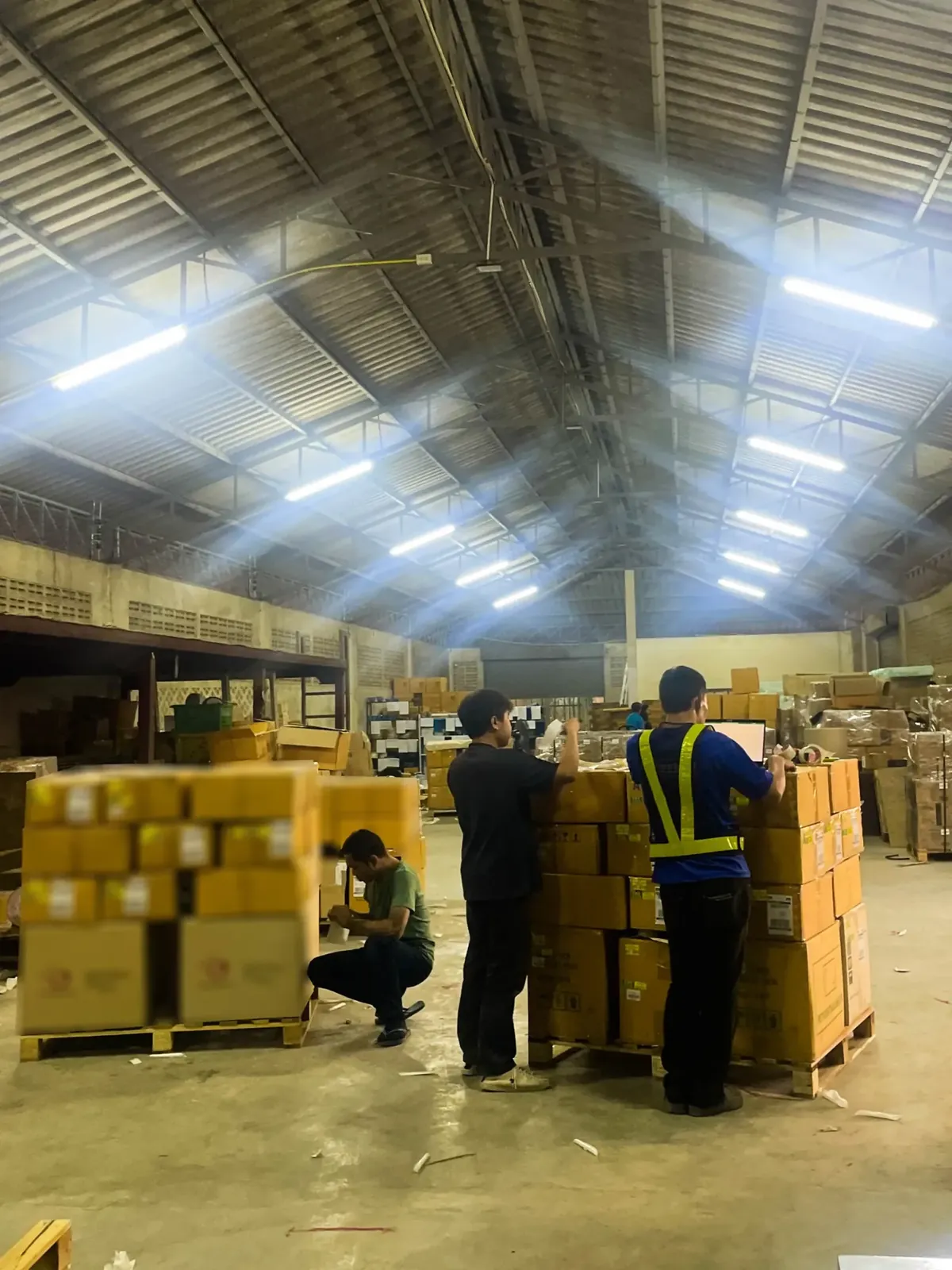
These four benefits explain why pallets always go with forklifts and containers. A container has a flat, even floor, so palletised goods go in and come out quickly. A warehouse using same-size pallets can serve every kind of goods with one racking system and one forklift fleet. According to Wikipedia, businesses using standard pallets have much lower handling and storage costs than those that do not; some standard sizes such as the EUR 1200 x 800 mm pallet were even designed to pass through standard doorways.
Palletising, palletised goods and the pallet as a unit
These three terms often appear in freight quotes. Palletising is stacking boxes or bags on a pallet to a pattern that is balanced and tight, then fixing them with shrink wrap or strapping. Palletised goods are goods already packed and ready to be lifted as a unit. And when a carrier quotes a “rate per pallet”, the pallet is the unit of charge: the price for one complete block of goods on one pallet, usually with a limit on that block’s height and weight.
When did pallets appear?
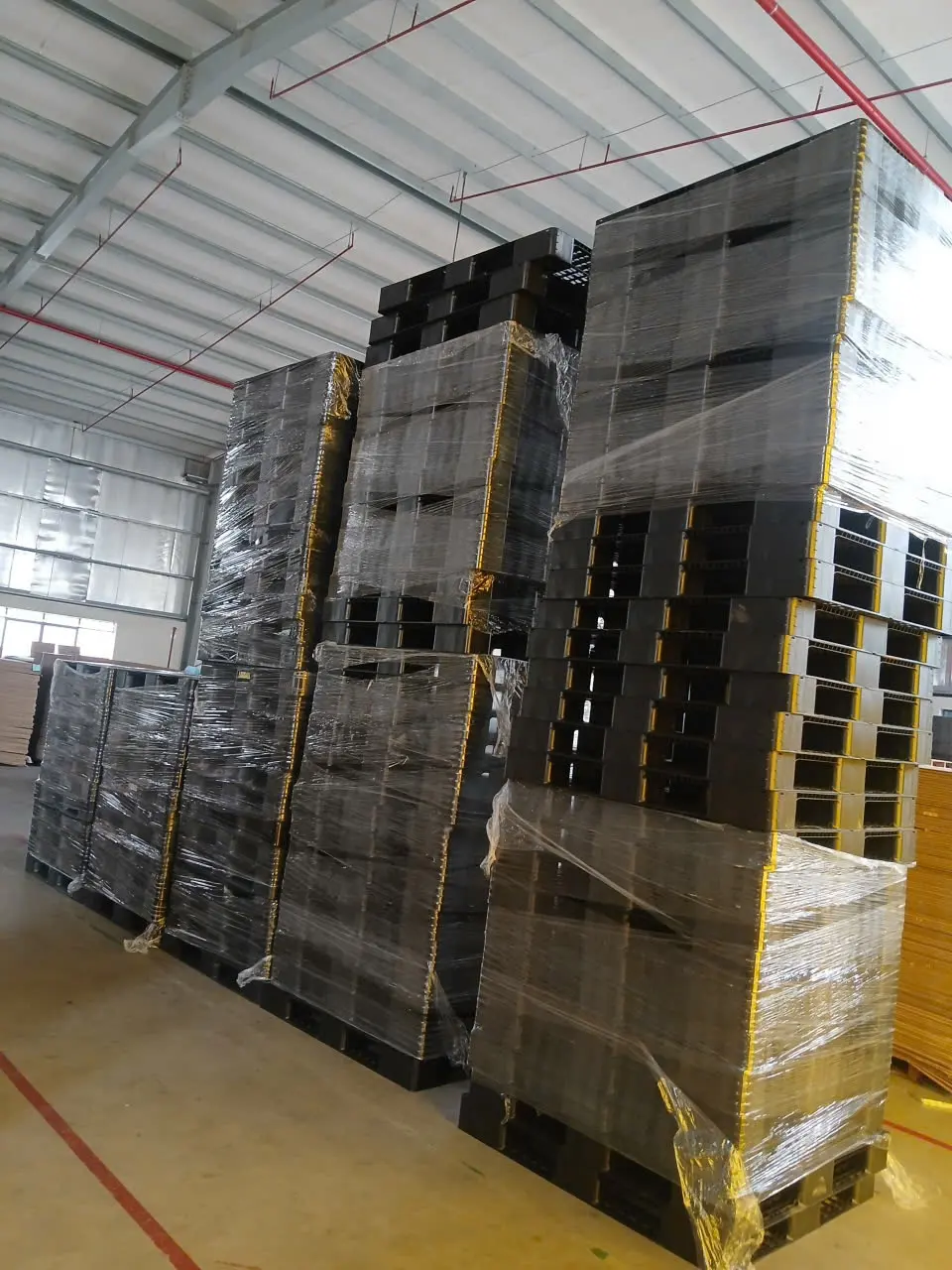
Simple platforms for goods (skids) go back to ancient Egypt and Mesopotamia, but the modern pallet is tied to the forklift. According to Wikipedia, one of the earliest patents was a lift platform for forklifts by Howard T. Hallowell in 1924. In 1937, George G. Raymond and William C. House filed a patent for a type of pallet that came with a new hand pallet truck design, granted in 1939, and the main features of the two devices are still used today. Logistics demand in the Second World War brought pallets into large-scale use, and post-war containerisation then made pallets gradually replace wooden crates and barrels.
The scale today is very large: also according to Wikipedia, in 2020 the US alone had about 2 billion pallets in circulation and about half a billion pallets produced each year. Making pallets accounts for 43% of hardwood and 15% of softwood consumed in the US. Pallets also go missing: in the mid-2000s an estimated 14 million pallets were reported lost in Europe, one reason the shared pallet rental model grew.
Types of pallets by material
By material there are four groups: wooden pallets, plastic pallets, paper pallets and metal pallets. Pallets are also named by construction (single-deck, double-deck, two-way, four-way) or by load rating, but material is what decides price, lifespan and export procedures.
Wooden pallets
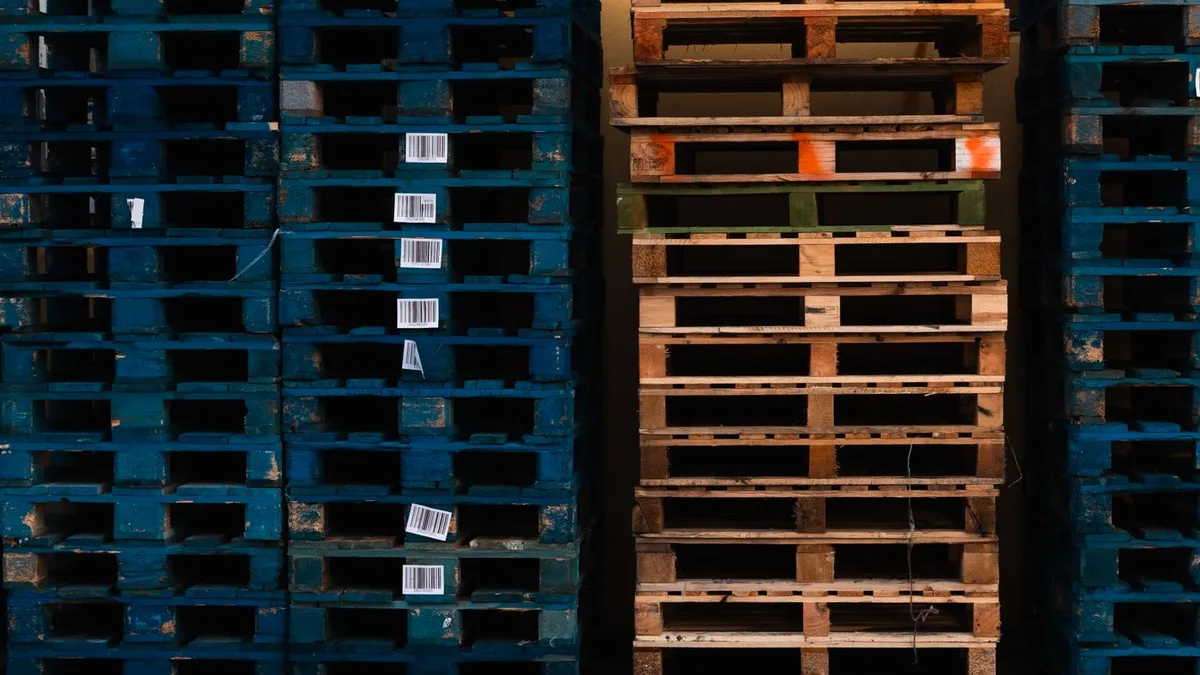
Wooden pallets are the most common because they are cheap, easy to make to custom sizes and easy to repair: if a board breaks, you replace the board. Wood has high friction so goods slide less. In return, wooden pallets are heavy, mould and get termites if left damp for long, and can have splinters or protruding nails that tear packaging. The cheapest are made of softwood with a stringer design and are usually treated as single-use pallets for one-way export goods.
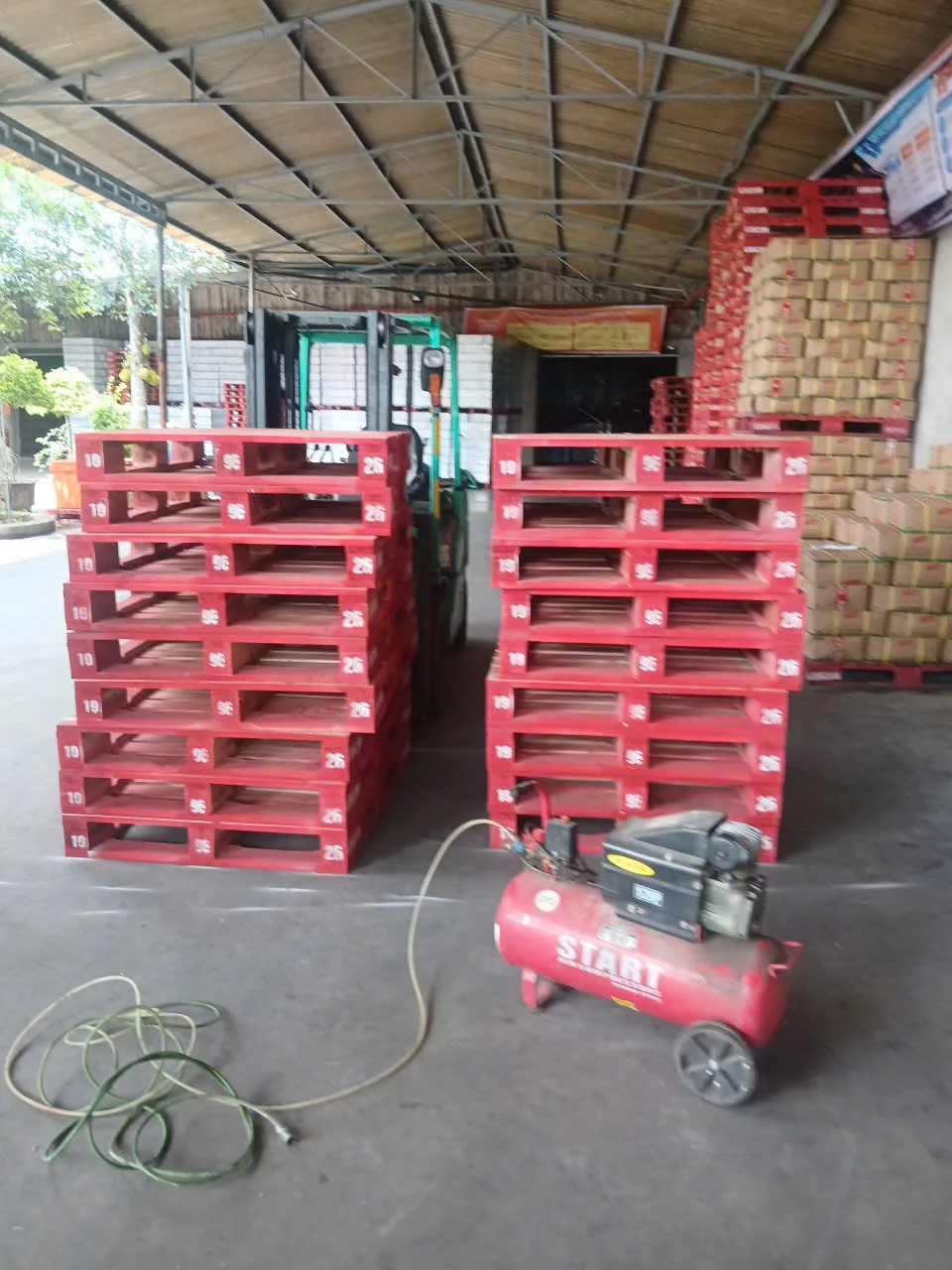
The key point with wooden pallets is quarantine: raw wood crossing a border must be treated and stamped to ISPM 15, covered in the import-export section below.
Plastic pallets
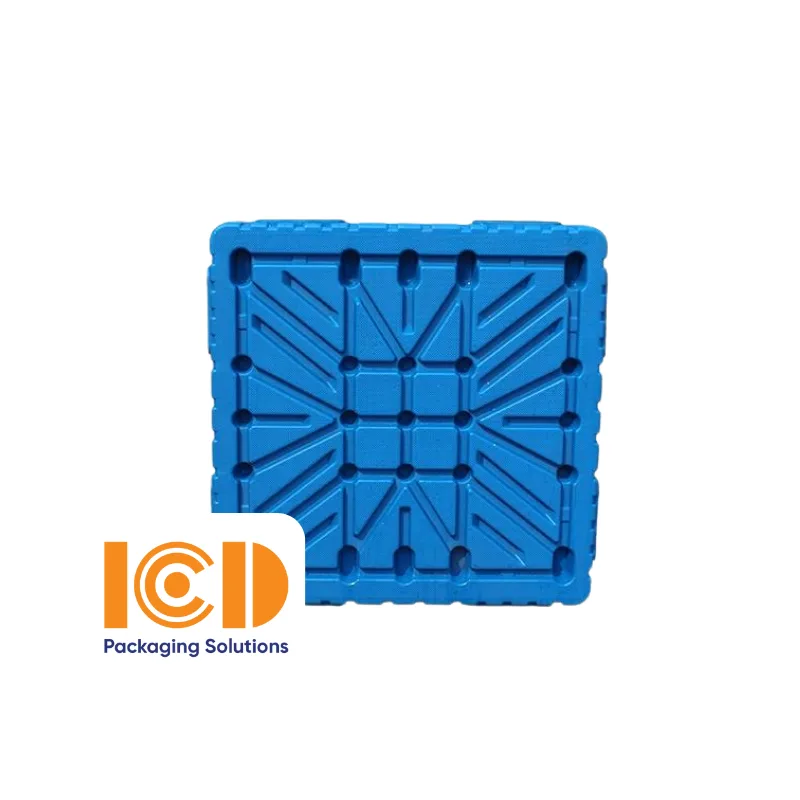
Plastic pallets are usually made of HDPE or PP, are waterproof and chemical-resistant, have no termites, are easy to wash and are exempt from ISPM 15 quarantine. According to Wikipedia, a plastic pallet can be used a hundred times or more, but the price can be up to ten times that of a hardwood pallet, so it suits rotating-stock warehouses, food, pharmaceuticals and cold stores best. Two limits to know: plastic pallets are hard to repair when broken, and may sag gradually (plastic creep) under continuous heavy load over a long time.
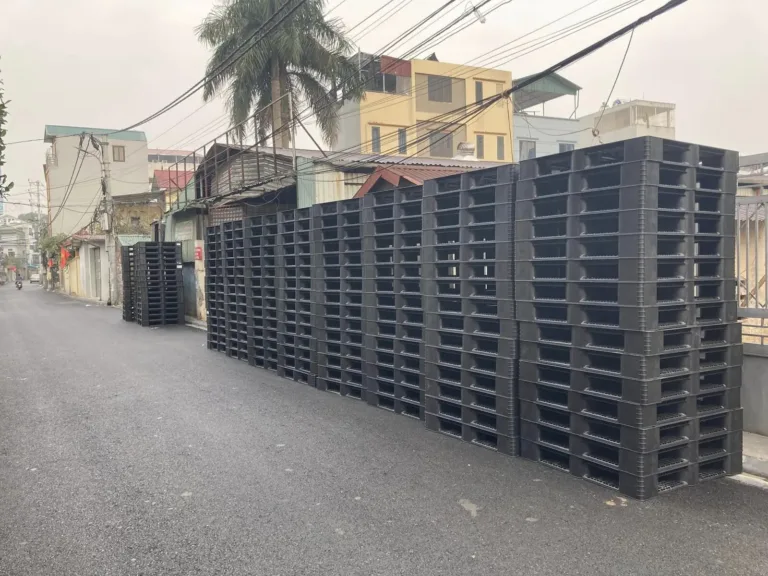
In ICD Vietnam’s plastic pallet catalogue (checked 11 October 2026), 176 models state their dimensions; the dynamic load of the 151 models that state it ranges from 400 to 3,200 kg with a median of 1,000 kg, and the median static load of the 157 models that state it is 4,000 kg. A detailed breakdown by construction and the pros and cons of each line is in the article what a plastic pallet is and what types there are.
Paper pallets
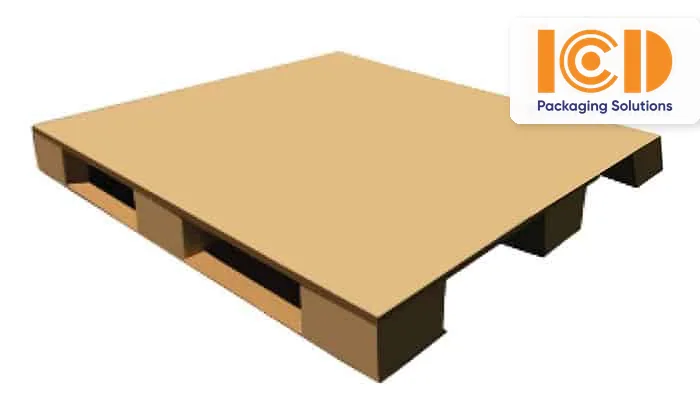
Paper pallets are made from laminated corrugated board or honeycomb paper and are very light, saving freight, especially for air cargo. According to Wikipedia, there is a paper pallet design made of just two flat sheets of cardboard, with no glue or staples, weighing about 4.5 kg. Paper pallets are exempt from ISPM 15 like plastic pallets, but carry less load, fear water and are almost always single-use.
Metal pallets
Steel, stainless steel or aluminium pallets are used for very heavy goods, high stacking, long-term dry storage or in closed-loop circulation such as car plants and tyre makers. According to Wikipedia, metal pallets hold under 1% of the market; carbon steel is the cheapest in the group, with stainless steel and aluminium costing about 2 to 3 times as much. The advantages are that they are stiff, durable and free of termites and splinters; the drawbacks are weight, low friction and that carbon steel can rust.
The table below summarises the four types for a quick comparison on the same criteria.
| Criterion | Wooden pallet | Plastic pallet | Paper pallet | Metal pallet |
|---|---|---|---|---|
| Investment cost | Low | Higher than wood | Low to medium | Highest |
| Load capacity | Good | Good, depending on construction | Low, suits light goods | Very high |
| Water and moisture resistance | Poor, moulds easily | Good | Poor | Good (carbon steel needs painting) |
| ISPM 15 on export | Required for raw wood | Exempt | Exempt | Exempt |
| Repair | Easy to replace boards | Hard, usually replaced | Not repairable | Welding, replacing bars |
| Best suited to | Heavy goods, one-way low-cost export | Rotating-stock stores, food, cold stores | Air freight, light one-way goods | Very heavy goods, closed loops |
What is the standard pallet size?
ISO 6780 recognises 6 pallet sizes for intercontinental trade. There is no single size for the whole world because each region built its warehouses, racking and trucks around its familiar size, so choose a pallet size by the receiving market and the receiver’s racking, not just by your own warehouse.
| Size (mm) | Main region | Notes |
|---|---|---|
| 1200 x 800 | Europe | EUR pallet size, fits many standard doorways |
| 1200 x 1000 | Europe, Asia | The most common size in ICD Vietnam’s plastic pallet catalogue (46/176 models) |
| 1219 x 1016 | North America | Equivalent to 48 x 40 inches |
| 1100 x 1100 | Asia (Japan, Korea) | 26/176 models in the ICD Vietnam catalogue |
| 1067 x 1067 | North America, Europe, Asia | Equivalent to 42 x 42 inches |
| 1140 x 1140 | Intercontinental trade | The Australian market uses a nearly equivalent size of 1165 x 1165 |
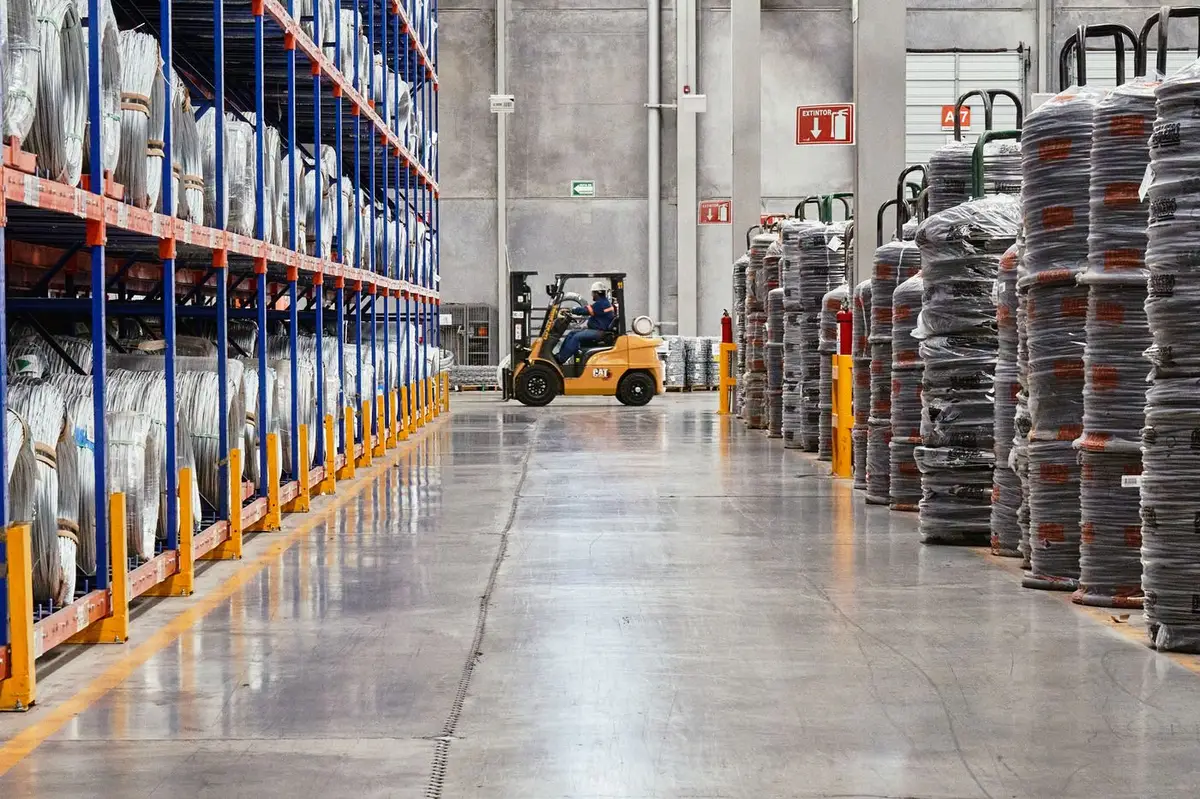
In Vietnam, domestic warehouses and goods bound for Asia use 1200 x 1000 and 1100 x 1100 mm a lot; goods bound for Europe usually require 1200 x 800 mm. If the store has racking, measure the distance between the rack’s two support bars before choosing: the pallet must rest fully on both bars, and a pallet used on racking needs a rack load rating, which is usually much lower than the static load on the floor.
Pallets in import-export: ISPM 15 and the IPPC mark
Raw wooden pallets crossing a border must follow ISPM 15, the standard of the International Plant Protection Convention (IPPC) on wood packaging material, intended to stop pests spreading between countries. The wood must be debarked and treated under the supervision of a recognised authority, then stamped with the IPPC mark. A pallet with no mark or a failed mark can be required to be re-treated, re-exported or destroyed at the port of arrival.
Not every wooden pallet falls under this. According to Wikipedia, pallets made of non-wood materials such as steel, aluminium and plastic, and pallets made of processed wood such as plywood, oriented strand board (OSB) or cardboard, are exempt from ISPM 15, because the pressing and gluing process has removed pests. This is why many shippers switch to plastic pallets, paper pallets or pressed-wood pallets for shipments to Australia, the US or Europe, where wood packaging is checked closely.
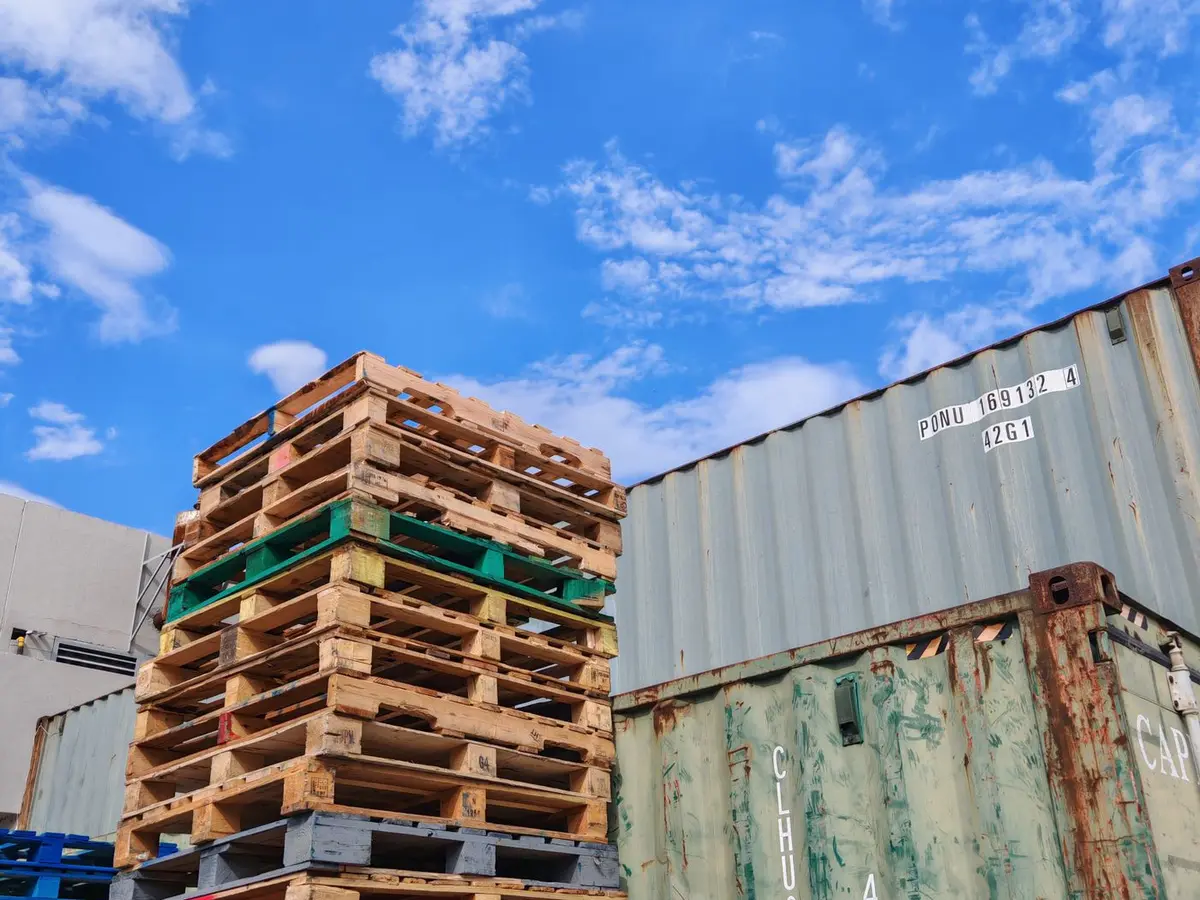
For goods that go out and come back in a loop, many businesses rent rather than buy. The pallet pooling model is renting pallets within the lessor’s network: pick up a pallet at one point, return it at another after use, and the lessor handles inspection and repair. This suits retail chains and consumer goods on fixed routes; and when you need pallets for a short time at a single warehouse, you can look at pallet rental services.
Which type of pallet to choose: four questions I ask customers
When a customer calls to buy pallets without being sure what type is needed, I do not start with a price list. I ask four questions, because the answers almost point to the right material and construction by themselves:
- Does the pallet go one way with export goods, or circulate within the warehouse and between plants?
- Are the goods exported, and to which market?
- How heavy is each load, and is it stacked or put on racking?
- Is the warehouse dry or damp, and is there a cold store or a food or pharmaceutical hygiene requirement?
For one-way shipments to countries with strict quarantine, a heat-treated wooden pallet or a paper or pressed-wood pallet is the economical choice. For many rotations, damp stores or clean-room needs, a plastic pallet breaks even sooner despite the higher purchase price. For goods on racking, look at the rack load, not the static load. And only very heavy goods in a closed loop justify a metal pallet.
The word “pallet” in other contexts
Pallet jack is the English name for the hand pallet truck, a device with two tines that slide into the pallet’s fork openings, with a hydraulic pump that lifts the load a few centimetres and then pulls it through the warehouse. A pallet bed is a do-it-yourself furniture trend that uses old wooden pallets for bed frames, tables and chairs; if you do this, choose pallets with an HT (heat-treated) mark rather than MB (chemical fumigated). And “palette” in painting is the artist’s colour-mixing tray, which only sounds like pallet and is unrelated.
Frequently asked questions about pallets
What is a pallet?
A pallet is a flat platform of wood, plastic, paper or metal with openings for forklift tines, used to gather goods into one unit that can be lifted, stored and shipped in a single move.
What are palletised goods?
Palletised goods are goods stacked and secured on a pallet, ready to be lifted and shipped as one unit.
What is palletising?
Palletising is stacking boxes or bags on a pallet to be balanced and tight, then wrapping with stretch film or strapping them into one stable block.
Why must export wooden pallets carry an IPPC mark?
The IPPC mark confirms that the wooden pallet was treated to ISPM 15 (heat or methyl bromide) so pests do not travel with wood packaging to another country. Plastic, paper and pressed-wood pallets do not need this mark.
What is the standard pallet size?
ISO 6780 recognises 6 sizes: 1200 x 800, 1200 x 1000, 1219 x 1016, 1067 x 1067, 1100 x 1100 and 1140 x 1140 mm. In Vietnam 1200 x 1000 and 1100 x 1100 mm are used a lot; goods bound for Europe usually use 1200 x 800 mm.
How many kg can a pallet carry?
It depends on material and construction; many standard pallets carry about 1,000 kg when lifted. In ICD Vietnam’s plastic pallet catalogue, the dynamic load ranges from 400 to 3,200 kg with a median of 1,000 kg; the static load on the floor has a median of 4,000 kg. When choosing, compare the dynamic load with the weight of the load.
How do two-way and four-way pallets differ?
A two-way pallet lets forklift tines enter only from two opposite sides and is usually a stringer pallet, stiff and cheaper. A four-way pallet lets the forklift enter from all four sides, which is more flexible in warehouse stacking and container loading.
Why use pallets?
Because a pallet turns many loose packages into one block that a forklift handles in one go, enabling storage on multi-tier racking, keeping goods off the floor against damp and reducing the number of people needed for carrying.
How much does a wooden pallet cost?
The price of a wooden pallet depends on size, wood type, board thickness, construction and whether it is heat-treated, so there is no general price. Send the size, load rating and export market for ICD Vietnam to quote.
How do a pallet and a skid differ?
A skid has only a top deck and runners, with no bottom deck; a full pallet also has a bottom deck or bottom boards to spread load. In Vietnam the two are usually called pallets.
Contact ICD Vietnam
ICD Viet Nam Industrial Production Company Limited supplies plastic pallets and wooden pallets and gives advice on choosing the pallet by load rating, warehouse racking and export market.
Hotline: 0983 797 186 / 090 345 9186 / 090 5859 186
Email: sales@icdvietnam.com.vn | Zalo: Chat Zalo ngay
References
- Pallet sizes for intercontinental trade - ISO 6780: Flat pallets for intercontinental materials handling.
- Treatment of wood packaging material - IPPC, ISPM 15.
- Concept and role of pallets in goods handling - Material Handling Industry (MHI) - Pallets.
- Construction, history, numbers, pallet materials and ISPM 15 exemptions - Wikipedia, Pallet entry.
See also: uses of plastic pallets | which material is best for pallets