
Table of Contents
- 1. What is gloss-coated rubber wood board?
- 2. Should you choose one-side or two-side coating?
- 3. Reference prices of gloss-coated rubber wood board in 2026
- 4. Converting sheets, weight and cubic metres of board
- 5. Practical uses of gloss-coated rubber wood
- 6. Tips for choosing coated rubber wood board
- Frequently asked questions
- How much is gloss-coated rubber wood board per cubic metre?
- Should I choose one-side or two-side coating?
- How is coated finger-jointed rubber wood different from solid rubber wood?
- What affects the price of coated finger-jointed rubber wood the most?
- Is coated finger-jointed rubber wood water-resistant?
- How much does an 18 mm finger-jointed rubber wood sheet weigh?
- Should I choose gloss or matt coated board?
- Does ICD Vietnam sell coated finger-jointed rubber wood board?
- Contact ICD Vietnam about wooden pallets
- References
According to public price lists updated from March to June 2026, a gloss-coated rubber wood panel of 1220 x 2440 mm, 17-18 mm thick, grade AA, coated on both sides is listed at about 780,000-910,000 VND. The gloss coating usually adds about 40,000 VND per side compared with an uncoated board. No government agency publishes a price for this product, so every quote has to be compared at the same sheet size, thickness, face grade and number of coated sides.
Pre-coated board lets a joinery shop skip sanding and finishing the surface. In exchange, the coating sits only on the faces: the cut edge is still bare wood, and it is the quality of the glue between the strips that decides how well the sheet tolerates moisture.
ICD Vietnam makes pallets and does not sell finger-jointed boards, so the figures in this article are the list prices of board sellers, with source and date, not ICD quotes. The article explains what this board is, whether to choose one-side or two-side coating, how to convert sheets to cubic metres, and what to check when buying.
1. What is gloss-coated rubber wood board?
Gloss-coated rubber wood board is a finger-jointed rubber wood panel that has been sanded and machine-coated with a clear glue or lacquer layer, so the surface is glossy, shows the wood grain and is ready to use once cut.
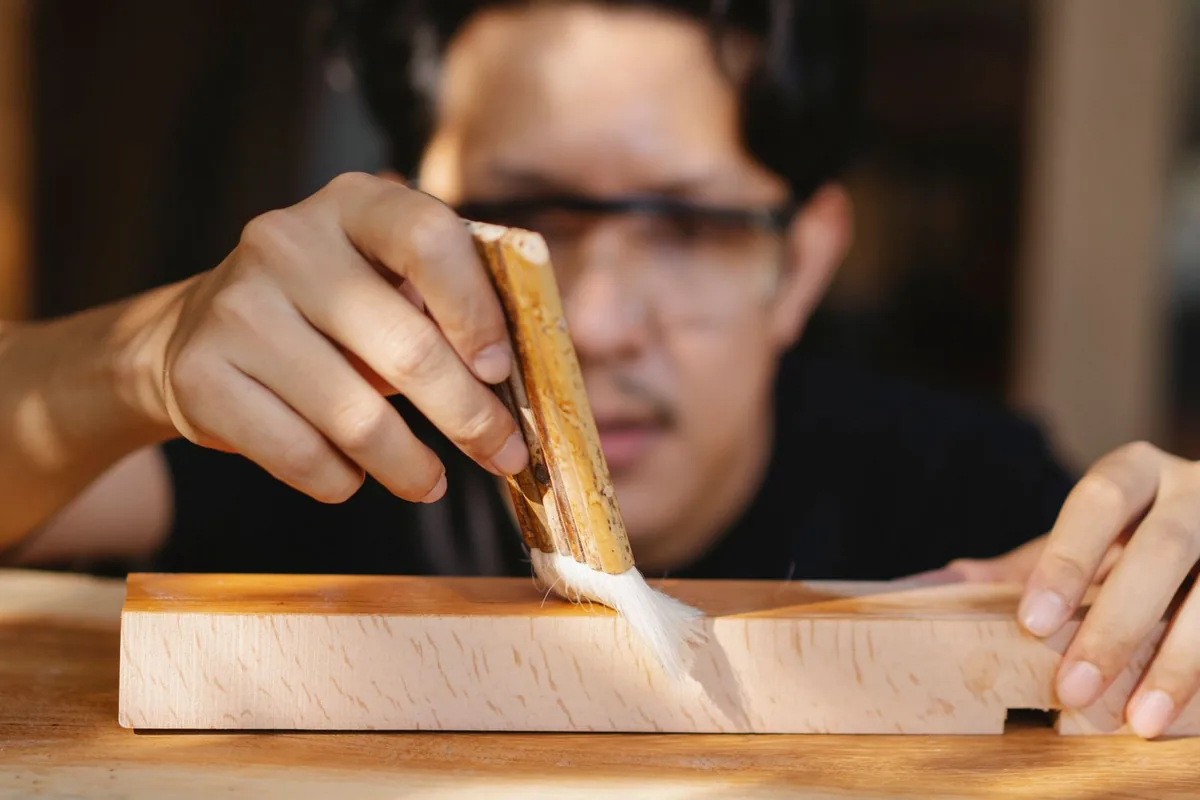
Sellers call this coating gloss glue, some write PU, some write UV coating; these are trade names, not a standardised material. When ordering, ask which coating material, how many layers and what gloss level, so you can compare between sellers.
In structure, a coated board has two parts: a core of rubber wood strips that have been treated and dried, joined with glue and finger joints, and the coating on the surface. The coating protects only the faces that are coated. When the board is cut to part size, the cut edge exposes the bare core, which is where moisture enters most easily unless the edge is banded or sealed.
Cross-section guide: the gloss coating sits on face A; below it is the finger-jointed core of glued rubber wood strips; the back is coated (two-side type) or left bare (one-side type); the cut edge has no coating at all. The zig-zag line in a section drawing marks the finger joint between strips.
The coating slows moisture uptake at the surface and makes wiping easier, but it cannot block moisture completely. A study by the US Forest Products Laboratory (FPL) of 91 coatings found that none stopped wood from taking up water vapour entirely; a coating only slows the process. Nor does a coating replace the borer treatment of the rubber wood blank, a timber whose natural durability is poor.
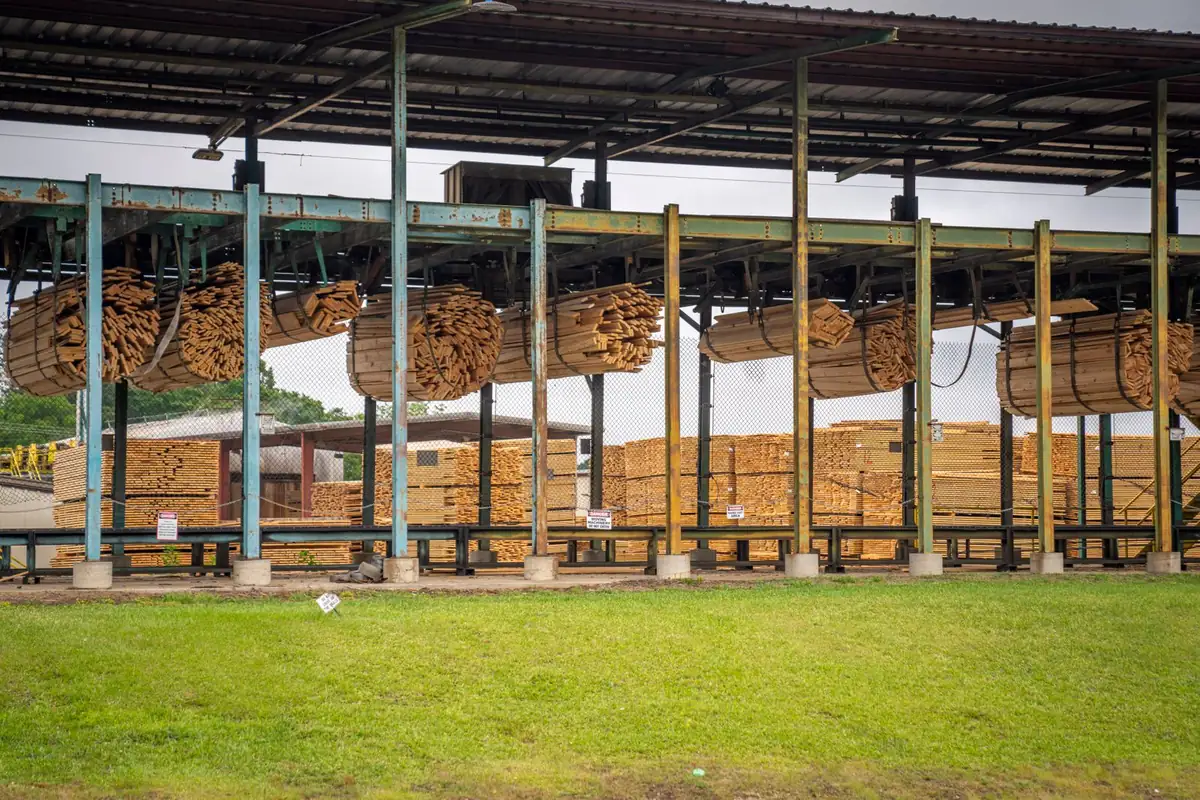
Because the surface is already finished, coated board suits parts that are wiped often, such as table tops, shelves and light partitions indoors. The biggest benefit to a joinery shop is that you can cut and assemble it as soon as it arrives, skipping on-site sanding and painting, which is dusty and needs a spray booth.
2. Should you choose one-side or two-side coating?
Choose two-side coating for parts that show on both sides or stand free, such as wardrobe doors, partitions and doors; one-side coating suits only parts whose back is glued, fixed or hidden.
One-side coating is normally used for wall cladding, wall-mounted shelf tops and loft flooring, where the back is glued or screwed to a structure. The main face (grade A) is glossy, and the back is left bare or only lightly sanded so that adhesive grips well during installation.
Two-side coating is for parts that are seen from both sides, such as wardrobe doors, room partitions and wooden doors. Besides looks, two-side coating also helps the sheet stay flat.
The reason lies in how wood exchanges moisture. The FPL Wood Handbook notes that a coating on one side only makes the two faces take up moisture unevenly and raises the chance of cupping; to limit moisture changes, every surface must be coated, especially the end grain. For a wide part such as a wardrobe door or a free-standing table top, coating both sides, or at least priming the back, is the safer way, even though it costs about 40,000 VND more per sheet.
3. Reference prices of gloss-coated rubber wood board in 2026
Public list prices in 2026 for a 1220 x 2440 mm gloss-coated sheet run from about 615,000 to 910,000 VND, depending on thickness from 12 to 18 mm, face grade and number of coated sides; there is no official price source from a government agency for this product.
I checked the construction-materials price announcement for October 2026 from the An Giang Department of Construction, the kind of document provinces issue every month; its list includes formwork plywood and film-faced board but no finger-jointed rubber wood board. So the figures below come from sellers’ own price lists, which are asking prices before discount, not actual transaction prices.
According to the price list of a board seller in Binh Duong posted on 20 June 2026 (Go An Thanh), a 17 mm grade AA sheet costs 695,000 VND uncoated and 780,000 VND coated on both sides; a 17 mm grade AC sheet costs 630,000 VND uncoated, 670,000 VND coated on one side and 715,000 VND coated on both sides; a 12 mm grade AC sheet coated on both sides costs 615,000 VND.
Another seller (Go Hieu Huong) lists prices updated in March 2026 for two-side gloss-coated board of 1220 x 2440 mm: 12 mm grade AB at 738,000 VND, 15 mm grade AB at 798,000 VND, 18 mm grade AB at 830,000 VND and 18 mm grade AA at 910,000 VND, excluding delivery.
The two sources differ quite a lot for the same specification, for example a two-side coated AA sheet around 17-18 mm differs by more than 100,000 VND. The gap can come from thickness, face grade AB or AA, the date of the update, and whether the price includes VAT and delivery. Both lists say their prices are for reference only and change with timing and quantity.
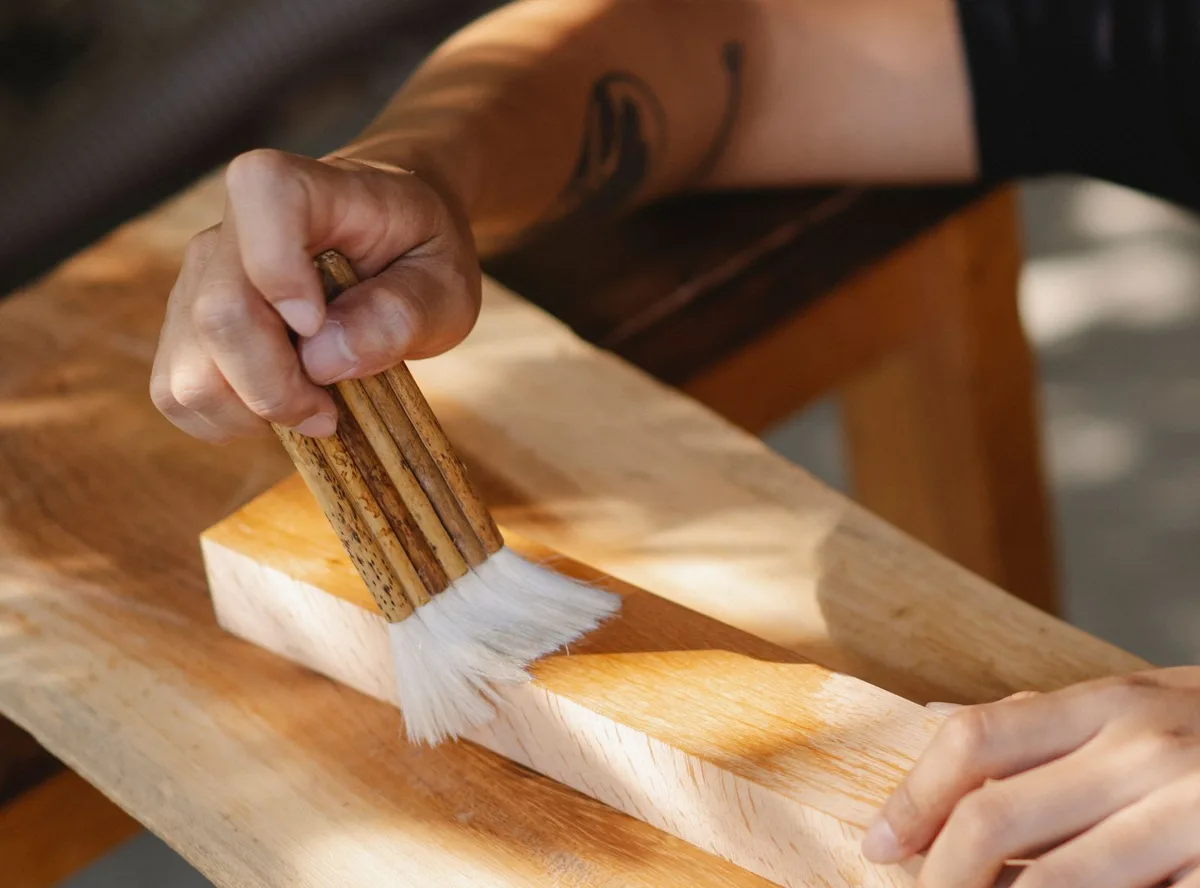
The extra cost of coating is fairly stable: in the June 2026 list above, one-side coating adds 40,000 VND and two-side coating adds 85,000 VND over a plain 17 mm board of the same grade. That helps you estimate when you only have the plain-board price in hand.
The table below compares the two common ways to get a glossy rubber wood surface: buy board that is coated at the factory, or buy bare board and spray it with PU at your own workshop.
| Criterion | Pre-coated board | Bare board, PU-sprayed at the workshop |
|---|---|---|
| Time to put into use | Cut and assemble immediately | Must be sanded, primed, top-coated, with drying time between coats |
| Surface evenness | Machine-coated, even across the sheet | Depends on the skill of the painter and the spray booth conditions |
| Colour and gloss options | From the factory’s ready-made samples | Mix the colour and choose gloss or matt as you like |
| Cut edges | No coating; needs edge banding or sealing | Edges can be sprayed too, after machining |
| Coating cost | Included in the sheet price, usually about 40,000 VND per side | Paint materials, labour, spray equipment and drying time are costed separately |
Buying pre-coated board saves time and needs no spray booth; spraying PU at the workshop gives control of colour and gloss and lets you finish the edges after machining. Small shops with urgent orders usually choose pre-coated board; orders that need a custom colour or a special matt finish buy bare board and spray it.
4. Converting sheets, weight and cubic metres of board
One cubic metre of finger-jointed board in the 1220 x 2440 mm format equals about 19 sheets of 18 mm or about 34 sheets of 10 mm. The conversion table lets you compare quotes per sheet and per cubic metre, and estimate the load when transporting.
The weights in the table use the average density of dry rubber wood, 595 kg/m³ according to The Wood Database, excluding glue and coating, so the real weight may be a little higher. If you use the 0.55 g/cm³ value in TCVN 12619-2:2019, each sheet is about 8% lighter, for example about 29.5 kg for an 18 mm sheet instead of 32 kg.
| Thickness | Volume of 1 sheet (m³) | Sheets per 1 m³ | Estimated weight per sheet |
|---|---|---|---|
| 10 mm | 0.0298 | 33.6 | about 18 kg |
| 12 mm | 0.0357 | 28.0 | about 21 kg |
| 15 mm | 0.0447 | 22.4 | about 27 kg |
| 17 mm | 0.0506 | 19.8 | about 30 kg |
| 18 mm | 0.0536 | 18.7 | about 32 kg |
To estimate quickly how many sheets to buy for a set of parts, divide the total part area, plus your cutting waste, by 2.98 m², the area of one 1220 x 2440 mm sheet, and round up. For example, 12 m² of parts with 10% waste needs 12 x 1.10 / 2.98 = 4.4, so 5 sheets. Multiply the number of sheets by the thickness and the sheet area to get the volume in cubic metres, and by 595 kg/m³ for the approximate weight, excluding glue and coating.
5. Practical uses of gloss-coated rubber wood
Gloss-coated rubber wood board is used mainly for dry indoor furniture: tables, cabinets, shelves, light partitions, counter tops and loft flooring.
In homes, this board is often used for dining tables, desks, wardrobes and bookshelves. In renovation work, 18 mm board coated on both sides is used for loft flooring or light partitions; the coated surface makes sweeping and wiping simple, which suits rental apartments.
In shops and cafes, glossy board makes counter tops and display shelves, where the gloss lifts the grain under lighting. A counter top that is knocked, exposed to hot items and water all the time will wear its coating faster than a home surface, so plan on recoating it periodically.
Choosing coated board by the environment of use
Coated board suits dry indoor furniture best; in damp places such as kitchen shelves, bathrooms or under-roof lofts, ask about the glue used to join the strips and seal the cut edges.
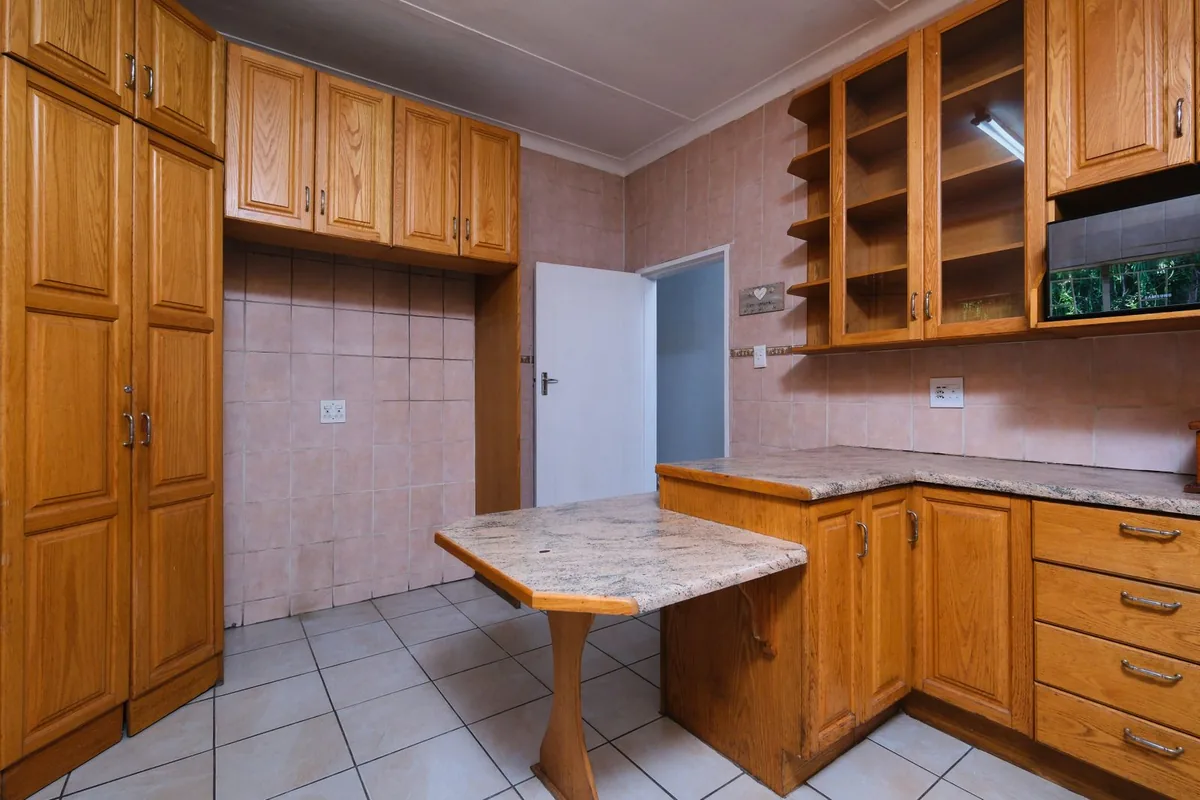
The European standard EN 13353 for solid wood panels divides panels into three conditions of use, dry, humid and exterior, matching grades SWP/1, SWP/2 and SWP/3. It also requires a board moisture content at dispatch of 8 ± 2% for dry conditions, 10 ± 3% for humid and 12 ± 3% for exterior, which you can use as a reference frame when ordering:
| Panel grade | Conditions of use | Example applications | What to ask the supplier |
|---|---|---|---|
| SWP/1 | Dry, indoors, no risk of getting wet | Work desks, bookshelves, wardrobes | Board moisture at delivery, face grade |
| SWP/2 | Humid, covered exterior, short periods of wetting | Kitchen shelves, bathroom partitions, under-roof lofts | Whether the finger-joint glue is moisture-resistant, how the edges are treated |
| SWP/3 | Uncovered exterior, constantly exposed to water | Gloss-coated board is rarely used for this case | Consider other materials or a board made for exterior use |
The gloss coating makes the surface more water-resistant than bare board, but it does not change how well the glue between the strips tolerates moisture. So in places that are often damp, the quality of the joint glue and sealing the cut edges matter more than the gloss of the coating.
6. Tips for choosing coated rubber wood board
Good coated board has an even glossy coating with no waviness or dust, edges that are not chipped and no peeling coating; check it in the warehouse under natural light before you accept it.
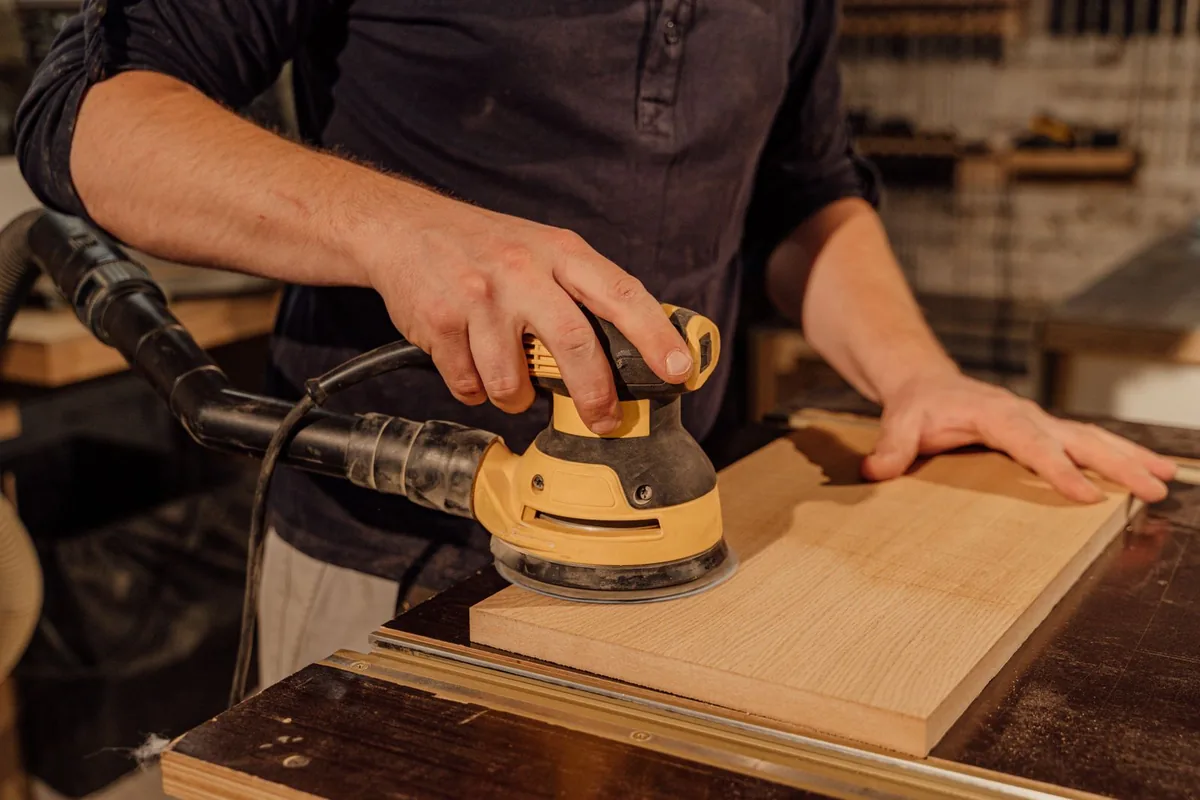
Finger-jointed rubber wood supply is concentrated in the southern provinces near rubber-growing areas such as Binh Duong, Dong Nai and around Ho Chi Minh City, but price also depends on the freight to where you receive the goods. When comparing prices, ask each seller to quote the same specification and to state whether VAT and delivery are included.
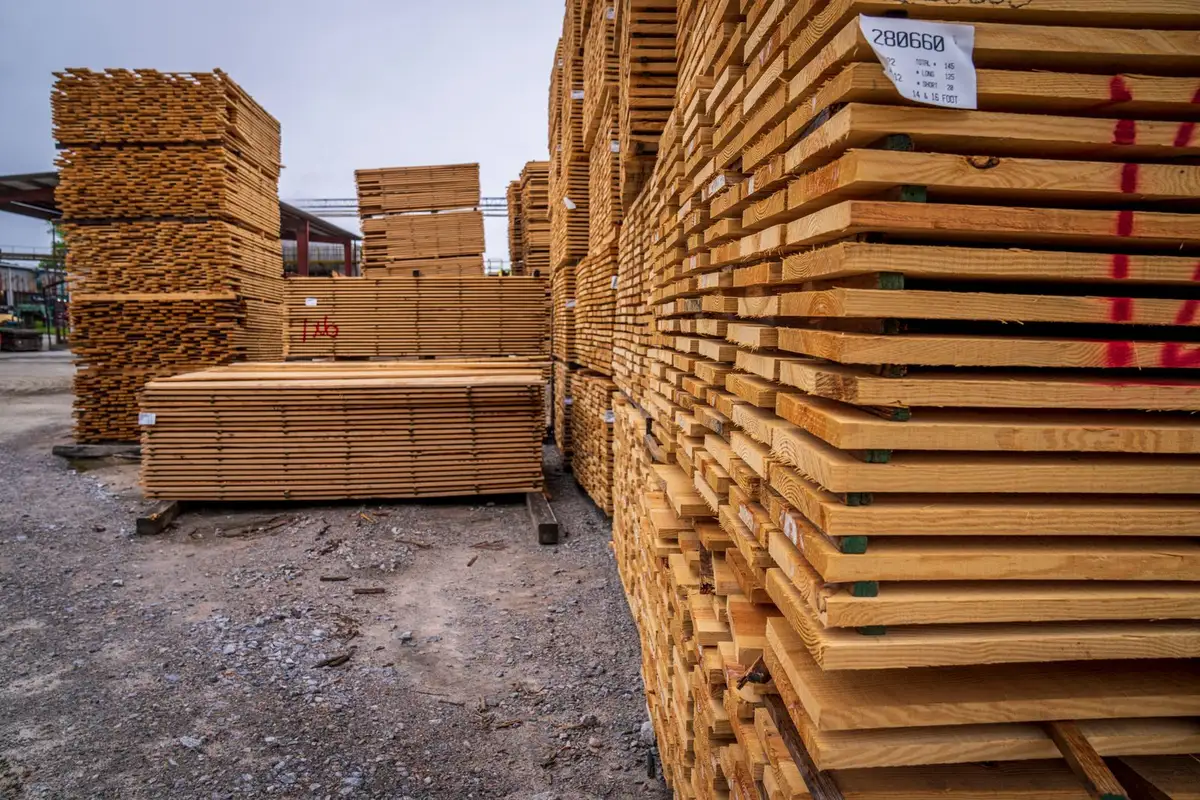
When you inspect board in the warehouse, take the sheet into natural light to check how flat the coating is. Good board has an even glossy surface, with no waviness and no tiny dust particles trapped under the coating. Check the edges too, for chipping or peeling coating. For a large order, you can ask the factory to apply a number of coats or a gloss level to your own product requirement.
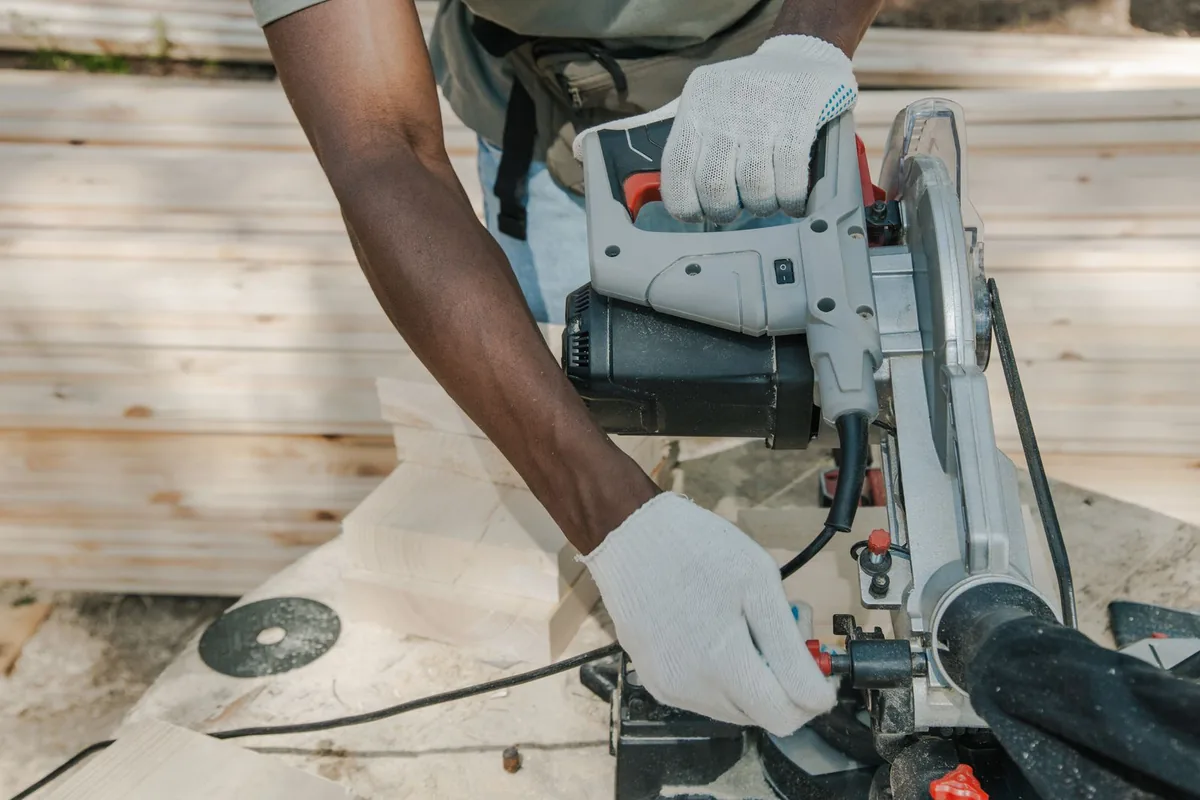
Once you have chosen the board, machining and storage decide whether the coating keeps its gloss. The four tips below apply to both one-side and two-side coated board:
See more wooden pallets at ICD Vietnam.
Frequently asked questions
How much is gloss-coated rubber wood board per cubic metre?
Coated board is usually sold by the sheet. Converted from the June 2026 list prices of a board seller in Binh Duong, a 17 mm grade AA sheet coated on both sides at 780,000 VND equals about 15.4 million VND/m³, and a 12 mm grade AC sheet coated on both sides at 615,000 VND equals about 17.2 million VND/m³. The thinner the board, the higher the price per cubic metre.
Should I choose one-side or two-side coating?
Choose two-side coating for parts that stand free or show on both faces, such as wardrobe doors, partitions and doors. Use one-side coating only when the back is glued or fixed in place, because uneven moisture uptake between the two faces makes the sheet prone to bowing.
How is coated finger-jointed rubber wood different from solid rubber wood?
Finger-jointed board is made from many small strips joined with glue and finger joints, so it can be made in large sheets of 1220 x 2440 mm and warps less than a solid timber panel of the same size. The durability of the board depends heavily on the quality of the joints and the type of glue.

What affects the price of coated finger-jointed rubber wood the most?
Sheet thickness, face grade (AA, AB, AC, CC), the number of coated sides, sheet size, quantity bought and the delivery location. Within a single price list, the coating usually adds about 40,000 VND per side.
Is coated finger-jointed rubber wood water-resistant?
The coated surface resists water better than bare board and can be wiped with a damp cloth. However, the cut edges have no coating and the glue between the strips decides how the whole sheet tolerates moisture, so the board is not suitable for soaking or for uncovered outdoor use. In damp places such as kitchen shelves, seal the edges and ask which joint glue is used.
How much does an 18 mm finger-jointed rubber wood sheet weigh?
A 1220 x 2440 mm sheet 18 mm thick has a volume of about 0.054 m³ and weighs about 32 kg at the 595 kg/m³ density of The Wood Database, or about 29.5 kg at the 0.55 g/cm³ of TCVN 12619-2:2019, excluding glue and coating. A 10 mm sheet weighs about 16-18 kg.
Should I choose gloss or matt coated board?
Gloss makes the grain stand out and suits counter tops and display shelves under lights. Matt shows fewer fingerprints and small scratches, and suits desk tops and everyday cabinets. Both have the same core structure; only the gloss of the coating differs.
Does ICD Vietnam sell coated finger-jointed rubber wood board?
No. ICD Vietnam makes and supplies pallets and does not trade in finger-jointed boards. The board prices in this article are public list prices of board sellers, with source and date.
Contact ICD Vietnam about wooden pallets
- Hotline 1: 0983 797 186
- Hotline 2: 0903 459 186
- Hotline 3: 0905 859 186
South Vietnam: 098 6784 186. Hanoi warehouse: 3rd Floor, Thang Long A1 Building, Bau Hamlet, Thien Loc Commune. Southern workshop: 551/212 Le Van Khuong Street, Tan Thoi Hiep Ward, District 12. Wooden pallets: contact for a quote, volume discounts.
References
- List prices of finger-jointed rubber wood board (including coated types): the article “How much is finger-jointed rubber wood board? Price list updated 2026”, Go An Thanh, posted 20 June 2026; the gloss-coated rubber wood board product page, Go Hieu Huong, prices updated March 2026. Read on 17 October 2026.
- Construction materials price announcement for October 2026, An Giang Department of Construction.
- The Wood Database, Rubberwood (Hevea brasiliensis): density and properties of rubber wood.
- TCVN 12619-2:2019 Wood - Classification - Part 2: By physical and mechanical properties.
- BSI Knowledge, EN 13353:2022 Solid wood panels (SWP) - Requirements.
- EUR-Lex, Regulation (EU) 2023/1464 on limits for formaldehyde emissions from products.
- Feist, Peterson, Protecting Wood From Humidity, US Forest Products Laboratory (FPL).
- Wood Handbook, chapter Finishing of Wood, USDA Forest Service.