Table of Contents
- 1. What is grade AA rubber wood?
- Is AA a national standard?
- 2. Technical characteristics of AA finger-jointed rubber wood board
- 3. Why choose AA rubber wood?
- 4. Comparing AA with AB and AC
- 5. What does the price of AA rubber wood depend on?
- How to inspect AA boards on delivery
- 6. Applications: when should you use AA board?
- 7. Conclusion
- Frequently asked questions
- What is grade AA rubber wood?
- Is AA a TCVN standard?
- What is the standard moisture for AA rubber wood?
- How does AA in US hardwood plywood differ from AA in finger-jointed rubber wood?
- What products is AA grade rubber wood usually used for?
- Is AA rubber wood used to make pallets?
- Is AA finger-jointed rubber wood water resistant?
- How do AA finger-jointed rubber wood and MDF differ?
- Contact ICD Vietnam for a quote
- References
Reviewed and updated by ICD - Week 43/2026
‘Grade AA rubber wood’ is the market name for finger-jointed rubber wood board that looks good on both faces: no dead knots, no black streaks, and strips of almost the same color. AA is not a national standard; each mill sets its own defect thresholds, so when you buy, write the acceptance criteria into the purchase order.
Rubber wood AA is the most selective grade in the range of finger-jointed rubber wood boards sold in Vietnam: strips are picked individually so that neither face has dead knots or black streaks.
This board is used for products that show both faces, such as wooden doors, CNC-cut partitions and freestanding shelves. There is no single moisture figure for the board either: 10-12% suits a hot, humid climate, while furniture headed for dry places usually needs less.
This article explains how to read face-grade codes, the real standards in the world that use the letters AA, the technical specifications worth asking about, and how to inspect boards on delivery.
1. What is grade AA rubber wood?
AA rubber wood board is a finger-jointed board in which both the main face and the other face reach grade A, meaning almost no visible defects.
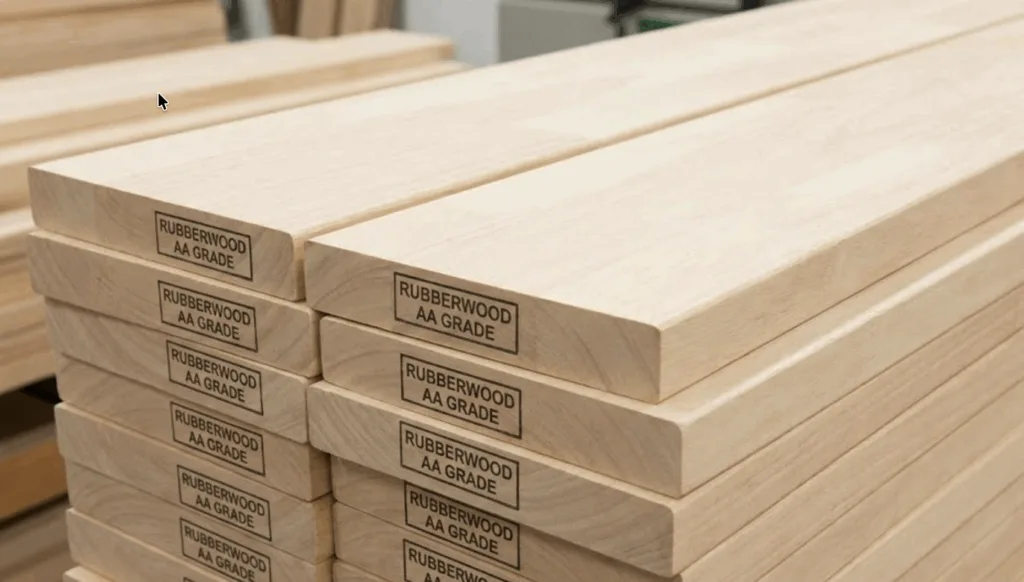
The AA code has two letters: the first describes the main face, the second the other face. AA means both faces reach grade A, so either face can be turned up as the main face.
For a board to be graded AA, the small rubber wood strips must be sorted before joining, rejecting strips with dead knots, black cores or a clearly different color from the others.
The surface must have no dead knots (black, rotten or hollow knots), no long black streaks, and seen as a whole sheet the strips must match in color. For a woodworker, this is a board that needs no defect repair before painting.
Because strip sorting takes effort, AA boards are usually kept for export furniture or high-end interior projects.
Reading the face code: a 5-grade scale from AA to CC by market convention
A face code has two letters: the first is the quality of the main face, the second the other face. A is a face with almost no defects, B allows small defects such as sound knots and short black streaks, and C has no limit on cosmetic defects.
| Grade | Main face | Other face | Choose when |
|---|---|---|---|
| AA | A | A | Products that show both faces: door leaves, partitions, freestanding shelves |
| AB | A | B | Back rarely seen: tabletops, wardrobe doors |
| AC | A | C | Only one face visible: wall-hugging shelves, flooring, wall cladding |
| BC | B | C | Core for veneer lamination, or color paint that hides the grain |
| CC | C | C | Hidden parts, internal structure |
The specific defect threshold of each grade (permitted sound knot size, length of black streaks) is usually set by each mill and can differ between suppliers. So when ordering AA, write the acceptance criteria into the purchase order instead of only the code.
Is AA a national standard?
No. In Vietnam, AA, AB, AC, BC and CC are trading conventions between mill and buyer, not quality grades defined in a national standard (TCVN) for finger-jointed rubber wood boards.
Reading sellers’ listings, you can see each one describes face grades in its own way. Some split three grades, AA, AC and CC; others split five as in the table above. The threshold for a B face also differs: some pages allow black knots under 4-5 mm, others state about 5 mm. Two quotes that both say AA are therefore not necessarily the same quality.
Some articles online cite TCVN 10768:2015 as the standard for grading finger-jointed timber. Looking it up in the standards database of the Vietnam Standards and Quality Institute, TCVN 10768:2015 is the standard for glass-fiber-reinforced thermosetting plastic (GRP) pipes, determining the creep factor under dry conditions, and has nothing to do with wood. Do not rely on this number when signing a board purchase contract.
The letters AA in US and European standards
The letters AA do appear in an official standard, but for a different board and with a different meaning. Under ANSI/HPVA HP-1-2024 (the US national standard for hardwood and decorative plywood), the face is graded on six levels AA, A, B, C, D, E, and the back is numbered 1, 2, 3, 4. A sheet marked ‘AA-1’ has a face of grade AA and a back of grade 1.
So AA in HP-1 is a single top face grade, higher than A, not two faces of the same grade A as the term is used in Vietnam. The standard also gives specific limits: a C-grade face allows small knots up to 6.4 mm in diameter and repaired knot holes up to 12.7 mm. The HPVA describes grade AA as meant for architectural paneling and high-quality furniture.
In Europe, solid wood panels are classified by surface appearance in the EN 13017 series; part 2 applies to hardwoods, the group that includes rubber wood. For faced finger-jointed boards, TCVN 11205:2015, equivalent to ISO 13609:2014, requires the face layer to reach class II under the ISO 2426 plywood appearance grading. When a foreign buyer names a specific standard in the order, check against that exact standard instead of converting to AA the way it is understood in Vietnam.
2. Technical characteristics of AA finger-jointed rubber wood board
Four specifications decide the quality of AA board: moisture content, surface flatness, knots and joint type; you should also ask about the glue type and the level of formaldehyde emission.
Grade AA only describes the appearance of the two faces. The strength and stability of the board lie in the internal specifications, so the buyer should ask about each item separately.
Moisture. Sellers usually offer finger-jointed rubber wood board at about 8-12%; this is a figure each mill declares, with no single common ‘export standard’. In a hot, humid climate like Vietnam, this level keeps the board from warping and shrinking much. When shipping to a dry temperate climate or for use in a heated room, the board should be dried lower, about 6-8% (see the table of moisture by place of use below).
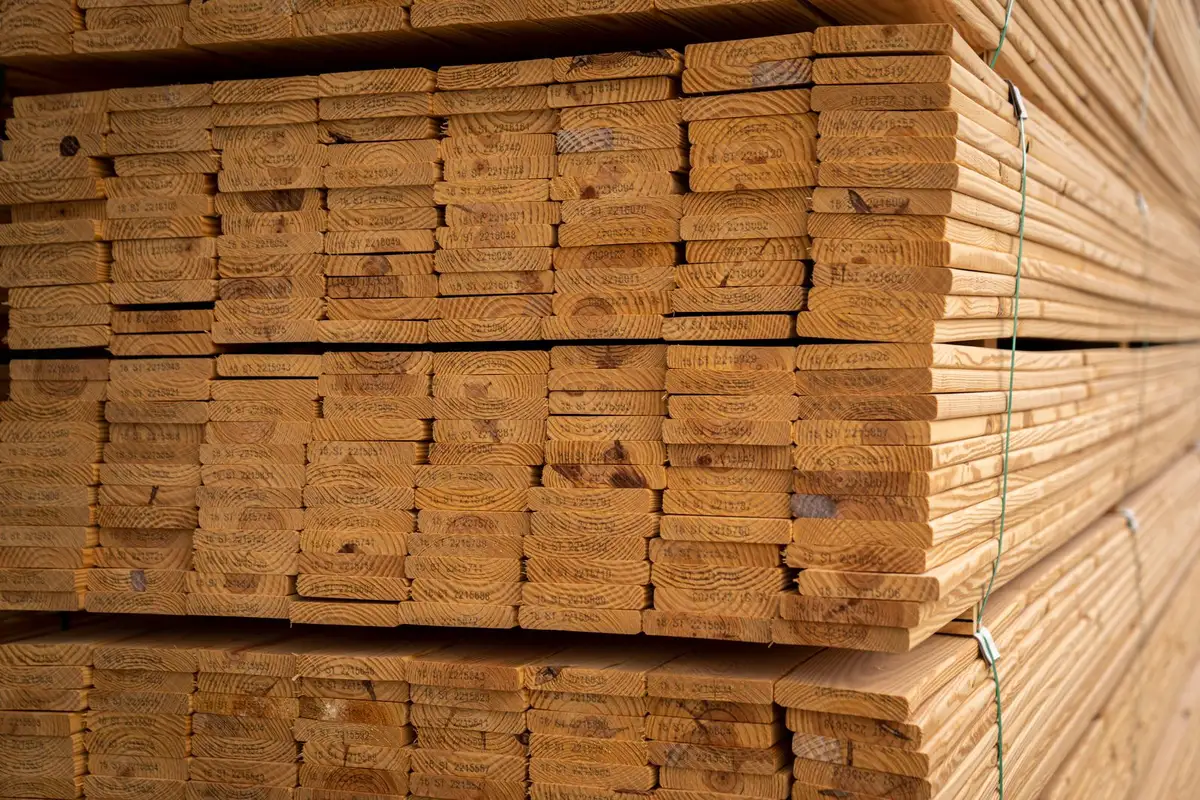
Surface. The board is sanded in several passes to be flat and smooth. Running a hand over an AA board, there is no wavy or rough feel.
Knots. Dead knots and black cores are not allowed on AA boards. A few very small, scattered sound knots (tight knots firmly bonded to the grain) may still be accepted, since they are a natural feature of real wood; the permitted level should be written in the order.
Joint type. AA boards usually favor a horizontal finger joint. This joint hides the comb teeth inside and leaves only a thin joint line on the surface, so the board looks almost like solid wood.
How does the joint type affect an AA board?
The joint type does not change the face grade, but it decides whether the board looks as continuous as solid wood or shows the comb teeth. A vertical finger-jointed board is still AA, yet the comb joints are clearly visible on the face, so for door leaves or decorative partitions, write the joint type into the order.
Glue and formaldehyde emission
Glue determines the moisture resistance of the joint and the amount of formaldehyde released by the board. The table below summarizes the glues commonly found in finger-jointed rubber wood boards:
| Glue type | Characteristics | Note for AA boards |
|---|---|---|
| UF (urea-formaldehyde) | Cheap, fast curing, poor water resistance | Suitable only for dry interiors; ask for an emission certificate if exporting |
| PVAc | Water-based, no formaldehyde in the glue composition | Common for furniture; water resistance classes D1 to D4 under European standard EN 204 |
| PU, EPI | Better moisture and heat resistance | Suited to kitchen countertops that are often wiped wet |
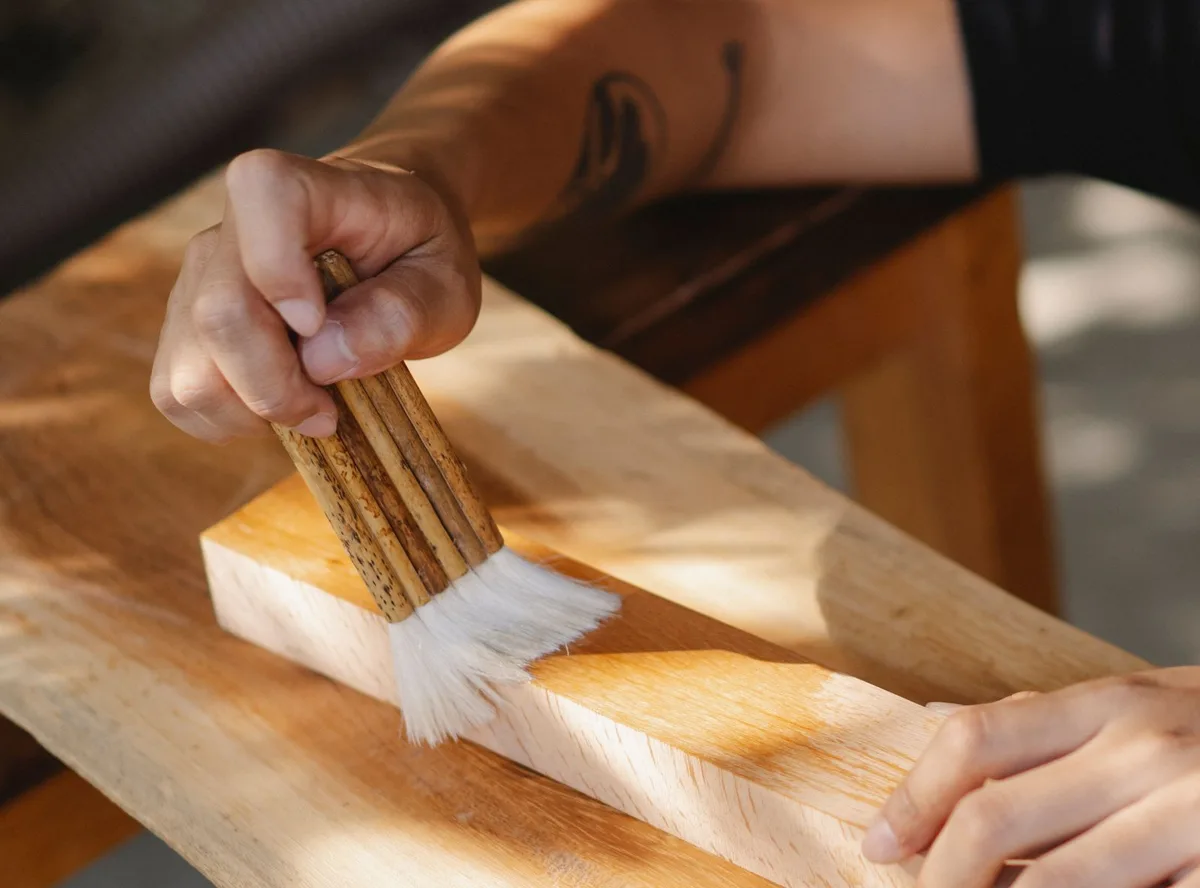
Is 10-12% moisture right for every market?
The right moisture depends on where the product will be placed; there is no single figure for all markets. The principle is to dry the wood close to the equilibrium moisture at the place of use to limit shrinkage and cracking after installation.
| Place of use of furniture (US) | Recommended average moisture | Range for individual boards |
|---|---|---|
| Most of the United States | 8% | 6-10% |
| Dry southwestern regions | 6% | 4-9% |
| Warm, humid coastal regions | 11% | 8-13% |
The figures above come from the Wood Handbook, chapter 13, of the USDA Forest Products Laboratory; the same document notes that hardwood for furniture and kitchen cabinets is usually dried to 6-8%. So 10-12% suits a hot, humid climate like Vietnam; for orders going to dry places or air-conditioned and heated rooms, agree on a lower moisture in the contract from the start.
3. Why choose AA rubber wood?
Choose AA board when the product shows both faces, when you want to paint and finish straight away without filling, and when you need paint color to take evenly across the whole surface.
AA board costs more than AB and AC, but for many workshops the difference is paid back in finishing labor.
Good looking on both sides. A door, a room partition or a bookshelf standing in the middle of the room shows both faces to the user. Here only AA board meets the need for an even good look on both sides, with no bad face to hide.
Saving on finishing labor is an economic calculation every workshop owner can see. With AB or AC boards, painters spend a lot of time filling with putty and re-sanding dead knots and cracks.
With AA boards the surface is already clean, so you can apply PU paint straight after purchase. The faster finishing time recovers part of the material price difference.
Even color. When stained, a board whose strips share one tone gives an even finish, not blotchy like boards joined from mismatched strips.

4. Comparing AA with AB and AC
All three grades share the same good A face; the difference lies in the other face: AA looks as good as the main face, AB has small knots and short black streaks, AC can have many dead knots and voids.
So if the product needs to show off both faces (wooden doors, CNC partitions, high-end tables and chairs), AA is the only choice. If only one good face is needed, such as a work desk top, wardrobe or kitchen cabinet, AB saves money because the B face turns inward. AC is mainly used for floor underlay, wall cladding or veneer core, where nobody sees the back.
5. What does the price of AA rubber wood depend on?
The price of AA board rises with thickness and sheet size; at the same specification, price also depends on the acceptance criteria, glue type and when the stock was bought.
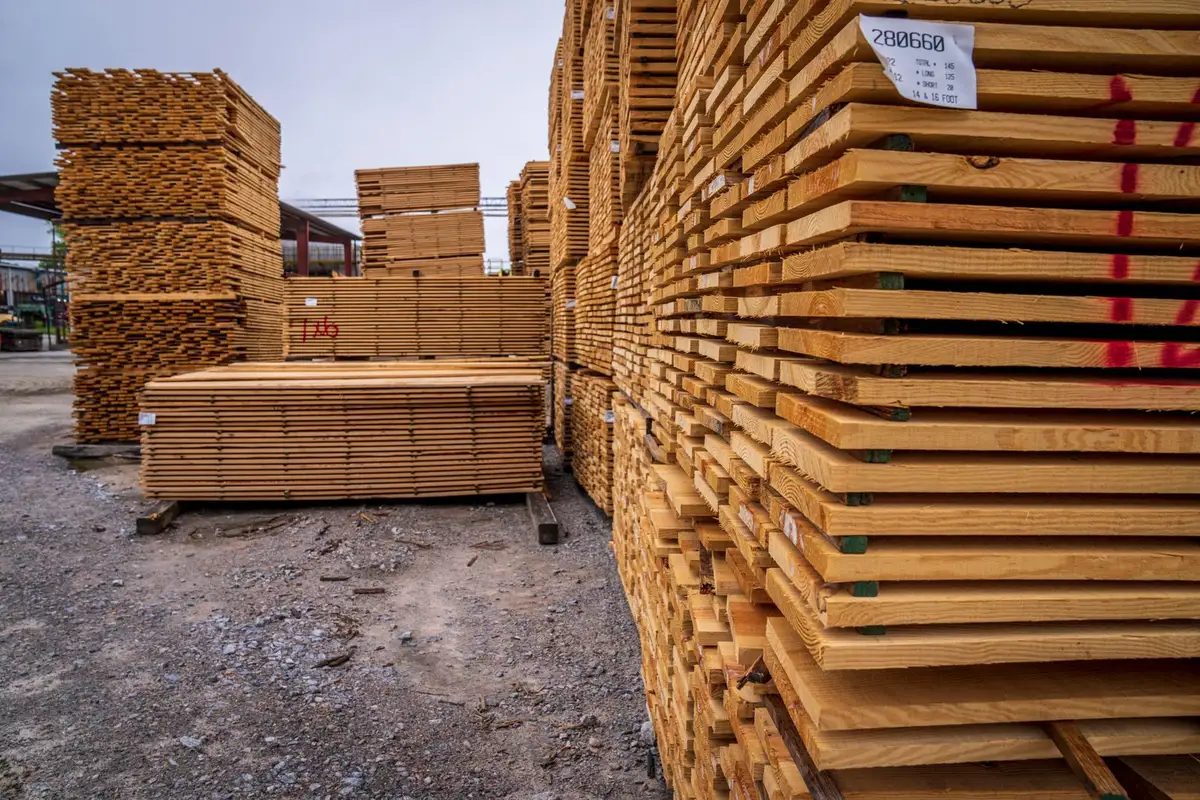
Because AA criteria are set by each mill, comparing prices between two suppliers only makes sense when both quote the same size, thickness, joint type, glue type and the same defect threshold for each face. A clearly cheaper AA quote usually comes with a looser sound-knot threshold or weaker water-resistant glue. ICD Vietnam manufactures pallets and does not trade in finger-jointed boards, so it does not quote this board.
How to inspect AA boards on delivery
Inspect AA boards at the warehouse, before the boards go into the workshop, in the five steps below. Do each step on several boards picked at random from the bundle, not just the top one.
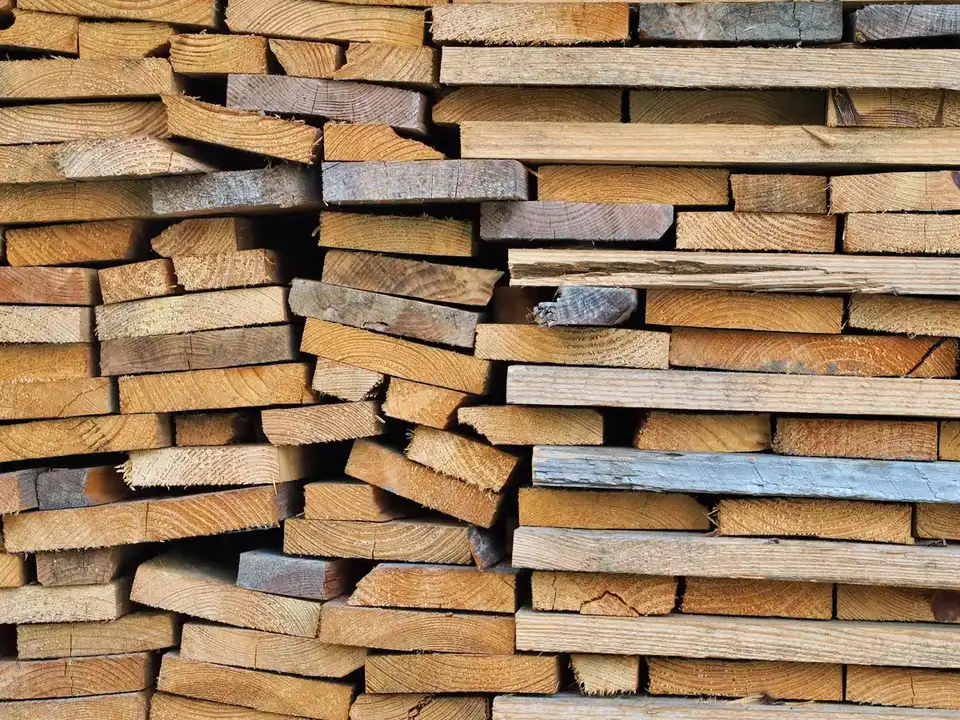
- Check both faces: turn each board under raking light; pass if both faces have no dead knots, no black core and no long black streaks.
- Check color: lay boards side by side and compare color between strips; pass if no strip is clearly darker.
- Measure moisture: use a wood moisture meter at several points on each board; pass if within the range written in the order.
- Check flatness: press a long straightedge on the face and along the diagonal; pass if there is no bow or twist and the surface is smoothly sanded.
- Check the joints: look along the edges and ends of the board; pass if there are no glue gaps, no opened joints and no cracks.
For the moisture step, following Wood Handbook guidance, measure at least about 10% of the boards in the lot to get a reliable average.
Specifications to write into an AA board purchase order
6. Applications: when should you use AA board?
Use AA board in three cases: contract-manufactured export goods with strict appearance criteria, CNC-cut products that show the core on both sides, and high-end furniture.
You do not always need AA board, but in the cases below, a lower grade usually has to be reworked or gets rejected by the customer.
Contract-manufactured export goods. Importers often attach their own appearance criteria for each item, sometimes stricter than the domestic reading of AA. AA board makes those criteria easier to meet, but you should still check each clause before ordering boards.
Double-sided CNC-cut products. When a CNC machine cuts patterns for a partition, the cut exposes the wood core inside. The AA face grade only covers the two surfaces; if the core is hollow or has dead knots, the bit catches and the pattern line chips. So state the core requirement in the order.
High-end apartment and villa interiors. Customers in this segment look at the inside of cabinet doors too. A door that is beautiful outside but speckled with black knots inside is likely to be sent back for rework, so AA board reduces that risk.
7. Conclusion
Choose AA board when the product shows both faces or is export goods with strict appearance criteria; in other cases AB or AC saves cost.
The most important thing is not to buy by the letters AA. Write the size, thickness, defect threshold for each face, joint type, glue type and moisture into the order, then inspect against exactly those items on delivery.
ICD Vietnam makes wooden pallets and does not trade in finger-jointed boards; if you need support for goods or export packing, see our wooden pallets.
Frequently asked questions
What is grade AA rubber wood?
It is the market name for finger-jointed rubber wood board with both faces at grade A: no dead knots, no black streaks, strips of even color. It is the highest face grade on the AA, AB, AC, BC, CC scale.
Is AA a TCVN standard?
No. AA is a trading convention, with defect thresholds set by each mill. The number TCVN 10768:2015 that some articles cite for finger-jointed timber is actually a standard for GRP plastic pipes.
What is the standard moisture for AA rubber wood?
There is no single standard level. Boards sold domestically are usually offered at 8-12%, which suits a hot, humid climate; per the Wood Handbook, hardwood for furniture used in dry places is usually dried to 6-8%, so moisture should be stated by place of use.
How does AA in US hardwood plywood differ from AA in finger-jointed rubber wood?
In the ANSI/HPVA HP-1-2024 standard, AA is a single face grade (above A), and the back is given as a number from 1 to 4, for example AA-1. In Vietnam, AA is two letters for two faces, each of grade A.
What products is AA grade rubber wood usually used for?
Products that show both faces such as wooden doors, CNC-cut partitions and freestanding shelves, plus contract-manufactured export furniture with strict appearance criteria.
Is AA rubber wood used to make pallets?
No need. Rubber wood pallets are built from sawn rubber wood strips, not finger-jointed board. AA board is selected for surface beauty and serves furniture; using it for pallets adds cost without adding load capacity.
Is AA finger-jointed rubber wood water resistant?
Rubber wood absorbs moisture quickly, so a board’s water resistance depends on the glue and coating. A board using a high water-resistance glue (such as D3, D4 under EN 204) and sealed with PU or paint on both faces can handle indoor damp environments such as kitchens; it should not be used outdoors or where it is soaked.
How do AA finger-jointed rubber wood and MDF differ?
Finger-jointed rubber wood is natural timber joined from strips, still looks good when CNC-cut to expose the core and can be painted directly; MDF is pressed fiberboard bonded with glue, with an even flat surface, usually coated with melamine or color paint. MDF is among the boards whose formaldehyde emission is controlled under TSCA Title VI when sold in the US; solid finger-jointed board is not.
Contact ICD Vietnam for a quote
- Hotline 1: 0983 797 186
- Hotline 2: 0903 459 186
- Hotline 3: 0905 859 186
References
- Characteristics of rubber wood used as panel stock: Vietnam Timber and Forest Product Association (VIFOREST).
- Face grades AA, A, B, C, D, E and back grades 1-4 for hardwood plywood: ANSI/HPVA HP-1-2024 and the Hardwood Plywood Handbook, Hardwood Plywood and Veneer Association (HPVA).
- Classification of solid wood panels by surface appearance: EN 13017-1 and EN 13017-2, European Committee for Standardization (CEN).
- TCVN 11205:2015 (ISO 13609:2014) faced finger-jointed boards; TCVN 10768:2015 (GRP pipes): standards database, Vietnam Standards and Quality Institute, accessed 17 October 2026.
- Recommended moisture for furniture wood: Wood Handbook, chapter 13, USDA Forest Products Laboratory.
- Formaldehyde emission rules for wood boards (TSCA Title VI): U.S. Environmental Protection Agency (EPA).
- Rubber wood properties: Wikipedia, entry Rubberwood.