Table of Contents
- What is the IPPC mark and what does it contain?
- The role of the IPPC mark in the wooden pallet trade and where it applies
- Where must the IPPC mark be stamped and how?
- Challenges in applying the IPPC mark
- How can you tell whether a provider complies with the IPPC standard?
- What happens to pallets with a missing or non-compliant mark?
- Frequently asked questions
- What components does a standard IPPC mark have?
- Which standard does the IPPC mark follow?
- What does a real IPPC mark look like?
- Are the IPPC fumigation mark and the ISPM 15 mark the same thing?
- Can the IPPC mark be printed in red?
- Can an IPPC sticker be used instead of stamping the pallet?
- Does a pallet with an IPPC mark need a fumigation certificate as well?
- Contact ICD Vietnam
- References
Reviewed and updated by ICD - Week 43/2026
The IPPC mark is a rectangular stamp placed on pallets, crates and wooden cases to prove the wood has been treated under ISPM 15. It has 4 components: the IPPC wheat-ear symbol, a two-letter ISO country code, a facility code issued by the plant protection authority and a treatment code (HT, DH, MB or SF); it is stamped on at least 2 opposite faces and must never be hand-drawn.
I wrote this article for the person who receives and inspects pallets before the cargo is packed: what the mark contains, where it must be stamped, how to check a sample pallet yourself, and what happens when the mark is non-compliant.
What is the IPPC mark and what does it contain?
The IPPC mark is the international symbol on wood packaging material (pallets, crates, cases) certifying that it has been given a phytosanitary treatment under the International Plant Protection Convention (IPPC). Its purpose is to stop the global spread of plant pests and diseases.
The IPPC mark follows the ISPM 15 standard (International Standards for Phytosanitary Measures No. 15), which sets the treatment measures that remove the risk of pests and diseases from wood.
A valid IPPC mark has exactly 4 components. The wheat-ear symbol is a fixed IPPC design and must not be altered. The country code is the two-letter ISO code of the country where the wood was treated, for example VN, US, DE. The facility code (the code of the producer or treatment provider) is a unique code issued by the national plant protection organisation (NPPO), placed after the country code and separated by a hyphen. Last comes the treatment method code under Annex 1 of ISPM 15, which has 4 symbols:
- HT (Heat Treatment): the wood core reaches at least 56 °C for 30 minutes continuously.
- MB (Methyl Bromide): methyl bromide fumigation.
- DH (Dielectric Heating): dielectric heating, added from the 2013 amendment.
- SF (Sulphuryl Fluoride): sulfuryl fluoride fumigation, added from the 2018 amendment.
For example, an IPPC mark may read VN-xxx HT: VN is the country code for Vietnam, xxx is the treatment facility code (here only an illustrative placeholder; the real code is issued by the plant protection authority) and HT is the heat treatment method.
The country code is the code of the country where the wood was treated and stamped, taken from the ISO 3166-1 code list; “EU” is the name of a bloc, not a country code, so a pallet treated in Germany carries DE and one treated in the Netherlands carries NL. Under the 2018 edition of ISPM 15 published by FAO, the four components must sit inside a rectangular or square frame, with a vertical line separating the symbol on the left from the codes on the right; the treatment code goes on its own line or is separated by a hyphen if on the same line.
The role of the IPPC mark in the wooden pallet trade and where it applies
The IPPC mark certifies that a wooden pallet has had the mandatory phytosanitary treatment, ensuring it carries no insects, larvae, mould or microorganisms harmful to the ecosystem of the importing country.
For a business, the IPPC mark does three jobs. It is international proof that the pallet was treated under ISPM 15, so wood packaging passes the border without extra paperwork. It is valid in most markets, because ISPM 15 is the common standard of the International Plant Protection Convention, which now has 185 contracting parties; a pallet with no mark or an invalid mark can be refused or forced to be re-treated at the border. And it tells you the method used: HT, DH, SF or MB.
On MB, the European Union has banned the use of methyl bromide inside the bloc since 18 March 2010 (now covered by Regulation (EU) 2024/590), but according to the European Commission, pallets imported into the EU are still accepted if treated by HT or MB in line with ISPM 15. EPAL pallets alone may only be heat treated. Because pallets can circulate through several countries, choosing HT is the lowest-risk option.
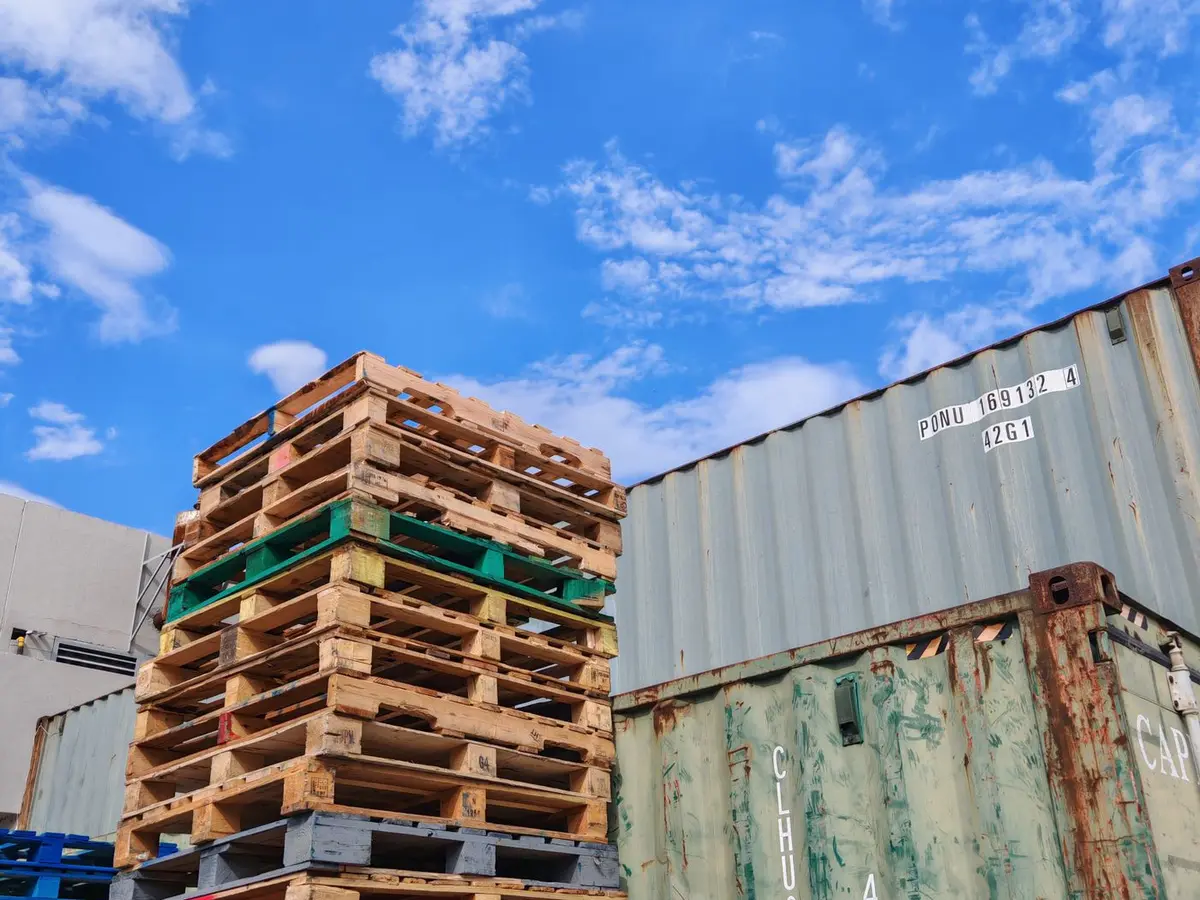
A point worth noting is that ISPM 15 was designed as a paperless certification system: the mark on the pallet is the proof, and the plant health authority of the importing country accepts a mark that follows Annex 2 as grounds to let the wood packaging through with no further request. A mark stamped incorrectly can therefore hold up an entire shipment even though the wood was treated properly.
In our experience, for businesses that export wooden pallets, the IPPC mark decides whether a shipment clears the border smoothly. A correct mark avoids delays and extra costs at the destination port, helps stop alien pests from spreading and shows partners that the business follows international rules. A wrong mark, on the other hand, can lead to re-treatment, destruction of the packaging or return of the goods.
Where must the IPPC mark be stamped and how?
The IPPC mark must be legible to the naked eye, durable, not transferable to another object and placed where it is visible while the pallet is in use, ideally on at least 2 opposite faces. The table below summarises the requirements of Annex 2 of ISPM 15 and the explanatory document for ISPM 15 from the IPPC Secretariat, with the faults that turn up most often when inspecting real cargo.
| Requirement | Rule | Common fault |
|---|---|---|
| Shape | Rectangular or square, with a border and a vertical line separating the symbol; the frame may have a few small gaps when a stencil is used | Mark missing the frame or the vertical line |
| Content inside the frame | Only 4 components; the manufacturer’s logo and the production date, if any, go outside the frame | Company name or batch number added inside the frame |
| How the mark is made | Applied with a heat brand, ink stamp or stencil; never hand-drawn, never a hang tag or removable item | Hand-written code, paper sticker |
| Symbol | Same as the IPPC design, on the left; not tilted, not printed in mirror image | Symbol flipped because the stamp was engraved the wrong way round |
| Colour | Avoid red and orange because they are colours of dangerous goods labels | Red paint used to make it more visible |
| Size | No minimum size but it must be readable without a magnifying glass; some countries set their own minimum size | Mark too small or smudged |
| Position | On the finished unit, ideally on 2 opposite faces; on a pallet it can be stamped on the inner face of the blocks so it is visible when the container door opens | Stamped on 1 face only, mark covered by stretch film or a label |
For dunnage that is often cut short when cargo is packed, the explanatory document recommends repeating the mark along the whole length of the board so that every cut piece still carries at least 1 mark; a piece too short to have a mark must not be used. A pallet assembled from treated wood and processed wood (plywood, particleboard) is treated as 1 unit, and the mark may be stamped on the processed-wood part to make it easy to see.
Challenges in applying the IPPC mark
The biggest challenges are the cost of the treatment kiln and record-keeping discipline: every batch must reach at least 56°C at the wood core for 30 minutes continuously and be recorded so it can be traced when a complaint arises.
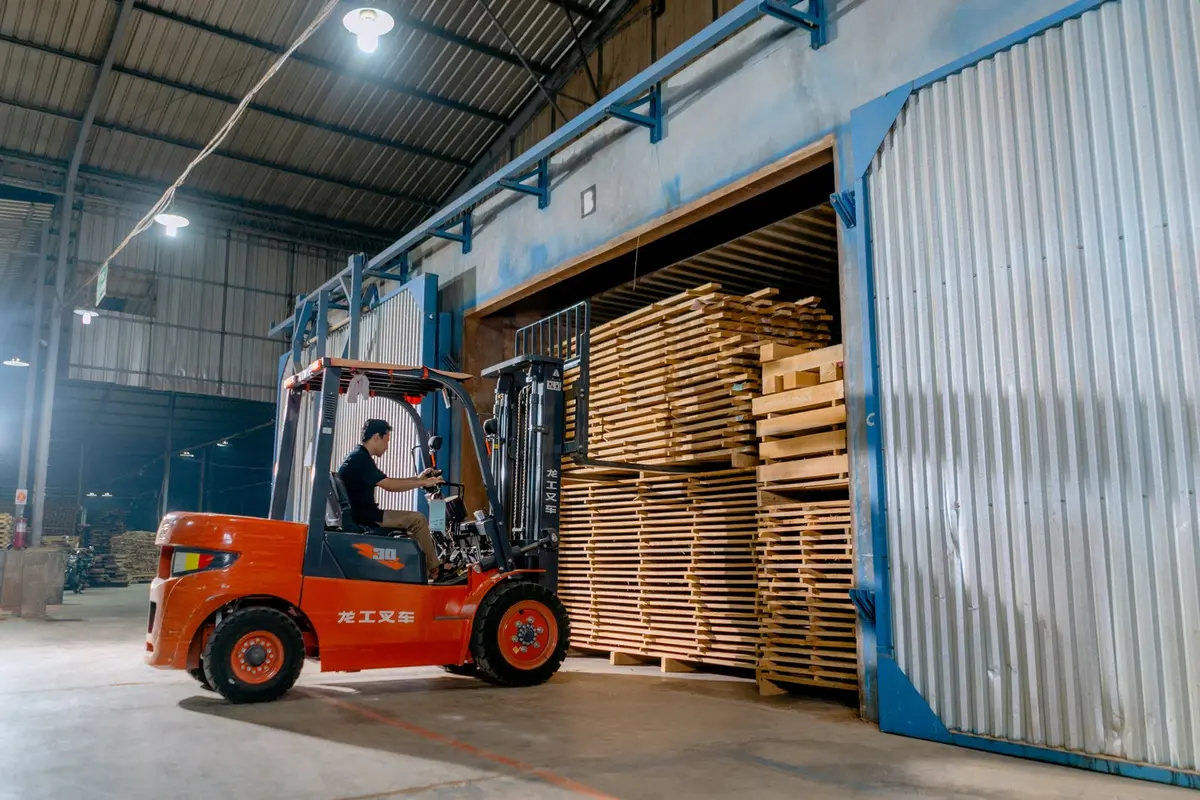
Beyond the investment and running cost, the treatment process must be precise enough both to kill pests and not to damage the wood, and every batch needs proper control and records. Treatment providers must also follow amendments to ISPM 15 and the specific requirements of each importing country. Counterfeit marks are a risk for the whole industry, because they erode trust in the marks of providers who do things properly.
The IPPC symbol is protected in many countries and is used by plant protection authorities under authorisation from FAO, so only a facility approved by the national plant protection authority may stamp it. In Vietnam, those are organisations licensed and given a code by the Department of Crop Production and Plant Protection (Ministry of Agriculture and Environment). The facility code on the mark lets you trace back to the exact provider that did the treatment, so using another provider’s mark or branding an unlicensed mark can be detected when the importing country reports a violation.
How can you tell whether a provider complies with the IPPC standard?
The quickest way is to read all 4 components on the mark, check its position and legibility, then ask the supplier to prove that the facility code on the mark was issued to them or to the treatment provider they hire. When you receive pallets before packing the cargo, you can check a sample pallet in the 5 steps below.
- Find the wheat-ear symbol: it passes when the symbol is there, to the left of the vertical line and not upside down.
- Read the country code: it passes when the two-letter ISO code matches the country of treatment (a pallet made in Vietnam shows VN).
- Check the facility code: it passes when the code on the mark matches the code on the licence of the supplier or the treatment provider they hire.
- Check the treatment code: it passes when it is the method stated in the contract or required by the importing country (usually HT).
- Check position and legibility: it passes when the mark is on at least 2 opposite faces, easy to read, and not covered by stretch film or a label.

When choosing a supplier, besides checking that the mark is clear and complete, ask which provider the facility code on the mark belongs to and whether it can be verified with the plant protection authority. ISPM 15 does not require a certificate to accompany a pallet carrying a valid mark, but if the contract, letter of credit or shipping line asks for a treatment certificate you should agree this in advance so the supplier can prepare it. Finally, prefer providers experienced in export pallets who control the process from wood to stamping.
What happens to pallets with a missing or non-compliant mark?
The plant health authority of the importing country may require re-treatment, destruction, diversion or refusal of the wood packaging, and even refusal of the whole accompanying shipment; the action depends on risk and each country’s law. Under the explanatory document for ISPM 15 from the IPPC Secretariat (section 8), the importing country is also recommended to notify the violation to the plant protection authority of the country whose code is on the mark, with the details of the mark, the goods, the exporter and the importer, so that the facility that applied the mark can be traced.
In our experience, the cost of a single detention is usually far greater than the price gap between a compliant pallet and a pallet of unknown origin, so check the mark as soon as you receive the pallets. In short, understanding the 4 components of the mark, stamping it in the right place and choosing a supplier that follows the right process is the simplest way to get a wood shipment across the border safely.
Frequently asked questions
What components does a standard IPPC mark have?
It has the IPPC symbol (the international wheat-ear logo), the country code (ISO 2 letters), the code of the producer or treatment provider issued by the national plant health authority, and the treatment method code (HT - heat treatment, DH - dielectric heating, MB - methyl bromide fumigation or SF - sulfuryl fluoride fumigation).
Which standard does the IPPC mark follow?
The IPPC mark follows ISPM 15 (International Standards for Phytosanitary Measures No. 15), which sets the treatment measures that remove the risk of pests and diseases from wood in international trade.
What does a real IPPC mark look like?
The mark takes the form VN-xxx HT, where VN is the country code for Vietnam, xxx is the treatment facility code issued by the plant protection authority (each provider has its own code) and HT is the symbol for the heat treatment method.
Are the IPPC fumigation mark and the ISPM 15 mark the same thing?
They are the same. “IPPC mark” refers to the symbol of the International Plant Protection Convention, “ISPM 15 mark” to the name of the standard that governs the mark, and “fumigation mark” is the familiar trade name even though most pallets today are heat treated (HT) rather than chemically fumigated.
Can the IPPC mark be printed in red?
It should not. Annex 2 of ISPM 15 requires avoiding red and orange because those two colours are used on dangerous goods labels. Common colours are black or dark blue, or a brown heat-branded mark burned into the wood.
Can an IPPC sticker be used instead of stamping the pallet?
No. The mark must be durable and not transferable to another object; the explanatory document for ISPM 15 says clearly that hang tags or other removable forms of marking are not used. The mark is applied with a heat brand, ink stamp or stencil directly on the wood.
Does a pallet with an IPPC mark need a fumigation certificate as well?
Under section 3.1 of ISPM 15, a valid mark is the basis for wood packaging to pass the border without further request, so a certificate is not mandatory. Some contracts, letters of credit or shipping lines still ask for a treatment certificate, so check with the buyer before packing the cargo.
Contact ICD Vietnam
If you need heat-treated wooden pallets with an IPPC mark for an export shipment, send us the dimensions, quantity and destination market so we can advise the right treatment method. ICD Vietnam export pallets are treated and stamped through a licensed facility; prices are quoted by quantity and specification.
- North Vietnam: 3rd Floor, Thang Long A1 Building, Bau Hamlet, Thien Loc Commune, Hanoi - 0983 797 186.
- South Vietnam: 551/212 Le Van Khuong Street, Tan Thoi Hiep Ward, District 12, Ho Chi Minh City - 098 6784 186.
- Email: sales@icdvietnam.com.vn.
References
- International Plant Protection Convention (IPPC), official IPPC website; ISPM 15 standard on treating wood packaging material.
- FAO, ISPM 15 Regulation of wood packaging material in international trade, 2018 edition, Annexes 1 and 2.
- IPPC Secretariat, Explanatory document for ISPM 15, section 6.2 Marking and section 8 Measures for non-compliance.
- International Organization for Standardization, ISO 3166-1 country codes.
- European Commission, guidance on wood packaging material imported into the EU; Regulation (EU) 2024/590 on substances that deplete the ozone layer.