
Table of Contents
- 1. The scientific name of rubber wood in detail
- 2. The role of the scientific name Hevea brasiliensis in export documents
- 3. Biological features of Hevea brasiliensis that affect pallet quality
- 4. What should be agreed when ordering rubber wood pallets?
- 5. Conclusion
- Frequently asked questions
- What is the scientific name of rubber wood?
- Why does the scientific name Hevea brasiliensis need to be written correctly when exporting?
- What other trade names does rubber wood go by?
- What does Hevea brasiliensis (Willd. ex A.Juss.) Müll.Arg. mean?
- Is rubber wood under CITES?
- Does exporting rubber wood pallets need the scientific name?
- How many species are in the genus Hevea?
- Contact ICD Vietnam for a quote
- References
Reviewed and updated by ICD - Week 43/2026
The scientific name of rubber wood is Hevea brasiliensis, in the spurge family (Euphorbiaceae); the full name with author is Hevea brasiliensis (Willd. ex A.Juss.) Müll.Arg., published in 1865. This is the name accepted by the Royal Botanic Gardens, Kew and by the GRIN database of the US Department of Agriculture. On export documents for rubber wood, boards and furniture, writing it next to the trade name Rubberwood lets partners and inspection bodies identify the timber species correctly.
Having made pallets and wooden packaging at ICD Vietnam since 2011, I find the question about the scientific name usually comes from the documents department: foreign partners ask for the timber species, forest product lists need the species name, and European importers need information for their due diligence files. Rubber wood is not listed under CITES, so no CITES permit is needed, but stating the exact species name is still worth doing from the contract stage. This article goes from the name itself and how to write it correctly to each kind of paper that needs the scientific name.
1. The scientific name of rubber wood in detail
Rubber wood is the timber of the rubber tree Hevea brasiliensis, the only species grown commercially for natural rubber latex. The tree originates from the Amazon region of South America; according to PROSEA, the species was introduced to Southeast Asia in 1876 (Sri Lanka, Singapore and Bogor, Indonesia) and to the Malay Peninsula in 1877, and then became the region’s main industrial crop, including in Vietnam.
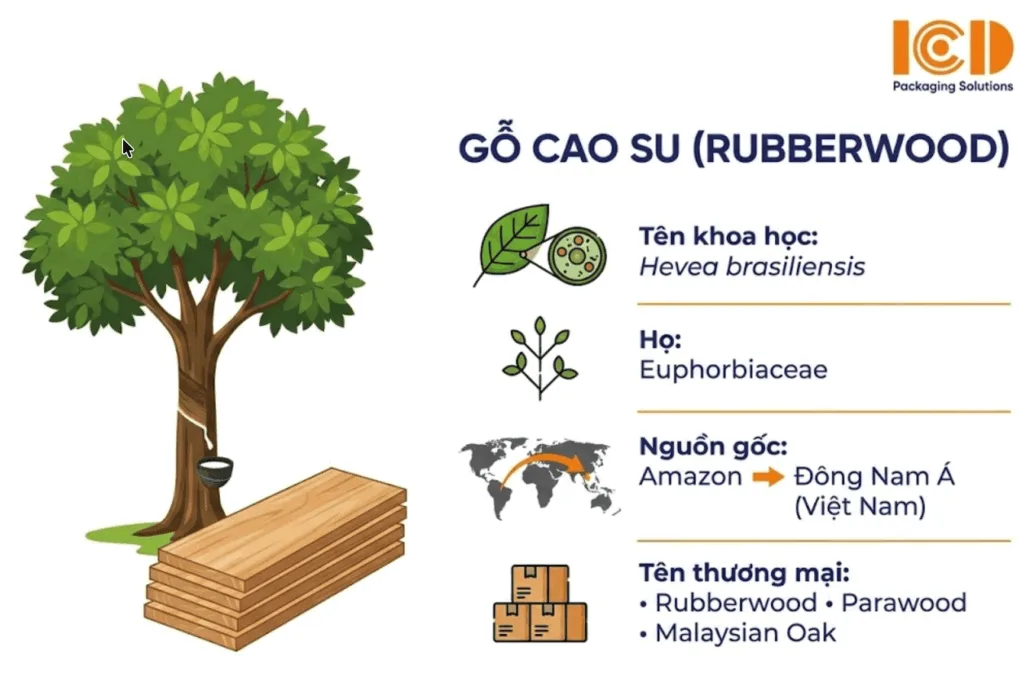
Three pieces of information to remember when declaring rubber wood are the scientific name, the plant family and the trade name:
- Official scientific name: Hevea brasiliensis, accepted in biological research and international trade.
- Plant family: Euphorbiaceae, also called the spurge family.
- Trade names: Rubberwood, Parawood, sometimes Malaysian Oak; Malaysian Oak is only a marketing name, and the wood has no relation to oak.
According to the Tropical Timber Atlas of the International Tropical Timber Organization (ITTO), the official name of the wood in tropical timber nomenclature is ‘Hevea’, while ‘Rubberwood’ is the second commonly used trade name. Our article what rubber wood is called in English goes deeper into these English names; here I focus on the scientific name.
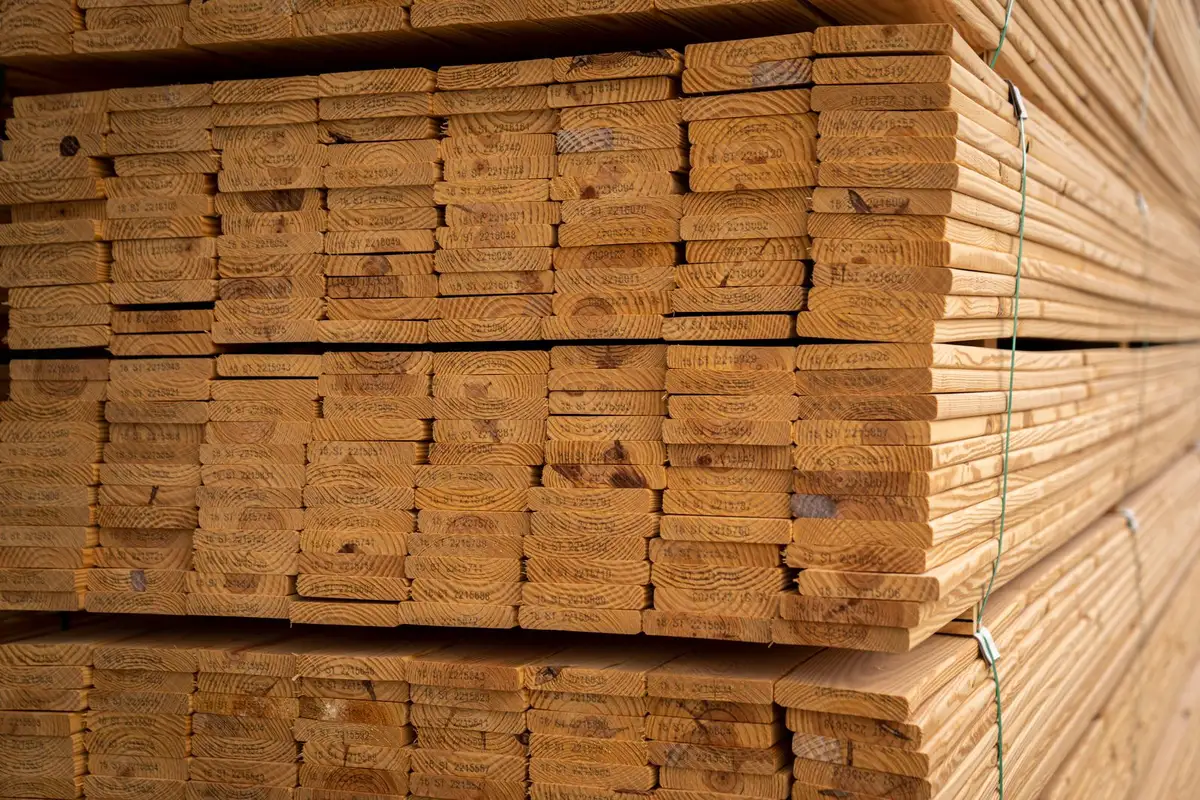
Full scientific name and classification of the rubber tree
The full scientific name, with author, of the rubber tree is Hevea brasiliensis (Willd. ex A.Juss.) Müll.Arg., according to the Plants of the World Online database of the Royal Botanic Gardens, Kew. The part in brackets shows that the species was first described under the name Siphonia brasiliensis Willd. ex A.Juss. in 1824: Willdenow gave the name and Adrien de Jussieu published it. In 1865 the botanist Müller Argoviensis moved the species to the genus Hevea in the journal Linnaea (volume 34, page 204). On commercial documents it is enough to write Hevea brasiliensis; the author part is used when technical documents or partners ask for the full nomenclature.
According to PROSEA, the genus Hevea has 10 species, all native to tropical America. Kew records that only 3 species yield usable latex, and Hevea brasiliensis is the only one grown commercially. So rubber wood grown in Vietnam and Southeast Asia is almost entirely Hevea brasiliensis; when declaring, do not write the generic Hevea spp. if you know the species for certain.
You may meet the author name written in different ways in older documents: ‘Müll.Arg.’, ‘Muell. Arg.’ or ‘Muell.-Arg.’ all refer to the same botanist, Johannes Müller Argoviensis. The current standard form according to the International Plant Names Index (IPNI) that Kew uses is ‘Müll.Arg.’.
How to write the scientific name correctly on documents
A scientific name follows the binomial rule: the genus name has a capital first letter, the species name is entirely lowercase, and the whole phrase is italic where formatting allows. The errors below are common on declarations and lists:
| Spelling | Correct or wrong | Explanation |
|---|---|---|
| Hevea brasiliensis | Correct | Genus capitalized, species lowercase, italic |
| Hevea brasiliensis | Acceptable | When the form does not allow italics |
| H. brasiliensis | Correct from the second mention | Abbreviating the genus after it has been written in full once in the same document |
| Hevea Brasiliensis | Wrong | The species name is not capitalized |
| Hevea brasiliens, Hevea brazilliensis | Wrong | Misspelled species name, easily leads to a request to correct the document |

2. The role of the scientific name Hevea brasiliensis in export documents
For documents staff, the scientific name identifies the timber species on many papers, but each paper needs it only in certain cases. The most common mix-up is between rubber wood as the goods themselves (sawn timber, boards, furniture) and rubber wood pallets used only to carry other goods.
A phytosanitary certificate in the model of the International Plant Protection Convention has a field for the plant name, stating the scientific name of the goods. Writing only ‘Rubberwood’ does not identify the species, so I always advise writing ‘Rubberwood (Hevea brasiliensis)’ wherever the goods are named, so documents match each other and avoid follow-up questions.
For domestic forest product records, Circular 26/2022/TT-BNNPTNT on the management and traceability of forest products requires species information to include both the common name and the scientific name; forest product lists are drawn up on the forms issued with the circular. Writing the species name correctly helps trace the origin of legal plantation timber when customers or inspectors ask.
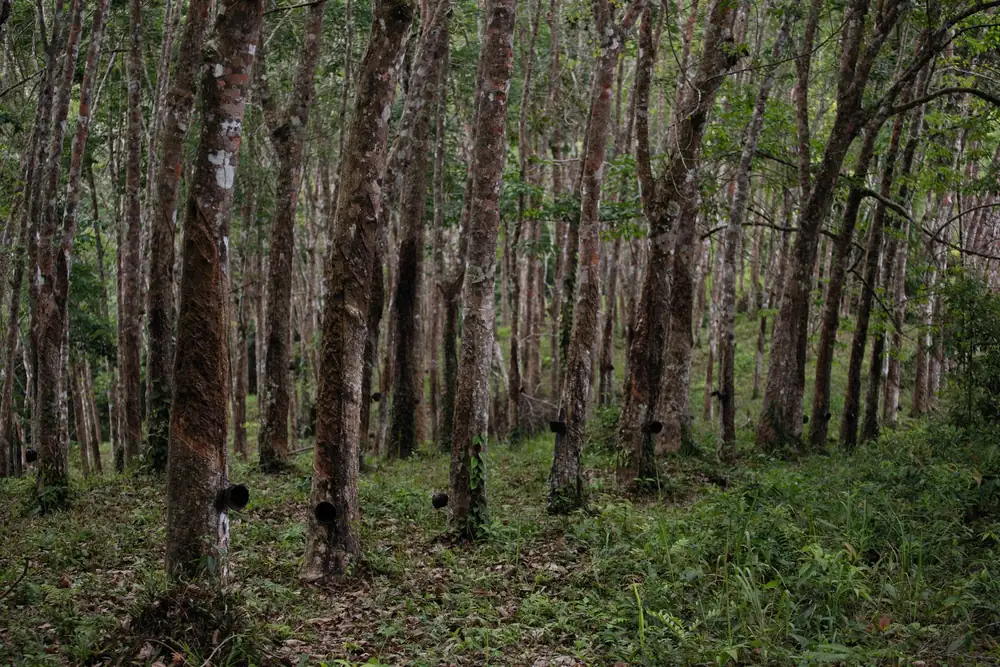
On CITES, rubber wood comes from plantations after the latex cycle, and the species is not named in the convention’s Appendices, so exporting it does not need a CITES permit. Stating the scientific name precisely helps partners quickly confirm that the shipment is not among the controlled species. The table below summarizes where rubber wood stands in the regulations that documents staff are often asked about by partners.
| Regulation | Status of Hevea brasiliensis | Meaning for export documents |
|---|---|---|
| CITES | Not listed in Appendix I, II or III | No CITES permit needed to export rubber wood |
| IUCN Red List | Least Concern (LC) | Not a threatened species |
| EU Deforestation Regulation (EUDR) | Both rubber and wood are in scope | The EU importer’s due diligence statement must give the full scientific name of the timber species |
| Vietnamese forest product records | Plantation timber | The forest product list states the species name to trace legal origin |
From 30 December 2026, EU customers will ask about the scientific name more closely
According to the European Commission, Regulation (EU) 2023/1115 on deforestation-free products (EUDR), as amended by Regulation (EU) 2025/2650, applies from 30 December 2026 to large and medium companies, and to small companies already within the scope of the EU Timber Regulation (EUTR); the remaining micro and small companies apply from 30 June 2027. The simplification package the European Commission announced on 4 May 2026 confirmed there is no further delay to this date. Under Article 9 of the regulation, for products containing wood, the due diligence information includes the common name and full scientific name of each timber species, together with the geographic location of the harvest area.
One point worth noting for the packaging industry: the EUDR product list excludes packaging material used only to support, protect or carry another product placed on the market. Pallets used to carry goods are therefore not the main subject of the due diligence file, but rubber wood timber, boards and furniture exported to the EU are. Exporters of those items should standardize the ‘Rubberwood (Hevea brasiliensis)’ wording on every document from now on.
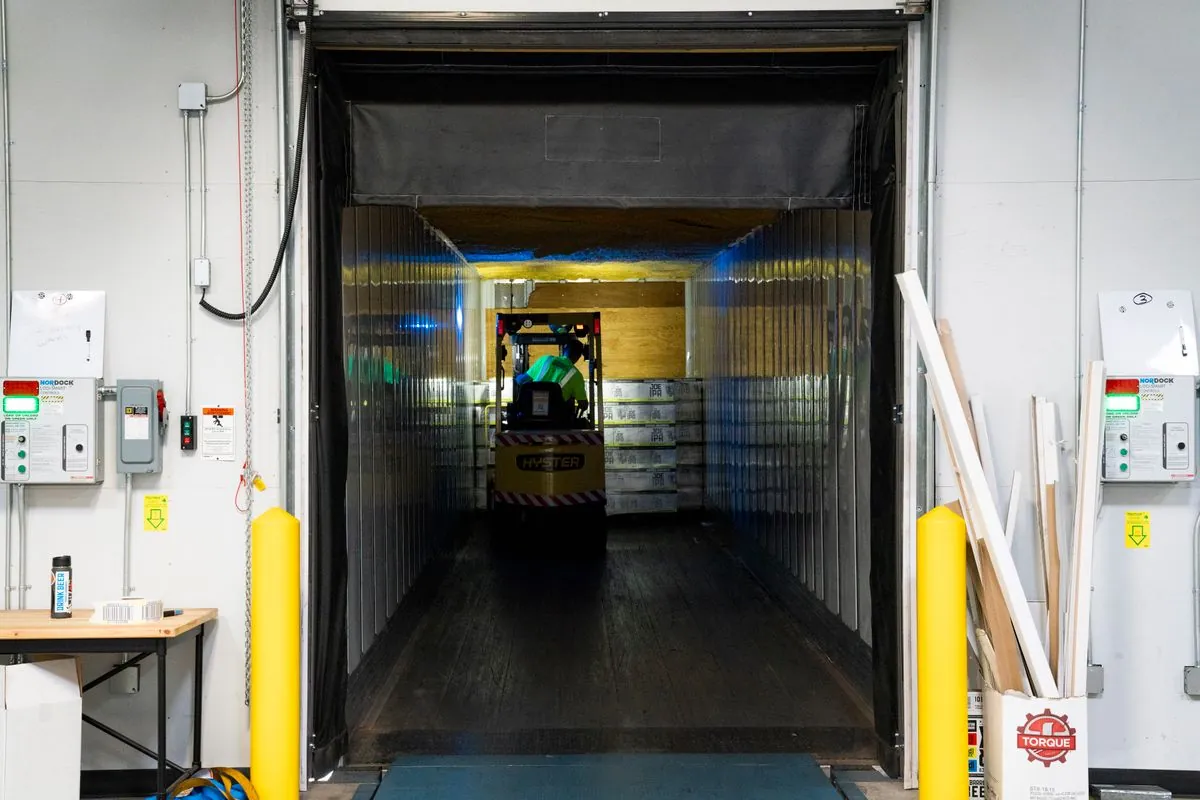
3. Biological features of Hevea brasiliensis that affect pallet quality
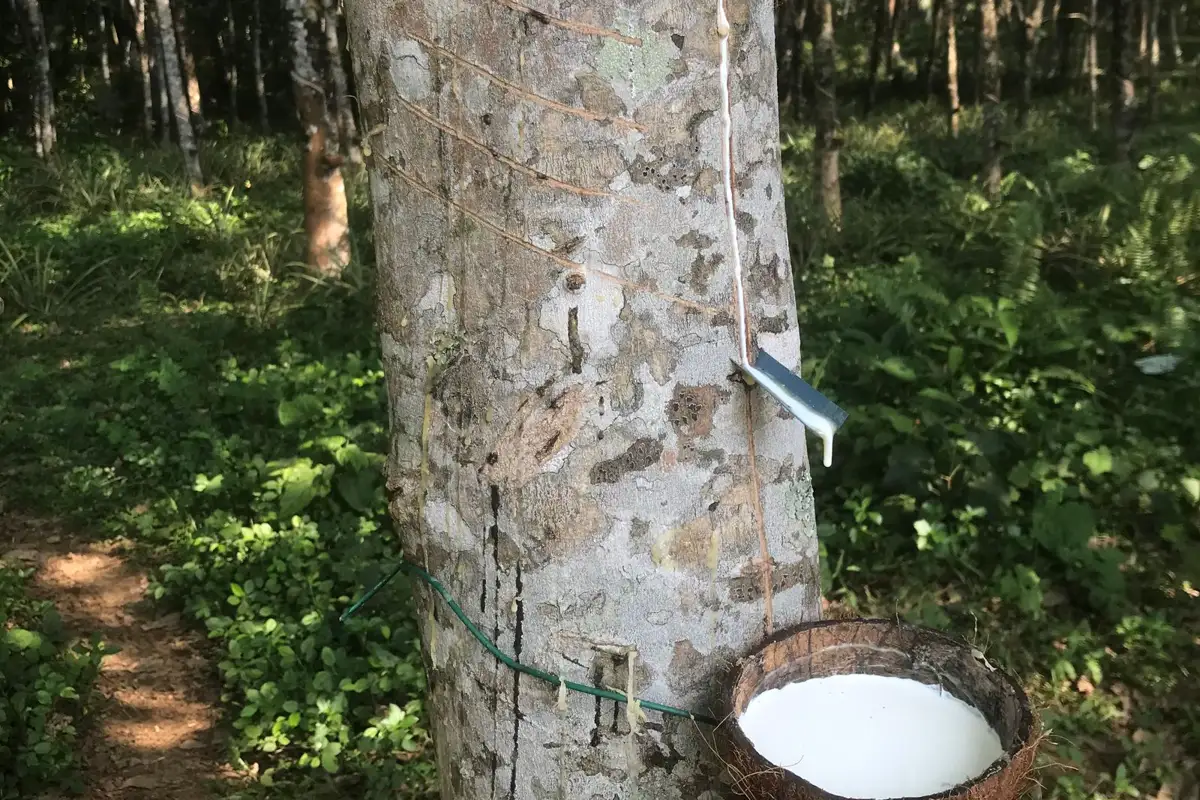
Two features of the rubber tree directly affect pallets: the wood contains a lot of starch, and trees are felled at 25 - 35 years after the latex cycle. Kew describes latex as formed in a specialized system of ducts in the inner bark; the trunk wood is what remains when the plantation is no longer productive. Wild trees can reach 30 - 40 m, but cultivated trees are usually only 15 - 25 m because tapping slows growth.
Rubber wood naturally contains fairly high levels of starch and sugar, which feed wood borers and stain fungi. This is why sawn rubber wood or rubber wood pallets need to be treated and dried to limit termites and mold. If they accompany export cargo, pallets must also be treated under ISPM 15 by one of the recognized methods, most commonly heat treatment (HT). ISPM 15 aims to kill pests at the time of treatment and does not replace preservative treatment against long-term termite and borer attack.
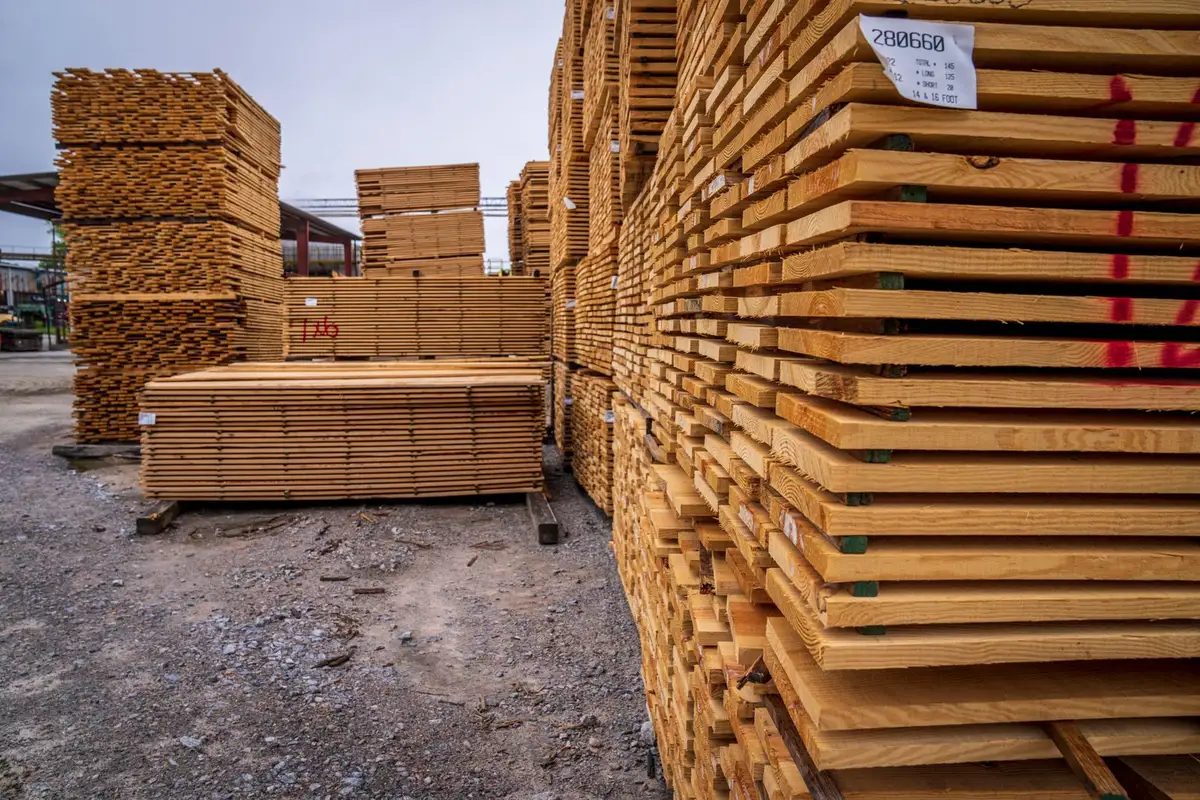
On wood properties, the articles in our cluster use consistent figures: an average weight of 595 kg/m³ at 12% moisture and a Janka hardness of 4,280 N per The Wood Database, and an air-dry density of 560 - 640 kg/m³ per ITTO. Rubber wood is regarded as an environmentally friendly plantation timber because it is harvested only after the tree ends its latex cycle, instead of being burned. For rubber wood pallets, this advantage only counts when accompanied by clear timber origin records.
4. What should be agreed when ordering rubber wood pallets?
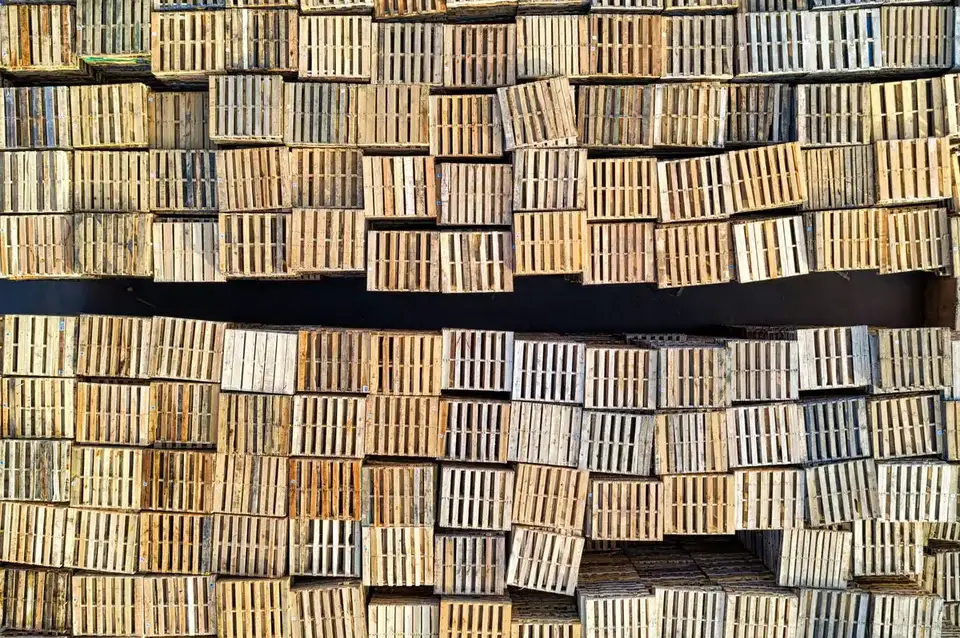
When ordering rubber wood pallets for export cargo, agree with the supplier from the quotation stage: the wood type stated with its scientific name, the wood moisture, the ISPM 15 treatment method and the position of the IPPC mark. ICD Vietnam builds wooden pallets to the customer’s drawing and load; ISPM 15 treatment and marking is carried out through a provider licensed by the plant protection authority. The scientific name appears on four different documents depending on the role of rubber wood in the shipment:
5. Conclusion
The scientific name of rubber wood is Hevea brasiliensis (Willd. ex A.Juss.) Müll.Arg., family Euphorbiaceae; on documents it is enough to write Hevea brasiliensis, placed next to the trade name Rubberwood. Rubber wood is not under CITES and is rated Least Concern by IUCN, but from 30 December 2026, EU customers importing rubber wood timber, boards and furniture will need the full scientific name for EUDR due diligence. For pallets used only to carry goods, the paper needed remains the IPPC mark under ISPM 15.
Frequently asked questions
What is the scientific name of rubber wood?
Hevea brasiliensis, in the spurge family (Euphorbiaceae). The full name with author is Hevea brasiliensis (Willd. ex A.Juss.) Müll.Arg., accepted by the Royal Botanic Gardens, Kew and GRIN (US Department of Agriculture).
Why does the scientific name Hevea brasiliensis need to be written correctly when exporting?
The scientific name identifies the timber species exactly on the phytosanitary certificate (when the importing country requires it), the forest product list and the EU importer’s due diligence file under EUDR. A trade name such as Rubberwood is not enough to identify the species.
What other trade names does rubber wood go by?
In foreign trade contracts, rubber wood is usually called Rubberwood, Parawood, or sometimes Malaysian Oak. In the tropical timber nomenclature ITTO uses, the official name is Hevea.
What does Hevea brasiliensis (Willd. ex A.Juss.) Müll.Arg. mean?
It is the full scientific name with author of the rubber tree. The species was first described as Siphonia brasiliensis Willd. ex A.Juss. in 1824, and Müller Argoviensis later moved it to the genus Hevea in 1865. On commercial documents it is enough to write Hevea brasiliensis.
Is rubber wood under CITES?
No. Hevea brasiliensis is not listed in CITES Appendices I, II or III and is rated Least Concern by IUCN (assessed in 2020), so exporting rubber wood does not need a CITES permit. Documents still need to prove the legal origin of the wood under forest product regulations.
Does exporting rubber wood pallets need the scientific name?
If the pallet is used only to carry and pack other goods, the evidence needed is the IPPC mark under ISPM 15 on the pallet. If the pallet or the rubber wood is the exported goods themselves, the scientific name Hevea brasiliensis needs to be on the forest product list and the phytosanitary certificate when the importing country requires it.
How many species are in the genus Hevea?
According to PROSEA, the genus Hevea has 10 species, all native to tropical America. Kew records that only 3 species yield usable latex, and Hevea brasiliensis is the only one grown commercially, so rubber wood in Vietnam is almost entirely this species.
Contact ICD Vietnam for a quote
For a quote on rubber wood pallets by size, load and ISPM 15 treatment requirements, send us the drawing or specification, quantity and export market. ICD Vietnam has a production workshop, a Hanoi warehouse and a southern workshop; price: contact for a quote, with volume discounts. Wooden pallets carry no warranty and can be returned or exchanged within 7 days.
ICD Vietnam Industrial Manufacturing Co., Ltd
- North (Hanoi warehouse): 3rd Floor, Thang Long A1 Building, Bau Hamlet, Thien Loc Commune, Hanoi - 0983 797 186 / 090 345 9186 / 090 5859 186.
- Southern workshop: 551/212 Le Van Khuong, Tan Thoi Hiep, District 12, Ho Chi Minh City - 098 6784 186.
- Email: sales@icdvietnam.com.vn. Zalo: Chat with an advisor.
References
- Hevea brasiliensis (Willd. ex A.Juss.) Müll.Arg., Plants of the World Online, Royal Botanic Gardens, Kew.
- Hevea brasiliensis, GRIN-Global, US Department of Agriculture (USDA ARS).
- Hevea (PROSEA), Plant Resources of South-East Asia, Pl@ntUse.
- Hevea brasiliensis, IUCN Red List (Fabriani F. & Hills R., 2020).
- Tropical Timber Atlas, International Tropical Timber Organization (ITTO) and CIRAD.
- Regulation on Deforestation-free products (EUDR), European Commission.
- Delay until December 2026 and other developments in the implementation of the EUDR Regulation, Access2Markets, 28 Jan 2026.
- Circular 26/2022/TT-BNNPTNT on the management and traceability of forest products, Government Web Portal.
- ISPM 15: Regulation of wood packaging material in international trade, IPPC.
- Rubberwood (Hevea brasiliensis), The Wood Database.
- Rubber tree, Vietnamese Wikipedia.