Table of Contents
- 1. What is rubber tree timber called in English?
- 2. English terms for wooden pallets in logistics
- 3. Why is rubberwood pallet popular in Vietnam?
- 4. Export rubberwood pallets at ICD Vietnam
- Frequently asked questions
- What is rubber tree timber called in English?
- What other names does rubberwood go by in international trade?
- What other names does rubberwood go by in international trade?
- Why do I need to know the English name of rubberwood?
- What is finger-jointed rubberwood called in English?
- What is a pressed-wood pallet called in English?
- What is pallet fumigation called in English?
- What is a pallet crate called in English?
- Is rubberwood a hardwood or a softwood?
- What is the HS code of a wooden pallet?
- Contact ICD Vietnam for a quote
- References
Reviewed and updated by ICD - Week 43/2026
Rubberwood is the English name for rubber tree timber, the timber of the rubber tree. On contracts and catalogs you will also meet hevea, parawood and plantation hardwood, while the botanical name is Hevea brasiliensis. When you order pallets, the terms worth knowing first are wooden pallet, stringer, block, deckboard, static/dynamic/racking load, and the quarantine group of ISPM 15, HT and IPPC mark.
This article answers the question of what rubber tree timber is called in English, and gives a working vocabulary for wooden pallets, the ISPM 15 quarantine standard, load ratings and industrial crates. Read it as a reference for purchasing, import-export and warehouse teams who deal with overseas partners. For the material itself, see our complete guide to rubberwood.
I have worked at ICD Vietnam since 2011, and I have seen more than a few orders questioned over a single word: the quotation says “rubber wood”, the buyer’s file says “hevea”, and the customer’s drawing calls the pallet foot a “block” while our workshop reads it as a “stringer”. The tables below hold the words I find myself using most when discussing wooden pallets with overseas partners, with sources so you can check them yourself.
1. What is rubber tree timber called in English?
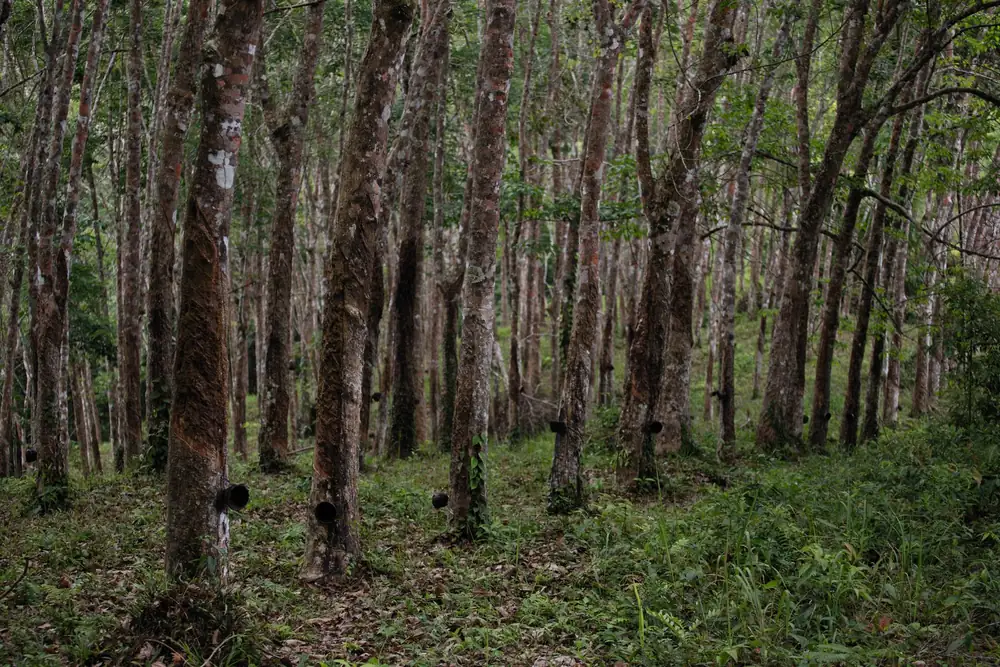
In international trade, the most common name for this timber is Rubberwood. It is a compound of rubber and wood, and it points to the right origin: the timber comes from the Para rubber tree (Hevea brasiliensis) once the tree has finished its latex-tapping cycle. Depending on the market and the type of document, you will meet several other names, shown below.
- Hevea, hevea wood: taken from the botanical genus, common in technical papers and tropical timber lists.
- Parawood: a trade name often seen on furniture, derived from the name of the Para rubber tree.
- Hevea brasiliensis: the botanical name, used when declaring the species on quarantine documents and origin certificates.
- Plantation hardwood: a generic description for hardwood grown on plantations, not only rubberwood.
Rubberwood is regarded as an environmentally friendly plantation timber because the tree is felled only after its latex cycle ends. In industrial packaging it is a widely used plantation hardwood for pallets and crates; how well a pallet carries load depends on treatment, drying and structural design.
These names point to the same timber but differ in precision. The table below follows The Wood Database, which lists rubberwood, plantation hardwood, parawood and Malaysian oak as common names of the same species, Hevea brasiliensis, together with ITTO’s Tropical Timber Atlas.
| English name | Where you see it | Notes on use |
|---|---|---|
| Rubberwood | Contracts, quotations, pallet and furniture catalogs | The most common name; use it in contracts |
| Hevea, hevea wood | Technical documents, tropical timber lists | Official (pilot) name under the ATIBT tropical timber nomenclature |
| Parawood | Retail furniture | Same meaning as rubberwood, from the name of the Para rubber tree |
| Plantation hardwood | Furniture product labels | Generic description (hardwood from plantations); add the species name |
| Malaysian oak | Furniture imported from Malaysia | Marketing name; unrelated to true oak (genus Quercus) |
| Hevea brasiliensis | Quarantine papers, timber origin certificates | Botanical name; state it when declaring the timber species |
Why write the botanical name as well? According to the CIRAD paper on wood names, ITTO’s Tropical Timber Atlas follows the ATIBT tropical timber nomenclature, in which the official name of this species is Hevea and rubberwood is the second trade name. The same paper cites Article 9 of the EU Timber Regulation (EUTR), which requires records to give both the common name and the full scientific name of the species. In practice I advise writing “Rubberwood (Hevea brasiliensis)” in contracts and documents so that neither side reads it differently.
What is finger-jointed rubberwood called in English?
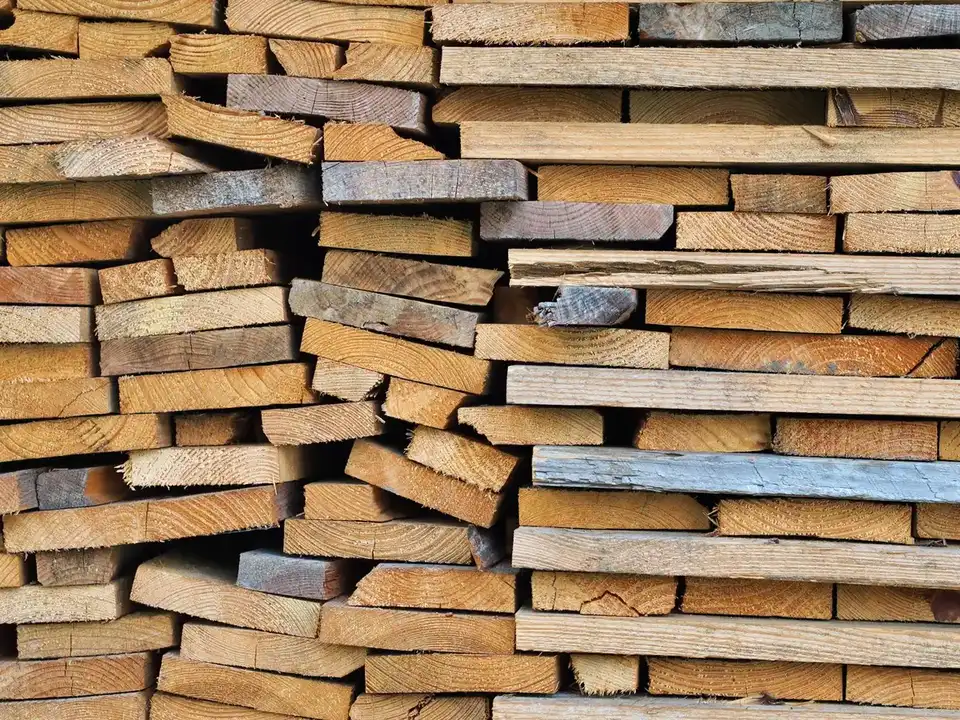
Jointed rubber tree timber is usually called finger-jointed rubberwood, or rubberwood edge-glued panel and rubberwood laminated board for glued-up boards. These terms turn up on orders for panels and furniture components, and they differ from the pallet vocabulary in section 2. Words commonly found on such orders include:
- Finger-jointed (FJ): pieces joined end to end with finger joints along the length of the board.
- Edge-glued panel, laminated board: boards glued edge to edge into wide panels.
- Solid wood, non finger-jointed: one-piece timber with no jointing.
- Face / back (grade A, B, C): the main face, the back face, and the quality grade of each face.
- Kiln-dried (KD): timber dried in a kiln.
- Moisture content (MC): the water content of timber, as a percentage of its dry weight.
- Sawn timber (UK) / lumber (US): timber cut to size.
2. English terms for wooden pallets in logistics
Wooden pallet vocabulary falls into five groups: pallet types, parts, load ratings, quarantine and packing. The international standard that defines these words is ISO 445 (Pallets for materials handling - Vocabulary).
Using the right terms in contracts and emails helps businesses avoid technical mistakes when ordering export pallets, especially for the words describing structure and load, where the two sides often read things differently.
2.1. Pallet types
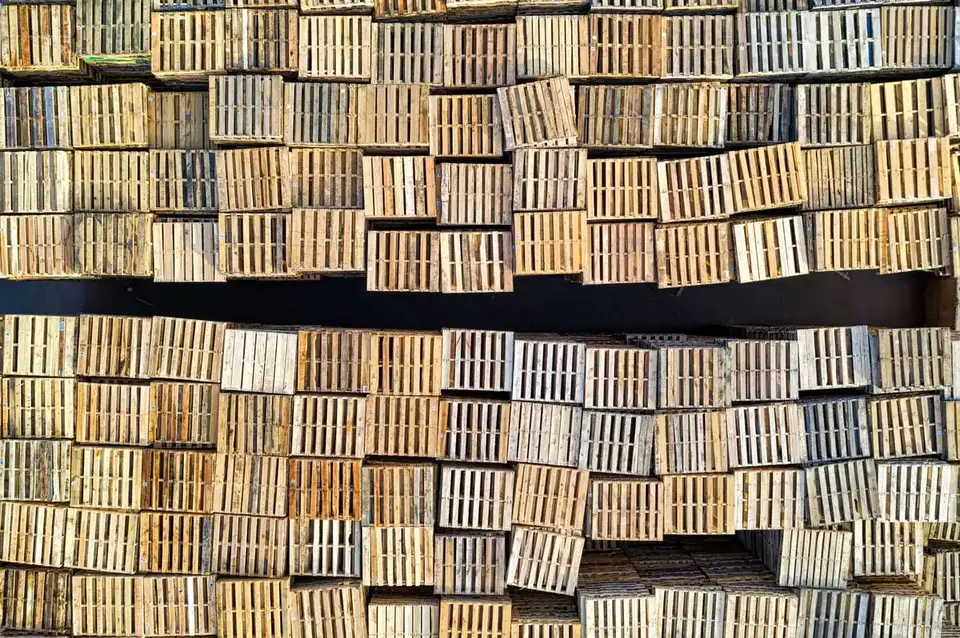
- Wooden pallet: the general term for a pallet made of wood.
- Rubberwood pallet: a pallet made from rubberwood, the common type in southern Vietnam.
- Pine pallet: a pallet made from pine, light in color and usually light in weight.
- 2-way pallet: forks can enter from two opposite sides only.
- 4-way pallet: forks can enter from all four sides, which makes stacking in warehouses and containers more flexible.
- Skid: a base similar to a pallet but without bottom boards, often used for machinery that stays in place.
What are the parts of a wooden pallet called in English?
A wooden pallet consists of deckboards, a support part made of stringers or blocks, and bottom boards. The part names below follow ISO 445 and the Uniform Standard for Wood Pallets of the North American pallet association (NWPCA).
| Term | Plain meaning | Short explanation |
|---|---|---|
| Deckboard (top / bottom) | Top board / bottom board | Board laid at right angles to the stringers or stringerboards |
| Lead board | End board | The outermost board at each end, where the forks enter; usually wider than the middle boards |
| Stringer | Beam | A solid beam running the full length of the pallet and supporting the deckboards (stringer pallet) |
| Block | Spacer block, foot | A spacer between the two layers of boards in a block pallet, usually nine blocks |
| Stringerboard | Connecting rail | A board running the full length, joining the blocks, between the deckboard and the blocks |
| Notch | Cut-out | A cut in the lower edge of a stringer so forks can enter from the side (partial four-way) |
| Chamfer | Bevel | The edge of the bottom board is bevelled so pallet jack wheels can roll over it |
| Fork entry, opening | Fork opening | The gap between the two layers of boards that the forks slide into |
| Single-deck / double-deck | One-sided / two-sided | A pallet with a top deck only, or with both a top deck and a bottom deck |
| Reversible pallet | Flip-over pallet | Both faces carry the same load, so either face can be used on top |
One convention to remember when reading drawings: pallet size gives the length of the stringers or stringerboards first. A 1200 x 1000 mm pallet has stringers 1200 mm long and deckboards 1000 mm long; writing it the other way round can lead to a pallet built with the wrong fork direction.
2.2. Specifications and load capacity
Three load ratings must appear in a pallet description: static load, dynamic load and racking load. The racking figure is usually the lowest because the pallet is supported only at two edges. In technical files under ISO 445 and ISO 8611, overseas partners use a few more load terms; understanding them avoids confusing a comparison figure in a catalog with the real permitted load.
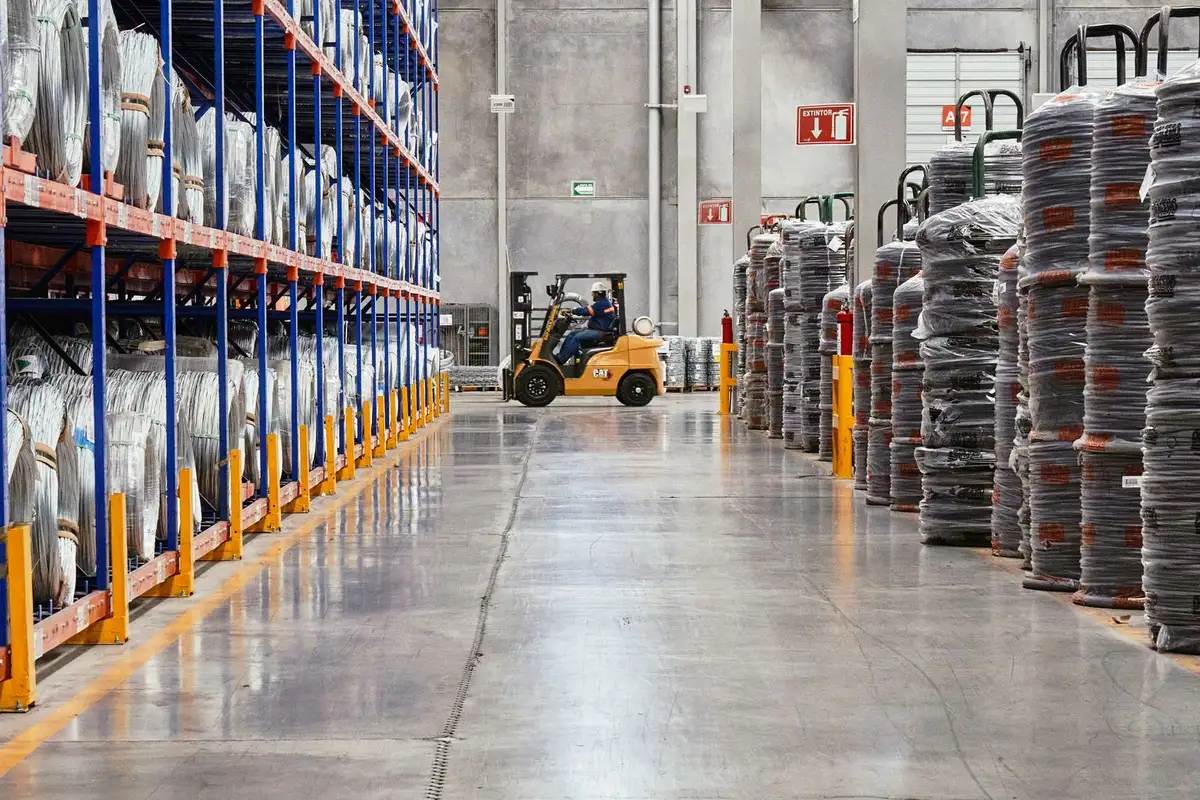
- Static load: the load when the pallet rests fixed on the floor.
- Dynamic load: the load while the pallet is being moved by a forklift or other equipment.
- Racking load: the load on a rack; important for warehouses with multi-level racking.
- Nominal load (R): the lowest safe load for the stated support condition, used to compare pallets.
- Maximum working load: the largest load for a specific stacking pattern and support condition; it may be higher or lower than the nominal load.
- Payload (Q): the load the pallet actually carries in use.
- Safety factor: the ratio between the failure load and the nominal load.
- Uniformly distributed load: a load spread evenly across the whole pallet surface.
- Concentrated load: a load on an area smaller than 50% of the pallet surface.
- Dimensions: overall size, commonly 1200 x 1000 mm or 1200 x 800 mm (the Euro pallet size).
- Moisture content: the water content of the timber, usually kept below about 20% to limit mold.
2.3. International quarantine treatment standards
The key word in this group is ISPM 15: export wood packaging must be debarked, treated by an approved method and stamped with the IPPC mark. ISPM 15 stands for International Standards for Phytosanitary Measures No. 15, the standard of the International Plant Protection Convention that stops pests spreading through wood packaging.
Heat treatment (HT) is the most widely used method today. Fumigation means gassing, normally with methyl bromide (MB) for wooden pallets; ISPM 15 still recognizes it, but many countries restrict it. According to the European Commission, MB is no longer used within the European Union, the last exemption having ended on 18 March 2010, although the EU still accepts imported wood packaging material treated correctly under ISPM 15. The table below gathers the codes you will meet on marks and documents.
| Term / code | Meaning | Notes |
|---|---|---|
| IPPC mark, ISPM 15 stamp | The IPPC stamp on the pallet | Made up of the IPPC symbol, the country code, the treatment provider code and the treatment code |
| HT (heat treatment) | Heat treatment | At least 56°C for 30 minutes continuously |
| DH (dielectric heating) | Dielectric (microwave) heating | At least 60°C for 1 minute continuously |
| MB (methyl bromide) | Methyl bromide fumigation | Restricted in many countries; ISPM 15 encourages replacing it |
| SF (sulphuryl fluoride) | Sulphuryl fluoride fumigation | Added to ISPM 15 in the 2018 revision |
| Phytosanitary certificate | Plant health certificate | Issued for consignments of plant products; pallets already carrying the IPPC mark usually need no extra certificate |
| Fumigation certificate | Fumigation certificate | Issued by the fumigation company when the buyer or the importing country asks for it |
One more word that often appears on declarations is HS code. Under the classification of the World Customs Organization (WCO) Harmonized System, wooden pallets fall under subheading 4415.20 (pallets, box pallets and other load boards; pallet collars of wood). The actual duty rate must be checked against the tariff schedule in force when the customs procedure is done.
2.4. Packing and cargo protection
A wooden crate is either an open or framed crate, or a closed wooden box; related words cover lashing and blocking inside containers.
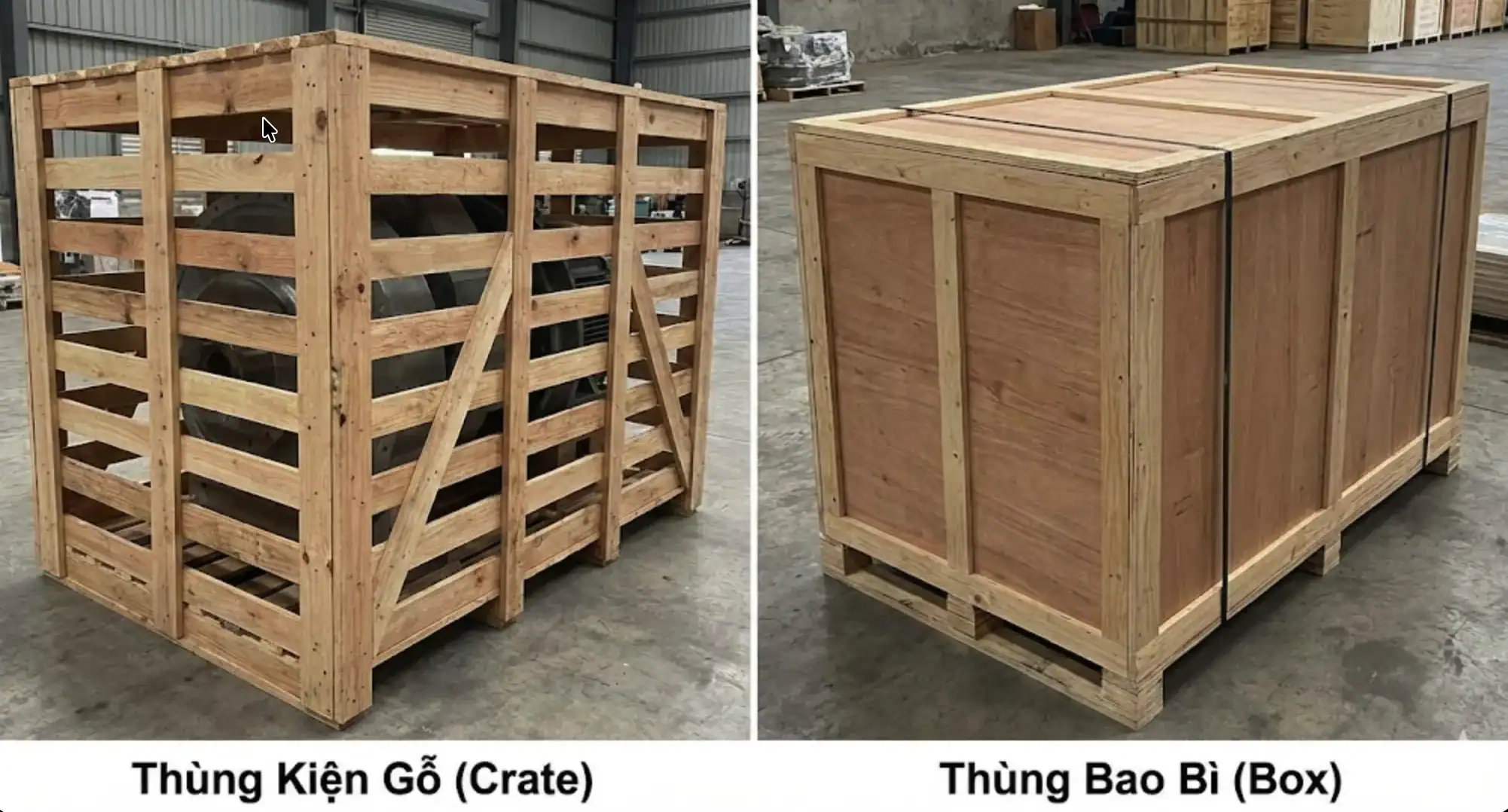
- Wooden crate, open crate, skeleton crate: a wooden crate with gaps left between the slats.
- Closed crate, sheathed crate, wooden box: a crate closed in with boards or plywood.
- Wooden packing case: the general term for a wooden shipping crate in commercial English.
- Skid base: a crate base with runners that the forks slide under.
- Pallet collar: a stackable, folding wooden frame placed on a pallet.
- Industrial packing: packing built to the requirements of sea or air freight.
- Lashing, chocking: securing and blocking so cargo cannot shift inside a container.
- Dunnage: filler material (timber, air bags) placed between packages.
- Strapping, banding: steel or plastic straps that bind a package.
When you send a request for a crate quotation, state whether you want a crate or a box, whether the dimensions are inside or outside dimensions, and the weight of the contents; these three facts decide board thickness and base structure.
3. Why is rubberwood pallet popular in Vietnam?
Rubberwood pallets are popular in Vietnam because domestic rubber timber is plentiful and the wood is hard enough for medium-load pallets once it is properly treated and dried.
It is no accident that rubberwood pallets have become the familiar choice for companies in the industrial parks of southern Vietnam.
On hardness, rubberwood is harder than pine: Janka hardness is 4,280 N against 2,420 N for Scots pine according to The Wood Database, so the pallet deck dents and chips less under impact. On weight, The Wood Database gives an average of 595 kg/m³ at 12% moisture, the ITTO rubberwood processing manual gives 560 - 640 kg/m³ air-dried, and the Forest Research Institute Malaysia (FRIM) gives 480 - 650 kg/m³ depending on tree age and clone. Compared with acacia (Acacia auriculiformis, density 490 - 840 kg/m³ according to PROSEA), rubberwood is not denser. How much a pallet can carry depends mainly on its design and board thickness, not on the species alone.
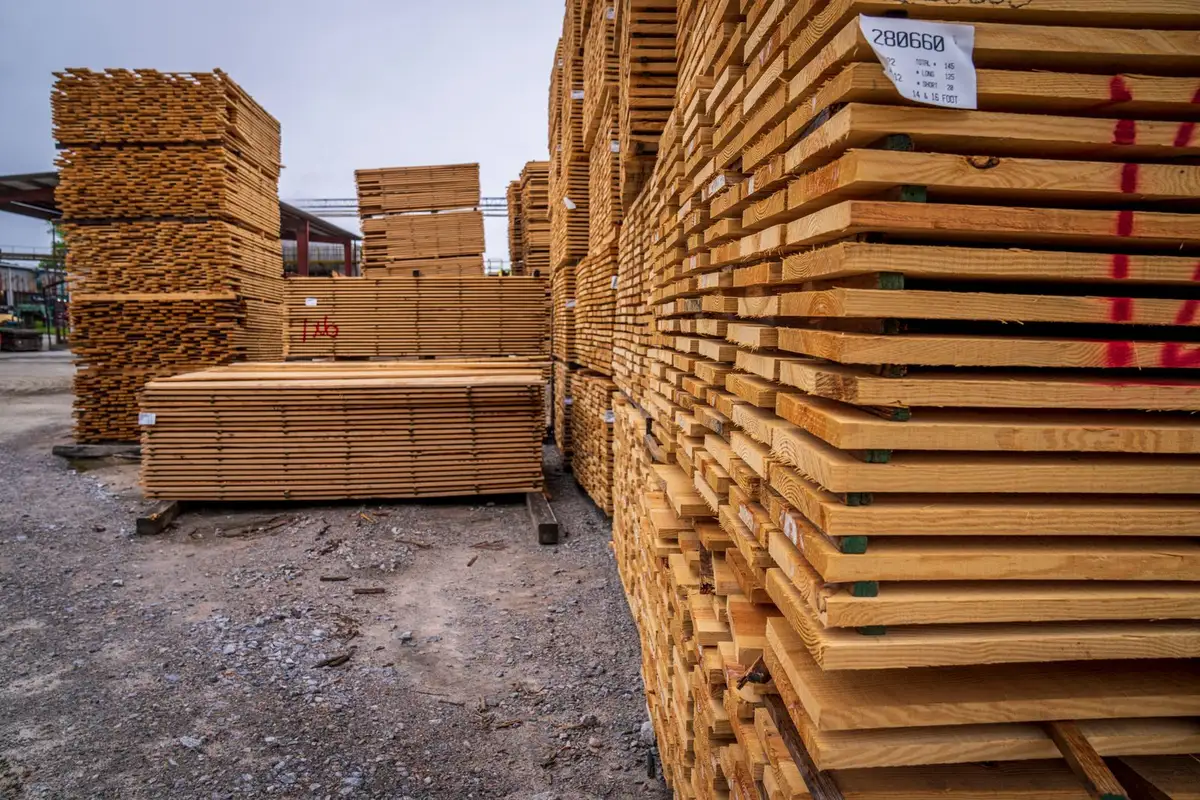
On supply, Vietnam is one of the large rubber-growing countries, with the raw-material region concentrated in the Southeast. That lets pallet workshops source locally instead of relying on imported timber. The downside is that rubberwood has poor natural durability: according to the ITTO manual it is prone to biological decay and insect attack after felling, so it must be sawn or preserved as early as possible.
Note on place names: under Resolution 202/2025/QH15 on reorganizing provincial-level administrative units, the new provincial governments began operating on 1 July 2025; Binh Phuoc merged into Dong Nai province and Binh Duong into Ho Chi Minh City. The raw-material region is still the Southeast, as before.
4. Export rubberwood pallets at ICD Vietnam
ICD Vietnam supplies rubberwood pallets and builds pallets to the size and load of each cargo type; pallets that travel with export goods are treated and stamped with the IPPC mark under ISPM 15 through a licensed provider. ICD Vietnam has a Hanoi warehouse and a southern workshop at 551/212 Le Van Khuong Street, Tan Thoi Hiep Ward, District 12, Ho Chi Minh City.
When you send a quotation request in English to a partner, or when a partner sends one to us, these four items are essential:
These four items are the minimum frame of a pallet quotation request in English; adding a drawing or a photo of the cargo helps the workshop choose the board thickness and the number of blocks.
ICD Vietnam’s technical team helps select the pallet structure according to the load diagram and dimensions of each cargo type, making better use of container space. Pallet price: contact for a quote, with volume discounts. Knowing the terms above lets you communicate more clearly with partners and reduces disputes when negotiating contracts.
Frequently asked questions
What is rubber tree timber called in English?
The most common name is rubberwood, a compound of rubber and wood. The botanical name is Hevea brasiliensis; in tropical timber lists the official name of the species is Hevea.
What other names does rubberwood go by in international trade?
What other names does rubberwood go by in international trade?
Besides rubberwood, the timber is also called hevea or hevea wood, parawood, plantation hardwood and Malaysian oak. The last two are marketing names and not accurate, so add the botanical name Hevea brasiliensis.
Why do I need to know the English name of rubberwood?
So that purchasing, import-export and warehouse teams write the correct timber name on contracts, quarantine documents and origin certificates. For timber goods entering the EU, records must also carry the full scientific name of the species.
What is finger-jointed rubberwood called in English?
Jointed rubberwood is usually called finger-jointed rubberwood when joined end to end with finger joints, or rubberwood edge-glued panel and rubberwood laminated board when it is a wide glued-up board. Face grades are written as AA, AB, AC (main face, back face).
What is a pressed-wood pallet called in English?
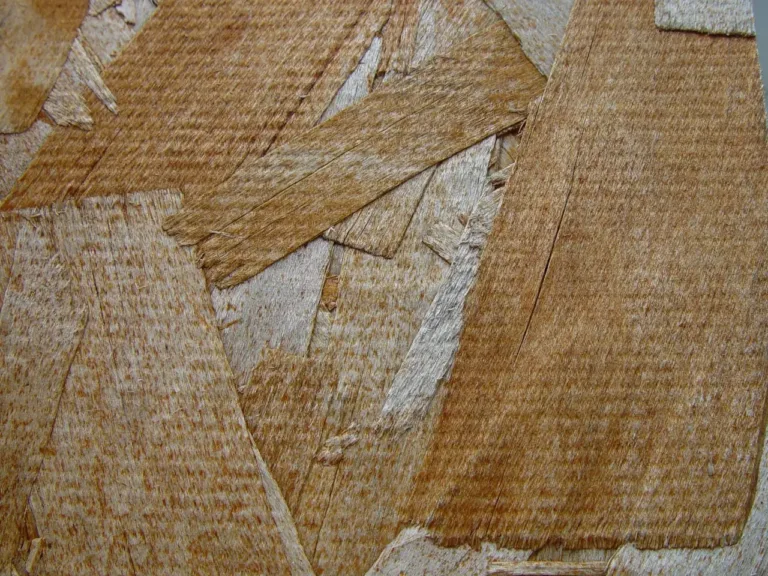
A pressed-wood pallet is called a presswood pallet or moulded wood pallet, made from wood chips mixed with glue and hot-pressed. Because the material has been processed with glue, heat and pressure, presswood pallets are exempt from ISPM 15 and need no treatment or IPPC mark.
What is pallet fumigation called in English?
Fumigation is called fumigation, and the certificate is a fumigation certificate. For wooden pallets the more common method is heat treatment (HT); the IPPC mark on the pallet carries the code HT, DH, MB or SF to show which method was used.
What is a pallet crate called in English?
A wooden crate built on a pallet base is called a wooden crate (open) or a wooden box (closed); a stackable wooden frame placed on a pallet is a pallet collar. Commercial English also uses wooden packing case for wooden shipping crates.
Is rubberwood a hardwood or a softwood?
Rubberwood is a hardwood, because the rubber tree is broad-leaved. In English, hardwood and softwood are split by plant group rather than directly by hardness; pine is a softwood.
What is the HS code of a wooden pallet?
Wooden pallets fall under subheading 4415.20 of the Harmonized System (HS), which covers pallets, box pallets, load boards and pallet collars of wood. The actual duty rate must be checked in the tariff schedule currently in force.
Hanoi warehouse: 3rd Floor, Thang Long A1 Building, Bau Hamlet, Thien Loc Commune, Hanoi. Southern workshop: 551/212 Le Van Khuong Street, Tan Thoi Hiep Ward, District 12, Ho Chi Minh City. Email: sales@icdvietnam.com.vn.
Contact ICD Vietnam for a quote
- Hotline 1: 0983 797 186
- Hotline 2: 0903 459 186
- Hotline 3: 0905 859 186
References
- Principles of HS classification in tariff schedules - World Customs Organization (WCO), Harmonized System.
- Rubberwood (Hevea brasiliensis) and Scots Pine (Pinus sylvestris) - The Wood Database.
- Rubberwood Processing Manual (density, preservation of timber after felling) - International Tropical Timber Organization (ITTO).
- Wood names and designations; Tropical Timber Atlas (ITTO, 2016) - CIRAD.
- Rubberwood information (density 480 - 650 kg/m³) - Forest Research Institute Malaysia (FRIM).
- ISO 445:2013 Pallets for materials handling - Vocabulary - International Organization for Standardization (ISO).
- ISPM 15 Regulation of wood packaging material in international trade - IPPC, FAO.
- Requirements for wood packaging material entering the EU and rules on methyl bromide - European Commission.
- Acacia auriculiformis (PROSEA) - Pl@ntUse.
- Uniform Standard for Wood Pallets - National Wooden Pallet and Container Association (NWPCA).