

Table of Contents
- Overview of the wooden pallet market in Hanoi
- How a standard wooden pallet is made
- A detailed guide to choosing the right wooden pallet
- A guide to finding places that make and sell wooden pallets in Hanoi
- When can wooden pallets be delivered into inner Hanoi?
- ICD Vietnam serves wooden pallet customers in Hanoi
- Frequently asked questions (FAQ)
- Is a pine pallet bed durable?
- How do I tell a single-use pallet from a multi-use pallet?
- Does ICD Vietnam deliver to the door in Hanoi?
- How much do wooden pallets cost in Hanoi at the moment?
- Which area of Hanoi should I buy wooden pallets in?
- What criteria should I use to choose a wooden pallet supplier?
- Can wooden pallets be delivered into inner Hanoi in the daytime?
- What do I need to provide to order custom wooden pallets in Hanoi?
- How much does a wooden pallet weigh?
- Contact ICD Vietnam
- References
Reviewed and updated by ICD - Week 44/2026
Businesses in Hanoi should buy wooden pallets on three criteria: the right size for the destination market, a clearly stated load rating (for example, ICD Vietnam publishes a dynamic load of 1,500 kg and a static load of 4,000 kg for its 800 x 1200 x 144 mm wooden pallet), and ISPM 15 heat treatment (HT) if the pallet travels with export cargo. Customers in Hanoi work with ICD Vietnam through the northern office: 3rd Floor, Thang Long A1 Building, Bau Hamlet, Thien Loc Commune, Hanoi, hotline 0983 797 186. If your receiving warehouse is inside the inner city, trucks of 2 tonnes and above may only run in the restricted zone between 21:00 and 06:00 under Decision 01/2026/QD-UBND.
The wooden pallet market in Hanoi and the surrounding provinces is one of the busiest in the country. Working at ICD Vietnam since 2011, I have met every kind of need, from factories in industrial parks that want export pallets to young people looking for pine pallet wood to build furniture. This article helps you work out which pallet to look for, where to find it, and how deliveries reach the inner city.
The article goes through four parts: wooden pallet demand in Hanoi by the two groups of customers, how a pallet that meets the standard is made, the criteria for choosing a pallet (purpose, load, wood species, new or used, and size for the destination market), and how to find the right place to buy, including the rules on delivery hours into the inner city. The last part describes how ICD Vietnam serves customers in Hanoi. You can jump straight to the part you need:
Overview of the wooden pallet market in Hanoi
Wooden pallet demand in Hanoi falls into two groups: industrial pallets for industrial parks, logistics and export, and pallets or pallet wood slats for furniture and household use.
The wooden pallet market in Hanoi reflects the economic growth of the whole northern region, and demand splits into two segments that differ sharply in customers, quantities and how goods are delivered.
The first segment is industrial demand, coming from large industrial parks such as Thang Long, Quang Minh and Noi Bai, as well as logistics centres and e-commerce warehouses. Each order is usually hundreds to thousands of pallets and repeats monthly. These customers need pallets with stable size and load rating from one batch to the next, HT treatment if the pallets go with export cargo, pallet assembly services to a drawing, and ways to save cost. Goods are delivered by large trucks to the industrial park, mostly outside the inner-city restricted zone.

The second segment is creative and household demand from individuals, small carpentry workshops and cafes. The trend of using pallet pine wood for beds, tables and chairs, or for decorating a cafe, has created a lively niche market. These buyers usually take a few to a few dozen pallets and need planed, dry wood that is free of borers and safe to use indoors; goods go by small trucks under 2 tonnes, avoiding peak hours when entering the inner city.
How a standard wooden pallet is made
A standard wooden pallet goes through five steps: choosing and sawing the blanks, cutting the slats, drying, nailing to the drawing, then heat treating and stamping if it is for export cargo.
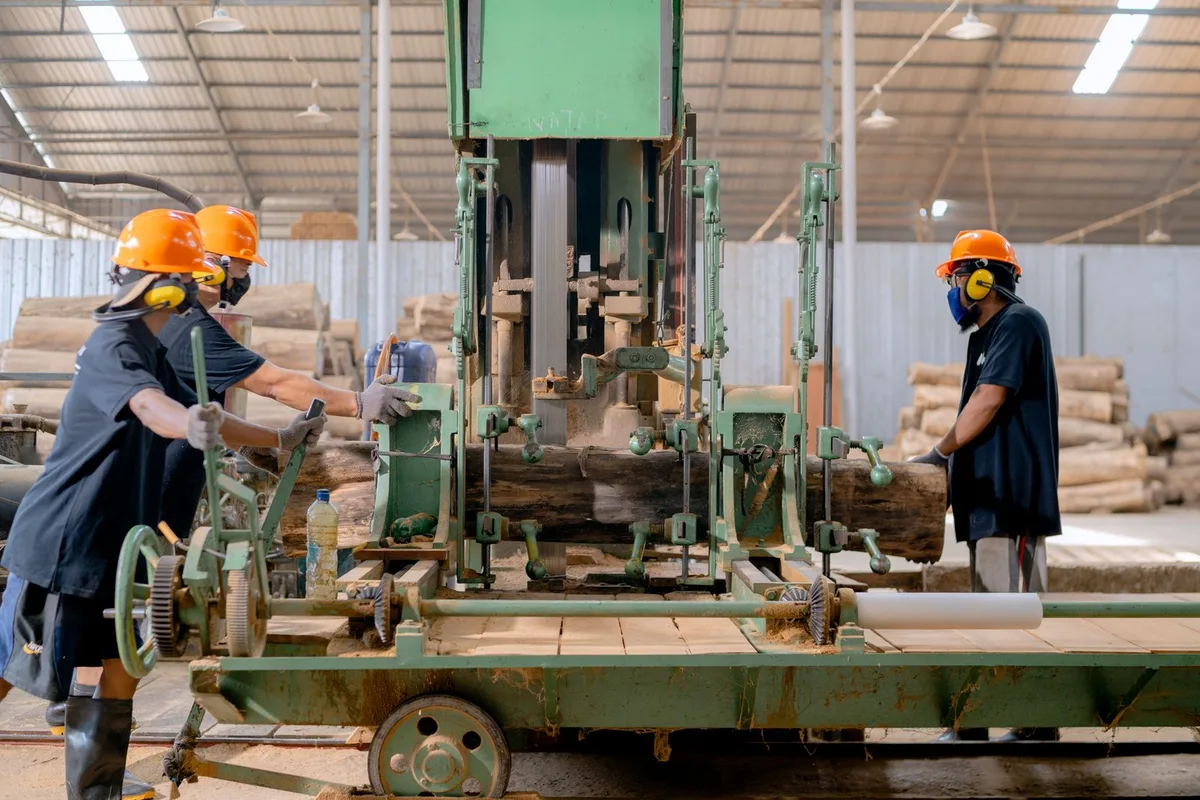
To make a quality wooden pallet that is safe for goods and workers, production must follow each step. First comes selecting and preparing the wood: plantation woods such as pine, acacia and tram are sorted and sawn into blanks at the initial size. Next, the blanks are cut into slats and blocks to the specification on the drawing.
The wood needs to be dry enough before nailing to limit mould and warping; according to the Wood Handbook of the US Forest Products Laboratory, keeping wood moisture below about 20% prevents most decay fungi from developing. Some makers use kilns, others air dry. At ICD Vietnam, pallet wood is air dried naturally and then planed smooth on all faces so no splinters remain. Final assembly is done by skilled workers using pneumatic nail guns, joining the parts exactly to the technical drawing.
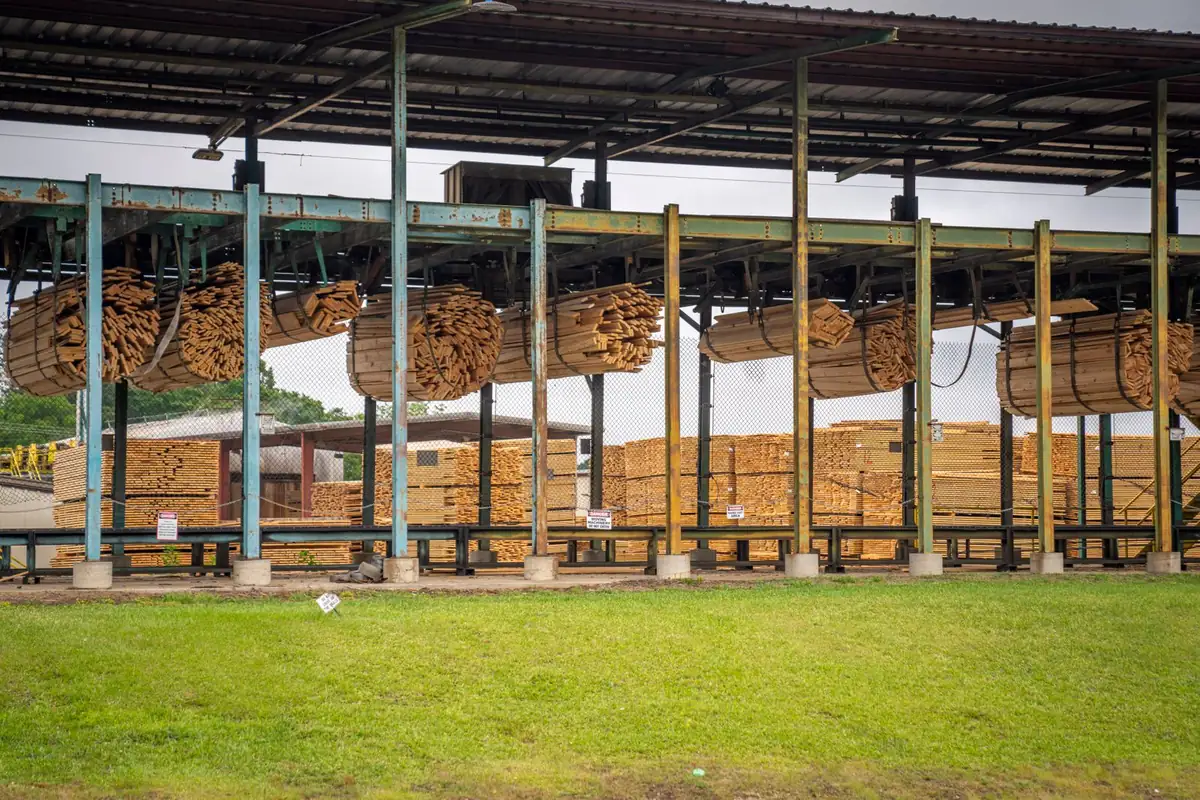
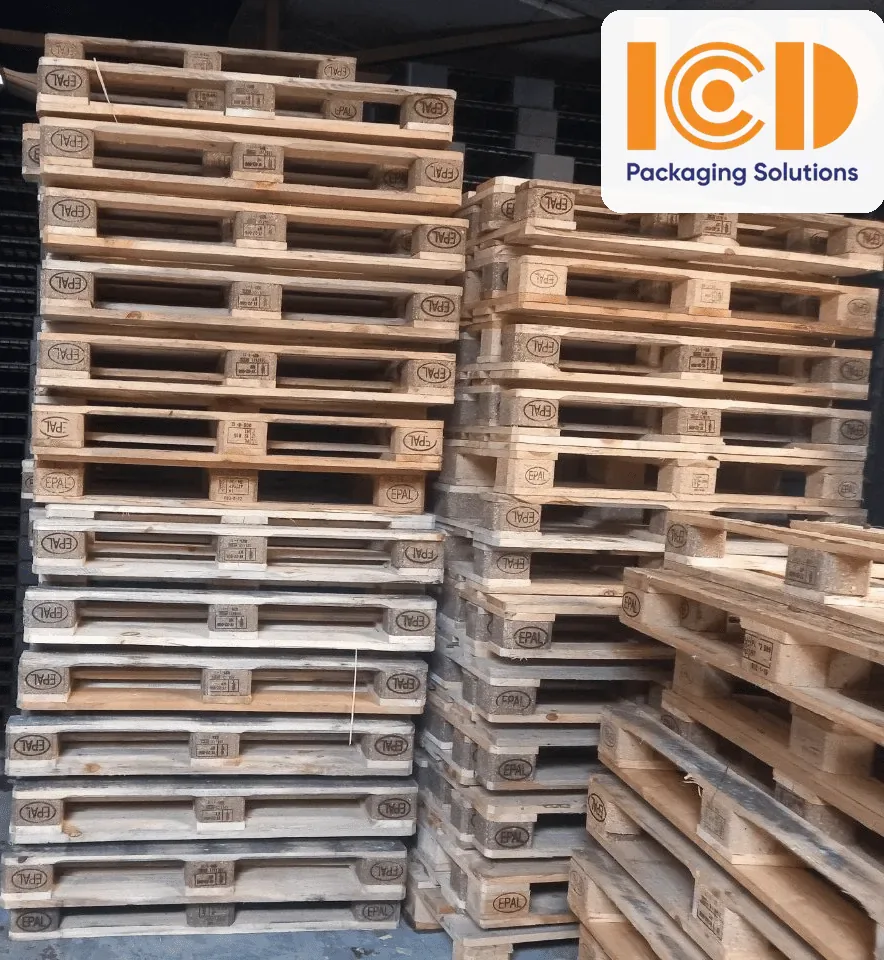
Finally, for pallets that travel with export cargo, the mandatory step is treatment under the ISPM 15 standard, usually heat treatment (HT), followed by the IPPC stamp. ICD Vietnam export pallets are treated and stamped with the IPPC mark through a licensed facility; pallets used only domestically can skip this step.
Under ISPM 15, heat treatment must bring the wood core to at least 56°C for 30 continuous minutes; the mark is stamped on at least two opposite sides of the pallet.
A detailed guide to choosing the right wooden pallet
Choose a wooden pallet on four factors in this order: purpose, load, wood species, and new or used.
Choosing by how you will use it
First, decide the main purpose: is the pallet only to hold goods off the warehouse floor, to move goods domestically, or to travel with export shipments? Export pallets always demand the highest quality of material and must be treated for plant quarantine under ISPM 15; floor pallets can be a simpler, lower-priced type.
Choosing by load and type of goods
The weight of the goods determines the structure of the pallet, the thickness of the slats and the wood needed. A pallet designed for 500 kg is not safe for a 1,500 kg load. The table below uses the specifications published on ICD Vietnam product pages, so you can compare dynamic load (when lifting and moving) and static load (when resting on the floor) at a glance.
| ICD wooden pallet model | Size (mm) | Dynamic load | Static load | Notes |
|---|---|---|---|---|
| 4-way entry wooden pallet 800 x 1200 | 800 x 1200 x 144 | 1,500 kg | 4,000 kg | Weighs about 25 kg ±5% |
| 4-way entry wooden pallet 1200 x 1000 | 1200 x 1000 x 162 | 1,250 kg | 4,250 kg | Weighs about 35 kg ±5% |
| Asian standard wooden pallet | 1200 x 1000 x 156 | 1,500 kg | 6,000 kg | Weighs about 30 kg ±5% |
| Half pallet | 800 x 600 x 144 | 500 kg | 2,000 kg | Retail display goods, about 10 kg |
| Single-face 2-way entry pallet | Made to order | 500 kg | 1,000 kg | Warehouse storage, light goods |
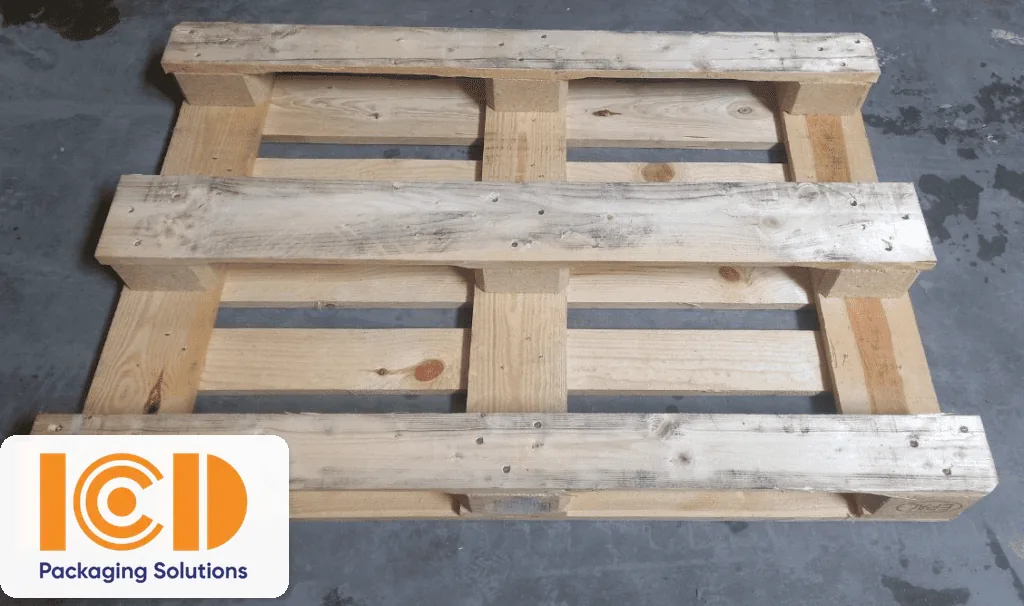
For the Euro 800 x 1200 x 144 mm EPAL pallet built to the standard of the European Pallet Association, EPAL publishes a safe working load of 1,500 kg, and the bottom pallet in a stack on a flat, hard floor carries up to 5,500 kg. This is a useful reference point when comparing models of the same 800 x 1200 mm size.
Choosing between wood species
Pine, acacia and tram all work well for pallets; compare load by the published specification of each model rather than inferring it from the name of the wood.
Pine is light, easy to work and the most common. Acacia and tram are heavier, but heavier wood is not always stronger in bending: according to The Wood Database, the average bending strength of radiata pine is 79.2 MPa; according to TCVN 12619-2:2019, the static bending strength of Acacia auriculiformis (tram) is 101 MPa. The sources use different test methods, and slat thickness, number of blocks and nail type affect load more than the species itself. So for very heavy goods, pick a model whose published dynamic and static loads fit, and only then weigh the wood species on price and availability.
Choosing between new and used pallets
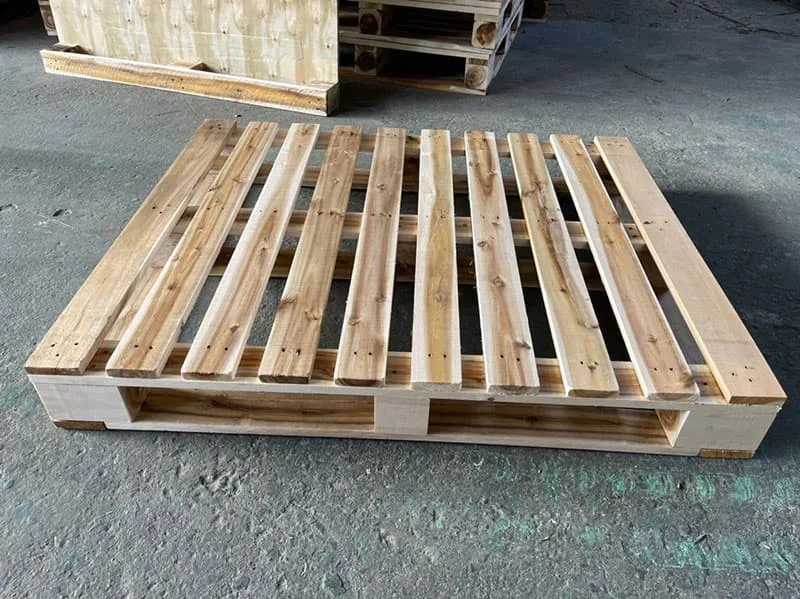
New pallets have uniform dimensions, a published load rating, and meet the strictest requirements, so they suit food, pharmaceuticals and high-value export cargo. A used wooden pallet is a cost-saving answer for internal storage or for transport of goods with low appearance requirements, but each one needs to be inspected and, if it goes with export cargo, it must still carry a valid ISPM 15 mark.
Choosing size by destination market
Choose the pallet size that is common in the market your goods go to; the international standard ISO 6780 lists six sizes used for intercontinental transport.
| Size (mm) | Common region of use | Suggestion for businesses in Hanoi |
|---|---|---|
| 1200 x 800 | Europe (EPAL pallet) | Goods exported to the EU, partners who use the EPAL system |
| 1200 x 1000 | Europe, Asia | Domestic warehouses, goods exported to many markets |
| 1219 x 1016 | North America | Goods exported to the US and Canada |
| 1100 x 1100 | Asia | Goods to Japan and Korea, fits containers well |
| 1067 x 1067 | North America, Europe, Asia | Uncommon, used for drums and special goods |
| 1140 x 1140 | Square size in ISO 6780, uncommon in Vietnam | Use only when the partner specifically requires it |
According to ISO, the standard ISO 6780:2003 remains valid after the 2026 review. The 1165 x 1165 mm size is a separate Australian standard and is not on the ISO 6780 list.
A guide to finding places that make and sell wooden pallets in Hanoi
The right place depends on quantity and purpose: industrial orders should go to a workshop or supplier with HT treatment, and small furniture orders should look for a shop selling pre-planed pallet wood slats.
For large-volume industrial needs
The best choice is to work directly with a workshop or supplier able to build pallets to a drawing and provide HT treatment for export cargo. Buying at the source gives a better price and lets you order your own specification. According to the Hanoi pallet industry directory of Vietnam Yellow Pages (consulted 17 October 2026), many pallet makers register addresses in the Soc Son area, near Noi Bai Industrial Park and the National Highway 3 corridor; there are also factories in neighbouring provinces with industrial parks.
Note that since 1 July 2025 Hanoi has reorganised its commune-level administrative units and no longer has a district level, so many old addresses of the form “Soc Son district” now carry the name of a new commune. When looking on a map, signing a contract or writing an invoice, ask the supplier for its new commune or ward name.
Before placing a large order, I recommend visiting the workshop or asking for a sample, and then checking these points:
- The workshop can build to your exact drawing and shows a real sample before mass production.
- The dynamic and static load of the sample is stated on the quotation or product page.
- Export pallets are HT treated and stamped with the IPPC mark through a licensed facility, with a clear mark on two opposite sides.
- Delivery and return policies are in writing, including delivery to a warehouse inside the inner city.
For used and surplus pallets
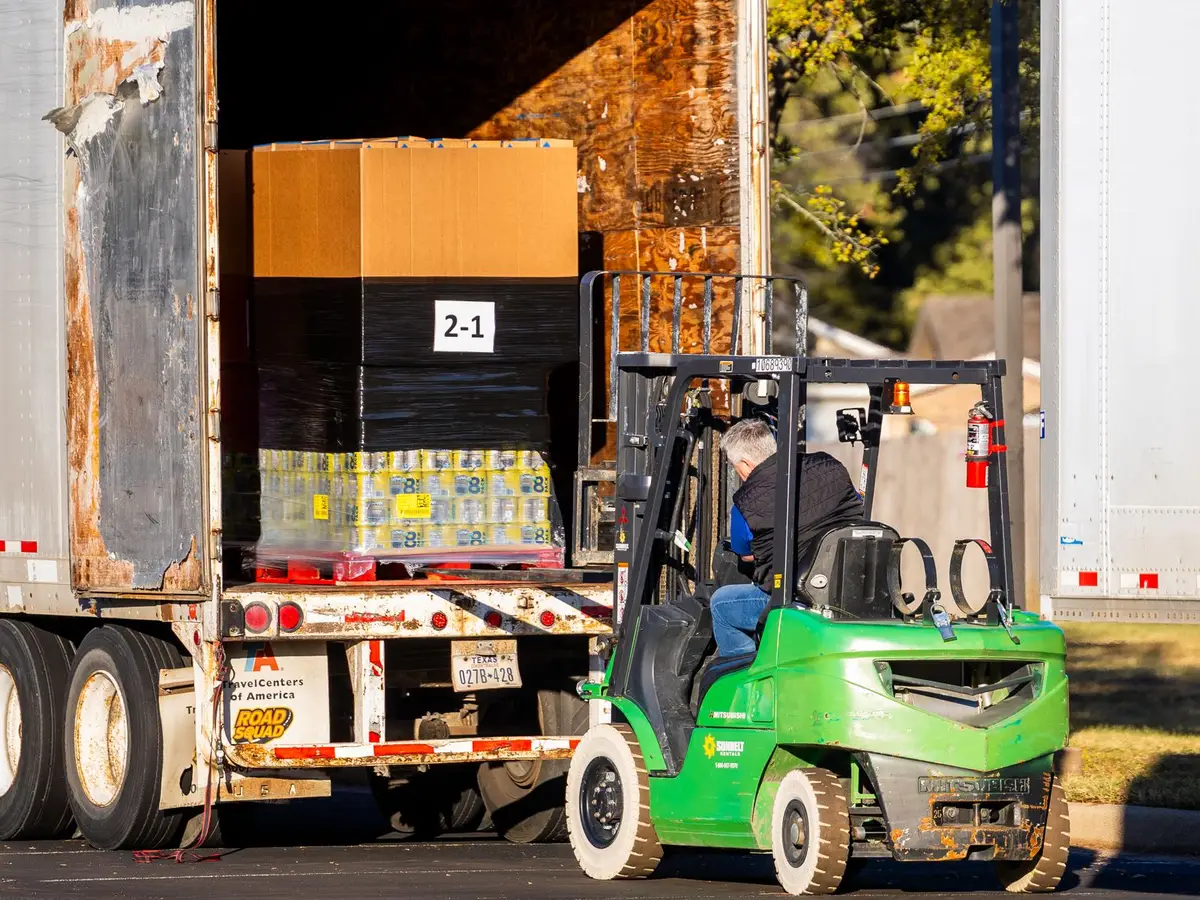
Used pallet yards and depots are where pallets from many industries are gathered, in many types and at competitive prices. You can find these sellers on the edge of the city or through industrial classified channels. Because used pallets vary from one to the next, go and look in person, measure the size and check for borers, mould and loose nails before confirming the lot.
For furniture (pallet beds, tables and chairs)
You should go to a shop that specialises in pallet wood slats or to small carpentry workshops. They usually have pallet slats that are already planed and sanded, which saves you time and effort. When you buy a whole pallet to make items for living spaces, choose a pallet with the HT (heat treated) mark that is clean and has never carried chemicals, and avoid pallets with the MB (methyl bromide fumigated) mark.
When can wooden pallets be delivered into inner Hanoi?
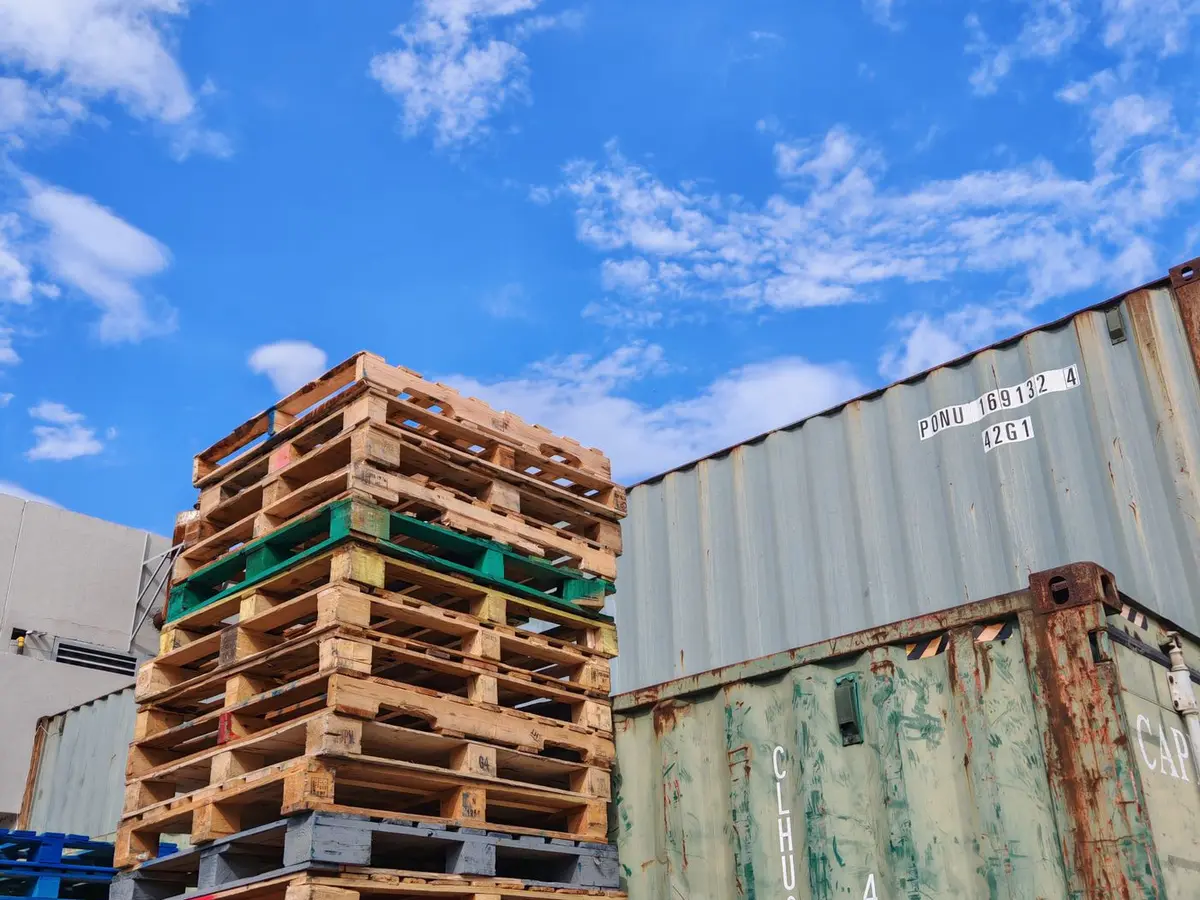
Under Decision 01/2026/QD-UBND of the Hanoi People’s Committee (effective 15 January 2026), within the inner-city restricted zone, trucks with a gross weight of 2 tonnes or more may only run from 21:00 to 06:00 the next morning; trucks under 2 tonnes may only run outside the peak hours of 06:00 - 09:00 and 16:00 - 19:30.
| Common truck class | Allowed in the restricted zone | Outside the time window |
|---|---|---|
| Gross weight under 2 tonnes | Outside peak hours (06:00 - 09:00, 16:00 - 19:30) | Not allowed during peak hours |
| 2 tonnes to under 10 tonnes | 21:00 - 06:00 the next morning | Needs written approval from the city Police |
| 10 tonnes and above | 21:00 - 06:00 the next morning | Needs written approval from the Department of Construction |
The restricted zone is the area inside the ring of Pham Van Dong, Ring Road 3, Nguyen Van Linh, Vo Van Kiet and Thang Long Bridge. The Thang Long, Quang Minh and Noi Bai industrial parks lie outside this ring, so pallets are delivered there in daylight as normal. An order of 100 wooden pallets of 800 x 1200 mm weighs about 2.5 tonnes (about 25 kg each according to the ICD Vietnam product specification) and needs a truck larger than 2 tonnes; if the receiving warehouse is in the inner city, arrange to receive goods at night or split the order into several small-truck trips.
ICD Vietnam serves wooden pallet customers in Hanoi
Customers in Hanoi work with ICD Vietnam through the northern office at 3rd Floor, Thang Long A1 Building, Bau Hamlet, Thien Loc Commune, Hanoi; hotline 0983 797 186, email sales@icdvietnam.com.vn.
ICD Vietnam has a production workshop, a Hanoi warehouse and a southern workshop (551/212 Le Van Khuong Street, Tan Thoi Hiep Ward, District 12). For wooden pallet customers in Hanoi, we focus on three things:
- Building new wooden pallets to the size, entry type and load you require, uniform from one batch to the next.
- Supplying ready-made models with published specifications as in the load table above, including the 800 x 1200 mm and 1200 x 1000 mm sizes.
- Treating and stamping with the IPPC mark under ISPM 15 for pallets that go with export cargo, through a licensed facility.
Price: contact us for a quote, because price depends on wood species, size, HT treatment and the quantity of each batch. Orders are processed within 1-2 days; delivery takes 1-3 days within Hanoi, 2-5 days between regions and 3-7 days to other provinces under the shipping policy. Wooden pallets carry no warranty and can be exchanged or returned within 7 days under ICD Vietnam policy.
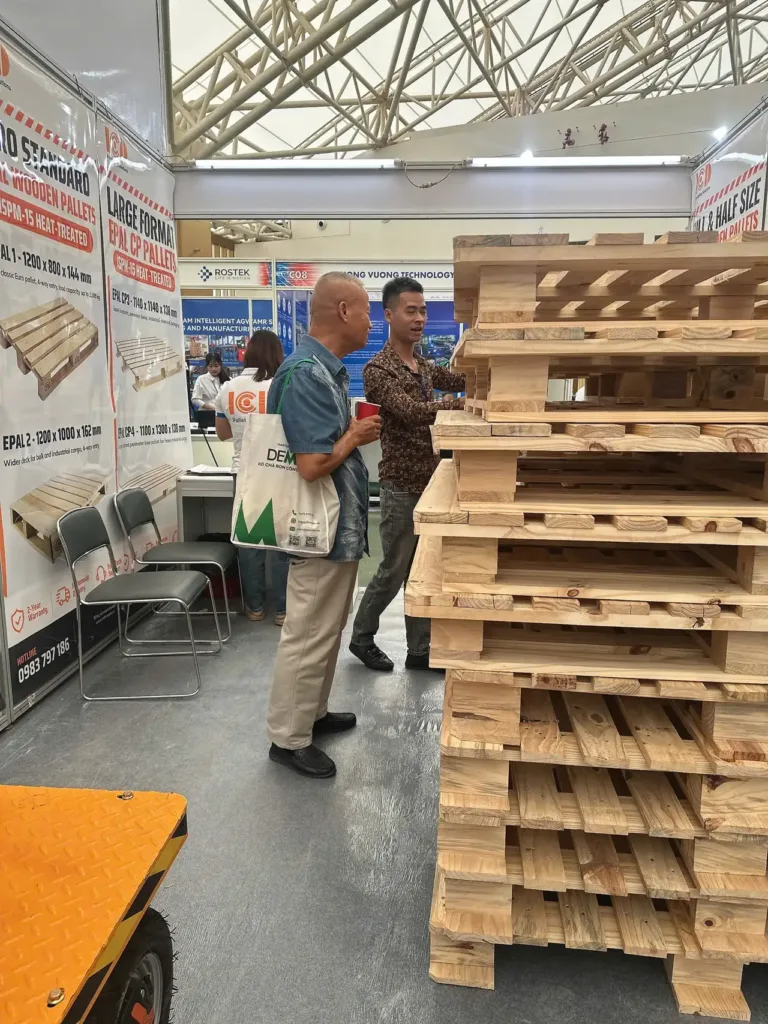
When ordering pallets to your own specification, have the information below ready to get an accurate quote and avoid reworking the sample.
Frequently asked questions (FAQ)
Is a pine pallet bed durable?
Yes, pallet pine is durable enough to make beds and indoor furniture if the pallet is still sound, sanded smooth and re-nailed. Pine is light, easy to move and gives a cosy feel, but keep it away from damp places and direct contact with water, and choose pallets with the HT mark rather than the MB mark.
How do I tell a single-use pallet from a multi-use pallet?
Single-use pallets are usually made from mixed low-grade wood, with a simple structure and thin, widely spaced slats. Multi-use pallets have a sturdier structure, are made from better wood (pine, acacia), have thicker slats and usually come with a clear load rating.
Does ICD Vietnam deliver to the door in Hanoi?
Yes. ICD Vietnam delivers pallets to customers’ warehouses and workshops in Hanoi and the provinces under its shipping policy: order processing 1-2 days, delivery within the city 1-3 days, between regions 2-5 days, other provinces 3-7 days. For warehouses inside the inner-city restricted zone, delivery hours depend on the truck’s weight class under the city’s rules.
How much do wooden pallets cost in Hanoi at the moment?
ICD Vietnam wooden pallet price: contact us for a quote. The price depends on wood species, size, structure, whether ISPM 15 HT treatment is included, the quantity per batch and the delivery location; send all of these details to receive the closest quote.
Which area of Hanoi should I buy wooden pallets in?
For large orders, work with a production workshop; according to the Hanoi pallet industry directory of Vietnam Yellow Pages, many businesses register in the Soc Son area, near Noi Bai Industrial Park. If your receiving warehouse is in an industrial park outside the restricted ring, daytime delivery is easier.
What criteria should I use to choose a wooden pallet supplier?
Prefer a supplier that past customers rate well, that gives a clear load rating for each model, can build to the size you ask for, does HT treatment through a licensed facility and has delivery and return policies in writing. For ICD Vietnam wooden pallets, the product carries no warranty and can be exchanged or returned within 7 days.
Can wooden pallets be delivered into inner Hanoi in the daytime?
Yes, if you use a truck with a gross weight under 2 tonnes and avoid peak hours of 06:00 - 09:00 and 16:00 - 19:30. Trucks of 2 tonnes and above may only run in the restricted zone from 21:00 to 06:00, under Decision 01/2026/QD-UBND of the Hanoi People’s Committee.
What do I need to provide to order custom wooden pallets in Hanoi?
Provide the length, width and height; the number of faces and entry type; the weight per unit and how it is stacked (floor, stack or racking); whether you need ISPM 15 HT treatment; and the quantity per batch, delivery location and receiving time.
How much does a wooden pallet weigh?
According to ICD Vietnam product specifications, the 800 x 1200 x 144 mm wooden pallet weighs about 25 kg ±5%, and the 1200 x 1000 x 156 mm Asian standard wooden pallet weighs about 30 kg ±5%. Real weight varies with wood species and moisture.
Contact ICD Vietnam
Northern office: 3rd Floor, Thang Long A1 Building, Bau Hamlet, Thien Loc Commune, Hanoi. Hotline 0983 797 186 / 090 345 9186 / 090 5859 186.
Email: sales@icdvietnam.com.vn. Zalo: Chat with ICD Vietnam on Zalo.
References
- Decision 01/2026/QD-UBND of 4 January 2026 of the Hanoi People’s Committee regulating road vehicle operations in the city: Government portal, summary of Decision 01/2026/QD-UBND.
- ISPM 15 in Vietnamese, Regulation of wood packaging material in international trade: IPPC.
- ISO 6780:2003, Flat pallets for intercontinental materials handling - Principal dimensions and tolerances: ISO (reviewed and confirmed in 2026).
- EPAL Euro pallet specifications: European Pallet Association (EPAL).
- Wood moisture and decay fungi: USDA Forest Products Laboratory, Wood Handbook (FPL-GTR-190).
- Bending strength of radiata pine: The Wood Database; of Acacia auriculiformis: TCVN 12619-2:2019 Wood classification, Part 2.
- Hanoi pallet industry directory, Vietnam Yellow Pages, consulted 17 October 2026.
- Technical specifications of wooden pallet models and shipping and return policies on the ICD Vietnam website, checked 17 October 2026.