Table of Contents
- Weight of a cubic metre of pine by moisture content
- Factors that affect the weight of pine
- Uses of pine according to weight
- How to calculate the weight of pine
- Comparing the weight of pine with other pallet timbers
- Why moisture content decides weight when calculating freight
- Frequently asked questions
- How do you calculate the weight of a cubic metre of pine?
- Is pine lighter than other pallet timbers?
- Where can I buy pine wooden pallets?
- What is the specific gravity of pine?
- Is pine harvested in Vietnam heavier than imported pine?
- How many kg does a cubic metre of South American pine weigh?
- How many kg does a pine wooden pallet weigh?
- Is pine that has had ISPM 15 heat treatment lighter?
- Contact ICD Vietnam
- References
Reviewed and updated by ICD - Week 43/2026
1 cubic metre (1 m³) of pine dried to 12% moisture content weighs about 400 - 570 kg for the imported species most often met (white pine, radiata, Scots, loblolly) and about 610 - 710 kg for the three-needle pine and resin pine that grow in Vietnam, according to The Wood Database. Freshly sawn green pine is much heavier, commonly estimated at about 800 - 950 kg/m³, because the sapwood can hold more water by weight than the wood itself.
Pine wood is one of the most common timbers on the market, used in construction, furniture and packaging. When buying timber, booking a truck or working out freight, buyers often need to know how many kg a cubic metre of pine weighs. There is no single figure: the weight depends first on moisture content, then on the pine species and the data source the seller is using. This article collects the sourced figures we could read, states the moisture content each was measured at, so you can convert correctly for your own lot of timber.
Weight of a cubic metre of pine by moisture content
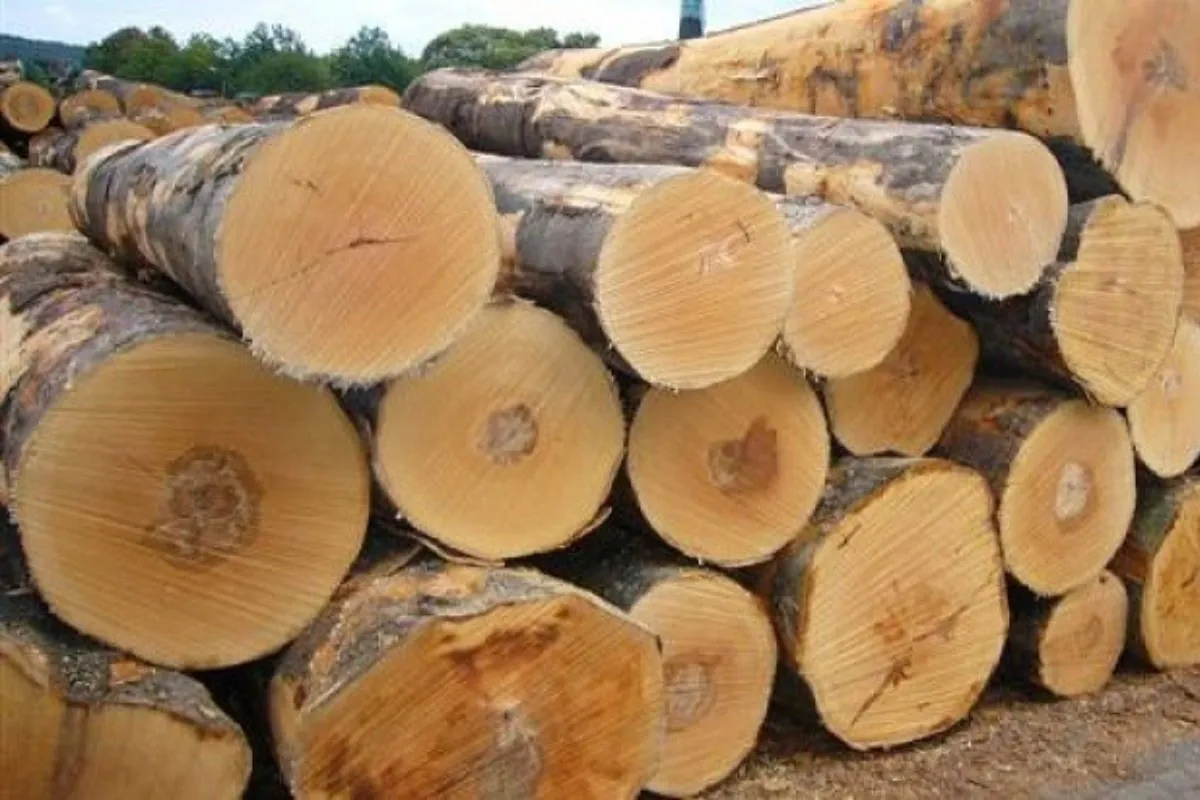
A cubic metre of dry pine (12% moisture) weighs about 400 - 710 kg depending on species, while a cubic metre of green pine is usually estimated at 800 - 950 kg. The three states below are the levels commonly met when trading timber, each measured in a different way, so they must not be mixed.
Dry pine (12% moisture)
Pine dried to about 12% moisture is the state used to publish average weights in international timber databases. For the imported species common in sawn timber, The Wood Database gives about 400 kg/m³ (eastern white pine) to 570 kg/m³ (loblolly pine); radiata pine, the most common imported sawn pine, is at 515 kg/m³. This is the state usually met with glued pine boards and dried sawn timber for furniture.
Green pine (freshly cut)
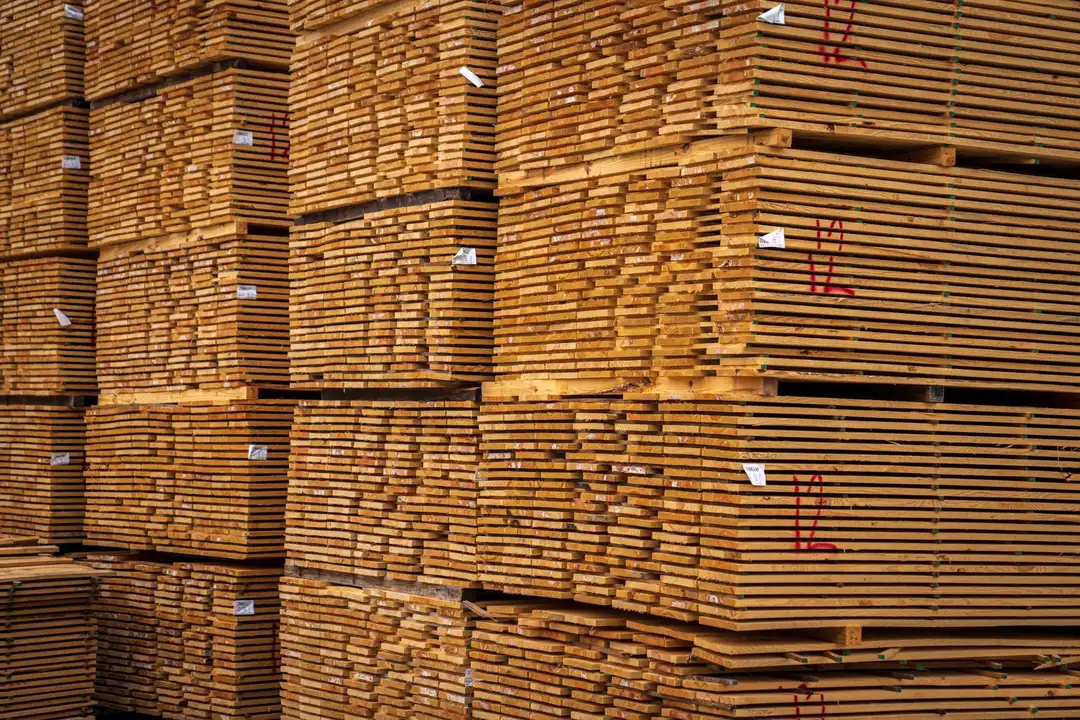
Green pine, freshly felled and not yet dried, is considerably heavier because water still fills the wood cells. The 800 - 950 kg/m³ level often quoted on the market is an estimate, not a standard measurement of a specific species. By the calculation in the moisture section below, green loblolly pine can weigh from about 625 kg/m³ (heartwood) to nearly 990 kg/m³ (sapwood), so a lot of green timber with a lot of sapwood will sit at the upper end of this range.
Light pine: white pine
Eastern white pine (Pinus strobus) is the lightest pine in this article’s table, about 400 kg/m³ at 12% moisture according to The Wood Database. The wood is soft and easy to work, and is usually used for light furniture, picture frames and wall cladding, where high load capacity is not required.
Weight of pine by species
At the same 12% moisture, pine species differ by almost double, from about 400 kg/m³ (white pine) to 710 kg/m³ (resin pine) according to The Wood Database. The table below also adds the density figures of TCVN 12619-2:2019 (Timber - Classification by physical and mechanical properties) for the pine species that grow in Vietnam, because the two sources give a different order between three-needle pine and resin pine.
| Pine species | Scientific name | Weight of 1 m³ dry at 12% (kg, The Wood Database) | Basic specific gravity | TCVN 12619-2:2019 (g/cm³) | Met in Vietnam as |
|---|---|---|---|---|---|
| Eastern white pine | Pinus strobus | 400 | 0.34 | None | Timber imported from North America |
| Radiata pine (New Zealand pine) | Pinus radiata | 515 | 0.41 | None | Sawn timber imported from New Zealand, Chile, Australia |
| Scots pine | Pinus sylvestris | 550 | 0.39 | None | Sawn timber imported from Europe, Russia |
| Loblolly pine (southern yellow pine group) | Pinus taeda | 570 | 0.47 | None | Sawn timber imported from the US, Brazil |
| Slash pine | Pinus elliottii | 655 | 0.54 | None | Plantation timber from the US, Brazil, Argentina, Uruguay |
| Three-needle pine (Pinus kesiya) | Pinus kesiya | 610 | 0.45 | 0.71 | Plantation and natural forest in the Central Highlands and the Northwest |
| Resin pine (two-needle pine) | Pinus merkusii | 710 | 0.57 | 0.67 | Plantations grown for resin in the North and Central regions |
The Wood Database column and the basic specific gravity column differ because basic specific gravity counts only the oven-dry wood, divided by the volume when the wood is still green (which is larger), so it is always lower than the weight at 12% moisture. The TCVN column is taken from the Group III table of the standard; the public version does not state the moisture content measured with the table, so it should only be used for relative comparison between species. When you ask to buy timber, ask the seller which figure they are using and at what moisture content.
One point worth noting is that the two native pines (three-needle pine, resin pine) are heavier than the imported pines widely used for furniture, according to both sources. So if you apply only the 400 - 550 kg/m³ level to pine harvested in Vietnam, the real weight may be understated by 10 - 30%. The order between the two species differs: The Wood Database gives resin pine as heavier (710 against 610 kg/m³), while TCVN 12619-2:2019 gives three-needle pine as heavier (0.71 against 0.67 g/cm³).
How do South American pine, New Zealand pine and Northern European pine differ?
Imported pine is usually called by its country of origin, but the weight depends on the species and not on the country name. According to FAO, pine plantations in South America are mainly Pinus radiata, Pinus elliottii and Pinus taeda; Chile mainly plants radiata pine, while Brazil, Argentina and Uruguay plant a lot of slash and loblolly pine. New Zealand pine is almost entirely radiata (FAO records this species as 91% of New Zealand’s plantation area), while Northern European and Russian pine is usually Scots pine.
So even when all are called South American pine, a lot of Chilean radiata pine (about 515 kg/m³ at 12% moisture) can be more than 20% lighter than a lot of Brazilian slash pine (about 655 kg/m³). Short-cycle plantation timber still has a lot of juvenile wood and is usually lighter than the species average; when you need an exact figure for a shipment, ask for the species name on the documents and weigh a few battens.
Factors that affect the weight of pine
Three factors decide the weight of pine: the species, the moisture content and the treatment method; of these, moisture content makes the biggest difference. On species, pine includes many kinds such as red pine, yellow pine and white pine, each with a different wood density as in the table above. On moisture, green wood is heavier because it holds a lot of water, while dried wood is lighter and more dimensionally stable. On treatment, the wood may be dried, treated with preservative against termites and borers, or compressed to raise hardness; preservative treatment and compression make wood heavier, while drying makes it lighter.
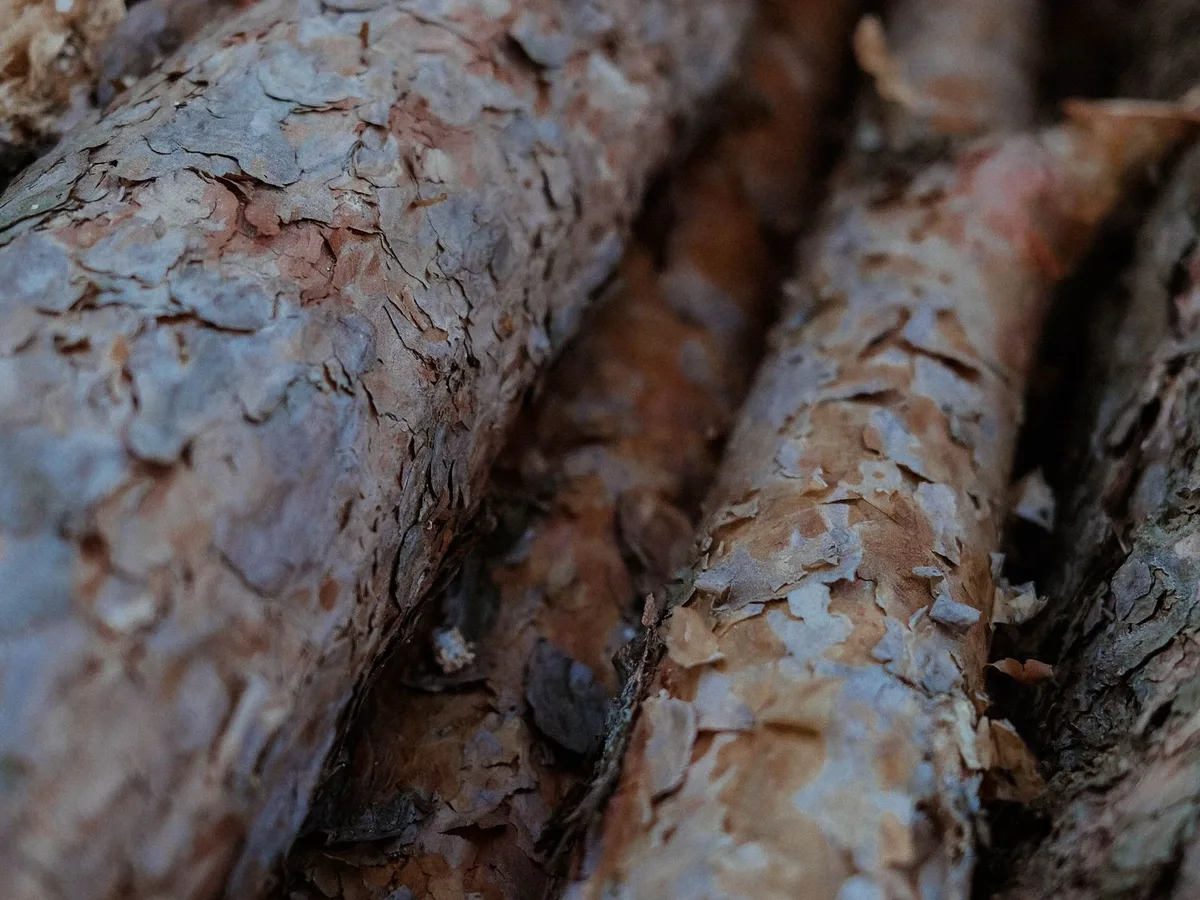
On moisture alone, the sapwood (the pale outer layer) of pine holds far more water than the heartwood when the tree has just been felled. According to measurements in the Wood Handbook of the US Forest Products Laboratory, the moisture content of green heartwood and green sapwood is 33% and 110% in loblolly pine, 31% and 106% in longleaf pine, 40% and 148% in ponderosa pine and 32% and 134% in red pine.
Moisture content here is measured against the oven-dry weight of the wood: loblolly sapwood at 110% moisture means that every 1 kg of wood substance carries 1.1 kg of water. So a log with a lot of sapwood (a small tree, a plantation tree) is clearly heavier than one with a lot of heartwood, even of the same species and volume, and a board sawn close to the bark is usually heavier than one sawn from the heartwood.
Uses of pine according to weight
Light pine suits wooden pallets, crates and small furniture that must be easy to transport; heavier pine suits structures, doors and products that must carry load. Light wood is easy to transport, work and assemble, and for pallets it reduces the tare weight of the shipment. Heavier pine, such as three-needle pine and slash pine, is commonly used in construction, doors and kitchen cabinets, where better hardness and load capacity are needed.
Heavier does not mean more durable against termites and borers. The Wood Database rates the heartwood of radiata pine and resin pine as non-durable to poorly durable against decay fungi, and notes that resin pine is easily attacked by termites and insects. For pine to last, whether heavy or light, it still has to be dried, treated with preservative and kept dry.
How to calculate the weight of pine
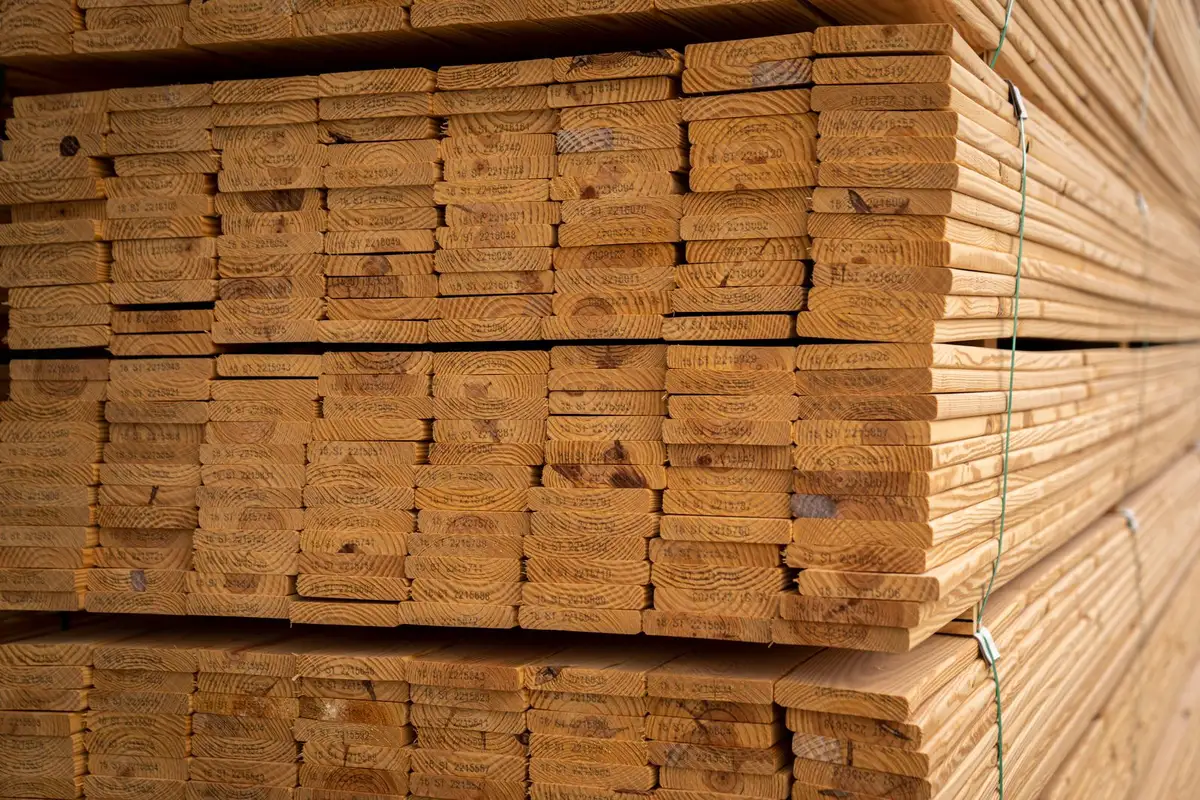
The weight of pine is volume times the density at the exact moisture content of that lot of timber: Weight (kg) = Volume (m³) x Density (kg/m³). For example, a pine board with a volume of 0.5 m³ and a density of 450 kg/m³ weighs 0.5 x 450 = 225 kg. The important thing is to choose the right density: use the 12% dry figure for dried wood and the green wood estimate for freshly sawn wood.
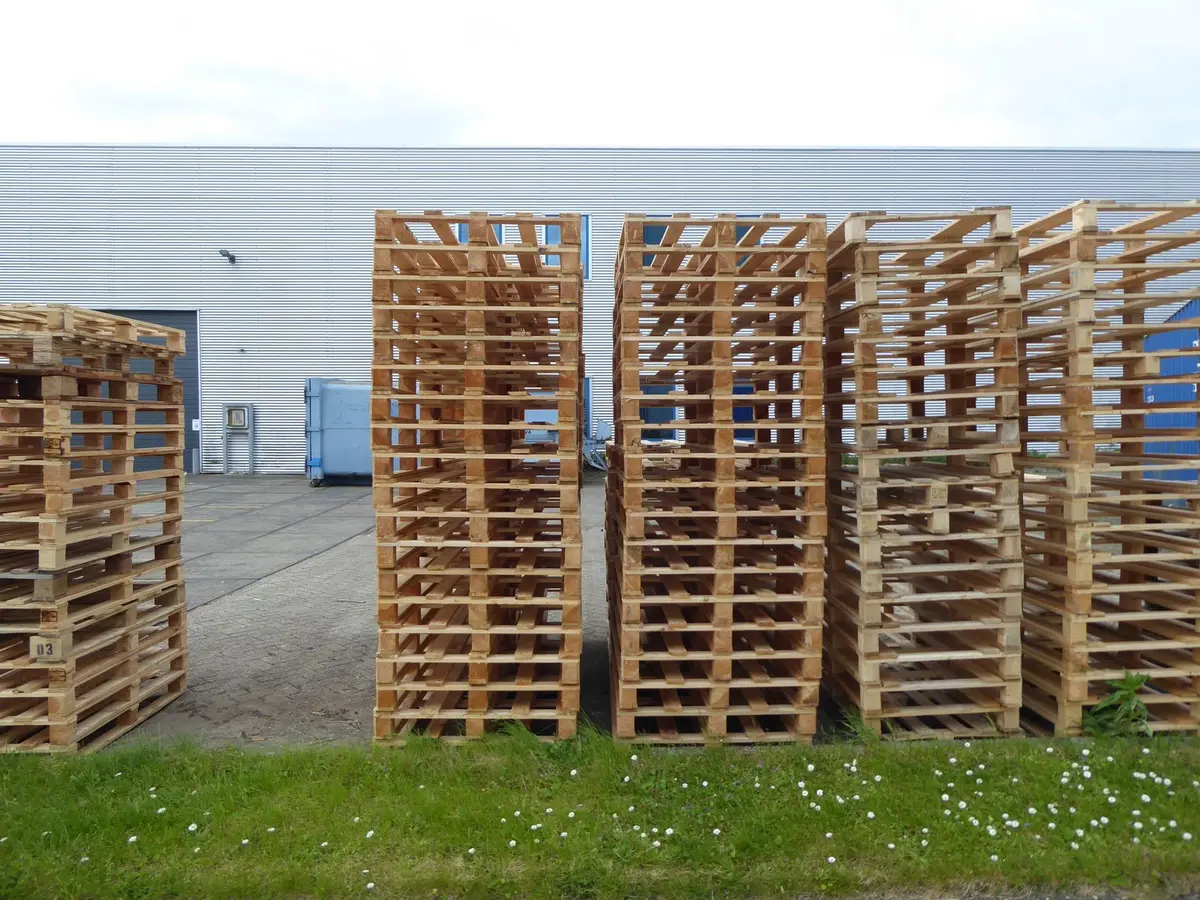
For timber used in pallets, convert the batten dimensions from millimetres to metres before multiplying. For example a 1,200 x 100 x 20 mm batten has a volume of 1.2 x 0.1 x 0.02 = 0.0024 m³; with dry pine at about 500 kg/m³, this batten weighs about 1.2 kg, and 1 m³ of sawn timber is enough for about 416 battens of the same specification.
You can also work the other way to check the amount of wood in a pallet. The EPAL wooden pallet 1200 x 800 x 144 mm on the ICD Vietnam product page is published at a weight of about 25 kg ±5%; if the wood is dry at about 500 kg/m³, the amount of wood is about 0.05 m³. With the same amount of wood but not dried (about 900 kg/m³, the middle of the green wood estimate range), the pallet would weigh about 45 kg, almost double, and would also shrink and loosen its nails as it gradually dries.
Comparing the weight of pine with other pallet timbers
Imported pine is lighter than the acacia, rubberwood and eucalyptus grown in Vietnam, but domestic three-needle pine and resin pine are as heavy as or heavier than acacia. The table below puts the timbers often used to build pallets side by side from two sources: TCVN 12619-2:2019 for domestically grown species and international databases, with the moisture content stated.
| Timber | TCVN 12619-2:2019 (g/cm³) | International source (kg/m³) | Characteristics in pallets |
|---|---|---|---|
| Imported pine | None | 400 - 655 at 12% moisture, depending on species (The Wood Database) | Light, easy to nail, reduces tare weight |
| Domestic pine (three-needle, resin, Merkus) | 0.64 - 0.71 | 610 - 710 at 12% moisture (The Wood Database) | Heavier than imported pine, resinous |
| Acacia (hybrid acacia, Acacia mangium, earleaf acacia) | 0.57 - 0.59 | Earleaf acacia 490 - 840 at 15% moisture (PROSEA) | Medium hardness, often used for domestic pallets |
| Rubberwood | 0.55 | 595 at 12% moisture (The Wood Database); 560 - 640 air-dried (ITTO) | Prone to mould and borers after felling, needs early treatment and drying |
| Eucalyptus | 0.65 (uro eucalyptus) - 0.78 (white and red eucalyptus) | Not cross-checked | Heaviest of the group, pallets heavier than the same construction in other woods |
With the same construction and the same volume of wood, the weight of a pallet is proportional to density. For example, switching from radiata pine (about 0.52 g/cm³) to white eucalyptus (0.78 g/cm³) makes the pallet about half as heavy again, and switching to domestic three-needle pine (0.71 g/cm³) also adds about 35%. See also the comparison of timbers for pallets to choose a material that suits the load rating and budget.
Why moisture content decides weight when calculating freight
Moisture content is the factor that makes the weight of a cubic metre of pine differ the most: for the same species, green wood can weigh almost double wood dried to 12%. For example, by the commonly used estimate, green pine weighs 800 - 950 kg per cubic metre, while dried imported pine weighs only about 400 - 570 kg per cubic metre; the gap of several hundred kg is the water that evaporates during drying.
This figure matters in practice when working out freight: transport is usually charged by weight or volume, undried wood adds a lot to freight, and when built into pallets it is also prone to warping and borers. So when you buy timber or order pallets by volume, state in the order whether the wood is dried and the target moisture content, so the weight figure and durability are agreed between both sides. You can compare the same kind of conversion in the article How many kg does 1 cubic metre of rubberwood weigh.
Frequently asked questions
How do you calculate the weight of a cubic metre of pine?
Use the formula weight = density x volume. For 1 cubic metre (1 m³) of imported pine dried to 12% moisture, the density is about 400 - 570 kg/m³ so 1 cubic metre weighs 400 - 570 kg; three-needle pine and resin pine about 610 - 710 kg. Green pine is usually estimated at 800 - 950 kg per cubic metre.
Is pine lighter than other pallet timbers?
Imported pine is: about 400 - 655 kg/m³ at 12% moisture, lighter than the acacia, rubberwood and eucalyptus grown in Vietnam. Domestic three-needle pine and resin pine are not lighter: TCVN 12619-2:2019 gives 0.67 - 0.71 g/cm³, heavier than acacia (0.57 - 0.59) and rubberwood (0.55).
Where can I buy pine wooden pallets?
ICD Vietnam builds pine and many other wooden pallets to your specification, with the wood type and moisture content stated on the order, exchange or return within 7 days, price: contact for a quote. Call hotline 0983 797 186 for advice on specifications.
What is the specific gravity of pine?
At 12% moisture, the density of pine is about 400 - 710 kg/m³ depending on species according to The Wood Database: white pine 400, radiata 515, Scots 550, loblolly 570, three-needle 610, slash 655, resin pine 710 kg/m³. The corresponding basic specific gravity is about 0.34 - 0.57.
Is pine harvested in Vietnam heavier than imported pine?
Usually yes. Three-needle pine and resin pine weigh 610 - 710 kg/m³ at 12% moisture according to The Wood Database, or 0.67 - 0.71 g/cm³ according to TCVN 12619-2:2019, heavier than imported radiata pine (515 kg/m³) or white pine (400 kg/m³). When estimating truck loads or the weight of pallets built from domestic pine, use the higher level.
How many kg does a cubic metre of South American pine weigh?
It depends on the species. According to FAO, the pine planted in South America is mainly radiata, slash and loblolly; at 12% moisture, The Wood Database gives about 515, 655 and 570 kg/m³ respectively. Ask for the species name on the documents instead of only asking the country of origin.
How many kg does a pine wooden pallet weigh?
The weight of a pallet is the amount of wood (m³) times the density of the wood. For example, an EPAL 1200 x 800 x 144 mm pallet is published by ICD Vietnam at about 25 kg ±5%, equivalent to about 0.05 m³ of dry wood; with the same amount of wood undried, the pallet could weigh about 45 kg.
Is pine that has had ISPM 15 heat treatment lighter?
Not necessarily. ISPM 15 heat treatment only requires the wood core to reach 56 °C for 30 minutes to kill pests and does not set a moisture content after treatment. Wood is clearly lighter when it is kiln dried to a target moisture content, usually about 12 - 18%.
Contact ICD Vietnam
If you need advice on pine wooden pallets by dimensions, load rating, wood moisture and ISPM 15 treatment requirement, contact ICD Vietnam. We have a production workshop, a Hanoi warehouse (3rd Floor, Thang Long A1 Building, Bau Hamlet, Thien Loc Commune) and a southern workshop (551/212 Le Van Khuong Street, Tan Thoi Hiep Ward, District 12). Export wooden pallets are treated and stamped with the IPPC mark under ISPM 15 through a licensed treatment provider. Price: contact for a quote, with volume discounts.
- North Vietnam: 0983 797 186 / 090 345 9186 / 090 5859 186.
- South Vietnam: 098 6784 186.
- Zalo: Chat on Zalo. Email: sales@icdvietnam.com.vn.
References
- Average dry weight, basic specific gravity and natural durability of Pinus strobus, P. radiata, P. sylvestris, P. taeda, P. elliottii, P. kesiya, P. merkusii: The Wood Database (accessed 17/10/2026).
- Density of three-needle pine, resin pine, Merkus pine, acacia, rubberwood, eucalyptus: TCVN 12619-2:2019 Timber - Classification - Part 2: By physical and mechanical properties, published by the Ministry of Science and Technology.
- Moisture content of green heartwood and sapwood: USDA Forest Products Laboratory, Wood Handbook FPL-GTR-282, chapter 4.
- Pine species planted in South America and New Zealand: FAO, The outlook for future wood supply from forest plantations.
- Density of earleaf acacia: PROSEA, Acacia auriculiformis. Air-dried density of rubberwood: ITTO, Rubberwood Processing Manual (2007).
- Treatment of wood packaging material: IPPC, ISPM 15.
- ICD Vietnam, specifications of the EPAL EU 1200 x 800 x 144 mm wooden pallet on the product page (October 2026).