Table of Contents
- 1. Comparing the technical properties of rubberwood and pine
- 2. When should a business prefer a rubberwood pallet?
- 3. Strengths of pine pallets in logistics
- 4. Selection advice from ICD Vietnam specialists
- Frequently asked questions
- Are rubberwood and pine the two most common pallet timbers?
- Should I choose rubberwood or pine for heavy sea freight?
- What goods is pine suited to?
- Which is better for pallets, rubberwood or pine?
- Can a pine pallet carry heavy goods?
- Which is more prone to mould, rubberwood or pine?
- Which group are rubberwood and pine in?
- How much heavier is a rubberwood pallet than a pine pallet?
- Contact ICD Vietnam for a quote
- References
Reviewed and updated by ICD - Week 43/2026
Rubberwood is harder and heavier than pine (about 595 against 515 kg/m³, Janka hardness 4,280 against 3,150 N), suiting pallets that carry heavy goods domestically and by sea; pine is about 13% lighter but has equal or higher bending strength, suiting air freight. Both must be dried and treated to ISPM 15 when used for export goods.
Key points: rubberwood and pine are the two timbers most often met when ordering pallets, besides acacia and melaleuca. Choosing the right timber protects goods and optimises transport cost, but I always remind customers that a pallet’s load capacity is decided more by its construction than by the name of the timber.
Rubberwood has the advantage of surface hardness and a domestic supply, suiting heavy goods moved by road and sea. Pine is lighter, pale and good in bending, suiting goods charged by weight such as air freight, or goods that need a pale, clean pallet.
1. Comparing the technical properties of rubberwood and pine
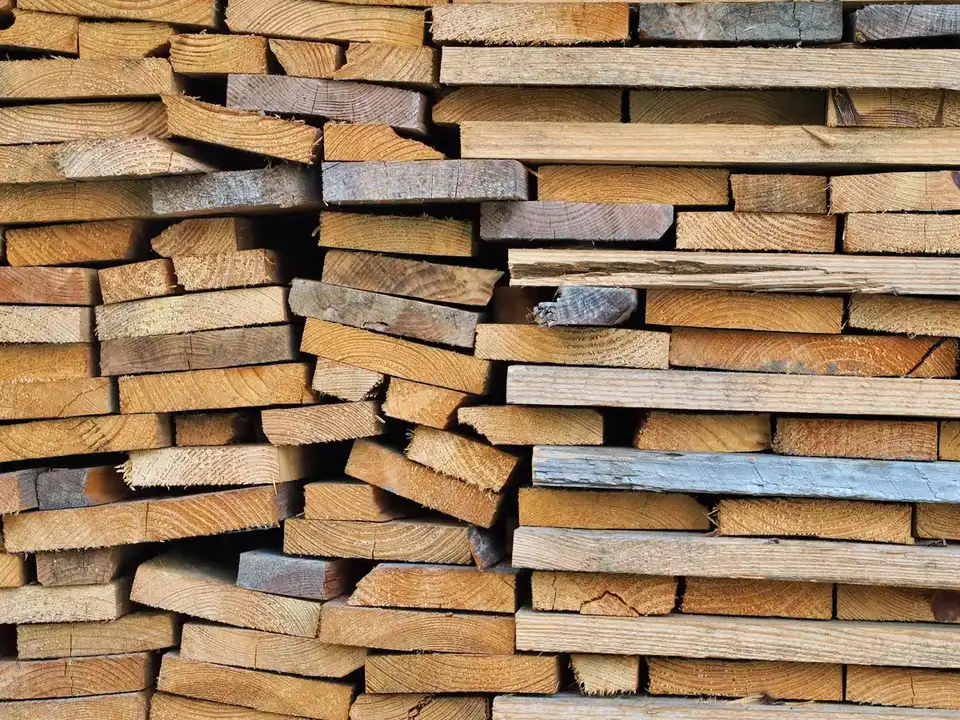
Rubberwood is heavier, harder on the surface and shrinks less; pine is lighter and slightly better in bending and stiffness; both have poor natural durability against decay fungi and insects. That is the conclusion when the two timbers are put against the same technical indicators used for industrial packaging.
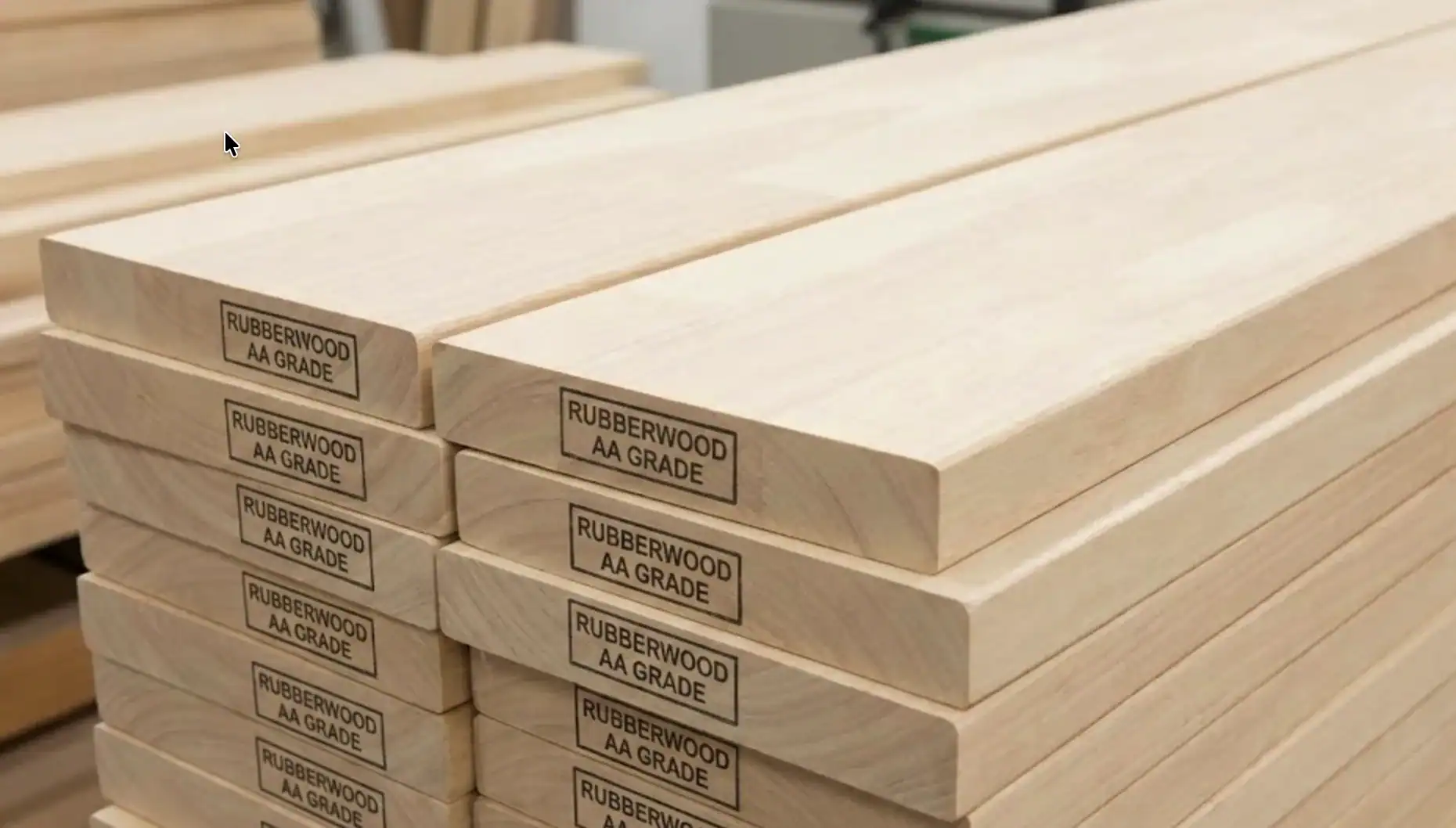
On weight, dry rubberwood averages 595 kg/m³, radiata pine 515 kg/m³ and Scots pine 550 kg/m³, so pine is about 8 - 13% lighter. On surface hardness, rubberwood reaches 4,280 N on the Janka scale and radiata pine 3,150 N: rubberwood resists dents on the deck board better, while pine scratches and dents more easily under hard knocks. On colour, rubberwood is light cream with faint grain; pine has pale yellow, almost white sapwood with more visible grain.
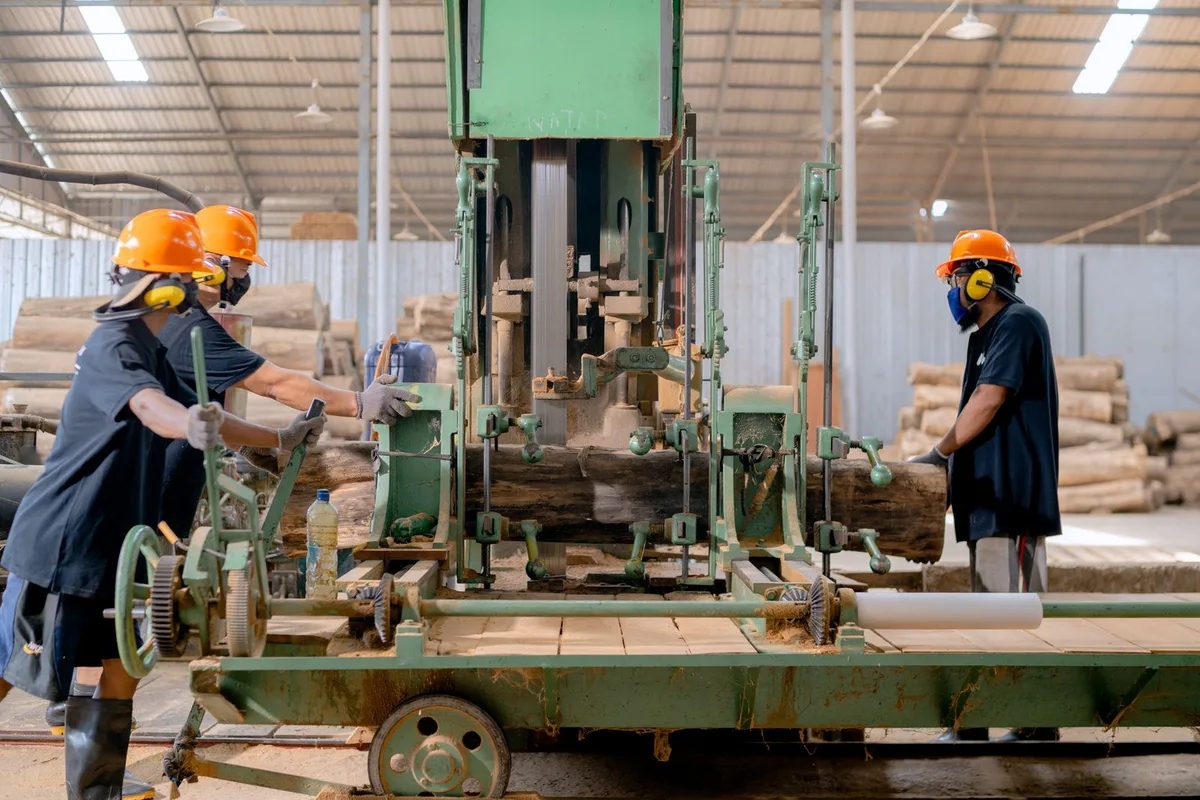
There are two common misunderstandings in furniture comparison articles. First, rubberwood is not more elastic than other woods of the same weight: The Wood Database states that the name comes from the tree being grown for latex, not from the elasticity of the wood, and the modulus of elasticity of rubberwood (9.07 GPa) is even lower than pine. Second, pine resin does not make pine resistant to decay: radiata pine heartwood is rated poor to very poor in natural durability, and Scots pine moderate to poor.
Under the timber classification table issued with Decision 2198-CNR (1977), rubberwood is in group VII, while the domestic pines are in group IV (three-needle pine) and group V (resin pine, Pinus massoniana). TCVN 12619-2:2019 reclassified by density and mechanical strength, placing three-needle pine, Pinus massoniana and resin pine in group III. Imported radiata pine is not named in the 8-group table.
Mechanical data: how much do rubberwood and pine differ?
The clearest differences are in density and surface hardness; the bending strength and stiffness of pine are slightly higher. The table below uses The Wood Database average figures at 12% moisture for rubberwood and the two pines common on the pallet market.
| Property | Rubberwood (Hevea brasiliensis) | Radiata pine (Pinus radiata) | Scots pine (Pinus sylvestris) | Meaning for pallets |
|---|---|---|---|---|
| Dry density | 595 kg/m³ | 515 kg/m³ | 550 kg/m³ | Pine pallets are lighter, which helps when freight is charged by weight |
| Janka hardness | 4,280 N | 3,150 N | 2,420 N | Rubberwood resists dents and chipped edges better when hit by forklift tines |
| Bending strength (MOR) | 71.9 MPa | 79.2 MPa | 83.3 MPa | Pine deck boards bend no worse than rubberwood of the same section |
| Modulus of elasticity (MOE) | 9.07 GPa | 10.06 GPa | 10.08 GPa | Pine boards sag slightly less under the same load |
| Compressive strength parallel to grain | 42.1 MPa | 41.6 MPa | 41.5 MPa | Feet and blocks carry compression almost equally |
| Volumetric shrinkage | 7.5% | 10.7% | 13.6% | Rubberwood shrinks less as it dries |
| Natural durability | Poor, prone to staining and insects | Heartwood poor to very poor | Moderate to poor | Both need drying and dry storage; export requires ISPM 15 treatment |
The point to note is that the load rating of a pallet depends on its construction (board thickness, number of feet, foot-locking style) more than on the timber. For example, in the ICD Vietnam wooden pallet catalogue, the single-deck 2-way entry model has a published static load of 1,000 kg, while the 800 x 1200 x 144 mm block pallet (EUR 1 size) has a published static load of 4,000 kg. So when comparing prices between rubberwood and pine pallets, compare the same construction and the same committed load.
2. When should a business prefer a rubberwood pallet?
Prefer a rubberwood pallet when goods are heavy, stored for long, moved by road or sea, and the factory is near the southern raw material area.
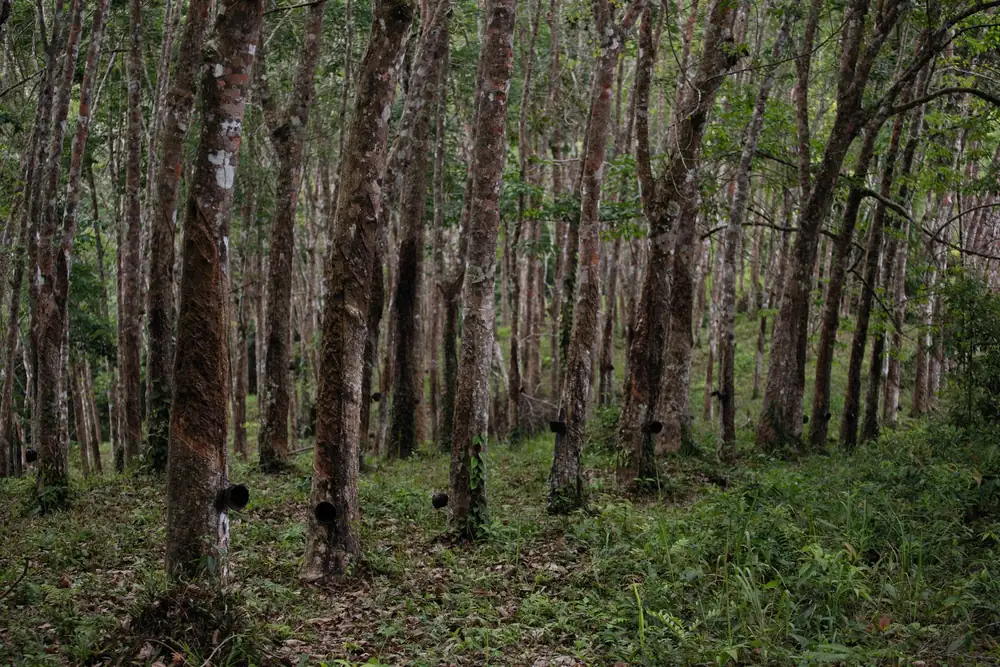
In the south, rubberwood is an easy timber to find for load-bearing pallets because it is close to the plantations. Its measurable advantages are a hard deck surface and low shrinkage as it dries (volumetric shrinkage 7.5% against 10.7% for radiata pine), but the wood can warp during drying and is very prone to mould and borers if left untreated and undried after sawing.
2.1. Suited to heavy goods
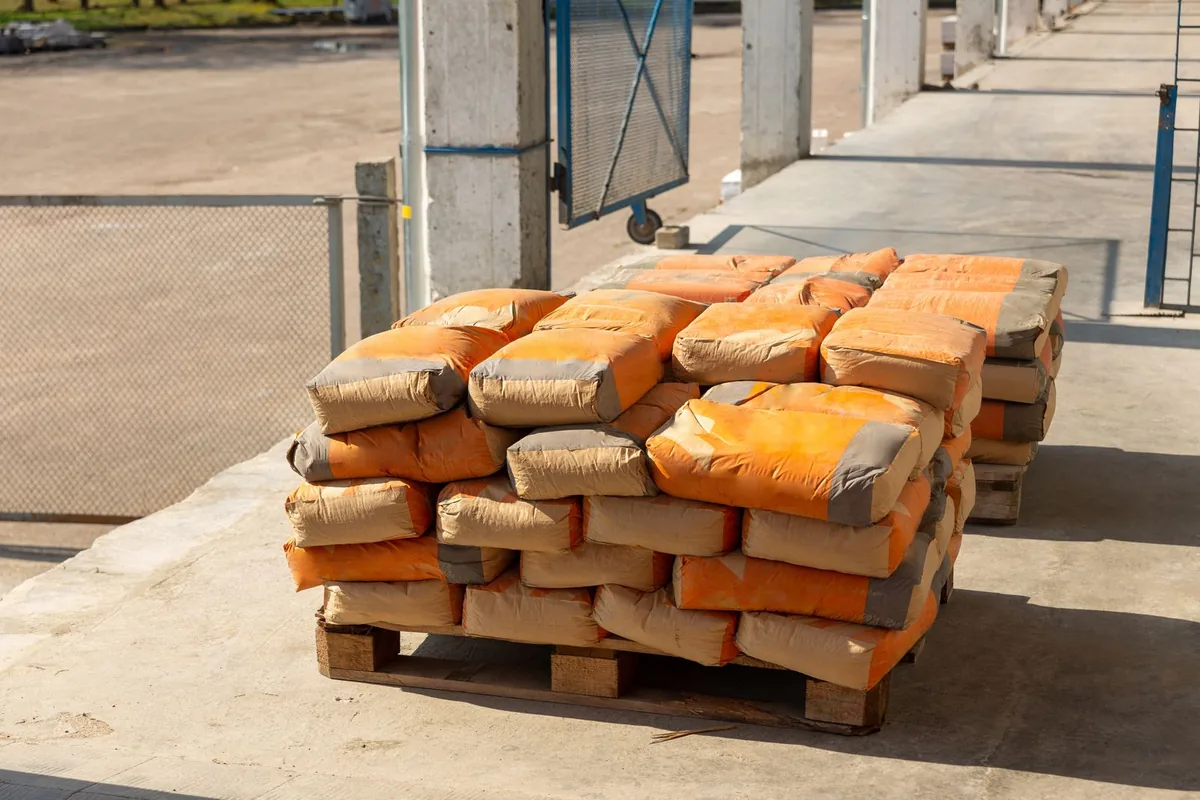
For goods such as machinery, mechanical parts, ceramic tiles or bagged goods like cement and rice, a rubberwood wooden pallet is worth considering thanks to its hard, dent-resistant deck.
The specific load rating must be taken from the pallet model. For example, the single-deck 4-way entry block pallets that ICD Vietnam publishes on its website have a static load of 4,000 - 6,000 kg and a dynamic load of 1,250 - 1,500 kg, while the single-deck 2-way entry model has only a static load of 1,000 kg and a dynamic load of 500 kg. This gap comes from construction, not from the timber.
2.2. Suited to road and sea transport
On a long journey by container truck or ship, the pallet goes through many lifts and knocks from forklift tines. Rubberwood reduces dents and chips on the deck and block edges thanks to its high surface hardness, helping the pallet keep its shape as goods pass through many warehouses and yards.
By the figures, the measurable advantage of rubberwood under impact is surface hardness: its Janka value is about 36% higher than radiata pine, so the face of the boards and the block edges dent and chip less when forklift tines push in.
2.3. Advantage in investment cost
Rubberwood has a stable domestic supply thanks to the large planted area in the Southeast and the Central Highlands, so prices are usually competitive for businesses ordering pallets in the south.
According to Vietnam Rubber Association statistics, in 2024 the country had 909.3 thousand ha of rubber, of which 734.8 thousand ha were being tapped. Plantations at the end of their tapping cycle are cleared steadily, giving a stable domestic rubberwood supply, unlike the pine used for pallets, which is mostly imported, such as radiata pine grown mainly in Chile, Australia and New Zealand.
For businesses using large pallet volumes, the cost gap between rubberwood pallets and imported-timber pallets depends on specification, quantity and delivery distance, so the right way to compare is to order the same drawing and the same committed load and compare quotes. Pallet price at ICD Vietnam is contact for a quote, with volume discounts.
3. Strengths of pine pallets in logistics
Pine pallets are strong in light weight, a clean pale surface and good bending strength, so they suit air freight, display goods and light goods that need an attractive pallet.
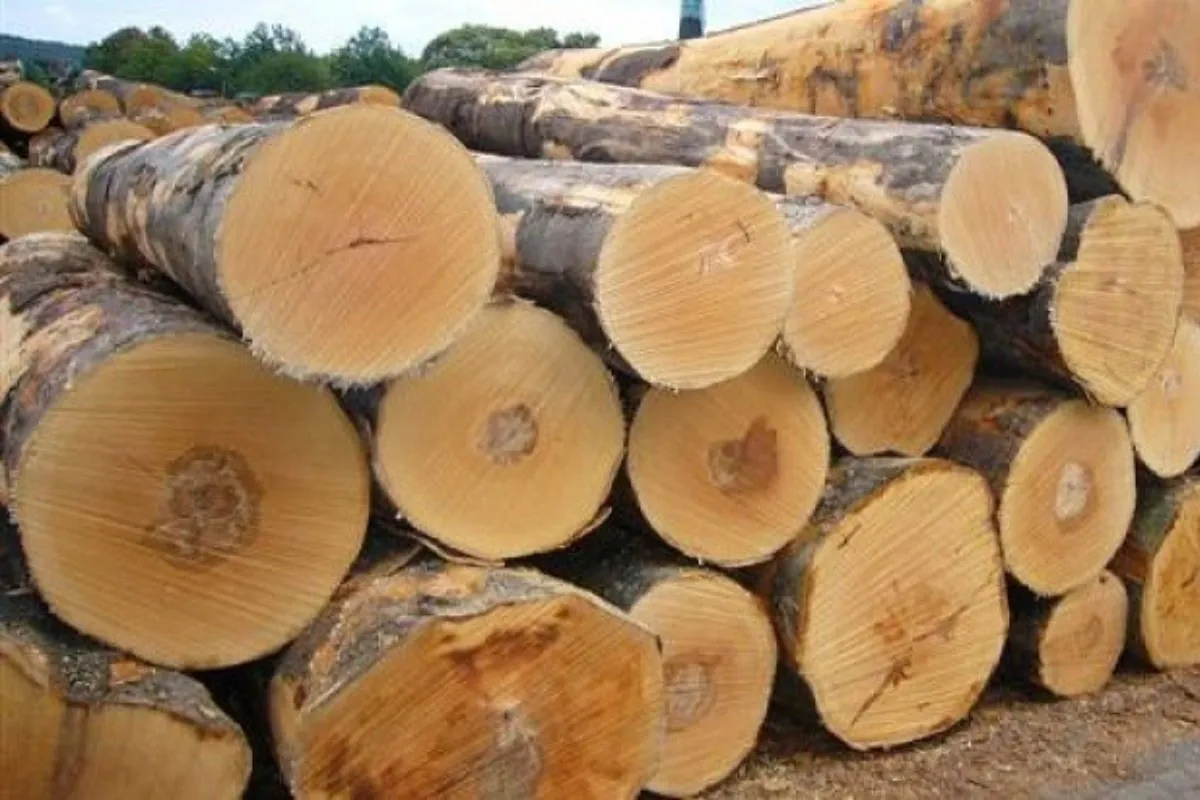
Although its surface hardness is lower than rubberwood, pine keeps a place in consignments that need a light or pale pallet thanks to its low density, straight grain and ease of working. Pine prices depend on origin and grade, because most pine used for pallets is imported.
3.1. Suited to air-freight export
For goods charged by weight such as air freight, a lighter pallet reduces the total weight of the package. By average dry density, pine is about 8 - 13% lighter than rubberwood, so the actual saving depends on the amount of wood per pallet.
For example, a pallet using 0.04 m³ of wood weighs about 23.8 kg if it is rubberwood and about 20.6 kg if radiata pine, about 3.2 kg lighter per pallet when the wood is dry. Whether this saving is worth more than the pallet price difference depends on the freight tariff and the number of pallets in the consignment. Even by air, a wooden pallet must still be treated to ISPM 15 if the importing country applies the standard.
The weight gap depends on the amount of wood per pallet. The tool below estimates the wood weight of a batch of pallets from average dry density; real pallets are heavier if the wood is still moist.
3.2. Meeting appearance and cleanliness needs
Industries such as food, healthcare or electronic components often require clean, uniformly coloured pallets. Plantation radiata pine is pale, straight-grained and usually has few knots, so it suits customers who need a pallet with a pale surface.
Note that pine is sensitive to moisture: the sapwood readily develops blue stain when damp. ISPM 15 treatment is a quarantine measure to kill pests, not a mould-prevention measure; the way to limit mould is to dry the wood and store it somewhere dry, because according to the USDA Wood Handbook, decay fungi barely grow in wood kept below about 20% moisture.
On decay, neither timber has high natural durability: The Wood Database rates rubberwood as non-durable, prone to fungal staining and insect attack; radiata pine heartwood is also rated poor to very poor in decay resistance. The practical difference comes from drying, treatment and storage more than from the name of the timber.
4. Selection advice from ICD Vietnam specialists
Choose rubberwood for heavy goods moved domestically or by sea; choose pine for light goods going by air or needing a pale, clean pallet; for both, fix the load rating by the specific pallet model.
| Situation | Choose | Reason |
|---|---|---|
| Goods over 1 tonne per pallet, going by sea | Rubberwood | Hard surface, withstands impact in repeated handling |
| Air freight, charged by weight | Pine | About 8-13% lighter by density |
| Display goods, supermarkets, pallets needing a pale colour | Pine | Pale surface, visible grain |
| Domestic warehouse, high turnover, cost first | Rubberwood | Abundant domestic timber supply |
| Export to any market that applies ISPM 15 | Both | Treatment to ISPM 15 (HT, DH, MB or SF) and the IPPC mark are mandatory |
Comparing pine and rubberwood is not about finding which timber is better, but about showing which timber gives the highest economic benefit for your business model.
If your warehouse or factory is in the southern industrial provinces and your goods mainly go domestically or by sea, a rubberwood pallet is the option to look at first, because it is close to the timber source and the hard deck dents less in repeated handling.
Conversely, if the consignment goes by air and is charged by weight, or the customer requires a pale pallet, a pine pallet is worth considering. Work out the kilograms saved over the whole batch and compare with the pallet price difference before deciding.
At ICD Vietnam we build rubberwood, pine, acacia and melaleuca pallets to order specifications. Pallets for export goods are treated to ISPM 15 and stamped with the IPPC mark through a licensed treatment provider. ISPM 15 accepts four methods, HT, DH, MB and SF; the European Union banned the use of methyl bromide in the bloc from 18/3/2010 but still accepts imported pallets treated with MB in line with ISPM 15.
Frequently asked questions
Are rubberwood and pine the two most common pallet timbers?
There are no official statistics on the market share of each pallet timber in Vietnam. Rubberwood and pine are two commonly met timbers, besides acacia and melaleuca; ICD Vietnam builds pallets from all four.
Should I choose rubberwood or pine for heavy sea freight?
Rubberwood, because the deck is harder (Janka 4,280 N against 3,150 N for radiata pine), dents less in repeated handling, and has a domestic timber supply. The specific load rating still has to be taken from the construction of the pallet model.
What goods is pine suited to?
Pine suits goods charged by weight such as air freight, light goods and goods needing a pale pallet, because it is about 8 - 13% lighter than rubberwood by dry density.
Which is better for pallets, rubberwood or pine?
Neither is better in every case. Rubberwood is harder and heavier, resists dents well and suits heavy goods by sea and domestic warehouses; pine is lighter, with equal or higher bending strength, and suits air freight and goods needing a pale pallet.
Can a pine pallet carry heavy goods?
Yes, if the construction is adequate. The bending strength of pine is no lower than rubberwood, so pallet load rating is decided mainly by board thickness, number of feet and foot-locking style. Ask the supplier to state the static and dynamic load for the exact pallet model.
Which is more prone to mould, rubberwood or pine?
Both mould easily if not dried and stored properly: rubberwood is prone to fungal staining and insects, while pine sapwood develops blue stain when damp. Drying below about 20% moisture and dry storage matter more than the choice of timber; ISPM 15 treatment is a quarantine requirement for export and does not replace drying.
Which group are rubberwood and pine in?
Under Decision 2198-CNR (1977), rubberwood is group VII; three-needle pine is group IV, resin pine and Pinus massoniana group V. TCVN 12619-2:2019 places these three pines in group III.
How much heavier is a rubberwood pallet than a pine pallet?
With the same wood volume, a rubberwood pallet is about 16% heavier than a radiata pine pallet (595 against 515 kg/m³). A pallet using 0.04 m³ of dry wood weighs about 23.8 kg if rubberwood and 20.6 kg if radiata pine; moist wood will weigh more.
Contact ICD Vietnam for a quote
- Hotline 1: 0983 797 186
- Hotline 2: 0903 459 186
- Hotline 3: 0905 859 186
ICD Vietnam has a Hanoi warehouse at 3rd Floor, Thang Long A1 Building, Bau Hamlet, Thien Loc Commune, Hanoi and a southern workshop at 551/212 Le Van Khuong Street, Tan Thoi Hiep Ward, District 12, Ho Chi Minh City (southern hotline 098 6784 186). Wooden pallet price is contact for a quote, with volume discounts; wooden pallets carry no warranty, with exchange or return within 7 days. Under the delivery policy, orders are processed in 1 - 2 days, delivery within Hanoi and Ho Chi Minh City takes 1 - 3 days, between regions 2 - 5 days and other provinces 3 - 7 days.
References
- Rubberwood (Hevea brasiliensis), Radiata Pine, Scots Pine: The Wood Database, checked 17/10/2026.
- Decision 2198-CNR (1977) issuing the provisional table of timber classes used nationwide: National legal document database.
- TCVN 12619-2:2019 Timber - Classification - Part 2: Thu Vien Phap Luat.
- Wood Handbook (FPL-GTR-190), chapter 14 Biodeterioration of Wood: USDA Forest Products Laboratory.
- Overall statistics of Vietnam rubber in 2024: Vietnam Rubber Association (VRA).
- ISPM 15 Regulation of wood packaging material in international trade: IPPC, FAO.
- Requirements for wood packaging material and dunnage: European Commission.
- Wooden pallet specifications, delivery and return policy of ICD Vietnam: icdvietnam.com.vn website, checked 17/10/2026.