Table of Contents
- 1. Is rubber wood actually good?
- 2. Durability analysis: three dimensions
- 3. Rubber wood vs. other timber species
- 4. Are rubber wood pallets good?
- 5. Applications: what is rubber wood used for?
- 6. Should you buy rubber wood furniture or pallets?
- Related articles
- Frequently asked questions about rubber wood pallets
- Contact ICD Vietnam
Reviewed and updated by ICD - Week 43/2026
Rubber wood (Hevea brasiliensis) is one of the most cost-effective natural timbers available today. With an average indoor service life of 10-20 years, it meets the needs of furniture buyers and warehouse operators alike - including those who need rubber wood pallets for heavy-load handling. The key condition: the timber must go through pressure treatment to resist insects, and it should be kept indoors. If you need material for outdoor use or a premium heirloom finish, rubber wood may not be the right fit.
1. Is rubber wood actually good?
To answer that objectively, look at how it performs in practice. Rubber wood is a by-product of latex tapping. Once a tree completes its latex cycle (roughly 25-30 years), the trunk is harvested for timber. In terms of market segment, rubber wood sits in the affordable-natural-timber bracket - clearly above standard engineered boards, but below premium hardwoods. Its mechanical strength is consistent, and its naturally light colour pairs easily with most finishes.
It works well for:
- Apartment dwellers who want minimal, modern furniture without paying premium hardwood prices.
- Office fitouts, cafes, and restaurants that need the warmth of natural wood while keeping initial investment low.
It is not the best choice for:
- Grand classical interiors that call for heavily grained timbers such as Red Balau or Rosewood.
- Areas with direct and prolonged exposure to rain and sun, such as uncovered balconies or gardens.
2. Durability analysis: three dimensions
Based on technical properties and the experience of seasoned woodworkers, rubber wood durability breaks down into three areas.

2.1. Load-bearing and impact resistance
Rubber wood has a naturally flexible cell structure that gives it a degree of elasticity. This prevents brittle cracking under sudden impact. During machining and assembly, rubber wood accepts screws and nails very well, keeping joints tight over years of use. That characteristic makes it especially suitable as a wood pallet material.
One honest limitation: surface hardness is lower than Oak or Acacia. A sharp object dragged across it will leave scratches. A quality PU lacquer coat is therefore essential to protect the core timber.
2.2. Resistance to wood-boring insects (2026 reality)
This is the question buyers ask most. Fresh rubber wood does contain sugars and residual latex - an attractive food source for termites and wood borers. Untreated rubberwood is perishable, with very little natural resistance to decay, and it is susceptible to fungal staining and insect attack (The Wood Database). Reputable producers therefore apply pressure preservative treatment before the timber is used in furniture or pallets, forcing anti-insect agents deep into the grain. Treatment greatly reduces the risk, but it is not absolute, so ask the supplier how the timber was treated and dried.
2.3. Moisture resistance
Rubber wood does absorb moisture to some degree. For finger-jointed boards - the most common product format today - the concern is not the grain itself but the glue lines. Prolonged soaking or sustained high-humidity environments can cause glue joints to open. The practical advice: use rubber wood for dry interiors. For kitchen shelving, ask the manufacturer to seal all edges thoroughly with a specialist primer.
3. Rubber wood vs. other timber species
A direct comparison against the two most common alternatives puts the trade-offs in perspective.
3.1. Rubber wood vs. Oak
| Criterion | Rubber Wood | Oak (European / American) |
|---|---|---|
| Price | 30-40% cheaper | Noticeably more expensive |
| Hardness | Medium (slightly soft) | Hard, dense, solid feel |
| Grain | Fine, subtle | Bold, pronounced, premium look |
| Service life | 10-20 years | 20-30 years or more |
Oak delivers a classic, high-end aesthetic while rubber wood prioritises flexibility and economy. If budget is not a constraint, Oak wins on appearance. Otherwise, rubber wood wins on value.
3.2. Rubber wood vs. Acacia
Acacia (golden wattle) is generally harder and slightly more weather-resistant, which is why it is often used for outdoor furniture. Its disadvantage is an uneven, darker grain and a rougher surface. Rubber wood offers a brighter, more uniform surface that takes stain exceptionally well - Natural and Walnut finishes both come out smooth and contemporary.
4. Are rubber wood pallets good?
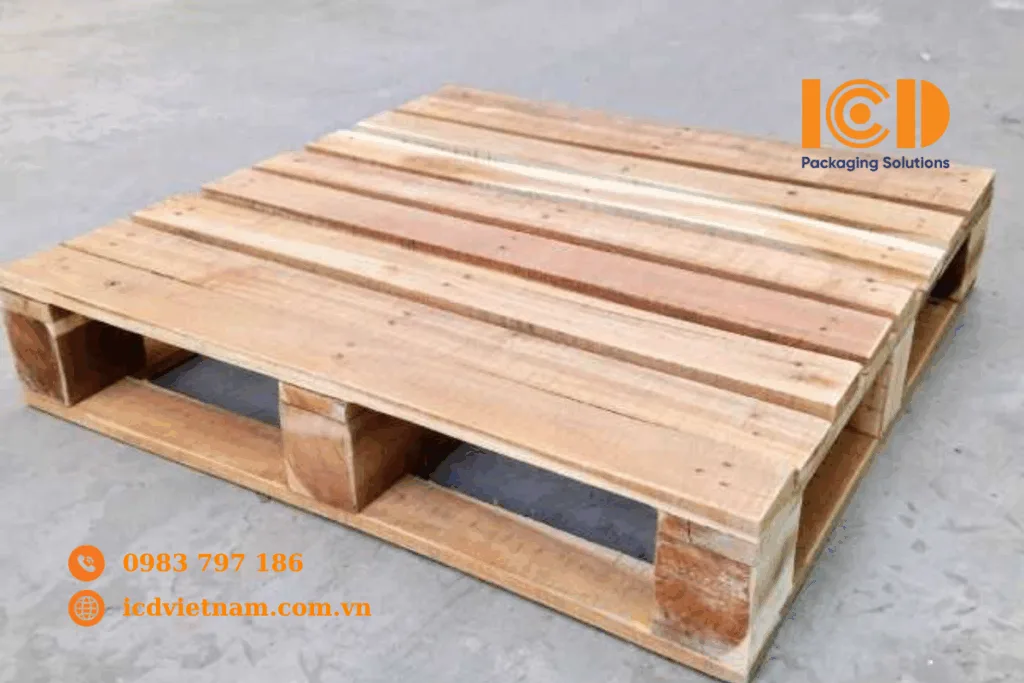
In logistics and packaging, rubber wood pallets are becoming a strong alternative to pine and acacia in several specific applications.
Practical assessment of rubber wood pallets:
- Load capacity: Excellent. A well-built rubber wood pallet can carry a high static load and a dynamic load in the region of 1,500 kg, depending on board section and design, so always ask for the rated load of the specific pallet.
- Surface smoothness: Rubber wood is very smooth with minimal splinter risk - critical when packaging goods that scratch easily, or export apparel.
- Export compliance: Rubber wood pallets can be treated and marked to meet ISPM 15, making it suitable for international shipments to demanding markets such as the US and EU.
- Repairability: Because the timber is flexible and holds fasteners well, a damaged rubber wood pallet can be disassembled and reassembled as shelving or DIY items.
One point to note: rubber wood pallets are heavier than pine. Calculate freight costs carefully if shipping by air, as weight-based charges can add up.
5. Applications: what is rubber wood used for?
Beyond pallets, rubber wood appears widely in everyday life:
Bed frames: Most modern bed designs use finger-jointed rubber wood. Its load-bearing strength means the frame stays rigid with no creaking over years of use.
Wardrobes and kitchen cabinets: Because rubber wood accepts adhesive and lacquer so well, it is used for cabinet frames and door panels. The bright colour makes bedrooms and kitchens feel cleaner and more open.
Flooring and wall cladding: Stained in Walnut or Oak colours, rubber wood is a budget flooring option that still delivers the warmth of real timber underfoot.
6. Should you buy rubber wood furniture or pallets?
The final answer depends on your purpose and budget.
Choose rubber wood if:
- You need pallets for heavy storage or export goods that require a clean surface.
- You want natural-wood furniture at a price comparable to engineered board.
- You prefer a modern, bright, and contemporary design style.
Avoid rubber wood if:
- You want heirloom furniture that appreciates in perceived value over time.
- You plan to use pallets or furniture entirely outdoors with no shelter from rain and direct sun.
Rubber wood has shed its old label as a by-product timber and established itself as one of the most sustainable and versatile raw materials in modern production.
Related articles
| What is rubber wood? Properties, price and uses | Does rubber wood attract termites? | Finger-jointed rubber wood: price and standards |
Frequently asked questions about rubber wood pallets
1. Is rubber wood strong enough for industrial pallets?
Yes. A well-built rubber wood pallet can carry a high static load and a dynamic load in the region of 1,500 kg, depending on board section and design - sufficient for many warehouse and manufacturing environments. Always ask for the rated load of the specific pallet.
2. Does rubber wood pass ISPM 15 for export?
Yes. Rubber wood can be heat-treated or fumigated to meet ISPM 15 requirements, making it accepted for export to the US, EU, Australia, and other markets with strict phytosanitary rules.
3. Are rubber wood pallets heavier than pine pallets?
Yes. Rubber wood is denser than pine, so pallets weigh more. This is not an issue for ground freight or sea containers, but it is worth calculating for air freight where charges are weight-based.
4. How long does a rubber wood pallet last?
In indoor warehouse use, a well-made rubber wood pallet typically lasts 5-10 years depending on load cycles. The wood holds fasteners well, so damaged boards can be replaced rather than scrapping the whole pallet.
5. Can rubber wood pallets be used outdoors?
Short-term outdoor use is fine, but rubber wood is not ideal for permanent outdoor storage without shelter. Prolonged exposure to rain and humidity can open glue joints in finger-jointed boards over time.
6. Why is rubber wood smooth enough for packaging sensitive goods?
Rubber wood has a fine, uniform grain with minimal natural defects. After planing, the surface is smooth with very low splinter risk - important when the pallet contacts export apparel, electronics packaging, or any product with a surface that marks easily.
Contact ICD Vietnam
Hotline: 0983 797 186 / 090 345 9186 / 090 5859 186
Email: sales@icdvietnam.com.vn | Zalo: Chat Zalo
Reference
Physical properties of rubberwood (Hevea brasiliensis) relevant to pallet use - The Wood Database - Rubberwood.