
Table of Contents
Reviewed and updated by ICD - Week 43/2026
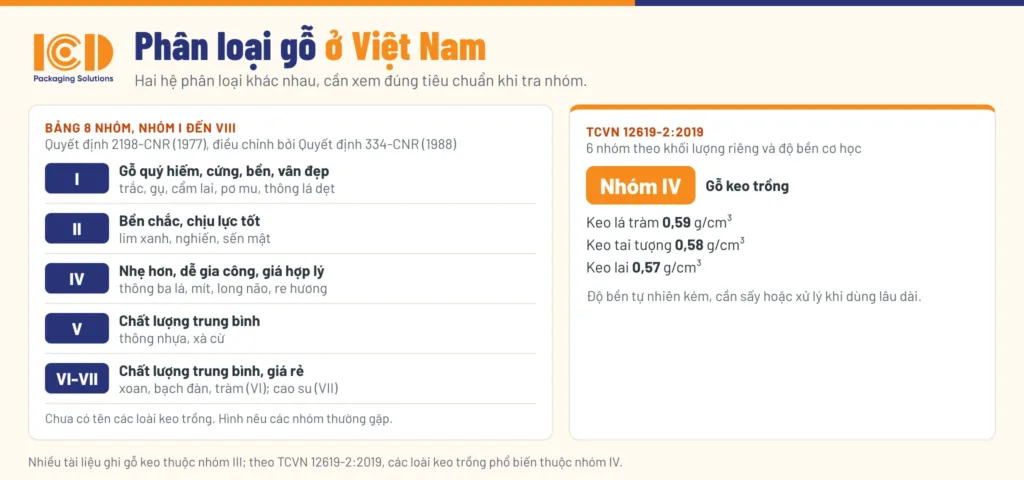
Acacia wood belongs to Group IV under TCVN 12619-2:2019 (Wood - Classification by physical and mechanical properties): Acacia auriculiformis has a density of 0.59 g/cm³, Acacia mangium 0.58 g/cm³ and hybrid acacia 0.57 g/cm³, with natural durability rated poor. The 8-group table in Decision 2198-CNR (1977) does not list today’s plantation acacia species, so when someone says “acacia is Group III” you should ask which document they are relying on.
I have worked at ICD Vietnam since 2011, and acacia is the raw material I meet most when advising on wooden pallets for domestic warehouses. The first question customers ask is usually not “which group is acacia” but “is acacia strong enough, and will it get borers”. This article answers both: the grouping under official documents, then the real properties of acacia and what to check when using it for pallets.
In short, acacia has a medium density and enough strength for pallets and everyday wood products, and it is cheap thanks to short-cycle plantation supply, but its natural durability is poor, so it must be dried and stored properly if you want it to last.
Which Group Is Acacia in Vietnamese Standards?
Under the national standard TCVN 12619-2:2019, acacia belongs to Group IV, covering Acacia auriculiformis, hybrid acacia and Acacia mangium. Vietnam currently has two wood classification systems side by side, and the “Group III or Group IV” confusion comes from mixing the two.
The old system is Decision 2198-CNR of 1977 from the Ministry of Forestry (now part of the Ministry of Agriculture and Environment), which divided wood into 8 groups from I to VIII by durability, hardness, colour, grain and use value; this table was adjusted by Decision 334-CNR of 1988, which changed the ranking of some woods. The table was drawn up before introduced acacia species were widely planted, so it has no Acacia auriculiformis, Acacia mangium or hybrid acacia; the “tram” in the table is the Melaleuca tree, placed in Group VI.
The new system is TCVN 12619-2:2019, compiled by the Institute of Forest Industry Research and issued by the Ministry of Science and Technology, effective 1 January 2020. The standard divides wood into 6 groups (precious, rare and special wood, then Groups I to V) by density, static bending strength and compression strength parallel to the grain. This is the document that names the acacia species, placing them in Group IV. The table below sets acacia beside other plantation woods often used for pallets:
| Wood | Scientific name | Density | Group under TCVN 12619-2:2019 | Group under Decision 2198-CNR |
|---|---|---|---|---|
| Acacia auriculiformis (golden-flowered tram) | Acacia auriculiformis | 0.59 g/cm³ | Group IV | Not in the table |
| Hybrid acacia | A. auriculiformis x A. mangium | 0.57 g/cm³ | Group IV | Not in the table |
| Acacia mangium | Acacia mangium | 0.58 g/cm³ | Group IV | Not in the table |
| Tram (Melaleuca) | Melaleuca leucadendra | 0.73 g/cm³ | Group IV | Group VI |
| Rubber wood | Hevea brasiliensis | 0.55 g/cm³ | Group IV | Group VII |
| Khasi pine | Pinus kesiya | 0.71 g/cm³ | Group III | Group IV |
| Merkus pine | Pinus merkusii | 0.67 g/cm³ | Group III | Group V |
The table shows that the plantation woods often used for pallets (acacia, tram, rubber wood) all sit in Group IV under the new standard, while Khasi pine and Merkus pine are ranked one step higher.
The plantation woods often used for pallets (acacia, tram, rubber wood) all sit in Group IV under the new standard, while Khasi pine and Merkus pine are ranked one step higher. Many online articles say acacia is Group III without citing any document; in the two official documents above, I have not found any place that puts plantation acacia species in Group III.
Why Is Acacia Heavy but Still in Group IV?
Going by density alone, acacia (0.57 - 0.59 g/cm³) is heavier than the Group IV range, which is about 0.40 - 0.50 g/cm³. TCVN 12619-2:2019 has a clause for this case: wood with a density above the Group IV range but which does not meet the technical requirements of the higher groups, has poor natural durability or comes from a medium-sized tree of modest economic value is still placed in Group IV. All three acacia species are marked “poor durability” in the natural durability column, so they stop at Group IV despite not being light wood.
Common Acacia Species in Vietnam
The three main acacia species that give timber in Vietnam are hybrid acacia, Acacia mangium and Acacia auriculiformis. Hybrid acacia is a natural cross between Acacia mangium and Acacia auriculiformis, fast growing and straight stemmed, planted very widely for both chip wood and sawn timber. Acacia mangium is a large timber tree, planted for wood, pulp and soil improvement. Acacia auriculiformis, also called golden-flowered tram, has light brown to reddish brown heartwood and is often used for furniture and veneer.
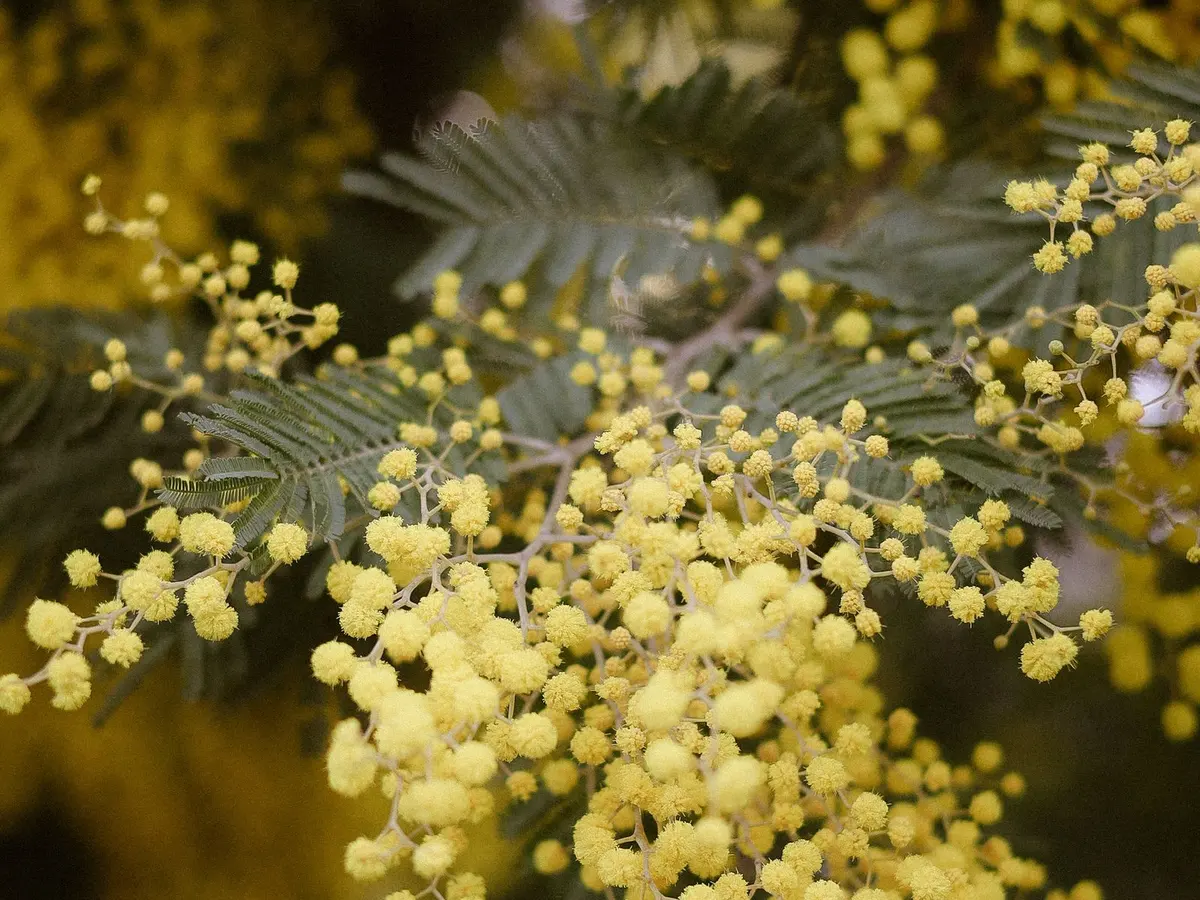
Two other plants are often lumped together as “acacia” but are not pallet wood sources. Leucaena (Leucaena leucocephala) is a small tree, usually planted as a windbreak hedge or for soil improvement, and despite the common name it does not belong to the Acacia genus. Yellow wattle, or yellow mimosa, covers bipinnate species with yellow flowers originating in Australia, planted mainly as ornamentals.
What Kind of Wood Is Acacia?
Acacia wood comes from trees of the Acacia genus; in Vietnam it is mainly taken from plantations of hybrid acacia, Acacia mangium and Acacia auriculiformis and used for paper chips, veneer, furniture and pallets. The Acacia genus belongs to the legume family (Fabaceae), in the Mimosoideae subfamily group.
According to Wikipedia, the Acacia genus currently has about 1,084 species of shrubs and trees, most originating in Australia, where they are called “wattle”; some others grow in New Guinea, Southeast Asia and around the Indian Ocean. In Vietnam, acacia is planted widely from the northern provinces through the Central region to the Central Highlands. At first the wood was mainly paper raw material; as drying and board-gluing technology developed, acacia has been used more and more for furniture and packaging materials such as pallets and crates.
Characteristics of Acacia Wood
Acacia is pale yellow to brown, with a fairly straight grain and medium density; it is easy to work but has low natural durability unless dried and treated. Understanding these traits helps you choose the right use, especially in transport and packaging.
Growth traits of the acacia tree
The acacia tree grows fast and tolerates poor soil. For Acacia auriculiformis, the PROSEA database (Plant Resources of South East Asia) records a height of up to 30 m and a trunk diameter of about 50 cm; the bark is grey or brown, fairly smooth when young and fissured when old. The true leaves are reduced to curved sickle-shaped phyllodes 10 - 16 cm long; the flowers are small, yellow and fragrant, growing in spikes 7 - 10 cm long.
The harvest cycle decides the quality of acacia wood. Most acacia forests in Vietnam are small-timber forests, harvested on a 4 - 6 year cycle and sold for chips. According to Gia Lai Newspaper (April 2026), companies in the province bought 4 - 5 year old acacia at VND 1.68 million per tonne and 7 - 8 year old acacia at VND 1.75 million per tonne. For large-timber forests, the technical guidance of the Ministry of Agriculture and Rural Development (Decision 2962/QD-BNN-TCLN of 2019) sets a management cycle of 10 - 15 years for hybrid acacia and 12 - 15 years for Acacia mangium.
Wood from young, short-cycle trees is small, has more sapwood and is more prone to cracking and borers than wood from large trees. That is why, even when all are called “acacia pallets”, quality can differ clearly between lots, and when ordering you should ask about board specification and the wood’s drying condition, not just the species name.
Properties of Acacia When Working and Using It
In colour, acacia has pale yellow sapwood and heartwood from light brown to reddish brown; according to PROSEA, heartwood makes up more than 70% of the wood volume in Acacia auriculiformis. The grain varies from straight to swirled, attractive enough for ordinary furniture but not as striking as Group I and II woods.
Mechanically, the density of Acacia auriculiformis varies widely, 490 - 840 kg/m³ at 15% moisture according to PROSEA, so acacia boards are stiff enough to carry load and hold nails when building pallets. Even so, the official ranking in TCVN 12619-2:2019 is still Group IV, not the outstanding hardwood many advertisements describe. The resistance of acacia to termites, borers and mould comes from impregnation and drying and from how it is stored, not from the wood itself.
In working, acacia is easy to cut, drill and plane, polishes well and takes paint, glue and finishes well, so many designs are easy to make. Acacia dried by the proper process warps and shrinks far less than green wood, which matters in Vietnam’s hot, humid and ever-changing climate. One drawback to know: acacia boards tend to crack when sawn.
Advantages of Acacia
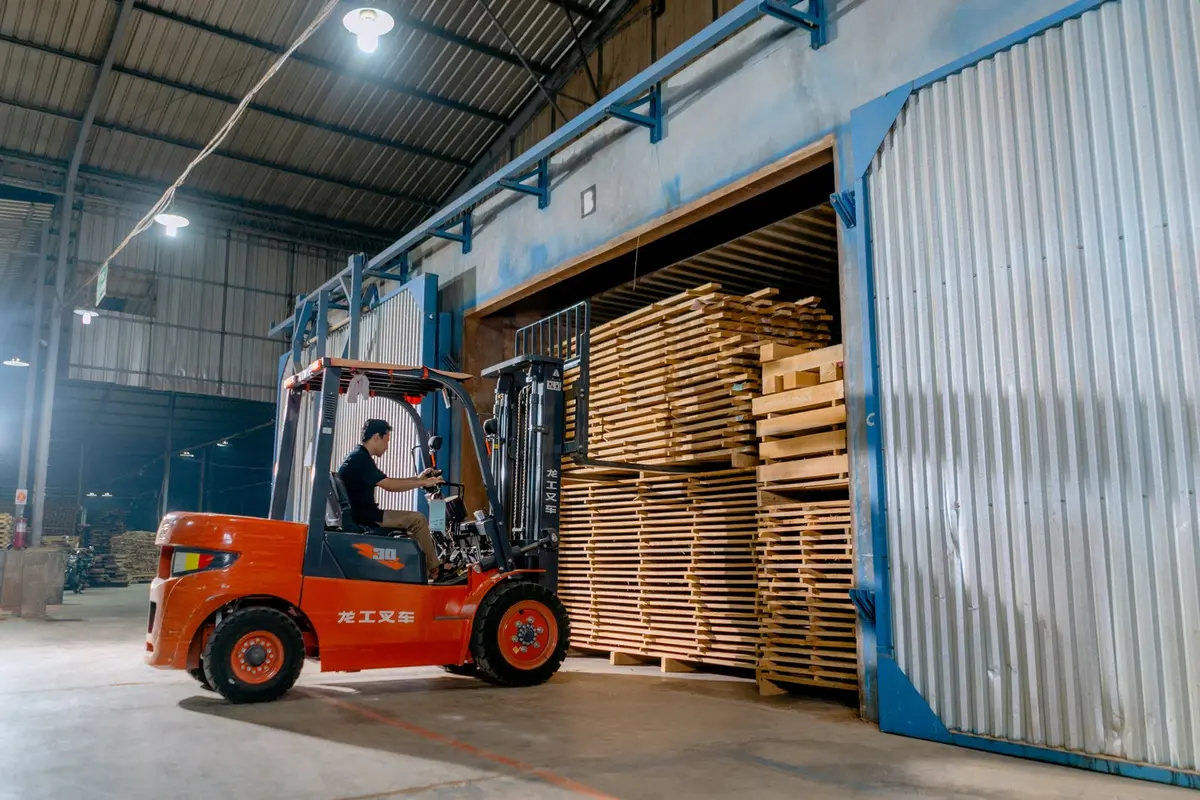
The biggest advantages of acacia are low price, plentiful supply from short-cycle plantations, easy working and enough stiffness for pallets and everyday wood products. These are also the reasons I see acacia chosen most for pallets used in domestic warehouses.
Dried acacia is dimensionally stable: it shrinks, cracks and distorts less than green wood, so pallets keep their shape through many lifting cycles. When impregnated and treated by the proper process, acacia resists termites and insects better, which matters for pallets sitting a long time in yards and warehouses. Dried wood also warps less when weather changes, suiting the climate of many regions of Vietnam.
From a production viewpoint, acacia is easy to cut, drill and chisel and takes stain and finishes well, so many specifications can be made from the same wood source. Plantation acacia renews quickly. Finally there is price: against other natural woods of similar durability, acacia is considerably cheaper, cutting costs for both furniture and industrial products.
Disadvantages of Acacia
The main disadvantages of acacia are poor natural durability, needing impregnation and drying against termites and mould, and lower load capacity than Group I and II hardwoods.
In load capacity, acacia products do not beat precious Group I and II woods such as ironwood, gu or huong, so it is not the best choice for extremely heavy load structures or those needing very high mechanical strength. For pallets carrying very heavy cargo, boards need to be sawn thicker or a different design used, and load rating should follow the specification of each pallet model.
In looks, acacia colour and grain, though pleasant, are not as striking as many higher-value woods, so it is rarely chosen for high-end furniture that needs a distinctive appearance. In service life, young acacia or acacia not impregnated and dried properly is prone to termites and mould; that kind should only be used in dry places with low humidity and no heavy pressure.
Uses of Acacia in Daily Life and Industry
Acacia is used mostly for chips and pulp, veneer, everyday furniture and wooden pallets for logistics. The traditional and largest-scale use is paper raw material: PROSEA records that Acacia auriculiformis is widely used for pulp and small sawn timber, and acacia plantations give good quality pulp.
In furniture and household goods, acacia is used for tables, chairs, sofas, beds, wardrobes, shoe cabinets and TV stands thanks to its variety of designs and affordable price. Acacia is also made into altars, chopping boards and trays; for these items the wood needs to be dried well and the surface finished to limit warping and mould. In the countryside, acacia is also used for fences, stakes and posts in structures that carry no great load; wood left outdoors should be treated with preservative because its natural durability is low.
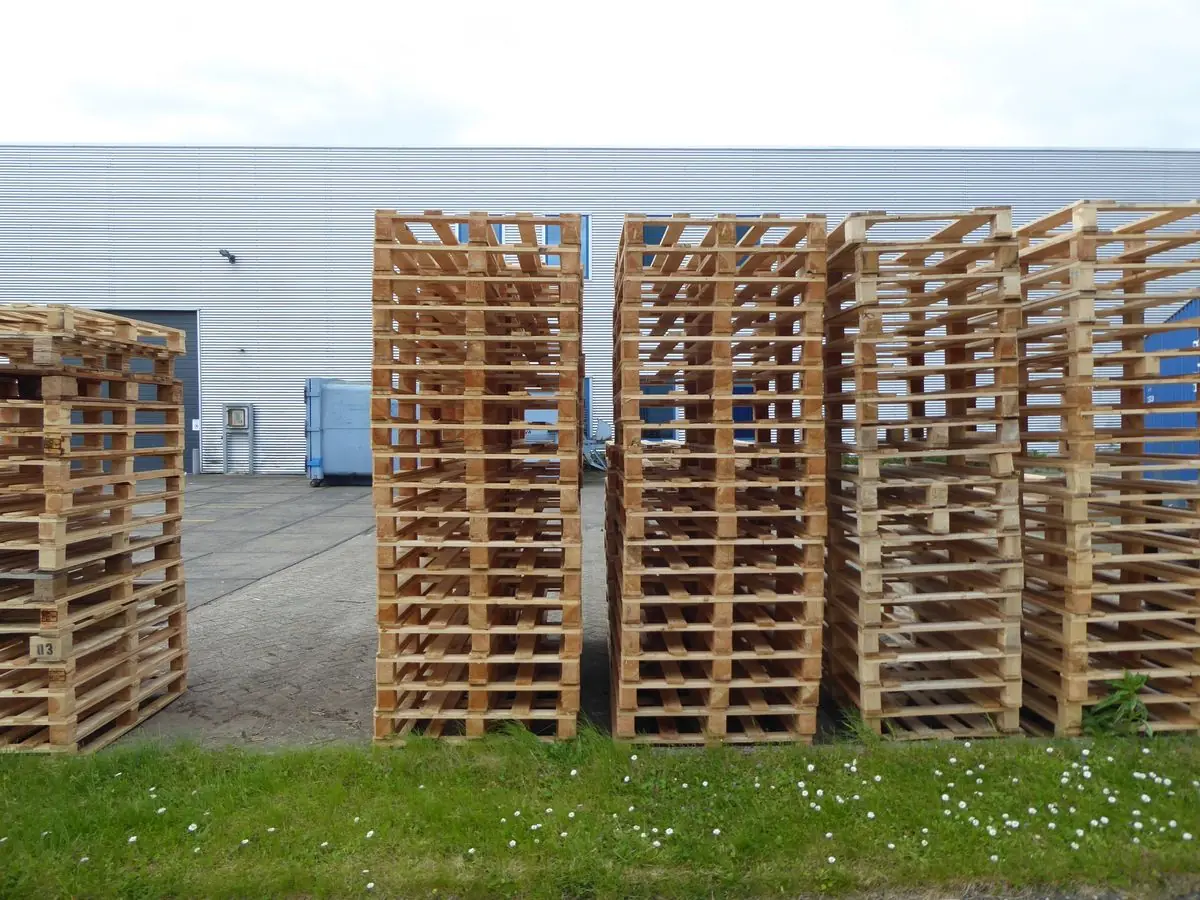
Pallets are the use I have the most hands-on experience with. Acacia is one of the woods often used for pallets in Vietnam, alongside tram wood, rubber wood and pine, because the price is low and the boards are stiff enough and hold nails well. Besides pallets, acacia is also used for floor boards, formwork and shipping crates.
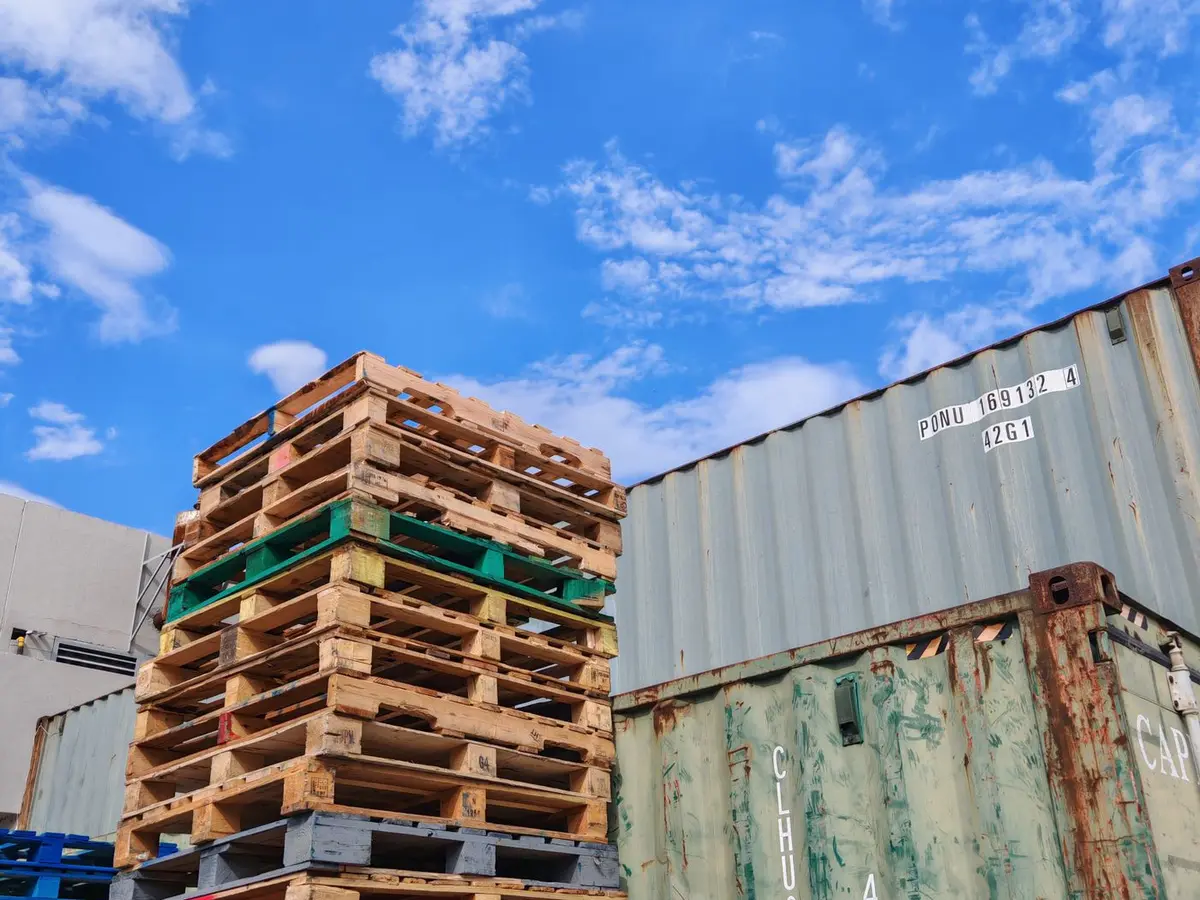
Acacia pallets going with export cargo must be treated to the ISPM 15 standard of the International Plant Protection Convention (IPPC). The most common method is heat treatment (HT), which requires the wood core to reach at least 56 °C continuously for 30 minutes; methyl bromide (MB) fumigation is also an accepted method, although some markets and some pallet systems only accept heat treatment. After treatment, the pallet is stamped with the IPPC mark. ICD Vietnam wooden pallets for export cargo are treated and stamped with the IPPC mark under ISPM 15 through a licensed treatment provider.
In Short: When Should You Use Acacia?
Acacia is Group IV under TCVN 12619-2:2019, cheap, easy to work and suitable for pallets and everyday wood products when dried and treated correctly. Acacia is not a precious wood, nor is it wood that “resists borers naturally”; its value lies in the balance between cost, adequate stiffness and stable supply from plantations, along with the role of acacia forests in regeneration and carbon storage.
For companies that need pallets, acacia suits domestic warehouse cargo and medium-load export cargo, provided the wood is dried, board specification matches the design and export pallets carry the ISPM 15 mark. Understanding the properties of acacia helps buyers choose the right use and avoid wrong expectations about the durability of untreated wood.
Frequently Asked Questions
Which group is acacia?
Acacia is Group IV under TCVN 12619-2:2019: Acacia auriculiformis, hybrid acacia and Acacia mangium have a density of 0.57 - 0.59 g/cm³ and poor natural durability. The 8-group table in Decision 2198-CNR (1977) does not name plantation acacia species.
Which group are hybrid acacia, Acacia mangium and tram acacia?
All three are Group IV under TCVN 12619-2:2019: hybrid acacia has a density of 0.57 g/cm³, Acacia mangium 0.58 g/cm³ and Acacia auriculiformis (tram acacia, golden-flowered tram) 0.59 g/cm³.
Is acacia more durable than tram wood?
Under TCVN 12619-2:2019, Acacia auriculiformis (golden-flowered tram), hybrid acacia, Acacia mangium and Melaleuca tram are all Group IV, with Melaleuca tram heavier (0.73 g/cm³). For pallets, the real difference in durability depends much more on drying and treatment than on the grouping alone.
Is acacia durable?
Acacia is stiff enough for pallets and everyday wood products, but its natural durability is rated poor by TCVN 12619-2:2019, so it is prone to termites, borers and mould if not dried and impregnated. Acacia that is dried, treated and used in a dry place lasts much longer.
Which is better for pallets, acacia or pine?
Acacia is heavier than imported radiata pine (0.57 - 0.59 g/cm³ against about 0.52 g/cm³), so pallet boards are stiffer at the same size, and the price is usually lower because it is domestic plantation wood; pine is lighter, with a straight grain and easy to work. Acacia tends to crack when sawn, so it needs to be sawn and nailed correctly. The choice depends on load, tare weight requirement and budget.
Is leucaena acacia wood?
No. Leucaena (Leucaena leucocephala) carries the name keo in Vietnamese but does not belong to the Acacia genus; it is a small tree planted as hedges or for soil improvement, not a pallet wood source.
How many years before an acacia forest is harvested?
Small-timber acacia forests grown for chips are usually harvested on a 4 - 6 year cycle. Large-timber plantations have a management cycle of 10 - 15 years for hybrid acacia and 12 - 15 years for Acacia mangium under Decision 2962/QD-BNN-TCLN of 2019.
Contact ICD Vietnam
For advice on acacia pallets by size, load and ISPM 15 treatment requirement, contact ICD Vietnam. We have a production workshop, a Hanoi warehouse and a southern workshop; price: contact for a quote.
- North: 0983 797 186 / 090 345 9186 / 090 5859 186.
- South: 098 6784 186; southern workshop: 551/212 Le Van Khuong Street, Tan Thoi Hiep Ward, District 12.
- Zalo: Chat on Zalo. Email: sales@icdvietnam.com.vn.
References
- TCVN 12619-2:2019 Wood - Classification - Part 2: By physical and mechanical properties, compiled by the Institute of Forest Industry Research and issued by the Ministry of Science and Technology; summary: LuatVietnam.
- Decision 2198-CNR of 26 November 1977 of the Ministry of Forestry and Decision 334-CNR of 10 May 1988 adjusting the ranking of some woods.
- Vietnam Timber and Forest Product Association (VIFOREST), wood group classification.
- Decision 2962/QD-BNN-TCLN of 30 July 2019 on technical guidance for intensive large-timber acacia plantations (hybrid acacia, Acacia mangium): National Agricultural Extension Center.
- Acacia auriculiformis - PROSEA (Plant Resources of South East Asia), Pl@ntUse.
- Acacia - Wikipedia (number of species, distribution).
- Gia Lai: raw wood prices rise but profit from forest planting is not high - Gia Lai Newspaper, 9 April 2026.
- Treatment of wood packaging material: IPPC, ISPM 15.