Table of Contents
- 1. HS codes and export tax rates for rubber wood
- 2. How is a wrong HS code on rubber wood back-taxed and penalized?
- 3. Customs procedures and forest-product documents needed
- 4. Notes for goods that travel with wooden pallets
- 5. How does ICD Vietnam support a rubber wood export shipment?
- Frequently asked questions
- What is the HS code for sawn rubber wood strips and what is the tax rate?
- What is the HS code for finished rubber wood pallets?
- What documents are needed to export rubber wood?
- What HS code is used for exported finger-jointed rubber wood?
- Is rubber wood sawn thinner than 6 mm subject to the 25% tax?
- Must a forest-product list be submitted to customs when exporting rubber wood?
- Does a wooden pallet need a fumigation certificate?
- Is the export tax reduced when exporting rubber wood to the EU?
- Contact ICD Vietnam for a quote
- References
Reviewed and updated by ICD - Week 43/2026
Sawn rubber wood is declared under HS 4407.29.96 (planed, sanded or end-jointed) or 4407.29.97 (other), both with a 25% export tax; rubber wood pallets are declared under 4415.20.00 at 0%; rubber wood chips are declared under 4401.22.00 and taxed at 2%. These rates come from the Export Tariff issued with Decree 26/2023/ND-CP, which still applies to Chapter 44 as of October 2026.
Summary of key points:
Rubber wood falls into two main groups: sawn strips (codes 4407.29.96 and 4407.29.97) with a 25% export tax, and finished wooden pallets (code 4415.20.00) at 0%. In between are thin sliced veneer at 10%, continuously shaped wood at 5% and edge-glued panels at 0%.
An export file consists of customs documents, a forest-product list prepared and kept by the company, a phytosanitary certificate when the importing country requires it, and any pallets or wooden crates traveling with the goods must carry a treatment mark under the ISPM 15 international standard.
I checked the rates below directly against the original legal text on 17 October 2026. The official code of each shipment is still decided by customs based on the actual goods, so when a shipment sits close to the line between two groups, a company should ask for an advance ruling on the code.
1. HS codes and export tax rates for rubber wood
The export tax on rubber wood depends on the degree of processing: logs and sawn timber 25%, thin sliced veneer 10%, shaped wood 5%, while pallets, edge-glued panels and most finished wood products are at 0%.
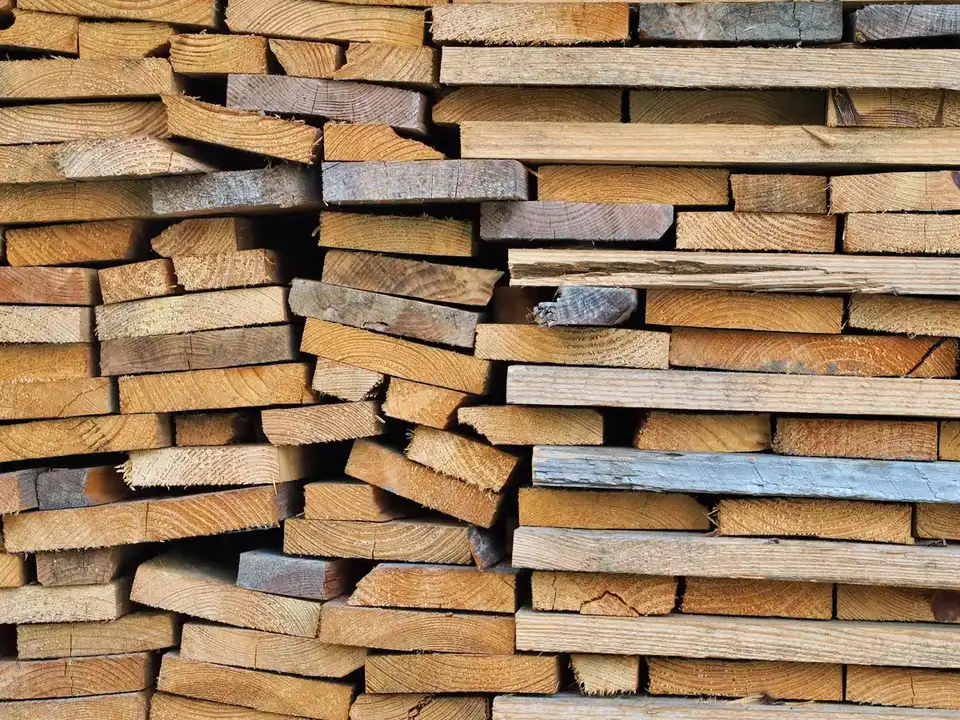
For sawn rubber wood strips, the usual code is 4407.29.96 when the wood is planed, sanded or end-jointed, and 4407.29.97 for other; both lines carry a 25% export tax, the same as logs under heading 44.03.
For rubber wood pallets, the HS code is 4415.20.00 and the export tax is 0%. Rubber wood chips are declared under 4401.22.00, where the detailed line 4401.22.00.90 ‘Wood chips’ is taxed at 2%, while shavings in the same subheading (4401.22.00.10) are at 0%.
The table below summarizes the forms of rubber wood products commonly exported, checked directly against the Export Tariff attached to Decree 26/2023/ND-CP (Appendix I). The 8-digit codes match the Vietnam Export and Import Commodity List under Circular 31/2022/TT-BTC.
| Rubber wood product | Heading / HS code | Export tax | Classification note |
|---|---|---|---|
| Logs, roughly squared timber | Heading 44.03 | 25% | Including debarked wood or sapwood |
| Sawn timber thicker than 6 mm, planed, sanded or end-jointed | 4407.29.96 | 25% | Finger-joint (end-jointed) strips still belong to this line |
| Sawn timber thicker than 6 mm, other | 4407.29.97 | 25% | Rough sawn timber, freshly dried or treated |
| Sliced or peeled sheets up to 6 mm thick | Heading 44.08 | 10% | For face layers, plywood |
| Continuously shaped wood (grooved, tongued, chamfered) | Heading 44.09 | 5% | Moldings, unassembled flooring strips |
| Strips edge-glued into large panels | 4418.99 | 0% | Per Notice 5344/TB-TCHQ (2020) and Official Dispatch 179/TCHQ-TXNK (2023) |
| Pallets, wooden load platforms | 4415.20.00 | 0% | Must be treated under ISPM 15 when used as export packaging |
| Wood chips | 4401.22.00.90 | 2% | Wood other than conifers |
| Shavings | 4401.22.00.10 | 0% | |
| Sawdust; wood pellets | 4401.41.00; 4401.31.00 | 0% |
Rates looked up in Appendix I of Decree 26/2023/ND-CP; the amending decrees 144/2024/ND-CP, 108/2025/ND-CP and 201/2026/ND-CP do not change the lines in Chapter 44. The official code of a shipment is decided by customs based on the actual goods; checked October 2026.
Two points few articles mention. Wooden boxes, crates and cases for packing goods fall under line 4415.10.00 and also carry a 0% export tax like pallets. In addition, the Government’s policy-drafting portal posted a draft decree amending Decree 26/2023/ND-CP on 25 August 2026, including an amendment to the export tax rates of some goods; once that decree is issued, companies should check the Chapter 44 lines again before fixing selling prices.
Code 4407.29.96 is read level by level as in the diagram below. The point to note is that rubber wood sits in subheading 4407.29 ‘tropical wood, other’, and Vietnam splits out two separate 8-digit lines for rubber wood to ease statistics and tax management.
The boundary between 44.07 (25%) and 44.09 (5%) lies in whether the wood has been continuously shaped along its edge or face. A strip that is only planed smooth, sanded or end-jointed is still sawn timber under 44.07; a strip that has been grooved, tongue-and-grooved or chamfered along its whole length moves to 44.09.
2. How is a wrong HS code on rubber wood back-taxed and penalized?
Declaring the right HS code directly determines the tax payable: for the same block of rubber wood, declared as sawn timber it is taxed at 25% of value, declared as a pallet or edge-glued panel it is 0%. A wrong HS code is one of the common errors leading to legal and financial trouble.
Customs controls timber closely to prevent tax fraud and wood of unclear origin. If a shipment is moved from the 25% group to a lower group and detected, the company is back-taxed in full and fined in proportion to the tax underdeclared, as in the example below.
The limits of ‘tax optimization’ need to be understood correctly. Under Article 16 of Decree 08/2015/ND-CP, customs classifies goods based on documents, technical documentation and the actual nature and use of the goods; Official Dispatch 20173/CHQ-NVTHQ of 11 August 2026 from the Customs Department restated this principle in replying to the Vietnam Timber and Forest Product Association. So a pallet must be a real pallet, usable at once for lifting and supporting cargo; sawn timber merely nailed into a temporary frame to declare under 4415 risks being reclassified to 44.07.
Edge-glued panel is a typical example. For rubber wood strips edge-glued into a large panel, planed and sanded, customs has classified it under heading 44.18, subheading 4418.99 (export tax 0%) in Notice 5344/TB-TCHQ of 2020 and Official Dispatch 179/TCHQ-TXNK of 2023; strips that are only end-jointed lengthwise remain sawn timber 4407.29.96.
Official Dispatch 20173/CHQ-NVTHQ also notes a point that processing companies often miss: for goods processed for export, the value of domestically purchased materials and supplies that make up the product is not exempt from export tax, under Decree 134/2016/ND-CP as amended by Decree 18/2021/ND-CP.
For goods exported to the European Union, Decree 116/2022/ND-CP issues the preferential export tariff implementing the EVFTA, phased year by year. The conditions are that the goods are imported into an EU member state and the company holds a copy of the transport document and a copy of the EU import declaration. At export, the company pays tax at the normal rate, then submits the supplementary documents to have the overpaid tax handled. I have not been able to verify the 2026 preferential rate for the two lines 4407.29.96 and 4407.29.97, so companies should check the appendix of this decree before pricing.
3. Customs procedures and forest-product documents needed
An export file for rubber wood consists of customs documents (declaration, invoice, contract), a forest-product record proving the origin of the wood kept by the company itself, a phytosanitary certificate when the importing country requires it, and the ISPM 15 mark for wooden packaging.
The table below separates which documents are submitted to customs and which the company keeps itself, to avoid preparing too much or too little.
| Document | Basis | Submitted or presented to customs? |
|---|---|---|
| Customs declaration, commercial invoice, contract | Circular 38/2015/TT-BTC, amended by Circulars 39/2018/TT-BTC and 121/2025/TT-BTC | Yes, declared on the system |
| Forest-product list (export forest-product record) | Article 12 of Circular 26/2025/TT-BNNMT; Official Dispatch 17890/CHQ-GSQL | Not mandatory; the company keeps it for inspection and traceability |
| Phytosanitary certificate | As required by the importing country | Presented with the commercial document set |
| ISPM 15 mark on pallets and wooden crates | IPPC ISPM 15 | Checked at the destination port |
A record proving the origin of forest products is mandatory. Under Article 12 of Circular 26/2025/TT-BNNMT (replacing Circular 26/2022/TT-BNNPTNT from 1 July 2025), the export forest-product record consists of the original forest-product list, or a list certified by the local forest protection office when the owner asks for certification. According to Official Dispatch 17890/CHQ-GSQL of 24 June 2026 from the Customs Department, this is not a document that must be submitted or presented in customs procedures, but without a valid record the timber lot cannot prove its legal origin when inspected.

Sawn rubber wood is a plant product, so when the importing country requires it, the company applies for a phytosanitary certificate from the quarantine office under the Department of Crop Production and Plant Protection. This procedure should be done in parallel with loading so as not to miss the vessel schedule.
Pallets and wooden crates are different: the main evidence is the ISPM 15 mark of the International Plant Protection Convention (IPPC), not a fumigation certificate. ISPM 15 accepts four methods: heat treatment HT (wood core reaching 56°C for 30 continuous minutes), dielectric heating DH, methyl bromide fumigation MB and sulphuryl fluoride fumigation SF. The mark consists of the IPPC symbol, the country code, the treatment facility code and the method code. Heat treatment is not fumigation, so a fumigation certificate exists only when the pallet is fumigated or when the buyer separately requires one.
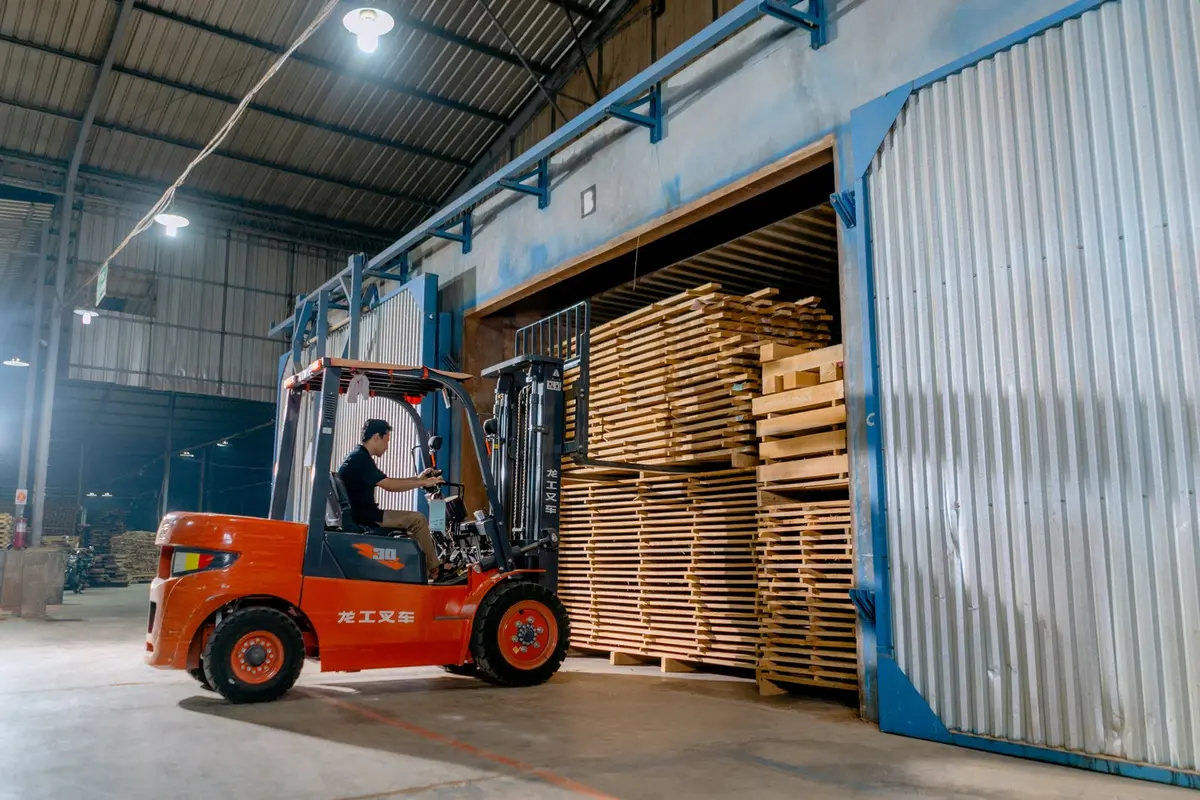
The European Union does not allow methyl bromide use inside the bloc, but still accepts imported wood packaging treated with MB in line with ISPM 15. ISPM 15 also requires that wood used for packaging be debarked; plywood, veneer sheets, OSB, wood not thicker than 6 mm and materials pressed from sawdust are exempt from treatment.
4. Notes for goods that travel with wooden pallets
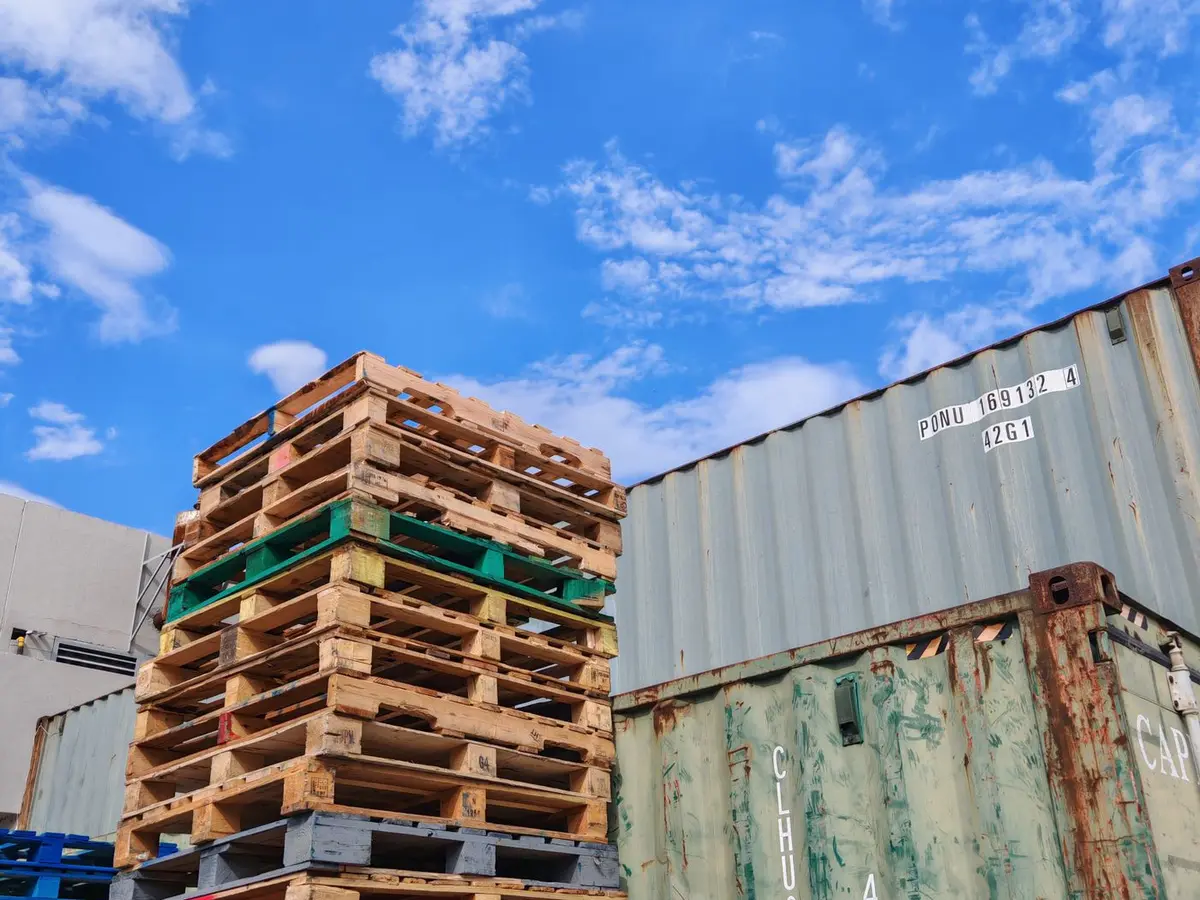
Rubber wood pallets used only to support cargo are not declared under a separate HS code, but must be treated and carry the ISPM 15 mark when the importing country applies this standard. If your company does not trade in timber but exports goods (such as electronics or food) placed on rubber wood pallets, note the following two points:
First, there is no need to declare a separate HS code for the pallets if they only serve as protective packaging for the main goods.
The basis is Rule 5(b) of the six General Rules for the Interpretation of the HS Nomenclature: packing materials and containers that accompany goods are classified with those goods, except those clearly suitable for repeated use. A pallet sold as its own item, for example a lot of rubber wood pallets shipped to an overseas customer, is declared under 4415.20.00.
Second, the pallet must be treated by one of the four ISPM 15 methods and stamped clearly. When an accompanying pallet lacks the mark or the mark is unreadable, the importing country may require re-treatment, re-export or destruction of the packaging, even though the main goods meet requirements.
5. How does ICD Vietnam support a rubber wood export shipment?
ICD Vietnam makes rubber wood pallets to ordered specifications, for use as export load packaging or as semi-finished goods under code 4415.20.00. Pallets for export cargo are treated under ISPM 15 and IPPC-stamped through a licensed treatment provider.
The pallets we deliver are complete pallets, liftable at once by forklift, matching the nature of goods under heading 44.15; the final classification is still decided by customs based on the actual goods. When customers need it, I send a list of commonly seen documents for their import-export team to check against.
Frequently asked questions
What is the HS code for sawn rubber wood strips and what is the tax rate?
Codes 4407.29.96 (planed, sanded or end-jointed) and 4407.29.97 (other), both with a 25% export tax under Decree 26/2023/ND-CP.
What is the HS code for finished rubber wood pallets?
Code 4415.20.00, export tax rate 0%. Wooden boxes, crates and cases for packing goods are declared under 4415.10.00, also 0%.
What documents are needed to export rubber wood?
Customs documents (declaration, invoice, contract), the forest-product list prepared and kept by the company, a phytosanitary certificate when the importing country requires it, and the ISPM 15 mark on accompanying pallets and wooden crates.
What HS code is used for exported finger-jointed rubber wood?
It depends on the level of processing. Strips only end-jointed lengthwise are still sawn timber 4407.29.96, with a 25% export tax. Strips further glued sideways into a large panel, planed and sanded, have been classified by customs under 4418.99 with a 0% rate (Notice 5344/TB-TCHQ of 2020, Official Dispatch 179/TCHQ-TXNK of 2023).
Is rubber wood sawn thinner than 6 mm subject to the 25% tax?
No. Heading 44.07 applies only to wood thicker than 6 mm. Sliced or peeled sheets up to 6 mm thick fall under heading 44.08, with a 10% export tax under Decree 26/2023/ND-CP.
Must a forest-product list be submitted to customs when exporting rubber wood?
Not mandatory. Under Official Dispatch 17890/CHQ-GSQL of 24 June 2026, the forest-product record under Circular 26/2025/TT-BNNMT serves inspection and origin tracing and is not a document to be submitted or presented in customs procedures. Companies must still prepare and keep it in full.
Does a wooden pallet need a fumigation certificate?
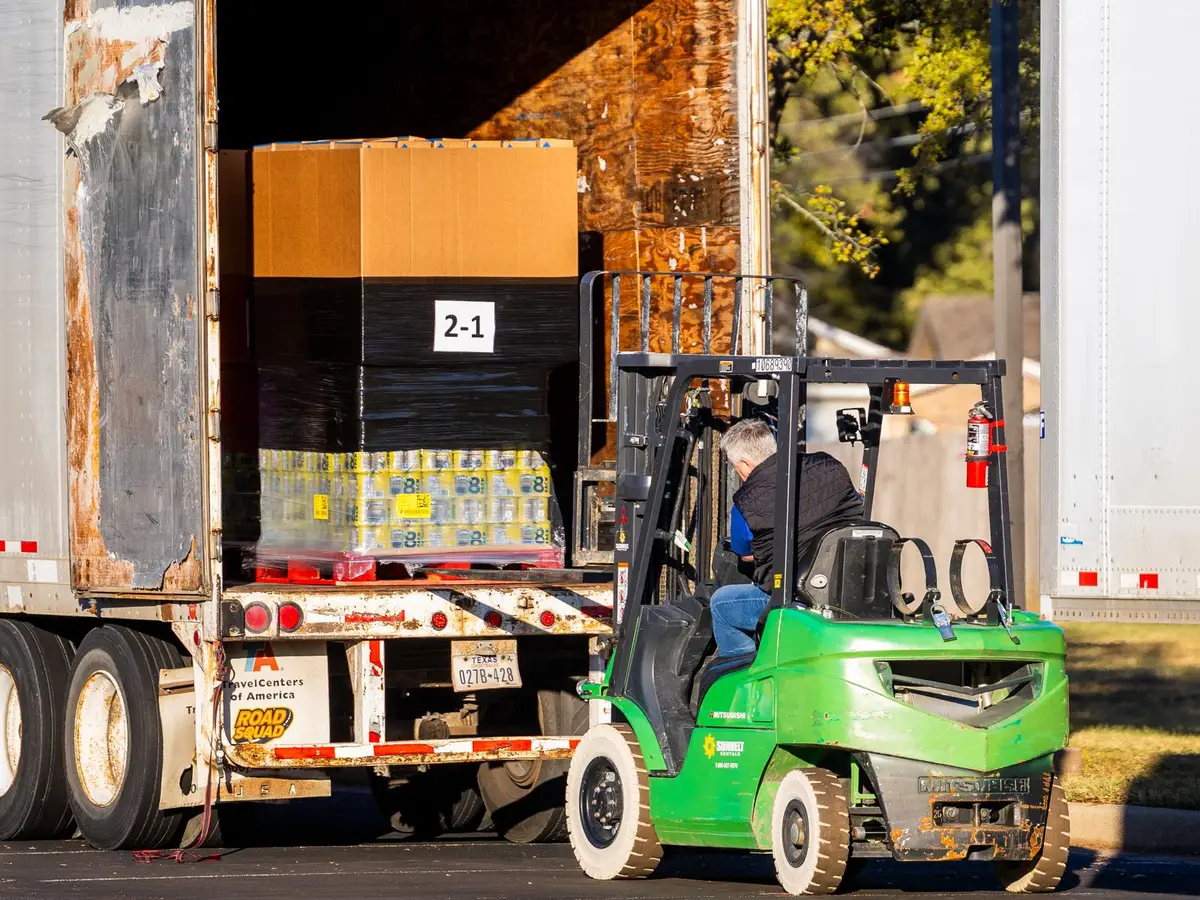
Not necessarily. The main evidence is the ISPM 15 mark on the pallet; a heat-treated (HT) pallet is not fumigated. A fumigation certificate exists only when the pallet is fumigated or when the buyer separately requires one.
Is the export tax reduced when exporting rubber wood to the EU?
Possibly, under the preferential export tariff implementing the EVFTA in Decree 116/2022/ND-CP, provided the goods are imported into the EU and the company holds a copy of the transport document and EU import declaration. The company pays at the normal rate first, then submits supplementary documents to have the overpaid tax handled; the preferential rate for each line must be looked up in the decree’s appendix.
Contact ICD Vietnam for a quote
- Hotline 1: 0983 797 186
- Hotline 2: 0903 459 186
- Hotline 3: 0905 859 186
ICD Vietnam has a Hanoi warehouse at 3rd Floor, Thang Long A1 Building, Bau Hamlet, Thien Loc Commune, Hanoi, and a southern workshop at 551/212 Le Van Khuong, Tan Thoi Hiep, District 12, Ho Chi Minh City (southern hotline 098 6784 186). Wooden pallet price: contact for a quote, with volume discounts; wooden pallets carry no warranty and can be returned or exchanged within 7 days. Under our delivery policy, orders are processed in 1 - 2 days, with delivery in 1 - 3 days within Hanoi and Ho Chi Minh City, 2 - 5 days between regions and 3 - 7 days to other provinces.
References
- Decree 26/2023/ND-CP of 31 May 2023 on the Export Tariff and Preferential Import Tariff (Appendix I): Government Gazette, checked 17 October 2026.
- Decrees 144/2024/ND-CP, 108/2025/ND-CP and 201/2026/ND-CP amending Decree 26/2023/ND-CP (Chapter 44 not amended).
- Draft decree amending Decree 26/2023/ND-CP, posted on the Government’s policy-drafting portal on 25 August 2026.
- Circular 31/2022/TT-BTC issuing the Vietnam Export and Import Commodity List.
- Decree 116/2022/ND-CP on the preferential export tariff implementing the EVFTA.
- Official Dispatch 20173/CHQ-NVTHQ of 11 August 2026 from the Customs Department on export tax for timber: Vietnam Financial Times.
- Official Dispatch 17890/CHQ-GSQL of 24 June 2026 from the Customs Department on forest-product lists for exports; Circular 26/2025/TT-BNNMT on forest-product management.
- Notice 5344/TB-TCHQ of 2020 and Official Dispatch 179/TCHQ-TXNK of 2023 on classification of edge-glued rubber wood boards: Legal Library (Thu Vien Phap Luat).
- Decree 128/2020/ND-CP on administrative penalties in the customs field; Decree 08/2015/ND-CP (Article 16).
- HS classification principles: World Customs Organization (WCO) - Harmonized System.
- ISPM 15 Regulation of wood packaging material in international trade: IPPC, FAO.
- Requirements for wood packaging material and dunnage: European Commission.