Table of Contents
- How wide, long and high is the inside of a container?
- How many pallets does each pallet size give?
- Straight loading or combined two-direction loading?
- Can two tiers of pallets be loaded in a container?
- What should you check on the container before loading?
- How should goods be loaded onto pallets before going into the container?
- How do you secure cargo in a container?
- What standards must export pallets meet?
- Common mistakes when loading pallets into a container
- Frequently asked questions
- How many pallets does a 20-foot container hold?
- How many pallets does a 40-foot container hold?
- Can a 40-foot High Cube container take 2 tiers of pallets?
- Which pallets do not need fumigation for export?
- How big a gap between pallets needs an air bag?
- Which pallet size should be used when loading containers?
- How do you calculate the total weight of goods so as not to exceed the container payload?
- Contact ICD Vietnam
- References
Reviewed and updated by ICD - Week 43/2026
Per layer, a 20-foot container holds 9 pallets of 1200 x 1000 mm or 10 pallets of 1100 x 1100 mm; a 40-foot container holds 21 pallets of 1200 x 1000 mm or 20 pallets of 1100 x 1100 mm. The inside of a container is only about 2,352 mm wide, so only two rows of pallets fit side by side, and the pallet size therefore decides most of how many pallets you can load.
Customers who ask ICD Vietnam about container loading usually ask how to stack, but the biggest problem we meet comes before that: the business has bought pallets whose size does not suit the type of container it normally uses. Then no matter how skilfully you load, gaps remain. This article follows the order we use with customers: measure the container interior, calculate the number of pallets, choose a loading pattern, inspect the container, load goods onto pallets, secure the cargo and prepare the export pallet documents.
The tool below does that calculation for you. Enter the pallet size, the height of the whole load and the weight per pallet, and the tool gives the number of pallets per layer for two loading patterns, the number of tiers and the total weight against the container’s maximum payload.
| Container interior | - |
| Straight block loading (per layer) | - |
| Combined two-direction loading (per layer) | - |
| Number of tiers possible | - |
| Total pallets per container | - |
| Total weight of goods | - |
How wide, long and high is the inside of a container?
The inside of a 20-foot container is about 5,900 mm long and a 40-foot container about 12,032 mm long; both are about 2,352 mm wide and 2,395 mm high, except the 40-foot High Cube, which is about 2,700 mm high. These are internal dimensions. The figure people usually quote, 20 or 40 feet, is the external length, and the walls, frame and floor take away part of it, so to count pallets you must use the interior dimensions. Related product: ICD container pallets.
| Container type | Interior (L x W x H, mm) | Door (W x H, mm) | Maximum payload |
|---|---|---|---|
| 20 feet (22G1) | 5,900 x 2,352 x 2,395 | 2,340 x 2,292 | 28,130 kg |
| 40 feet (42G1) | 12,032 x 2,352 x 2,395 | 2,340 x 2,292 | 28,750 kg |
| 40 feet High Cube (45G1) | 12,032 x 2,350 x 2,700 | 2,340 x 2,597 | 28,600 kg |
| 45 feet High Cube (L5G1) | 13,556 x 2,352 x 2,700 | 2,340 x 2,597 | 27,700 kg |
Specifications of standard dry containers in the Hapag-Lloyd container fleet, read on 15 October 2026. The shipping line states this is an example, and each container manufacturer has small differences. For a similar need, ICD has the ICD-1210-760 plastic container pallet 1200x1000x760 mm.
There are two figures we always ask customers to look at closely. The first is the width of 2,352 mm: two pallets side by side must have a combined width smaller than this figure, so each layer has at most two rows of pallets. The second is the door height, 2,292 mm for a standard container and 2,597 mm for a High Cube. The door is about 100 mm lower than the interior, and every load must pass through the door, so the usable height is really the door height and not the interior height.
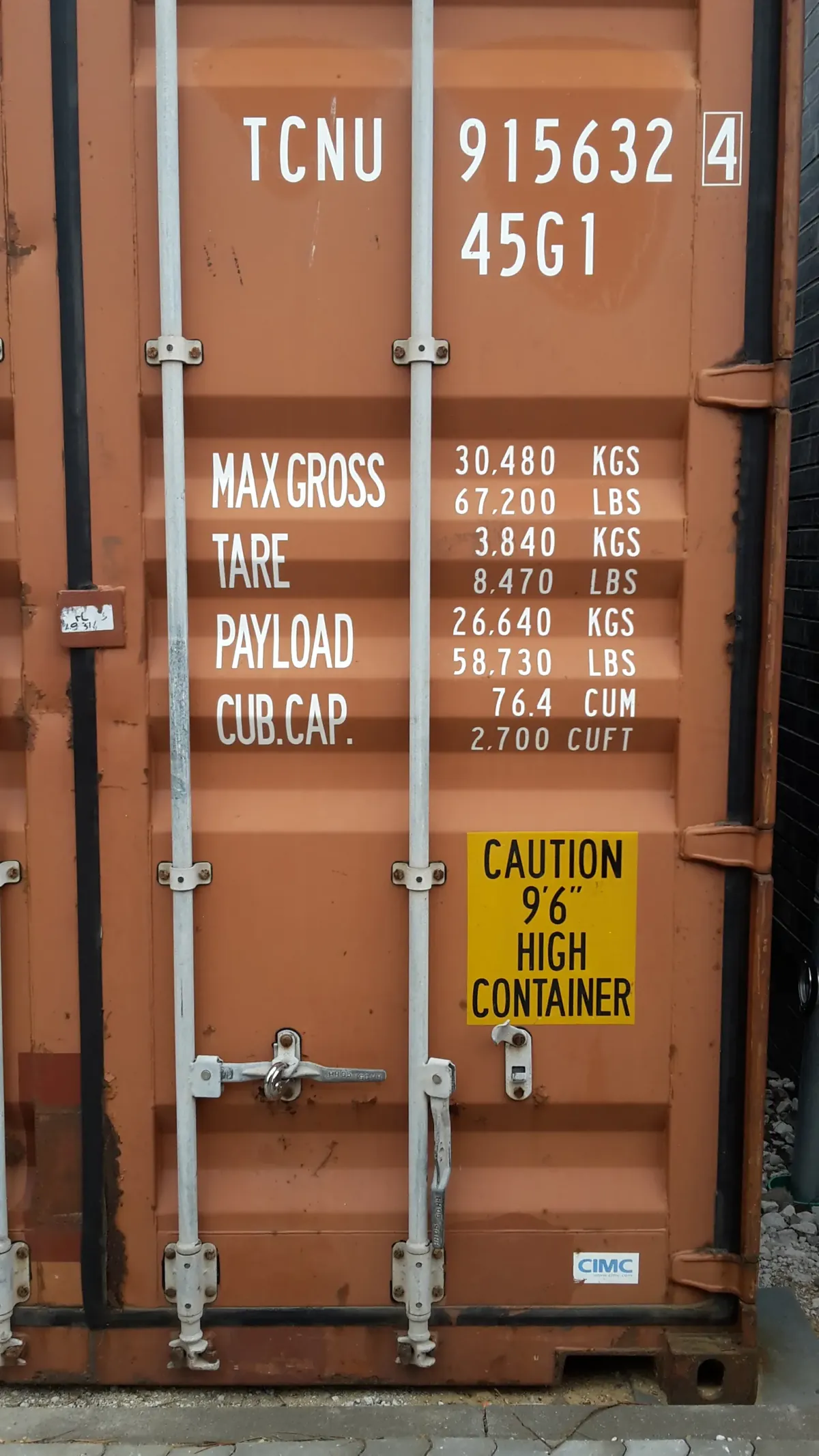
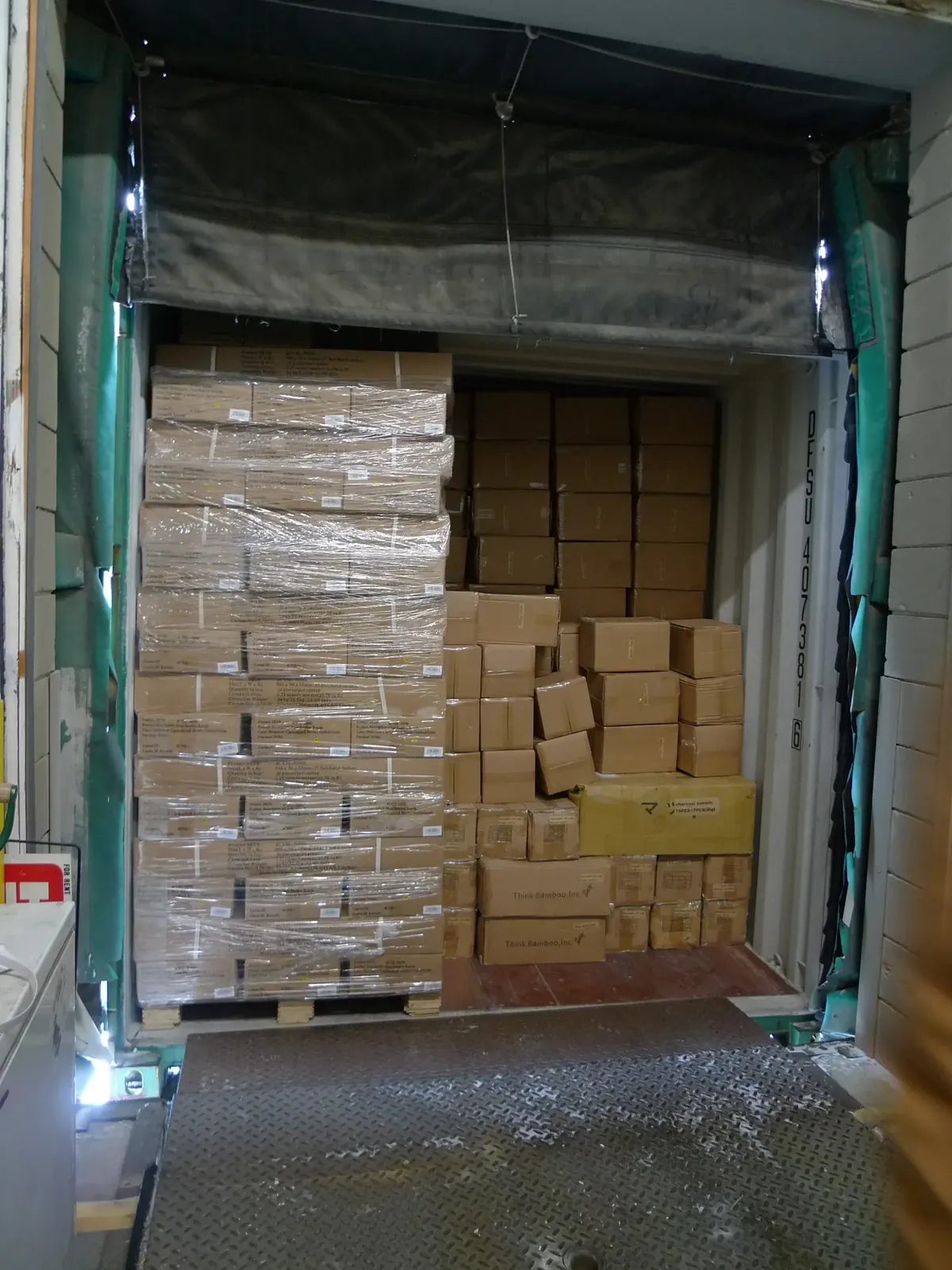
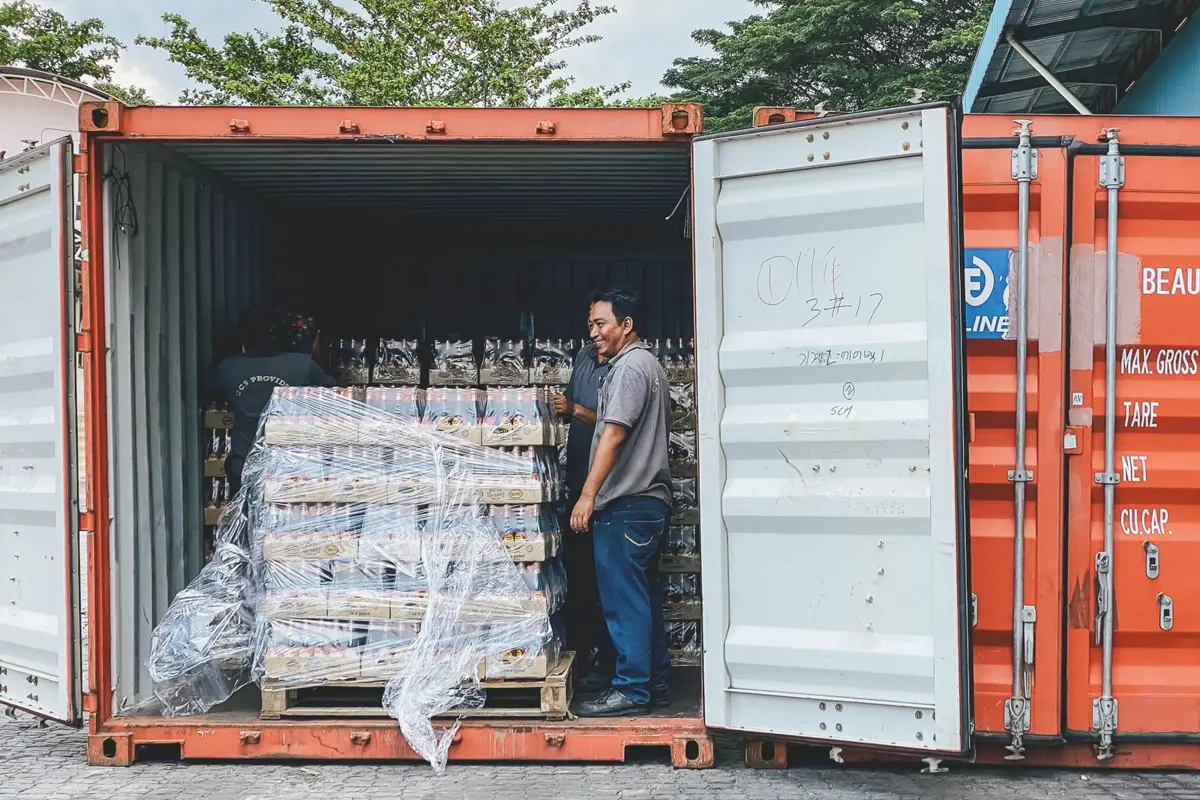
The same goes for load. The table above is from one shipping line; containers from another line or another vintage may state a payload several tonnes lower, like the container in the photo. Heavy goods such as bricks, steel and drummed chemicals usually hit the weight limit before the area limit, so for heavy goods work out the weight first and only then count the pallets.
How many pallets does each pallet size give?
The number of pallets per layer equals the number that fit along the length multiplied by the number of rows across the width, at most two rows; turning one row 90 degrees sometimes adds 1 to 5 pallets. The calculation is: divide the container’s interior length by the pallet edge lying lengthwise, round down, then multiply by the number of rows. For example, a 1100 x 1100 mm pallet in a 40-foot container: 12,032 divided by 1,100 gives 10, times 2 rows is 20 pallets. A model available for reference: the ICD-1208-760 plastic container pallet, size 1200x800x760 mm.
Combined two-direction loading means one row has its long side along the container length while the other row is turned sideways. This only works when the sum of the two different pallet edges is still below 2,352 mm, for example 1,200 plus 1,000 equals 2,200 mm. The table below is calculated on the Hapag-Lloyd interior dimensions for the six most common pallet sizes.
| Pallet size (mm) | 20 feet straight | 20 feet combined | 40 feet straight | 40 feet combined |
|---|---|---|---|---|
| 1200 x 1000 | 8 | 9 | 20 | 21 (theoretical 22) |
| 1100 x 1100 | 10 | 10 | 20 | 20 |
| 1200 x 800 (Euro) | 8 | 11 | 20 | 25 |
| 1200 x 1100 | 8 | 9 | 20 | 20 |
| 1300 x 1100 | 8 | 8 | 18 | 18 |
| 1200 x 1200 | 4 | 4 | 10 | 10 |
Pallets per layer, calculated geometrically on interiors of 5,900 x 2,352 mm (20 feet) and 12,032 x 2,352 mm (40 feet). The figures of 11 and 25 Euro pallets match the reference numbers for ISO containers on Wikipedia.
By floor fill ratio, a 1100 x 1100 mm pallet covers about 87% of a 20-foot container floor without turning, so it is the easiest size to load. A 1200 x 1000 mm pallet loaded straight covers only about 69% of a 20-foot container floor, rising to about 78% when combined; in a 40-foot container it is 85% and 89% with 21 pallets. The Euro pallet shows the biggest gap between the two patterns: 20 or 25 pallets in a 40-foot container.
In a 40-foot container, 1200 x 1000 mm pallets loaded combined reach 22 pallets in theory, because 12 pallets placed sideways measure exactly 12,000 mm. The remaining gap is only 32 mm, the forklift has no room to pull its forks out and container walls are rarely perfectly flat, so we always count 21. The tool at the top of the article gives the geometric figure, and you subtract one pallet yourself when the end gap is only a few tens of millimetres.
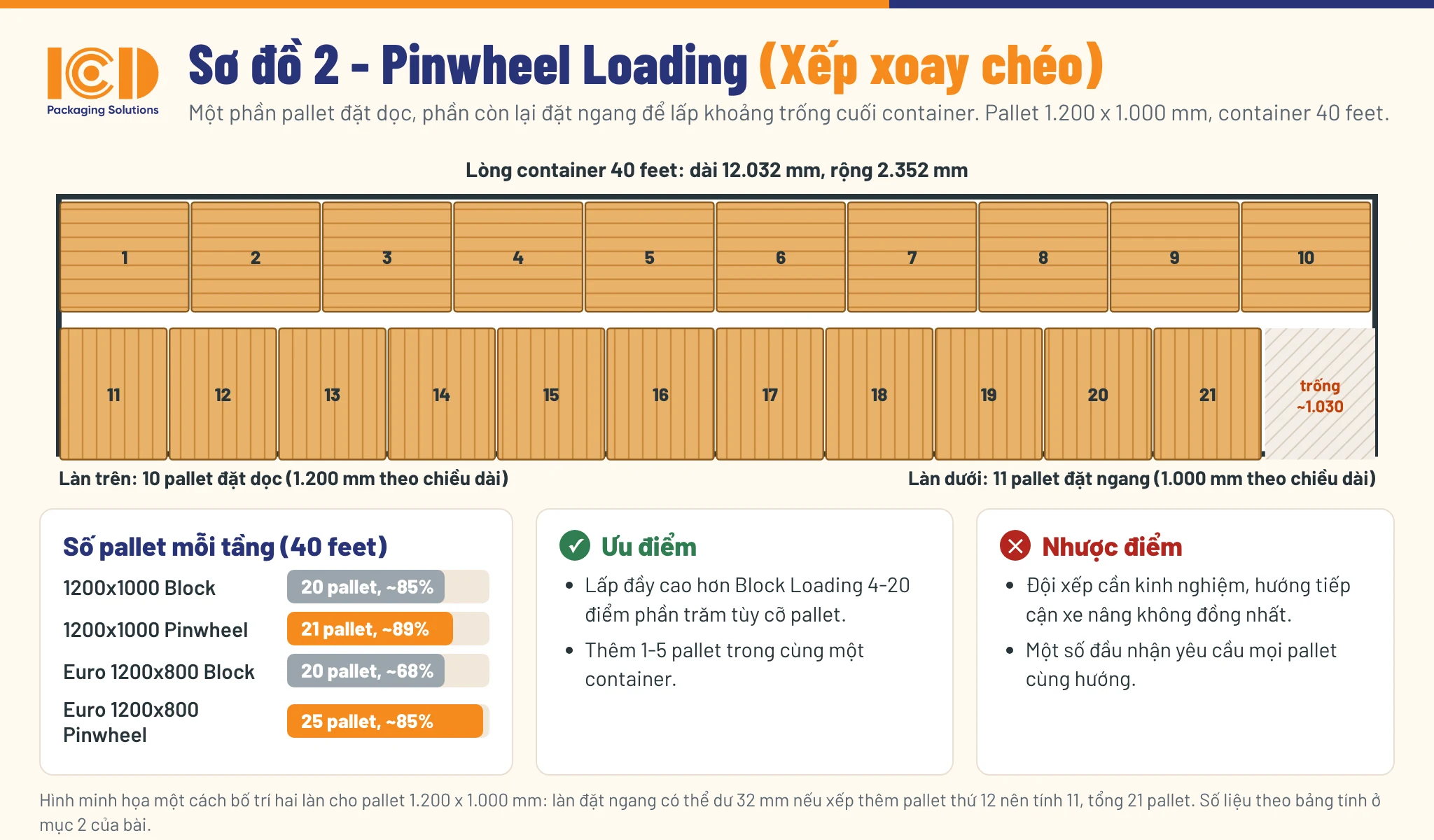
A difference of one pallet sounds small but multiplies across a shipment. A lot of 420 pallets of 1200 x 1000 mm needs 21 40-foot containers if loaded straight, 20 containers if loaded combined. A lot of 500 Euro pallets needs 25 containers if loaded straight, 20 containers if loaded combined. Every container saved is one less sea freight charge, handling fee and haulage fee to the port.
So if a business is choosing new pallets for container goods, fix the pallet size before discussing price. Among the 201 plastic pallet models on the ICD Vietnam website (checked on 11 October 2026), the two sizes with the most models are 1200 x 1000 mm (nearly 50 models) and 1100 x 1100 mm (26 models), which are also the two sizes that load into containers most neatly. About 17 models of 1200 x 1200 mm suit warehouses and domestic trucks more than containers. The mistake of choosing the wrong pallet size is the hardest to fix, because it arises when the pallet is bought rather than when it is loaded.
Straight loading or combined two-direction loading?
Load straight when you need quick handling or the receiving end requires all pallets facing the same way; load combined when you want to fit the most pallets; combine pallets with loose cartons when the lot still has items that cannot be palletised. There is no best method for every lot; the choice depends on the pallet size, the type of goods, the forklifts at the receiving end and the skill of the loading crew.
Straight loading (block loading)
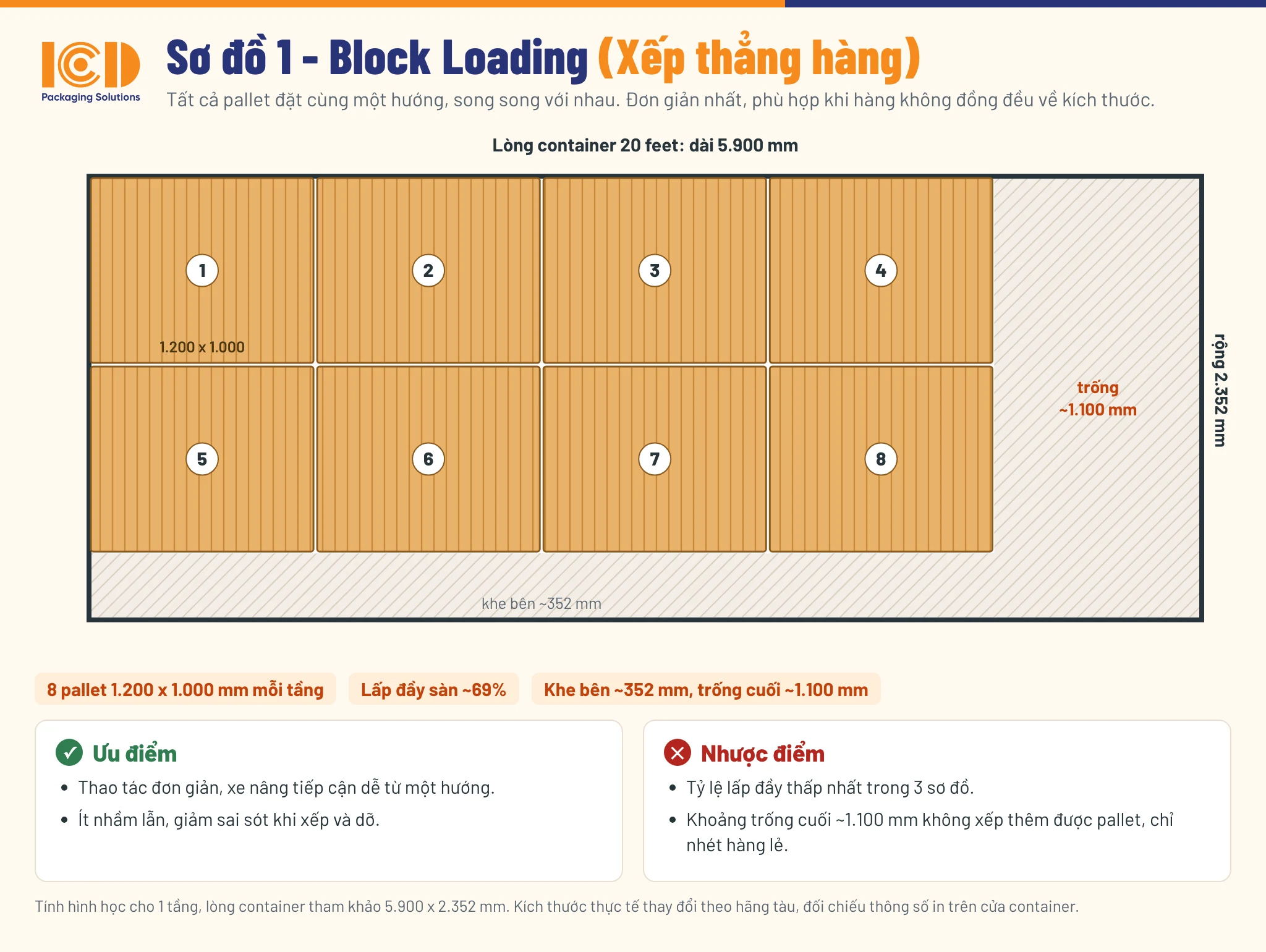
All pallets face one direction, parallel to each other. This is the simplest method, the forklift enters from one direction, there is little confusion when loading and unloading, and it suits businesses new to container shipping or when the cartons on the pallets are uneven. In return, the fill ratio is the lowest: with 1200 x 1000 mm pallets in a 20-foot container you get only 8 pallets and about 1,100 mm remains at the end of the container where no further pallet fits, only loose cartons.
Combined two-direction loading (pinwheel loading)
One row of pallets is placed lengthwise and the other row turned sideways, sometimes alternating direction section by section to fill the space at the end of the container. The industry often calls this pinwheel loading. In a 40-foot container, this raises 1200 x 1000 mm pallets from 20 to 21 pallets and Euro pallets from 20 to 25. The price is that the loading crew needs experience because the forklift no longer enters from one direction, and some overseas receiving warehouses with automatic unloading systems require all pallets to face the same way. Before switching to this method, ask the receiving end one question.
Combining pallets with loose cargo (hybrid loading)
Load pallets into most of the container first, then put the loose cargo into the remaining space, usually the section near the door or on top of the pallets if the height allows. This suits a shipment that is mostly palletised but has a few items of odd size or fragile goods that must be packed separately. Do not use it for dangerous goods, for food needing strict hygiene control, or when the receiving end unloads automatically, because loose cartons without pallets must be unloaded by hand.
Can two tiers of pallets be loaded in a container?
Yes, when the goods can withstand stacking, the total height of two tiers clears the container door, and the lower pallet carries enough load for the upper tier. With a standard container of 2,395 mm interior height, each tier gets only about 1,150 mm including the pallet, so two tiers usually suit only low, light goods. A High Cube container, 2,700 mm high inside with a 2,597 mm door, is the type often used for two-tier goods.
For example, with a pallet 150 mm high and goods 1,100 mm high, each tier is 1,250 mm and two tiers are 2,500 mm: it fits inside a High Cube container and still clears the 2,597 mm door if the forklift brings the pair in at once. If the goods are 1,200 mm high, each tier is 1,350 mm and two tiers are 2,700 mm, exactly the interior height and higher than the door, so this plan cannot work. This is the calculation most often skipped, because people compare only with the interior height.
On load, the lower pallet must carry the whole upper tier of goods when the ship rolls, so load two tiers only with heavy-duty pallets and goods in cartons that are stiff enough. A pallet with a flat underside or base runners keeps the upper tier steadier than a cup-leg pallet. Heavy goods should go one tier high, even when height remains.
What should you check on the container before loading?
Before loading, check the container on five points: weathertightness, odd smells, the floor, lashing rings and moisture; a container that fails any point should be rejected. Many warehouses start loading as soon as the container enters the yard without looking at anything, yet a damp container, one smelling of chemicals from the previous load or one with a cracked floor can ruin the whole shipment after a few weeks at sea.
- Close the doors and stand inside: if you see light coming through the walls or roof, the container has a hole.
- Smell it: a smell of chemicals, pesticide or anything odd means it should not be used for food goods.
- Look at the floor: a sunken, rotten or cracked floor should be refused, because the forklift will drive on it.
- Check that the lashing rings on the floor and walls are intact, especially when carrying heavy goods.
- Touch the walls and floor: if damp is still present, dry it before loading.
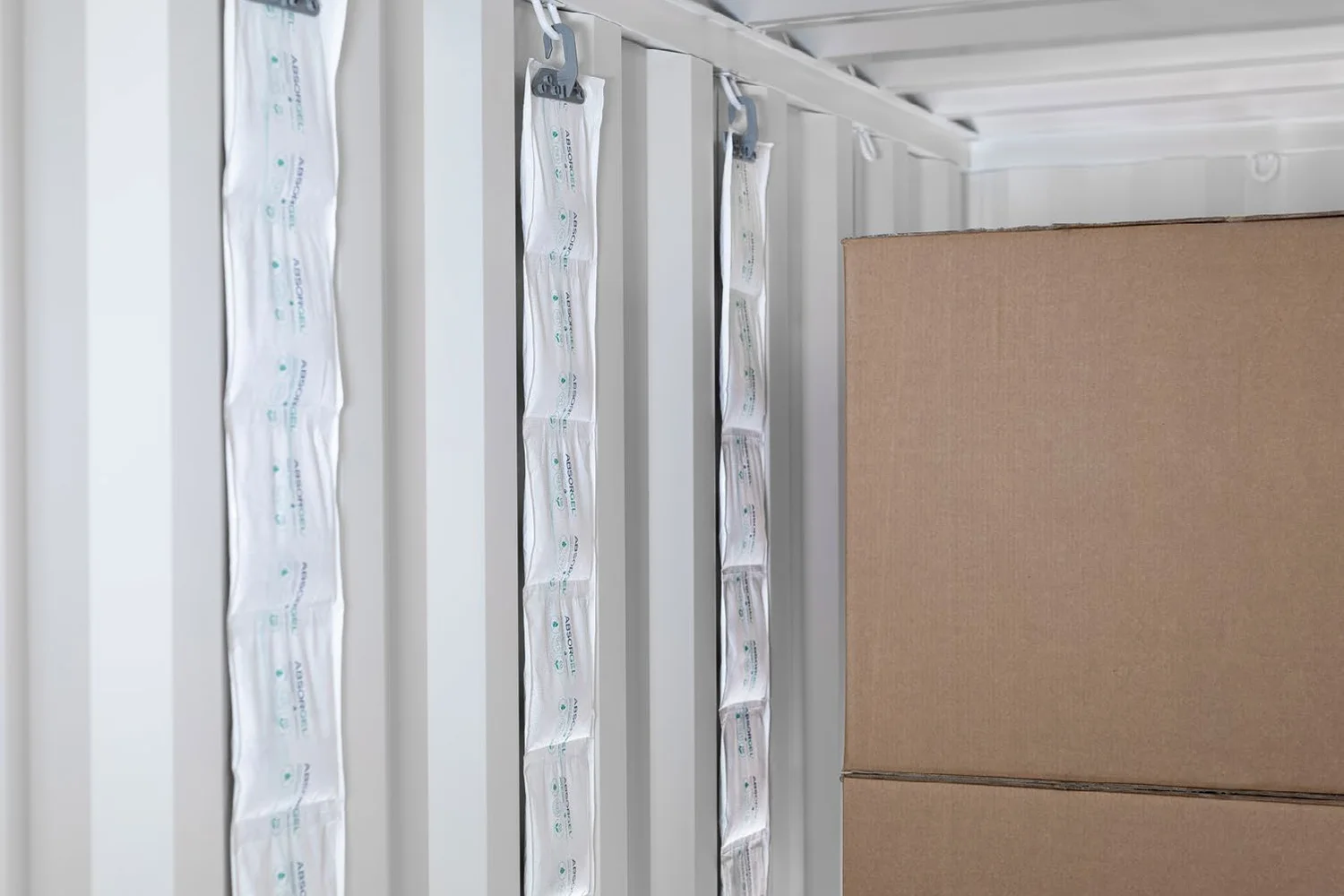
Containers on long sea voyages also meet what exporters call container rain: moisture in the goods, in the pallets and in the air condenses on the steel roof when day and night temperatures differ, then drips down onto the goods. Plastic pallets do not absorb water like wooden pallets, so one source of moisture is removed, but you should still hang desiccant bags along the walls. After loading the pallets, the last step is to fit Absortech desiccant beads from ICD before closing the door.
How should goods be loaded onto pallets before going into the container?
Put heavy goods at the bottom, prefer the brick pattern, do not let the load exceed the dynamic load of the pallet and keep the height of the load within the container door. However good the container loading plan is, goods will still fall if the load on each pallet is not stable.
The brick pattern is what we recommend for sea freight: each layer of cartons is turned 90 degrees to the layer below, the layers lock into each other and the load is less likely to come apart when the ship rolls. The column pattern, with cartons stacked straight up, keeps the compression strength of the cartons better but tends to burst sideways, and should only be used with very tight wrapping. A pyramid pattern, with the upper layers getting smaller, should not be used because the load has no flat surface to brace against and falls easily.
The weight of each pallet of goods must stay within the pallet’s dynamic load, meaning the load when a forklift lifts and moves it, not the static load when the pallet sits on the floor. Dynamic load is usually much lower: among the 156 plastic pallet models with both loads published on the ICD Vietnam website, the median dynamic load is about one third of the static load, and half of the models lie between 25% and 37.5%. For example, the N4-1210SL export plastic pallet, 1200 x 1000 x 120 mm, carries a static load of 3,000 kg but a dynamic load of only 1,000 kg.
How do you secure cargo in a container?
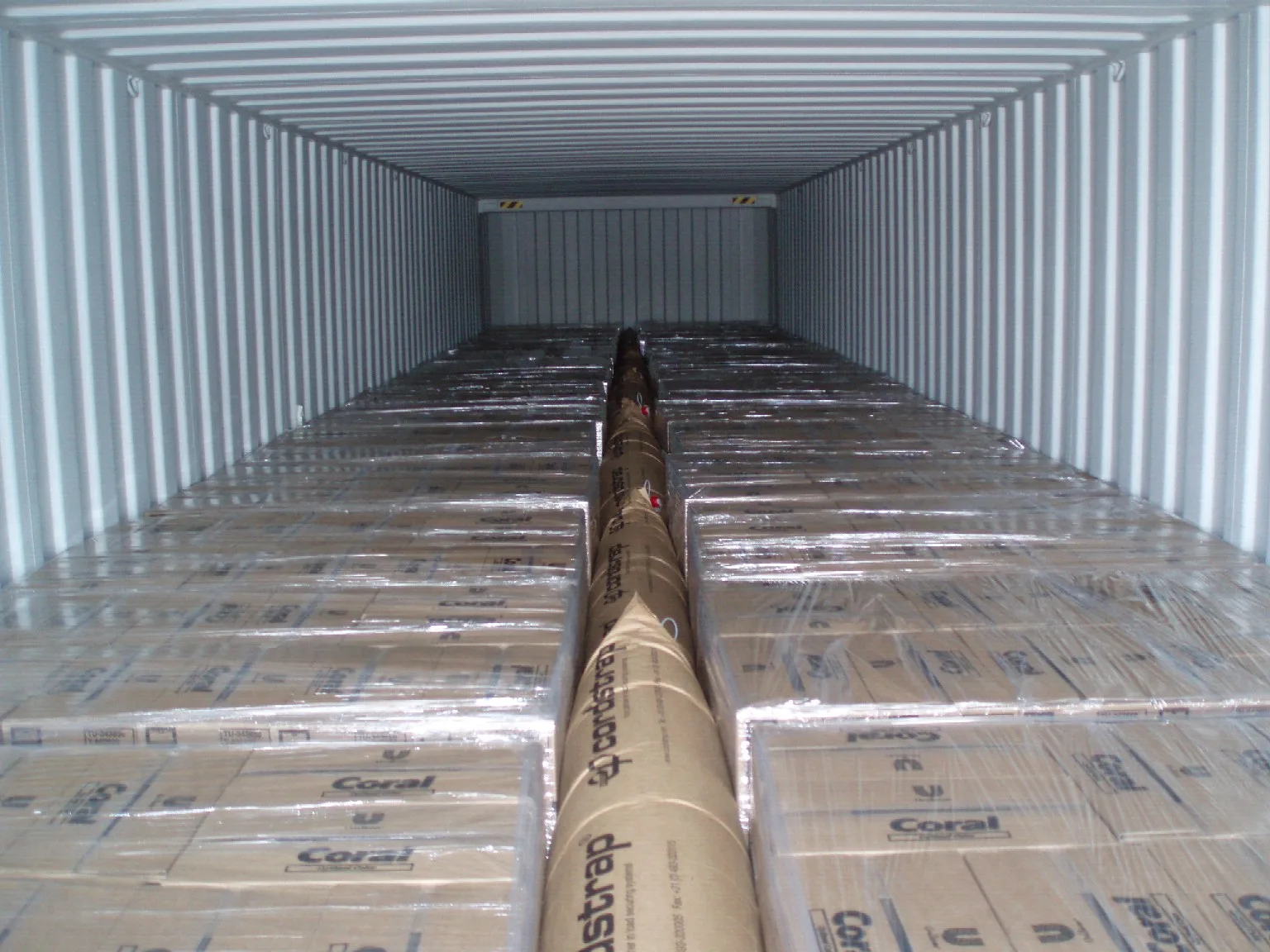
Secure cargo in two layers: wrap each pallet tightly in PE film, then fill the gaps between pallets and between pallets and the container wall with air bags, cushioning boards or lashing. The reason lies in the forces during transport. The IMO, ILO and UNECE Code of Practice for Packing of Cargo Transport Units (CTU Code) sets the sideways force of a ship in rough seas at 0.8 times the weight of the cargo, and the forward force when a truck brakes hard on the road is also 0.8 times.
In other words, a pallet of goods weighing 800 kg is at times pushed sideways with a force equivalent to about 640 kg. The code also states clearly that relying only on the weight of the goods and friction with the floor is not enough to hold cargo, because vibration makes cargo shift gradually. The truck leg from the plant to the port is therefore no gentler than the sea leg, and goods can shift out of place on the road section alone.
PE film wrapping starts at the foot of the pallet, with a few turns hugging the feet tight and then rising gradually, each upper turn overlapping the one below by about half the film width. The wrap must hug the whole pallet and not just the load, otherwise the goods and pallet still slide against each other. A warehouse that loads many containers each week should use a stretch wrapping machine so the film tension is even between pallets.
For gaps, the way we usually instruct is to divide by gap width. A small gap, under about 100 mm, takes thick cardboard or a cushioning board. A gap of about 100 to 300 mm takes dunnage air bags, inflatable bags placed in the gap and inflated to press the loads against each other. A larger gap should not rely on one air bag; add more goods, build a wooden bracing frame or use lashing tied to the container’s lashing rings first, and only then fill the remainder with air bags.
One more thing before closing the door is weighing. Since 1 July 2016, the IMO’s SOLAS regulation has required the shipper to declare the verified gross mass (VGM) of the container before it is loaded on the ship, including the goods, pallets, dunnage and the container tare. Pallets and air bags are included in that figure, so add the pallet weight when you calculate the load.
What standards must export pallets meet?
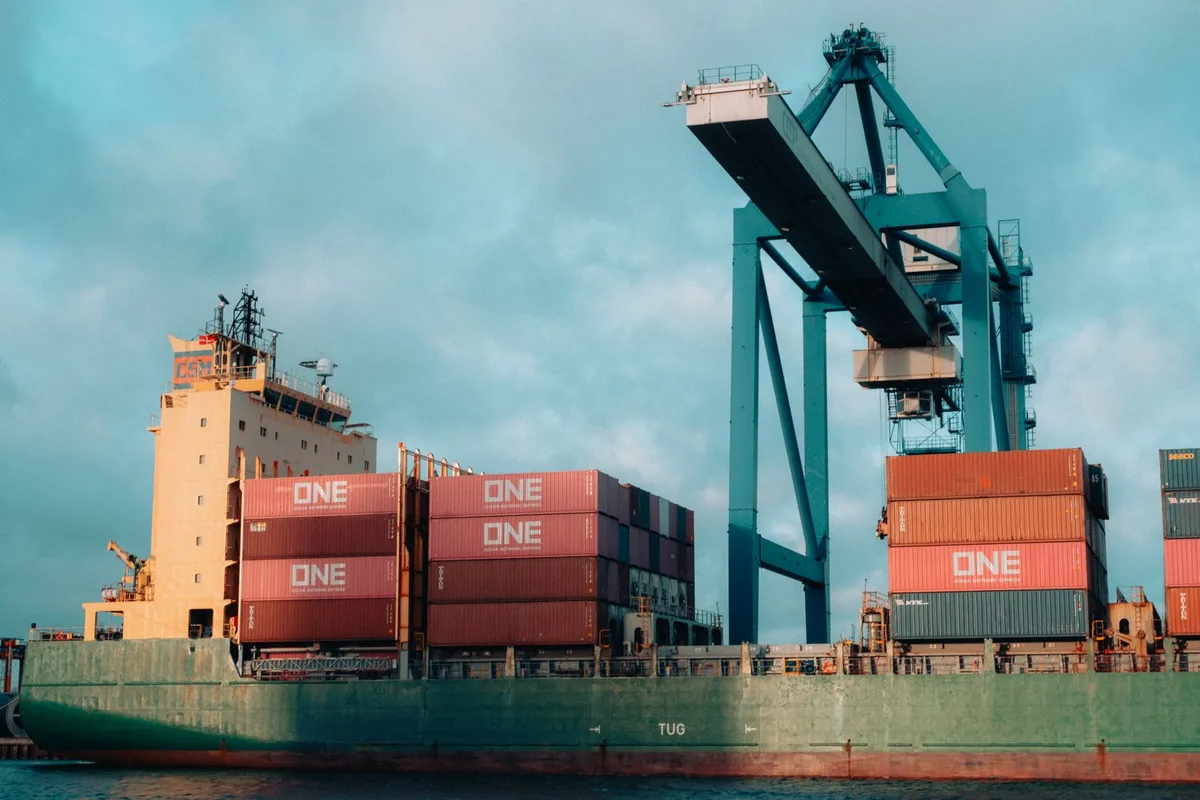
Solid wooden pallets for export must be treated and marked under the ISPM 15 standard of the International Plant Protection Convention (IPPC); plastic pallets and processed wood materials such as pressed wood and plywood do not need treatment. Goods that are loaded and then held at port because the packaging material fails are the most expensive risk in the whole process, because the goods have travelled far and every treatment cost arises in the importing country. The summary of ISO standards for export pallets explains this part more fully.
Pressed-wood pallets and plywood are exempt because the wood has been processed with glue, heat and pressure and is no longer raw wood that can carry pests. For solid wooden pallets, the common method is heat treatment, marked HT on the stamp. Methyl bromide fumigation, marked MB, is encouraged by the IPPC to be replaced and has been banned in the European Union since March 2010, so many importers accept only HT-marked pallets. You can also read on about the GMA pallet standard.
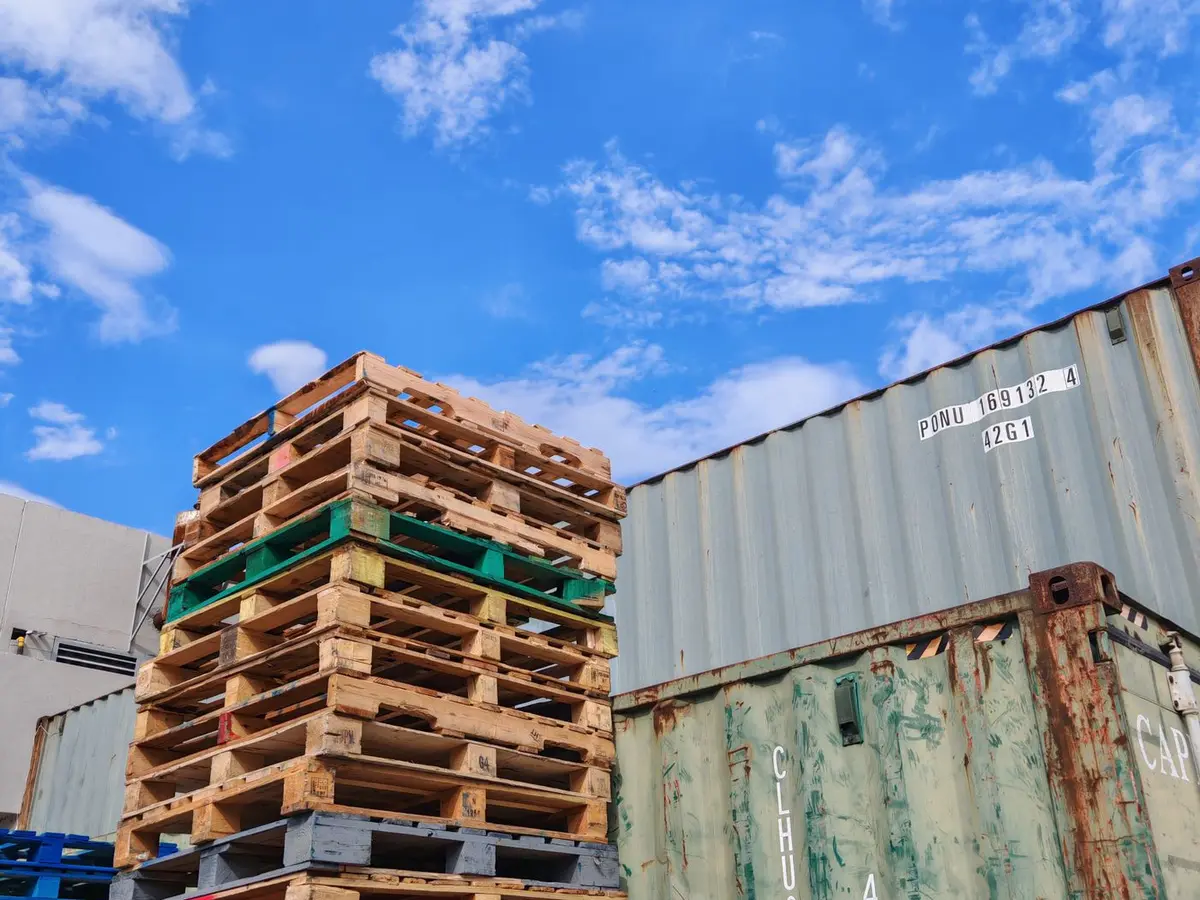
That is why many exporters switch to plastic pallets: no heat treatment, fumigation or stamping, no rot and no water absorption. For one-way goods where pallets are not recovered, people usually choose a light type 120 to 150 mm high to reduce weight and the height of each tier. A plastic pallet costs more than a wooden pallet of the same size, so the question is to weigh that cost against the cost of treatment, document risk and the number of reuses.
Common mistakes when loading pallets into a container
The five most common mistakes are choosing the wrong pallet size, loading beyond the dynamic load, wrapping loosely, leaving gaps unfilled and using wooden pallets that fail ISPM 15.
- Using 1200 x 1200 mm pallets in a 20-foot container: only 4 pallets per layer instead of 9 or 10 with 1200 x 1000 mm or 1100 x 1100 mm sizes.
- Loading by the static load printed on the pallet, forgetting that when a forklift lifts it the pallet should only carry the dynamic load, usually about one third of the static load.
- Wrapping loosely or wrapping only the load without hugging the pallet feet, so cartons gradually come loose with the rhythm of the ship’s roll.
- Leaving gaps of several hundred millimetres between pallets without filling them with air bags or cushioning boards.
- Buying cheap wooden pallets with a faded or wrong ISPM 15 mark or no treatment documents, and then having the goods held at the destination port.
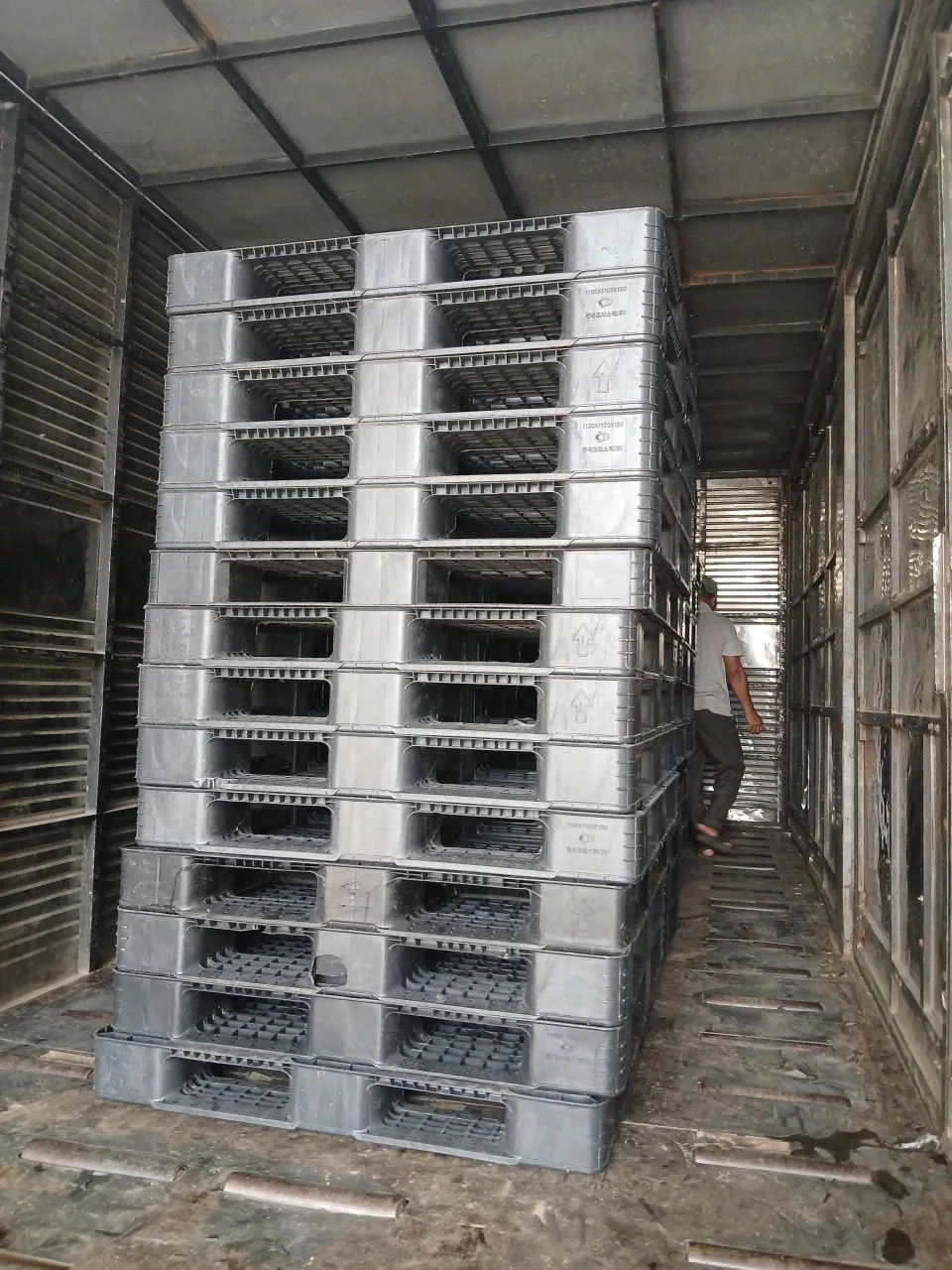
Of these five mistakes, only the first has to be fixed at the time of buying pallets; the other four can be corrected right in the warehouse with a pre-closing checklist for the container. For export goods travelling far, we still advise customers to consider plastic pallets as well, to remove the risk of quarantine documents at the destination port.
Frequently asked questions
How many pallets does a 20-foot container hold?
Per layer, a 20-foot container holds 8 pallets of 1200 x 1000 mm loaded straight or 9 pallets loaded combined, 10 pallets of 1100 x 1100 mm and 11 Euro pallets of 1200 x 800 mm when loaded combined. If two tiers are possible, double the figure, but check the container door height of 2,292 mm.
How many pallets does a 40-foot container hold?
Per layer, a 40-foot container holds 20 pallets of 1200 x 1000 mm when loaded straight or 21 pallets when loaded combined, 20 pallets of 1100 x 1100 mm and 25 Euro pallets of 1200 x 800 mm when loaded combined. A 40-foot High Cube container has the same floor area, so the number of pallets per layer does not change; it is only about 300 mm taller.
Can a 40-foot High Cube container take 2 tiers of pallets?
Yes, if each tier is no higher than about 1,300 mm including the pallet and the goods can withstand stacking. A High Cube container is 2,700 mm high inside but its door is only 2,597 mm high, so if you bring the pair of pallets in at once, the total height must be lower than the door. A standard 40-foot container with 2,395 mm interior height only suits two tiers of low goods.
Which pallets do not need fumigation for export?
Plastic pallets are not wood material, so they need no ISPM 15 treatment or marking. Pressed-wood pallets and plywood are also exempt because the wood has been processed with glue, heat and pressure. Solid wooden pallets must be treated under ISPM 15, most commonly heat treatment and an HT stamp.
How big a gap between pallets needs an air bag?
A gap under about 100 mm can be filled with thick cardboard or a cushioning board, and a gap of about 100 to 300 mm should take a dunnage air bag. A larger gap should have more goods added, a bracing frame built or lashing applied first, and only then the remainder filled with air bags.
Which pallet size should be used when loading containers?
A 1100 x 1100 mm pallet fits 2 rows x 5 in a 20-foot container and 2 rows x 10 in a 40-foot container without turning. A 1200 x 1000 mm pallet needs combined two-direction loading to reach 9 pallets in a 20-foot container and 21 pallets in a 40-foot container. Avoid 1200 x 1200 mm pallets because only one row fits.
How do you calculate the total weight of goods so as not to exceed the container payload?
Add the weight of the goods, pallets and dunnage for every pallet, then compare with the maximum payload (PAYLOAD) printed on the container door, not a generic figure from the internet. This total plus the container tare is the VGM that must be declared before loading on the ship under the SOLAS regulation.
Contact ICD Vietnam
ICD Vietnam advises on choosing pallet sizes for containers, loading plans and cargo securing supplies for export shipments.
- Northern Vietnam: 0983 797 186 / 090 345 9186 / 090 5859 186.
- Southern Vietnam: 098 6784 186.
- Email: sales@icdvietnam.com.vn.
- Zalo: Chat with ICD Vietnam on Zalo.
References
- Interior and door dimensions and payload of 20, 40, 40 High Cube and 45 High Cube containers: Hapag-Lloyd, Container specifications.
- Acceleration factors in transport and cargo securing principles: IMO/ILO/UNECE, Code of Practice for Packing of Cargo Transport Units (CTU Code).
- Wood packaging material in international trade: IPPC, ISPM 15.
- Number of Euro pallets in a standard ISO container: Wikipedia, Intermodal container.
- Container size codes and identification: Bureau International des Containers (BIC).
- Dimensions, static load and dynamic load of plastic pallets: ICD Vietnam product catalogue, checked on 11 October 2026.