Table of Contents
- What is an HS code
- Structure of an HS code
- HS codes for wooden and plastic pallets
- Why declaring the correct HS code matters
- Three pallet-specific situations when preparing the declaration
- Declaring and quarantine when exporting wooden and plastic pallets
- Where and how to look up an HS code
- Frequently asked questions
- Contact ICD Vietnam
- References
Reviewed and updated by ICD - Week 43/2026
Plastic pallets are declared under HS code 3923.90.90, wooden pallets under 4415.20.00, and plastic bins under 3923.10.90. These are lines in Vietnam’s List of Export and Import Commodities issued with Circular 31/2022/TT-BTC, in force as of October 2026. The preferential import duty is 15% for plastic pallets and 20% for wooden pallets, with VAT at 8% until 31 December 2026. Declaring the wrong code is now penalised under Decree 169/2026/ND-CP, which replaced Decree 128/2020 from 1 July 2026.
Since I started working with plastic pallets and wooden pallets at ICD Vietnam in 2011, “which code do your pallets go under” has come up from customers’ import-export departments more often than any question about load capacity. The person asking has usually seen two different numbers online and needs a sourced answer to put on the declaration. This article answers exactly that: which code, how much duty, why not the other code, and a few pallet-specific situations that few documents mention, such as pallets that travel with goods or pallets in circulation.
What is an HS code
The HS code classifies goods under the Harmonized System developed by the World Customs Organization (WCO). According to the WCO, the system has more than 5,000 commodity groups identified by 6-digit codes, used by over 200 countries and economies as the basis for tariffs and statistics, and covers more than 98% of international trade goods. Vietnam adds 2 digits to make an 8-digit code; where a line is not split further, the last two digits are 00, as in 4415.20.00 for wooden pallets. You may also read on about buying plastic pallets for export.
The WCO amends the nomenclature roughly every 5 to 6 years. The version in force is HS 2022, and HS 2028 has been adopted and takes effect on 1 January 2028. Vietnam will then issue a new list to replace Circular 31/2022/TT-BTC, so the codes in this article need to be rechecked from 2028. Reference category: plastic pallets for packing export goods.
Structure of an HS code
Read an HS code from left to right, with each pair of digits narrowing the scope of the goods: the first 2 digits are the chapter, the first 4 the heading, the first 6 the international subheading, and the last 2 the detailed Vietnamese line. Take the plastic pallet code as an example:
Both are pallets, but wooden pallets sit in chapter 44 (wood and articles of wood) and plastic pallets in chapter 39 (plastics and articles thereof). The reason is that the HS classifies first by constituent material and only then by use. By the same logic, steel pallets fall under chapter 73 and aluminium pallets under chapter 76.
HS codes for wooden and plastic pallets
The table below gathers the 8-digit code and three layers of tax for three items that often travel together in a warehouse: wooden pallets, plastic pallets and plastic bins. The standard duty applies to goods from countries without most-favoured-nation status with Vietnam and equals 150% of the preferential duty.
| Item | 8-digit code | Preferential import duty (MFN) | Standard import duty | VAT until 31 Dec 2026 |
|---|---|---|---|---|
| Plastic pallets (HDPE, PP) | 3923.90.90 | 15% | 22.5% | 8% |
| Wooden pallets, wooden load stands | 4415.20.00 | 20% | 30% | 8% |
| Plastic bins, crates and boxes | 3923.10.90 | 10% | 15% | 8% |
Preferential duty follows the Tariff issued with Decree 26/2023/ND-CP (as amended by Decree 144/2024/ND-CP, which does not change these three lines). Goods with a valid certificate of origin under a free trade agreement may enjoy a lower rate, including 0%, depending on the agreement. VAT of 8% applies under Decree 174/2025/ND-CP until 31 December 2026; from 1 January 2027 it returns to 10% unless an extension is decided.
HS code for wooden pallets
Wooden pallets are declared under 4415.20.00. The official wording of this line in the List is “pallets, box pallets and other load boards; pallet collars”. The code covers pine and acacia pallets, EPAL pallets and wooden frames fitted onto pallets, and applies to export wooden pallets as well as goods for domestic use.
HS code for plastic pallets
Plastic pallets are declared under 3923.90.90, in heading 39.23 “articles for the conveyance or packing of goods, of plastics”. Subheading 3923.90 “other” has only two lines: 3923.90.10 for toothpaste tubes and 3923.90.90 for everything else, so every kind of plastic pallet, whether one-piece, 9-foot, double-deck or mesh, goes under 3923.90.90.
Why declaring the correct HS code matters
The HS code decides three things at once: the tax rate, the management policy (whether specialised inspection or a licence is required) and whether the shipment can enjoy preferences under a free trade agreement. Choosing the wrong code is therefore not a paperwork slip but something that directly affects the tax paid and clearance time.
From 1 July 2026, penalties for declaring the wrong code follow Decree 169/2026/ND-CP, replacing Decree 128/2020/ND-CP. Under Article 10, a wrong code that leads to underpaid tax is fined 10% of the underpaid tax if the business amends its declaration on its own but late (after customs has notified a document check, or more than 60 days after clearance), and 20% if customs finds it during clearance, a post-clearance audit or an inspection. The fine applies only when the tax difference is at least VND 2,000,000 per declaration for an organisation (VND 500,000 for an individual), and always comes with payment of the full shortfall.

Three pallet-specific situations when preparing the declaration
Most documents stop at giving the code. But with pallets, customers’ questions are usually elsewhere: whether a pallet that only supports goods has to be declared, what procedure applies to pallets sent abroad and taken back, and how to write the goods description on the declaration so that it does not draw questions.
Does a pallet that comes with the goods have to be declared separately
Rule 5(b) of the six classification rules allows packing materials to be classified with the goods inside when they are of a kind normally used for those goods. But the rule excludes packing that is clearly suitable for repeated use, and plastic pallets are a typical example of reusable packing. So do not assume a pallet “follows the goods’ code”. A one-way pallet serving only as a base for an export shipment is usually declared by quantity and weight on the packing list, but whether to split it into a separate declaration line is something to ask the Customs Sub-department handling the procedure beforehand, as there is no specific guidance for pallets.
Pallets in circulation with overseas partners
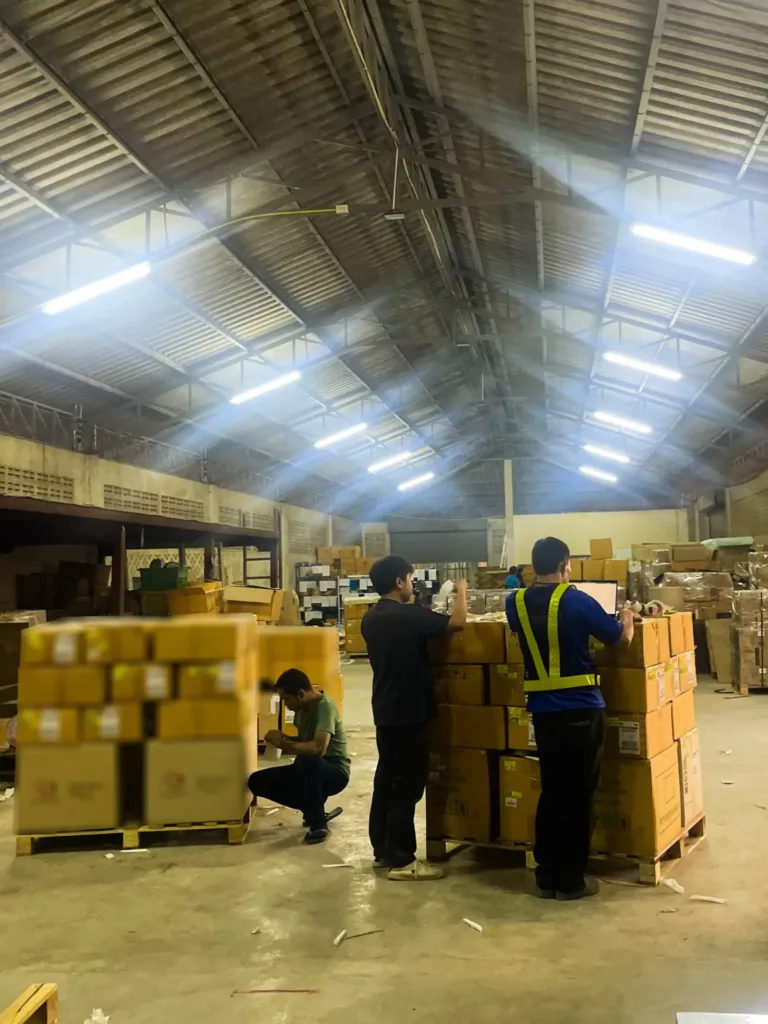
Pallets sent abroad and taken back, or received from a partner and sent back, fall under means of containing goods under a circulation scheme in Article 49 of Decree 08/2015/ND-CP (as amended by Decree 167/2025/ND-CP), in the group “other means that can be used repeatedly to contain or pack goods”. The business declares with Statement form 02 and files an annual report on form 02a issued with Circular 121/2025/TT-BTC before 15 January each year. No tax is payable during the temporary import period; if the pallets are later kept for use or sold, import procedures apply as for ordinary goods.

Goods description on the declaration
A correct code with a thin description can still draw a request for explanation. A good description lets the customs officer see at once why the goods belong in 3923.90.90, and matches the invoice and packing list. When customers buy ICD Vietnam pallets to export with goods or re-export, I usually send the specification so they can fill in all of the following:
- Item name and material: HDPE or PP plastic pallet, virgin or recycled.
- Length x width x height in mm.
- Structure type: one-piece, 9-foot, 3-runner or double-deck.
- Weight per unit and quantity.
- Whether it has a reinforcing steel core.
- Manufacturer, product code and origin.

Declaring and quarantine when exporting wooden and plastic pallets
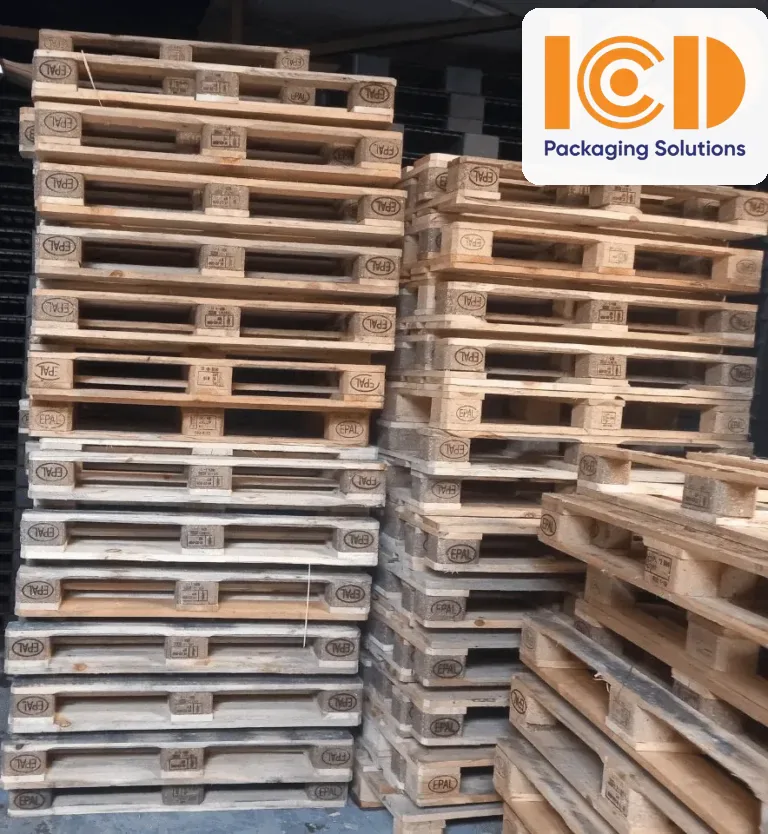
For wooden pallets, the harder part than the HS code is plant quarantine. The ISPM 15 standard of the International Plant Protection Convention (IPPC) requires raw wood packaging to be treated, most commonly by heat treatment, and stamped with the IPPC mark. This is a requirement of importing countries applying ISPM 15, even when the pallet is only a base travelling with goods. A pallet without the mark may be required to be retreated, re-exported or destroyed at the port of arrival. Domestic rules on quarantine of wood packaging material are covered in the article on Circular 24/2017/TT-BNNPTNT.
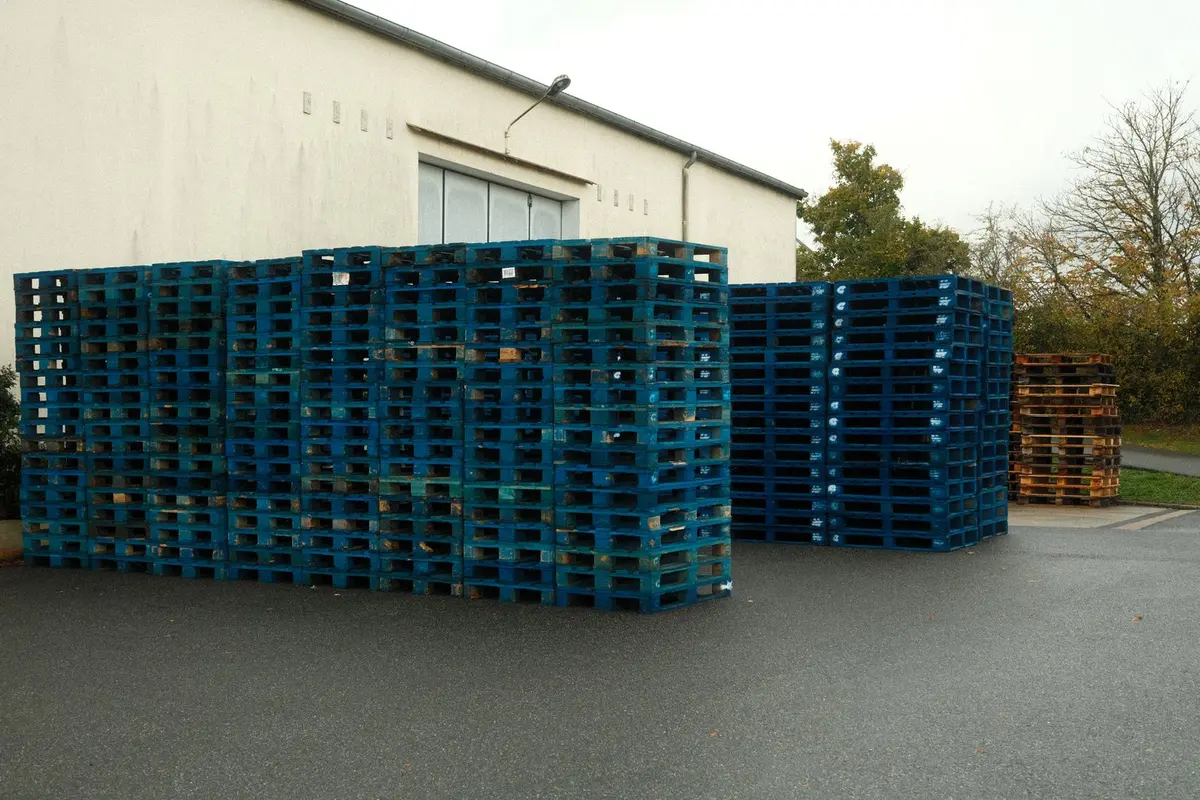
Plastic pallets are not subject to ISPM 15 because they are not wood material, so they need no heat treatment, fumigation or stamping. This is why many exporters switch to plastic pallets for shipments to Australia, the US or Europe, where wood packaging is inspected strictly. The difference between the two types when exporting therefore lies more in quarantine than in the HS code; a fuller comparison is in the article on plastic pallets and wooden pallets. The groundwork for this topic is in the article on ISO standards for export pallets.
Where and how to look up an HS code
The source of every 8-digit code is the List issued with Circular 31/2022/TT-BTC, read together with the chapter notes and the six general rules for interpreting classification. Duty rates are looked up in the Tariff of Decree 26/2023/ND-CP. A faster way is the Ministry of Industry and Trade’s Vietnam Trade Portal, which lets you search by code number or description and see the base duty rates.
When still in doubt, especially for goods of mixed materials or large import quantities, a business can ask the Customs Department (the new name of the General Department of Customs from 1 March 2025) for an advance ruling on the code under Article 24 of Decree 08/2015/ND-CP, as amended by Decree 167/2025/ND-CP.
- Submit the file to the Customs Department at least 60 days before exporting or importing the shipment.
- A file that does not qualify, or an item that already has code guidance, is rejected within 5 working days.
- The result is returned within 30 days, or 60 days for complex goods that need analysis.
- The result is valid for up to 3 years, and lapses if the actual goods differ from the sample or the legal basis changes.
See also: plastic pallet types to describe the pallet type correctly on the declaration, and what plastic pallet is called in English when drafting bilingual invoices and packing lists.
Frequently asked questions
What is the HS code for plastic pallets?
Plastic pallets are declared under 3923.90.90, in heading 39.23 “articles for the conveyance or packing of goods, of plastics”, under the List issued with Circular 31/2022/TT-BTC. The code applies to every kind of plastic pallet: one-piece, 9-foot, 3-runner and double-deck.
What is the HS code for wooden pallets?
Wooden pallets are declared under 4415.20.00, in heading 44.15 on wooden cases, crates and load boards. The preferential import duty is 20%. On export, raw wooden pallets must also be treated and stamped under ISPM 15.
How much is the import duty on plastic pallets?
The preferential import duty is 15% and the standard duty 22.5%, and it can be lower or 0% with a valid certificate of origin under a free trade agreement. VAT is 8% until 31 December 2026 under Decree 174/2025/ND-CP.
Is a plastic pallet code 3923.10.90?
No. Subheading 3923.10 is for boxes, cases, crates and similar articles, containers with walls around them such as plastic bins and crates. A pallet is a flat platform and so belongs in subheading 3923.90.
What is the penalty for declaring the wrong HS code?
From 1 July 2026, Decree 169/2026/ND-CP applies: a fine of 10% or 20% of the underpaid tax depending on timing and who finds it, when the difference is at least VND 2 million per declaration for an organisation, together with payment of the full shortfall. An item that already has code guidance but is still declared wrongly is treated as tax evasion, with a fine of 1 to 3 times the evaded tax.
What is an HS code?
It is a commodity classification code under the World Customs Organization’s Harmonized System: the first 6 digits are shared internationally, and Vietnam adds 2 digits to make an 8-digit code for tax and statistics.
What is the HS code for iron and steel pallets?
The HS classifies by material, so steel pallets usually fall under heading 73.26 (other articles of iron or steel) and aluminium pallets under heading 76.16. The specific 8-digit code and duty rate must be looked up in the Vietnamese List or confirmed by an advance ruling.
Contact ICD Vietnam
ICD Vietnam supplies plastic pallets and wooden pallets with a VAT invoice, technical specifications for filling in the declaration, and CO and CQ documents when the file requires them.
- North: 0983 797 186
090 345 9186
090 5859 186 - South: 098 6784 186
- Email: Sales@icdvietnam.com.vn
In stock, VAT invoice, nationwide delivery
References
- Harmonized System - World Customs Organization (WCO), HS 2022 and the HS 2028 amendments effective 1 January 2028.
- List of Vietnam’s export and import commodities and the six classification rules - Circular 31/2022/TT-BTC.
- Preferential import tariff - Decree 26/2023/ND-CP, amended by Decree 144/2024/ND-CP.
- Value-added tax reduction - Decree 174/2025/ND-CP.
- Administrative penalties in the customs field - Decree 169/2026/ND-CP (Article 10, Article 15).
- Advance ruling, circulating containers - Article 24 and Article 49 of Decree 08/2015/ND-CP, amended by Decree 167/2025/ND-CP; forms 02 and 02a of Circular 121/2025/TT-BTC.
- Classification of plastic pallets - US Customs and Border Protection (CBP), ruling NY J80577.
- Wood packaging material in international trade - ISPM 15, IPPC.