Table of Contents
- How is “pallet” spelled and pronounced correctly?
- English names of the different pallet types
- Why does each pallet type have its own English name?
- What are the parts of a pallet called in English?
- Pallet technical specifications in English
- Packing, transport and export terms related to pallets
- Sample email asking for a plastic pallet price in English
- Frequently asked questions
- What is a plastic pallet called in English?
- What is the difference between pallet and palette?
- What is the difference between a pallet and a skid?
- What is a 3-leg plastic pallet called in English?
- What is a steel-core plastic pallet called in English?
- What is a spill-proof plastic pallet called in English?
- What is “dong pallet” in English?
- What is a pallet foot called in English?
- What is a pressed-wood pallet called in English?
- What is pallet strapping called in English?
- Contact ICD Vietnam
- References
Reviewed and updated by ICD - Week 43/2026
The English term for a plastic pallet is “plastic pallet”, pronounced /ˈpæl.ɪt/ (roughly “PAL-it”), and the plural is “plastic pallets”. A wooden pallet is a “wooden pallet” or “wood pallet”, a steel pallet is a “steel pallet” or “metal pallet”, and a paper pallet is a “paper pallet”. On customs declarations, plastic pallets fall under HS code 3923.90.90 and wooden pallets under 4415.20.00.
The hard part is not the words “plastic pallet” but the names of each type. Many names used in Vietnamese quotations are word-for-word translations, such as “three-legged pallet” for a 3-runner pallet or “cup pallet” for a nestable pallet, and overseas buyers often have to ask what is meant. This glossary collects the standard names as international documents use them, with part names, catalogue specifications, packing terms and a sample enquiry email, so that you can write the right name the first time. Vietnamese terms are shown without diacritics, as they usually appear on local quotations.
How is “pallet” spelled and pronounced correctly?
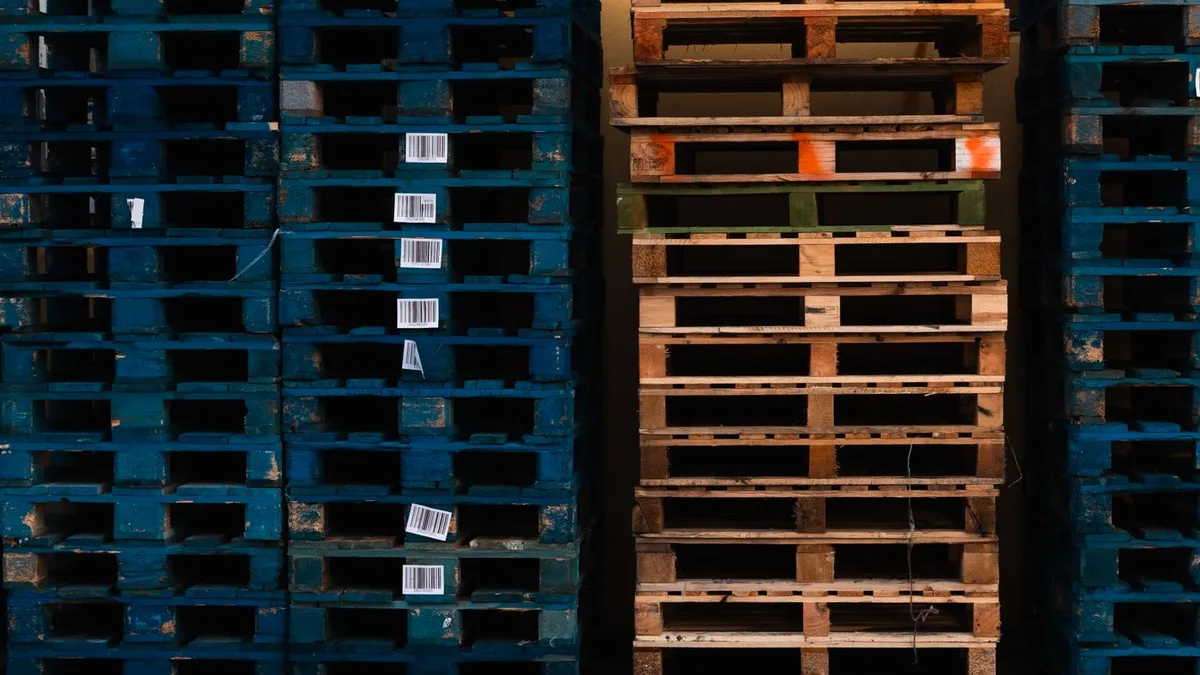
The correct word is “pallet”, with two l’s and one t, pronounced /ˈpæl.ɪt/ according to the Cambridge Dictionary, with the stress on the first syllable. In English, “palette” is an artist’s colour board, so an email that says “plastic palette” will be read as a painting tool. The mistake is common because in French and German the word “palette” (Palette) is the pallet, so European customers sometimes write it as they would in their own language, and Vietnamese writers copy them. To go deeper, see single-face and double-face plastic pallets.
In the US, a pallet is also called a skid. According to the Wikipedia article on pallets, a skid is technically a type with only a top deck set on feet or runners and no bottom deck, like a 9-leg plastic pallet; in everyday speech the two words are often used interchangeably. If a customer writes “skid” on an order, we always ask about the size and foot type instead of guessing. You can also read on about the dimensions and load capacity of plastic pallets.
English names of the different pallet types
The English name of a pallet combines the material, the foot type, the deck type and the use, for example “HDPE 3-runner open deck pallet”. The table below puts the name to use in quotations and contracts in the middle column, and the last column gives alternative names and common points of confusion.
| Vietnamese term | English name to use | Alternative names, notes |
|---|---|---|
| Pallet nhua | Plastic pallet | Plural “plastic pallets”; write “plastic pallets”, not “plastic palettes” |
| Pallet go | Wooden pallet, wood pallet | “Timber pallet” is common in the UK and Australia |
| Pallet go ep | Presswood pallet | Also called a moulded wood pallet; outside the scope of ISPM 15 |
| Pallet sat | Steel pallet | “Metal pallet” is the general name; “iron pallet” is rarely used in international catalogues |
| Pallet giay | Paper pallet | Corrugated pallet, cardboard pallet; Wikipedia also lists the name “ecopallet” |
| Pallet nhua HDPE | HDPE plastic pallet | State clearly whether it is virgin HDPE or recycled HDPE |
| Pallet nhua 3 chan | 3-runner pallet | “Three-legged pallet” is a word-for-word translation that overseas buyers rarely use |
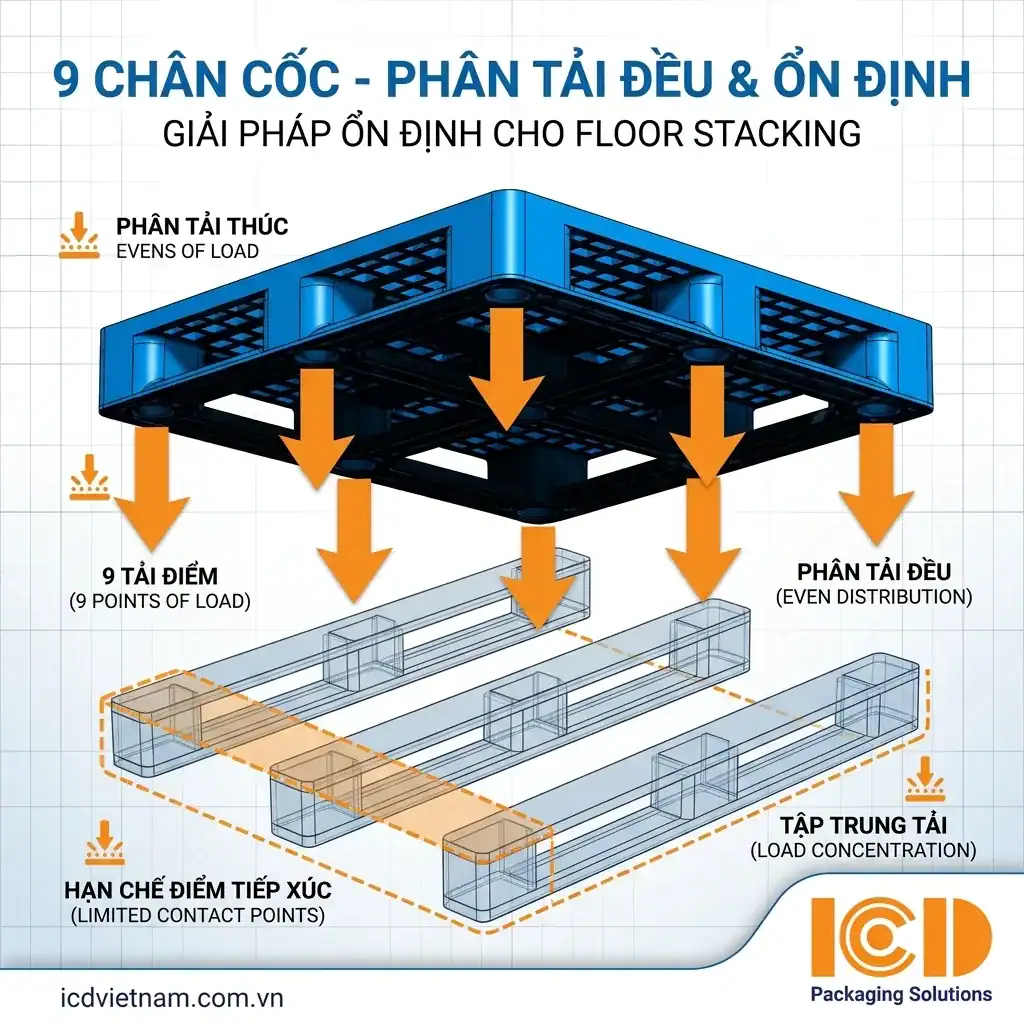
| Pallet nhua 9 chan | 9-leg pallet | It has no bottom deck, so technically it is also a skid |
| Pallet nhua chan coc | Nestable pallet | “Cup pallet” is rarely used; the hollow feet nest inside each other when empty pallets are stacked |
| Pallet nhua 1 mat | Single-deck pallet | Single-faced pallet; has only a top deck |
| Pallet nhua 2 mat | Double-deck pallet | Double-faced pallet; one that can be used on both sides is called a reversible pallet |
| Pallet nhua mat kin | Solid deck pallet | Closed deck pallet |
| Pallet nhua mat luoi, mat ho | Open deck pallet | Grid deck pallet |
| Pallet nhua loi thep | Steel-reinforced plastic pallet | Steel core plastic pallet |
| Pallet nhua chong tran | Spill pallet | Spill containment pallet |
| Pallet nhua ke kho | Warehouse storage pallet | If it goes on racking, add “rackable pallet” |
| Pallet nhua lot san | Floor pallet | No standard name, so state the height and send a photo |
| Pallet nhua lot san khau | Plastic event flooring panel | It is an interlocking floor panel, not a load-lifting pallet; describe it with its dimensions |
| Pallet xuat khau dung mot lan | One-way pallet | Expendable pallet, export pallet |
| Pallet nhap khau | Imported pallet | State the country of origin |
Why does each pallet type have its own English name?
Each name describes a structural feature or a use, so reading the name tells you how the pallet is lifted and stacked. There are four groups of features: material, foot type, deck type and use. Once you know these four groups, you can still guess the meaning of an unfamiliar name and build the right name for your own product code.
The material group is the simplest: plastic, wooden, steel, paper, and for plastic you also state the type of resin. An HDPE plastic pallet is widely used in food, pharmaceutical and chemical stores because HDPE does not absorb water and withstands many cleaning chemicals. The words “virgin” or “recycled” should stand right before the resin name, because this is the first thing an overseas purchasing department checks.
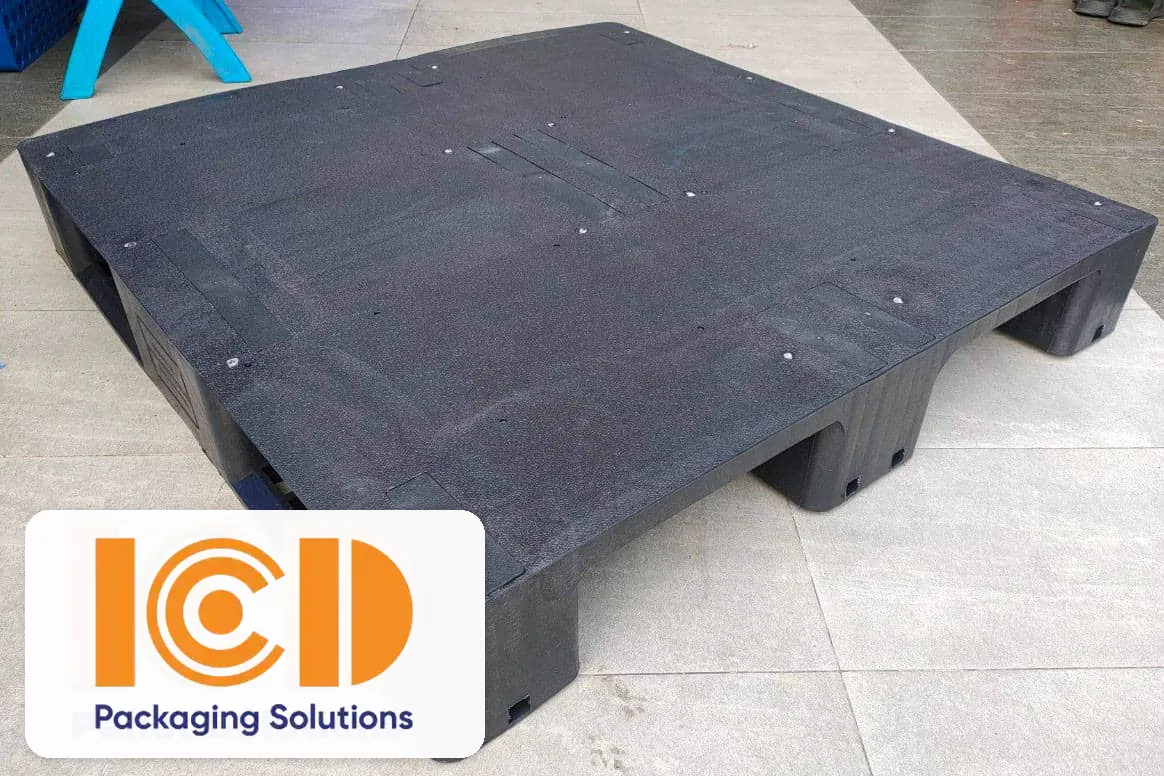
The foot type group is where translations most often go wrong. A “3-leg” pallet actually has three runners running lengthwise rather than three legs, so the international name is a 3-runner pallet. A 9-foot pallet is a 9-leg pallet, and forklift forks can enter from all four sides. A cup-leg pallet has hollow cup-shaped feet and empty pallets nest inside each other when stacked, so it is called a nestable pallet; its advantage is that it is light and saves space on the return trip, not that it carries heavy loads.
The deck type group has two pairs. The first pair is single-deck (a top deck only) and double-deck (both a top deck and a bottom deck); a double-deck pallet that can be flipped and used on both sides is called a reversible pallet. The second pair is solid deck (closed, suited to small items that fall through and places that need frequent washing) and open deck (a grid deck that is lighter and drains and ventilates better). On a plastic pallet, a bottom deck in the form of a frame around the perimeter helps the pallet stand steady on conveyor rollers and rack beams.
The use group collects names tied to what the pallet does. A spill pallet has a sump that catches liquid spilled from chemical drums. A steel-reinforced plastic pallet has steel bars inside its cavities to reduce sagging on racks; for example, the 1200 x 1000 x 150 mm steel-core model in ICD Vietnam’s catalogue carries a dynamic load of 1,500 kg and a static load of 4,500 kg. A one-way pallet travels with an export shipment and is not returned, while pallet pooling is a model of renting pallets from a network that collects them back.
What are the parts of a pallet called in English?
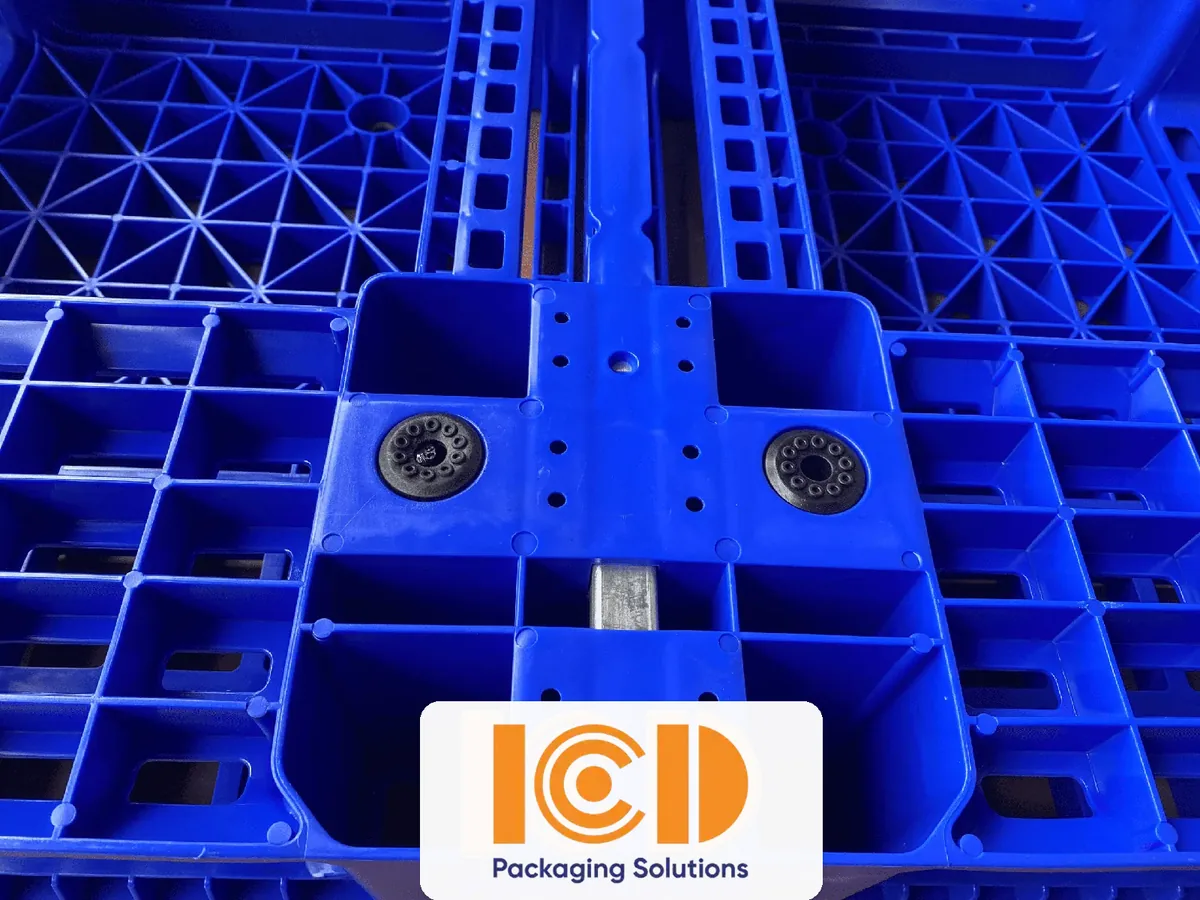
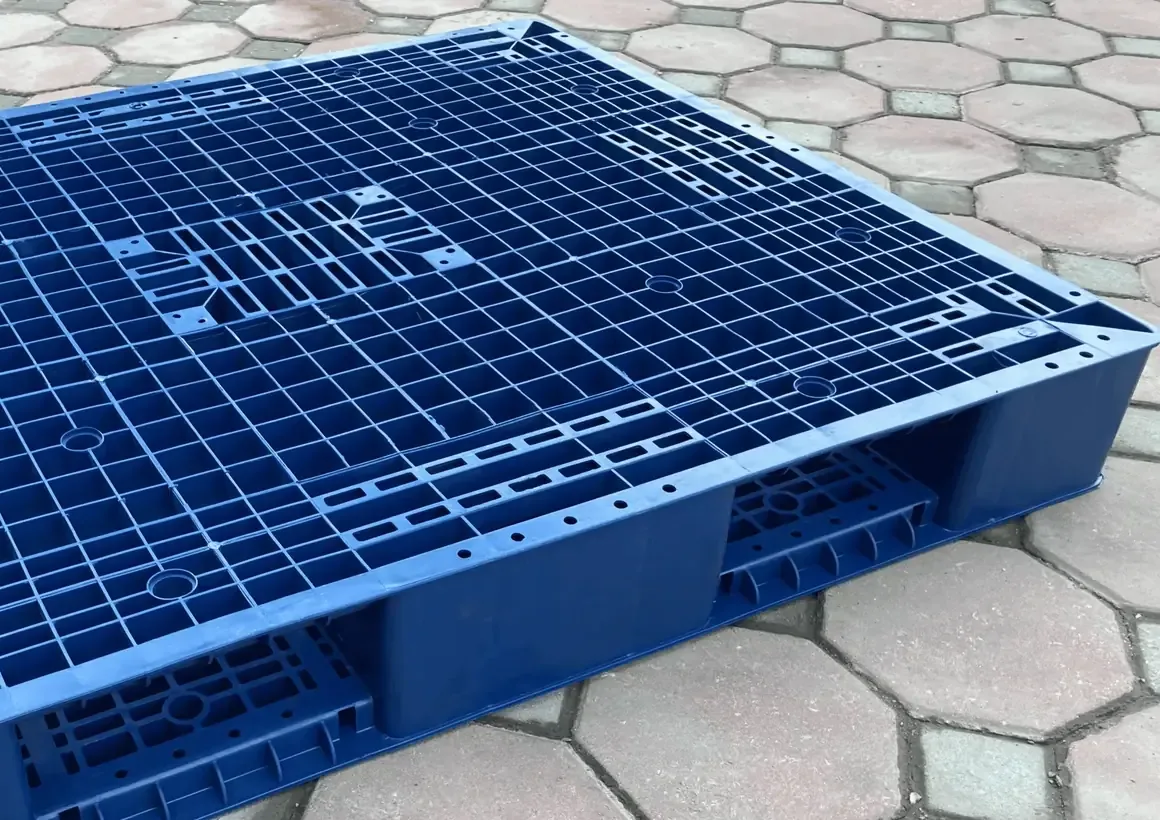
A pallet consists of a top deck, a bottom deck, deck boards, stringers or blocks, and fork entry openings. These words appear on drawings and in the technical requirements of overseas customers, so being able to read them means being able to read the drawing.
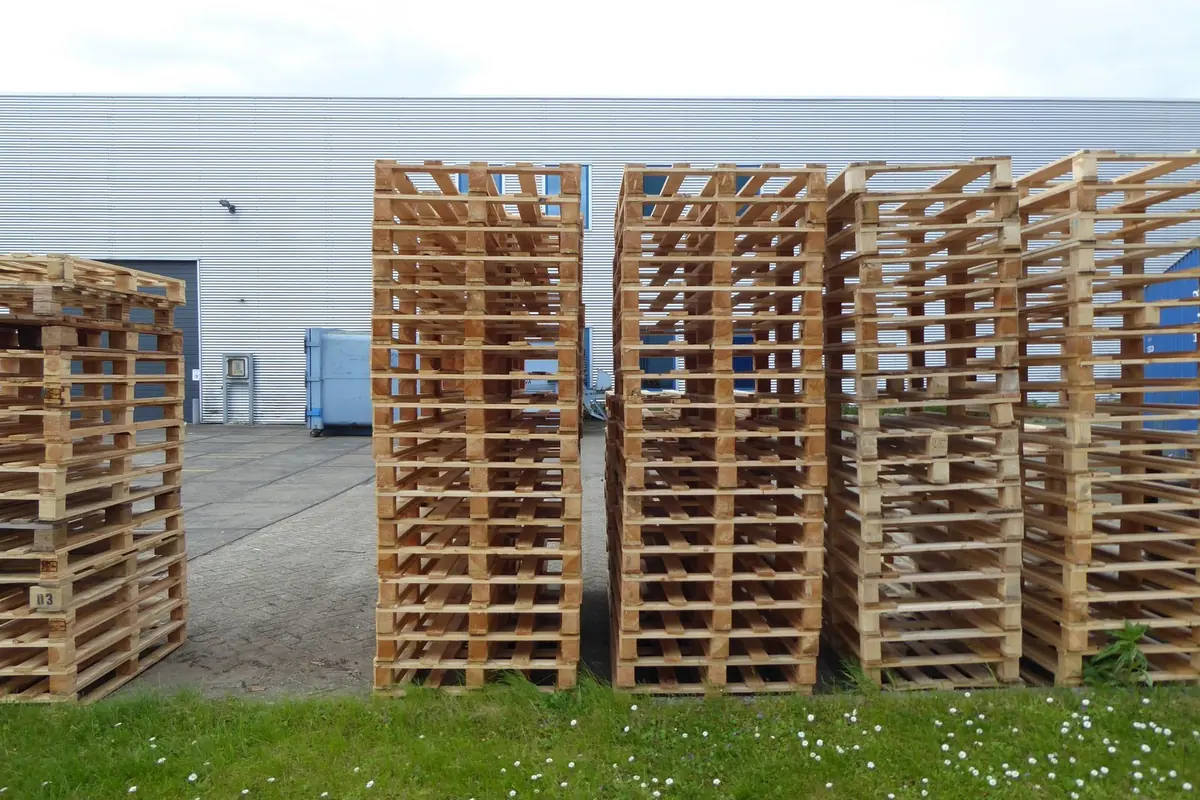
On a wooden pallet, the boards that form the deck are called deck boards, the load-bearing bars running lengthwise are stringers, and the wooden blocks at the corners and middle are blocks. The Wikipedia article on pallets divides wooden pallets into two structural groups: stringer pallets, which use three or more parallel stringers, and block pallets, which use blocks. A block pallet can be lifted from all four sides, so it is also called a four-way pallet; a stringer pallet can also be notched for four-way lifting, but lifting in the direction of the stringers is still stronger.
A moulded plastic pallet has no assembled boards, so its upper surface is simply called the top deck, and the feet are usually called feet or legs instead of blocks. The lifting direction is written as 2-way entry when the forks enter from two sides only, and 4-way entry when they enter from all four sides. These two terms belong in every enquiry, because a warehouse that uses hand pallet trucks and buys a 2-way pallet by mistake will find sides of the pallet the truck cannot enter.
Pallet technical specifications in English
The three most important specifications on an English pallet catalogue are dynamic load, static load and racking load, together with dimensions and material. Below are the specifications of a 3-runner plastic pallet, 1100 x 1100 x 150 mm, from ICD Vietnam’s catalogue, listed in the order usually seen on catalogues:
- Dimensions (L x W x H), length x width x height: 1100 x 1100 x 150 mm.
- Material: HDPE.
- Dynamic load: 1,000 kg.
- Static load: 3,000 kg.
- Racking load: not for racking (not rackable), because a 3-runner pallet normally stands on the floor.
- Pallet weight or tare weight: stated for each model.
- Color: blue, black.
Dynamic load is the load the pallet can bear while a forklift moves it; static load is the load when the pallet stands still on a flat floor; racking load is the load when the pallet sits on racking, supported only at its two edges. For the same pallet, static load is always the largest and racking load is usually the smallest. Two other words are often seen: stackable (can be stacked when loaded) and nestable (nests inside another when empty); do not confuse them when ordering, because a nestable pallet usually cannot take many tiers of loaded stacking.
Besides the names of pallet types, international trade also uses words for operations (palletizing), load-securing supplies (stretch film, strapping), lifting equipment (pallet jack, forklift) and quarantine requirements (ISPM 15, heat treatment). The table below collects the words we meet most often in customers’ documents and emails.
| Vietnamese term | English term | Explanation |
|---|---|---|
| Dong pallet, xep hang len pallet | Palletize, palletizing | Stacking goods on a pallet into one load; the machine that does this is a palletizer |
| Do hang khoi pallet | Depalletize | The reverse of palletizing |
| Kien hang tren pallet | Unit load, pallet load | Goods and pallet secured together as one block |
| Mang quan pallet, mang PE | Stretch film, stretch wrap | Elastic film wrapped around the load |
| Mang co nhiet | Shrink wrap | Film that shrinks when heated |
| Day dai pallet | Strapping, strapping band | PP or PET strap that tightens the load |
| Khung quay pallet | Pallet collar | A frame placed on top of a pallet to enclose the goods |
| Xe nang tay | Pallet jack, hand pallet truck | Equipment for lifting a pallet by hand |
| Xe nang | Forklift | Electric or internal-combustion lift truck |
| Pallet mot chieu | One-way pallet, expendable pallet | A pallet that travels with the goods and is not returned |
| Thue pallet dung chung | Pallet pooling, pallet rental | Renting pallets from a network that collects them back |
| Hun trung, xu ly nhiet | Fumigation (MB), heat treatment (HT) | The two ways of treating wood under ISPM 15 |
| Ma HS pallet nhua | HS code 3923.90.90 | Pallets and load boards of plastics |
| Ma HS pallet go | HS code 4415.20.00 | Pallets, box pallets and load boards of wood |
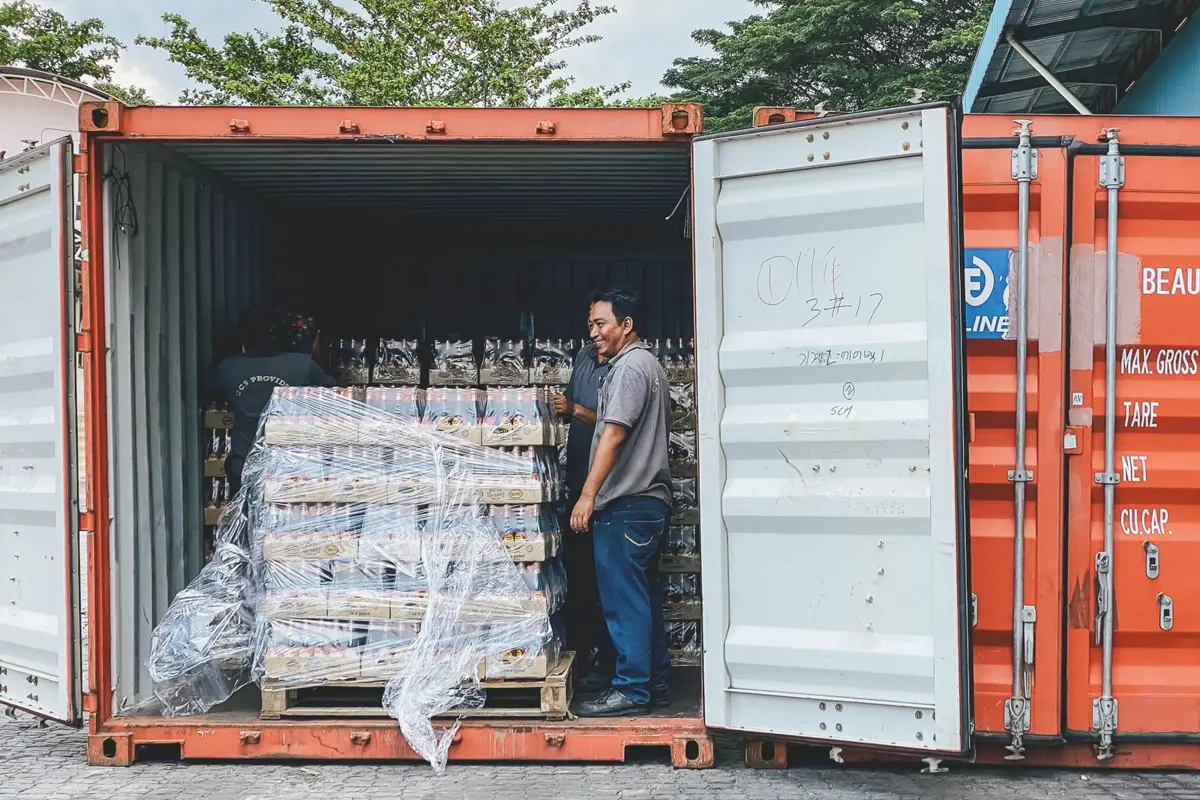
For wooden pallets in international transport specifically, the ISPM 15 standard of the International Plant Protection Convention (IPPC) requires treatment of raw wood and marking; the HT mark means heat treatment and the MB mark means methyl bromide fumigation. Plastic pallets and pallets made of processed wood such as pressed wood or plywood fall outside this standard, so no mark is needed for export. On documents, customers often write a short “ISPM 15 exempt” for these pallet types.
Sample email asking for a plastic pallet price in English
A plastic pallet enquiry in English should include the quantity, dimensions, foot type, entry direction, load capacity and material, so the supplier can quote the right model the first time. Add the delivery terms too (for example EXW at the factory or delivery to the port), because the price changes with the delivery point.
The figures in the example only illustrate the sentence structure; when you send a real enquiry, replace them with the quantity and specifications that match your goods, racking and forklifts.
When reading the quotation that comes back, three words often appear: MOQ (minimum order quantity), lead time (production and delivery time) and payment terms. If a quotation only states a general “load capacity”, ask again to be clear whether it is dynamic, static or racking load.
See all plastic pallets.
See also: what a plastic pallet is and the types of plastic pallet to understand each type before looking up the English terms.
See also: what is a pallet | the HS code for plastic pallets
Frequently asked questions
What is a plastic pallet called in English?
A plastic pallet is called a “plastic pallet” in English, plural “plastic pallets”, pronounced /ˈpæl.ɪt/. This is the name used in international catalogues, quotations, contracts and technical documents.
What is the difference between pallet and palette?
A pallet is a platform that lets a forklift lift and move goods, while “palette” in English is a colour board. In French and German, “palette” means pallet, so emails from European customers sometimes write “palette”.
What is the difference between a pallet and a skid?
In the US the two words are often used interchangeably. Technically, a skid has only a top deck set on feet or runners and no bottom deck, like a 9-leg plastic pallet; a full pallet has both a top deck and a bottom deck.
What is a 3-leg plastic pallet called in English?
A 3-leg plastic pallet is a 3-runner pallet in English, because it has three runners running in parallel under the deck. The translation “three-legged pallet” is rarely used in international catalogues.
What is a steel-core plastic pallet called in English?
A steel-core plastic pallet is called a steel-reinforced plastic pallet or a steel core plastic pallet. The steel bars in its cavities keep the pallet from sagging on racks.
What is a spill-proof plastic pallet called in English?
It is called a spill pallet or a spill containment pallet, used under chemical and oil drums to catch leaking liquid.
What is “dong pallet” in English?
It is “palletize” (verb) or “palletizing” (the noun for the job), meaning stacking and securing goods on a pallet into one load. The machine that does this is a palletizer, and the reverse operation is to depalletize.
What is a pallet foot called in English?
The block-type foot of a wooden pallet is called a block, the feet of a plastic pallet are usually called a foot or leg, and the runner running lengthwise under the pallet is called a runner. That is why a 9-foot pallet is written as a 9-leg pallet and a 3-runner pallet is written as a 3-runner pallet.
What is a pressed-wood pallet called in English?
A pressed-wood pallet is a presswood pallet or moulded wood pallet, made from wood chips mixed with glue and hot-pressed into shape. It is processed wood, so it falls outside ISPM 15 and needs no HT or MB mark for export.
What is pallet strapping called in English?
Pallet strapping is called strapping or strapping band; PP plastic strapping is a PP strap and PET strapping is a PET strap. Strapping is often used with stretch film to keep the load from shifting.
Contact ICD Vietnam
ICD Vietnam Industrial Manufacturing Co., Ltd
Northern Vietnam: 3rd Floor, Thang Long A1 Building, Bau Hamlet, Thien Loc Commune, Hanoi - 0983 797 186 / 090 345 9186 / 090 5859 186
Southern Vietnam: 551/212 Le Van Khuong, Tan Thoi Hiep Ward, District 12, Ho Chi Minh City - 098 6784 186
Email: sales@icdvietnam.com.vn
Zalo: Chat with ICD Vietnam on Zalo
References
- Pallet terminology under the international standard: ISO 445:2013, Pallets for materials handling, Vocabulary.
- Material handling and logistics terminology: Material Handling Industry (MHI), Glossary.
- Structure of stringer pallets, block pallets, skids and paper pallets: Wikipedia, Pallet.
- Wood packaging material in international trade: IPPC, ISPM 15.
- Spelling and pronunciation of the word pallet: Cambridge Dictionary, pallet.
- Specifications of the 3-runner plastic pallet 1100 x 1100 x 150 mm and the steel-core model 1200 x 1000 x 150 mm: ICD Vietnam product catalogue, checked on 15 October 2026.