Table of Contents
- What is GMP in the pharmaceutical industry?
- The GMP legal framework in Vietnam today
- Why is GMP directly relevant to pallets?
- Which pallets suit a GMP plant?
- Choosing pallets by area in a pharmaceutical plant
- Documents to request when buying pallets for a GMP plant
- Benefits of using GMP-suitable pallets
- Frequently asked questions
- Contact for pallet advice for pharmaceutical plants
Reviewed and updated by ICD - Week 43/2026
GMP (Good Manufacturing Practices) is a set of principles that ensure medicines are always produced and tested consistently to quality standards. In Vietnam, Circular 28/2025/TT-BYT, effective from 1 July 2025, announces the application of WHO-GMP, PIC/S-GMP and EU-GMP. Pallets are not granted GMP certification; a suitable pallet is a virgin plastic, closed-deck type that is easy to clean and that the plant includes in its cleaning programme.
I am Le Van Thang, and I have worked with plastic pallets at ICD Vietnam since 2011. With pharmaceutical plant customers, the first contact is usually not the purchasing department but quality assurance (QA), and their question is different too: not “how many tonnes does the pallet bear” but “what documents do you have for our file”. This article follows that line: what GMP is and the legal framework in force, why a small item like a pallet falls within the scope of GMP, which pallets suit which areas, and which documents to ask for when buying.
What is GMP in the pharmaceutical industry?
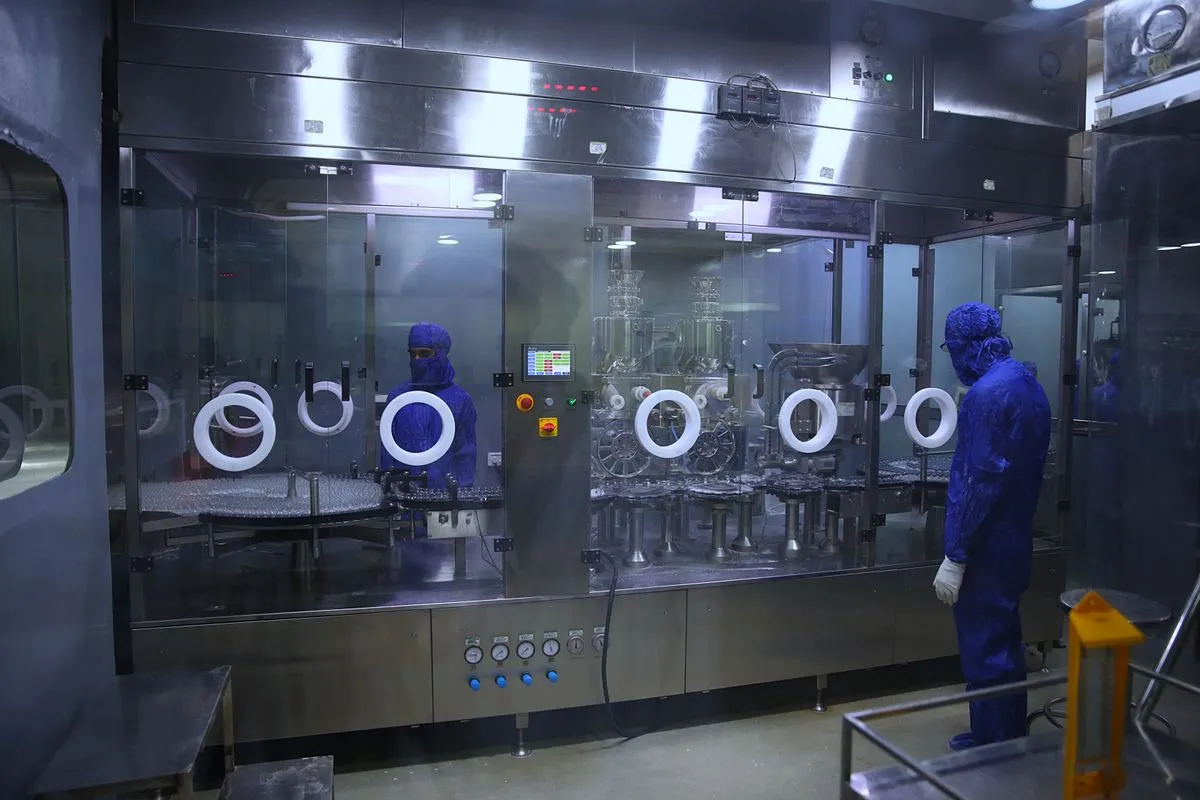
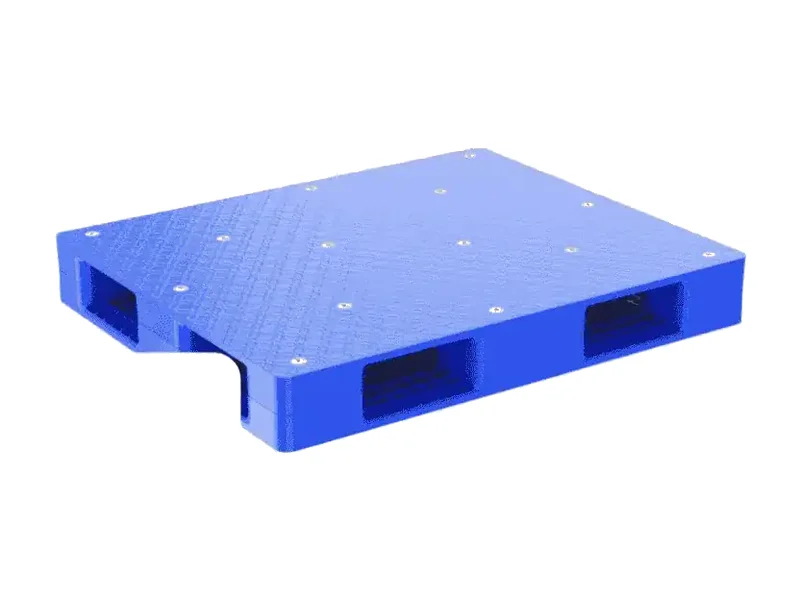
GMP in the pharmaceutical industry is a system of principles that obliges a manufacturer to control the whole process of making medicines, from materials, premises, equipment and people to records, rather than relying only on finished product testing. Circular 28/2025/TT-BYT defines Good Manufacturing Practice as a set of principles and standards to ensure medicines and medicinal ingredients are always produced and tested consistently to quality standards suited to their intended use and marketing registration file. You can see the whole range in ICD’s hygienic closed-deck pallets.
Compliance with GMP is a mandatory condition for a facility to produce medicines in Vietnam and in most countries with a medicines regulator. A code available for reference: 3-runner solid-deck ICD plastic pallet 1200x1200x165mm.
According to the World Health Organization (WHO) GMP guidance, the basic elements include sanitation, validation, self-inspection, personnel, premises, equipment, materials and documentation. The pallet sits at the intersection of three elements: premises (the storage area), equipment (stands and lifting tools) and sanitation. These three points are what an audit team looks at as it walks through the warehouse.
- Premises: storage areas must be clean, dry and have enough room to place goods off the floor and to clean regularly.
- Equipment: stands and lifting tools must suit their purpose, be easy to clean and be maintained.
- Sanitation: a written cleaning programme that states the frequency and cleaning method.
The GMP legal framework in Vietnam today
The document in force is Circular 28/2025/TT-BYT of the Ministry of Health, issued and effective on 1 July 2025, replacing Circular 35/2018/TT-BYT. The Circular does not write a new GMP set for chemical medicines but announces the application of three international sets of principles: WHO-GMP in Annex I, the GMP of the Pharmaceutical Inspection Co-operation Scheme (PIC/S) in Annex III and EU-GMP (EudraLex volume 4) in Annex IV. For herbal medicines, traditional medicines and traditional medicinal ingredients only, the Ministry of Health issues Vietnam’s own set of principles in Annexes V, VI and VII.
- Annex I: WHO GMP principles, the common baseline when assessed domestically.
- Annex III: PIC/S GMP.
- Annex IV: EU-GMP (EudraLex volume 4), including Annex 1 specifically for sterile medicines.
- Annexes V, VI, VII: GMP for herbal medicines, traditional medicines and traditional medicinal ingredients issued by the Ministry of Health.
In practice, a plant chooses which set according to its output market and investment level. WHO-GMP is the common baseline for assessing GMP compliance domestically. PIC/S-GMP and EU-GMP are stricter, usually tied to plants that want to bid in the high tender groups or export. Medicines sold into the US must also follow the cGMP of the US Food and Drug Administration (FDA), set out in 21 CFR parts 210 and 211.
Storage has its own document. Good Storage Practice (GSP) under Circular 36/2018/TT-BYT, amended by Circular 11/2025/TT-BYT also effective from 1 July 2025, is built on WHO guidance. The requirement to keep goods off the floor and keep pallets clean, in its most specific form, sits in this GSP part rather than in the production part. This is where many articles blur things together: a pharmaceutical plant must meet both GMP for the production workshop and GSP for the warehouse, and pallets pass through both.

Why is GMP directly relevant to pallets?
GMP is relevant to pallets because WHO guidance requires materials and medicines to be stored off the floor on suitable pallets, and requires pallets to be kept clean and in good condition. A pallet travels with materials from the receiving gate to the store, then with finished goods out to the truck, so a dirty or damaged pallet can carry dirt through many areas.
From my experience, the risk from pallets falls into three types, and each has its own control.
- Physical contamination (wood splinters, fragments, dust): use materials that do not flake, and remove cracked or chipped pallets.
- Chemical contamination (material of unknown origin, cleaning residues): use virgin plastic, and rinse by the correct procedure.
- Biological contamination (bacteria, mould in grooves, standing water): choose a closed surface and dry completely after washing.
These requirements are not just general recommendations but are written as specific clauses. The WHO guide to good storage and distribution practices for medical products (TRS 1025, Annex 7, section 12.23) states that materials and products must be stored off the floor, away from walls, with enough clearance for ventilation, cleaning and inspection, and that suitable pallets must be used, kept clean and undamaged. The older edition (TRS 908, Annex 9, section 4.3) has similar content and is still cited by many domestic documents. FDA’s rule at 21 CFR 211.80 paragraph (c) requires bagged or boxed materials to be placed off the floor with space for cleaning and inspection.
For sterile medicines the level is even stricter. EU GMP Annex 1 (2022 revision) divides cleanrooms into four grades A, B, C and D and requires each plant to build a contamination control strategy (CCS). Sections 4.10 and 4.12 of the annex treat bringing equipment and materials into the cleanroom as a major source of contamination; materials moving to a higher cleanliness grade must be cleaned and disinfected under that strategy. A pallet is a large item with many contact faces, so it is often the first thing QA asks about when building the CCS.
If your plant also makes dietary supplements, you can read the article What is HACCP to compare how the two systems look at pallets and stands.
Which pallets suit a GMP plant?
A pallet suited to a GMP plant is a virgin plastic pallet (HDPE or PP), closed-deck and one-piece, with few dead corners, resistant to cleaning chemicals and sized to fit the plant’s racking and forklifts. The six criteria below are what I usually review with the customer’s QA team before settling on a sample.
- The material is HDPE plastic or virgin PP, with origin information, not recycled plastic of unknown composition.
- Smooth, water-resistant surface with few grooves; a solid-deck (closed-deck) pallet is the easiest to wipe and dry.
- Does not absorb moisture, hold odour or create a refuge for mould when dried properly.
- Resists impact and keeps a stable shape in cold stores, cool stores and when washed with water.
- Does not shed splinters like wood, and is replaced at once when cracked or chipped at the edge.
- Standard size, with static, dynamic and racking loads matching the racking system and forklifts.
The six criteria above need to be understood at the right level. Plastic pallets do not shed splinters like wood, but a pallet that is worn, cracked or chipped at the edge can still create fragments, which is why WHO requires pallets to be kept in good condition and not merely clean. Some suppliers advertise pallets with antibacterial additives; a business should ask for proof in the manufacturer’s technical documents before putting this feature into the assessment file, because auditors will ask for the basis.
The table below compares three common options by the criteria pharmaceutical plants often use when choosing pallets for hygiene-sensitive areas.
| Criterion | Wooden pallet | Mesh-deck plastic pallet | Virgin closed-deck plastic pallet |
|---|---|---|---|
| Absorbs water, odour | Yes, wood absorbs moisture | No | No |
| Risk of shedding splinters, fragments | High | Low while intact | Low while intact |
| Surface cleanability | Hard to clean thoroughly | Many mesh cells, need careful washing | Easy to wipe, spray-wash and dry |
| Resistance to cleaning chemicals | Poor | Good | Good |
| Areas commonly used | Outside the controlled area | Raw material store, finished goods store | GSP store, packing area, cleanroom as assessed by the plant |
Choosing pallets by area in a pharmaceutical plant
No single pallet type serves every area: the level of control rises from the receiving area to the cleanroom, so the pallet requirements rise too. The diagram below summarises the five stages a pallet usually passes through.
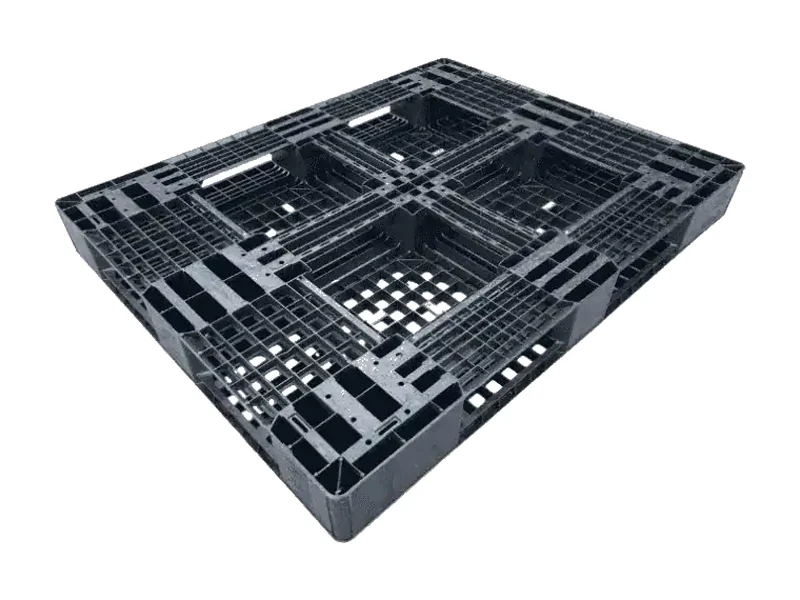
In raw material and finished goods stores, the main requirement is to keep goods off the floor with enough space for cleaning and inspection. Virgin plastic pallets, closed-deck or mesh-deck, are both usable as long as the size fits the racking; two common sizes are 1200 x 1000 mm and 1200 x 800 mm. Mesh decks are lighter and airier and suit ordinary stores; closed decks suit stores with a frequent pallet washing schedule.
Quarantine areas, returned goods and rejected goods need clear marking, and the status of each lot must be recognisable. A simple method many warehouses use is pallets of a different colour combined with a status label, so staff see at a glance which lot is not yet allowed to ship. Pallet colour is only a supporting tool; the official status must still be on the label and in the warehouse management system.
Cold stores for medicines must maintain and monitor temperature according to the product label. Here HDPE plastic has an advantage because it stays flexible at low temperature and does not absorb moisture when condensation forms, whereas damp wood dries slowly and moulds easily. When choosing pallets for a cold store, ask the supplier for the working temperature range of each code, and do not assume all plastic pallets tolerate cold equally.
Packing areas and cleanrooms are the strictest. Materials pass through an airlock and are cleaned and disinfected under the plant’s CCS, so a pallet, if allowed in, must be a closed-deck one-piece type that withstands the disinfectant the plant uses. Some plants do not let transport pallets into the cleanroom but transfer goods onto the area’s own pallets, or onto stainless steel carts, at the airlock.
Documents to request when buying pallets for a GMP plant
When buying pallets for a GMP plant, a business should request enough documents proving material, specifications and cleanability, because these are what auditors may ask about when reviewing suppliers and equipment. The list I usually send with a quote to pharmaceutical customers has five groups.
- Material information confirming virgin HDPE or PP, to rule out recycled plastic of unknown composition.
- Table of dimensions, static load, dynamic load and racking load.
- Information on chemical resistance and working temperature range.
- Information on the pallet manufacturer’s quality management system.
- Origin and quality documents (CO, CQ) for imported goods, for supplier assessment and lot traceability.
On the quality management system item, many plants ask whether the pallet manufacturer holds ISO 9001:2015 certification or an equivalent, as evidence of stable quality control across lots. This is the plant’s requirement of the manufacturer, so when comparing quotes, ask clearly to whom that certificate was issued and until when it remains valid.
Benefits of using GMP-suitable pallets
GMP-suitable pallets reduce contamination risk, give clear records during assessment and last longer, so the total life-cycle cost is usually lower than for types that must be replaced often. The four concrete benefits a pharmaceutical business gets are protecting medicine quality by reducing the risk of contamination and damage, an easier time when the regulator assesses because documents already exist for each criterion, showing diligence to partners when they inspect the plant, and long-term savings thanks to durable pallets that are easy to maintain.
In the ICD Vietnam catalogue, two imported lines are often chosen for the pharmaceutical industry: pharmaceutical plastic pallets and super-hygienic plastic pallets. The figures below come from the product code table, checked on 11 October 2026.
- Pharmaceutical plastic pallet: 2 codes, sizes 1200 x 1000 and 1200 x 800 mm, virgin HDPE, 4-way entry, static load 4,000 kg, dynamic load 1,000 kg.
- Super-hygienic plastic pallet: 41 codes, sizes from 1000 x 650 to 1500 x 1300 mm, static load 4,000 to 8,000 kg.
For the common needs of the pharmaceutical and food industries, the article plastic pallets in the pharmaceutical and food industries compares the two sectors in detail.
Frequently asked questions
What does GMP stand for?
GMP stands for Good Manufacturing Practices. It is a set of principles ensuring medicines are produced and tested consistently to quality standards.
Which document sets pharmaceutical GMP in Vietnam today?
Circular 28/2025/TT-BYT of the Ministry of Health, issued and effective on 1 July 2025, replacing Circular 35/2018/TT-BYT. The Circular announces the application of WHO-GMP, PIC/S-GMP and EU-GMP.
Is GMP mandatory?
Yes. Facilities making medicines and medicinal ingredients must meet GMP in order to operate, and the regulator periodically assesses continued compliance. Most countries with a medicines regulator apply similar requirements.
Why is GMP relevant to pallets in a pharmaceutical plant?
Because pallets hold materials and finished goods throughout their journey in the plant. WHO guidance requires goods to be placed off the floor on suitable pallets that are kept clean and undamaged; a non-compliant pallet can cause physical, chemical or biological contamination.
Can plastic pallets be GMP certified?
No. GMP certification is issued to a medicine manufacturing facility. A pallet is assessed as a tool within the plant’s GMP system, based on material, design, cleanability and condition in use. When buying, ask the supplier for material and specification documents, not just a “GMP-compliant” label.
How do GMP and GSP differ?
GMP is good manufacturing practice, applied to the production and quality testing of medicines. GSP is good storage practice, applied to warehouses of medicines and materials, in Vietnam under Circular 36/2018/TT-BYT as amended by Circular 11/2025/TT-BYT. The requirement to keep goods off the floor and pallets clean is most specific in the GSP part.
Can wooden pallets be used in a pharmaceutical plant?
Wooden pallets are usually used only outside the controlled area, such as the receiving yard, because wood absorbs moisture, sheds splinters and is hard to clean thoroughly. Goods received on wooden pallets are usually moved onto plastic pallets before entering the storage area; the specific rule is set by each plant’s procedure.
Contact for pallet advice for pharmaceutical plants
ICD Vietnam supplies plastic pallets with material information, specification tables and CO, CQ documents for imported goods so the QA department can include them in the assessment file. Tell us the area of use, rack size and the cleaning agents the plant uses, and we will suggest suitable codes.
Hotline: 0983 797 186 / 090 345 9186 / 090 5859 186
Email: sales@icdvietnam.com.vn
Zalo: Chat on Zalo now
References
- GMP legal framework in Vietnam - Circular 28/2025/TT-BYT, Ministry of Health.
- Good storage practice for medicines - Consolidated document 12/VBHN-BYT (Circular 36/2018/TT-BYT, amended by Circular 11/2025/TT-BYT).
- Storage off the floor, clean and undamaged pallets - WHO TRS 1025, Annex 7, Good storage and distribution practices for medical products.
- Storage of medicine materials and packaging in the US - FDA 21 CFR 211.80.
- Grade A-D cleanrooms and contamination control strategy - EU GMP Annex 1 (2022 revision).
- Pharmaceutical Inspection Co-operation Scheme - PIC/S.