Table of Contents
- What is HACCP?
- HACCP in Vietnam in 2026
- Where do pallets sit in the HACCP system?
- Requirements for plastic pallets in a plant applying HACCP
- Managing pallets so they do not become a weak point in an audit
- Understanding the phrase “HACCP-compliant pallet” correctly
- Frequently asked questions
- Contact ICD Vietnam
- References
Reviewed and updated by ICD - Week 43/2026
HACCP (Hazard Analysis and Critical Control Point) is a system of hazard analysis and critical control points, used to prevent biological, chemical and physical hazards in food from the production process onward instead of waiting to inspect the finished product. The system has 7 principles, applied through 12 steps under Codex CXC 1-1969. In Vietnam, this content is in TCVN 5603:2023.
I have worked with pallets at ICD Vietnam since 2011, and most food-industry customers ask me the same question: are your pallets “HACCP compliant”. The short answer is that HACCP does not certify pallets; it certifies a plant’s food safety system. But pallets, especially closed-deck plastic pallets placed in processing areas and cold stores, are a piece of equipment that HACCP auditors will look at. This article explains what HACCP is, how HACCP is being applied in Vietnam in 2026, and what pallets need to meet so as not to become a weak point in the system.
What is HACCP?
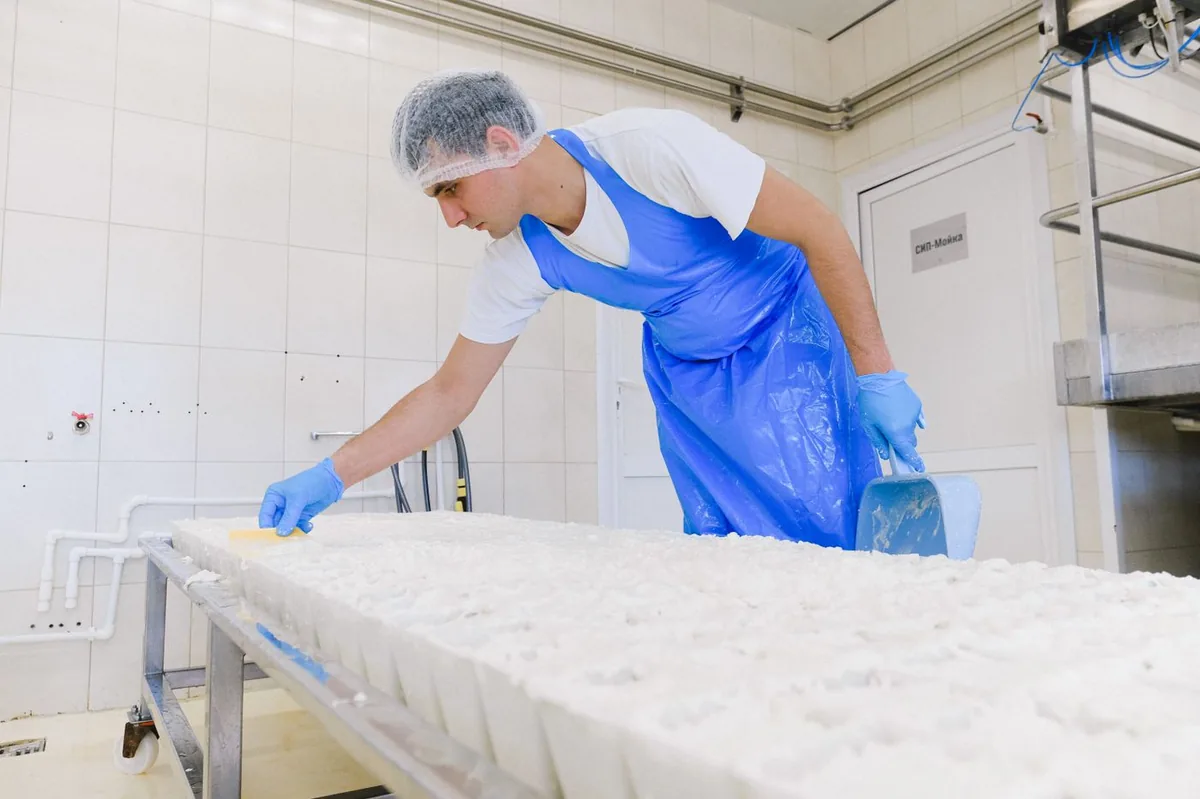
HACCP is a preventive approach: a business analyses for itself at which step food can be contaminated, picks out the points where, if control is lost, no later step can fix it, and then sets limits, monitors and keeps records at exactly those points. According to the US Food and Drug Administration (FDA), it is a management system that addresses food safety by analysing and controlling hazards from raw materials, procurement and processing through to distribution and consumption.
The idea emerged in the 1960s, when Pillsbury and NASA needed food for astronauts that could hardly be tested portion by portion. Instead of sampling the finished product, they controlled the process. The Codex Alimentarius Commission of FAO and WHO then put HACCP into the general principles of food hygiene CXC 1-1969, whose 2020 revision is now the international reference standard.
The 7 HACCP principles
The seven principles are the core of the system. Each has its own detailed guide, which I wrote in the article on the 7 HACCP principles; here is only a summary to show the common logic:
- Conduct hazard analysis and identify control measures.
- Determine the critical control points (CCPs).
- Establish critical limits for each CCP, for example cooking temperature and time.
- Establish a system to monitor CCPs.
- Establish corrective actions for when a CCP exceeds its limit.
- Verify that the system is working correctly.
- Keep records and documentation for the whole process.
The 12 steps of applying HACCP
Codex arranges implementation into 12 steps: 5 preparatory steps (form the HACCP team, describe the product, identify intended use, build the flow diagram, confirm the diagram on site), followed by 7 steps matching the 7 principles. The 2022 revision added a decision tree annex to help determine whether a step is a CCP.
HACCP stands on the foundation of GHP
A point many documents skip: HACCP does not stand alone. In Codex 2020, good hygiene practices (GHP) are the foundation, covering plant design, cleaning, maintenance, pest control, personal hygiene and transport. HACCP builds on that foundation and focuses only on critical points. If GHP is weak, the number of CCPs swells and the system becomes hard to run. GMP in the pharmaceutical industry and ISO 22000 have a similar structure, with prerequisite programmes first and hazard analysis after.
HACCP in Vietnam in 2026
The current national standard is TCVN 5603:2023 “General principles of food hygiene”, which adopts Codex CXC 1-1969 (2020 edition) in full, announced under Decision 586/QD-BKHCN of 6 April 2023. It replaces TCVN 5603:2008, so any document still citing the 2008 edition is out of date. In TCVN 5603:2023, the chapter on GHP and the chapter on HACCP are presented back to back, in keeping with GHP being the foundation of HACCP.
Legally, HACCP is voluntary for most businesses, but has concrete benefits. Under point k, clause 1, Article 12 of Decree 15/2018/ND-CP, a facility holding a valid GMP, HACCP, ISO 22000, IFS, BRC or FSSC 22000 certificate is exempt from having to obtain a Certificate of eligibility for food safety. For a food production plant, that is an administrative procedure waived.
For export goods, HACCP often becomes a mandatory condition of the import market. In the US, HACCP is mandatory for seafood (21 CFR Part 123) and fruit juice (21 CFR Part 120). Importers and retail chains in Europe and Japan also require suppliers to have HACCP or higher certification such as BRCGS or FSSC 22000. Seafood and processed farm-product exporters therefore have almost no option of not applying it.
Where do pallets sit in the HACCP system?
Codex has no separate section for pallets, but pallets fall under the same requirements as equipment and containers. The equipment design section requires utensils that touch or are near food to be cleanable and disinfectable, and to be maintained or removed when they no longer qualify. The storage section requires raw materials and food to be kept off the floor, preferably away from walls. The transport section requires vehicles and containers to be cleaned between trips and dedicated to food when necessary.
From my experience, traditional wooden pallets absorb water and mould easily, wood gaps hold residue that a spray hose cannot reach, and splinters and nails are an obvious physical hazard. That is why food processing areas and cold stores have almost fully moved to plastic pallets. Even so, switching to plastic does not mean the hazard is gone.
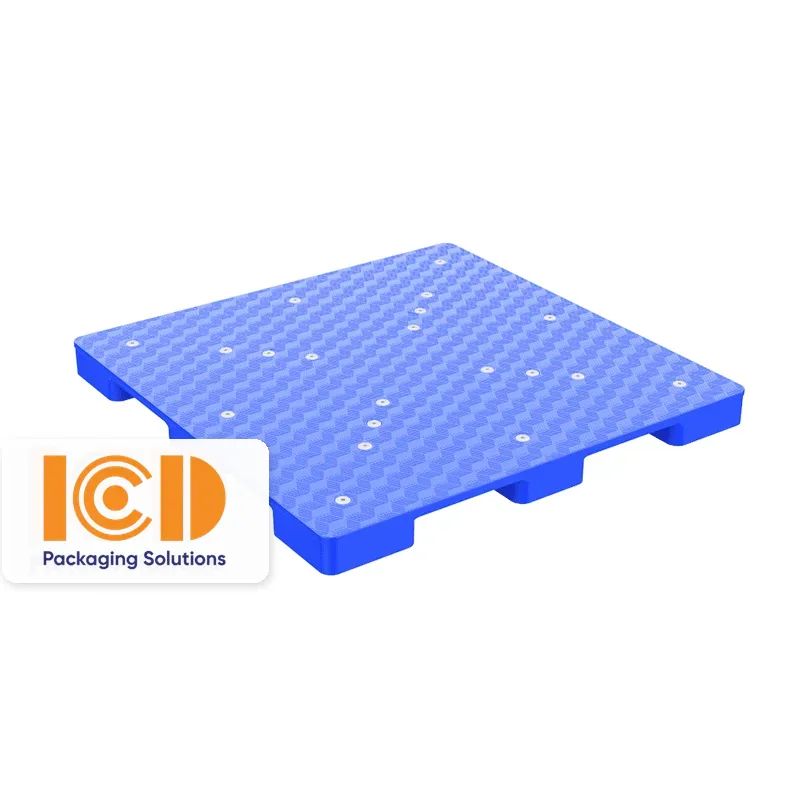
The table below sets wooden and plastic pallets side by side along the three hazard groups HACCP analyses.
| Hazard group | Wooden pallet | Virgin HDPE plastic pallet |
|---|---|---|
| Biological | Wood absorbs moisture, wood gaps hold dirt, prone to mould in a damp store | Water-resistant, can be washed and disinfected, closed deck leaves little for dirt to cling to |
| Chemical | May carry residues of preservatives or wood treatment chemicals | Virgin plastic is unblended; cleaning chemicals need rinsing off after washing |
| Physical | Wood splinters, nails, fragments | Plastic pieces when the pallet cracks or breaks; controlled by regular inspection |
Allergens and cross-contact through pallets
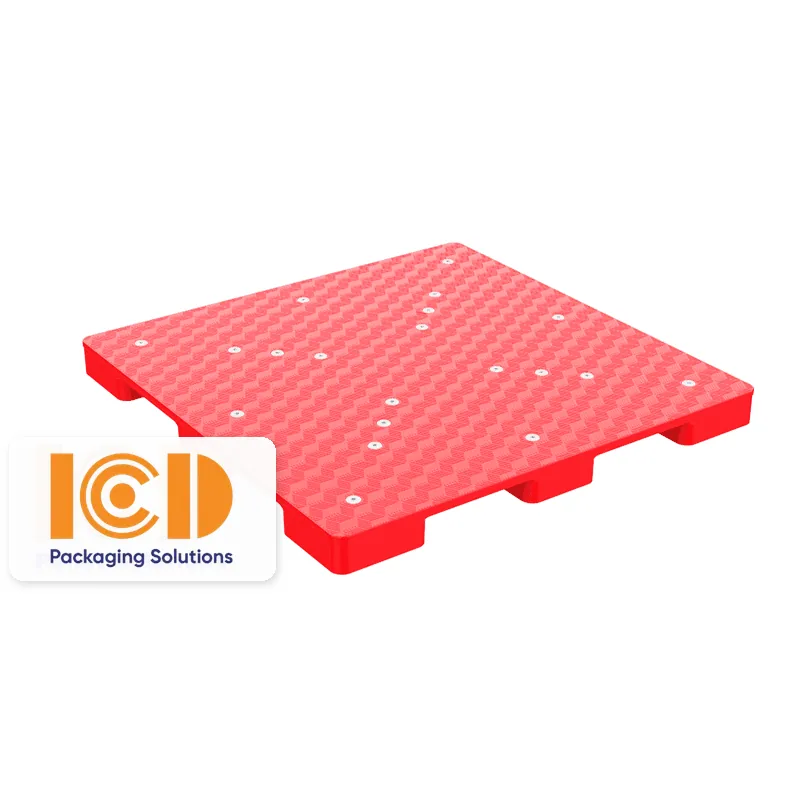
This is where I see many plants not paying attention. A pallet that has just carried bags of flour, milk powder or boxes of peanuts may still have dust on its surface. If that pallet goes on to the packing area of a product labelled “gluten free” without being washed, that is a route for allergen cross-contact. Codex 2020 requires allergens to be managed by separation and cleaning, so the simplest way is to assign pallets by product line or by area, then use colour to identify them. This is also why many plants choose plastic pallets for the food industry instead of using one type of pallet across the whole plant.
Requirements for plastic pallets in a plant applying HACCP
There is no standard named “HACCP pallet”, but gathering the GHP requirements together, plastic pallets used in a food plant should meet the points below.
Material. Pallets should be made of virgin HDPE or virgin PP, not recycled plastic of unknown origin, which may carry impurities, heavy metals or odour. If food sits directly on the pallet surface, not through a box or packaging, the material needs to meet QCVN 12-1:2011/BYT on hygiene and safety for plastic packaging and utensils in direct contact with food, and the supplier must have matching test results.
Design. A closed deck or a deck with few gaps, rounded corners and no closed pockets that hold water is the easiest design to clean. A one-piece moulded pallet has no screws or assembled parts, so there is nothing to fall into food. A pallet with a reinforcing steel core must be fully sealed, with no steel exposed.
Colour. Colour does not affect safety, but it is a useful management tool: one colour for the raw material area, one for the finished product area, one for products containing allergens. A light colour such as blue also makes dirt easier to see.
Load. An overloaded pallet sags, cracks and sheds fragments, which brings back exactly the physical hazard. Check the static load, dynamic load and, if racking is used, the racking load. In my experience, the dynamic load rating should be 25-30% above the actual weight of the goods so the pallet works within a safe range, especially in cold stores where plastic is more brittle at sub-zero temperatures.
When buying pallets for a plant that applies or is preparing for a HACCP audit, ask the supplier to send the following documents for your file:
- Material information: type of plastic, virgin or recycled.
- Test results under QCVN 12-1:2011/BYT if food touches the pallet directly.
- Static load, dynamic load, racking load and working temperature range.
- Cleaning guidance: permitted chemicals and wash water temperature.
- Lot code or production date marked on the pallet for traceability.
Managing pallets so they do not become a weak point in an audit
Buying the right pallet is half of it. The other half is the process, because auditors will ask for logs and go to see for themselves. A lean pallet management programme usually has the following parts:
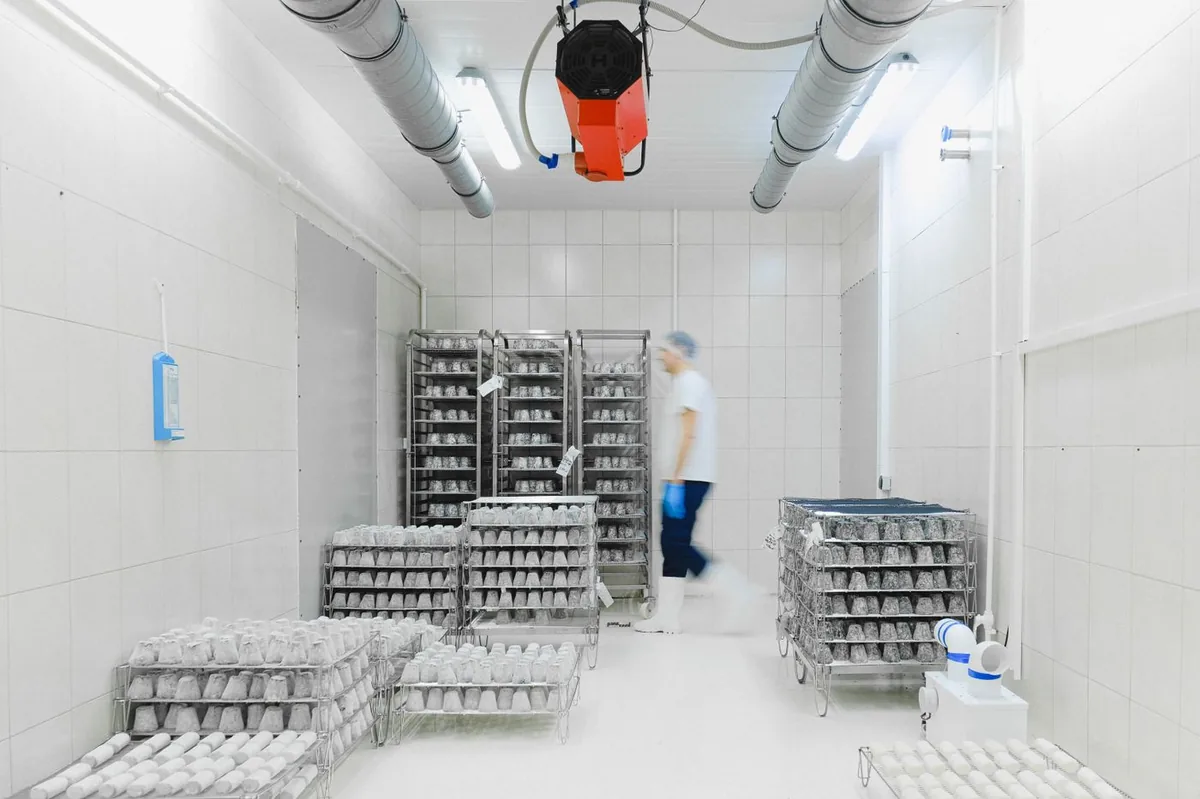
- Cleaning schedule by area: processing areas washed after every shift, dry stores weekly, with who did it and the chemicals used recorded.
- Regular damage inspection: cracked pallets, chipped edges and deformation are removed from the food area at once.
- Zoning and colour: pallets do not move backwards from the raw area to the finished product area.
- Rule for when a pallet breaks: collect the fragments, inspect the goods on the pallet, write a report.
- Records: list of pallets by area, cleaning log, rejection log.
I believe that with the right choice and a simple process, pallets will be the easiest part of a HACCP system, not the part that gets written up.
Understanding the phrase “HACCP-compliant pallet” correctly
There are many advertisements for “HACCP-certified pallets” on the market. In reality, HACCP certification is granted to the food safety management system of a food production, processing or trading facility, not to a product such as a pallet. What matters is whether the pallet is suitable for your plant to meet HACCP requirements: safe material, easy to clean, no fragments, with traceability information.
Frequently asked questions
What does HACCP stand for?
HACCP stands for Hazard Analysis and Critical Control Point.
Is HACCP mandatory in Vietnam?
For most businesses, HACCP is voluntary. A facility with a valid HACCP certificate is exempt from the Certificate of eligibility for food safety under Decree 15/2018/ND-CP. For goods exported to the US in the seafood and juice groups, HACCP is mandatory under FDA rules.
What is the current Vietnamese HACCP standard?
It is TCVN 5603:2023 General principles of food hygiene, which adopts Codex CXC 1-1969 (2020 edition) and replaces TCVN 5603:2008.
How does HACCP differ from ISO 22000?
HACCP is a set of principles for hazard analysis and control. ISO 22000 is a food safety management system standard, integrating the HACCP principles with prerequisite programmes and ISO’s common management structure.
Can pallets be HACCP certified?
No. HACCP certification is granted to a food facility’s system, not to pallets. A pallet only needs to be suitable for the plant to meet hygiene requirements: safe material, easy to clean, no fragments, with traceability information.
Can a plant applying HACCP use wooden pallets?
Codex does not ban a specific material, but requires equipment to be cleanable and not shed fragments. Wooden pallets struggle to meet this in processing areas and cold stores, so they are usually used only in dry stores for sealed packaged goods, with inspection for nails and splinters.
How often should pallets be cleaned?
It depends on the area: processing areas and cold stores are usually washed after every shift or every product change, and dry stores can be weekly. The frequency is decided by the plant’s HACCP team and recorded in the cleaning log.
Contact ICD Vietnam
If you need advice on choosing plastic pallets for processing areas, cold stores or colour zoning, contact me and the ICD Vietnam team.
- North: 0983 797 186 / 090 345 9186 / 090 5859 186
- South: 098 6784 186
- Email: Sales@icdvietnam.com.vn
- In stock - VAT invoice - Nationwide delivery - Free advice
References
- Codex Alimentarius - General Principles of Food Hygiene CXC 1-1969 (amended 2020, 2022)
- FAO - GHP toolbox, food transport section
- TCVN 5603:2023 General principles of food hygiene - Vietnam Standards and Quality Institute
- Decree 15/2018/ND-CP guiding the Law on Food Safety - Government Gazette
- Resolution 15/2026/NQ-CP suspending Decree 46/2026/ND-CP (digitally signed copy)
- 21 CFR Part 123 - mandatory HACCP for seafood in the US
- ISO 22000:2018 Food safety management systems