Table of Contents
- Why clean plastic pallets?
- Types of dirt and how to clean each
- The 6-step plastic pallet cleaning process
- Which chemicals should not be used to clean plastic pallets?
- How to make plastic pallets last longer after cleaning
- Frequently asked questions
- Are plastic pallets easier to clean than wooden pallets?
- What kind of detergent should be used on plastic pallets?
- How often should plastic pallets be cleaned?
- Can bleach be used to disinfect plastic pallets?
- What should be done about a mouldy plastic pallet?
- Should plastic pallets be washed with hot water?
- How does an automatic pallet washer work?
- Contact ICD Vietnam
- References
Reviewed and updated by ICD - Week 43/2026
Cleaning a plastic pallet properly takes six steps: sweep off debris, rinse with water, scrub with detergent, rinse clean, disinfect if the pallet is used for food or pharmaceuticals, then let it dry completely before stacking. HDPE plastic withstands most diluted cleaning agents; what to avoid is concentrated acid, aromatic solvents, petrol and oil, and water hotter than about 60°C.
I am Le Van Thang, and I have made pallets at ICD Vietnam since 2011. Most plastic pallets that fail early, and that customers call me in to look at, did not fail from overloading but from the way they were washed: the wrong chemical, hot water sprayed with degreaser, or stacking while the pallet was still wet. This article goes through each step in the order it is done on the warehouse floor, with an HDPE chemical resistance table so you can check a new cleaning agent before using it.
Why clean plastic pallets?
Plastic pallets need cleaning for three reasons: to keep goods clean, to extend pallet life and to stay safe when lifting and moving. In food and pharmaceutical stores, pallet cleaning is also part of the hygiene programme whose records auditors will ask to see. If you want an overview first, read more about plastic pallets for the pharmaceutical and food industries.
The first reason is the goods. A pallet sits under every load, so bacteria, mould or oil stains on its surface easily transfer to cartons, sacks or the product itself when goods rest directly on the plastic deck. In the food industry this is a source of contamination that people often overlook because the pallet is not on the list of processing equipment. This part relates to HACCP and plastic pallets, which has its own article. You can see the actual specifications of the ICD closed-deck pallet 1200x1200x78mm.
The second reason is lifespan. Dirt and chemicals left for a long time make the plastic surface deteriorate faster and hide small cracks at the feet and at the edges of the fork openings. The third reason is operating safety: a pallet deck with oil on it or still wet lets the load slip when the forklift brakes or turns. New pallets and cheap used plastic pallets alike need proper cleaning before they go into the warehouse. You can see all models in ICD’s closed-deck plastic pallets for food warehouses.
Types of dirt and how to clean each
Each kind of dirt needs its own treatment: mud and dirt need pressure water, grease needs a degreaser diluted in warm water, food residue must be soaked soft, and mould needs a sanitising solution. Identifying the dirt correctly before washing keeps you from wasting chemicals or harming the plastic surface.
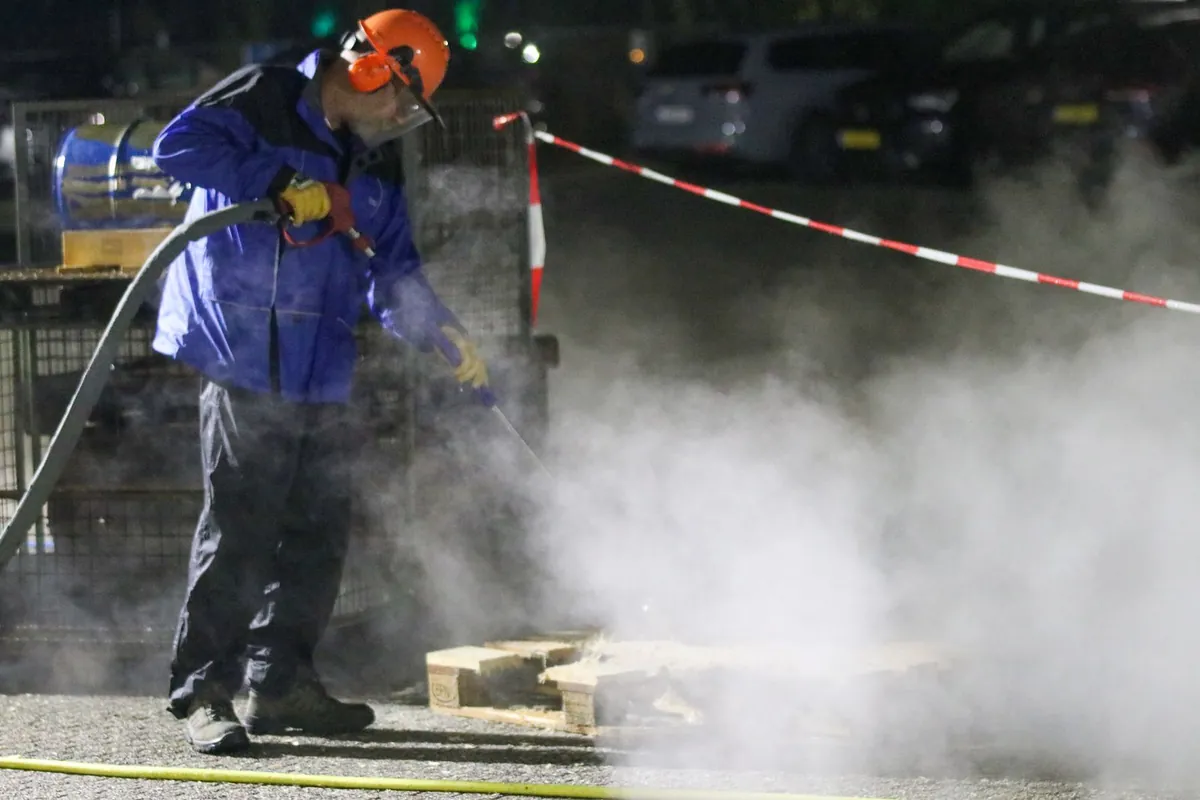
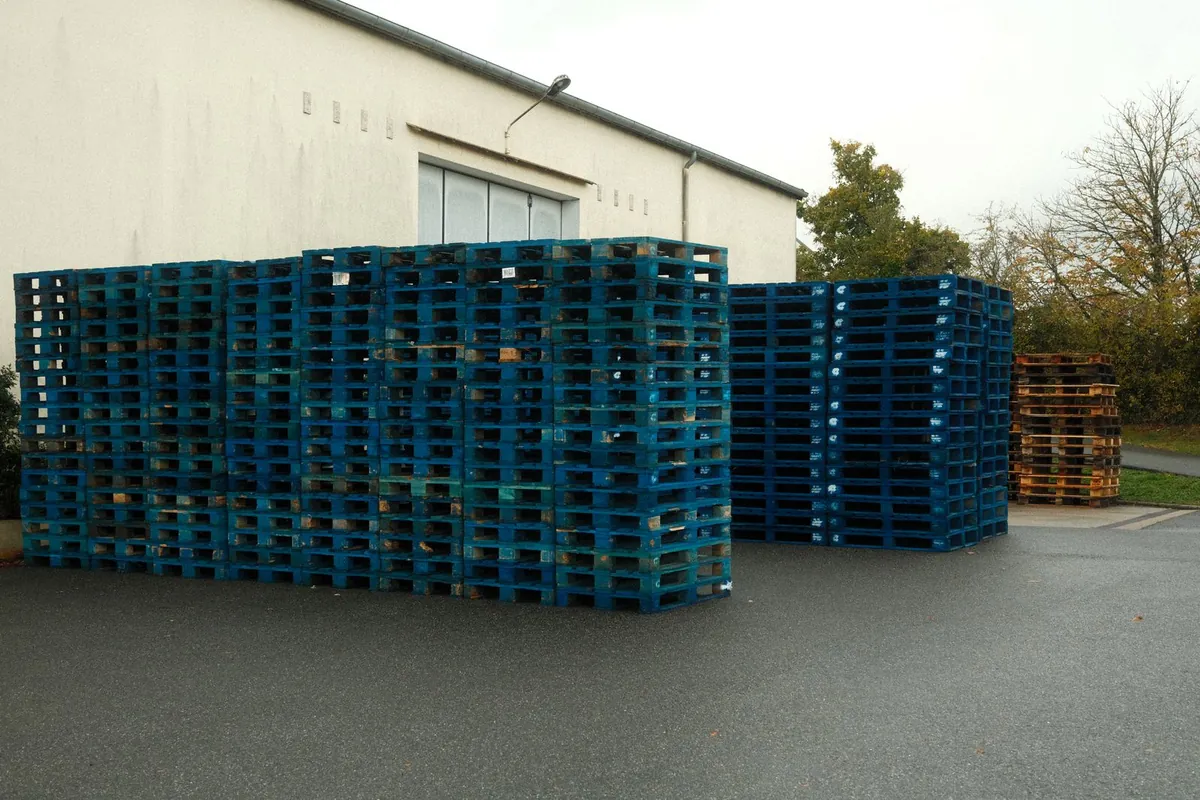
Dust and mud are the most common. Sweep off the large debris dry first, then pressure-wash, remembering to spray the underside and the gaps between the feet, because mud trapped there dries and flakes off inside the warehouse. Lubricating oil and grease are almost impossible to move with cold water: dilute a degreaser in warm water, scrub with a stiff brush, then rinse very thoroughly so the pallet surface is no longer slippery.
Food residue such as sugar, milk and sauce should be dealt with the same day. Once dry, this residue sticks very firmly; at that point soften it with warm water and scrub with a neutral detergent. Mould usually appears in damp stores: scrub with a sanitising solution, rinse and dry in a ventilated place, and also find the cause of the dampness in the store, otherwise the mould returns after a few weeks.
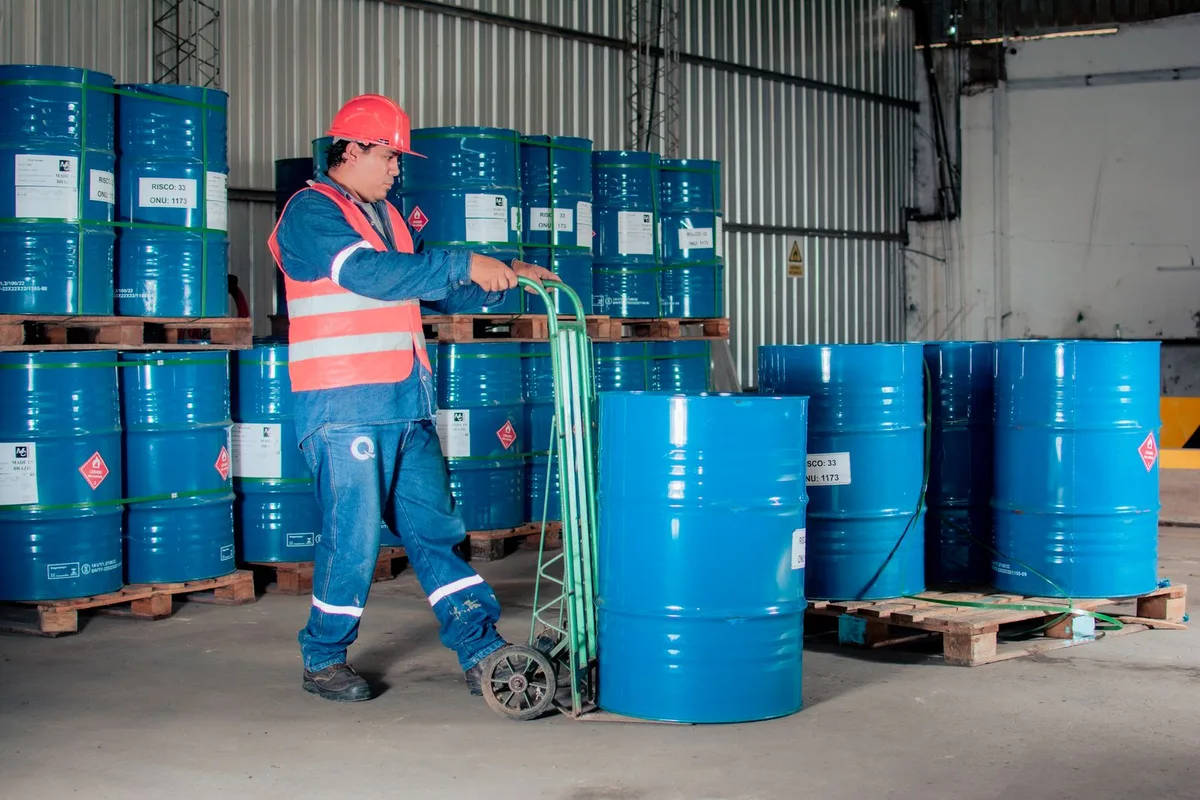
Two other cases common in real warehouses are label adhesive and chemicals leaking from drums and cans. Soften label adhesive with warm water and scrape it off with a plastic tool, not a metal knife, because deep scratches become places that hold dirt later. For leaked chemicals, read the safety data sheet (SDS) of that chemical to choose how to neutralise it, wash it and collect the wash water separately, never pouring it into the storm drain.
The 6-step plastic pallet cleaning process
The full process has six steps in order: sweep off debris, rinse with water, scrub with detergent, rinse clean, disinfect and let dry, then inspect. The disinfecting step is only mandatory for pallets used in food and pharmaceutical areas; an ordinary warehouse is fine with the other five steps.
Prepare tools and the washing area
Before washing, prepare all the tools so you do not have to stop halfway:
- A pressure hose or pressure washer.
- Stiff-bristle plastic brushes.
- Neutral detergent and a diluted degreaser.
- Gloves, safety glasses and non-slip boots.
- Dry cloths and a place to stand pallets to drain.
The washing area should drain well and be separate from the clean goods area, so splashes do not dirty goods already stacked. The water pressure only needs to be enough to loosen the dirt; do not spray too close to the edges and feet of the pallet, because the plastic wall is thinnest there.

Sweeping and rinsing
The first two steps are removing wrap, labels and dry residue, then spraying water to soften the remaining dirt. This step decides the time of the whole process: the better the residue is softened, the faster the scrubbing and the less chemical it needs.
Scrubbing and rinsing clean
Dilute the detergent to the ratio on the label, then scrub the gaps, the feet, the corners of the fork openings and any stubborn spots with a brush. Then rinse again with clean water until the foam is gone. Rinsing is the step most often done carelessly, yet detergent residue makes the pallet surface slippery and can become a source of chemical contamination for goods.
Disinfecting for food and pharmaceutical stores
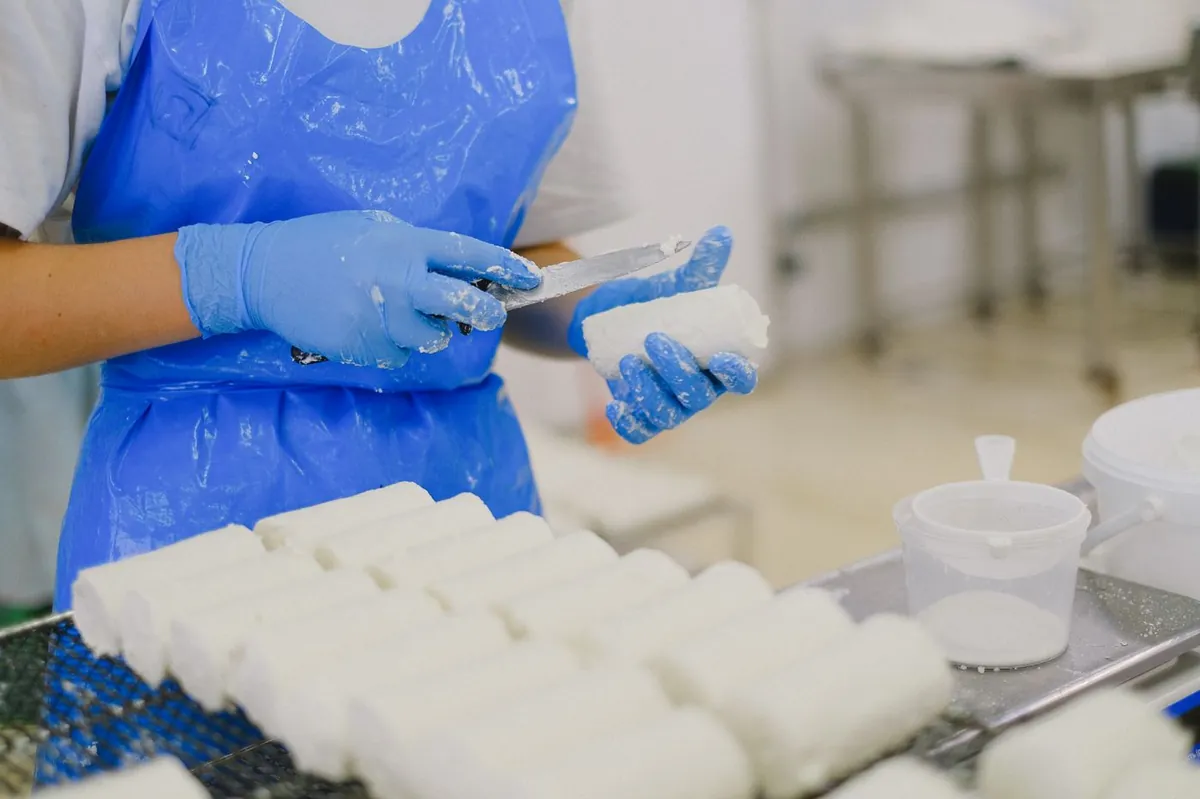
Disinfection only works on a clean surface, because organic residue reduces the effect of the disinfectant; this step therefore always comes after cleaning and rinsing. The Codex Alimentarius general principles of food hygiene (CXC 1-1969) state that cleaning must remove food residue and dirt, and that disinfection may be needed after cleaning, especially for food-contact surfaces.
In other words, cleaning and disinfecting are two different jobs. Cleaning uses a neutral detergent or degreaser to remove dust, grease and food residue, and applies to every pallet on a schedule or when dirty. Disinfecting uses a chlorine solution, hydrogen peroxide or a disinfectant approved for the food industry to reduce micro-organisms on a clean surface, and applies to pallets in food and pharmaceutical areas.
For chlorine-based solutions, regulation 21 CFR 178.1010 of the US Food and Drug Administration (FDA) limits sanitising solutions for food processing equipment to no more than 200 ppm of active chlorine. You should mix according to the label, keep the contact time the manufacturer recommends, then rinse again with clean water if the label requires it. A stronger mix does not clean better; it only increases chemical residue.
Draining and inspecting
The last step is to let the pallet dry completely and then inspect it again. It can dry naturally in a breezy place, or be blown dry with compressed air or a fan; if hot air is used, keep the temperature moderate and do not blow it right against the plastic.
When inspecting, I usually tell workers to look at three places: whether the feet have hairline cracks, whether the edges of the fork openings are chipped, and whether the deck is warped when the pallet is placed on a flat floor. A clean pallet is when cracks are easiest to see, so this is a good moment to set aside any pallet that needs repair or replacement.
Washing by hand or with an automatic pallet washer?
Manual washing with a pressure hose suits small numbers of pallets; an automatic pallet washer suits food and beverage plants that must wash pallets continuously every shift. The washer carries pallets on a conveyor through chambers that spray water, spray detergent solution, rinse and blow dry; some machines also have a disinfecting chamber. As a result, every pallet is washed with the same water, chemical and time settings.
| Criterion | Manual, pressure hose | Automatic pallet washer |
|---|---|---|
| Best for | Small warehouses, washing in batches | Plants washing pallets continuously |
| Consistency | Depends on the person washing | Same water, chemical and time settings |
| Investment | Low | High, needs floor space and a water and power supply |
| Hygiene records | Written by hand | Easy to record per shift and per batch |
Which chemicals should not be used to clean plastic pallets?
Avoid acids and alkalis at very high concentration, aromatic solvents such as toluene and xylene, and petrol and oils, especially combined with high temperature. At normal diluted concentrations, HDPE withstands most cleaning agents. Plastic pallets are very durable, but the wrong chemical can still make the plastic swell, turn brittle and deteriorate quickly.
With acids and alkalis, the risk lies in concentration. Concentrated sulphuric acid at 96 to 98% can attack the plastic surface and reduce its strength, while hydrochloric acid, dilute sulphuric acid and caustic soda are tolerated well by HDPE; even so, routine cleaning does not need them, and if they are used they must still be rinsed off. Aromatic solvents such as toluene and xylene can make a pallet swell and deform. Petrol and mineral oil do harm when they soak in for a long time or meet temperatures of about 60°C, while acetone has little effect on HDPE but is flammable, so it should not be used as a regular cleaner.
Chlorine-based bleach is a case that is often misunderstood. Diluted bleach (sodium hypochlorite) kills germs well and HDPE tolerates it; what to avoid is using a concentrated solution, soaking for a long time or not rinsing, because chlorine residue over time can make the plastic surface deteriorate faster.
The table below is taken from the HDPE chemical resistance ratings in the guide from INEOS, a resin manufacturer, at 20°C and 60°C. In the table, Pass means the plastic is not significantly affected, Partly attacked means the plastic may swell, change colour or lose strength with long contact, and Fail means the pallet should not be exposed to it.
| Chemical | 20°C | 60°C | What it means for pallet cleaning |
|---|---|---|---|
| Hydrochloric acid up to 35% | Pass | Pass | Tolerated, but not needed for routine cleaning |
| Sulphuric acid up to 50% | Pass | Pass | Tolerated at dilute concentrations |
| Sulphuric acid 96 to 98% | Partly attacked | Fail | Avoid completely |
| Caustic soda (NaOH), concentrated | Pass | Pass | Tolerated; still needs thorough rinsing |
| Sodium hypochlorite (bleach) | Pass | Pass | Can be used diluted for disinfection |
| Hydrogen peroxide 30% | Pass | Partly attacked | Use diluted, at normal temperature |
| Acetone | Pass | Pass | Little effect on HDPE, but flammable |
| Petrol | Pass | Fail | Do not use to remove oil, especially with hot water |
| Mineral oil | Pass | Fail | Wipe off early, do not let it soak in |
| Toluene | Fail | Fail | Avoid completely |
Reading the table, you will see that the real risk comes from concentrated acid, aromatic solvents and petrol and oils at high temperature. This is also why I do not recommend washing pallets with very hot water: the table only rates up to 60°C, and some substances such as petrol and mineral oil go from Pass to Fail at 60°C. If you do not yet have the temperature data of the pallet manufacturer, keep the wash water no hotter than about 60°C and do not combine hot water with solvents.
The table applies to HDPE. Pallets made of PP, or pallets with colour or UV additives, may react differently, so ask the supplier before using an unfamiliar chemical, or test first on a hidden corner of the pallet.
How to make plastic pallets last longer after cleaning
A pallet lasts longest when it is used at the correct load, stored in a dry place, kept out of the sun and lifted through the correct fork openings. Cleaning keeps the pallet clean, but how it is used and stored decides how long it stays usable.
Each pallet has its own load limit, and overloading not only makes the pallet fail sooner but is also dangerous for goods and people. In storage, keep pallets in a dry, ventilated place, out of direct sunlight for long periods, because heat and UV rays make plastic deform, turn brittle and break more easily. When lifting with a forklift, put the forks into the correct openings and do not ram the pallet body: knocks like that create small cracks, and the cracks grow until the pallet breaks.
As for frequency, there is no single figure for every warehouse. The schedule I often suggest to customers is: food and seafood pallets washed after every use, with disinfection and a log; pharmaceutical stores follow the store’s hygiene procedure, with separate pallet zones and colours; cold stores washed regularly and whenever water, frost or ice builds up, dried completely before going back into the store.
Pallets under chemicals and lubricants need washing as soon as there is a leak, following the safety data sheet of that chemical. An ordinary warehouse can wash every one to two months or when pallets are dirty, combined with checking for cracks and breaks. More important than the figure is that this schedule is written down and someone is responsible for it.
When I first started in the trade, I skipped regular cleaning because I thought durable plastic pallets did not need it. The result was that many pallets deteriorated much faster than expected. Since then I always advise customers to clean as soon as a pallet is dirty, to use warm rather than hot water for grease, and to check for cracks every time they wash. These three habits cost nothing extra but keep pallets usable longer.
Frequently asked questions
Are plastic pallets easier to clean than wooden pallets?
Yes. Plastic pallets have a non-absorbent surface that does not rot like wood, so they wash faster, dry faster and can take disinfectants without worry that they soak into wood grain.
What kind of detergent should be used on plastic pallets?
For ordinary dirt, a neutral detergent or diluted soap is enough. For grease, use a degreaser diluted in warm water. Avoid concentrated acid, aromatic solvents and petrol and oils, and always rinse clean after washing.
How often should plastic pallets be cleaned?
It depends on the use. Pallets in the food industry should be cleaned after every use, with disinfection. Pallets in an ordinary warehouse can be cleaned every one to two months or when there is dirt.
Can bleach be used to disinfect plastic pallets?
Yes, if it is diluted exactly as the label directs and rinsed again with clean water when the label requires it. According to the INEOS HDPE chemical resistance table, sodium hypochlorite is rated Pass at both 20°C and 60°C. For pallets used with food, the FDA limits chlorine-based sanitising solutions for processing equipment to no more than 200 ppm of active chlorine.
What should be done about a mouldy plastic pallet?
Scrub with a cleaning solution that has sanitising action, paying attention to the gaps between the feet and the underside, rinse clean and let it dry completely in a ventilated place. Mould grows on organic residue and moisture, so the cause of the dampness in the store must be dealt with and wet pallets must not be stacked, otherwise it will come back.
Should plastic pallets be washed with hot water?
Warm water removes grease better than cold water, but it should not exceed about 60°C if you do not have the pallet manufacturer’s temperature data, and hot water should not be combined with solvents or petrol and oils.
How does an automatic pallet washer work?
Pallets travel on a conveyor through chambers that spray water, spray detergent solution, rinse and blow air to dry; some machines also have a disinfecting chamber. The machine suits food and beverage plants that must wash pallets continuously, because every pallet is washed with the same settings.
Contact ICD Vietnam
If you need advice on choosing easy-to-clean plastic pallets for a food, pharmaceutical or cold store, contact ICD Vietnam for a specification sheet and a quote.
- Northern Vietnam: 0983 797 186 / 090 345 9186 / 090 5859 186.
- Southern Vietnam: 098 6784 186.
- Email: sales@icdvietnam.com.vn.
- Zalo: Chat with ICD Vietnam on Zalo.
References
- Cleaning and disinfecting food-contact surfaces: Codex Alimentarius (FAO/WHO), General Principles of Food Hygiene CXC 1-1969.
- The 200 ppm active chlorine limit: FDA, 21 CFR 178.1010 Sanitizing solutions.
- HDPE chemical resistance at 20°C and 60°C: INEOS, HDPE Chemical Resistance Guide.
See also: what a plastic pallet is, its types and technical specifications.
See also: what plastic pallets are used for | photos of plastic pallets at the ICD factory