

Table of Contents
- What do the pharmaceutical and food industries need from a plastic pallet?
- Why do plastic pallets replace wooden pallets in hygiene-controlled areas?
- Virgin plastic or recycled plastic?
- Should you choose a closed-deck or a mesh-deck pallet?
- Size, load rating and pallets for cold storage
- Cleaning procedure for plastic pallets in pharmaceutical and food warehouses
- How should a “HACCP, GMP compliant” pallet be understood?
- Frequently asked questions
- What type of plastic pallet do the pharmaceutical and food industries usually use?
- Do plastic pallets have HACCP or GMP certification?
- Does food placed directly on a plastic pallet need to meet QCVN 12-1:2011/BYT?
- Can recycled plastic pallets be used in a food warehouse?
- What kind of plastic pallet should pharmaceutical and food cold stores use?
- Do export plastic pallets need fumigation under ISPM 15?
- How often should plastic pallets be cleaned?
- Contact ICD Vietnam
- References
- Related articles
Reviewed and updated by ICD - Week 44/2026
The pharmaceutical and food industries should use virgin HDPE or PP plastic pallets with a closed deck, moulded in one piece, because the surface does not absorb water, can be washed clean and does not shed splinters like wood. The WHO guide to storing medicines requires goods to be kept off the floor on clean pallets in good condition, and the US FDA classes pallets as food transport equipment that must be cleanable.
I am Le Van Thang and I have worked on pallets at ICD Vietnam since 2011. Customers from drug factories, seafood plants or food distribution warehouses often open with the same sentence: “Are your pallets HACCP or GMP certified?” The honest answer is that no pallet is ever given that certification, because HACCP and GMP are granted to a company’s system. The buyer’s job is to choose the right material, the right deck type and the right load rating, then bring the pallet into the company’s own cleaning procedure. This article walks through each of those steps in the order I ask customers when advising them.
What do the pharmaceutical and food industries need from a plastic pallet?
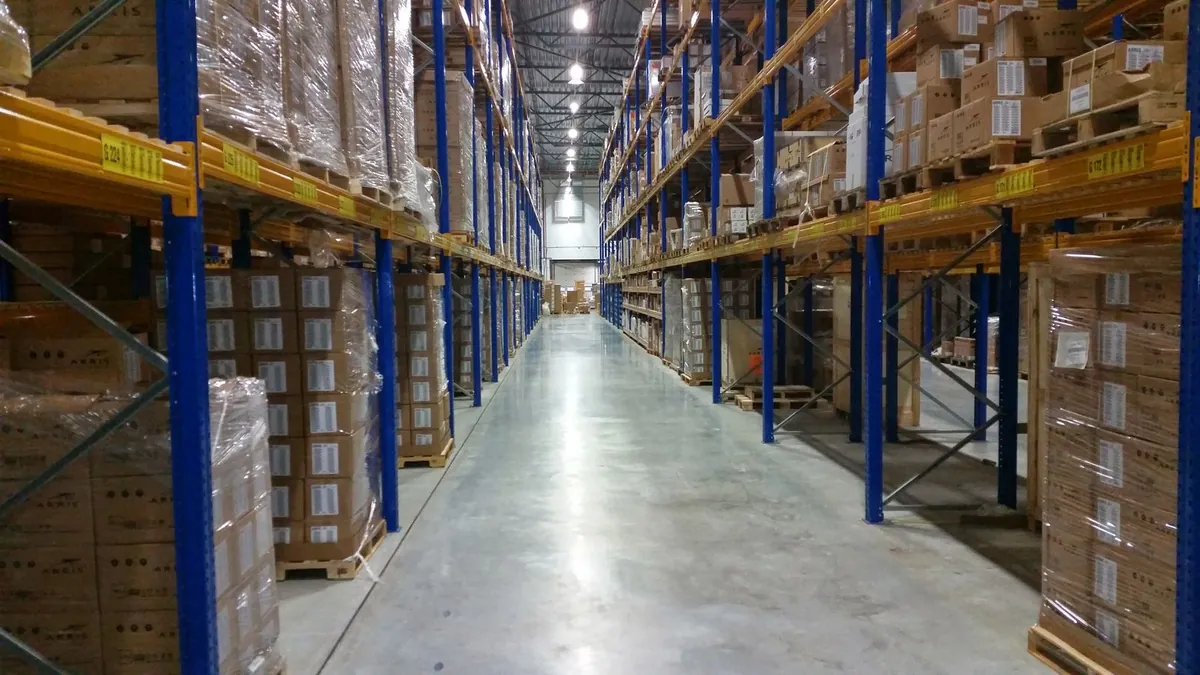
Both industries need a pallet that can be cleaned, holds no water and sheds no fragments into controlled areas. The difference lies in the main risk: pharmaceutical warehouses worry about cross-contamination between drug batches and particles in clean areas, while food plants worry about micro-organisms, standing water and foreign bodies falling into the product. Because the risks differ, the documents to check against also differ, as the table below shows. For more background, see the types of plastic pallets.
| Criterion | Pharmaceutical industry | Food industry |
|---|---|---|
| Main management framework | GMP for drug manufacturing (Circular 28/2025/TT-BYT), GSP for drug storage per WHO | HACCP and food safety regulations; QCVN 12-1:2011/BYT when plastic touches food directly |
| Main risk | Cross-contamination between products, particles in clean areas | Micro-organisms, foreign bodies, standing water |
| Typical environment | Ambient and cold storage for medicines, packing areas, clean areas | Cold rooms, chillers and wet processing areas that need frequent washing |
| Documents usually requested | Material information and cleanability for QA to assess | Material information; migration test results if food touches the pallet directly |
For drug stores, the WHO guide to good storage practices (GSP), in the TRS 908 series, Annex 9, makes two points that bear directly on pallets: materials and medicines must be stored off the floor with enough space to clean and inspect, and pallets must be kept clean and in good condition. In Vietnam, drug manufacturers apply GMP under Circular 28/2025/TT-BYT, effective from 1 July 2025, in which pallets are considered part of the premises, equipment and cleaning programme.
For food, the key point is whether the goods touch the pallet surface directly. Cartons of milk or soft drinks that are sealed make the pallet a mere support. Vegetables, fruit or seafood placed straight on the plastic make the pallet a food-contact surface, and then the material must meet the specific regulation I explain below.
Why do plastic pallets replace wooden pallets in hygiene-controlled areas?
Plastic pallets replace wooden pallets because wood absorbs moisture, is hard to clean thoroughly and sheds splinters, while plastic does not. Wood soaks up wash water, food liquids and odours, and in a chill room mould easily forms in the grain and on the feet. Nails and splinters can tear packaging, and a splinter that reaches the line is a genuine foreign body in a HACCP file.
The second advantage shows in export goods. The ISPM 15 standard of the International Plant Protection Convention (IPPC) applies only to wood packaging material, so plastic pallets need no heat treatment, fumigation or quarantine stamp. For a food shipment going to Australia, the US or Europe, one fewer document is one fewer place where goods can be held at the destination port.
Virgin plastic or recycled plastic?
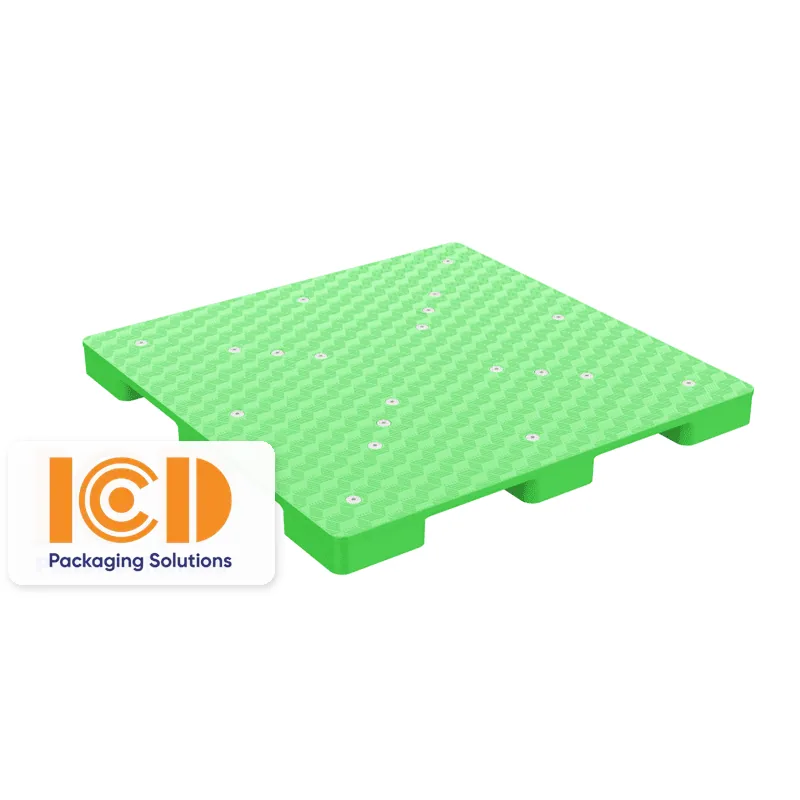
Hygiene-controlled areas should use pallets made of HDPE plastic or virgin PP, that is plastic that has not been recycled and has a clear origin and composition. HDPE is flexible, resists impact well and keeps its toughness at low temperature, so it suits cold rooms. PP is stiffer and tolerates heat better when washed with hot water. Many pallet models use a blend of HDPE and PP to balance these two properties.
Recycled plastic pallets are cheaper, but the raw material is collected from many sources, so its composition is hard to prove, and QA staff usually do not accept it in processing areas or GSP stores. In my experience the sensible approach is to separate zones: recycled pallets for packaging stores, materials stores and outside receiving areas; virgin pallets for finished-goods stores, packing areas and anywhere goods can touch the pallet surface. Many plants also use different pallet colours for each zone, so one glance shows which pallet must not pass through which door. A different angle is covered in the article on the 7 HACCP principles (see the related articles below).
On antibacterial additives, I advise customers to read carefully before believing the claim. A non-absorbent plastic surface means micro-organisms do not soak into the material as they do with wood, but they can still cling to the surface and into crevices if the pallet is not washed clean and dried. Any pallet code advertised with an antibacterial additive needs the manufacturer’s technical documents for that exact code; without them, treat it as an ordinary pallet and rely on the cleaning procedure.
Should you choose a closed-deck or a mesh-deck pallet?
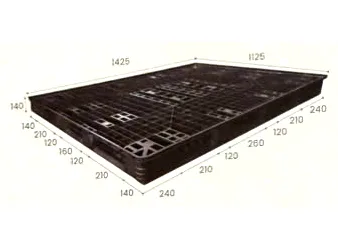
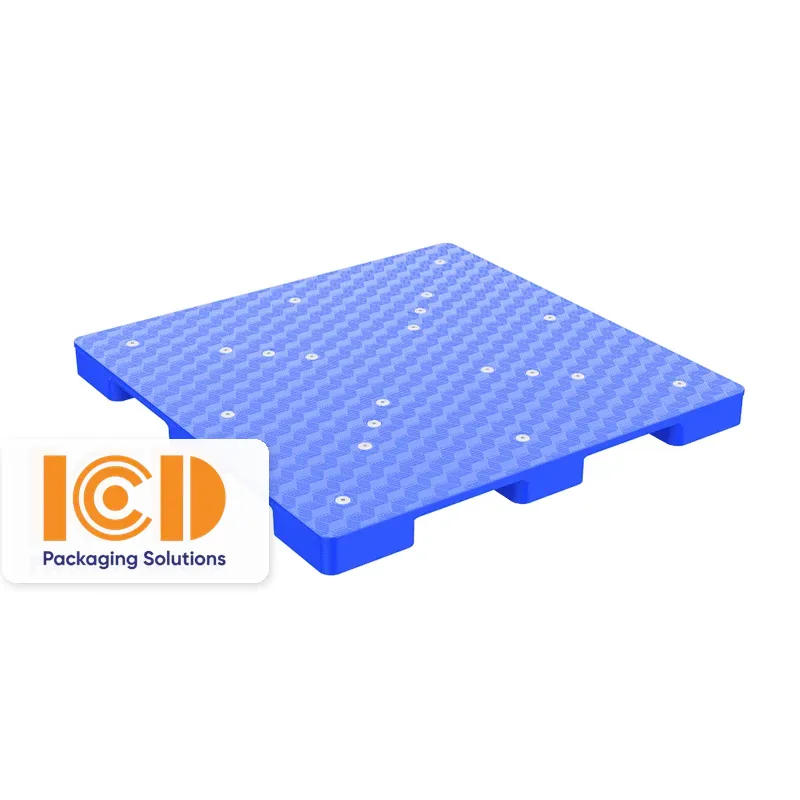
Choose a closed-deck plastic pallet for areas with high hygiene needs such as drug stores, packing areas and processing areas; choose a mesh deck for goods that need ventilation or areas that need fast drainage. A closed deck stops dust and liquid falling from upper shelf levels to lower ones, and after washing you can see by eye where dirt remains. A mesh deck is lighter and cheaper, but it has many small cells that must be washed thoroughly and are hard to inspect fully. The closest model for this case is the ICD PLR4-1289 closed-deck plastic pallet, 1200x1200x150 mm.
| Criterion | Closed-deck pallet | Mesh-deck pallet |
|---|---|---|
| Dirt and standing water on the surface | Little, easy to wipe clean | Many grid cells, needs more thorough washing |
| Drainage and ventilation | Lower | Good, suits goods needing drainage or ventilation |
| Visual inspection after cleaning | Easy to see remaining dirt | Hard to inspect every cell |
| Investment cost | Higher | Lower |
| Suitable area | Drug stores, packing areas, processing areas | Dry material stores, finished-goods stores with sealed packaging |
In the ICD Vietnam catalogue, the groups that directly serve these two industries are the imported Malaysian pharmaceutical plastic pallet line (2 codes, 1200 x 1000 and 1200 x 800 mm, virgin HDPE, static load 4,000 kg) and the super-hygienic plastic pallet line (41 codes, sizes from 1000 x 650 to 1500 x 1300 mm, static load 4,000 to 8,000 kg). For domestically made goods, the PLR4-1289 closed-deck model, 1200 x 1200 x 150 mm, made of virgin HDPE, carries a static load of 5,000 kg and a dynamic load of 1,500 kg; the three-foot closed-deck model, 1100 x 1100 x 165 mm, carries a static load of 4,000 kg and a dynamic load of 1,200 kg, according to the product code table checked on 14 October 2026.
Size, load rating and pallets for cold storage
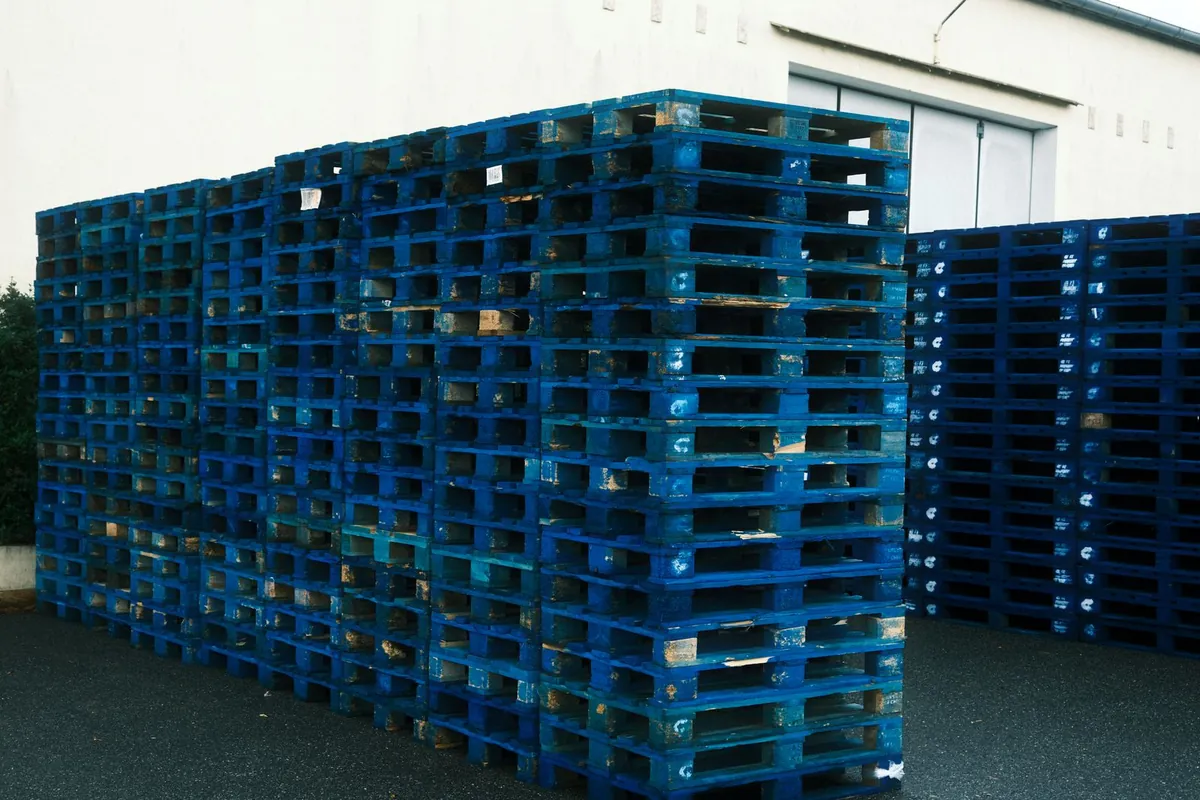
Choose pallet size by the racking and forklifts you already have, not by habit. The three sizes most often seen in drug and food warehouses are 1200 x 1000 mm, 1200 x 800 mm (the European size) and 1100 x 1100 mm (the Asian size). If goods go by container, work out in advance how many pallets fit the container floor so you do not have to re-stack at the port.
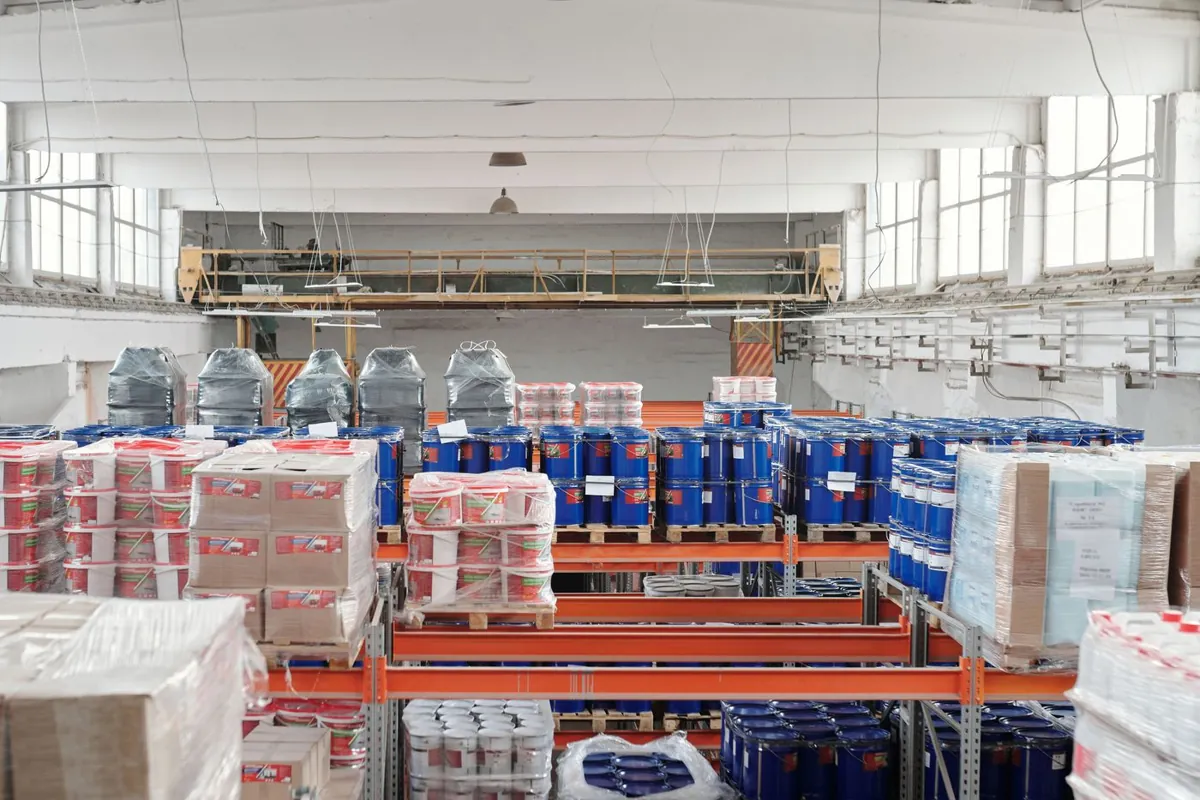
For load rating, read three separate numbers: the static load when the pallet sits on the floor, the dynamic load when a forklift lifts and moves it, and the racking load when the pallet is supported only at its two edges. For a drug consignment weighing 800 kg, for instance, choose a pallet with a dynamic load of 1,000 kg or more; if the consignment goes on a rack, you must also ask about the rack load, because not every closed-deck model can be racked. I have met many customers who looked only at a static load of 4,000 to 5,000 kg and put the pallet on a rack, which is the most misleading number of all.
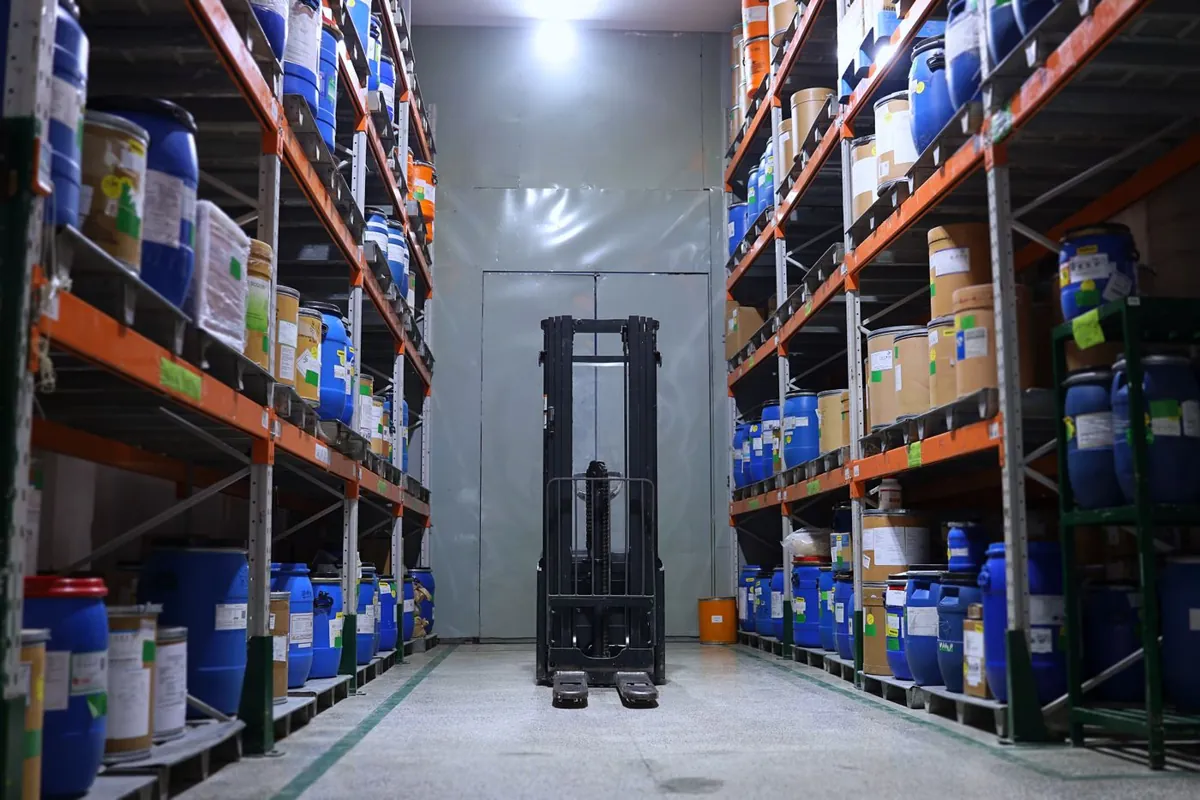
Cold stores and frozen food stores should use virgin HDPE pallets, because HDPE stays flexible at low temperature and absorbs no moisture when condensation forms, while wooden pallets in cold rooms easily turn damp and mouldy. A mesh deck lets cold air circulate through cartons of vegetables and fruit, while a closed deck suits goods that must be washed often. For example, the cold-storage plastic pallet line 1200 x 1000 x 150 mm in the ICD Vietnam catalogue is made of HDPE and PPC, with a static load of 4,000 kg and a dynamic load of 1,000 kg.
Cleaning procedure for plastic pallets in pharmaceutical and food warehouses
Plastic pallets should be cleaned in six steps: dry cleaning, washing with detergent, rinsing with clean water, disinfecting when the procedure requires it, drying with a damage check, then storing off the floor. The WHO GSP guide requires a written cleaning programme stating frequency and method, so the steps below should be written into an internal procedure rather than done by habit.
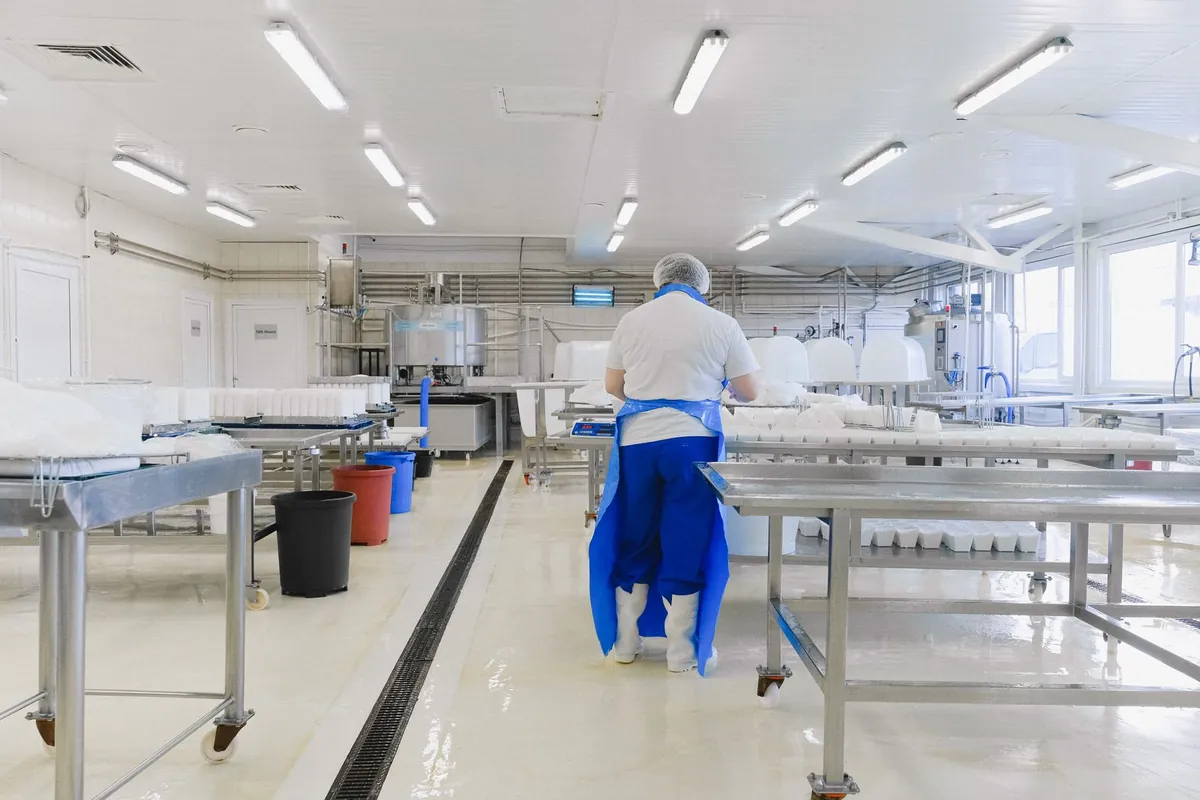
Two steps are often skipped: rinsing and drying. If you do not rinse well, leftover detergent can become a chemical contamination source; if you do not dry completely, standing water in corners and at the feet of the pallet is where micro-organisms grow. For food chains entering the US, the FDA sanitary food transportation rule (21 CFR part 1, subpart O) lists pallets in its definition of transportation equipment and requires that equipment to be cleanable, kept sanitary and free of pest harbourage.
Beyond the regular schedule, I advise customers to separate three cases. A new pallet needs washing and inspection before first use, recorded in the file. A pallet in use is cleaned at the written frequency and immediately when it is soiled or goods spill. A cracked or broken pallet is isolated, assessed, then repaired or removed, and not returned to the controlled area.
How should a “HACCP, GMP compliant” pallet be understood?
A pallet has no HACCP or GMP certificate of its own; it is assessed as a tool within the company’s system. When a supplier writes “HACCP compliant pallet”, it should be read only as meaning the material and design are suitable for the company to bring into its own system, while the final decision belongs to the plant’s QA department.
So when buying pallets for a controlled area, do not stop at the question “is it compliant?” Ask for the following documents to put in the supplier assessment file:
- Material information, stating clearly virgin HDPE or PP plastic.
- A specification sheet with dimensions, static load, dynamic load and racking load.
- Information on resistance to cleaning chemicals and the operating temperature range.
- Migration test results under QCVN 12-1:2011/BYT if goods touch the pallet surface directly.
- Certificates of origin and quality (CO, CQ) for imported goods.
After more than fifteen years in this trade, what I see most clearly is that pallets are rarely counted in a plant’s cleaning budget until an audit team asks about them. Choosing correctly from the start, having a written cleaning procedure and a schedule to remove damaged pallets is usually far cheaper than fixing the findings after a failed audit.
Frequently asked questions
What type of plastic pallet do the pharmaceutical and food industries usually use?
They usually use virgin HDPE or PP plastic pallets with a closed deck, moulded in one piece, because the smooth surface has no deep gaps for dirt and bacteria to cling to, absorbs no water and is easy to wash. Mesh decks are used for goods needing ventilation such as vegetables and fruit in cold rooms.
Do plastic pallets have HACCP or GMP certification?
No. HACCP and GMP are systems granted or assessed for a company, not for an individual pallet. A pallet is assessed as a tool within that system, based on its material, design, cleanability and condition of use.
Does food placed directly on a plastic pallet need to meet QCVN 12-1:2011/BYT?
Yes, when the pallet surface touches food directly without packaging. QCVN 12-1:2011/BYT sets hygiene and safety requirements for plastic packaging and utensils in direct food contact, with separate tables for PE and PP. If goods are sealed in packaging, the pallet is not a direct-contact surface.
Can recycled plastic pallets be used in a food warehouse?
They should not be used in processing areas, finished-goods stores or anywhere goods touch the pallet surface, because the composition of recycled plastic is hard to prove. Recycled pallets can be used in packaging stores, materials stores or outside receiving areas beyond the controlled area.
What kind of plastic pallet should pharmaceutical and food cold stores use?
Use virgin HDPE pallets, because this material stays flexible at low temperature and absorbs no moisture when condensation forms. A closed deck suits goods that must be cleaned often; a mesh deck suits cases where cold air must circulate through the goods.
Do export plastic pallets need fumigation under ISPM 15?
No. ISPM 15 applies only to wood packaging material, so plastic pallets need no heat treatment, fumigation or IPPC stamp when exported.
How often should plastic pallets be cleaned?
The frequency is set by the company’s written cleaning programme, following the requirement in the WHO GSP guide. Beyond the regular schedule, pallets need cleaning immediately when soiled or after goods spill, and before they enter an area with higher hygiene requirements.
Contact ICD Vietnam
ICD Vietnam supplies closed-deck and mesh-deck plastic pallets and virgin plastic pallets for drug and food warehouses, with specification sheets and CO, CQ documents for imported goods when the file requires them.
- Northern Vietnam: 0983 797 186 / 090 345 9186 / 090 5859 186.
- Southern Vietnam: 098 6784 186.
- Email: sales@icdvietnam.com.vn.
- Zalo: Chat with ICD Vietnam on Zalo.
- Facebook: ICD Vietnam on Facebook.
References
- Keeping goods off the floor, clean pallets, cleaning programme: WHO, Guide to good storage practices for pharmaceuticals (TRS 908, Annex 9).
- Good manufacturing practice for medicines: WHO, Good Manufacturing Practices.
- GMP in Europe: European Medicines Agency, Good manufacturing practice.
- GMP for medicines in Vietnam: Circular 28/2025/TT-BYT (Vietnamese text).
- Plastic in direct food contact: QCVN 12-1:2011/BYT (Vietnamese text).
- HACCP: FDA, Hazard Analysis Critical Control Point.
- Sanitary food transportation in the United States: 21 CFR 1.906.
- Wood packaging material in international trade: IPPC, ISPM 15.
Related articles
- What is HACCP and how does it relate to plastic pallets
- The 7 HACCP principles: the foundation of food safety
- What does HACCP stand for? What you need to know about HACCP
- What is a HACCP product description? A step-by-step guide
- What is GMP in the pharmaceutical industry? Which pallets comply with GMP
- How to clean plastic pallets so they last
- Cold Storage Plastic Pallets: Technical Requirements, Standards and How to Choose