Table of Contents
- What is a heavy-duty plastic pallet?
- Which structure makes a plastic pallet carry load best?
- Why is dynamic load the deciding figure?
- Top 10 popular heavy-duty plastic pallet models at ICD Vietnam
- How to choose the right heavy-duty plastic pallet
- What are heavy-duty plastic pallets used for?
- Advice from ICD Vietnam
- Frequently asked questions
- How much load can a heavy-duty plastic pallet carry?
- What material are heavy-duty plastic pallets made of?
- How are heavy-duty plastic pallets classified?
- How does a steel-core plastic pallet differ from an ordinary plastic pallet?
- Can heavy-duty plastic pallets go on racking?
- Do blow-moulded pallets carry load better than injection-moulded pallets?
- Do heavy-duty plastic pallets need fumigation for export?
- Contact us for advice on heavy-duty plastic pallets
- References
Reviewed and updated by ICD - Week 43/2026
A heavy-duty plastic pallet is an HDPE or PP plastic pallet with a reinforced structure to carry heavy goods, usually from a 3,000 kg static load upward; the strongest model in the ICD Vietnam catalogue is the PL12 with steel core, 1200 x 1000 x 150 mm, static load 6,500 kg, dynamic load 3,200 kg. When choosing, the deciding figures are the dynamic load and the rack load, not the static load printed in bold on the catalogue.
We say this because our own catalogue figures show it clearly: of the 163 plastic pallet models that publish a static load, 132 reach 3,000 kg or more, so almost any model could be called “heavy-duty” if you look only at static load. But by dynamic load, only 3 models exceed 2,000 kg. This article follows the questions buyers of heavy goods usually ask: which structure is strong, which models are worth looking at, how to choose by use and what to use them for.
For high-load needs, ICD Vietnam also has an imported Malaysian heavy-duty plastic pallet line, static load 4,000 to 6,000 kg and dynamic load 1,000 to 2,000 kg depending on the model.
What is a heavy-duty plastic pallet?
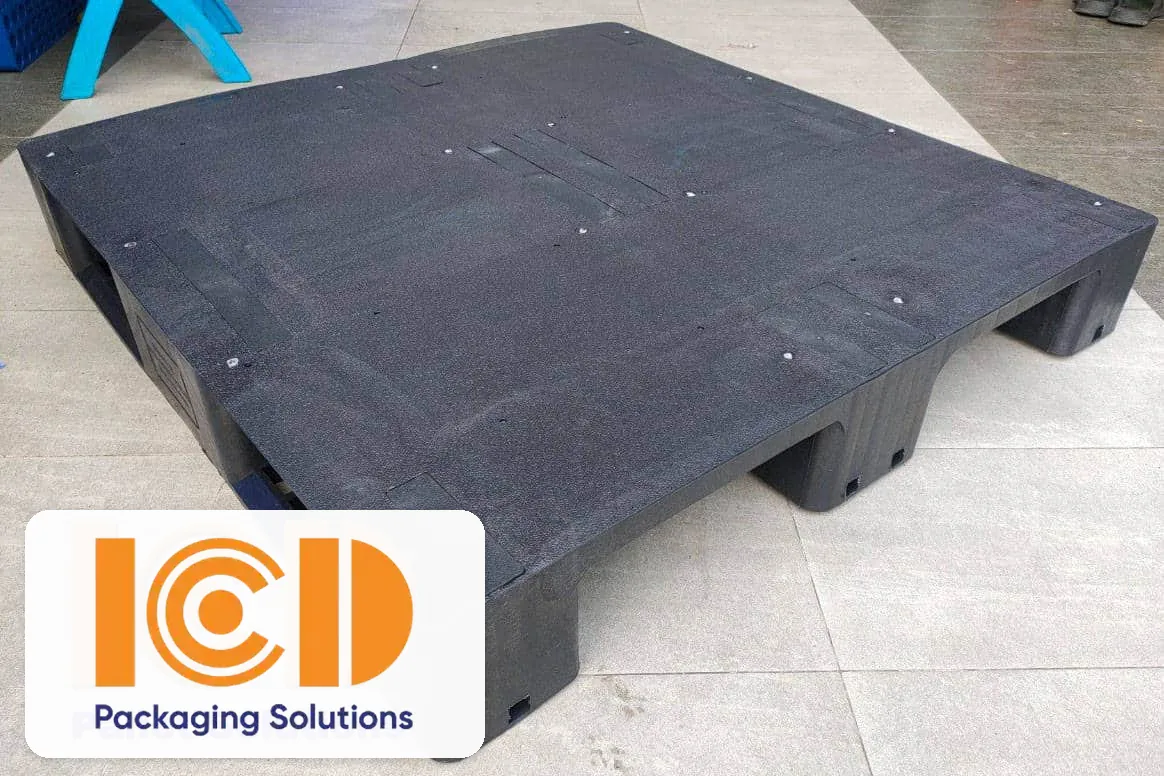
A heavy-duty plastic pallet is a plastic pallet with reinforced feet, ribs and deck, some models with a steel core added inside the rib bars, to carry heavy goods in storage, stacking and forklift handling. No standard defines a hard threshold for “heavy-duty”; on the market, people usually divide by static load into three groups: light under 1,000 kg (small warehouses, supermarkets), medium 1,000 to 3,000 kg and heavy above 3,000 kg for industry and export.
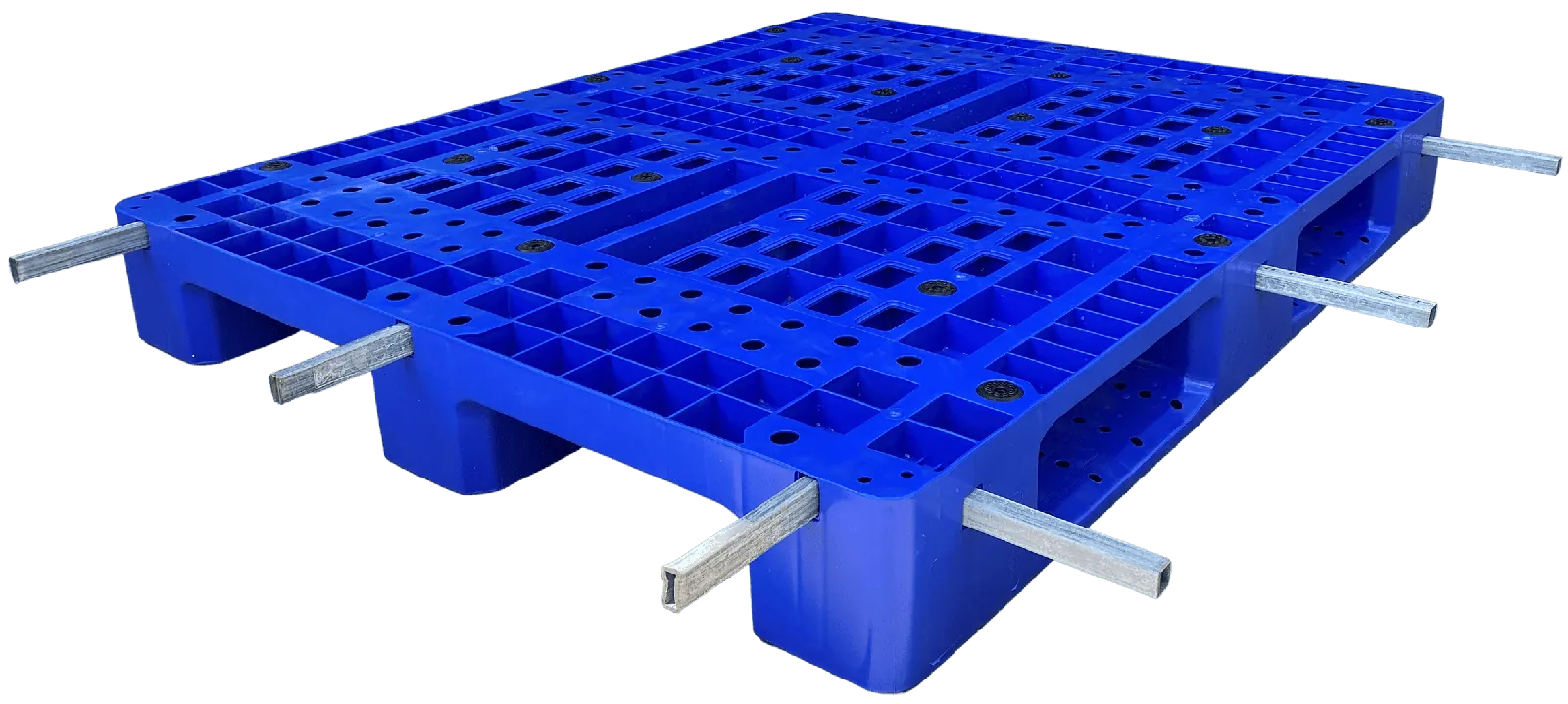
Most heavy-duty pallets are made of virgin HDPE or a blend of HDPE and PP. The advantage lies in the ratio of load to self-weight: the PL12 with steel core weighs only about 21 kg yet states a static load of 6,500 kg. Plastic is waterproof, termite-proof, washable and recyclable at the end of its life. Manufacturers can also add anti-slip pads, a reinforcing steel core or change the colour by warehouse zone.
Which structure makes a plastic pallet carry load best?
A steel core gives the highest dynamic load, while double-face blow-moulded pallets and 9-foot blow-moulded cup-foot pallets give the highest and most uniform static load. We grouped the catalogue models by the structure named in the product name to show this, with results in the table below. At the same 1200 x 1000 x 150 mm size, different structures can make the dynamic load differ by more than threefold.
| Structure | Number of models | Published static load | Published dynamic load | Suited to |
|---|---|---|---|---|
| Steel core in the ribs | 3 | 4,500 to 6,500 kg | 1,500 to 3,200 kg | Heavy goods with constant handling, racking |
| Double-face blow moulded, 9-foot blow-moulded cup feet | 15 | 6,000 kg (all 15 models) | 2,000 kg (all 15 models) | Multi-tier stacking, warehouses with entry from many directions |
| 3 runners | 22 | 2,000 to 6,000 kg | Mostly 1,000 kg, highest 1,800 kg | Racking, conveyors, 4-way forklifts |
| One-piece open deck (LK) | 11 | 3,000 to 5,000 kg | 1,000 to 2,400 kg | General warehouse storage, moderate handling |
| Floor lining | 10 | 100 to 3,000 kg | Not for lifting heavy goods | Fixed placement of goods, damp-proofing |
The table includes only models whose structure is stated in the name; figures are from the ICD Vietnam catalogue checked on 11 October 2026. A point worth noting is the blow-moulded group: blow moulding creates a one-piece hollow body with two shells, so all 15 models, from 1000 x 1000 to 1970 x 1010 mm, publish the same 6,000 kg static load and 2,000 kg dynamic load. The steel-core group has fewer models but is the only one with a dynamic load above 2,400 kg.
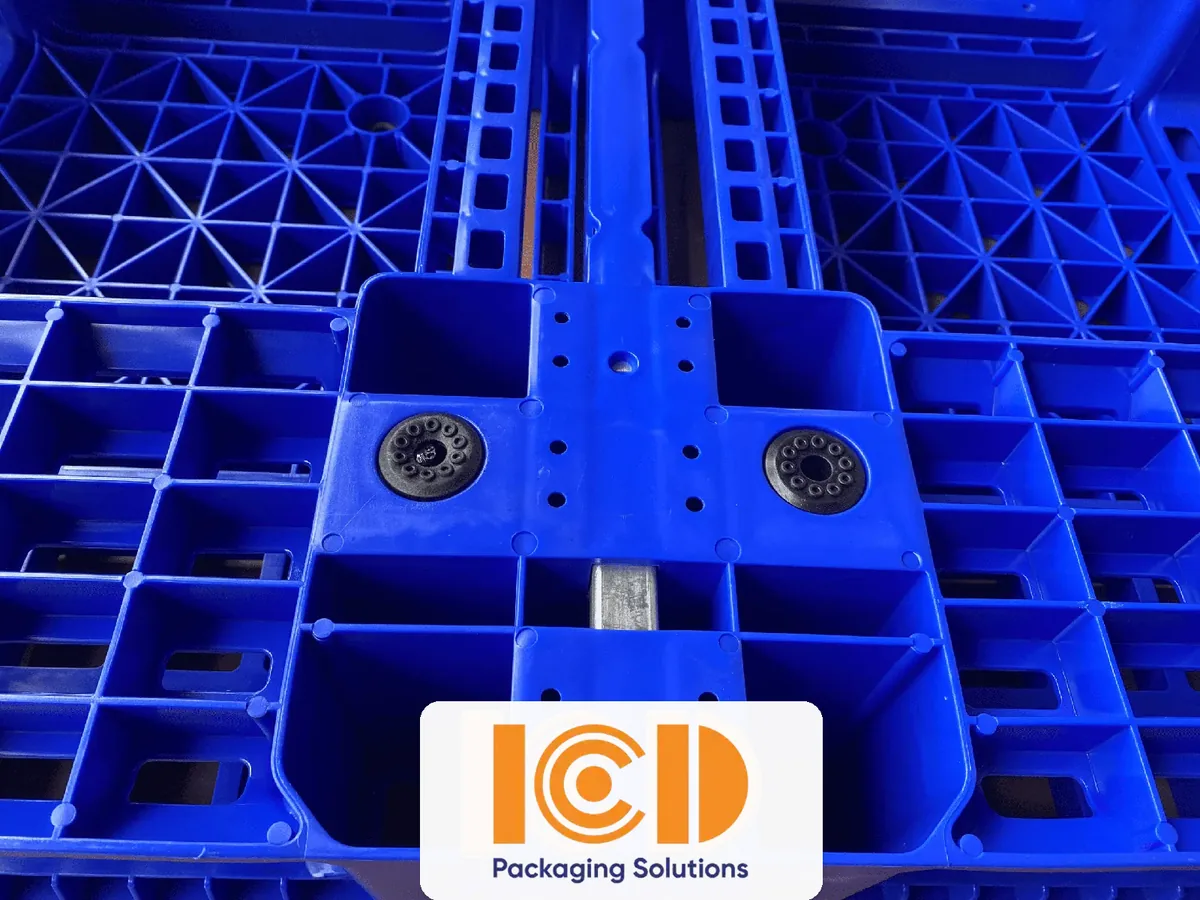
The 3-runner pallet has its own advantage on racking or roller conveyors, because three continuous runners distribute force evenly onto the beams. In return, the dynamic load of this group mostly stops at 1,000 kg. Floor-lining pallets are entirely different: although some models state a 3,000 kg static load, they exist to place goods permanently on the ground, not for forklifts to lift heavy goods.
Why is dynamic load the deciding figure?
Because heavy goods rarely just sit still: each time a forklift lifts them, the pallet rests only on two forks and takes extra vibration. Static load is what the pallet carries when it sits still on flat ground, dynamic load is what it carries while being lifted and moved, and rack load is what it carries when resting on only two beams. These three figures decrease in this order because the number of support points decreases.
The international standard ISO 8611-1:2025 has a separate test for each situation: a bending test on a rack, a lifting test with forklift forks and a stacking test. A pallet with a high static load therefore cannot necessarily go on a rack with the same weight of goods. The chart below shows the gap between the two figures within our own catalogue.
| Dynamic load up to 1,000 kg |
67 models
|
| 1,200 to 1,800 kg |
31 models
|
| 2,000 kg |
27 models
|
| 2,400 to 3,200 kg |
3 models
|
The ICD Vietnam catalogue publishes static and dynamic loads for most models; for goods placed on racking, ask also for the rack load of the exact model you plan to buy or prefer a model with a steel core. At the same 1200 x 1000 x 150 mm size, the PL12 with steel core states a 6,500 kg static load and 3,200 kg dynamic load, while the PL12-LK without a steel core states 5,000 kg and 2,400 kg. Detailed definitions and how each load is tested are in the article on static and dynamic load.
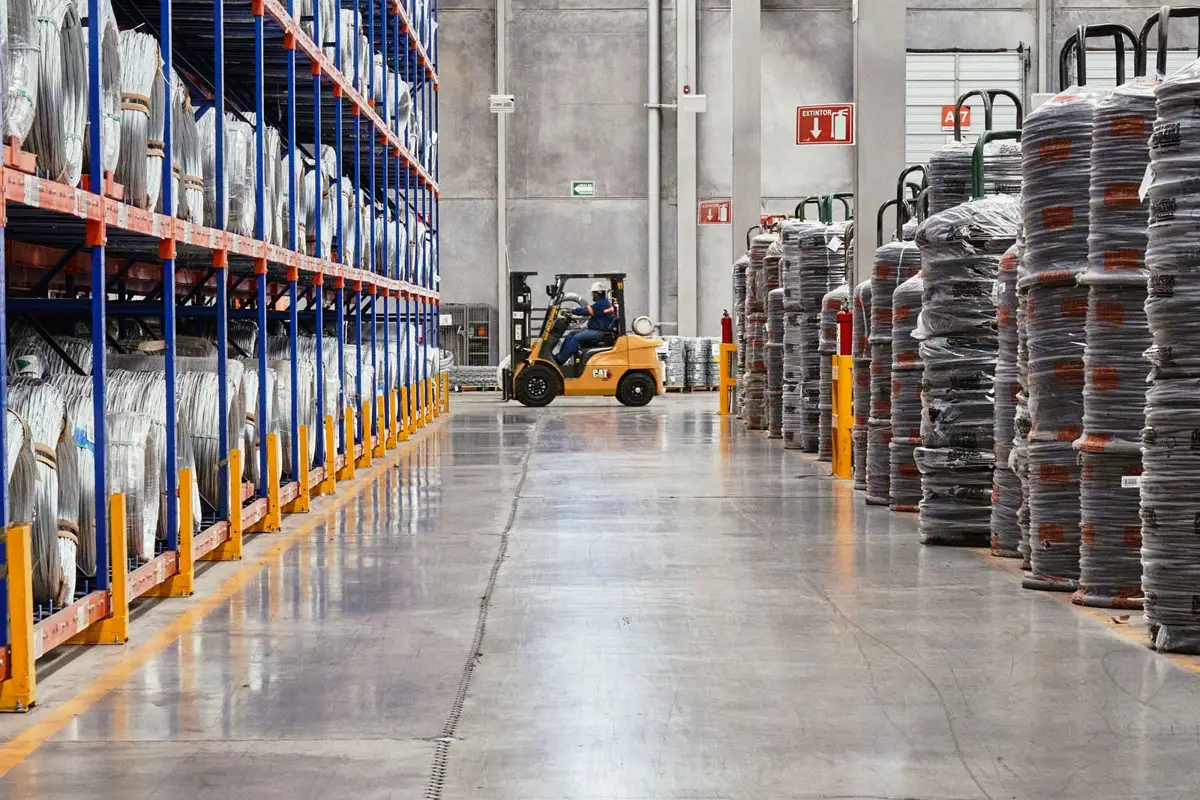
Top 10 popular heavy-duty plastic pallet models at ICD Vietnam
The model with the highest load is the ICD PL12 plastic pallet with steel core (static load 6,500 kg, dynamic load 3,200 kg), followed by the group with a dynamic load of 2,000 to 2,400 kg such as the PL12-LK, the blow-moulded XU 2M 1210 and the 9-foot cup-foot pallet. The table below summarises the published specifications for a quick comparison before looking at each model in detail. The models on sale are in ICD steel-core plastic pallet models.
| Pallet model | Size (mm) | Static load | Dynamic load | Material |
|---|---|---|---|---|
| 1. PL12 with steel core | 1200 x 1000 x 150 | 6,500 kg | 3,200 kg | Virgin HDPE |
| 2. PL12-LK one-piece | 1200 x 1000 x 150 | 5,000 kg | 2,400 kg | HDPE |
| 3. Double-face blow moulded XU 2M 1210 | 1200 x 1000 x 150 | 6,000 kg | 2,000 kg | HDPE |
| 4. 9-foot cup-foot 1210 | 1200 x 1000 x 150 | 6,000 kg | 2,000 kg | HDPE |
| 5. Large-format storage pallet | 1800 x 1600 x 153 | 8,000 kg | 2,000 kg | HDPE |
| 6. Closed deck PLR4-1289 | 1200 x 1200 x 150 | 5,000 kg | 1,500 kg | Virgin HDPE |
| 7. IPS PL10-2 with steel core | 1200 x 1000 x 150 | 4,500 kg | 1,500 kg | Recycled plastic |
| 8. Closed deck 3-runner EHS1111B3 | 1100 x 1100 x 165 | 4,000 kg | 1,200 kg | HDPE |
| 9. Imported Malaysian heavy-duty | 1100 x 800 to 1960 x 1960 | 4,000 to 6,000 kg | 1,000 to 2,000 kg | Virgin HDPE, PPC/HDPE |
| 10. Floor lining PL03-LS | 1200 x 1000 x 78 | 3,000 kg | Not for lifting | HDPE |
Model number 10 and other floor-lining sheets are only for placing goods permanently on the ground, damp-proofing, not for forklift handling. For heavy goods that must move often, choose the steel-core group, the blow-moulded group or the imported heavy-duty line. The large 1800 x 1600 mm model has the highest static load in the catalogue but suits only warehouses with racking and forklifts of the right format.
Steel-core group: PL12 and PL10-2
The ICD PL12 steel-core plastic pallet, size 1200 x 1000 x 150 mm, weighing 21 ± 0.5 kg, made of blue virgin HDPE, states a dynamic load of 3,200 kg and a static load of 6,500 kg. This is the model we suggest first when a customer needs to lift goods above 2,000 kg per pallet or put heavy goods on a rack.
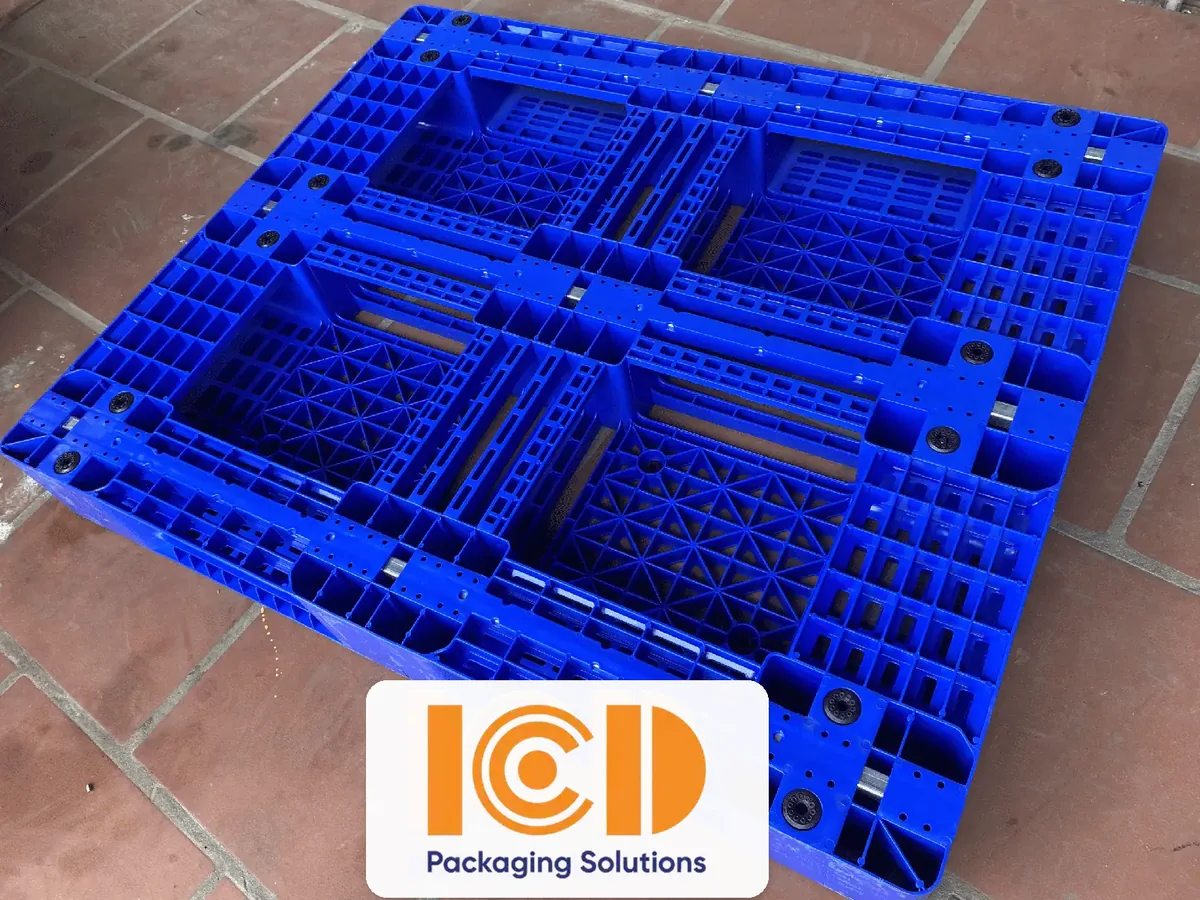
The ICD IPS PL10-2 steel-core plastic pallet, the same 1200 x 1000 x 150 mm size, weighing 18.9 kg ± 5%, made of blue recycled plastic, states a dynamic load of 1,500 kg and a static load of 4,500 kg. The steel core makes up part of the stiffness of recycled plastic, so this is an economical option for dry warehouses and medium goods; for deep cold stores, we still advise virgin HDPE.
Closed-deck group: PLR4-1289, PLR4-1277 and EHS1111B3
The ICD PLR4-1289 closed-deck plastic pallet, size 1200 x 1200 x 150 mm, double closed-deck design, virgin HDPE, static load 5,000 kg, dynamic load 1,500 kg. A closed deck stops dust and liquid falling to the tier below, and suits bagged goods, drums and warehouses that need cleaning.
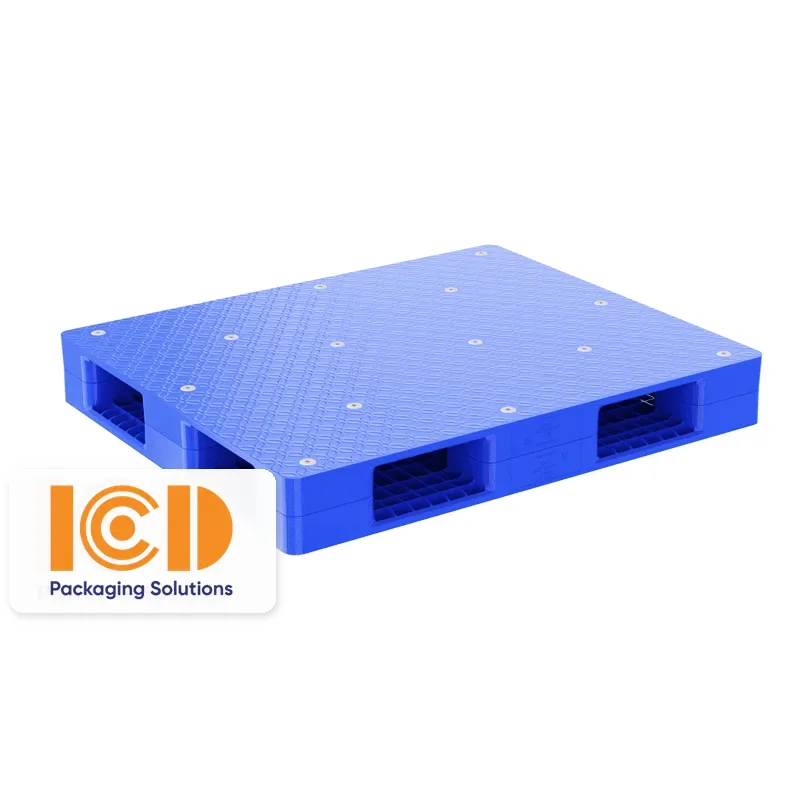
The ICD PLR4-1277 closed-deck plastic pallet is a welded closed-deck version of the same 1200 x 1200 x 150 mm size as the PLR4-1289; the load specification for each colour and batch should be confirmed when quoting.
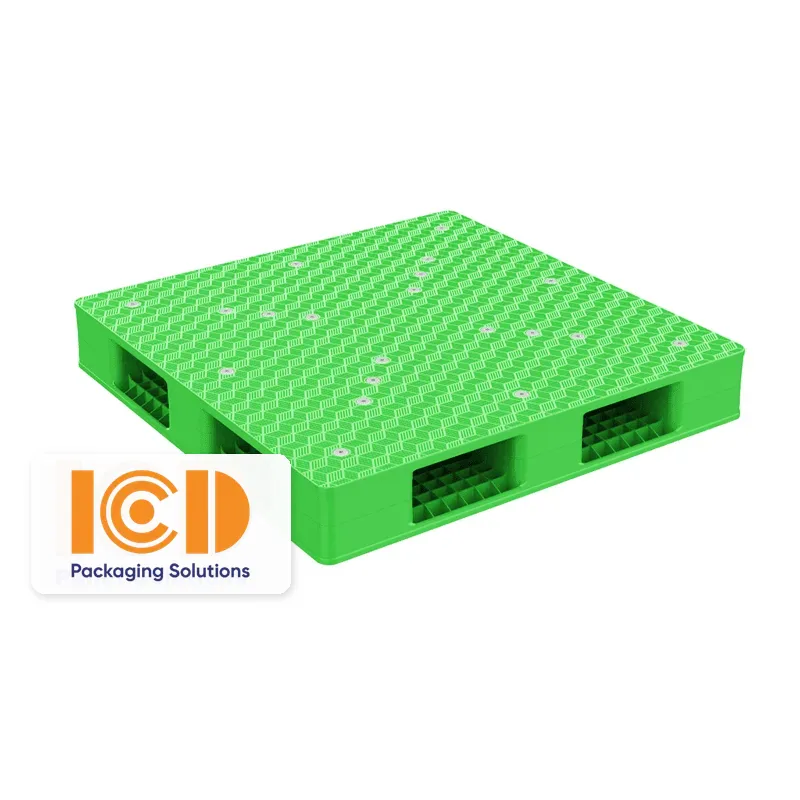
The ICD EHS1111B3 plastic pallet, size 1100 x 1100 x 165 mm, closed deck, 3 runners, weighing 16.5 kg ± 5%, static load 4,000 kg, dynamic load 1,200 kg. The 1100 x 1100 mm size suits goods going to Japan and Korea, and the three runners let the pallet sit smoothly on rack beams and conveyors.
Floor-lining group: fixed placement, no lifting
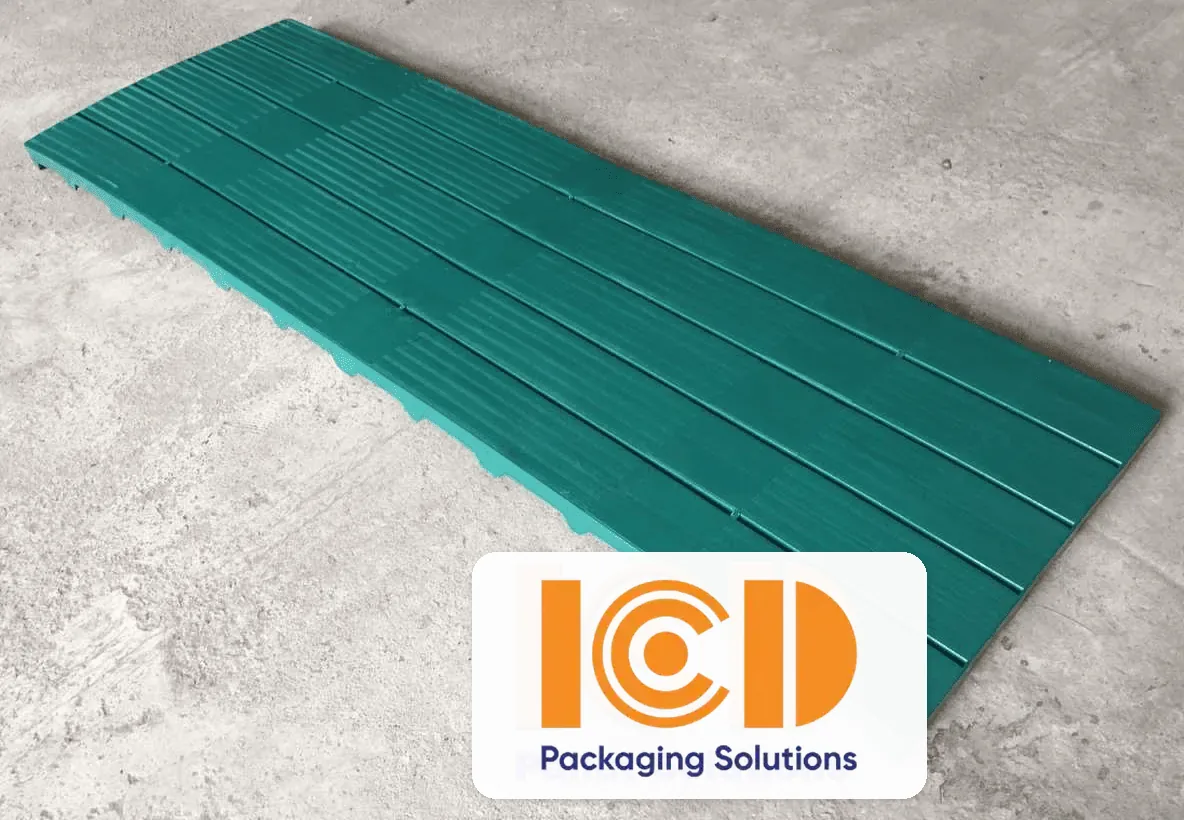
Floor-lining sheets are in the list because customers often ask about them together with heavy-duty pallets, but their role is to keep goods off the ground to guard against damp. The footless green floor-lining pallet 1800x600x50mm is made of PP, light and compact, suited to small spaces; the same format in blue, the floor-lining plastic pallet in blue 1800x600x50mm, is compact and flexible. The PL07-LS floor-lining plastic pallet 600x600x100mm has 4 hump feet and a mesh deck, is sturdy and mould-proof, static load 100 kg. The PL03-LS floor-lining plastic pallet, 1200 x 1000 x 78 mm, is well ventilated and easy to clean, static load 3,000 kg.
How to choose the right heavy-duty plastic pallet
Choose in three steps: identify the weight of the goods and how they are used (lifting, stacking or racking), choose the material by environment, then choose a size that fits the warehouse, racking and container. Each use matches a figure to read on the specification:
- Frequent lifting and moving: the weight of goods per pallet must not exceed the published dynamic load.
- Storage and multi-tier stacking: the bottom pallet carries the total weight of the tiers above; check against the static load.
- On two-beam racking: ask for the rack load of the model you plan to buy or choose a steel-core model.
- Outdoors with a lot of sun: ask clearly about UV-stabilising additives before ordering.
- Cold stores, food: choose virgin HDPE, prefer a closed deck if frequent cleaning is needed.
Calculate the required load from the weight of goods
Dynamic load is the total weight of goods the pallet can carry when lifted or moved by a forklift or transport equipment; static load is its capacity when goods are stored in place. A business needs to decide whether the pallet is mainly for moving goods or for fixed storage: frequent transport favours a high dynamic load, long-term storage favours a large static load to avoid deformation. The tool below quickly calculates the load needed and filters the models in the article that still have at least 20% static load to spare.
For example, a paper reel of 1,800 kg that must be lifted every day: the static load of many models far exceeds this, but only the group with a dynamic load of 2,000 kg or more will do, and if that reel goes on a rack the PL12 with steel core is the safest choice. See also the article on plastic pallet weight if you need to include tare weight when packing containers.
Choose virgin HDPE for long life
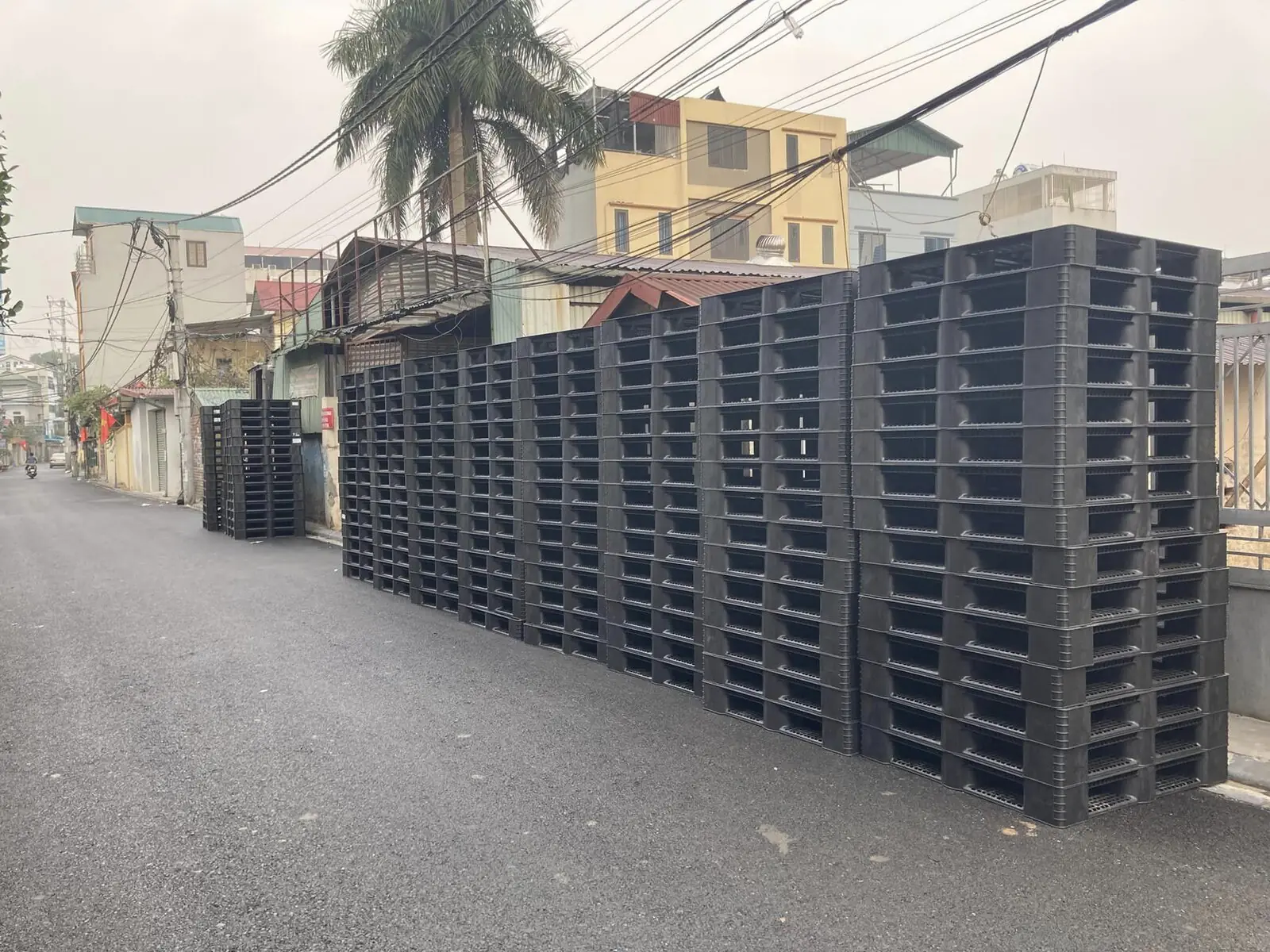
For many years of use, choose virgin HDPE because this material keeps its flexibility and is less brittle than recycled plastic, resists chemicals, repels water and can be used in cold and cool stores as well as sunny areas if it has UV additives. In the ICD Vietnam catalogue, 114 of the 132 models with a static load of 3,000 kg or more state HDPE as the material, and only 8 heavy-duty models are made of PP or PPC without HDPE. Recycled plastic is cheaper, suits medium loads and is rarely used in deep cold environments.
Choose a size that fits the warehouse and vehicles
Pallet size should match the rack module, forklift forks and container interior; a wrong-format pallet wastes warehouse space and slows forklift handling. ISO 6780 for flat pallets used in intercontinental transport lists 6 sizes: 1200 x 800 mm (the EUR pallet, common in Europe), 1200 x 1000 mm (common in Europe and Asia), 1219 x 1016 mm (48 x 40 inches, North America), 1140 x 1140 mm, 1100 x 1100 mm (common in Asia) and 1067 x 1067 mm (42 x 42 inches). Most heavy-duty models in the article are 1200 x 1000 mm; businesses with special needs can still consider a custom size. See also: Plastic pallet dimensions.
What are heavy-duty plastic pallets used for?
The three most common groups are logistics, cold storage and supermarkets, and export goods. In each group the reason for choosing a heavy-duty plastic pallet differs, so the model criteria differ too.
Logistics and transport
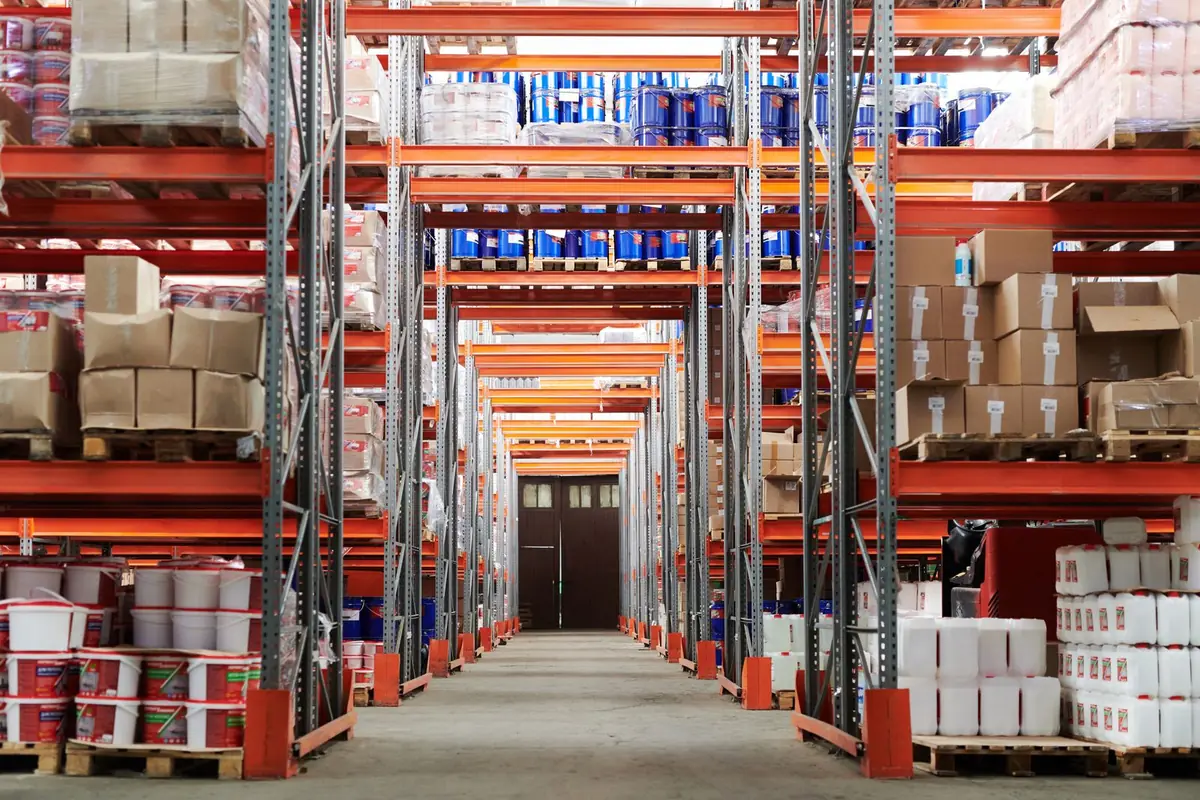
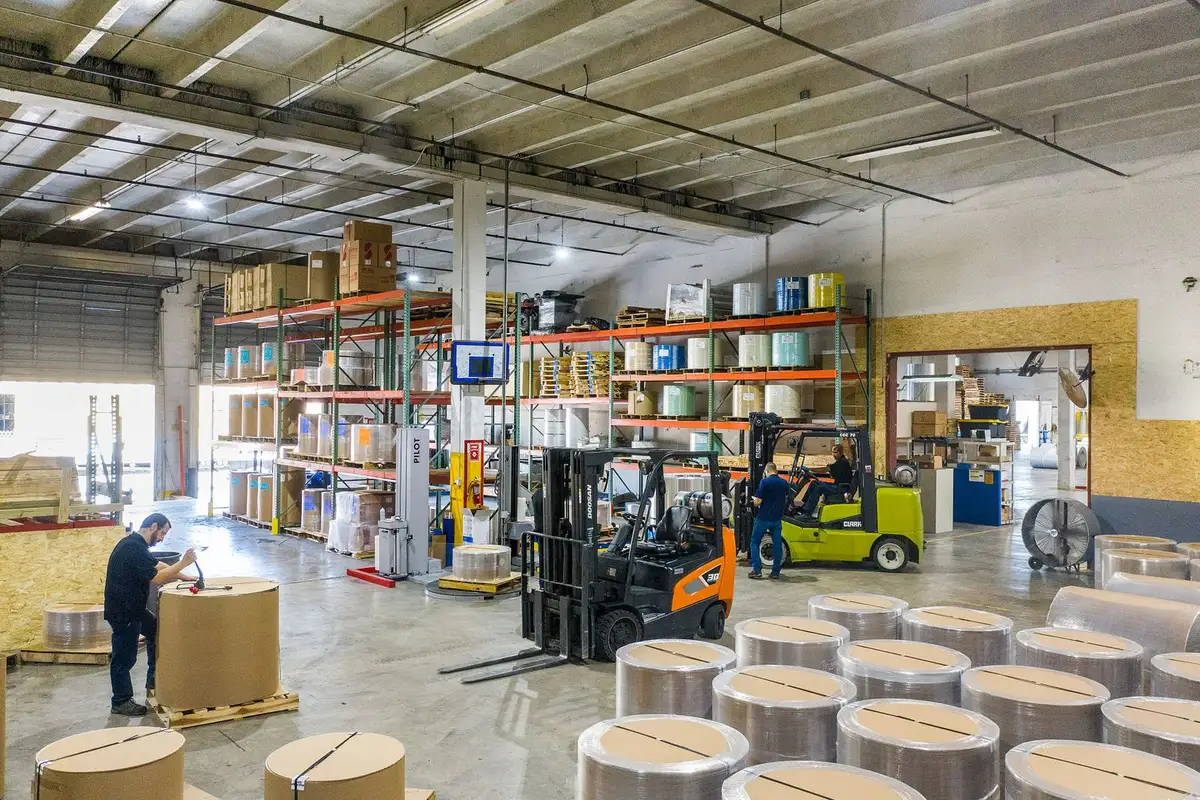
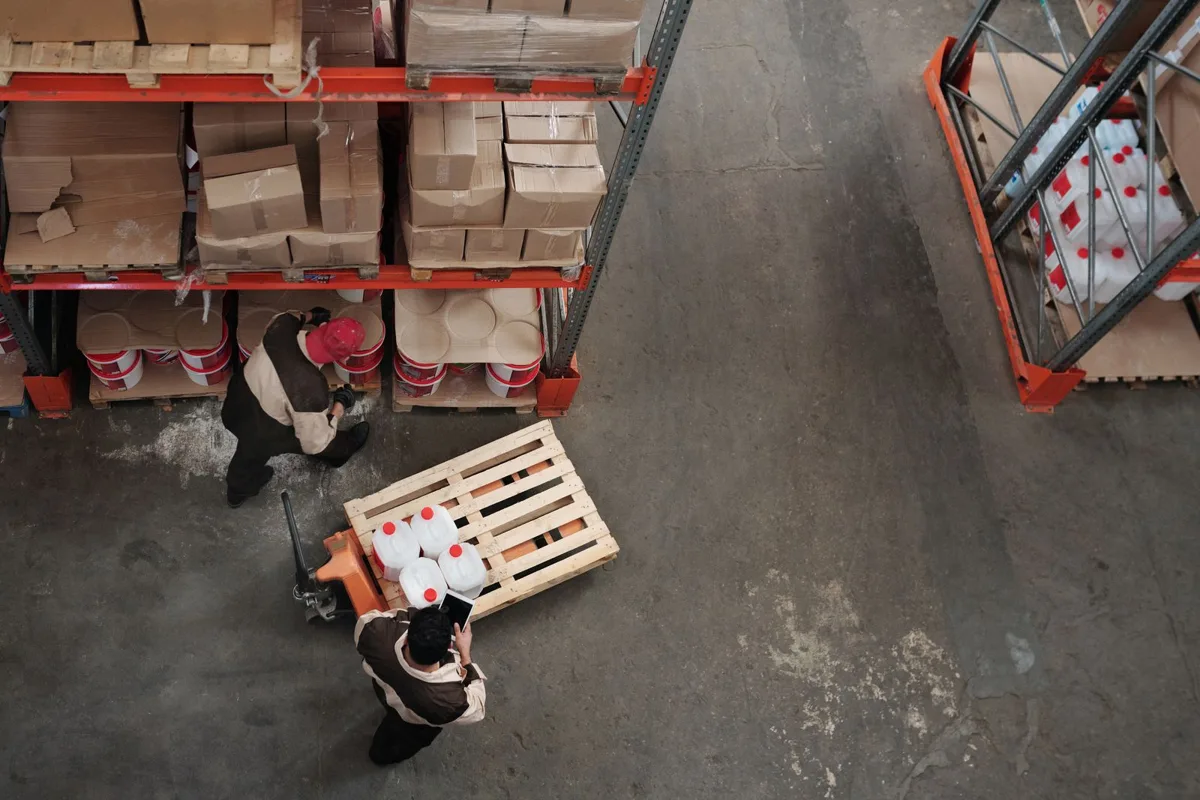
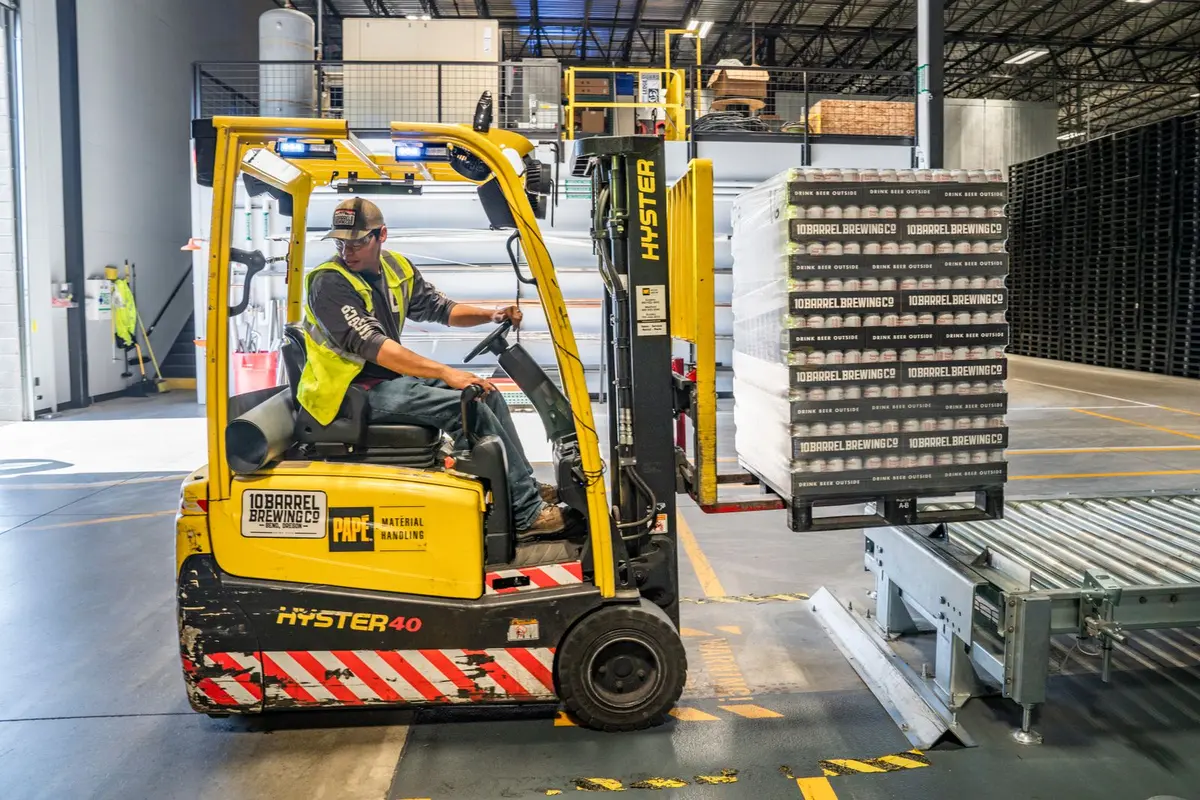
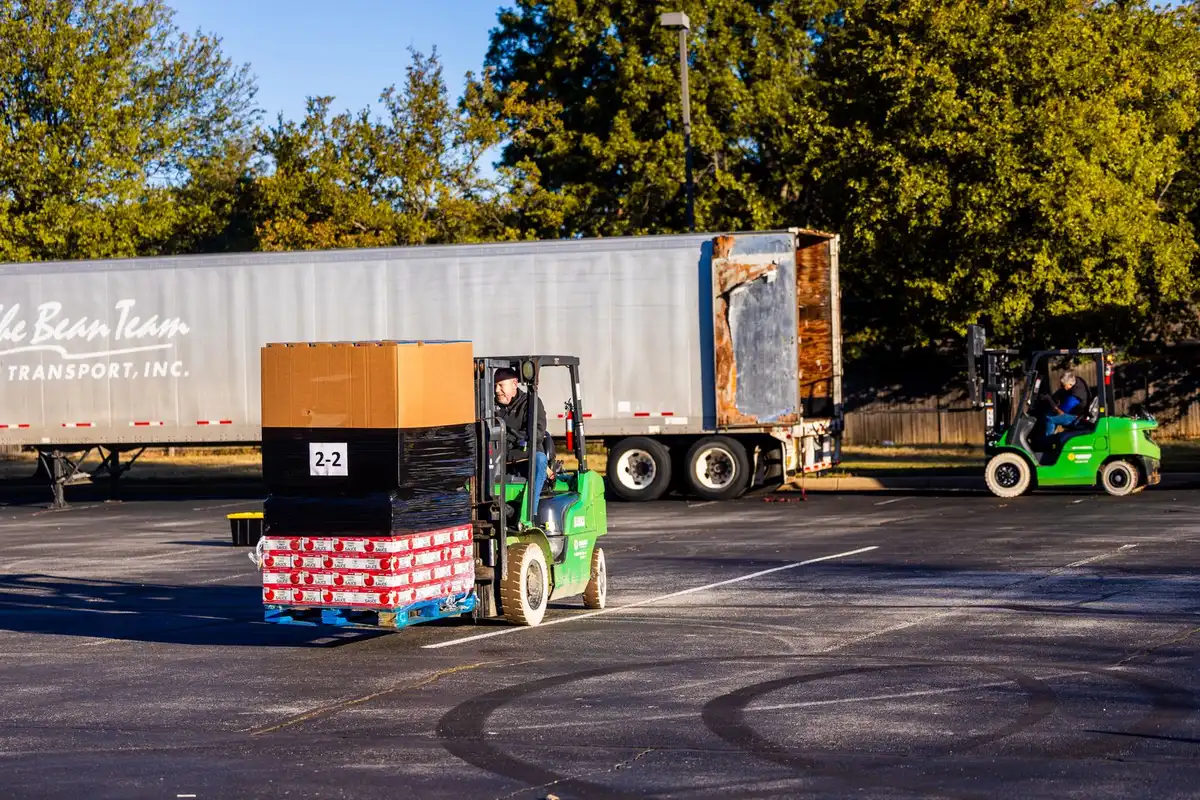
In logistics, a heavy-duty pallet supports and secures heavy packages during forklift handling and long-distance haulage. A bulky load cannot be lifted by hand; it needs a pallet that fits the forks of the forklift at the origin warehouse, is stiff enough not to sag when the truck brakes, and matches the truck bed or container floor for lashing. On inter-provincial or overseas routes, a stiff structure and uniform size mean less shifting and less damage.
Cold stores and supermarkets
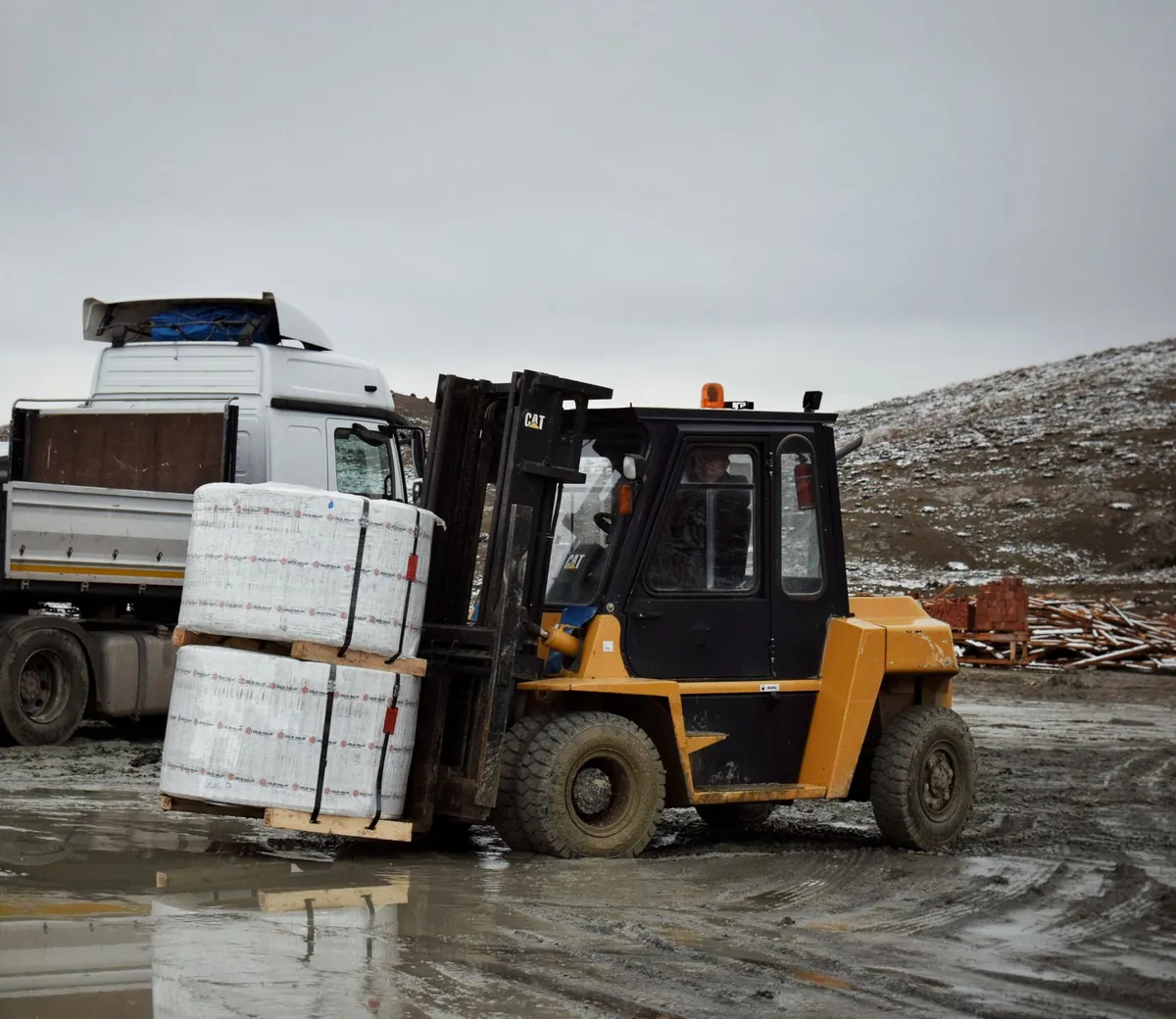
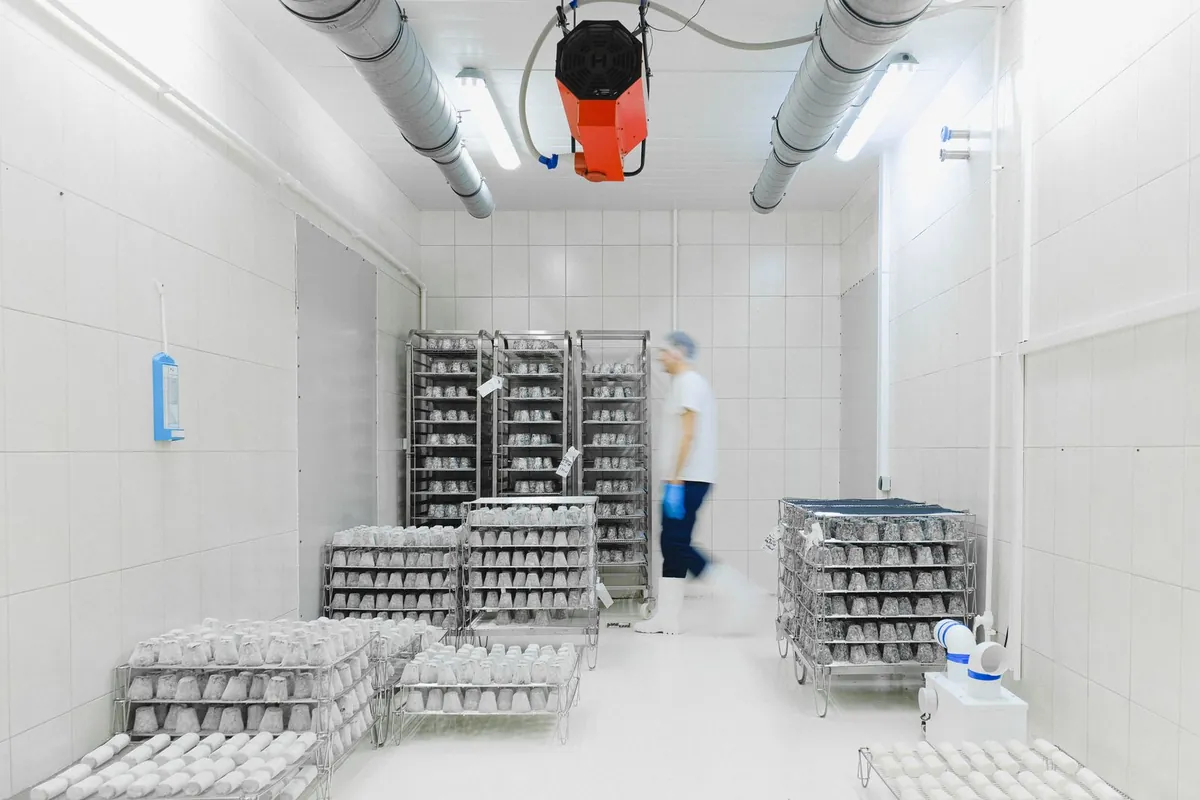
In cold stores and supermarkets, heavy-duty plastic pallets are used because they absorb no water, do not rot and can be washed, keeping frozen food, vegetables and processed goods hygienic. Virgin HDPE stays flexible at low temperature so it is less likely to crack on impact in below-freezing stores. In supermarkets, pallets are also used to display goods and are easy to wipe clean. This is a clear advantage of plastic pallets over wooden and paper pallets.
See also: PLASTIC PALLETS VS WOODEN PALLETS: WHICH IS THE BEST CHOICE FOR BUSINESS?
Export goods
For export goods, plastic pallets skip the mandatory quarantine treatment required for wooden pallets. The ISPM 15 standard of the International Plant Protection Convention (IPPC) requires heat treatment or fumigation and an IPPC stamp only for packaging made of raw wood; plastic pallets are outside this scope so the pallet itself needs no fumigation certificate, saving both cost and time. A standard size also helps pack containers neatly; a separate guide covers how to load pallets into a container correctly.
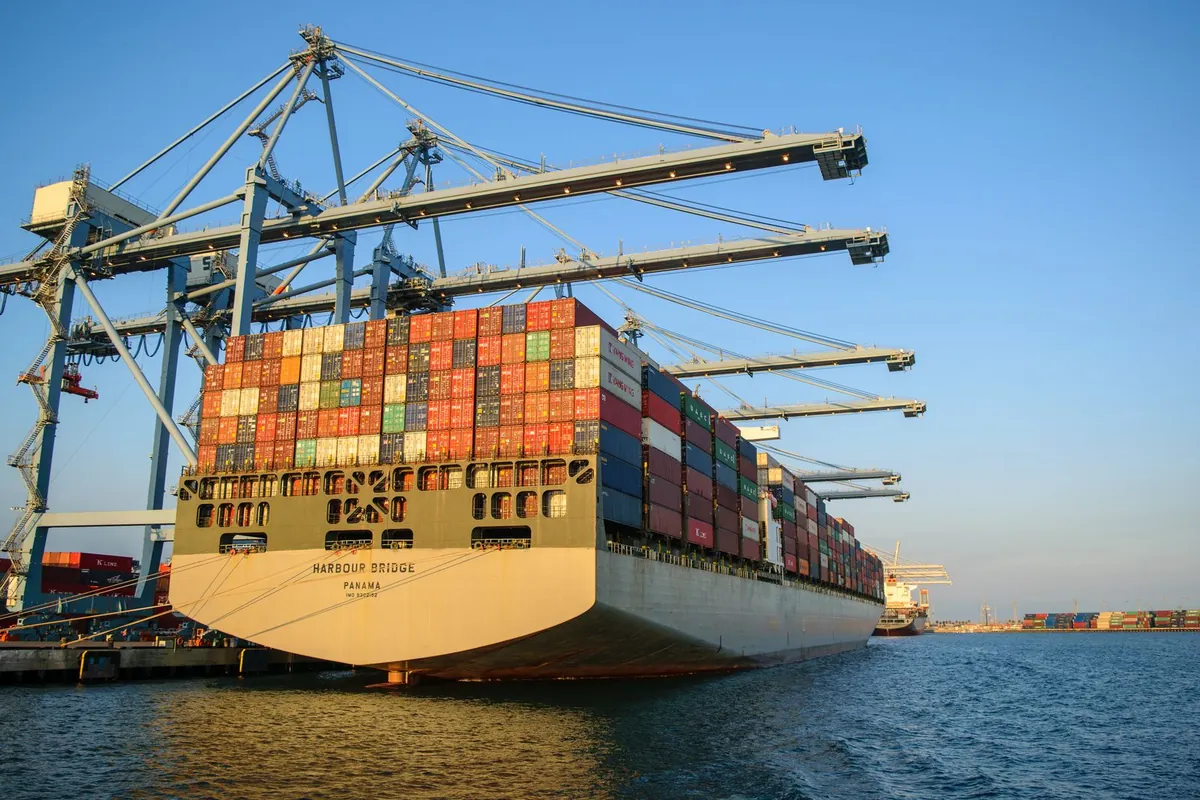
Plastic pallets are also recyclable at the end of their life, a plus when a business prepares environmental documents for overseas partners.
Advice from ICD Vietnam
A heavy-duty plastic pallet is a long-term investment, so do not choose by the largest static load figure on the catalogue. Weigh the real goods, decide whether the pallet will sit on the ground, on forklift forks or on rack beams, then choose the matching structure: steel core for heavy goods that are lifted and racked, blow moulding for multi-tier stacking, 3 runners for racks and conveyors, floor lining only for fixed placement. When asking a supplier, we advise requesting all three load figures and the material stated on the specification sheet for the exact model.
Frequently asked questions
How much load can a heavy-duty plastic pallet carry?
It depends on the structure. In the ICD Vietnam catalogue, the highest static load is 8,000 kg (the 1800 x 1600 x 153 mm storage pallet), the highest in the 1200 x 1000 mm group is 6,500 kg (PL12 with steel core); the highest dynamic load is 3,200 kg, also the PL12. Most heavy-duty models have a dynamic load of 1,000 to 2,000 kg.
What material are heavy-duty plastic pallets made of?
Mainly virgin HDPE, sometimes blended with PP or PPC; a few models have a steel core in the rib bars. Virgin HDPE is flexible and impact-resistant, suits cold stores and long use; recycled plastic is cheaper, suits medium loads and is rarely used in deep cold environments.
How are heavy-duty plastic pallets classified?
By static load they are usually divided into three groups: light under 1,000 kg, medium 1,000 to 3,000 kg and heavy above 3,000 kg. By structure there are steel-core pallets, double-face blow-moulded pallets, 9-foot cup-foot pallets, 3-runner pallets, one-piece open-deck pallets and floor-lining sheets.
How does a steel-core plastic pallet differ from an ordinary plastic pallet?
A steel core inside the rib bars makes the pallet sag less under load, especially when lifted by forklift or placed on a rack. At the same 1200 x 1000 x 150 mm size, the ICD PL12 with steel core states a static load of 6,500 kg and dynamic load of 3,200 kg, while the PL12-LK without a steel core states 5,000 kg and 2,400 kg.
Can heavy-duty plastic pallets go on racking?
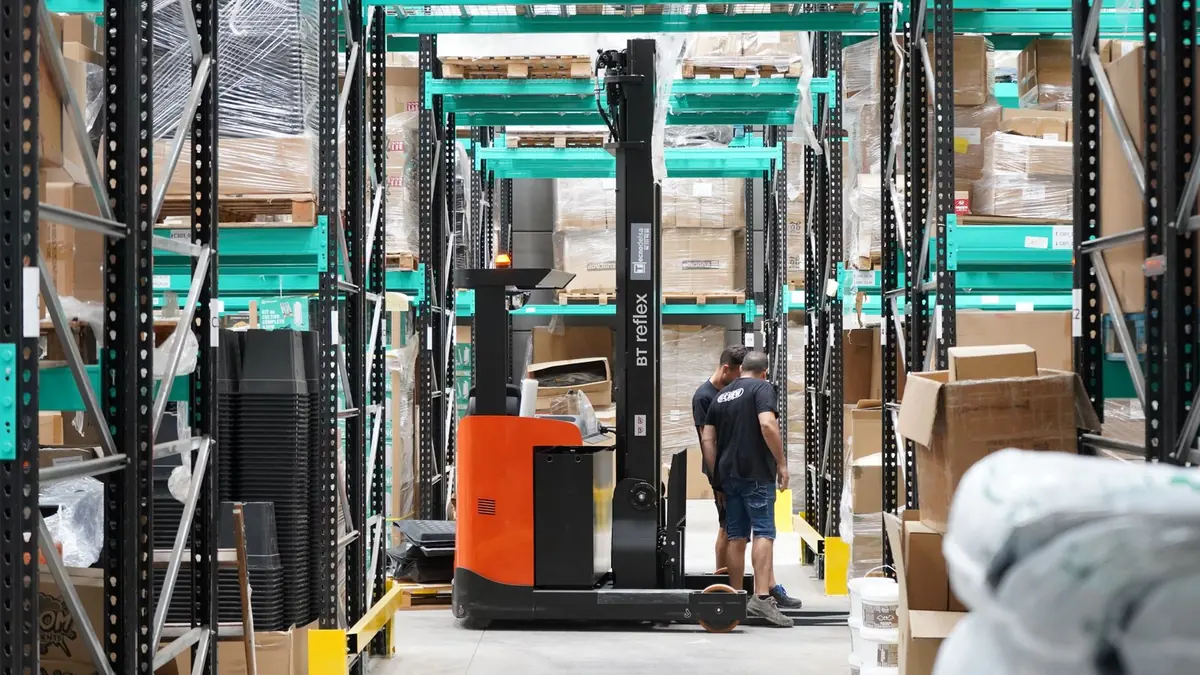
Yes, but you must check the rack load specification and not use static load as a substitute. On a rack the pallet rests only on 2 beams so it sags more easily than on the ground; ISO 8611-1 tests this case separately with a bending test. For heavy goods on racks, choose a steel-core model or a runner pallet.
Do blow-moulded pallets carry load better than injection-moulded pallets?
For static load, the double-face blow-moulded group and blow-moulded cup-foot pallets in the ICD Vietnam catalogue all state 6,000 kg and a dynamic load of 2,000 kg, higher and more uniform than most one-piece open-deck pallets. However, the dynamic load is still lower than the steel-core PL12 (3,200 kg), so very heavy goods that must be lifted often should still favour a steel core.
Do heavy-duty plastic pallets need fumigation for export?
No. The IPPC ISPM 15 standard applies only to packaging made of raw wood, so plastic pallets need no heat treatment, fumigation or IPPC stamp. The goods on the pallet may still need separate quarantine depending on the product and the importing country.
Contact us for advice on heavy-duty plastic pallets
ICD Vietnam Industrial Manufacturing Co., Ltd
Northern Vietnam: 3rd Floor, Thang Long A1 Building, Bau Hamlet, Thien Loc Commune, Hanoi - 0983 797 186 / 090 345 9186 / 090 5859 186
Southern Vietnam: 551/212 Le Van Khuong, Tan Thoi Hiep Ward, District 12, Ho Chi Minh City - 098 6784 186
Email: sales@icdvietnam.com.vn
Zalo: Chat with ICD Vietnam on Zalo
References
- Flat pallet tests: ISO 8611-1:2025, Pallets for materials handling - Flat pallets - Part 1: Test methods.
- Intercontinental pallet sizes: ISO 6780, Flat pallets for intercontinental materials handling - Principal dimensions and tolerances.
- Wood packaging material in international trade: IPPC, ISPM 15.
- Size, material, static load and dynamic load of plastic pallet models: ICD Vietnam product catalogue, checked on 11 October 2026.