Table of Contents
- Standard plastic pallet sizes under ISO 6780
- Japan’s T11 standard: why Japanese partners often ask for 1100 x 1100 mm
- Plastic pallet sizes in the ICD Vietnam catalogue
- Height and load ratings - the most misread part
- Comparing plastic pallet sizes 1200 x 1000 mm and 1100 x 1100 mm
- Pallet size and container loading efficiency
- Small plastic pallets: when to choose a size under 1000 mm?
- 4-step checklist for choosing the right plastic pallet size
- 3 common mistakes when choosing plastic pallet specifications
- Frequently asked questions about plastic pallet sizes
- What size is a pallet?
- How many kg does a plastic pallet weigh?
- How many m3 is one pallet?
- How much does a 1200 x 1000 plastic pallet cost?
- Does Vietnam have a national standard for pallet dimensions?
- Can plastic pallets be ordered in a custom size?
- How do I check that a plastic pallet is the right size?
- What should I note when exporting to Japan with plastic pallets?
- What is the standard European pallet size?
- Do blue and black plastic pallets differ in size?
- Contact for plastic pallet size advice
- References
- Related articles
Reviewed and updated by ICD - Week 43/2026
Standard plastic pallet sizes under ISO 6780 come in 6 sizes: 1200 x 800, 1200 x 1000, 1219 x 1016, 1067 x 1067, 1100 x 1100 and 1140 x 1140 mm, with a plan tolerance of +3/-6 mm. In Vietnam the two most used sizes are 1200 x 1000 mm for domestic warehouses and goods to Europe and Southeast Asia, and 1100 x 1100 mm for goods to Japan and Korea. ISO does not set height; in the ICD Vietnam catalogue, 88 of 176 codes are 150 mm high. A 1200 x 1000 mm pallet weighs from about 6 to 22 kg depending on construction.
New customers asking about plastic pallets usually start with “what is the standard size”, and since I started at ICD Vietnam in 2011 my question back has stayed the same: where do the goods go, and what forklifts and racking does the warehouse use? Pallet size is rarely the hard decision, but a wrong choice usually shows only after the racking is installed or the container is packed. This article goes from the standard, through real catalogue figures, to how to count pallets in a container and four questions to ask before ordering.
Standard plastic pallet sizes under ISO 6780
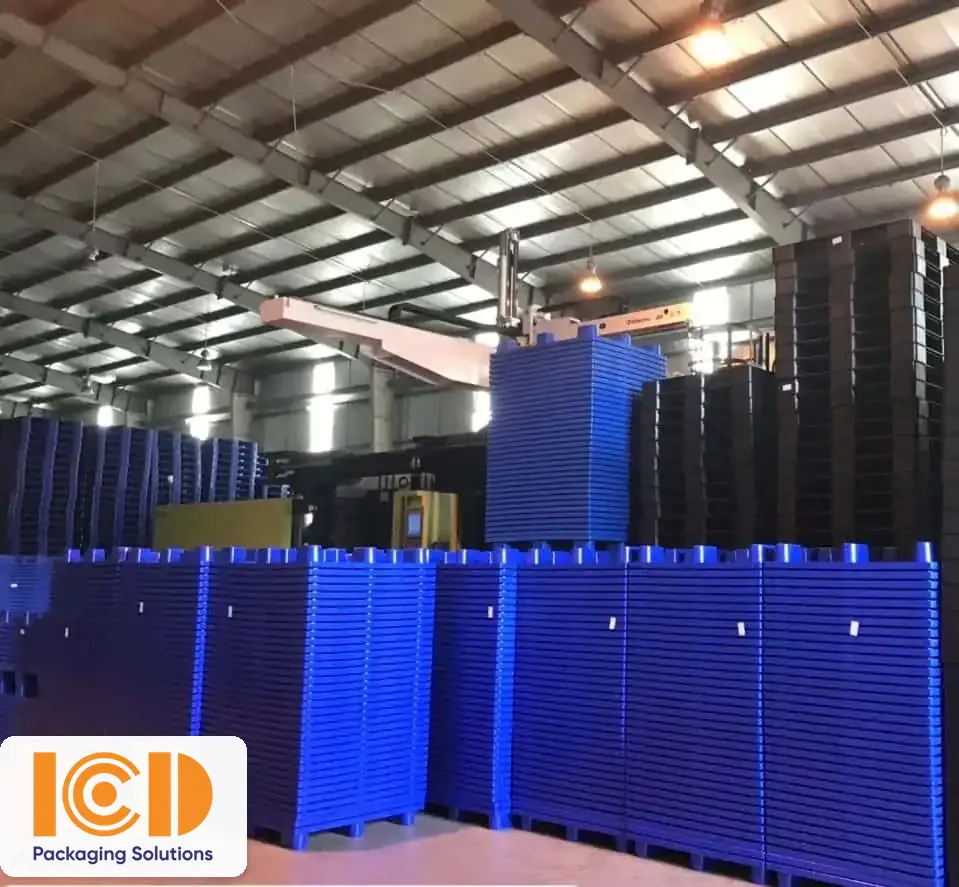
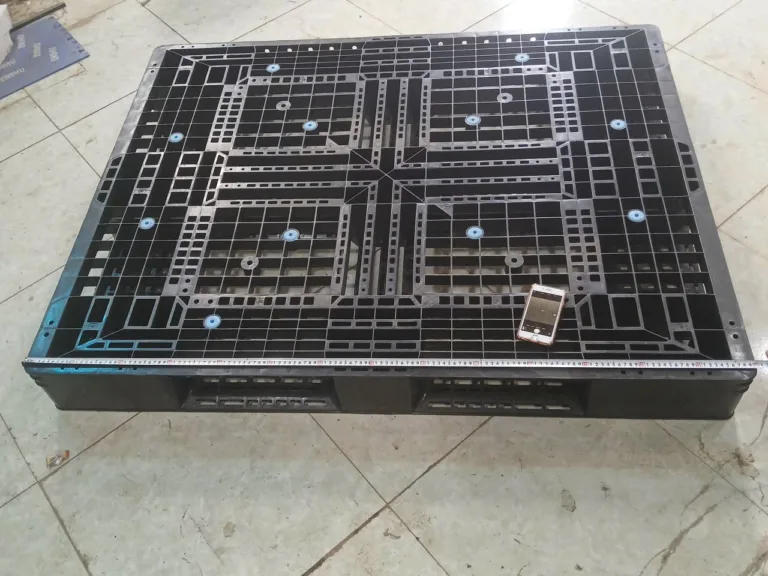
ISO 6780:2003 is the international standard for the principal dimensions and tolerances of flat pallets used in intercontinental transport, and ISO reviewed and confirmed it as current in 2026. Vietnam adopted it verbatim as TCVN 9022:2011. It is a voluntary standard: it binds only when the buyer writes an ISO size into the contract. The six sizes are three rectangular sizes, 1200 x 800, 1200 x 1000 and 1219 x 1016 mm, and three square sizes, 1067 x 1067, 1100 x 1100 and 1140 x 1140 mm. Models on sale are in the warehouse storage plastic pallets section.
The three square sizes are where mix-ups happen most. The 1140 x 1140 mm size is the ISO one; 1165 x 1165 mm is the Australian standard under AS 4068, created for that country’s rail containers and not part of ISO 6780, although many tables online still copy it in. And 1100 x 1100 mm is Japan’s T11 size. The three differ by a few tens of millimetres but cannot replace each other on pre-designed racking, so for goods to Australia or Japan ask for the exact dimensions rather than writing a general “square pallet”.
| Size (mm) | Mostly used in | Notes |
|---|---|---|
| 1200 x 1000 | Vietnam, Europe, Southeast Asia | ISO size, the most codes in the ICD catalogue |
| 1200 x 800 | Europe, retail | ISO size, same dimensions as the EPAL 1200 x 800 x 144 mm wooden pallet |
| 1100 x 1100 | Japan, Korea, Taiwan | ISO size, Japan’s T11 standard under JIS Z 0601 |
| 1219 x 1016 (48 x 40 inch) | North America | ISO size, commonly called the GMA pallet |
| 1067 x 1067 and 1140 x 1140 | North America, Europe, some Asian countries | ISO size, uncommon in Vietnam |
| 1165 x 1165 | Australia | Not part of ISO 6780, follows the Australian standard AS 4068 |
Besides these sizes, domestic warehouses also use 1000 x 1000, 1000 x 600 and 800 x 600 mm for internal goods that do not go in export containers. The EPAL 1200 x 800 x 144 mm wooden pallet weighs about 25 kg and has a safe working load of 1,500 kg according to EPAL, a reference point when European partners compare plastic pallets of the same size.
Japan’s T11 standard: why Japanese partners often ask for 1100 x 1100 mm
According to the Japan Pallet Association (JPA), the 1100 x 1100 x 144 mm size (coded T11, with T short for through transit) was issued in 1970 as the through-transit pallet standard under JIS Z 0601. JPA statistics updated 1 June 2026 show that in 2025, among rental plastic pallets in Japan, 21,908,942 were 1100 x 1100 mm, about 88% against the other sizes counted: 1400 x 1100 mm (1,934,536 units), 1200 x 1000 mm (1,110,877 units) and 1100 x 900 mm (26,000 units).
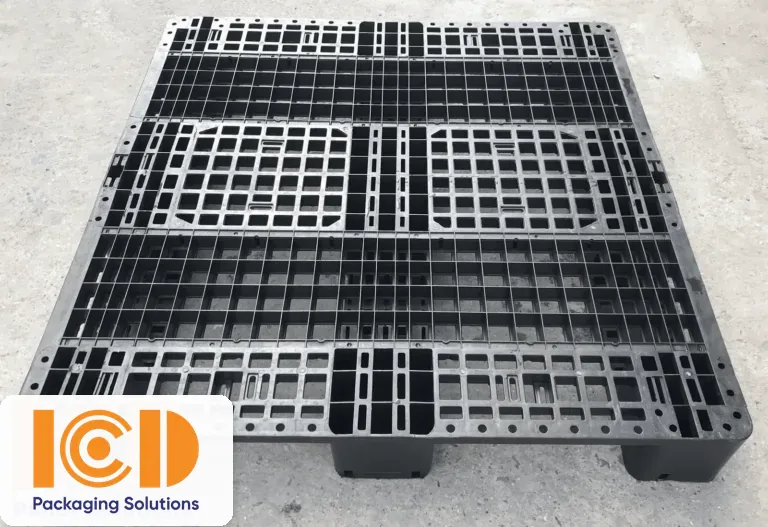
This figure explains why Japanese partners often ask for 1100 x 1100 mm: their warehouses, forklifts and pallet rental services revolve around this size. Even so, JIS still recognises other sizes, and JPA still counts more than a million rental 1200 x 1000 mm plastic pallets, so “exporting to Japan requires 1100 x 1100” is not an accurate way to put it. State the specific size in the contract.
Plastic pallet sizes in the ICD Vietnam catalogue
Of the 176 plastic pallet codes that publish full length, width and height on the ICD Vietnam website, 1200 x 1000 mm has 46 codes and 1100 x 1100 mm has 26 codes, 72 in total. The table below gathers the seven sizes with the most codes, with the real weights of the codes that publish them. One reference code for this need is the ICD plastic pallet with steel core, 1200x1000x150 mm.
| Size (mm) | Codes | Common height | Weight (codes that publish it) | Dynamic load | Commonly used for |
|---|---|---|---|---|---|
| 1200 x 1000 | 46 | 150, 145, 160 mm | 6 - 22 kg, median about 17 kg | 500 - 3,200 kg | Domestic warehouses, export to Europe and Southeast Asia |
| 1100 x 1100 | 26 | 150, 120, 125 mm | 7 - 18.5 kg | 500 - 2,000 kg | Export to Japan, Korea, Taiwan |
| 1200 x 1200 | 16 | 160, 150, 155 mm | 14.5 - 20.5 kg | 1,000 - 2,000 kg | Large sacks, drums, heavy goods |
| 1200 x 800 | 15 | 150, 120, 140 mm | 6.5 - 18 kg | 800 - 1,500 kg | European standard, narrow warehouse doors |
| 1300 x 1100 | 12 | 150, 120, 130 mm | 11.5 kg (1 code) | 1,000 - 2,000 kg | Wide goods on dedicated racking |
| 1200 x 1100 | 7 | 150, 120, 160 mm | - | 1,000 kg | On dedicated racking systems |
| 1400 x 1200 | 5 | 150 mm | 22 kg (1 code) | 1,200 - 2,000 kg | Bulky goods, jumbo bags |
Figures compiled from product specifications on the ICD Vietnam website, checked on 11 October 2026; weights count only the codes that publish them, with a manufacturer tolerance of about ±0.5 kg. The range is wide because one size has many constructions: nestable cup feet, 9-foot, 3-runner, steel core, closed deck. For example, at the same 1200 x 1000 mm, a 6 kg cup-foot code has a dynamic load of 600 kg, while a 21 kg code has a dynamic load of 1,500 to 2,400 kg. Double-face plastic pallets share these sizes, differing in the base deck rather than in length x width.
Height and load ratings - the most misread part
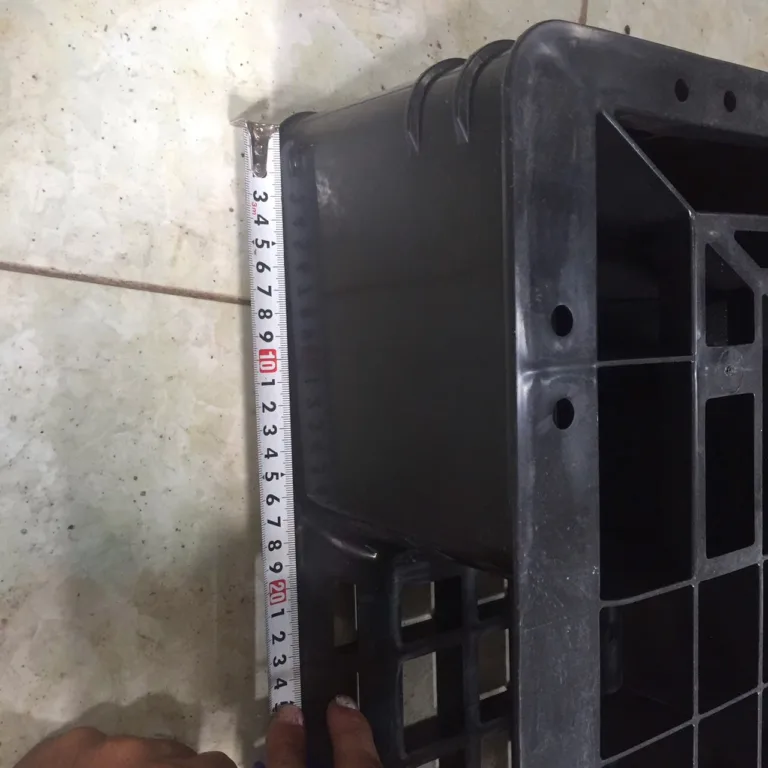
Pallet heights in the catalogue cluster at three levels: 150 mm has 88 codes, fitting most hand pallet trucks and selective racking; 160 mm has 19 codes, usually the 3-runner type or types with a steel core for racking; 120 mm has 16 codes, saving height when stacking goods in a container. About 12 codes lower than 100 mm are floor-level pallets, not for lifting with ordinary forklifts.
How pallet height affects warehouse design
Pallet height accumulates across rack levels. A 30 mm difference per pallet becomes 120 mm on a 4-level rack column, and in a low-ceiling warehouse that is enough to lose a storage level. Many people only notice this once the racking is built and test loads are placed. So if you are about to buy new racking, choose the pallet first and only then fix the beam-level height, not the other way round.
Static load and dynamic load: two figures to read correctly
Static load is what a pallet bears when it rests still on a flat floor. Dynamic load is what it bears while a forklift is lifting and moving it. Racking load is what it bears when resting on two support beams only, usually the lowest, and many codes are not for racking. Catalogues usually print the static load in the biggest type, but the figure that decides safety when lifting and lowering is the dynamic load. Among the 156 codes in the catalogue that publish both, the median dynamic load is about one third of the static load, and half of the codes fall between 25% and 37.5%.
Comparing plastic pallet sizes 1200 x 1000 mm and 1100 x 1100 mm
The two sizes have almost the same area, 1.20 m² against 1.21 m², but cannot replace each other. 1200 x 1000 mm is more flexible in the domestic market: the most codes, both 2-way and 4-way entry types, easy to buy more or rent short term, and fitting most racking installed in Vietnam. 1100 x 1100 mm is square so it lifts the same from any direction, matches Japanese and Korean warehouse standards, and packs one more per layer in a 20-foot container.
If the export market is unclear, or you sell mainly in Vietnam, 1200 x 1000 mm is the safer choice. When an order to Japan or Korea comes in, you can add a separate batch of 1100 x 1100 mm for that route without changing the whole warehouse system.
Pallet size and container loading efficiency
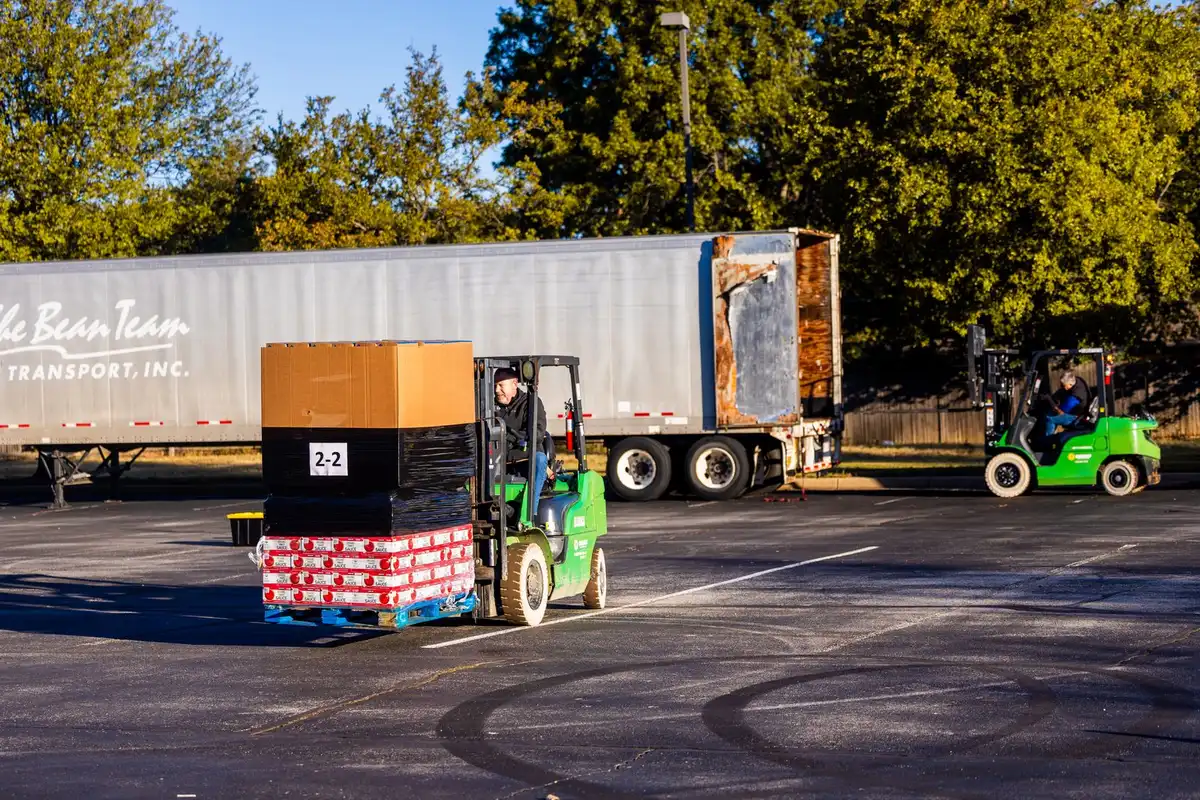
According to the container dimensions published by shipping lines, the interior of a 20-foot container is about 5,900 x 2,352 mm, and a 40-foot and 40-foot high cube (HC) about 12,032 x 2,350 mm; the 40-foot HC is only taller, 2,700 mm inside against about 2,393 mm, not wider on the floor. By geometry, before allowing handling gaps, each layer holds:
- 1200 x 1000 mm: 9 units in 20 feet, 20 units in 40 feet.
- 1100 x 1100 mm: 10 units in 20 feet, 20 units in 40 feet.
- 1200 x 800 mm: 11 units in 20 feet, 24 to 25 units in 40 feet when stacked alternating in both directions.
- 1140 x 1140 mm and 1219 x 1016 mm: 10 and 9 units in 20 feet respectively, both 20 units in 40 feet.
The difference lies in the 20-foot container: 1100 x 1100 mm gets one more position per layer than 1200 x 1000 mm, about 10% more positions. In a 40-foot, the 1200 x 1000 mm size could theoretically fit 22 units alternating, but the length leaves only about 32 mm spare, so in practice it usually stops at 20 to 21 units. A detailed stacking method is covered in the article on how to load pallets into a container.
Small plastic pallets: when to choose a size under 1000 mm?
Small pallets such as 1000 x 1000, 1000 x 600 or 800 x 600 mm fit when the warehouse has narrow aisles, uses hand pallet trucks, handles loose goods on a production line and does not go in export containers. But under the same name of 1000 x 1000 mm, three codes in the ICD catalogue have very different loads: the 120 mm code has a static load of 1,500 kg and a dynamic load of 1,000 kg; the 9-foot 150 mm code has a static load of 6,000 kg and a dynamic load of 2,000 kg; the 3-runner 165 mm code has a static load of 3,000 kg and a dynamic load of 1,000 kg. When asking to buy a small size, ask by code and dynamic load, not only by length x width.
4-step checklist for choosing the right plastic pallet size
The four questions below are enough to settle the pallet size in most cases, in order of priority:
- Which market the goods go to, and what size the partner writes in the contract.
- What type of forklift, and how wide and high the rack bays are.
- How many kg one load unit weighs when actually weighed.
- Whether the pallets circulate fast or slowly, and how much forklift impact they take.
The first question matters most, because the recipient’s warehouse, forklifts and racking are designed around their size. The second decides the height and foot type. The third decides the code by dynamic load. The last decides whether to invest in a more durable type or a lighter, cheaper one.
3 common mistakes when choosing plastic pallet specifications
Frequently asked questions about plastic pallet sizes
What size is a pallet?
There is no single size. ISO 6780 recognises 6 sizes: 1200 x 800, 1200 x 1000, 1219 x 1016, 1067 x 1067, 1100 x 1100 and 1140 x 1140 mm. In Vietnam the most common are 1200 x 1000 mm and 1100 x 1100 mm, usually 150 mm high.
How many kg does a plastic pallet weigh?
According to the ICD Vietnam catalogue, a 1200 x 1000 mm pallet weighs from about 6 kg (the nestable cup-foot type) to 22 kg (the 9-foot, 3-runner and steel-core types); a 1100 x 1100 mm pallet from about 7 to 18.5 kg. The heavier the pallet, the higher the dynamic load usually is. How material affects this is covered in the article on HDPE plastic pallets.
How many m3 is one pallet?
Calculate it by the load unit: length x width x total height, including the pallet. A 1200 x 1000 mm pallet stacked with goods 1.5 m high including the pallet takes 1.2 x 1.0 x 1.5 = 1.8 m3. An empty 1200 x 1000 x 150 mm pallet alone takes about 0.18 m3.
How much does a 1200 x 1000 plastic pallet cost?
Price depends on construction (open or closed deck, cup feet, 9-foot, 3-runner, steel core), height, plastic weight and order quantity. Contact ICD Vietnam for a quote on a specific code.
Does Vietnam have a national standard for pallet dimensions?
Yes, TCVN 9022:2011, fully equivalent to ISO 6780:2003. It is a voluntary standard, not mandatory; in practice, pallet size is decided by the customer contract or the warehouse system.
Can plastic pallets be ordered in a custom size?
Yes, for businesses with automated lines or special packing specifications. Minimum quantity and production time depend on the design and whether a new mould is needed, so send a drawing for ICD Vietnam to quote specifically.
How do I check that a plastic pallet is the right size?
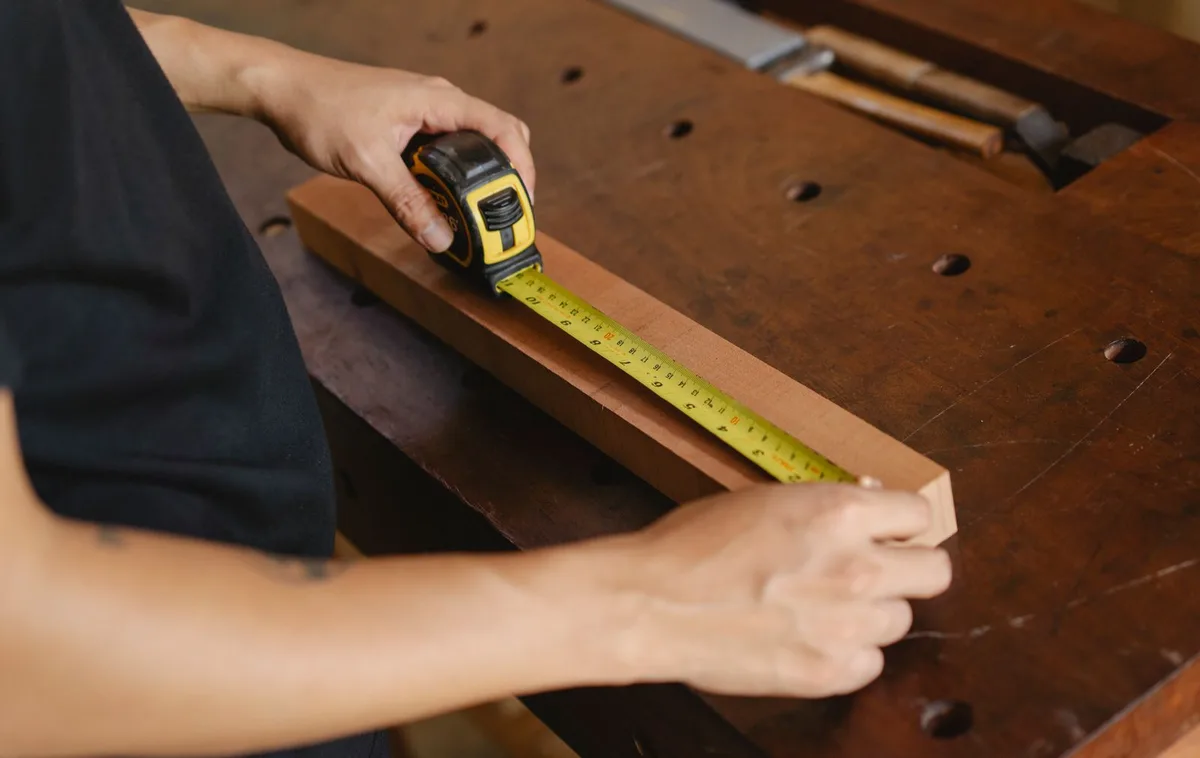
Measure length and width with a tape at room temperature, about 23 °C, then compare with the nominal size: under ISO 6780, the permitted deviation is +3 to -6 mm. Also measure both diagonals, with a difference of no more than 1%. Pallets in the same batch that differ widely are a sign of poor quality control.
What should I note when exporting to Japan with plastic pallets?
On size, the most common in Japan is 1100 x 1100 mm, but state the size clearly in the contract. Plastic pallets do not need ISPM 15 treatment, a standard that applies only to wooden pallets and raw wood packaging. Other paperwork depends on what the partner requires.
What is the standard European pallet size?
The EUR 1 European pallet under EPAL is 1200 x 800 x 144 mm; the 1200 x 1000 mm size is also widely used for industrial goods. A 1200 x 800 mm plastic pallet fits when goods enter European retail systems.
Do blue and black plastic pallets differ in size?
No. Colour usually reflects the plastic type (virgin or recycled) or a warehouse’s zone-coding convention, and does not decide size. In the ICD Vietnam catalogue, the same 1200 x 1000 mm size has both blue and black codes, with different loads by construction.
Contact for plastic pallet size advice
ICD Vietnam advises on choosing plastic pallet size and construction to suit each business’s warehouse, forklifts and export market.
- North: 0983 797 186
090 345 9186
090 5859 186 - South: 098 6784 186
- Email: Sales@icdvietnam.com.vn
In stock - VAT invoice - Nationwide delivery - Free advice
References
- Pallet classification and sizes - Material Handling Industry (MHI) - Pallets.
- Principal dimensions and tolerances of flat pallets - ISO 6780:2003; TCVN 9022:2011.
- T11 standard and rental pallet statistics in Japan - Japan Pallet Association (JPA), updated 1 June 2026.
- European pallet sizes and loads - EPAL Euro Pallet.
- Pallet 1165 x 1165 mm - Standards Australia, AS 4068-1993.
- Interior dimensions of 20-foot, 40-foot and 40-foot HC containers - specifications published by the shipping lines Hapag-Lloyd and Maersk.
- Number of codes, height, weight and load - ICD Vietnam plastic pallet catalogue, checked 11 October 2026.
Related articles
- Plastic Pallet 1200x1200x150mm: 6 Types ICD Offers, Load Comparison 2026
- How Many Kg Does a Plastic Pallet Weigh?
- Static and Dynamic Load of Pallets: The Key Factor to Understand
- Plastic Pallets on Racking: Rack Load, Steel Core and How to Choose
- Top 10 Heavy-Duty Plastic Pallets, Low Price, High Load, All Sizes