Table of Contents
- What is an HDPE plastic pallet?
- Advantages of HDPE plastic pallets
- Disadvantages of HDPE plastic pallets
- Types of HDPE plastic pallets
- Where are HDPE plastic pallets used?
- HDPE plastic pallets compared with PP plastic pallets
- HDPE plastic pallet specifications
- HDPE pallets in cold storage and outdoors
- How can you check that a pallet really is HDPE?
- Frequently asked questions
- How many kg can an HDPE plastic pallet carry?
- Can HDPE plastic pallets be used in cold storage?
- Which is more durable, an HDPE pallet or a PP pallet?
- Are HDPE plastic pallets food-safe?
- What is the HS code for HDPE plastic pallets?
- How much does an HDPE plastic pallet weigh?
- Can HDPE plastic pallets be recycled?
- Contact ICD Vietnam
- References
Reviewed and updated by ICD - Week 43/2026
An HDPE plastic pallet is a pallet moulded from high-density polyethylene (density about 0.93 to 0.97 g/cm³): flexible, impact-resistant and cold-tolerant, and it does not rot or absorb moisture. In the ICD Vietnam catalogue, 147 of 172 plastic pallet models list HDPE or HDPE blended with PP as the material, with a median static load of 4,000 kg and a median dynamic load of 1,000 kg.
At ICD Vietnam, questions about HDPE usually arrive with three follow-ups: how HDPE differs from PP, how virgin and recycled plastic compare, and whether a pallet can go on racking or into a cold store. This article answers each in turn, using sourced material data and the specifications of the pallet models currently in the catalogue, so buyers can read a spec sheet before asking for a price.
What is an HDPE plastic pallet?
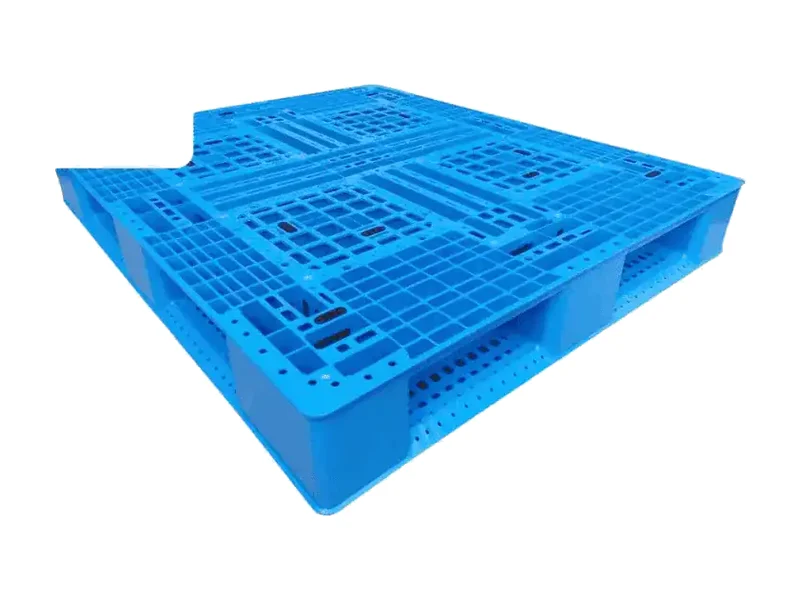
An HDPE plastic pallet is a load platform for forklifts and racking, injection-moulded or blow-moulded from HDPE (High-Density Polyethylene) resin, which may be virgin or recycled and is sometimes blended with PP or PPC for extra stiffness. HDPE is a polyethylene with almost no chain branching, so the forces between chains are large and tensile strength is much higher than low-density PE, about 38 MPa versus 21 MPa according to figures compiled on Wikipedia. The foundations of this topic are covered in which pallet material is best.
A few material properties directly explain how an HDPE pallet behaves in the warehouse. HDPE melts at about 130 °C and tolerates only about 120 °C for short periods, so it is not used in steam sterilisation the way PP is. The plastic is inert to many common solvents, acids and alkalis, so the pallet does not rot or rust. Because it is less dense than water, a 1200 x 1000 mm pallet in the ICD Vietnam catalogue weighs only about 6 to 22 kg depending on construction. On the product, HDPE carries resin identification code 2, while PP carries code 5. For more depth, see static and dynamic pallet load.
Advantages of HDPE plastic pallets
HDPE is the most widely used of the plastic pallet materials thanks to five points: impact strength, resistance to chemicals and moisture, light weight, easy cleaning and recyclability. HDPE’s flexibility lets the pallet absorb the blow of a fork tine instead of cracking, so it carries heavy loads and lasts for years if not overloaded.
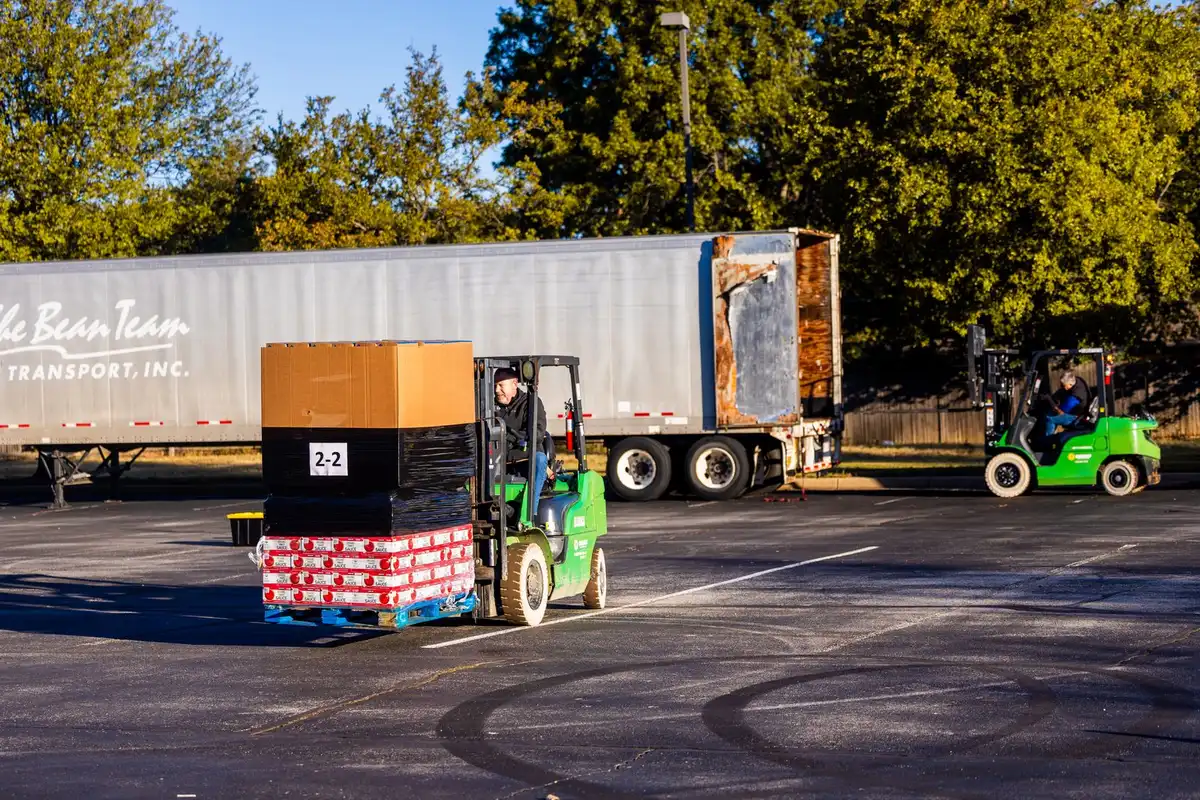
The plastic is unaffected by most common acids, alkalis and oils, and neither rots nor moulds in damp environments. The pallet is lighter than a wooden pallet of the same size and does not gain weight in the wet, which cuts handling effort and freight cost. The surface is non-absorbent and can be washed with water and cleaning solutions, which suits food warehouses. At the end of its life an HDPE pallet can be ground into recycled resin, which is also why HDPE is one of the most widely recovered plastics.
To understand this plastic family better, you can read PE and HDPE plastic to tell the types of polyethylene apart before choosing a pallet.
Disadvantages of HDPE plastic pallets
HDPE pallets have four main drawbacks: a higher purchase price than wooden pallets, lower heat resistance than PP, softer than PP so they sag on racking without a steel core, and they are very hard to repair once cracked or broken. The higher up-front price is offset by lifespan and the number of trips, so compare total lifecycle cost rather than the price of each unit.
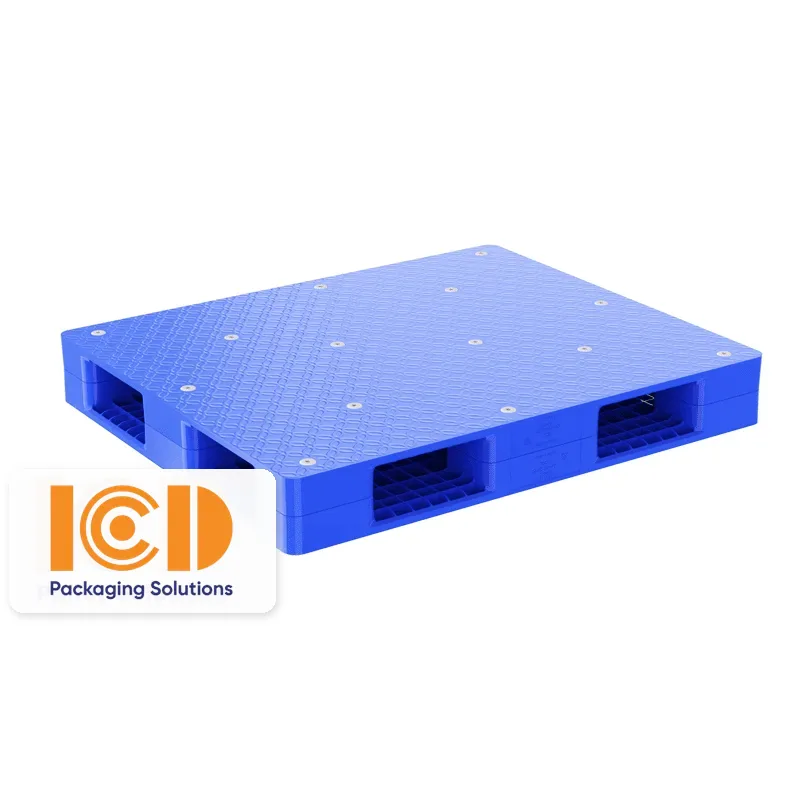
On heat, HDPE melts around 130 °C while commercial PP melts at about 160 to 166 °C, so areas with very hot washing or steam sterilisation suit PP better. On repair, HDPE can hardly be glued, joints must be heat-welded and rarely regain the original strength; a pallet with a broken leg usually has to be replaced.
In practice all four drawbacks can be managed if you pick the right model from the start: ask about rack load, ambient temperature and whether a UV-resistant additive is needed before you order.
Types of HDPE plastic pallets
HDPE plastic pallets are classified by construction, by plastic source (virgin or recycled), and by deck and leg style. By construction there are four common forms:
- A one-piece moulded pallet is cast in a single shot with no joints, so it is strong and distributes load evenly.
- A modular pallet is assembled from several pieces, so a damaged section can be replaced on its own.
- A double-deck pallet can be used on either side, suited to heavy goods and multi-tier stacking.
- A single-deck pallet is lighter, suited to light goods and fast handling.
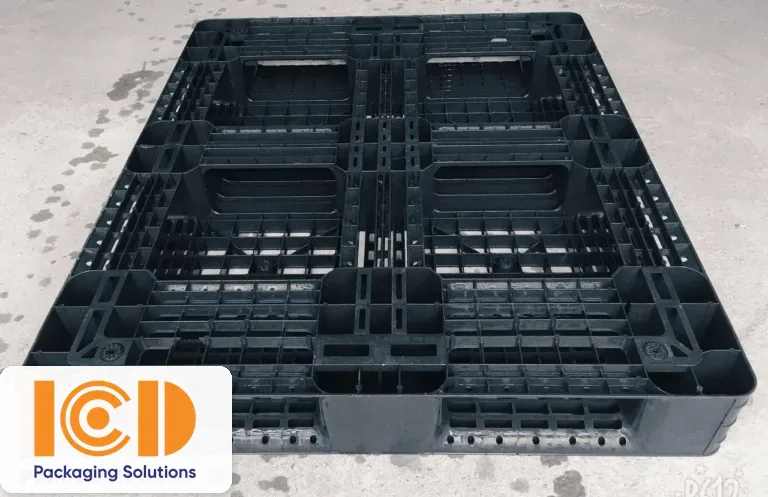
By plastic source: virgin HDPE and recycled HDPE
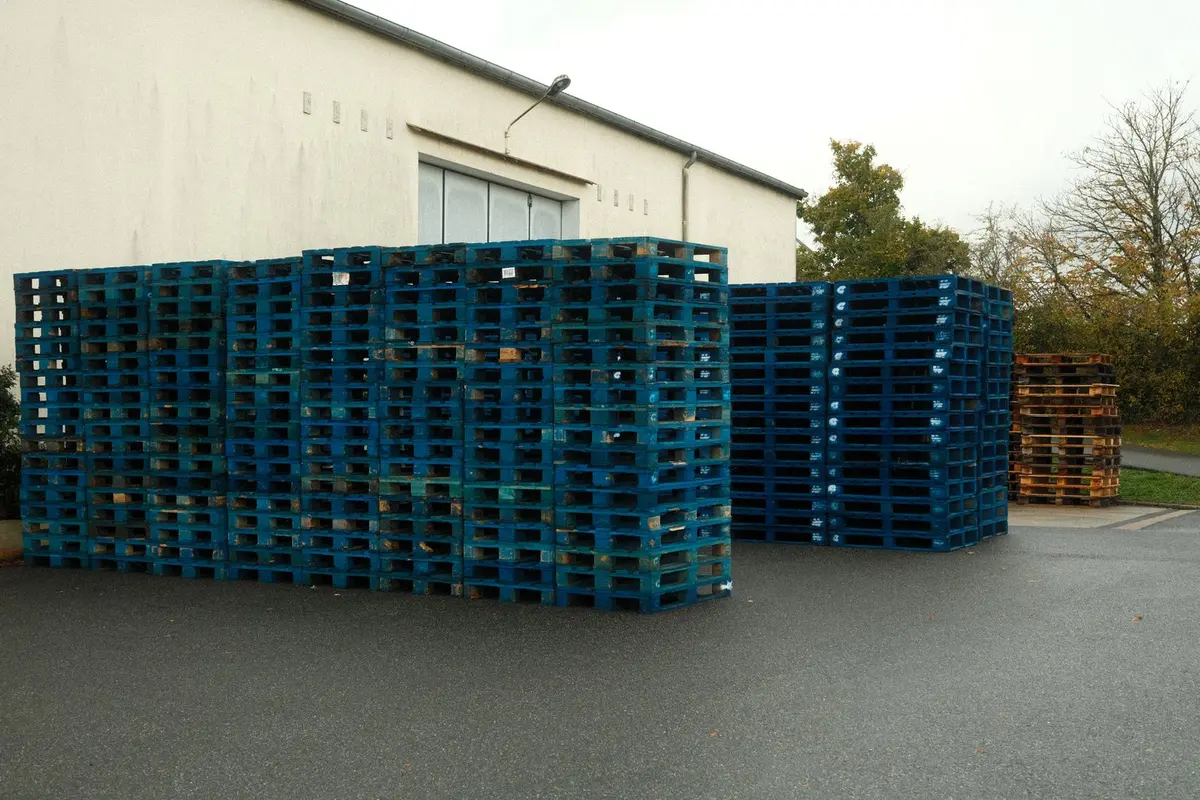
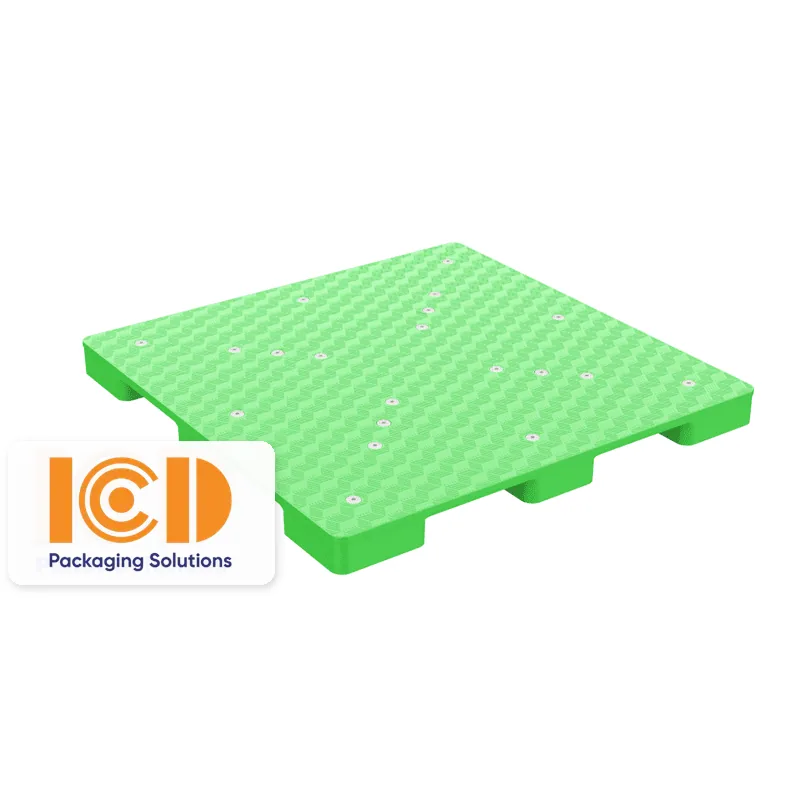
Virgin HDPE is made from new resin, so the colour is bright and even (blue, green, red, yellow) and quality is stable from batch to batch. Recycled HDPE is made from recovered plastic, usually black, grey or dark green, costs less, but its consistency depends on the incoming plastic. The difference lies in uniformity, not in every recycled pallet being weak: a recycled green three-leg 1000 x 1200 x 150 mm pallet in the ICD Vietnam catalogue still states a static load of 4,000 kg and a dynamic load of 2,000 kg.
A sensible approach is to divide by requirement: goods that touch the pallet surface directly in food, pharmaceutical and deep cold storage should favour virgin plastic; one-way export, dry warehouses and industrial goods can use recycled plastic to save money. For cold stores, ask for the specifications of each recycled model before putting it into service.
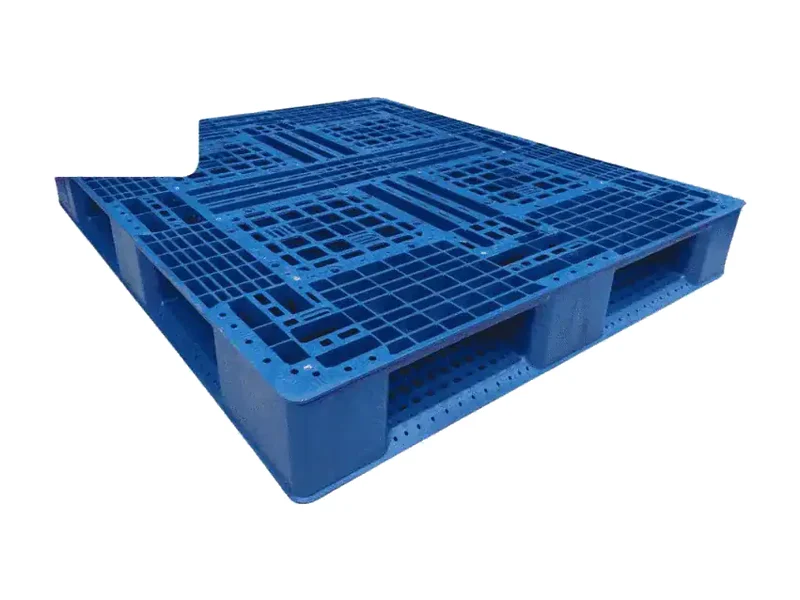
By deck style and leg style
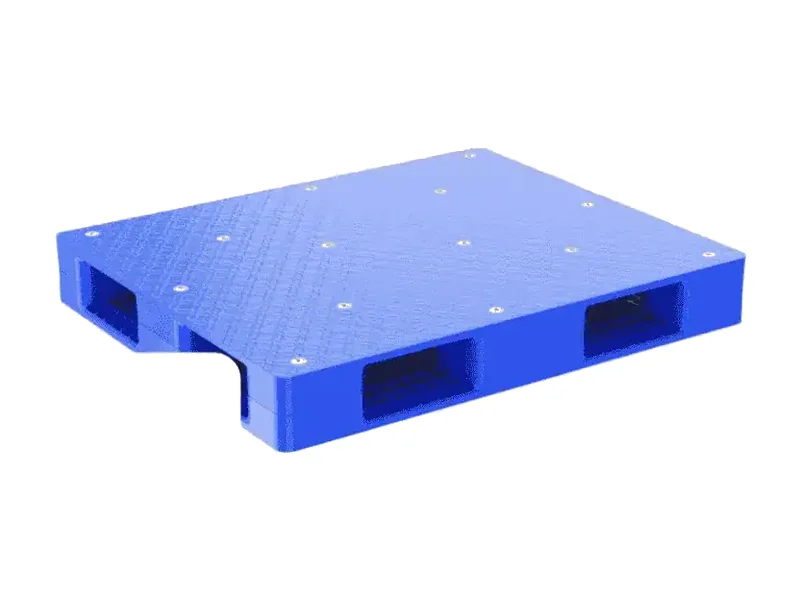
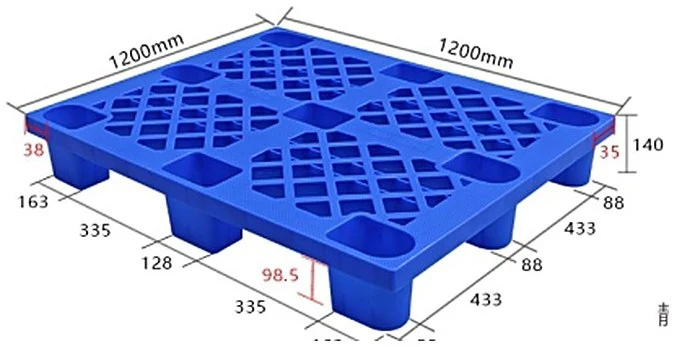
A mesh deck is light, airy and drains quickly, suited to agricultural and seafood goods; a solid deck stops dust and liquids falling to the tier below, is easy to wipe clean and suits pharmaceuticals and dry foods. On legs, a cup-leg (9-leg) pallet is light and nests inside others when stored empty, while a 3-leg or 6-leg pallet with bottom runners is more stable on racking and under repeated forklift handling.
Where are HDPE plastic pallets used?
HDPE plastic pallets are used most in warehousing and transport, the food, pharmaceutical, seafood and cold-storage industries, the chemical industry and industrial plants, that is, wherever durability, hygiene and moisture resistance are needed. Each environment calls for a different configuration.
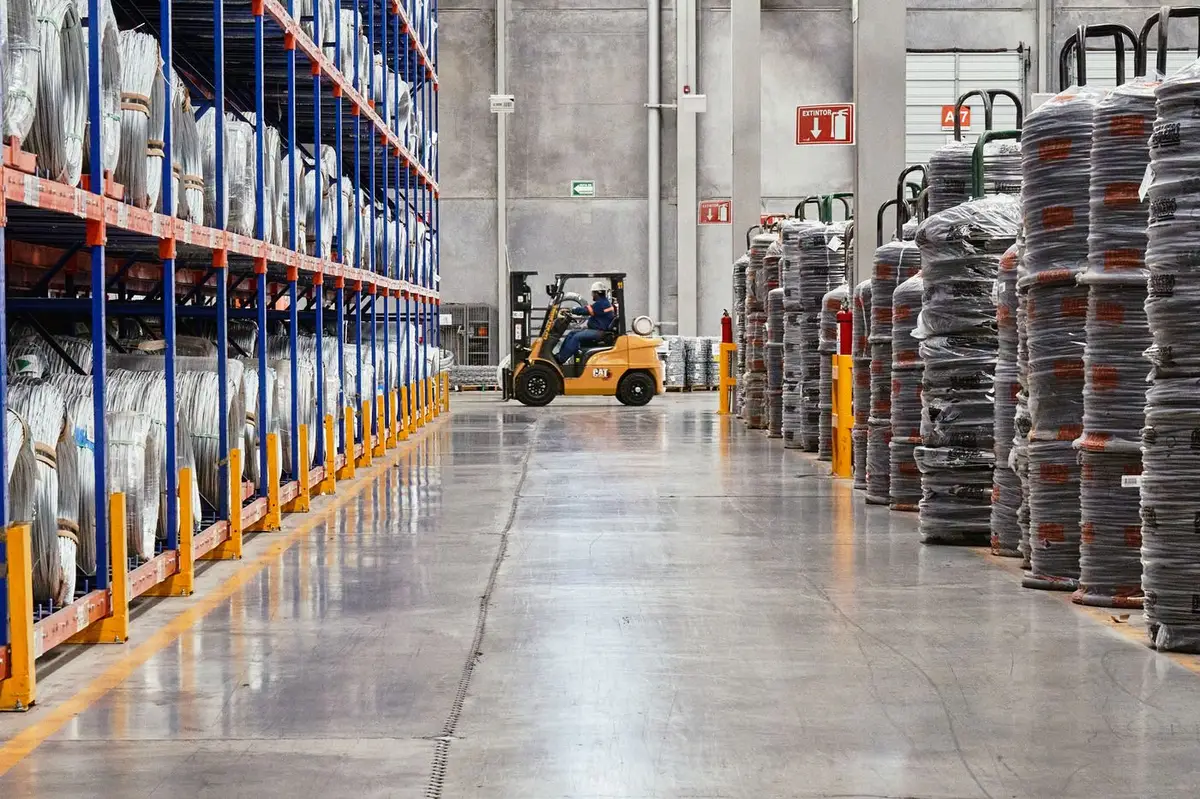
Seafood stores and cold stores need pallets that tolerate cold and frequent washing, so choose virgin HDPE with a mesh or solid deck. Food and pharmaceuticals need a clean surface that resists soiling and is easy to inspect, so choose a solid deck and virgin plastic. Chemical stores need chemical-resistant material that holds leaked liquid, so use a solid-deck or spill-containment pallet. Racking warehouses carrying heavy goods need a pallet that does not sag on the beams, so choose 3-leg or 6-leg with a steel core. One-way export goods need a light, low-cost pallet with no quarantine treatment, so use cup-leg models, which may be recycled plastic.
HDPE plastic pallets compared with PP plastic pallets
HDPE is tougher and handles impact and cold better; PP is stiffer, slightly lighter and more heat-resistant but turns brittle below 0 °C, so cold stores almost always use HDPE. The table below summarises the differences using material data. Another angle is in plastic pallets versus wooden pallets.
| Property | HDPE plastic pallet | PP plastic pallet |
|---|---|---|
| Toughness, impact resistance | Tough, absorbs impact well, hard to crack | Stiffer, more brittle under impact at low temperatures |
| Melting temperature | About 130 °C, tolerates 120 °C for short periods | About 160 - 166 °C, withstands steam sterilisation |
| Low temperature | Stays flexible at freezer-store temperatures | Brittle below 0 °C |
| Stiffness, creep resistance | Softer, sags on racking without a steel core | Stiffer, better creep resistance |
| Chemical resistance | Chemically durable, resists many acids, alkalis and solvents | Good resistance at normal temperature, weaker than PE against strong oxidisers |
| Density | 0.93 - 0.97 g/cm³ | 0.895 - 0.93 g/cm³, the lowest of the common plastics |
| Best suited to | Cold stores, food, seafood, general warehouses | Hot environments, hot-wash areas, dry warehouses |
Many pallet models are not pure HDPE but are blended with PP or PPC (PP copolymerised with ethylene), to get the stiffness of PP while keeping some of PE’s toughness at low temperatures. In the ICD Vietnam catalogue only 15 models list pure PP, 26 list HDPE with PPC, and the rest are mostly HDPE. So when reading a spec sheet, read the material line together with the rack load and the working temperature.
For more on the material, the article what HDPE plastic is, its properties and uses goes into the structure and characteristics of this plastic, while the plastic pallet articles in this topic cluster answer questions on sizes, load ratings and how to choose.
HDPE plastic pallet specifications
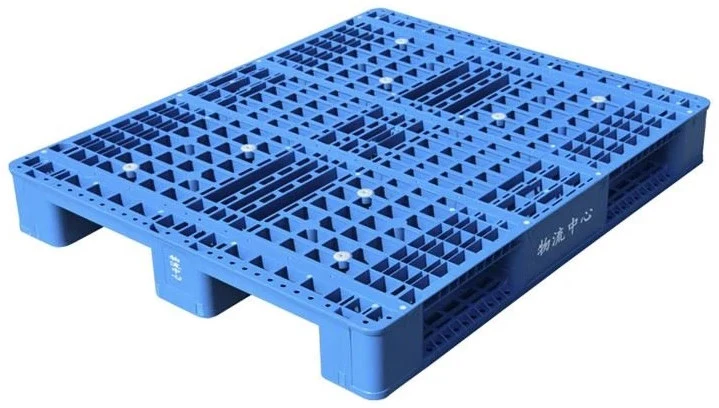
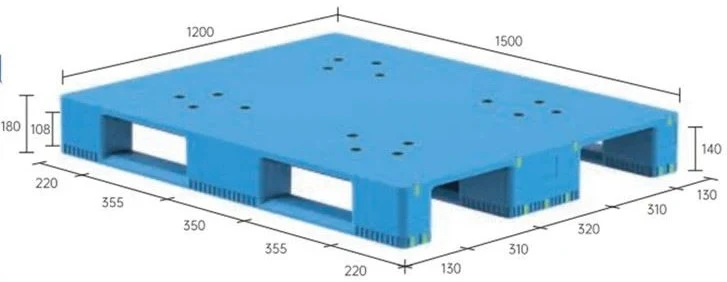
A standard-size HDPE pallet is usually 120 to 160 mm high and carries a static load of several thousand kg, but its dynamic load is only about one third to one half of the static load, and its rack load is the lowest. The three most common sizes in Vietnam are 1200 x 1000 mm, 1100 x 1100 mm and 1200 x 800 mm.
When reading specifications, separate the three load ratings because they differ many times over: static load is when the pallet sits still on the floor or is stacked, dynamic load is when a forklift lifts and moves it, and rack load is when the pallet is supported only at its two edges on beams. Choosing the wrong rating is the usual reason pallets sag or break on racking. The figures also vary with plastic weight, one-piece or modular construction, and whether steel reinforcement is used. The table below summarises the models that list HDPE as the material in the ICD Vietnam catalogue.
| Size (mm) | HDPE models | Common height | Static load (kg) | Dynamic load (kg) |
|---|---|---|---|---|
| 1200 x 1000 | 41 | 150 mm | 1,500 - 6,500 | 500 - 3,200 |
| 1100 x 1100 | 20 | 150 mm | 1,500 - 6,000 | 500 - 2,000 |
| 1200 x 1200 | 16 | 160 mm | 3,500 - 6,000 | 1,000 - 2,000 |
| 1200 x 800 | 12 | 150 mm | 2,000 - 6,000 | 800 - 1,500 |
Compiled from the specifications of plastic pallet models listing HDPE as the material on the ICD Vietnam website, checked 11 October 2026; static load counts only models rated 1,000 kg or more.
The load range above is wide because the catalogue includes both light cup-leg pallets for exports and steel-core pallets for heavy racking. Weight differs accordingly: a 1200 x 1000 mm cup-leg pallet weighs only about 6 kg, a 1100 x 1100 x 150 mm pallet about 11.5 to 18.5 kg, and a 1200 x 1000 x 150 mm warehouse pallet or steel-core pallet about 13.5 to 22 kg. A heavier pallet usually has thicker plastic or steel inside, so it carries higher dynamic and rack loads.
To choose the right model for your actual load and rack type, see the full plastic pallet catalogue with specifications for each model. Plastic pallets distributed by ICD Vietnam carry a 2-year warranty.
HDPE pallets in cold storage and outdoors
HDPE pallets work well in cold stores and freezer stores because they stay flexible at sub-zero temperatures, but for long-term outdoor use they must be a grade with a UV-resistant additive. The working range published by manufacturers varies by resin grade and design: the cold end from about -18 to -40 °C, the hot end from 60 to 70 °C. Ordinary food freezer stores at -18 to -25 °C fall within this range, but you should ask for the range of the exact pallet model you plan to buy.
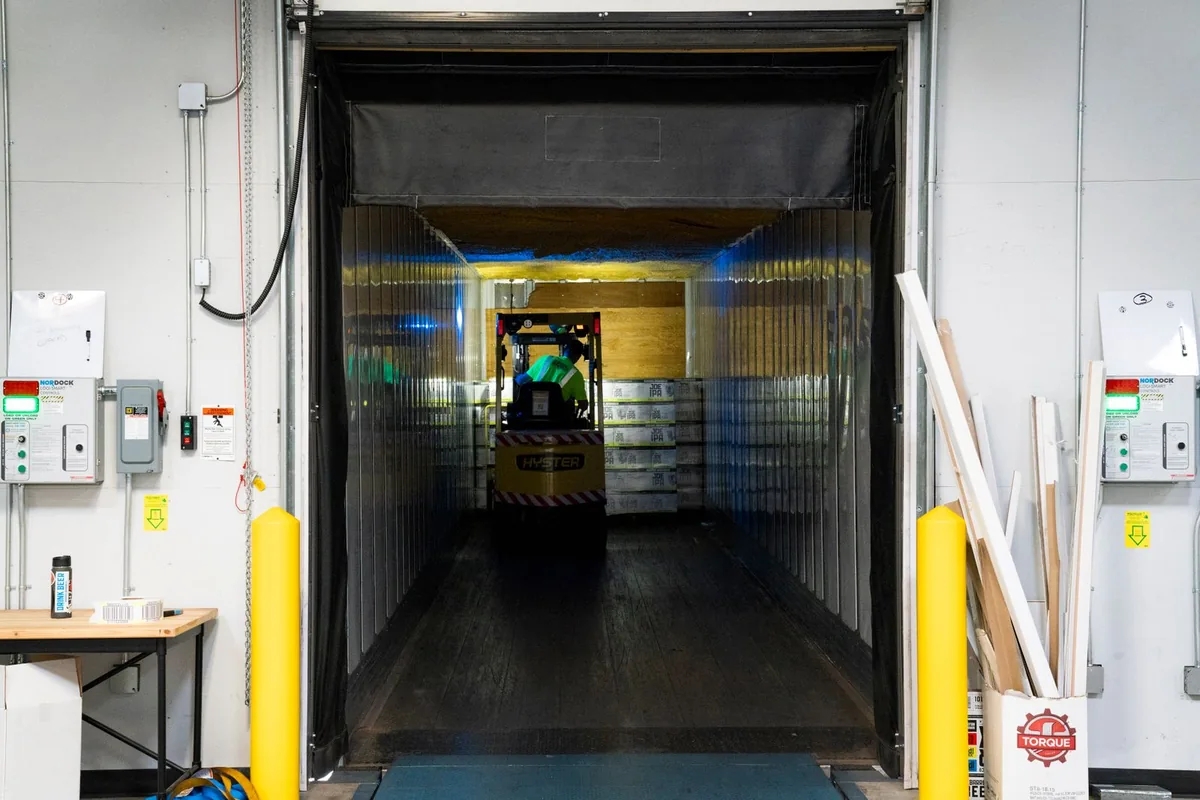
In seafood and frozen-food cold stores, the advantage of HDPE shows clearly against PP, which turns brittle below 0 °C, and against wooden pallets, which absorb moisture, freeze and mould easily. Condensation formed as pallets move in and out of the store does not soak into the plastic, so the pallet does not gain weight or rot. For example, the 1100 x 1100 x 150 mm cold-store pallet in the ICD Vietnam catalogue is made of HDPE and PPC and states a static load of 4,000 kg and a dynamic load of 1,000 kg.
Conversely, ultraviolet light is polyethylene’s weak point. HDPE without UV stabiliser, exposed to the sun regularly, fades, chalks on the surface and gradually becomes brittle, at a rate that depends on sunlight intensity and storage. If pallets are kept in an open yard, choose a grade with a UV-resistant additive from production, and state the conditions of use (cold store, indoor or outdoor) when ordering so you get the right resin formulation.
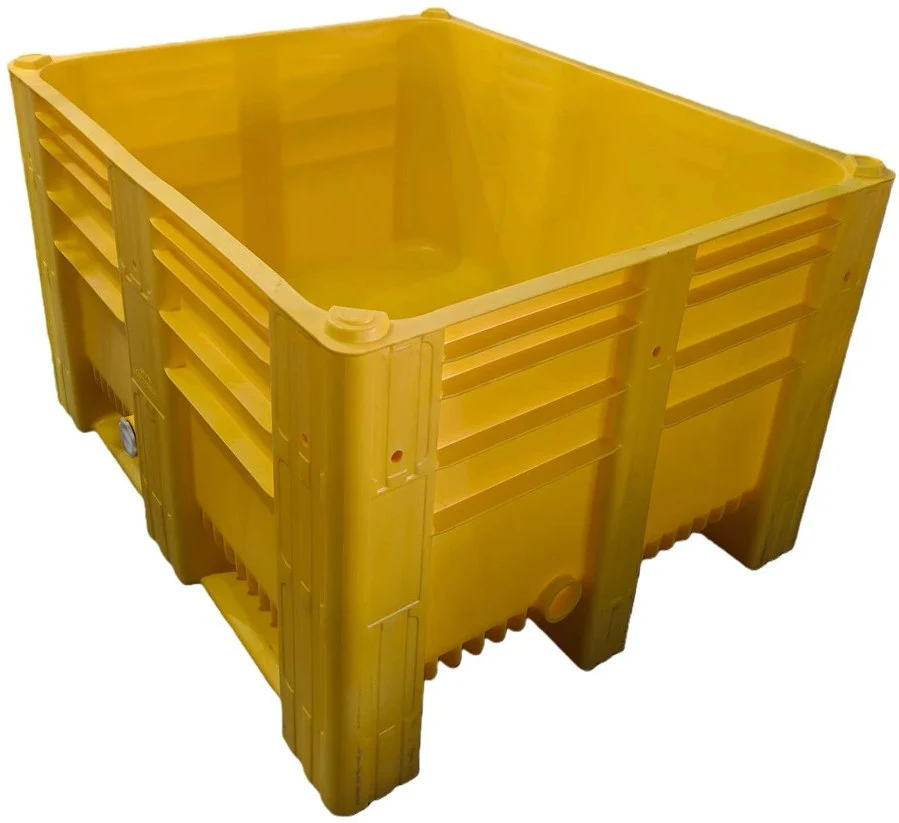
Besides standard flat pallets, ICD Vietnam also supplies container-type plastic pallets made from HDPE for bulk storage with four closed sides.
How can you check that a pallet really is HDPE?
The surest way is to match the marking moulded into the pallet body against the supplier’s specification sheet and documents, because colour or a water test cannot tell HDPE from PP. Both are lighter than water and both float; a bright colour only suggests the pallet may be made of virgin plastic, not whether it is HDPE or PP. On delivery, check the following points:
- Look for the HDPE marking or resin code 2 moulded into the body or legs of the pallet.
- Match the material line on the spec sheet against the contract, noting whether it is pure HDPE or HDPE blended with PP or PPC.
- Ask whether the plastic is virgin or recycled and write that into the contract if goods will touch food directly.
- Request migration test results under QCVN 12-1:2011/BYT for the exact pallet model if goods will sit directly on the plastic surface.
- Check the pallet for cracks, sharp burrs or crooked legs before it goes onto racking.
Frequently asked questions
How many kg can an HDPE plastic pallet carry?
It depends on size and construction. For the HDPE models in the ICD Vietnam catalogue, the median static load is 4,000 kg (up to 8,000 kg) and the median dynamic load is 1,000 kg (up to 3,200 kg on steel-core models). Rack load is always lower than static and dynamic load, so choose the pallet for how it will actually be used to avoid sagging or breaking.
Can HDPE plastic pallets be used in cold storage?
Yes. HDPE stays flexible at sub-zero temperatures and does not absorb moisture, so it is preferred for seafood and frozen-food cold stores. Manufacturers publish different working ranges by resin grade, with the cold end from about -18 to -40 °C and the hot end from 60 to 70 °C, so ask for the range of the exact pallet model. PP is unsuitable because it turns brittle below 0 °C.
Which is more durable, an HDPE pallet or a PP pallet?
HDPE handles impact and cold better, suiting cold stores and general warehouses; PP is stiffer, resists sagging better and tolerates more heat, suiting hot environments or hot-wash areas. For most warehouses and logistics operations in Vietnam, HDPE or HDPE blended with PP is a balance of durability and cost.
Are HDPE plastic pallets food-safe?
Yes, when they are virgin HDPE. HDPE and PP belong to the polyolefin group permitted for food-contact materials, in the US under FDA 21 CFR 177.1520, and in Vietnam PE plastic packaging and utensils in direct food contact must meet QCVN 12-1:2011/BYT. Recycled pallets of unknown plastic origin should not be used where goods touch the pallet surface directly.
What is the HS code for HDPE plastic pallets?
Under Vietnam’s Export and Import Commodity List issued with Circular 31/2022/TT-BTC, HDPE or PP plastic pallets are declared under code 3923.90.90; code 3923.10 is for plastic boxes, cases and crates, and wooden pallets fall under 4415.20.00. US Customs also classifies HDPE and PP plastic pallets of 1200 x 1000 x 150 mm under subheading 3923.90 in ruling NY J80577.
How much does an HDPE plastic pallet weigh?
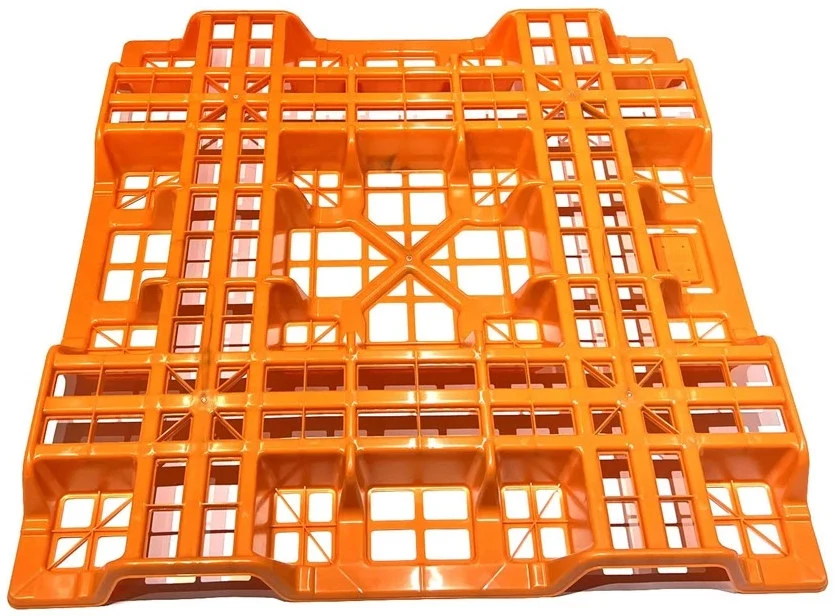
In the ICD Vietnam catalogue, a 1200 x 1000 mm cup-leg pallet weighs about 6 kg, a 1100 x 1100 x 150 mm pallet about 11.5 to 18.5 kg, and a 1200 x 1000 x 150 mm warehouse pallet about 13.5 to 22 kg. A heavier pallet usually has thicker plastic or a steel core.
Can HDPE plastic pallets be recycled?
Yes. HDPE carries resin identification code 2 and is one of the most commonly recovered and recycled plastics. A damaged HDPE pallet can be ground into recycled resin to mould new pallets or other industrial plastic products.
Contact ICD Vietnam
ICD Vietnam supplies virgin and recycled HDPE plastic pallets, solid-deck, mesh-deck and steel-core models for racking, with a specification sheet for each model to check before ordering.
- North: 0983 797 186 / 090 345 9186 / 090 5859 186.
- South: 098 6784 186.
- Email: sales@icdvietnam.com.vn.
- Zalo: Chat with ICD Vietnam on Zalo.
References
- HDPE properties, density and melting point (see also the Polypropylene entry for PP): Wikipedia, High-density polyethylene.
- HDPE plastic material: British Plastics Federation (BPF).
- Food-contact polyolefins: FDA, 21 CFR 177.1520.
- Plastic packaging and utensils in food contact: QCVN 12-1:2011/BYT, Ministry of Health.
- Plastic pallet classification: US Customs and Border Protection (CBP), ruling NY J80577; Circular 31/2022/TT-BTC, Ministry of Finance.
- Wood packaging material: IPPC, ISPM 15.
- Pallet counts, sizes, load ratings, weights: ICD Vietnam plastic pallet catalogue, checked 11 October 2026.