Table of Contents
- Comparing 4 pallet materials: wood, plastic, paper, metal
- Which plastic are plastic pallets made of? PPC, HDPE, LLDPE and PP
- Quick comparison table of the 4 plastics used for pallets
- Virgin or recycled plastic: the deciding factor for durability beyond the plastic type
- Wooden pallets, pressed wood, paper and metal: what else to know
- Choosing pallet material by situation of use
- Frequently asked questions
- Which pallet material is best?
- Which plastic is the most durable for plastic pallets?
- Why do plastic pallets not need fumigation for export while wooden pallets do?
- What is the easiest way to tell PPC, HDPE, LLDPE and PP plastic pallets apart?
- How long do plastic pallets last compared with wooden pallets?
- Can several plastics be mixed in one pallet?
- Do pressed-wood pallets need fumigation for export?
- Are plastic pallets heavier or lighter than wooden pallets?
- How do you dispose of plastic pallets at the end of their life?
- Contact us and get a quote for ICD Vietnam plastic pallets
- References
- Related articles
Reviewed and updated by ICD - Week 43/2026
No pallet material is best for everything: HDPE plastic pallets suit cold stores, food and goods that circulate for years; wooden pallets are cheapest for one-way goods; paper pallets are lightest for air freight; and steel pallets carry the largest loads. Of the 172 ICD Vietnam plastic pallet codes with a material listed on the website, 147 use HDPE.
I am Le Van Thang, and I have worked with pallets at ICD Vietnam since 2011. The question customers ask most is “which one is best”, and I usually ask back three things: where do the goods go, do the pallets come back, and is the warehouse dry or damp, hot or cold? Once those three are answered, the material almost picks itself. This article follows that order: it compares the four main material groups of wood, plastic, paper and metal, then goes deeper into the plastics used for pallets, the question of virgin versus recycled plastic, and finally a table for choosing by situation.
Comparing 4 pallet materials: wood, plastic, paper, metal
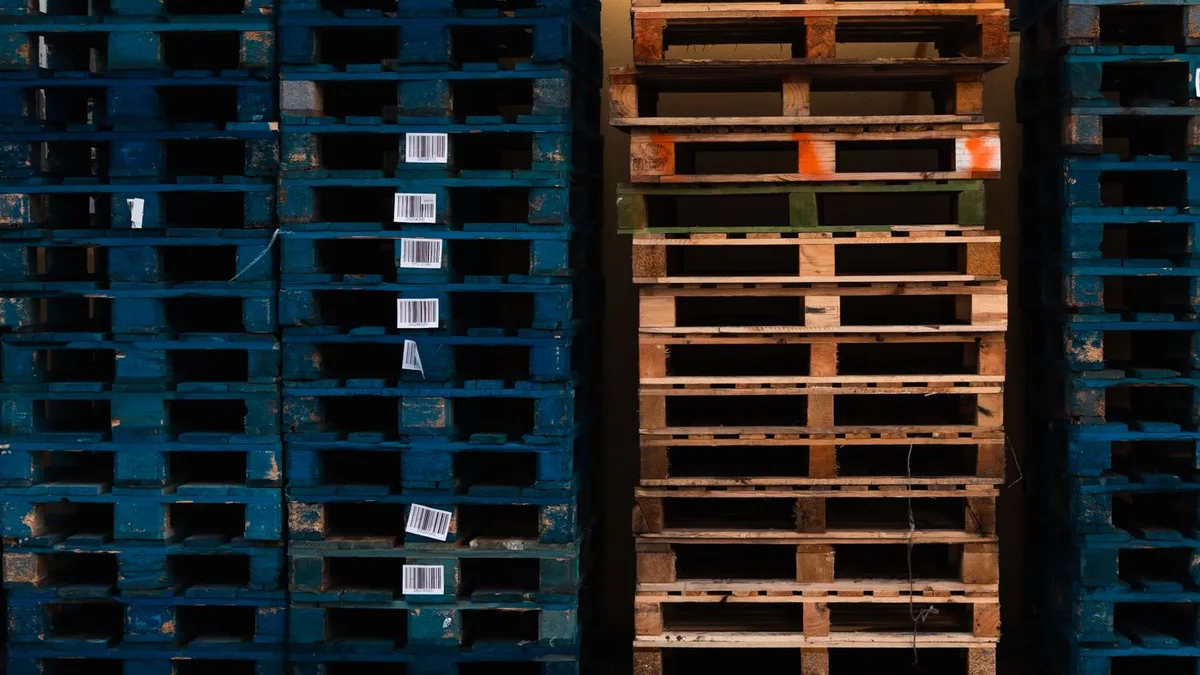
Wooden pallets win on purchase price and ease of repair, plastic pallets on hygiene and number of reuses, paper pallets on weight, and metal pallets on load and stiffness. The biggest differences among the four lie in two points: whether the pallet withstands moisture, and whether it can circulate many times. The table below summarises each group, with the source stated wherever a figure has one.
| Material | Load, weight | Durability, lifecycle | Main advantage | Main limitation | Best for |
|---|---|---|---|---|---|
| Wooden pallet | EPAL 1 pallet (800 x 1200 mm): safe working load 1,500 kg, weighs about 25 kg, according to EPAL | Reusable if slats and nails are replaced; deteriorates quickly when damp or attacked by termites | Low purchase price, easy to repair, can be built to any size | Absorbs moisture, termites, splinters and nails; export must be treated under ISPM 15 | Domestic goods, one-way goods, low budgets |
| Plastic pallet | ICD Vietnam catalogue: dynamic load 400 - 3,200 kg, static load up to 8,000 kg depending on code | Usable for many years; when it breaks the whole unit usually has to be replaced | Absorbs no water, no termites, washable, outside the scope of ISPM 15 | Higher purchase price than wood; sags on racking if the wrong type is chosen; softens near heat sources | Food, pharmaceuticals, cold stores, circulating goods |
| Paper (cardboard) pallet | Lowest load of the four groups, in return for the lightest weight | Usually single use | Very light, recyclable with paper, no ISPM 15 treatment needed | Loses stiffness in water or high humidity | Air freight, light one-way goods |
| Metal pallet | Highest load and stiffness, also the heaviest | Longest if painted or plated against rust | Does not sag on racking, does not burn, heat-resistant | Expensive, heavy, rusts if the protective layer peels | Heavy engineering, moulds, super-heavy goods stacked statically |
The table deliberately gives no number of years for each type. Pallet lifespan depends on the number of circulation cycles, how forklifts handle it and the warehouse environment more than on the material, so sales documents on the market state very different figures: even for plastic pallets, some say 3 - 5 years and others 7 - 10 years. When comparing, I advise customers to work out the cost per use cycle, that is, the purchase price divided by the number of cycles the pallet is expected to last. A cheap wooden pallet that only travels one way has a cost per cycle equal to its purchase price.
Most small and medium businesses in Vietnam choose between wooden pallets and plastic pallets, because these two balance cost and durability. If you already lean towards plastic pallets, the next question is which plastic the pallet is made of, because although all are called plastic pallets, their properties differ quite a lot.
Which plastic are plastic pallets made of? PPC, HDPE, LLDPE and PP
Plastic pallets are mainly made of HDPE and PP, including polypropylene copolymer (PPC). In the ICD Vietnam catalogue, 108 codes list HDPE only, 60 codes have PP or PPC in the composition, and 39 list both. LLDPE is almost never used for the pallet body; where you meet it most in a warehouse is the roll of pallet stretch film.
1. Plastic pallets made of PPC
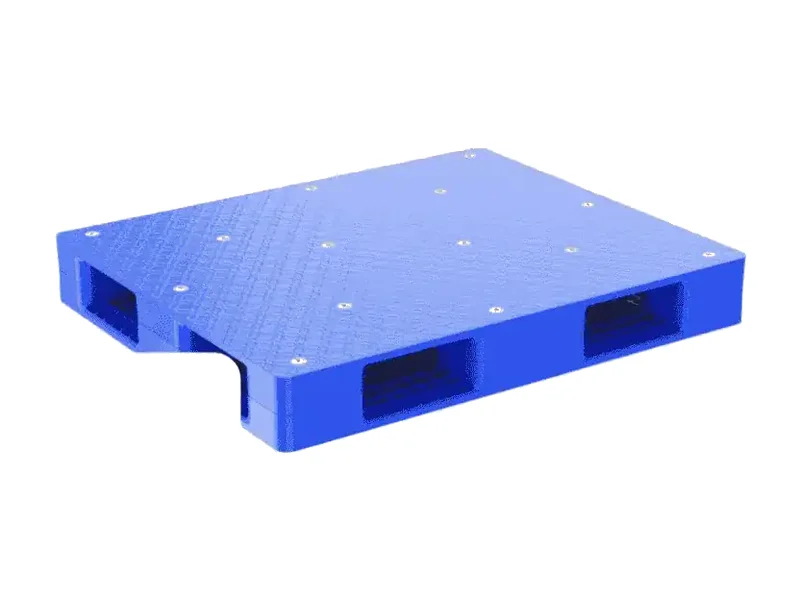
PPC is polypropylene copolymerised with ethylene. It is used for pallets because it is tougher than ordinary PP at low temperatures while keeping the chemical resistance of the PP family.
Thanks to its non-polar polymer chain, PPC withstands water, inorganic acids, alkalis and salts, is not harmed by ordinary cleaning chemicals, and absorbs almost no water even after long immersion. The material is lighter than water, insulating against heat and sound, and recyclable like other thermoplastics. PPC has an elastic modulus of about 1,050 - 1,260 MPa, meaning it is far more flexible than steel; this is an advantage under impact, and also a point to watch when pallets are placed on racking.
Some reference temperature marks commonly published for this plastic group; actual values differ by grade:
- Melting point about 162 - 165°C.
- Long-term working temperature about -30°C to 100°C.
- Short-term tolerance up to about 150°C.
2. Plastic pallets made of HDPE
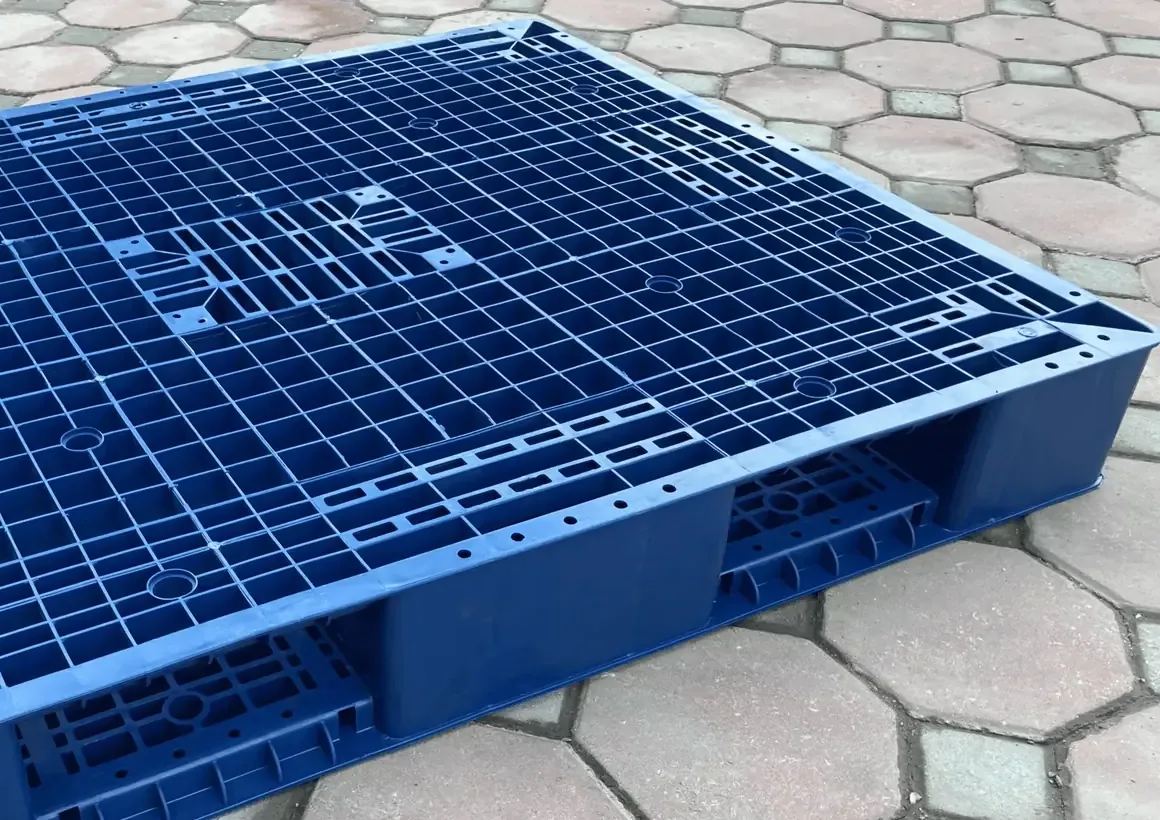
HDPE is the most common material for plastic pallets because it takes impact well, resists chemicals and stays flexible at deep sub-zero temperatures; 147 of the 172 ICD Vietnam plastic pallet codes contain HDPE.
HDPE (high-density polyethylene, also written PEHD) is polyethylene of high density, about 0.93 - 0.97 g/cm³, so an HDPE pallet is lighter than water and floats. The lightly branched molecular chains pack tightly, so HDPE has higher tensile strength than LDPE, resists impact and cracking, and resists corrosion and abrasion well. The material is electrically and thermally insulating, with a thermal expansion coefficient of about 0.2 mm per metre per degree C.
There are two points I always tell customers. First, HDPE withstands long sun exposure only when the resin has a UV-stabiliser additive; for pallets left in a yard, ask the supplier about this clearly. Second, HDPE softens gradually when hot, so do not leave pallets next to drying ovens or heat sources, or wash them with very hot water, unless the specification of that code states that it tolerates this.
See also: What is HDPE plastic? How is it used in plastic pallet production
3. LLDPE: present in the warehouse but rarely the pallet body
LLDPE is linear low-density polyethylene, notable for toughness and puncture resistance, so it is used mainly for thin films and parts that need elasticity rather than for the whole pallet body.
The main chain of LLDPE is nearly straight and carries many short branches formed by copolymerising ethylene with alpha-olefins. This structure makes it both soft and tough with a certain stiffness: tensile strength, impact strength and puncture resistance are higher than LDPE, but surface hardness and tensile strength are still lower than HDPE. The difference between LDPE and HDPE lies mainly in density, while LLDPE differs from both in molecular structure.
LLDPE resists acids, alkalis and organic solvents, insulates electrically well, stays flexible at low temperatures, is non-toxic and odourless, and has a softening point of about 94 - 108°C. Puncture strength is its greatest strength, so it can be drawn into thinner film than LDPE while staying strong.
4. Plastic pallets made of PP
PP is rigid, light and withstands over 100°C, but ordinary PP turns brittle below 0°C, so it suits dry and cool stores better than freezer stores.
PP (polypropylene) is a polymerisation product of propylene. The material has high mechanical strength and stiffness, is not as flexible as PE and does not stretch much, which is why it is also drawn into fibre for woven sacks. The weak point is that once it has a cut or small hole, PP tears further easily. PP is colourless, odourless, non-toxic and resists water vapour, oxygen and grease well, so it is widely used in the food industry and packaging.
In packaging, PP is also made into thin film that is nearly transparent, glossy and prints well. The heat-sealing temperature of PP packaging is about 140°C, higher than PE, so PP is rarely used as the innermost layer of laminated film. For pallets, what to remember is that PP is low-priced, rigid and heat-resistant, but ordinary PP should be avoided in freezer stores.
Quick comparison table of the 4 plastics used for pallets
If you choose only one plastic for a general-purpose pallet, HDPE is the safest option because it tolerates cold, impact and chemicals; PP and PPC suit dry stores and hotter environments.
| Plastic | Key properties | Reference temperature | Best for |
|---|---|---|---|
| PPC | Tougher than ordinary PP, strong chemical resistance | -30°C to 100°C long term | Chemical stores, areas needing frequent washing, cool stores |
| HDPE | Strong impact resistance, chemical resistance, sun-resistant with UV additive | Brittle below about -75°C | Cold stores, freezer stores, export goods, outdoor yards |
| LLDPE | Soft and tough, best puncture resistance in the PE group | Softens at 94 - 108°C | Pallet stretch film, parts needing elasticity; rarely used as the pallet body |
| PP | Rigid, light, non-toxic, low price | Withstands over 100°C, brittle below about 0°C | Dry stores, cool stores, hot environments |
Virgin or recycled plastic: the deciding factor for durability beyond the plastic type
For the same HDPE or PP, a pallet made from virgin plastic is usually more durable and stable than one made from recycled plastic, because recycled plastic has been melted several times and may contain impurities that reduce flexibility. You may also find our article on virgin plastic pallets useful.
The plastic name only tells half the story. Two pallets both marked HDPE can differ clearly in lifespan if one uses fresh resin and the other uses reclaimed plastic of unknown source. Virgin pallets are usually light, uniform colours such as blue, green and white; recycled pallets are often black, grey or dark green, and the colour varies between batches.
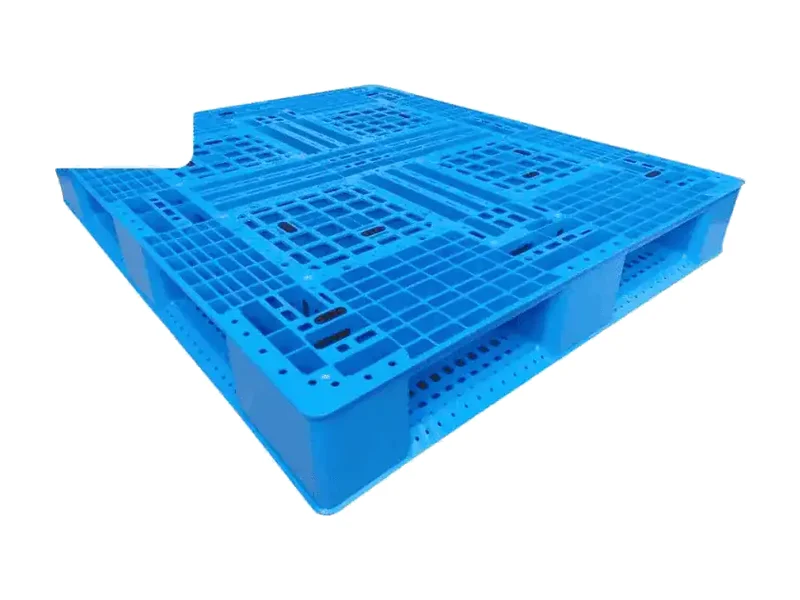
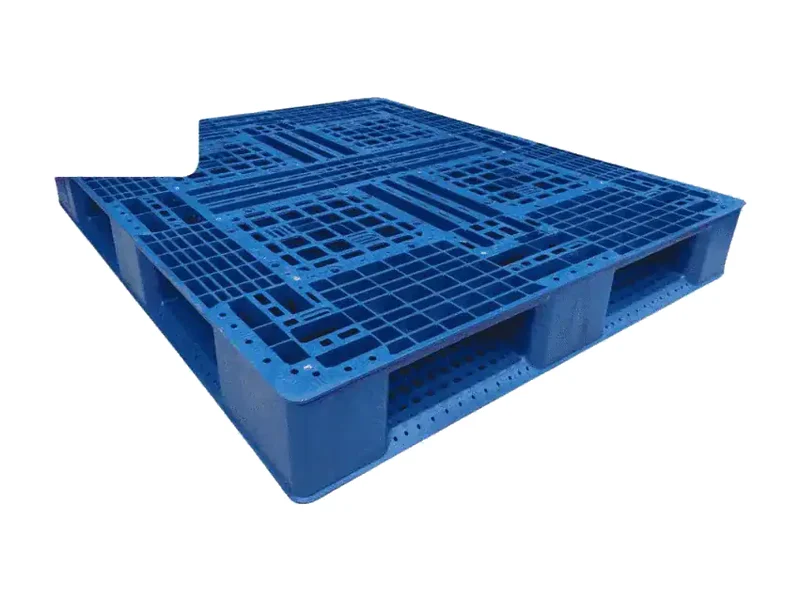
On performance, virgin plastic gives stable flexibility and impact resistance matching the resin grade, while recycled plastic varies with the source of reclaimed material. So for cold stores, freezer stores, food and pharmaceutical areas that need material records, use virgin plastic, preferring virgin HDPE for freezer stores; recycled pallets crack and turn brittle more easily at sub-zero temperatures and should not go into food areas. In return, recycled pallets cost less and are a sensible choice for a dry store holding packaged industrial goods.
In the ICD Vietnam plastic pallet catalogue, 6 codes state that they contain recycled plastic, and most of the remaining codes list HDPE, PP or PPC. When you ask for a price, ask the supplier to state virgin or recycled on the quote for each code, because two pallets that look the same in photos can differ considerably in price just because of the source of the resin.
Wooden pallets, pressed wood, paper and metal: what else to know
Each of the remaining groups has one deciding technical point: natural wood pallets must be treated under ISPM 15 for export, pressed-wood pallets need not be, paper pallets fear moisture, and metal pallets are heavy and need rust protection.
Natural wood pallets: cheap, easy to repair, but must be treated for export
Natural wood pallets have a low purchase price and can be repaired by replacing slats, but for international trade they must be heat-treated or fumigated and stamped under the ISPM 15 standard.
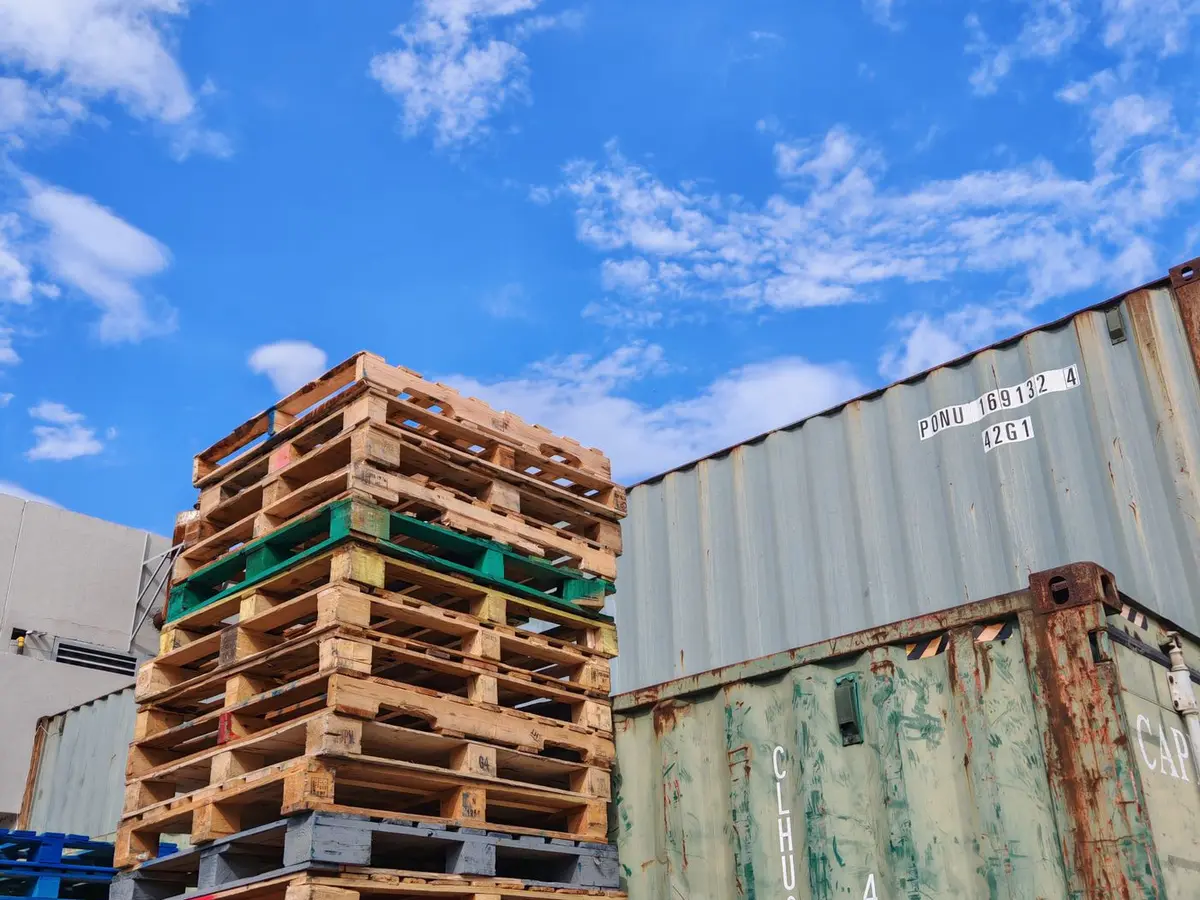
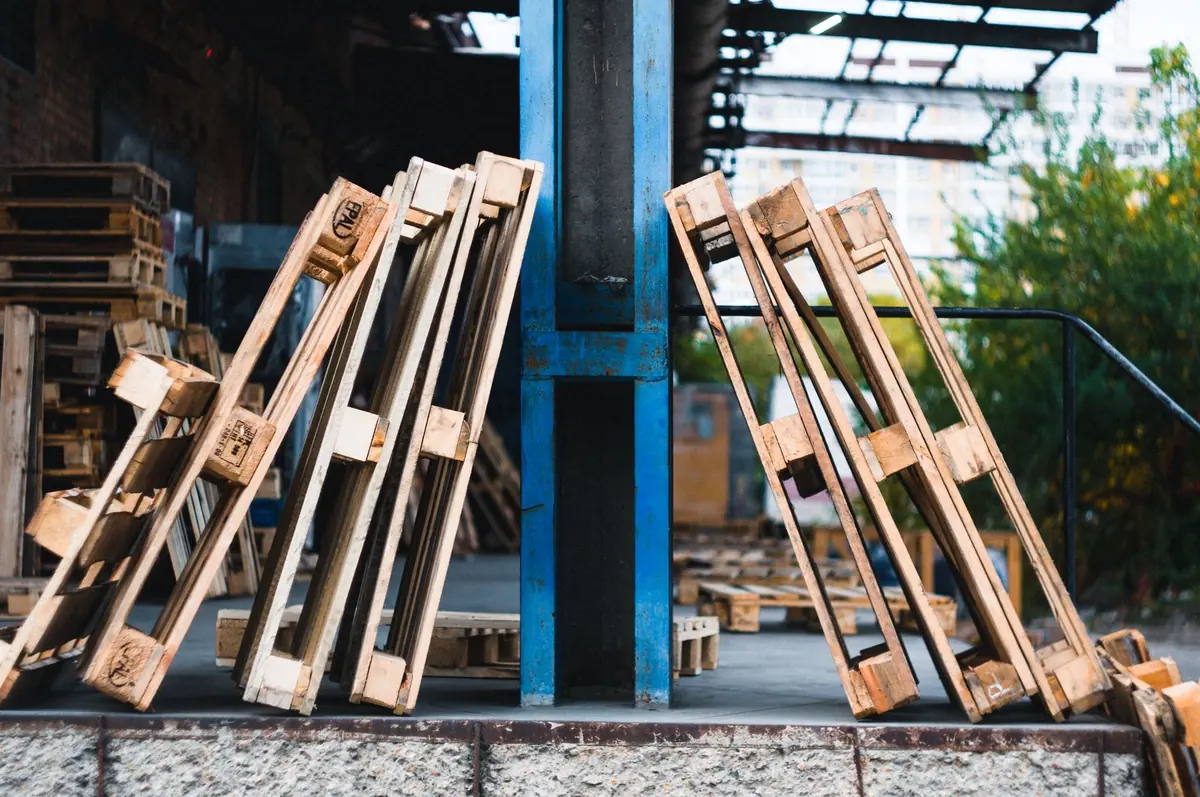
The European-standard wooden pallet is the easiest example to picture. According to the European Pallet Association (EPAL), the EPAL 1 pallet measuring 800 x 1200 x 144 mm has 11 boards, 9 blocks and 78 nails, weighs about 25 kg and has a safe working load of 1,500 kg. Since 1 January 2010, every new EPAL pallet has been heat-treated under ISPM 15, and fumigation with methyl bromide is not allowed.
Pressed-wood pallets: outside the scope of ISPM 15
Pressed-wood pallets, made from plywood or compressed wood chips, do not have to be treated under ISPM 15, because the standard of the International Plant Protection Convention (IPPC) excludes packaging made from wood that has been processed to the point where no pests remain, plywood for example.
As a result, pressed-wood pallets are often used for one-way export goods that need less paperwork. In return, pressed wood resists water less well than natural wood and is hard to repair, so it does not suit damp stores or many circulation cycles. In summary, from the quarantine point of view:
- Natural wood is cheap and easy to repair, but for export it must be treated under ISPM 15 and carry the IPPC mark.
- Pressed wood is outside the scope of ISPM 15, light and uniform, but resists water poorly.
- Plastic is outside the scope of ISPM 15, resists moisture, lasts for years, and costs more to buy.
Paper pallets: lightest but afraid of moisture
Paper pallets are made of pressed layers of cardboard or honeycomb paper; they are the lightest type, suit air freight and one-way goods, but lose stiffness quickly in water or high humidity.
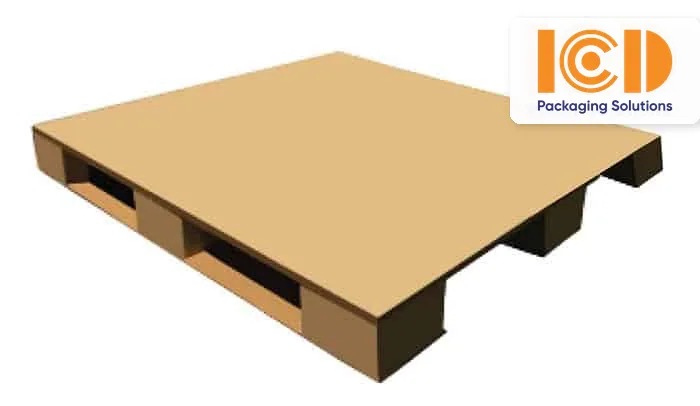
When using paper pallets for sea freight, allow for moisture condensing inside the container; for long journeys through hot, humid climates, plastic pallets or treated wooden pallets are usually safer.
Metal pallets and plastic pallets with a steel core
Metal pallets (powder-coated steel, galvanised steel, aluminium) carry the largest loads and do not sag on racking, but they are heavy, expensive and need rust protection; if you only need a stiffer pallet on racking, a plastic pallet with a steel core is the middle option.
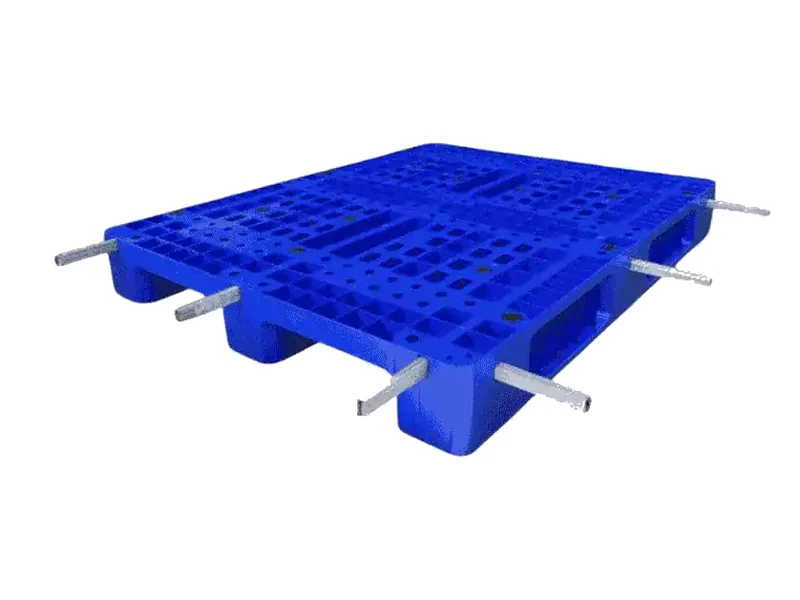
A steel-core plastic pallet keeps the moisture resistance and easy cleaning of plastic, while the steel bars in the body reduce sag on racking. In the ICD Vietnam catalogue, the highest dynamic load, 3,200 kg, belongs to a virgin HDPE steel-core pallet code measuring 1200 x 1000 x 150 mm. For super-heavy goods stacked statically for a long time, or areas that need fire resistance, a steel pallet is still the more suitable choice.
Choosing pallet material by situation of use
The quickest way to choose is to start from the environment and lifecycle: for one-way goods choose wood, pressed wood or paper; for goods circulating many cycles, damp stores and cold stores choose plastic; for very heavy loads on racking choose steel-core plastic or metal. Here is how I usually suggest for each common situation:
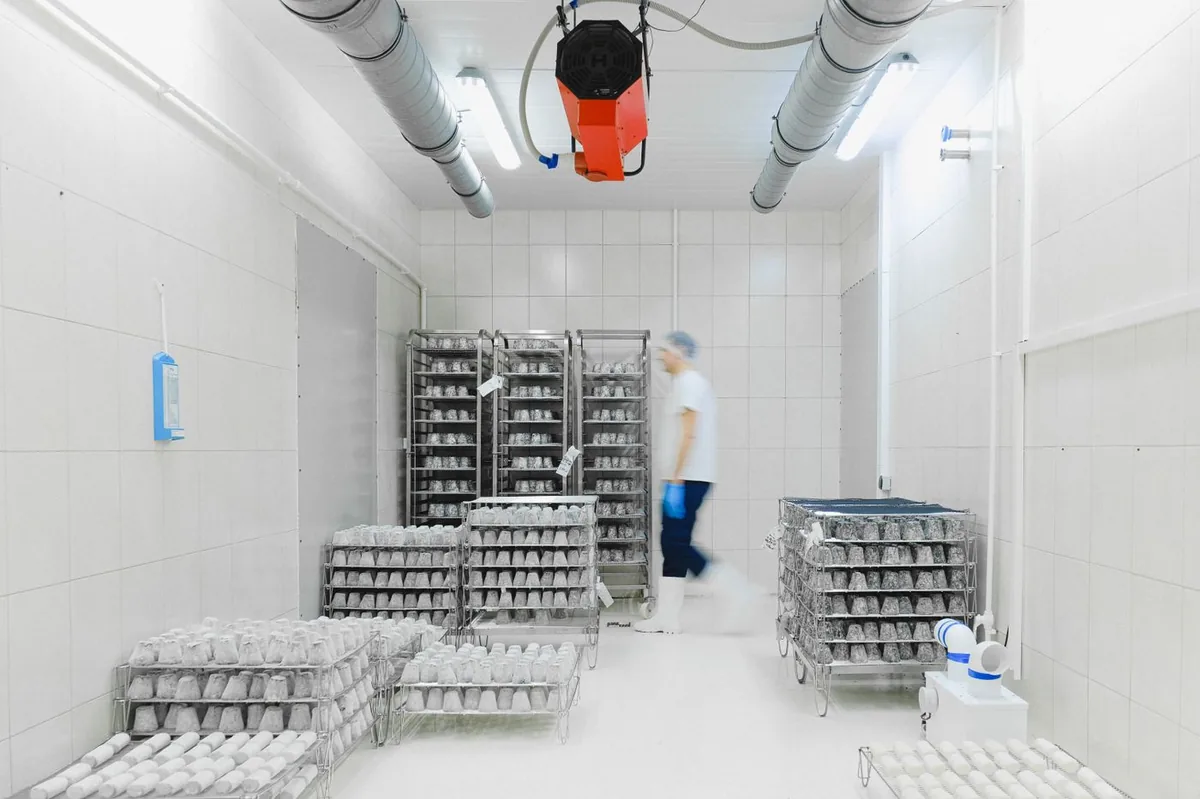
- Cold stores, freezer stores for seafood and meat: virgin HDPE plastic, mesh deck to drain defrost water.
- Food and pharmaceutical areas with hygiene audits: virgin plastic in a light colour, with material records.
- One-way sea export: ISPM 15-treated wood, pressed wood or low-cost plastic pallets, because pallets cannot be recovered.
- Air freight, light goods: paper pallets or light plastic pallets to reduce chargeable weight.
- Selective racking, heavy goods in many tiers: steel-core plastic pallets or steel pallets to limit sag.
- Chemical stores, corrosive environments: HDPE or PPC plastic because they resist acids, alkalis and salts and do not rust.
- Internal stores, low budget, short circulation: natural wood pallets because of the low purchase price and easy repair.
The list above is a starting point. Of the 172 ICD Vietnam plastic pallet codes with a listed material, 151 publish a dynamic load from 400 to 3,200 kg, with a median of 1,000 kg; load, size and forklift type are what finally settle the pallet code. If you need to understand the load numbers, you can also read the article on what determines pallet load rating.
That covers what you need to know about pallet material, including the plastics that ICD Vietnam currently supplies. If you are torn between plastic and wood, the article comparing plastic and wooden pallets goes deeper into the cost and use of the two, while the plastic pallet catalogue lists every series so you can choose a code by real load.
Frequently asked questions
Which pallet material is best?
There is no absolute best material. Wooden pallets suit low budgets and one-way goods; plastic pallets suit industries that need hygiene, damp stores, cold stores and goods circulating for years; paper pallets suit goods that need low weight; metal pallets suit very large loads.
Which plastic is the most durable for plastic pallets?
Of the four commonly mentioned, HDPE balances impact strength, chemical resistance and cold tolerance best, so it is the main material of most plastic pallets. For long outdoor use, you need HDPE with a UV-stabiliser additive. PPC resists chemicals well, while LLDPE is tough and puncture-resistant but rarely used for the pallet body.
Why do plastic pallets not need fumigation for export while wooden pallets do?
ISPM 15 applies only to wood packaging material, because raw wood can carry harmful insects across borders. A plastic pallet is a synthetic material, outside the scope of ISPM 15, so it needs no heat treatment, fumigation or IPPC stamp.
What is the easiest way to tell PPC, HDPE, LLDPE and PP plastic pallets apart?
By hand it is very hard to be sure. The reliable way is to look at the material mark moulded on the pallet, if any (code 2 is HDPE, code 5 is PP) and the specification the supplier states on the quote. By feel, PP is the most rigid and least elastic, HDPE is firmer and more flexible under impact, PPC is tougher than ordinary PP at low temperatures, and LLDPE is the softest, so it is rarely used for the pallet body.
How long do plastic pallets last compared with wooden pallets?
Plastic pallets usually last many times longer than wooden pallets if used within their load and kept away from heat, while wooden pallets deteriorate quickly when damp, attacked by termites or hit by forklifts. The exact number of years depends on the number of circulation cycles and handling, so when comparing, work out the cost per use cycle rather than years.
Can several plastics be mixed in one pallet?
Yes. In the ICD Vietnam catalogue, 39 codes list a material that includes both HDPE and PP or PPC. This blend balances stiffness against impact resistance, depending on the design of each series.
Do pressed-wood pallets need fumigation for export?
No. The IPPC’s ISPM 15 excludes packaging made from wood processed to the point where no pests remain, plywood for example, so pressed-wood pallets need no heat treatment or ISPM 15 stamp. Some importing countries may have their own requirements, so still ask your partner or freight forwarder before packing.
Are plastic pallets heavier or lighter than wooden pallets?
Most plastic pallets are lighter than wooden pallets of the same size. The EPAL 800 x 1200 mm wooden pallet weighs about 25 kg according to EPAL, while the 1200 x 1000 mm plastic pallet models in the ICD Vietnam catalogue weigh from about 6 kg for the one-way cup-foot type to 22 kg for the heavy-load warehouse type. A steel-core plastic pallet is heavier than the ordinary type of the same size.
A few weight marks from the ICD Vietnam catalogue: the cold-store warehouse plastic pallet 1200 x 1000 x 145 mm weighs 10.8 - 11.5 kg, the steel-core plastic pallet 1200 x 1000 x 150 mm about 18.9 kg, the heavy-load warehouse pallet 1200 x 1000 x 150 mm 21 - 22 kg, and the black export pallet 1300 x 1100 x 130 mm about 11.5 kg.
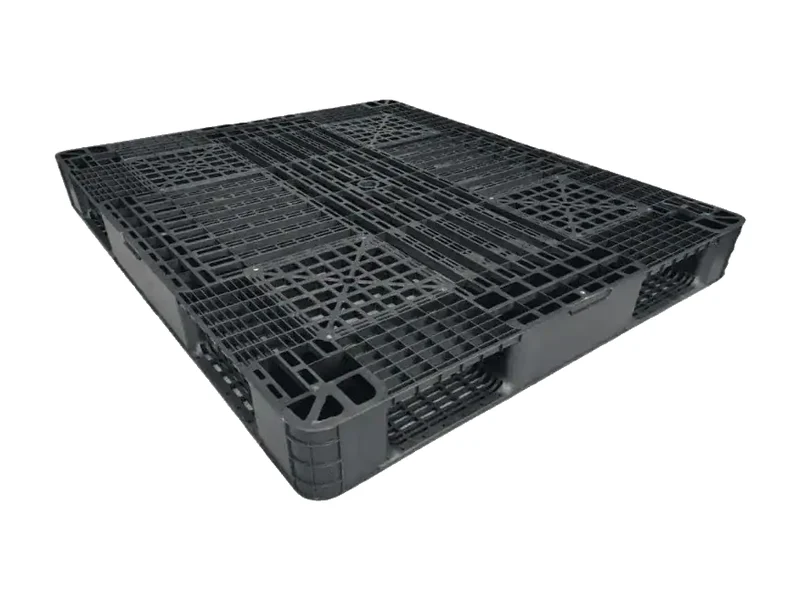
How do you dispose of plastic pallets at the end of their life?
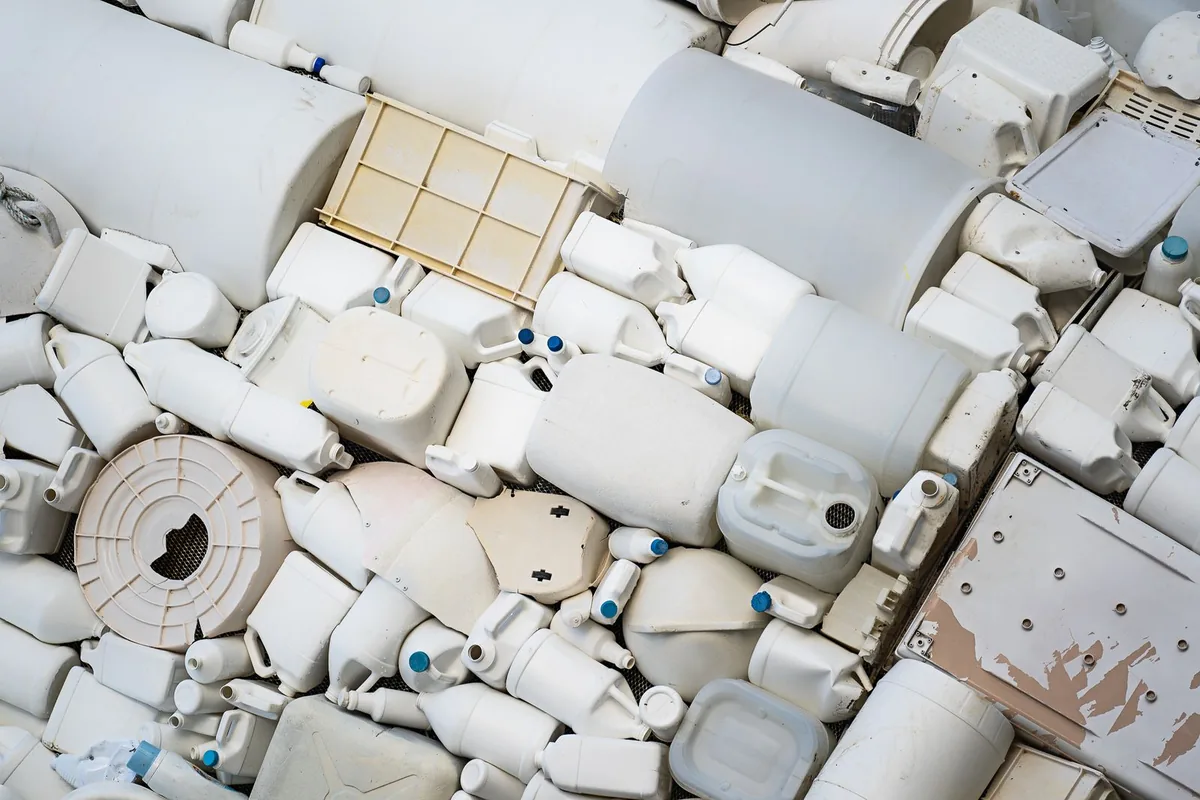
HDPE and PP plastic pallets are both recyclable: damaged pallets are ground into plastic flakes used as raw material for recycled plastic products. HDPE carries resin identification code 2 and PP carries code 5, with PP covering both ordinary PP and polypropylene copolymer (PPC).
Contact us and get a quote for ICD Vietnam plastic pallets
ICD Vietnam Industrial Manufacturing Co., Ltd.
Northern address: 3rd Floor, Thang Long A1 Building, Bau Hamlet, Thien Loc Commune, Hanoi
Southern address: 551/212 Le Van Khuong Street, Tan Thoi Hiep Ward, District 12, Ho Chi Minh City
North: Call 0983 797 186 / 090 345 9186 / 090 5859 186 for free advice and to place an order
South: Call 098 6784 186 for free advice and to place an order
Email: sales@icdvietnam.com.vn
Zalo: Chat on Zalo now
Fanpage: see more here
References
- EPAL 1 pallet specifications (dimensions, weight, load, heat treatment): EPAL, EPAL Euro pallet.
- Wood packaging in international trade and the plywood exclusion: IPPC, ISPM 15.
- Brittleness temperature of HDPE by ASTM D746: Chevron Phillips Chemical, Marlex 9045 data sheet.
- Polypropylene properties, density and brittleness at low temperature: Wikipedia, Polypropylene.
- Number of codes, material, load and weight of plastic pallets: ICD Vietnam product catalogue, checked on 15 October 2026.