Table of Contents
- How hot can Tritan and PP plastic go?
- What is PP plastic and what are its properties?
- What is Tritan plastic and what are its properties?
- How are Tritan and PP alike and different?
- Does “BPA-free” mean absolutely safe?
- PP and Tritan in industrial pallets and crates
- Frequently asked questions
- Which industries use Tritan and PP?
- Is Tritan plastic safe for children?
- How does Tritan compare with PPSU?
- What recycling number is Tritan, is it code 7?
- How can you tell whether a product is made of Tritan?
- What temperature can Tritan withstand?
- Can Tritan go in the microwave?
- How do Tritan and PC plastic differ?
- Are plastic pallets made from Tritan?
- Contact ICD Vietnam
- References
Reviewed and updated by ICD - Week 43/2026
Tritan and PP plastic are both BPA-free and both approved for food contact, but neither is absolutely safe. Tritan is as clear as glass (92% light transmission) and tougher under impact; PP is cheaper, lighter (0.90 g/cm³ versus 1.17 g/cm³) and holds its shape better when reheated or sterilised.
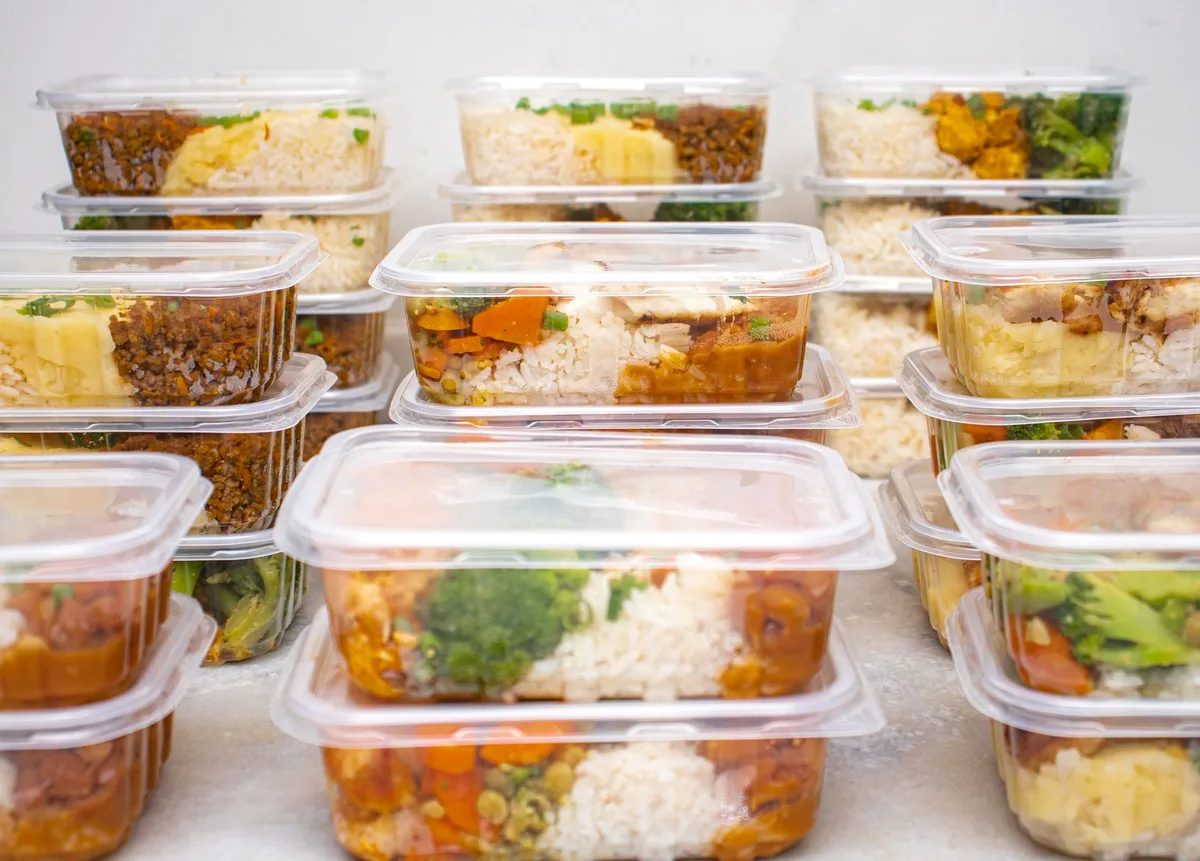
PP (polypropylene) has been used for decades in food containers, baby bottles, crates and industrial pallets. Tritan is a newer copolyester developed to replace BPA-containing PC in water bottles and clear household goods. At ICD Vietnam we work every day with PP and HDPE in plastic crates and plastic pallets, so this article compares the two materials using resin manufacturers’ own data sheets, points out the figures people most often misread, and ends with the hardest question: does “BPA-free” actually mean safe?
How hot can Tritan and PP plastic go?
According to the manufacturers’ data sheets, Tritan TX2001 is cleared by the FDA for food contact up to 100 °C, while PP handles reheating and steam sterilisation better because it only melts between about 130 and 171 °C. Many articles put the two figures “PP 130 °C, Tritan 109 °C” side by side, but the two numbers are not measured the same way, so they cannot be compared directly. If you are weighing materials more broadly, our comparison of plastic and wooden pallets is also worth a look.
The 109 °C figure for Tritan is the heat deflection temperature (HDT) of the TX2001 grade at 0.455 MPa; the TX1001 grade reaches only 99 °C. Measured by an equivalent method, a common PP homopolymer such as Moplen HP501H has an HDT of about 90 °C, which is lower than Tritan, yet its Vicat softening temperature reaches 154 °C. In other words, at moderate temperatures Tritan stays stiffer, while at high temperatures PP keeps its shape and Tritan softens quickly.
The reason lies in the material structure. PP is semi-crystalline: it softens gradually but only flows fully in its melting range, which is why PP containers survive reheating and sterilisation. Tritan is an amorphous copolyester with no sharp melting point that softens quickly once it passes its HDT, so it suits hot drinks better than cooking or high-temperature steaming.
What is PP plastic and what are its properties?
PP is a semi-crystalline thermoplastic with recycling code 5. At a density of about 0.90 g/cm³ it is the lightest of the common plastics. It is the second most produced plastic in the world, after polyethylene (PE). Light, easy to process and inexpensive, PP appears in bottles, plastic boxes, baby bottles, water pipes and a huge range of household goods.
PP stands out for four things: it tolerates reheating, it resists acids, alkalis and grease, it is very light, and it is cheap because it is made at enormous scale. PP also takes impact reasonably well, rarely cracks with long use and can be recycled many times; many plastic pallets made from recycled PP are still strong enough for warehouse use. The drawbacks are a surface that scratches easily, a white or translucent colour, and a tendency to hold food odours after long use.
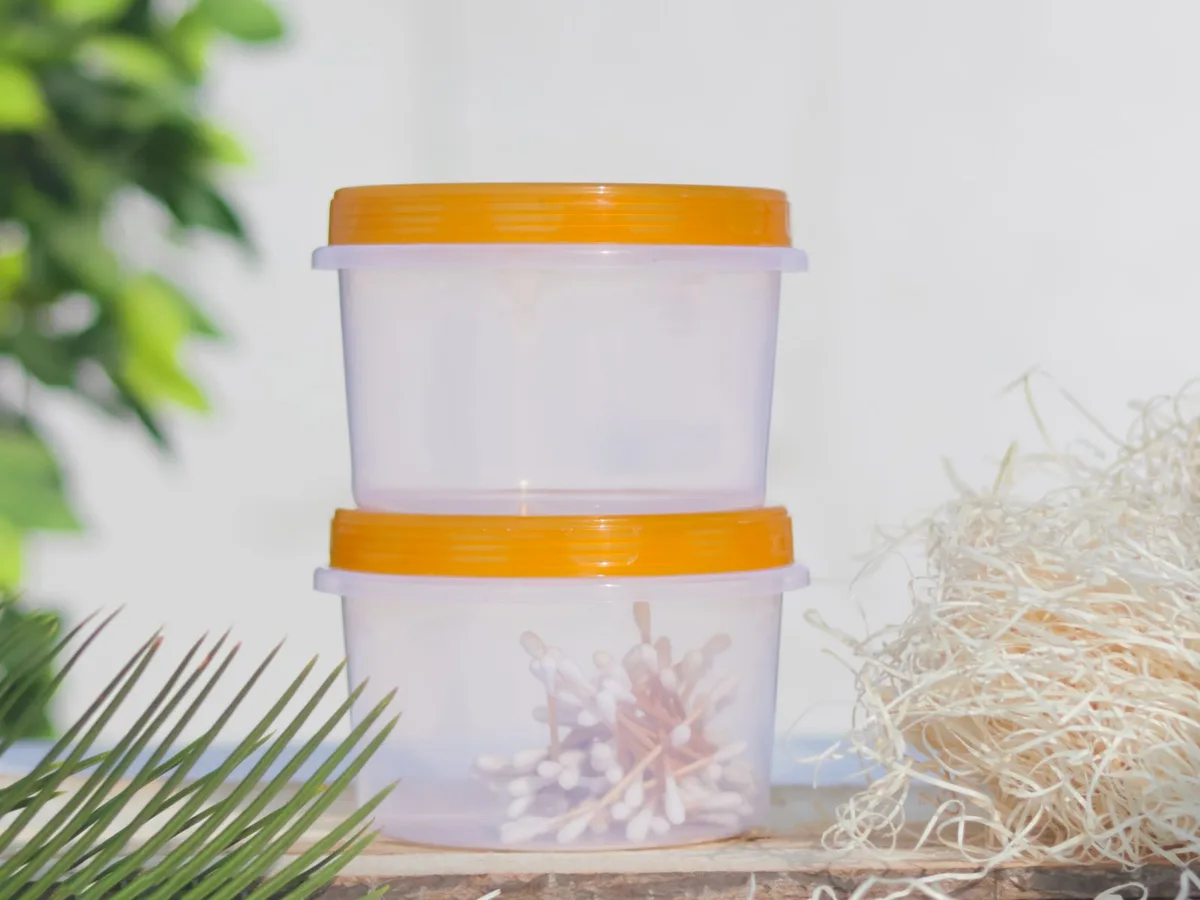
Being light, chemically resistant and easy to injection-mould, PP is also the main raw material for many plastic crates, totes and some industrial plastic pallets. PP copolymer grades are designed by resin makers specifically for crates and containers because they take impact better than PP homopolymer, especially in cold weather.
The quickest way to identify PP is to look for the number 5 inside the recycling triangle on the base of the product. PP also flexes elastically when bent rather than snapping. With no marking, you can drop a small piece in water: pure PP floats because it is lighter than water, while Tritan sinks. This test is only indicative, because PP filled with talc or heavily pigmented can be heavier than water.
What is Tritan plastic and what are its properties?
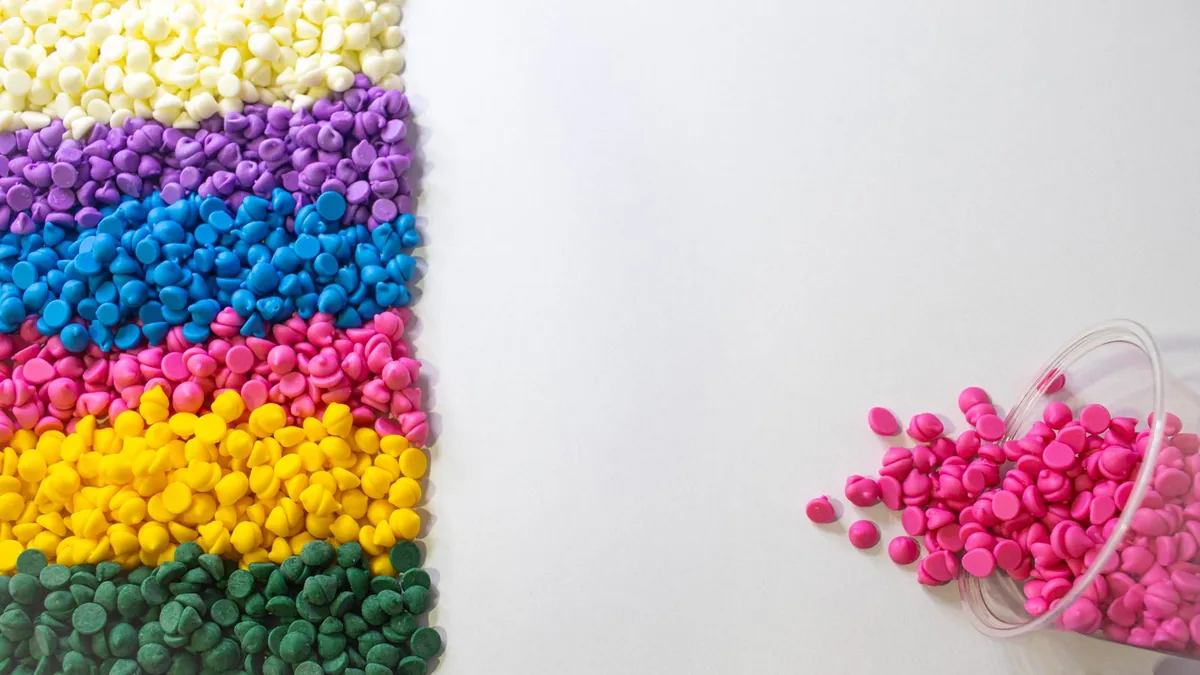
Tritan is the trade name of an amorphous copolyester made by Eastman Chemical (USA). It uses no BPA, BPS or any other bisphenol compound as a raw material, and the US FDA permits it for repeated-use food-contact articles. Tritan is increasingly used in place of PC in water bottles, jars and premium food containers.
According to Eastman’s data sheet, the Tritan TX2001 grade has 92% light transmission, haze below 1%, notched Izod impact strength of 650 J/m at 23 °C and a density of 1.17. The material is certified to NSF/ANSI 51 (food equipment materials) and NSF/ANSI/CAN 61 (drinking water system components). Its biggest advantage is that it is as clear as glass yet hard to break when dropped, and it is durable in the dishwasher because it is stable against hot water and detergents. Tritan also does not absorb odours, does not stain from food and does not yellow over time.
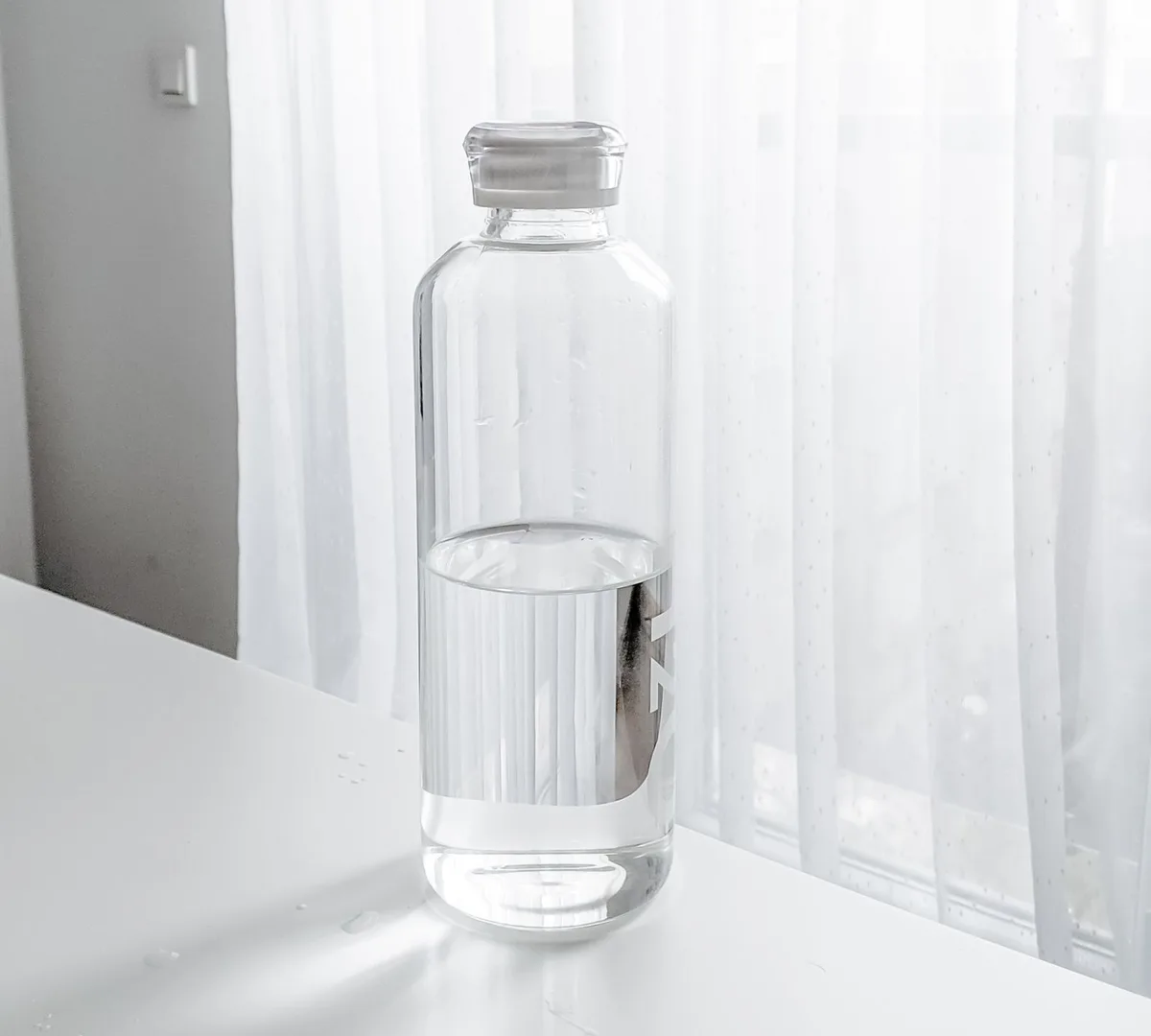
Tritan has no recycling code of its own. Products usually carry the Tritan™ Copolyester name and code 7, the group for every plastic outside the six groups numbered 1 to 6. Tritan has a smooth surface, feels hard when squeezed and sounds sharp when tapped, whereas PP is more flexible and slightly softer.
How are Tritan and PP alike and different?
The two plastics are alike in being BPA-free, holding hot water, being recyclable and being used for water bottles, food containers and kitchenware. The clearest differences are transparency, impact toughness, density, heat behaviour and price. The table below sets side by side specifications measured by equivalent test methods, taken from the resin manufacturers’ data sheets, together with practical usage criteria. For more background, see also which pallet material is best.
| Criterion | PP (Moplen HP501H) | Tritan (TX2001) |
|---|---|---|
| Structure | Semi-crystalline | Amorphous |
| Density | 0.90 g/cm³ (floats on water) | 1.17 (sinks in water) |
| HDT, 0.45 MPa | 90 °C | 109 °C |
| Vicat softening temperature | 154 °C | Not published |
| Light transmission | Opaque to translucent | 92%, haze below 1% |
| Tensile modulus (ISO 527) | 1,450 MPa | 1,624 MPa |
| Impact and scratching | Fairly impact-resistant, scratches easily | Very hard to break, scratches little |
| Odour and staining | May hold odours after long use | Does not hold odours, does not stain |
| Recycling code | Code 5 | Code 7 (other plastics) |
| Cost | Cheap, widely available | Higher than PP |
| Best used for | Reheating containers, sterilised baby bottles, industrial crates and pallets | Water bottles, cups, blender jars, household goods that need to be clear |
Sources: Eastman Tritan TX2001 and LyondellBasell Moplen HP501H data sheets. Each resin grade has its own values; these are representative examples, not figures for every product of the same type.
Choose PP when you need frequent reheating or sterilising, a low price, or industrial goods that contact chemicals. Choose Tritan when you need a clear, hard-to-break, odour-free product that will last for years and mainly holds drinks. Whichever you pick, read the temperature guidance for that specific product, because each manufacturer’s design and additives change heat resistance. The claim that “premium Tritan must be safer” is not quite right either: safety depends on how the product is used more than on the material name, as the next section shows.
See also: Can PP hold hot water?
Does “BPA-free” mean absolutely safe?
No. “BPA-free” only says that one specific substance was not used in the material; it does not mean the product releases nothing else. Two groups of studies are worth knowing about for anyone buying water bottles or baby bottles, because they bear directly on these two plastics.
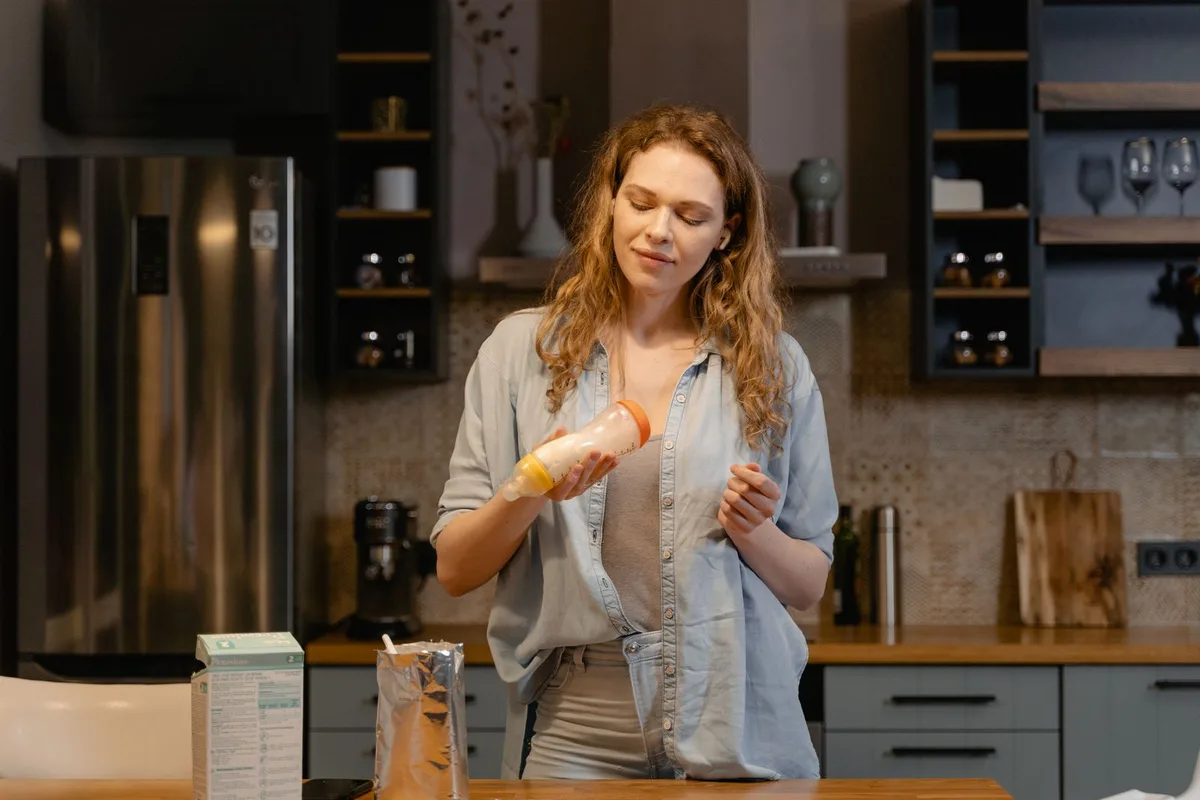
For PP, a 2020 study in the journal Nature Food (Li et al., Trinity College Dublin) found that PP baby bottles shed microplastics during formula preparation, with some samples reaching 16.2 million particles per litre; sterilising with hot water and mixing with high-temperature water raised the microplastic count markedly. The study did not conclude that this level harms infants, but it shows that PP, which is chemically safe, can still release plastic particles when exposed to heat.
For Tritan, a 2014 study by Bittner, Yang and Stoner in Environmental Health tested more than 1,000 extracts from 50 BPA-free products and reported that many products, including some made from Tritan, released substances with estrogen-like activity, especially after UV exposure. Eastman disputed these findings and published a series of independent in vitro and in vivo tests showing that Tritan has no estrogenic or androgenic activity. Tritan is currently cleared for food-contact use by the FDA, the European Food Safety Authority (EFSA) and Health Canada.
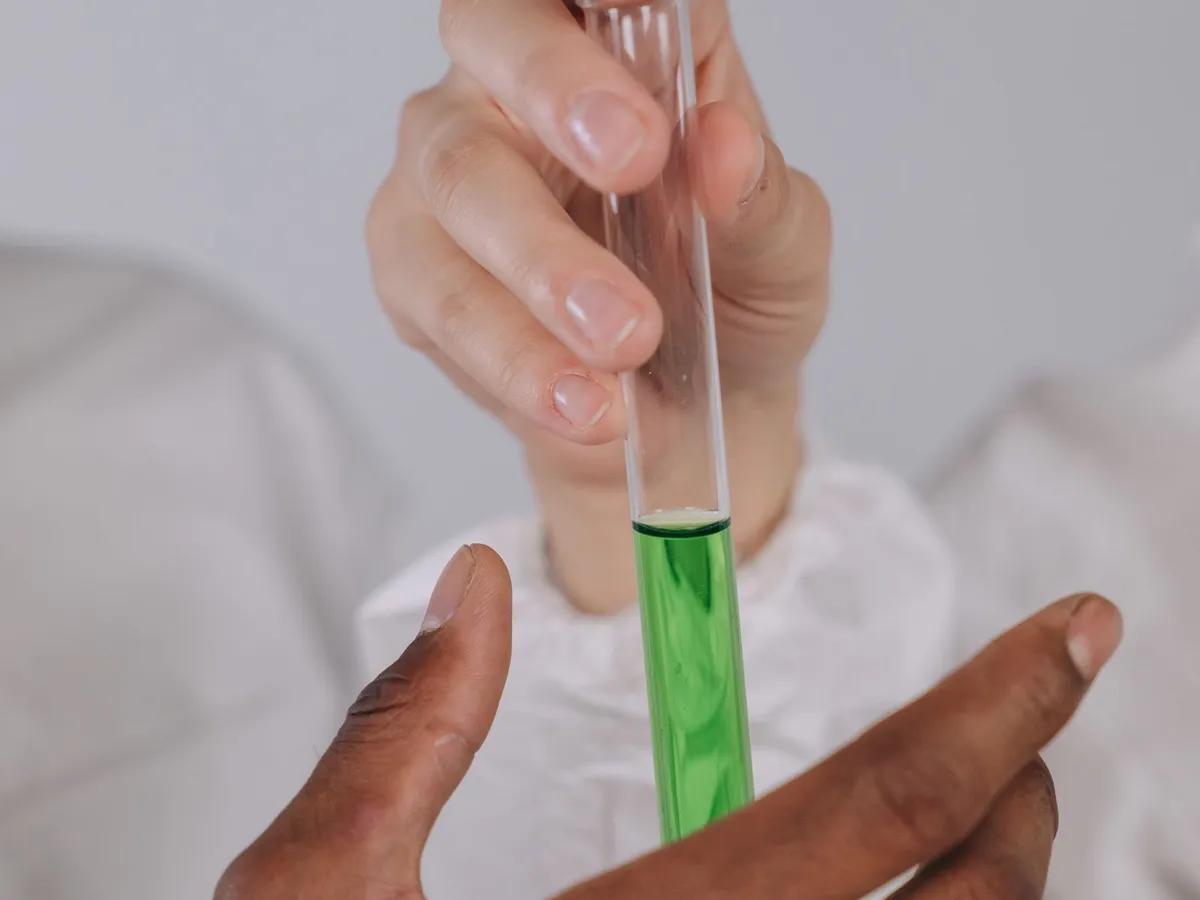
A reasonable reading is that both materials meet legal requirements under proper use, while risk rises when plastic is overheated, left in the sun, deeply scratched or used for too long. So you cannot rely on the letters PP or Tritan alone to call a product safe; you need to know the manufacturer, the composition and the permitted temperature range.
PP and Tritan in industrial pallets and crates
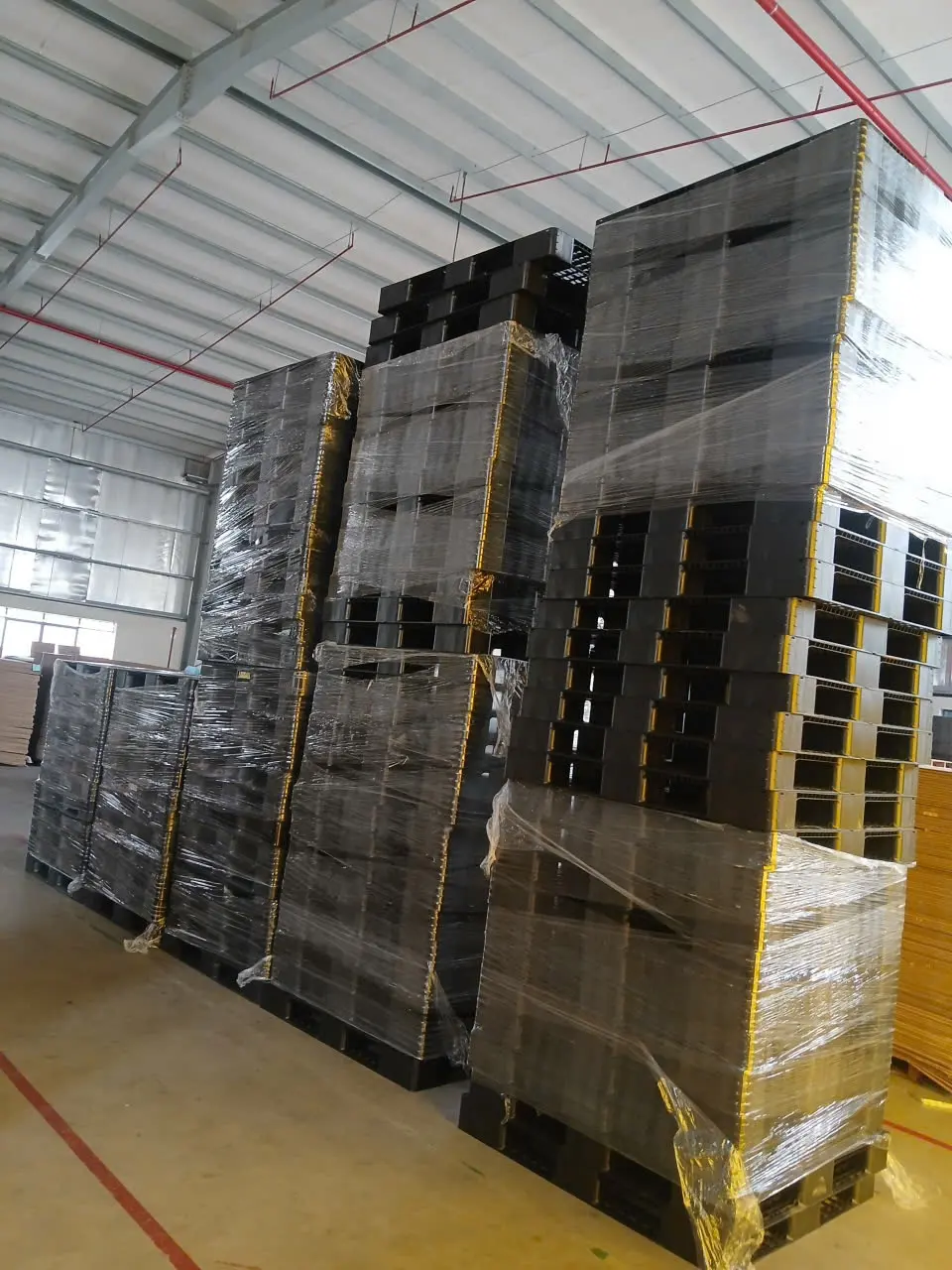
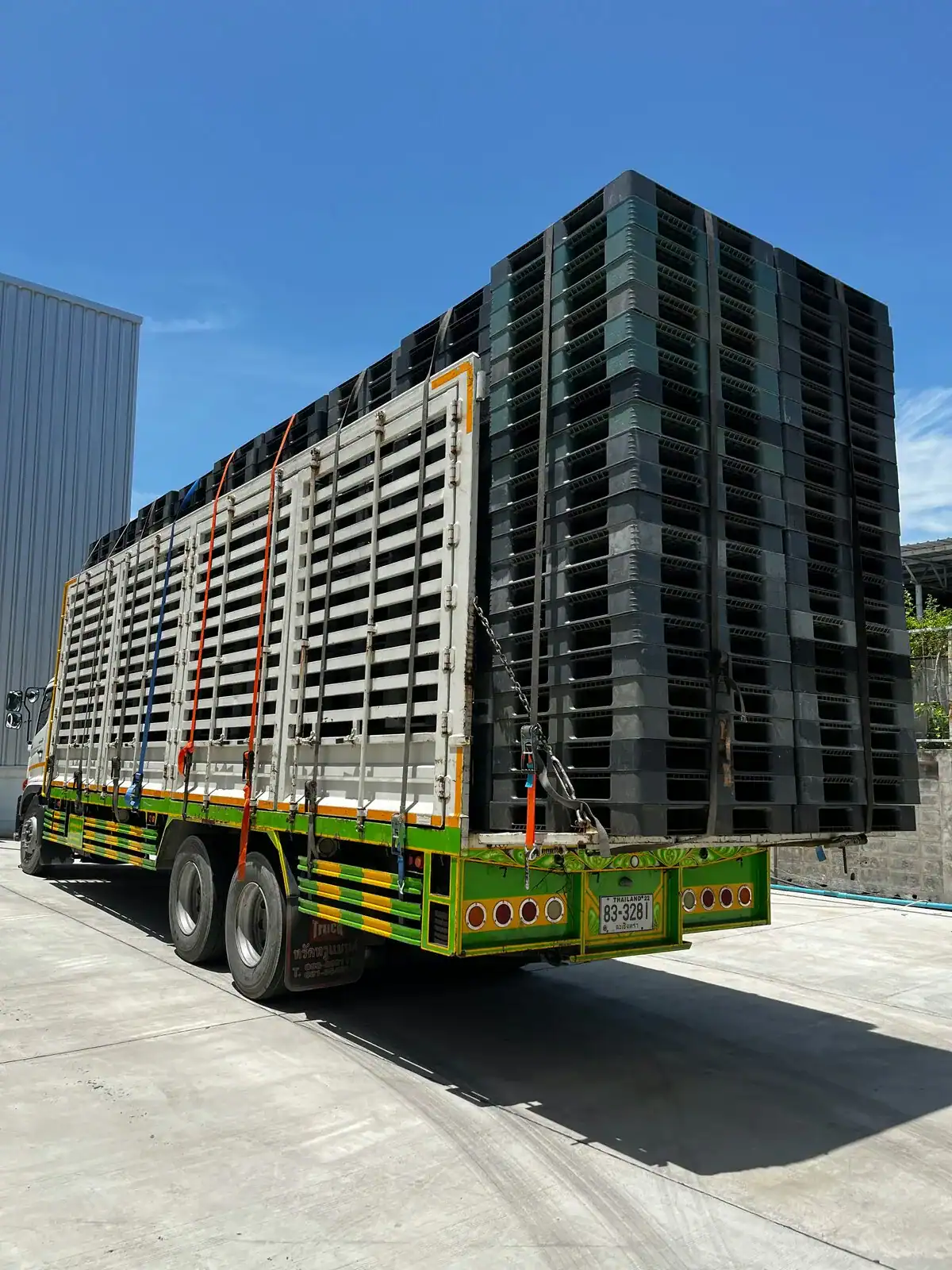
In industry, PP is widely used for plastic pallets and crates, while Tritan almost never appears because of its high price and because transparency brings no benefit to goods stored on racks. Of the 172 plastic pallet models with a stated material on the ICD Vietnam website (checked 11 October 2026), 60 contain PP or PP copolymer, 108 use HDPE only and none are made from Tritan.
HDPE remains the main material for plastic pallets thanks to its toughness under impact and its durability in cold storage. PP and PP copolymer are usually blended with HDPE, or used alone for pallets that need high stiffness, low weight and chemical resistance. For food businesses, the question to ask a supplier is whether the pallet is made from virgin or recycled plastic, because recycled plastic is unsuitable where goods touch the pallet surface directly.
Frequently asked questions
Which industries use Tritan and PP?
PP is widely used for food containers, water bottles, baby bottles, cups, water pipes, medical supplies, packaging and industrial goods such as crates and plastic pallets. Tritan is used mainly for water bottles, sports cups, stain-free food containers, blender jars, coffee brewers, some medical bottles and glass-replacement products.
Is Tritan plastic safe for children?
Tritan is cleared for food contact by the FDA, EFSA and Health Canada, and according to Eastman, BPA and BPS have never been raw materials or by-products in making Tritan; the company’s independent tests found no estrogenic or androgenic activity. That is why many children’s bottles and cups use Tritan, since it survives drops. Even so, use it within the right temperature range, keep it out of the sun and replace the bottle when it is deeply scratched.
How does Tritan compare with PPSU?
Tritan is clear and cheaper, while PPSU is amber-yellow and slightly cloudy and costs more, but it is an engineering plastic with much higher heat resistance that withstands repeated steam sterilisation and boiling water. Neither holds odours. Choose Tritan for clarity and toughness in a water bottle; choose PPSU for a baby bottle that is sterilised at high temperature often.
What recycling number is Tritan, is it code 7?
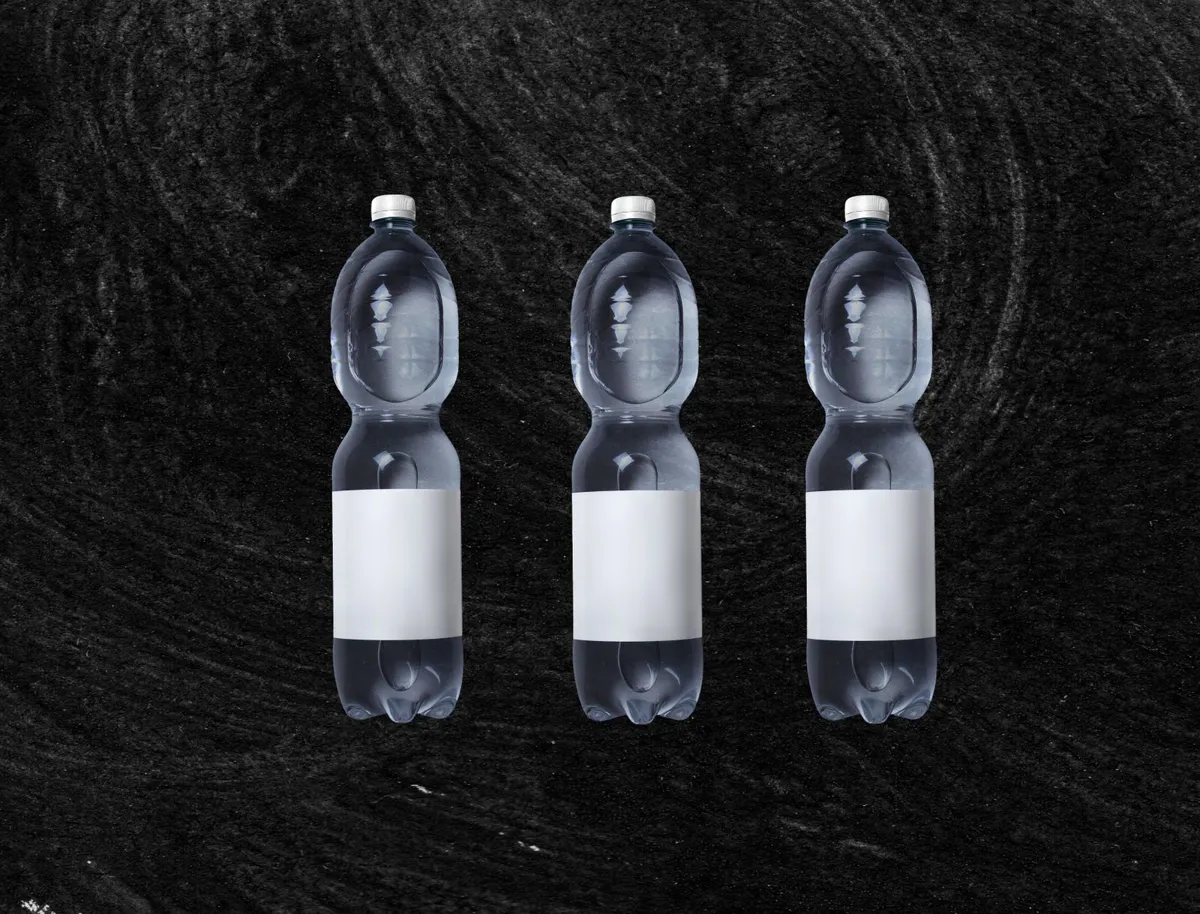
Yes, Tritan falls under code 7 but it is not polycarbonate (PC) containing BPA. The number in the recycling triangle only helps sorting at collection; it is not a safety rating: code 1 is PET (mineral water bottles), code 2 is HDPE (jerrycans, crates, plastic pallets), code 5 is PP (food containers, bottle caps, plastic crates), and code 7 groups Tritan, PC, nylon and bioplastics.
How can you tell whether a product is made of Tritan?
Look for the Tritan™ Copolyester name printed on the product or packaging, along with BPA-free information. Tritan products are highly transparent, do not turn cloudy or yellow over time, and feel smooth and hard when squeezed. The code 7 alone does not tell you whether it is Tritan or PC.
What temperature can Tritan withstand?
The FDA permits Tritan food contact at temperatures up to 100 °C; the 109 °C figure is the heat deflection temperature of the TX2001 grade, not a temperature for everyday use. A Tritan bottle can hold hot water and go on the top rack of a dishwasher, but you should not regularly pour boiling water straight in, because prolonged high heat shortens the product’s life.
Can Tritan go in the microwave?
Yes, if the product’s manufacturer explicitly allows it. The FDA clears Tritan for food contact up to 100 °C, including microwave reheating. Remove the lid, do not run it empty and avoid heating very fatty food for too long, since oil can exceed 100 °C. For everyday reheating, a PP container remains the more durable choice.
How do Tritan and PC plastic differ?
Both are transparent and carry recycling code 7, but PC (polycarbonate) is made from BPA, while Tritan uses no BPA or any other bisphenol. That is why many water bottles and baby bottles have switched from PC to Tritan. To tell them apart, look for the word Tritan or BPA-free on the product.
Are plastic pallets made from Tritan?
No. Plastic pallets are made mainly from HDPE, PP or a blend of the two because of their reasonable cost, load capacity and impact resistance. Tritan is far more expensive and its transparency has no value for a pallet. When buying pallets for the food industry, it matters more to choose virgin plastic and ask the supplier for the load ratings of each model.
Contact ICD Vietnam
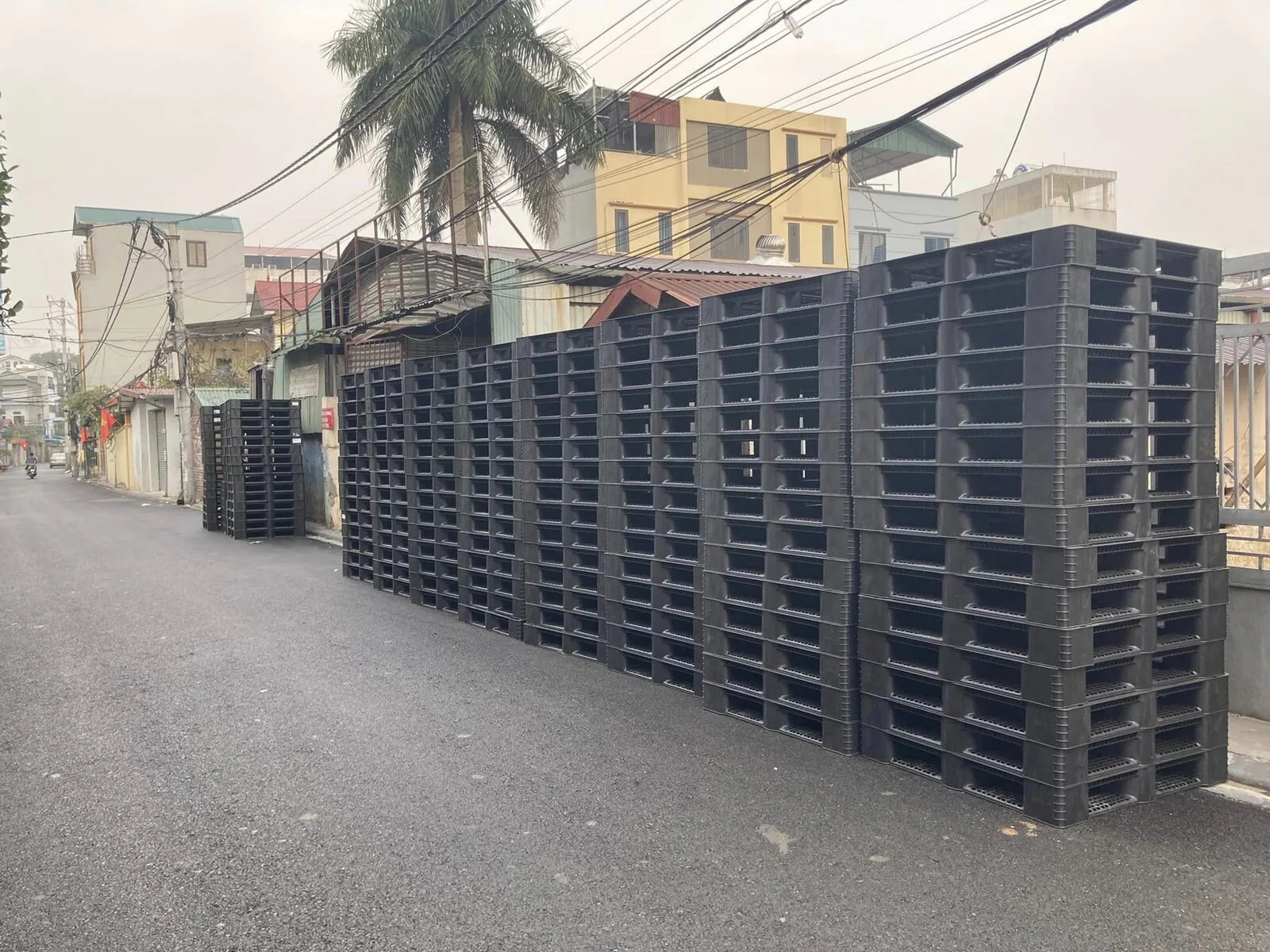
ICD Vietnam supplies HDPE and PP plastic pallets nationwide. To buy plastic pallets, please contact:
- North: 0983 797 186 / 090 345 9186 / 090 5859 186.
- South: 098 6784 186.
- Email: sales@icdvietnam.com.vn.
- Zalo: Chat with ICD Vietnam on Zalo.
See also: is PP plastic safe?.
References
- Tritan TX2001 data (light transmission, HDT, impact, NSF 51/61): Eastman, Technical Data Sheet Tritan Copolyester TX2001.
- 100 °C food-contact limit: FDA, Food Contact Notification No. 1041.
- PP homopolymer data: LyondellBasell, Moplen HP501H.
- General properties of PP: Wikipedia, Polypropylene.
- Plastics material information: British Plastics Federation (BPF).
- Microplastics from PP baby bottles: Li et al., Nature Food (2020).
- Estrogenic activity in BPA-free plastics: Bittner, Yang, Stoner, Environmental Health (2014).
- Tritan FAQ, “What about microwave applications” and Tritan product safety documents - Eastman Chemical Company.
- Plastic pallet materials - ICD Vietnam product catalogue, checked 11 October 2026.